3 Days In Oahu Without A Car: A Realistic Itinerary
You can do 3 days in Oahu without a car, and for Waikīkī, downtown, Pearl Harbor and the windward coast it is genuinely the easier option. The plan below is paced to the bus and rail network that actually exists, not the one a rental-car guide assumes.
Short answer
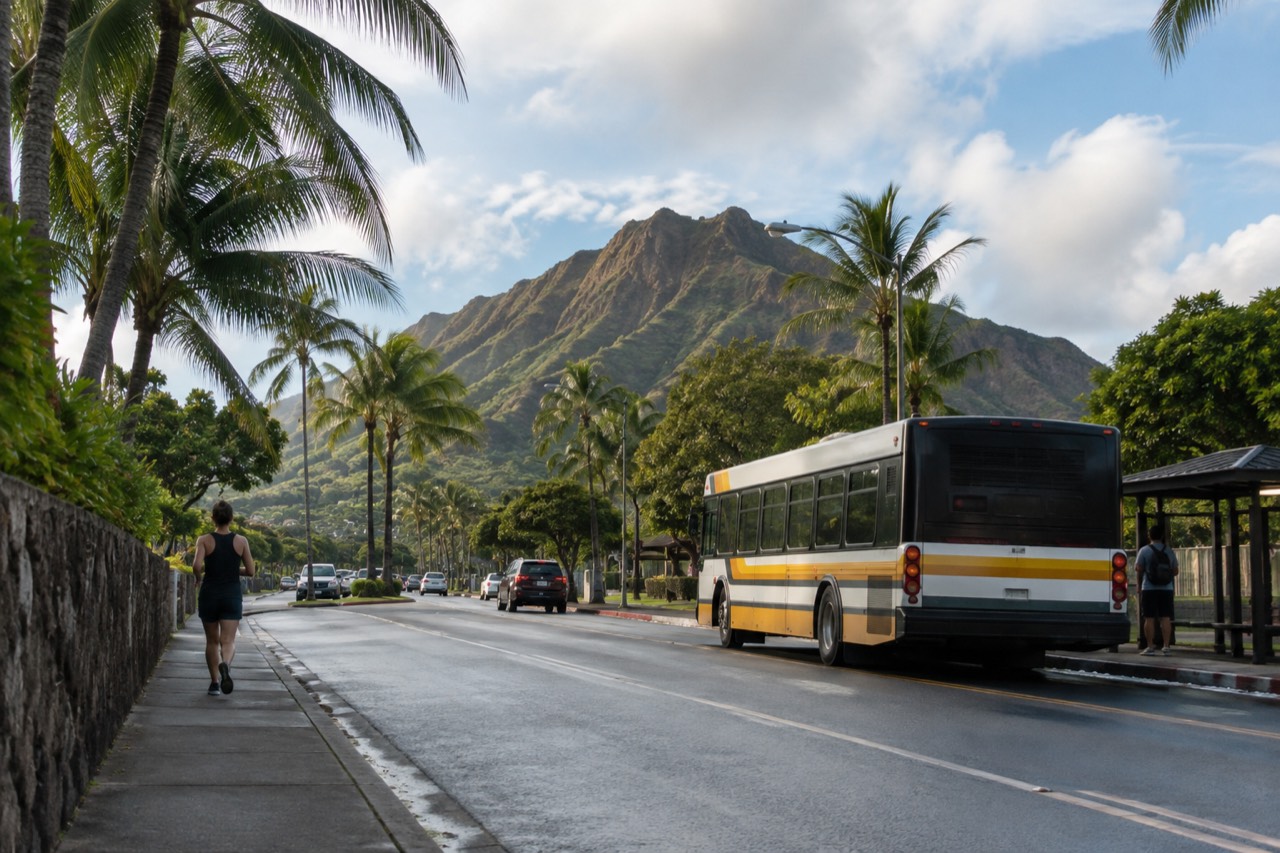
Yes. TheBus and Skyline share one fare system, a HOLO card caps at $7.50 a day, and every marquee stop on this itinerary, Waikīkī, Diamond Head, Pearl Harbor, Hanauma Bay and the windward coast, is reachable by public transit or a tour that picks up in Waikīkī.
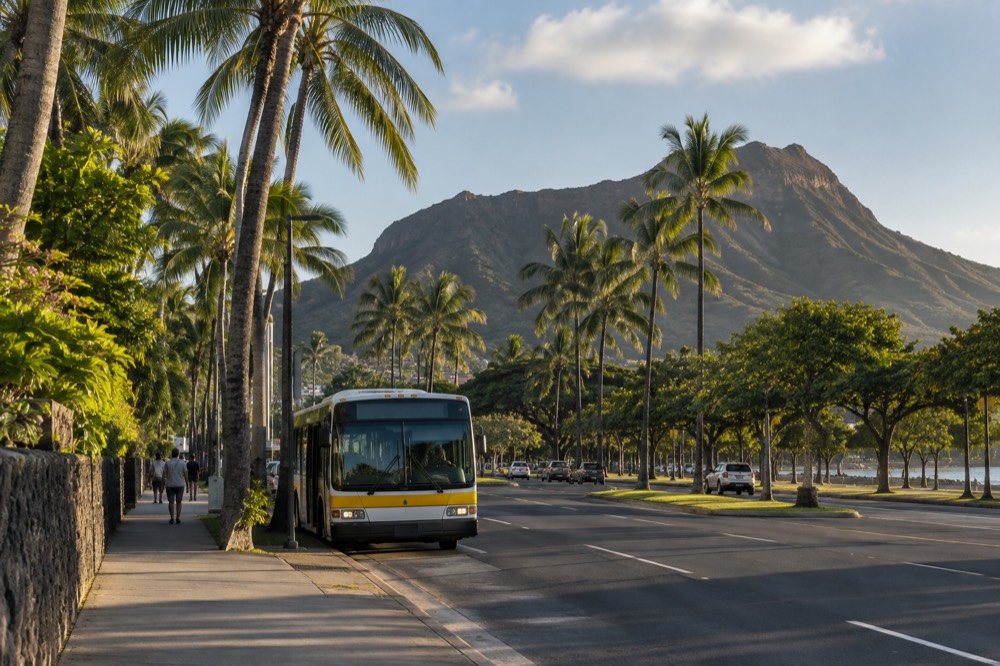
You can do 3 days in Oahu without a car, and for Waikīkī, downtown Honolulu, Pearl Harbor and the windward coast it is genuinely the easier option. TheBus and Skyline share one fare system, a HOLO card caps what you pay at $7.50 a day, and the only places that punish carlessness are the ones a first-time visitor should think hard about driving to anyway. This itinerary is built on the network that exists, with the reservation deadlines that actually decide whether your days work.
One thing to know before anything else: Oʻahu's real planning problem is not price, it is reservation windows. Hanauma Bay opens bookings two days ahead at 7 a.m., Diamond Head requires non-residents to reserve in advance with no on-site sales, and the USS Arizona Memorial program runs on a timed ticket. Those clocks, more than bus schedules, shape the three days below.
The island also rewards going carless in ways that are not obvious until you are here. Waikīkī hotel parking is expensive and scarce, the roads into the windward valleys are slow at peak hours, and the single most congested corridor on the island is the one a rental car traps you on. A HOLO card and a couple of well-chosen tours buy back the hours a car would eat.
Is 3 Days In Oahu Without A Car Realistic?
Yes, for most of what visitors come to see. Waikīkī, Diamond Head, downtown Honolulu, Pearl Harbor, Hanauma Bay and the Kailua windward coast all sit on TheBus routes, and Skyline now reaches the airport. The HOLO card caps a day of riding at $7.50, less than an hour of resort parking. The exceptions are the North Shore and the Leeward Coast, where a guided circle-island tour beats a bus transfer every time.
TheBus and Skyline use the same fare structure, which is the fact most car-free itineraries miss. A single adult cash ride on TheBus is $3.25 with no transfers, but the same trip on a HOLO card is $3.00 and includes two hours of unlimited transfers across bus and rail. Load the card once, tap everywhere. The card itself costs $2.00 and can be topped up at holocard.net, by phone, or at retail locations.
There is no Skyline station in Waikīkī, and pretending otherwise is how car-free plans fall apart. Rail gets you between the airport, Pearl Harbor and the stadium corridor quickly; the last mile into Waikīkī is a bus transfer. Budget your transfers accordingly.
A child aged 5 or under rides free with a paying rider as long as they are not occupying a seat, and the youth HOLO card covers ages 6 to 17, extending to 19 with proof of high-school enrolment. Families therefore pay meaningfully less than the headline adult figures suggest, and the 3-Day Pass at $20.00 per adult is worth comparing against the daily cap if you know you will ride hard all three days.
| Fare product | Price | What it covers |
|---|---|---|
| Adult cash single ride | $3.25 | One TheBus ride, no transfers, exact fare |
| HOLO 2-Hour Pass | $3.00 | 2 hours of unlimited transfers, bus and rail |
| Daily cap | $7.50 | All rides free after the cap is reached |
| 3-Day Pass | $20.00 | 72 hours from first tap |
| 7-Day Pass | $45.00 | 168 hours from first tap |
| HOLO card itself | $2.00 | One-time fee, initial or replacement |
For a three-day stay the arithmetic is simple. Even if you hit the daily cap on all three days, the whole transit budget costs less than most single paid activities on the island, and it covers every transit day in this plan with room to spare.
Day 1: Waikīkī, Lēʻahi And Downtown Honolulu
Start with Diamond Head early, because entry is by advance reservation for non-residents and the timed slots go to whoever booked first. Then ride into downtown for ʻIolani Palace and the Chinatown blocks, and finish back in Waikīkī for sunset on the sand. The whole day runs on two bus corridors and one rail transfer, with nothing more than a HOLO card in your pocket.
Diamond Head State Monument, Lēʻahi in Hawaiian, is the classic first morning, and the reservation rule is the part to get right. Non-residents pay $5 per person plus $10 per vehicle, card only, and reservations are required for both entry and parking, with no on-site sales. Book up to 30 days ahead. Walk or bus in and you skip the parking fee entirely, which is one of the few places being carless saves real money. The monument is open 6 a.m. to 6 p.m. daily, with the last reservation at 4 p.m. and last entry at 4:30 p.m. Our Diamond Head hiking guide covers the trail itself.
The easiest version of the morning is a tour that sorts the ticket and shuttle for you:
After the crater, take the bus toward downtown. ʻIolani Palace, the only official royal residence of a reigning monarch on American soil, sits at the heart of the civic district, and the downtown Honolulu guide maps a walkable loop from there through Chinatown. Both are flat, compact and dense, which makes them the best car-free territory on the island. Give the palace block a slow hour and let Chinatown take the afternoon; the Chinatown Honolulu guide is the companion piece for the food stops in between.
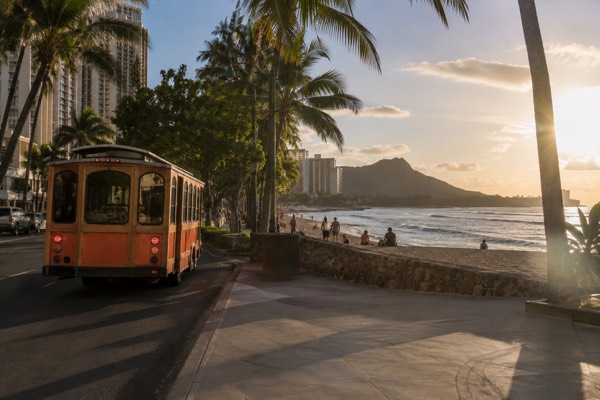
If you would rather not plan a single bus stop all day, the hop-on hop-off trolley is the tool built for exactly this:
The trolley's lines thread Waikīkī, downtown, Ala Moana and the arts district, and a day pass lets you ride the loop at your own pace instead of decoding individual route numbers. For a first day of orientation it is hard to beat, and the Waikīkī neighborhood guide pairs with it for the evening.
One honest note on the evening: Oʻahu does not have long summer nights. Sunset never runs later than about 7:17 p.m. even at the height of summer, and in midwinter it sits close to 6 p.m. Plan the beach part of the day around the actual clock rather than a mainland instinct, because the light goes earlier than you expect and the bus network thins out after dark.
Day 2: Pearl Harbor And The West Side
Pearl Harbor is the single best car-free day on Oʻahu, because the rail line stops at Hālawa Aloha Stadium Station a short walk from the visitor centre, and the memorial program itself is free. Reserve the USS Arizona boat program on recreation.gov, arrive early, and give the whole site most of a day. Bags are prohibited, so travel lighter than you think you need to.
The park is fee-free. The Arizona Memorial program is a 45-minute timed experience with a $1 non-refundable management fee per ticket when you reserve on recreation.gov, and parking is $7 per day if you did drive, which today you did not. The visitor centre is open 7 a.m. to 5 p.m. daily except Thanksgiving, Christmas and New Year's.
The bag policy is strict and worth repeating: backpacks, purses and camera bags are all prohibited, and storage near the entrance costs a small fee. Bring a wallet, a phone and a water bottle, nothing else.
The memorial is a war grave. 1,102 sailors and Marines remain in the ship. Treat the visit with the plainness that deserves, and do not rush it into a photo itinerary.
Our full Pearl Harbor and USS Arizona Memorial guide covers how the tickets work in detail. If you want the battleships and the aviation museum on the same day, a guided tour bundles the logistics:
The rest of the afternoon belongs to the rail line. Aloha Stadium hosts a swap meet on Wednesday, Saturday and Sunday, and the stadium station is the same stop you used that morning. An easy day, and by the evening you are back in Waikīkī with one tap.
If the Arizona program is the reason you are here, it is worth knowing that the release schedule for tickets, how many days ahead and at what time of day, is not published in a stable place, so the practical move is to check recreation.gov early in your planning and grab what appears. The program itself is the anchor; everything else at the site, the museums, the waterfront, the bookshop, can absorb whatever time the ticket leaves you.
Day 3: Windward Coast, Hanauma Bay Or A Circle-Island Tour
The third day is where a car-free trip chooses between two good options: the windward coast by bus and tour, or a guided circle-island day that picks you up in Waikīkī and hands you the North Shore without a single transfer. Kailua, Kāneʻohe and the Byodo-In Temple are reachable by public transit. The North Shore is not, realistically, in a day.
The windward coast is the bus-friendly half of the island. Kailua and its beach park sit on a direct route from town, and the Kailua guide plus the Kāneʻohe and windward coast guide cover how to spend the day once you are there. Note one thing before booking anything: a city ordinance prohibits commercial tour activity at Kailua Beach Park and Kalama Beach Park, so check carefully what a tour operator can legally include there.
There is a weather angle worth planning around, too. The official climate normals put Honolulu airport at 16.41 inches of rain a year, while the Lyon Arboretum station in Mānoa, five miles inland from Waikīkī, records 150.96 inches, and every single month there is wetter than the airport's wettest month. The windward valleys are where that rain goes. A grey morning in Kailua can sit under sunshine in Waikīkī and vice versa, so check the sky, not the forecast for one postcode, before committing to the east side.
The Byodo-In Temple sits against the Koʻolau mountains in Valley of the Temples, and the tour below reaches it along with the rest of the island's east and north coasts in one guided loop:
If your third day is your last full day, the circle-island option is the one that covers the most ground per hour. The alternative, doing the North Shore by bus, chews through most of a day in transit for a shorter time actually there, and the North Shore Oʻahu guide is honest about why: it is a working stretch of two-lane highway where parking, not distance, is the bottleneck. Haleʻiwa town, the shrimp trucks and the big-wave beaches are all better as a tour stop than as a bus project.
If a rental day would suit your plans better than the bus, book a rental car here.
| Day | Anchor | Getting there without a car | The deadline that decides it |
|---|---|---|---|
| Day 1 | Diamond Head, downtown | TheBus or tour shuttle | Diamond Head reservation, up to 30 days ahead |
| Day 2 | Pearl Harbor | Skyline to Hālawa station | Arizona program ticket on recreation.gov |
| Day 3 | Windward coast or circle island | TheBus routes or guided pickup | Circle-island tour availability |
Can You Get To Hanauma Bay Without A Car?
Yes, and it is one of the better bus trips on the island, but the reservation system is the hard part, not the ride. Non-residents pay $25 plus a 2.35% online service fee, bookings open exactly two days ahead at 7:00 a.m. HST, and the bay is closed Mondays and Tuesdays. Children 12 and under enter free, and Hawaii residents enter free without a reservation.
That two-day window is the detail that sinks most plans. The official phrasing is that on Monday at 7 a.m. you can begin reserving a time slot for Wednesday, and slots for the best morning entries go fast. Set an alarm. Entry is allowed from 6:45 a.m. to 1:30 p.m. and everyone is out by 4 p.m., so an early slot is both calmer and cooler.
Parking at the bay is $3 for non-residents, cash only, but you are not parking, you are riding. A tour that includes the entry, transport from Waikīkī and the mandatory orientation removes every one of those steps at once:
Our Hanauma Bay guide covers the snorkelling itself, the closed days and the resident exemptions in full. The one thing to add here is the water: harbour readings at Honolulu run from about 78 in the coolest months to the low 80s in late summer, and the open ocean off the bay runs a touch cooler than that, so a shorty or a rash guard is comfort rather than survival gear at any time of year.
How Do You Handle Arrival Day Without A Car?
Skyline now serves the airport directly, with a Lelepaua Daniel K. Inouye International Airport station, but there is no rail station in Waikīkī, so the last leg is a bus transfer. The practical sequence is rail from the airport to a transfer point, then the W Line bus into Waikīkī. A HOLO card bought before you fly turns the whole arrival into a single capped fare day.
This is the part of a car-free trip people worry about most, and it is the part the rail line has genuinely fixed. The airport station connects to bus transfers onward, with the W Line to Waikīkī, the A Line to Downtown and the U Line to UH Mānoa, so the same tap that brought you from the terminal carries you to your hotel corridor. Our airport to Waikīkī transfer guide compares the rail-and-bus option against shuttles and taxis in detail.
On departure day the same logic runs in reverse, and it is worth leaving more slack than a car traveller would. Rail frequency and the transfer are reliable, but check-out times and traffic on the final bus leg are the variables you control least.
Where Should You Not Go Without A Car?
Skip the North Shore under your own steam, skip Lanikai, and skip Kaʻena Point entirely, because it is closed. Nuʻuanu Pali Lookout is also closed until further notice for storm repairs as of the September 2026 DLNR notice. The Leeward Coast and the far north are circle-island-tour territory, and Lanikai has no public parking lot at all, which makes it hostile to cars and buses alike.
Two closures matter right now. Hurricane Lowell damage has Nuʻuanu Pali State Wayside and Kaʻena Point State Park's Mokuleʻia and Keawaʻula sections closed until further notice, along with Wahiawā Freshwater. Any itinerary that still lists the Pali Lookout as a quick photo stop is out of date, so re-check the DLNR notices the week you travel. Kaʻena Point is also a sacred site, a place where souls depart the living world in Hawaiian tradition, and it deserves restraint in copy even when the trail reopens.
Lanikai deserves its own warning. There is no public parking lot; the residential streets are restricted and towed, and the honest advice in our Lanikai Beach guide is to approach it from Kailua Beach Park on foot or by bike. That is easier without a car than with one, but it is not a bus-door-to-sand trip.
| Destination | Car-free verdict | Why |
|---|---|---|
| Diamond Head | Easy | Bus routes plus a walk-up trailhead, reservation required |
| Pearl Harbor | Easiest on the island | Skyline stops at Hālawa, program is free |
| Hanauma Bay | Easy with a reservation | Direct bus service, two-day booking window |
| Kailua and windward coast | Doable | Direct routes, allow transfer time |
| North Shore | Take a tour | Long transit times, parking is the real bottleneck |
| Kaʻena Point | Do not go | Closed until further notice |
| Nuʻuanu Pali Lookout | Do not go | Closed until further notice |
Common Questions About 3 Days In Oahu Without A Car
Most questions about a car-free Oʻahu trip come down to three things: the HOLO card, the reservation clocks and the North Shore. The card caps your daily transit cost at $7.50 across bus and rail. The reservation clocks, two days for Hanauma Bay and advance booking for Diamond Head, decide your mornings more than any schedule. And the North Shore is the one region where a guided tour beats transit on every measure.
Is 3 days in Oahu without a car enough?
Three days covers Waikīkī, Diamond Head, Pearl Harbor and one coast in reasonable depth. It is not enough for the whole island at a relaxed pace, and our piece on how many days in Oahu is enough breaks the trade-off down.
How do you pay for TheBus without cash?
Get a HOLO card, which costs $2.00, and load money on it at holocard.net, by phone or at a retail location. A two-hour pass is $3.00 with unlimited transfers, and the day caps at $7.50.
Does the Skyline train go to Waikīkī?
No. Skyline reaches the airport and the stadium corridor, including the stop for Pearl Harbor, but there is no Waikīkī station. You transfer to the W Line bus for Waikīkī.
Can you get to the North Shore by public transport?
Routes exist, but the time cost is high for a day trip and parking congestion makes even driving there slow. A guided circle-island tour with Waikīkī pickup is the practical answer.
Do you need reservations for Diamond Head if you arrive by bus?
Yes. Non-residents need a reservation for entry whether or not they park, there are no on-site sales, and entry is $5 per person, credit card only.
What is closed on Oahu right now?
As of the September 2026 DLNR notice, Nuʻuanu Pali State Wayside, Kaʻena Point State Park's Mokuleʻia and Keawaʻula sections, and Wahiawā Freshwater are closed until further notice for storm repairs. Hanauma Bay closes every Monday and Tuesday.
The honest summary from the Oahu Travel Guide desk: three carless days on this island are not a compromise version of the trip, they are a well-supported way to see it, provided you book the two things that run on clocks and take a tour for the one coast the bus serves badly. Plan the reservations first, buy the HOLO card second, and the rest of the itinerary mostly plans itself.