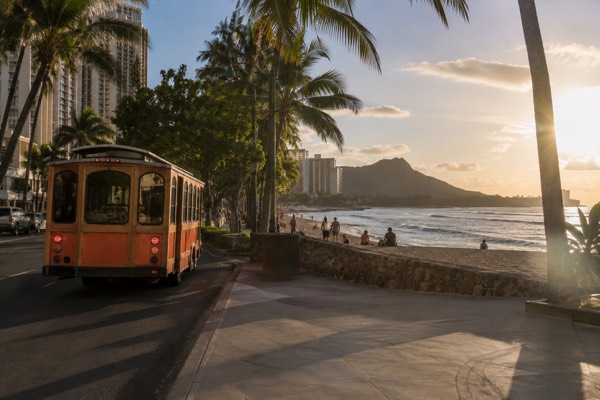
TheBus On Oahu: Fares, Routes And How To Ride Without A Car
TheBus is Oahu's public bus network and one of the cheapest ways to get around the island, with a daily fare cap that makes a full day of riding cost less than a single taxi ride.
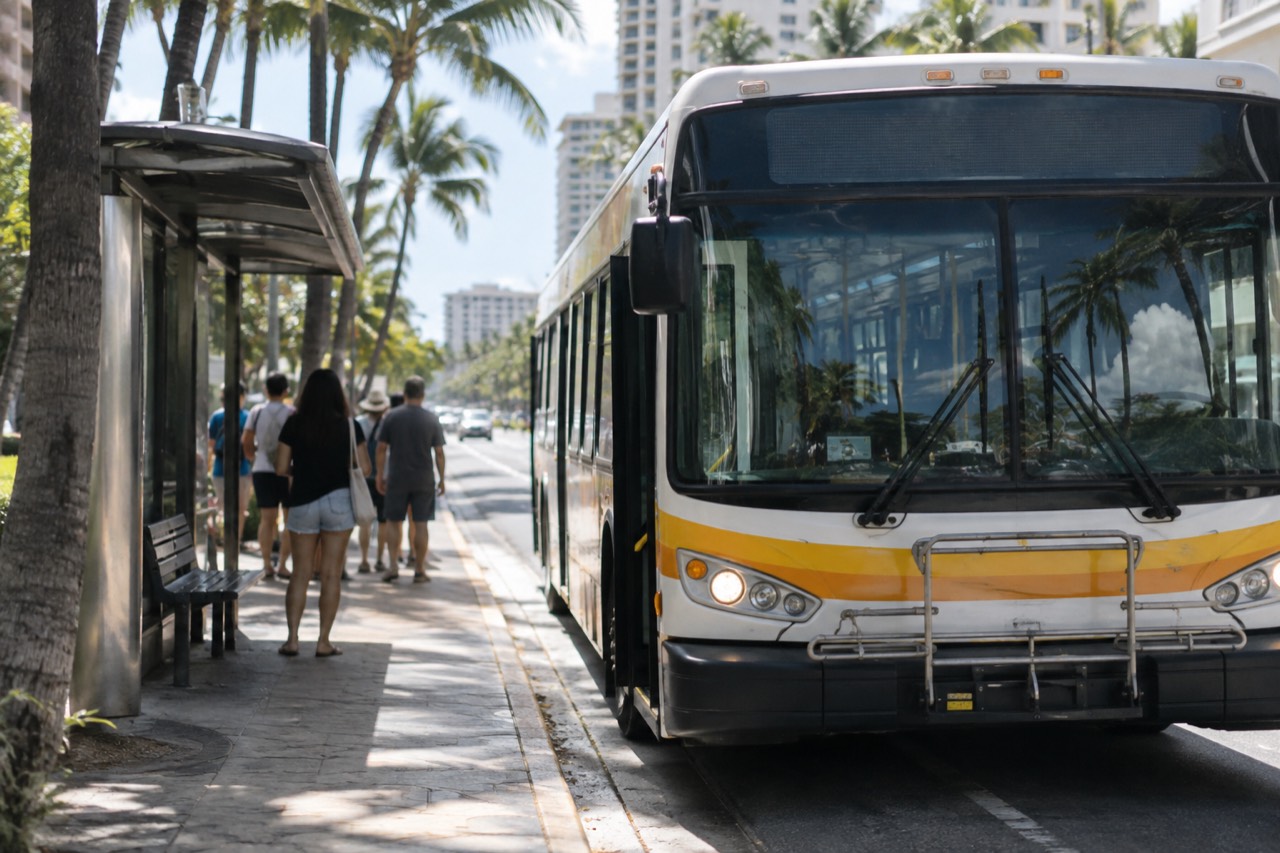
Short answer
TheBus costs $3.25 cash for a single ride with no transfers, or $3.00 on a HOLO card including two hours of unlimited transfers. Riding is capped at $7.50 per day, so a full day of unlimited bus travel never costs more than that.
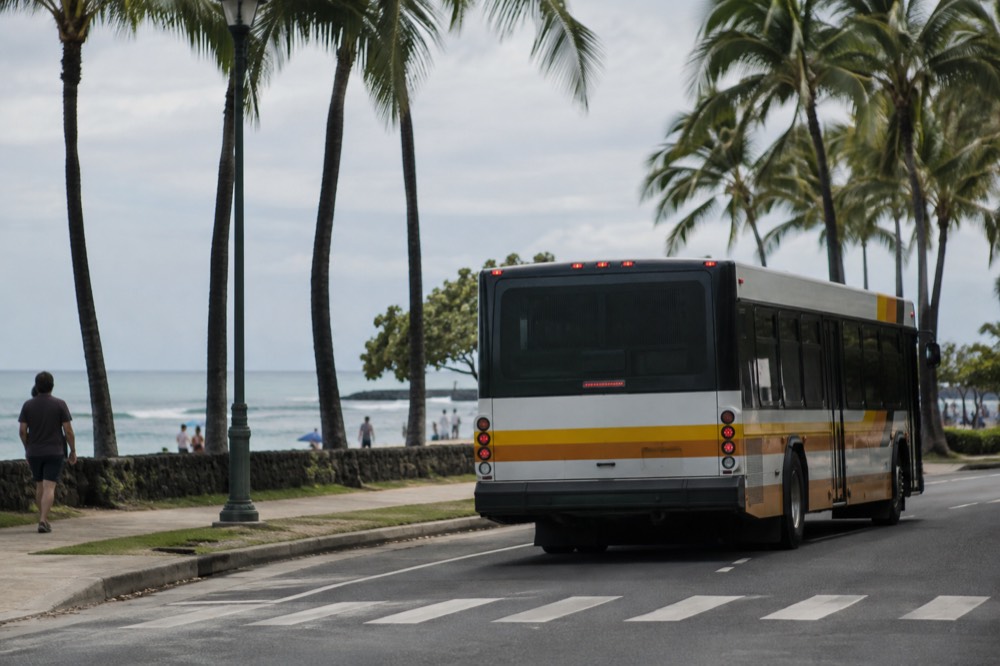
Oahu's public bus system carried residents to work, school and the beach long before most visitors ever considered riding it, and it remains one of the best-funded and most extensive bus networks on any American island. The fleet serves the whole island, from Waikīkī to Haleʻiwa to Waiʻanae, on routes that touch nearly every beach park, lookout and town worth visiting. For a visitor, the economics are almost absurdly favourable: a day of unlimited riding costs less than a single mile in a rideshare during surge pricing.
This guide covers the fares exactly as the City and County of Honolulu publishes them, how the HOLO card works, where the new Skyline rail line fits in, and which parts of the island you can realistically see from a bus window. Fares below come from the Department of Transportation Services fare page, checked in September 2026. If a number appears here, it is because the city states it, not because a forum thread repeated it.
What Is TheBus And Where Does It Go On Oahu?
TheBus is the public bus network of the City and County of Honolulu, and it covers the entire island of Oahu, reaching Waikīkī, downtown Honolulu, Kailua, Kāneʻohe, the North Shore and Waiʻanae. It shares a single fare system with the Skyline rail line, so one HOLO card pays for both. Frequencies are highest in the urban corridor between Pearl Harbor, downtown and Waikīkī, and thinner on the country routes.
The network's reach is what surprises visitors. The same agency that runs the frequent city routes also runs long country routes that climb the Koʻolau range and follow the two-lane highway up the coast to Haleʻiwa. You are not limited to the hotel zone.
Two practical realities shape any bus plan. First, the urban core is where the network is densest: along the south shore between Pearl Harbor and Waikīkī, buses run often and late. Second, the scenic outer routes, the ones that actually make a bus day trip worthwhile, run less frequently, so a missed connection on the windward side can cost you an hour. Check the timetable for the specific route rather than assuming city frequency applies island-wide.
The routes also connect to the Skyline rail line, which changes the arithmetic for airport trips and for reaching Pearl Harbor. That connection is worth its own section below.
How Much Does TheBus Cost On Oahu?
A single adult ride paid in cash on TheBus costs $3.25 with no transfers allowed and exact fare required. The same ride on a HOLO card costs $3.00 and includes two hours of unlimited transfers across TheBus and Skyline. After $7.50 in fares in one day, the HOLO card stops charging and every further ride that day is free. One child aged five or under rides free with each paying passenger when not occupying a seat.
That $7.50 daily cap is the number that matters most to visitors. The stored-value daily cap limits charges in the transit day. The separately purchased 24-hour pass lasts 24 hours from its first tap; it is not the same validity window. You do not need to decide in advance how much you will ride.
| Fare product | Price | What it covers |
|---|---|---|
| Adult cash, TheBus only | $3.25 | One ride, no transfers, exact fare |
| HOLO 2-Hour Pass | $3.00 | 2 hours of unlimited transfers on TheBus and Skyline |
| 24-Hour Pass | $7.50 | Valid 24 hours from first tap |
| Daily cap | $7.50 | Stored-value maximum for the transit day |
| 3-Day Pass | $20.00 | 72 hours from first tap |
| 7-Day Pass | $45.00 | 168 hours from first tap |
| Monthly Pass / month cap | $90.00 | Maximum charged per calendar month |
| HOLO card itself | $2.00 | Initial and replacement card fee |
| Child 5 and under | Free | With a paying rider, not occupying a seat |
For a typical visitor week, the arithmetic is straightforward. If you ride the bus most days, the 7-Day Pass at $45 equals six $7.50 capped days and costs less than seven. If you ride two or three days out of seven, pay as you go and let the daily cap protect you. The monthly cap depends on spending within a calendar month, not a minimum stay length; twelve $7.50 capped days total $90.
Loading money onto a HOLO card happens at holocard.net, by phone, or at any HOLO retail location around the island. The HOLO card holds the pass or stored value. The $2 fee applies to initial and replacement cards.
If the bus appeals for the price but not the timetable, there is a middle product worth knowing about: a hop-on hop-off trolley that loops Honolulu's main sights with commentary, aimed squarely at visitors rather than commuters. It is not cheaper than the bus, but you still need to check its lines and departure times. The other shortcut is a circle-island tour, which converts the whole day-long coastal loop into a seat with a driver who already knows the road.
Should You Get A HOLO Card Or Just Pay Cash?
Get the HOLO card. Cash on TheBus is $3.25 per ride with no transfers and requires exact change, while the card charges $3.00 including two hours of transfers, and caps every day at $7.50. The card costs $2 to buy and can be topped up online, by phone or at retail locations. Cash buys you nothing the card does not, except the ability to board without planning ahead.
The transfer window is the quiet advantage. Two hours of unlimited transfers means a trip that involves one connection, say Waikīkī to Kailua with a change in town, costs $3.00 total on the card but two separate cash fares otherwise. Any journey with a connection is effectively half price on HOLO.
| Situation | Best fare product | Why |
|---|---|---|
| One short stay, few bus days | HOLO card, pay as you go | Daily cap protects you, no commitment |
| Riding daily for a week | 7-Day Pass | $45 beats seven daily caps |
| Airport to hotel only | HOLO 2-Hour Pass | One tap covers the connection to Skyline |
| Frequent riding in one calendar month | Compare stored value and passes | $90 month cap is the ceiling |
| No card, boarding now | $3.25 exact cash | No transfers, TheBus only |
One thing the card does not do: it does not work on private shuttles, tour buses or the visitor trolleys. Those are separate products with separate tickets. The HOLO card is for TheBus and Skyline, full stop.
The visitor trolley has its own route map and passes; it is not a substitute for every public bus route.
Does TheBus Connect To Skyline And Honolulu Airport?
Yes. TheBus and Skyline share one fare system, so a HOLO card works on both and transfers between them are free within the two-hour window. Skyline reaches the airport via the Lelepaua Daniel K. Inouye International Airport station, with bus transfers onward: the W Line to Waikīkī, the A Line to downtown and the U Line to the University of Hawaiʻi at Mānoa.
There is no Skyline station in Waikīkī, so the last leg into the hotel zone is always a bus.
The airport connection is the newest piece and the one most guides get wrong. The rail line's station list includes Lelepaua at the airport and an ʻĀhua Lagoon Drive station, with signed bus transfers to Waikīkī and downtown. That means a card-carrying traveller can leave a terminal and reach the south shore on one fare, provided they accept a bus for the final stretch.
The other station visitors should know is Hālawa Aloha Stadium Station, which the city names as the stop for the Pearl Harbor memorial and visitor centre, and for the Aloha Stadium Swap Meet, which runs Wednesday, Saturday and Sunday. A rail-plus-bus journey to Pearl Harbor is now a realistic alternative to driving, and the memorial itself is free to enter apart from a small reservation fee for the Arizona program.
| Skyline connection | Serves | Bus transfer onward |
|---|---|---|
| Lelepaua station | Daniel K. Inouye International Airport | W Line to Waikīkī, A Line to downtown, U Line to UH Mānoa |
| Hālawa Aloha Stadium station | Pearl Harbor memorial and visitor centre; Aloha Stadium Swap Meet (Wed, Sat, Sun) | Local bus connections |
| ʻĀhua Lagoon Drive station | Airport area | Bus transfers to Waikīkī |
The honest caveat: the rail line's exact open-station list and current end-of-line status change as construction phases open, so confirm the system map before relying on a specific station. The fare integration, however, is settled policy: one card, both systems, transfers included.
For a fuller treatment of the rail line, see the Honolulu Skyline rail guide.
Which Oahu Attractions Can You Reach Without A Car?
You can reach nearly all of urban and windward Oahu by bus: Waikīkī, Ala Moana, downtown Honolulu, Chinatown, Kailua, Kāneʻohe and the Pearl Harbor visitor centre are all on the network, with a walk or short bus connection from Hālawa station to the memorial. The North Shore, Haleʻiwa and the Waiʻanae coast are reachable but slow, with infrequent country routes that reward careful timetable study. The bus is best for the south and east shores.
The south shore is trivial. Buses run along the Waikīkī and Ala Moana corridors constantly, and the routes that climb to downtown and the Nuʻuanu valley are frequent enough that you rarely consult a schedule at all. Punchbowl, the National Memorial Cemetery of the Pacific, sits above downtown and is reachable with a short uphill walk from city routes.
The windward side works well too. Routes cross the Koʻolau range to Kailua and Kāneʻohe, putting Kailua Beach Park, the Kāneʻohe Bay shoreline and the Byodo-In Temple area within reach of a patient rider. Allow a half day rather than a quick hop; the mountain crossing is scenic and the connections are not instant.
For urban sightseeing, the trolley offers a separate network of visitor-focused lines and commentary. Compare the line map before assuming a particular pass covers all your stops.
The North Shore is where the bus stops being the easy answer. Country routes do reach Haleʻiwa, but they are infrequent, and a day built around two bus departures leaves little flexibility for a coast where the point is lingering. This is the one part of the island where a guided circle-island day genuinely competes with driving yourself.
The Grand Circle listing distinguishes a 6.5-hour Dole and Haleiwa option from its 9-hour circle-island itinerary. Compare the actual option with your intended stops.
Is TheBus Cheaper Than Renting A Car On Oahu?
For two people staying inside the urban corridor, yes, comfortably: a week of bus travel costs at most $45 per person, against a rental car's daily rate plus parking, which on Oahu is notoriously expensive at Waikīkī hotels. For groups and trips with several outer-island stops, compare the full transport cost and the time each itinerary needs. Party size alone does not establish which option is cheaper.
The bus fares are so low that cost almost never disqualifies the bus. What disqualifies it is time. A family of four can ride all week on the 7-Day Pass, but if their itinerary is Haleʻiwa in the morning, Laniakea at midday and Sunset Beach for the evening, the return timetable and time at each stop need careful checking. Do not assume every stop will fit a single day.
| Trip profile | Bus or car | The reason |
|---|---|---|
| Waikīkī-based, city sights and Pearl Harbor | Bus | Frequent routes, rail connection, no parking fees |
| Kailua and windward beach days | Bus, with planning | Reachable, but check country timetables |
| North Shore day trip | Bus, car or tour | Compare timetable limits with desired stops |
| Four or more travellers | Compare actual costs | Per-person fares versus rental, parking and fuel |
| Cruise ship day in port | Bus or tour | Time-boxed days favour tours; see the cruise ship day itinerary |
Parking is the hidden cost that tilts many visitors toward the bus. Hotel parking and valet rates in Waikīkī are volatile and high, and beach lots fill early. A traveller who buses the city days and rents a car only for a North Shore day often spends less overall than one who rents for the full week. The full comparison, including where not to drive, is in our guide to whether you need a car on Oahu.
What Should You Know Before Riding TheBus For The First Time?
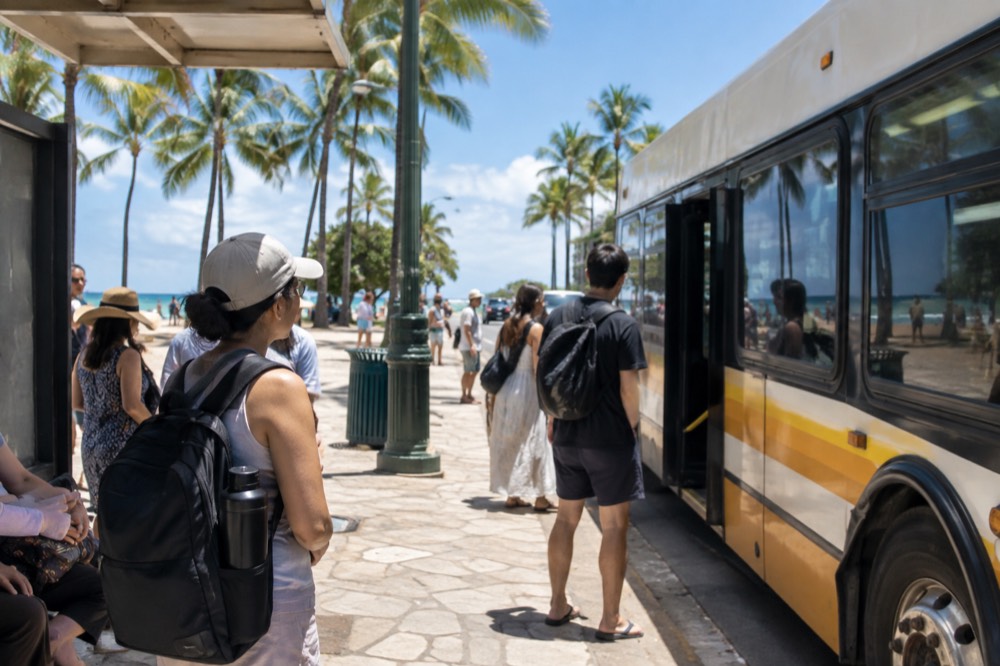
Have exact fare or a HOLO card before you board, because drivers do not make change. Tap the card on boarding and the system tracks your two-hour window and daily cap automatically. Routes are numbered and stops are announced, and the city's trip planner plus the holocard.net top-up system handle most of the planning work. The network is a commuter system first, so rush hours are crowded and beach gear draws attention, politely but noticeably.
A few practical notes that first-time riders ask about. Route numbers matter more than street names: the same corridor can be served by several routes with different endpoints, so the number on the front of the bus, not its general direction, is what you match against the timetable. Stops are requested, meaning signal before your stop rather than assuming the bus will pause.
Check baggage rules before bringing beach equipment or airport luggage. The city allows one standard medium suitcase and one small carry-on or qualifying backpack per passenger, carried aboard in one trip and stowed without blocking aisles or extra seats. A separate transfer is an option when your bags or journey do not fit. The airport to Waikiki transfer guide covers those options.
The system is also genuinely usable for evening plans, with the caveat that frequency thins after the commuter hours. A late dinner downtown followed by a bus back to Waikīkī is realistic; a late return from Kailua depends on the current route timetable. Plan the last return leg before you commit to the far end of a route.
Common Questions About TheBus On Oahu
Most questions about TheBus come down to three things: the fare mechanics, the card, and the network's reach. The fares are $3.25 cash with no transfers or $3.00 on a HOLO card with two hours of transfers, capped at $7.50 per day. The card costs $2, works on Skyline as well, and tops up online. The network covers the whole island, but frequency favours the urban south shore over the country routes.
How much is TheBus on Oahu?
A single adult ride is $3.25 in exact cash with no transfers, or $3.00 on a HOLO card including two hours of unlimited transfers on TheBus and Skyline. Fares cap at $7.50 per day, so unlimited riding in one day never costs more than that.
Do I need a HOLO card to ride TheBus?
No, you can pay $3.25 exact cash, but the card is better value: it charges $3.00 instead of $3.25, includes transfers, and enforces the $7.50 daily cap automatically. The card itself costs $2 and can be loaded at holocard.net, by phone or at retail locations.
Does TheBus go to Honolulu airport?
Skyline, which shares TheBus's fare system, now serves the airport via the Lelepaua Daniel K. Inouye International Airport station, and the W Line also provides a direct airport-to-Waikiki bus option; a train journey is not required. There is no Skyline station in Waikīkī itself, so the final leg into the hotel zone is by bus.
Can you get to Pearl Harbor by bus?
Yes. The city names Hālawa Aloha Stadium Station as the Skyline stop for the Pearl Harbor memorial and visitor centre, and TheBus serves the area on its regular network. The memorial is a fee-free park apart from a $1 per-ticket reservation fee on recreation.gov, and parking at the visitor centre costs $7 per day.
Is TheBus good for tourists on Oahu?
For Waikīkī, downtown, Ala Moana, the windward side and Pearl Harbor, yes, and the daily cap makes it very cheap. For the North Shore and the leeward coast it works but runs rarely, so most visitors use the bus for city days and a tour or rental car for the outer coasts.
What is the cheapest way to get around Oahu?
TheBus with a HOLO card is the cheapest motorised option on the island: $7.50 buys an entire day of unlimited riding, and a 7-Day Pass is $45. Walking and biking cover short distances, but for island-scale travel the bus is the budget benchmark.
The bus will not carry you to every beach at the hour you want, but for the corridors where most visitors actually spend their days, it is cheap, extensive and, with the rail connection now reaching the airport, more useful than it has ever been. For everything the bus cannot comfortably reach, the wider things to do in Oahu round-up lists the sights worth planning a car or a tour around. This guide sits alongside the rest of the planning coverage at Oahu Travel Guide, where every fare and figure is checked against the city's own published rates rather than repeated from hearsay.
For a windward day, compare the actual bus connections with the stops and fixed timing of any guided itinerary before deciding.
Whichever way you choose to move around the island, the fare structure rewards a little planning: buy the card on day one, let the daily cap do the accounting, and save the guided days for the coastlines the bus serves worst.
Compare Optional Alternatives To TheBus
Public transport remains the budget option described above. The paid default is an optional alternative; choose the journey you need and check actual quotes with the provider.
Waikiki And Honolulu By Trolley
For a day built around trolley stops, choose the pass covering your intended lines. Keep public buses in the comparison for ordinary point-to-point trips. Check the line coverage and pass validity before arranging your stops.
Choose a single-line or multi-line pass for the stops you need. Attraction admission, hotel pickup and meals are not included. The trolley does not serve Pearl Harbor or HNL.
Compare Your Transport Estimates
Enter totals for the same travel days and your whole party in USD. These are your estimates, not live quotes. Include rental taxes and fees in the first total; add only parking and fuel that are not already included. Include any transfers or admission you would buy separately in the car-free total, once only.
Choose dates and your party on the booking page. The booking link is not an on-page availability calendar.