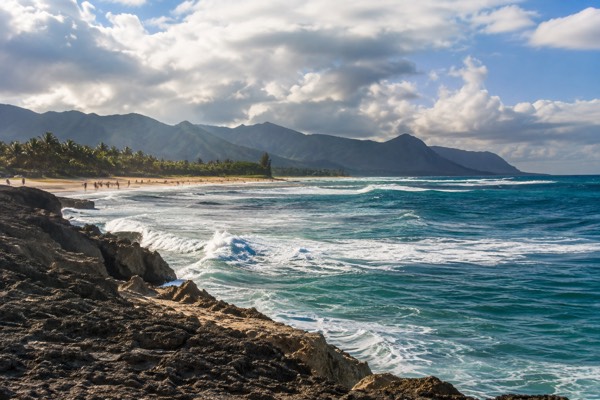
Oahu Cruise Ship Day Itinerary: A Realistic Plan For The Hours You Actually Have
A cruise ship day on Oahu is shorter than it looks. This itinerary is paced to the hours you actually have ashore, built around verified reservation windows, transit fares and the closures that matter right now.
Short answer
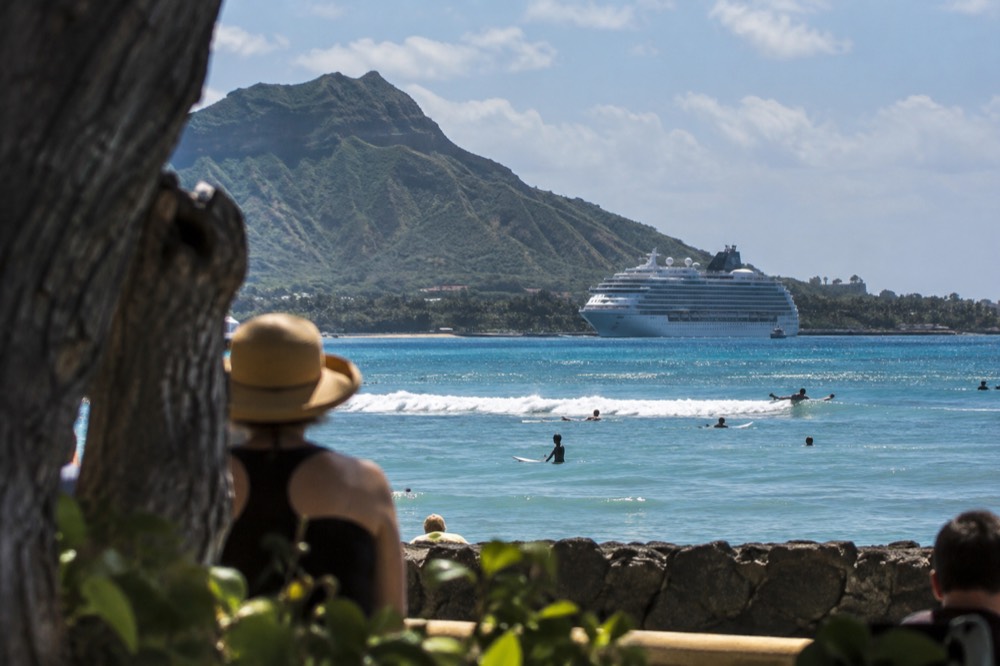
Most cruise passengers have eight to ten hours ashore on Oahu. The realistic plan is one anchor sight plus one stretch: Pearl Harbor in the morning and Waikiki after, or a booked circle-island tour that handles the driving. Book anything reservation-dependent before you sail.
A cruise ship day on Oahu gives you less usable time than the clock suggests. Between clearing the ship, getting off the pier and being back aboard before the gangway closes, most passengers end up with eight to ten hours of real shore time, and often closer to six once all-aboard lands in the late afternoon. The plans that fail are the ones written as if a port day were a full vacation day. This one is not.
Oʻahu took 5,679,047 visitors by air in 2025, and that figure does not even include the cruise arrivals, so the sights you are heading to are carrying visitor pressure every single day of the week. The island rewards a plan that respects two things: reservations, which are mandatory at some stops, and distance, which eats port days faster than any queue. Everything below is paced against verified rules and fares, not against how the day looks on a map.
What Can You Realistically See On An Oahu Cruise Ship Day?
Plan on one anchor sight and one secondary area, not three. A realistic day is Pearl Harbor in the morning and Waikīkī after lunch, or a booked circle-island tour that does the routing for you. Attempting Diamond Head, Hanauma Bay and the North Shore in one port day fails on reservations and drive time, and there is no version of that day that ends well. Pick a spine and accept what you drop.
The arithmetic is unforgiving. The pier area and Waikīkī sit at opposite ends of the urban core, and every headline sight on the island sits beyond one of them. A day that tries to string together the windward coast, the North Shore and a late luau will spend most of its hours in a vehicle watching the island go by through glass.
Two shapes of day work:
- The tour day. You book one product, it collects you near the port, and the operator owns the clock. This is the lowest-stress option and the one most first-time passengers settle on, happily.
- The self-directed day. You pick one reservation-dependent sight for the morning and one walkable area for the afternoon, with slack built in around the ship's all-aboard time.
What does not work is improvisation. Diamond Head requires a reservation for non-residents and sells nothing at the gate. Hanauma Bay's reservation system opens two days ahead at 7:00 a.m. HST and the bay closes Mondays and Tuesdays entirely. If your ship sails on a Monday, Hanauma Bay is simply not on your menu, and no amount of planning changes that.
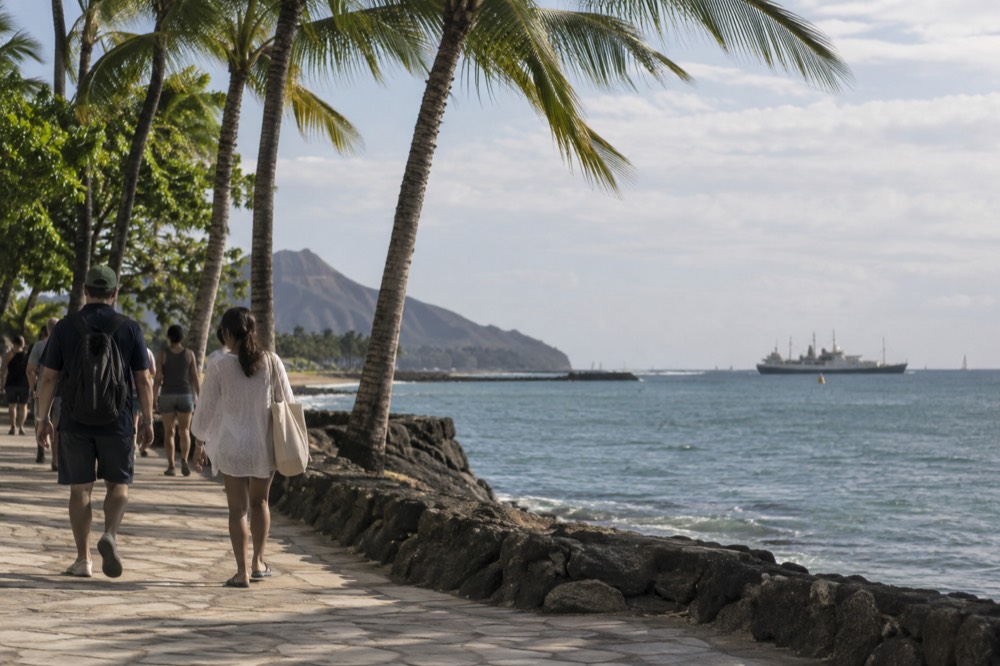
A sample spine for a self-directed day, assuming a morning arrival and an evening all-aboard:
| Block | What you do | Why it is paced this way |
|---|---|---|
| First hour ashore | Clear the ship, get oriented, transit to your first stop | The biggest time sink of the day; do not schedule anything for it |
| Mid-morning | Your anchor sight: Pearl Harbor visitor center or Diamond Head | Both are morning-friendly and reservation-gated |
| Lunch | Eat near your anchor sight, not in transit | Saves a second crossing of the urban core |
| Early afternoon | One walkable area: Waikīkī beachfront or downtown Honolulu | No car needed, no timing risk |
| Final two hours | Buffer, then head back to the pier | The buffer is the plan; arriving with an hour to spare is the goal |
That buffer row is the one people cut, and it is the one that saves the day when transit runs slow or a shuttle fills up. The rule worth internalising: your last hour ashore belongs to the ship, not to a sight.
Should You Book A Tour Or Explore Oahu On Your Own?
A booked tour is the better call for a first cruise day on Oahu, because the operator absorbs the two risks that ruin port days: routing and the all-aboard deadline. A circle-island tour collects you near the port, covers the headline sights in one loop and returns you on a schedule built around ships. Exploring on your own buys flexibility, but you own every transfer, every reservation and the consequences of a missed departure.
The honest trade-off is control versus clock. Oʻahu's famous sights are spread around a full loop of the island, and the loop is exactly what a port day struggles to fund on its own. A tour compresses that loop into a single booked decision, which is why the circle-island products are the ones cruise passengers book most.
For planning purposes, this is how the three most port-friendly options compare:
| Option | Shape of the day | Best for |
|---|---|---|
| Grand Circle Island tour | A guided full-day loop with Haleʻiwa town, roughly six and a half hours | First-timers who want the whole island in one decision |
| Hidden Gems circle tour with Byodo-In | A longer loop, about nine hours, reaching the Byodo-In Temple | Repeat visitors or long port calls |
| Pearl Harbor half-day tour | A roughly five-hour guided visit returning to the urban core | Anyone whose ship sails early, or who wants an afternoon free |
Each of these is a real product with its own page of details, current pricing and availability on the operator's live listing. If your port call is short or your ship sails mid-afternoon, the half-day shape is the safe one; a full-day loop only fits a call with a late departure.
If you would rather compare the full field before committing, the Oahu cruise ship day planning page covers the Pearl Harbor half in depth, and the wider Things to Do in Oahu rundown shows how each sight earns its place.
How Do You Fit Pearl Harbor Into A Cruise Ship Day?
Pearl Harbor fits a port day better than any other headline sight on Oahu, because the visitor center is free, opens at 7 a.m. and sits closest to the cruise pier. The USS Arizona Memorial program itself is free, with a $1 per-ticket management fee when you reserve on the federal reservation site, and bags of any kind are prohibited, so travel light or budget time for storage near the entrance.
That bag rule is the detail that wrecks cruise mornings. Backpacks, purses, camera bags and large handbags are all prohibited inside the memorial area, and the storage facility near the entrance charges a small fee the National Park Service does not publish a price for. A cruiser stepping off with a day bag has to deal with that before anything else. The current rules are on the park's official basic information page.
The memorial is a war grave. The ship still holds 1,102 sailors and Marines. Treat the visit the way the setting asks: no urgency framing, no rushing the shrine room, and no treating it as a photo backdrop.
Two ways to do it:
- Self-directed. The visitor center is free and open daily from 7 a.m. to 5 p.m., closed Thanksgiving, Christmas and New Year's. You can walk the grounds, the museum exhibits and the shoreline without any ticket at all.
- Guided. A booked tour bundles transport from the port area with a structured visit, which removes the transfer question and the reservation question in one stroke.
The guided version earns its keep on a port call precisely because it collapses two unknowns, the transfer and the ticket, into one booking. If you are weighing it against a self-directed visit, the deciding factor is usually the ship's departure time rather than the price.
How Do You Get Around Oahu Without A Rental Car?
TheBus and the Skyline rail share one fare system: $3.25 for a single cash bus ride, but a HOLO card costs $3.00 for two hours of unlimited transfers and caps at $7.50 per day no matter how much you ride. The rail line reaches the airport and the Pearl Harbor area, but there is no Waikīkī station, so rail trips into the beach district always end with a bus transfer.
For a cruise day, that fare structure is genuinely good news. A HOLO card costs $2 to buy, loads online or at retail locations, and after $7.50 in a single day the system stops charging you. One card covers both the bus network and the rail line, which no other Hawaiian island can offer.
The catch is geography. The Skyline serves the airport corridor and names a station for the Pearl Harbor memorial and visitor center, which is useful for the reverse trip, but Waikīkī is not on the rail line and requires a transfer to the W Line bus. If your day is rail-shaped, meaning Pearl Harbor and the airport corridor, the system is fast. If your day is beach-shaped, you are on the bus the whole way.
Practical notes for port days:
- Exact cash fare on TheBus buys no transfers. The HOLO two-hour pass at $3.00 is strictly better value than the $3.25 cash single.
- One child aged five or under rides free with a paying rider, not occupying a seat.
- The monthly cap is $90, irrelevant for a port day but worth knowing if you are ending a cruise here and staying on.
A shuttle or booked tour remains the strongest option if your day crosses the island, because transit to the North Shore or the windward coast is slow and infrequent by design. The Waikīkī neighborhood guide covers the beach district on foot, which is the one part of the island where walking beats everything else.
Prefer a hop between sights at your own pace? Book a hop-on hop-off trolley ticket here.
What If The Weather Turns During Your Port Day?
Oahu's weather splits by side of the island, not by season: the airport area records about 16 inches of rain a year while the Mānoa valley, five miles inland, records about 150.96 inches, and surf runs out of phase by shore, with the south shore larger in summer and the north shore larger in winter. A rainy port day is usually a one-side problem, and the fix is switching shores rather than switching plans.
This is the single most useful thing a cruise passenger can know about the island, and almost no itinerary content mentions it. The official climate normals put Honolulu's airport at 16.41 inches of rain per year. The Lyon Arboretum station in Mānoa, at 500 feet elevation and five miles from Waikīkī, records 150.96 inches. Every single month in Mānoa is wetter than the airport's wettest month.
What that means in practice: if it is pouring where your ship is, it may be dry on the leeward coast, and vice versa. The windward side, meaning Kāneʻohe, Kailua and Waimānalo, carries the rain. The leeward side, meaning Waikīkī through Ko Olina and the Waiʻanae coast, carries the dry.
Surf works the same trick. The National Weather Service's Oahu surf forecast publishes four shore aspects separately, and on a September day the south shore can run larger than the north shore, the exact inversion of winter. Winter cruise passengers should treat the North Shore's famous breaks as a viewing experience from safe, legal vantage points, and summer passengers should know the calm water sits up there while the south shore carries the swell.
Water temperature barely matters for planning: harbour readings at Honolulu ran from 78.0 to 82.7 degrees Fahrenheit across 2025, month to month. Whatever month your ship calls, the ocean is swimmable somewhere.
| Condition | Where it bites | The port-day fix |
|---|---|---|
| Rain on the windward side | Kāneʻohe, Kailua, Mānoa, Byodo-In | Shift the day to Waikīkī, Pearl Harbor or the leeward coast |
| Rain in Honolulu | The pier area, downtown | The windward side may still be workable; check before committing |
| Big winter surf | North and west shores | View from designated lookouts; do not enter the water on the north shore |
| Summer south swell | Waikīkī, south shores | Swim on the north or east side instead |
What Should You Skip On A One-Day Port Call?
Skip Hanauma Bay unless your ship sails on a Wednesday through Sunday and you win a reservation two days out, skip any sight whose reservation you could not secure before boarding, and skip the three sites currently closed for storm repairs: Nuʻuanu Pali Lookout, Kaʻena Point and Wahiawā Freshwater. A port day has no slack for a closed gate, so the honest itinerary is built on what is confirmable, not on what is famous.
The closures are live as of the state parks notice dated 9 September 2026, following Hurricane Lowell. The Pali Lookout in particular is a standard stop on half the circle-island routes in older content, so if you are following an itinerary you found elsewhere, check that it has not routed you to a shut gate. Kaʻena Point, a sacred site and a protected seabird area, is closed in its Mokuleʻia and Keawaʻula sections for the same reason.
The reservation-dependent sights deserve a hard look before you commit a port day to them:
| Sight | The constraint | Verdict for a port day |
|---|---|---|
| Hanauma Bay | Closed Mon/Tue; reservations open 2 days ahead, 7 a.m. HST | Only if the timing aligns; otherwise skip |
| Diamond Head | Non-resident reservation required, no gate sales | Workable if booked before boarding |
| Kaʻena Point | Closed until further notice, storm repairs | Skip, and do not plan around it |
| Nuʻuanu Pali Lookout | Closed until further notice, storm repairs | Skip; older itineraries still list it |
| Kualoa Ranch valleys | Private property; visits require a paid guided tour | Fine as a booked product, not as a drive-by |
Two softer skips. First, the North Shore as a self-drive: it works on a booked loop tour, but as an independent excursion it consumes the whole day for two beach towns and a shave ice. Second, anything requiring you to be somewhere at a specific late-afternoon hour on the far side of the island from your ship. The all-aboard time is the only deadline of the day that cannot move.
If a full loop is the shape of your day, the North Shore day trip from Waikīkī guide shows what the route contains and where the time goes, and it transfers directly to a port call that starts from the pier instead.
Common Questions About An Oahu Cruise Ship Day
Most questions about a cruise day on Oahu come down to three things: how much time the port call really allows, which reservations had to be made before boarding, and whether the day should be self-directed or handed to a tour. The answers follow from the island's rules rather than from preference, because the reservation windows, the transit fares and the current closures are fixed constraints that no enthusiasm moves.
How many hours do you really get on an Oahu cruise ship day?
Plan on eight to ten hours between clearing the ship and all-aboard on a typical call, and treat the first hour and the last hour as logistics rather than sightseeing. A day that assumes the full clock for sightseeing is the day that ends in a sprint to the gangway.
Can you do Pearl Harbor and Waikīkī in the same port day?
Yes, and it is the most reliable self-directed pairing on the island. The Pearl Harbor visitor center is free and opens at 7 a.m., and Waikīkī is walkable once you arrive. Reserve the Arizona Memorial program in advance, remember that bags are prohibited, and keep a generous buffer before all-aboard.
Do you need to book tours before your cruise?
For anything reservation-dependent, yes. Diamond Head has no on-site sales for non-residents, Hanauma Bay's window opens two days ahead at 7 a.m. HST and the bay closes Mondays and Tuesdays, and the popular circle-island tours fill on port days. Book the spine of your day before you sail and leave the afternoon loose.
Is public transit realistic from the cruise port?
Partly. TheBus covers the urban core well and one HOLO card caps at $7.50 per day across both bus and rail, but the Skyline has no Waikīkī station and the North Shore is a slow, infrequent ride. Transit works for a Waikīkī or Pearl Harbor day; it does not work for an island loop.
What if it rains on your port day?
Check which side. The airport area averages about 16 inches of rain a year while the Mānoa valley five miles inland averages about 150.96, so rain on Oahu is usually a one-side event. Move to the dry shore, or fall back to the indoor options downtown, rather than cancelling the day.
Is a circle-island tour worth it on a cruise day?
For a first visit with a single port call, it is usually the best use of the day, because the operator handles routing, timing and the return deadline in one product. If your call is short or sails early, choose the half-day Pearl Harbor shape instead of the full loop.
The shape of a good cruise day on Oahu has not changed much even as the island's rules have: one anchor sight, one walkable area, reservations made before boarding, and an hour of slack you never spend. The island you see in eight hours is still the one people fly nine hours for, and the plan above is how you see it without watching the gangway clock the whole time. For everything beyond the port day, Oahu Travel Guide covers the island in full, from itineraries to the reservation rules that shape them.