Do You Need A Car On Oahu? The Honest Answer For 2026
Oahu is the one Hawaiian island where a car is genuinely optional, and the honest answer depends on where you are staying and what you want to see.
Short answer
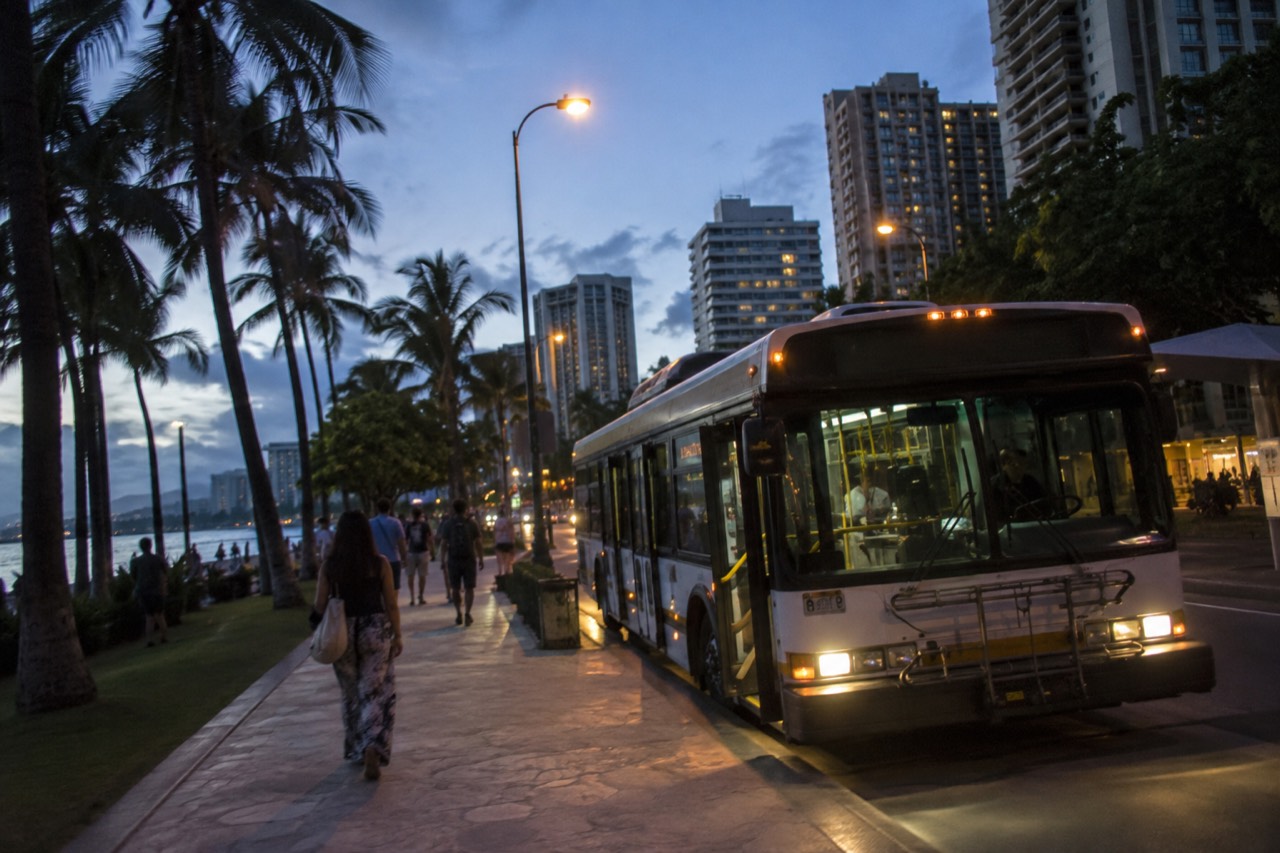
No, most visitors do not need a car on Oahu. Waikiki, Pearl Harbor, downtown Honolulu and Ala Moana are all reachable by TheBus, Skyline or a short shuttle, and guided circle-island tours offer another way to see the North Shore and windward coast. Compare actual quotes for your party rather than assuming a tour costs less than a rental day. A car earns its cost mainly if you are staying outside Waikiki, travelling with small children, or want to chase surf, sunsets and food trucks on your own schedule.
Do You Need A Car On Oahu?
No, most visitors to Oahu do not need a rental car, and many are better off without one. Waikiki, Ala Moana, downtown Honolulu, Pearl Harbor and even Kailua are reachable by bus, rail or an inexpensive shuttle, and circle-island tours cover the North Shore and windward coast in a single day. A car earns its cost mainly if you stay outside Waikiki, travel with small children, or want to chase surf and sunsets on your own clock.
That is the short version; compare it with your own stops and travel times before deciding. The longer version is that Oahu is the only island in the state where the honest answer to the rental-car question is "probably not", and the reasons are structural rather than a matter of taste. Honolulu County runs one of the most used bus systems in the United States, the Skyline rail line now reaches the airport, and the island is small enough that a well-chosen tour can cover in a planned day without you needing to drive. Check the duration of the specific itinerary you select.
This page lays out the case both ways, with real fare tables, the parts of the island that genuinely punish you for being carless, and the situations where renting still wins. The site behind it, Oahu Travel Guide, keeps a companion page on renting a car on Oahu for readers who land on the other side of the decision.
What Does Getting Around Oahu Without A Car Actually Look Like?
Getting around Oahu without a car is realistic because the transit network is built around the places visitors actually go. TheBus runs frequent routes through Waikiki to downtown, Ala Moana, Pearl Harbor and Kailua, and the Skyline rail line connects the airport to Pearl Harbor with a bus transfer to Waikiki. One HOLO card covers both systems, and a day of unlimited riding caps at $7.50.
The backbone is TheBus, operated by the City and County of Honolulu. Routes 19 and 20 run from Waikiki toward the airport and Pearl Harbor along the main hotel corridor, and the express Route 42 does the airport run faster. The Skyline rail line is the newer piece: it serves a station at Lelepaua, the Daniel K. Inouye International Airport, and a station at Hālawa, which is the stop for the Pearl Harbor memorial and visitor centre. There is no Skyline station in Waikiki, so the last leg is a bus transfer, but the fare system treats bus and rail as one network.
That fare system matters more than the map. TheBus and Skyline share a single fare structure, and a HOLO card caps what you pay per day no matter how many vehicles you board. The verified fares, read off the City's transit fare page, are below.
| Fare | Price | What it covers |
|---|---|---|
| Adult cash single ride, TheBus only | $3.25 | One ride, no transfers, exact fare |
| HOLO card 2-hour pass | $3.00 | 2 hours of unlimited transfers on TheBus and Skyline |
| 24-hour pass | $7.50 | A full day from first tap |
| Daily cap | $7.50 | Maximum charged per day, then free |
| 3-day pass | $20.00 | 72 hours from first tap |
| 7-day pass | $45.00 | 168 hours from first tap |
| Monthly cap | $90.00 | Maximum charged per calendar month |
| HOLO card itself | $2.00 | Initial and replacement card |
| Child 5 and under | Free | With a paying rider, not occupying a seat |
Two things follow from that table. First, a couple riding buses all week spends less on transit than a single day of rental-car parking in Waikiki, and hotel parking on this island is famously expensive, though the exact valet figure varies by property and should be checked with your hotel rather than assumed. Second, the daily cap means there is no penalty for hopping on and off: a morning at Pearl Harbor, an afternoon at Ala Moana and an evening back in Waikiki all cost the same $7.50.
The gaps in the bus network are real, and they cluster in exactly the places people most want to photograph. The North Shore, the windward coast's beach parks and the Mānoa valley trailhead are all reachable by bus, but slowly, and with service that thins in the evening. That is where tours and shuttles earn their keep.
The alternatives address different carless sightseeing plans. A trolley day pass handles the urban core. A full circle-island tour handles the North Shore and Haleʻiwa in one guided sweep. And a longer hidden-gems tour adds the windward side's Byodo-In Temple, which is genuinely awkward by bus.
Should You Rent A Car For Part Of Your Oahu Trip Instead Of The Whole Thing?
Yes, splitting the trip is often the smartest play: go carless for the Waikiki and Honolulu days, then rent for one or two days to cover the North Shore, the windward coast or the leeward side. A single rental day avoids parking charges on days you do not hire the car, and lets you set your own North Shore departure time. Expect to pick up and drop off at the airport or a hotel partner desk.
This hybrid pattern suits the largest group of visitors: people staying in Waikiki who want one big self-driven day. It also suits cruise passengers, who arrive at Pier 2 within walking distance of the bus routes into Waikiki and rarely have time to justify a full rental. The site's Oahu cruise ship day itinerary covers that case in detail.
The counter-argument is worth hearing before you commit. Oahu traffic is heavy and getting heavier, Waikiki parking is scarce, and the island's most famous driving day, the circle-island loop, is exactly what the guided tours do best, with a driver who knows where the legal parking is. The North Shore in particular punishes improvisation: Kamehameha Highway is a two-lane road through working towns, and the visitors who stop in travel lanes near Laniakea to look at turtles are a genuine hazard that locals resent. A tour bus solves that problem by not creating it.
Which Parts Of Oahu Are Hard To Reach Without A Car?
The hardest places to reach carless are the North Shore's western end, the leeward coast beyond Waiʻanae, and trailheads with private or limited parking such as Mānoa Falls and the Lāʻie area. The easiest are Waikiki, Ala Moana, downtown Honolulu, Pearl Harbor and Kailua, all on frequent bus routes. Kaʻena Point is currently closed to everyone after Hurricane Lowell, so no vehicle choice changes that.
Here is the honest access picture, area by area.
| Area | Carless difficulty | Why |
|---|---|---|
| Waikiki and Ala Moana | Easy | Frequent buses, short walks, trolley routes |
| Downtown and Chinatown | Easy | Multiple bus routes and TheBus Route 2 corridor |
| Pearl Harbor | Easy | Skyline to Hālawa station, or Routes 20 and 42 |
| Kailua and Lanikai | Moderate | Bus service exists but the beach streets have no public lot |
| Hanauma Bay | Moderate | Do not rely on old Route 22 advice; confirm transport and reservations separately |
| North Shore, Haleʻiwa to Waimea | Hard | Long bus rides, thin evening service, crowded weekend parking |
| Leeward coast, Waiʻanae and beyond | Hard | Infrequent buses, few visitor services |
| Mānoa Falls trailhead | Moderate | Bus plus a walk, and the trailhead lot is privately operated |
Two of those rows deserve expansion. Lanikai has no public parking lot at all: the residential streets around Mokulua Drive are signed no-parking with towing enforcement, and the nearest legal option is the Kailua Beach Park lot, which is exactly the situation that makes a bus-plus-walk arrival saner than a car. Hanauma Bay's constraint is not transport but tickets: reservations open two days ahead at 7:00 a.m. HST, the bay closes Mondays and Tuesdays, and kamaʻāina enter free without a reservation. The Hanauma Bay guide covers the booking mechanics.
The North Shore deserves its own sentence about timing rather than transport. Weekends bring both locals and visitors to a two-lane highway, and the difference between a 9 a.m. arrival and a noon one is the difference between a parking space and a circling loop. A tour arrives early because that is its job.
A guided circle-island day can replace a self-drive sightseeing route when its stops and pickup points fit your plans.
What Does A Car On Oahu Really Cost Beyond The Daily Rate?
The true cost of a car on Oahu is the rental rate plus hotel parking, resort-area traffic time, and the taxes that apply to the rental itself. Hotel and resort parking in Waikiki is the largest hidden line item, and it varies so widely by property that no single figure is honest. State TAT now sits at 11.00% on transient accommodations, and Oahu adds a general excise tax, so the sticker rate is never the paid rate.
The tax piece is worth getting right because it is widely misreported. Act 96, which took full effect on 1 January 2026, is an increase to the existing Transient Accommodations Tax, from 10.25% to 11.00%, not a separate "green fee" collected at the airport. That increase targets accommodations, and the same general excise tax that applies to purchases island-wide applies to rental transactions, so a quoted rate grows before it reaches your card. The honest planning move is to read the rental desk's total, not the headline.
Parking is the bigger swing. Waikiki resort parking is expensive enough that a week of it can exceed several days of the rental itself, and street parking in the neighbourhood is time-limited and aggressively enforced. Outside Waikiki the pressure drops: North Shore beach lots are generally inexpensive or free, though they fill early, and the Oahu parking guide goes lot by lot.
Time is the last cost. Honolulu's afternoon congestion is a real tax on a self-driven day, and a driver stuck on the H-1 is a passenger who cannot look at the Koʻolau range. The bus, the rail and a tour driver all let someone else absorb that cost.
When Is A Car The Right Call On Oahu?
A car is the right call if you are staying outside the Waikiki, Ala Moana and downtown core, travelling with small children and their gear, planning multiple early-morning or late-evening North Shore trips, or visiting when tour seats are tight. It also suits a trip built around the leeward coast or a series of trailheads, because bus coverage there is thin.
In every one of those cases, rent for the specific days that need it rather than the whole stay.
Families are the clearest case. Car seats, coolers and nap schedules do not mesh well with a bus timetable, and a rental converts a logistics problem into a trunk. Photographers are the second clearest: golden hour on the North Shore means being there at the right minute, and the island's sunset times never run later than about 7:17 p.m., so the window is short and a fixed-schedule tour may not sit inside it.
The third case is the weather-chaser. Oahu's surf runs out of phase by shore, north-facing coasts peaking in winter and south-facing in summer, and a visitor who wants to check the live forecast each morning and drive to whichever coast is firing that day needs wheels. A tour cannot do that, by design.
For everyone else, the arithmetic keeps pointing the same way: the bus and rail network covers the urban core for a capped $7.50 a day, the trolley covers the corridor at a flat day rate, and the circle-island tours cover the rest of the island with someone else holding the wheel.
The Byodo-In variant is the pick for a second tour day, because the temple and the windward valleys are the part of the map where the bus timetable starts to feel like a constraint rather than a convenience.
How Do You Decide Between A Car And Tours On Oahu?
Decide by comparing the days you need transport, your party size and the freedom you need at each stop. A guided island day can replace one driving day, but it is not automatically cheaper than a rental for a group. Repeated early starts or several independent stops may favor a car. Use your own quotes in the cost comparison below.
Then hold the decision loosely, because Oahu is small enough that a bad traffic day or a closed lookout can flip the answer overnight.
The decision table below compresses the whole page.
| Your situation | Best answer |
|---|---|
| Staying in Waikiki, first visit, 4 to 5 days | No car. Bus, rail and one circle-island tour. |
| Staying in Waikiki with toddlers and car seats | Car for the family days, bus for the rest. |
| Cruise call of one day | No car. Tours and the bus corridor cover it. |
| A week with three or more North Shore days | Rent for those days only. |
| Surf or photography trip with dawn patrols | Rent for the whole stay. |
| Staying in Kailua, Ko Olina or the North Shore itself | Rent for the whole stay. |
One closure note belongs in any 2026 answer: Nuʻuanu Pali Lookout and Kaʻena Point State Park's Mokuleʻia and Keawaʻula sections are closed until further notice for storm repairs following Hurricane Lowell, per the state parks notice dated 9 September 2026. If either was on your driving list, the list just got shorter, and the circle-island tours have adjusted their routes accordingly. Check the state parks page the week you travel, because this situation is moving.
Whichever transport option you lean toward, the same logic applies: buy the guided day for the parts of the island where driving is the chore, and save your own effort for the parts where it is a pleasure.
Common Questions About Needing A Car On Oahu
Most questions about needing a car on Oahu come down to three things: where you are staying, how many non-Waikiki days you have, and whether your plans need dawn or dusk timing. Waikiki-based visitors on a typical four or five day trip almost always do better with the bus, the rail and one or two tours, while families, photographers and anyone staying outside the urban core usually do better with at least a few rental days.
The $7.50 daily fare cap settles most arguments on its own.
Is Oahu public transport good enough for tourists?
Yes, for the places most tourists go. TheBus runs frequent service through Waikiki to Ala Moana, downtown and Pearl Harbor, and Skyline connects the airport to Pearl Harbor with a bus transfer onward to Waikiki. A HOLO card covers both, with a $7.50 daily cap. The weak spots are the North Shore, the leeward coast and evening service in outlying areas.
Can you get from Honolulu Airport to Waikiki without a car?
Yes. Skyline serves the airport at the Lelepaua station, and the W Line bus connects from the rail to Waikiki. TheBus Route 20 also runs an airport-to-Waikiki service. A taxi or rideshare is the faster option, but the transit route is a fraction of the cost.
Can you visit the North Shore without a car?
Yes, but budget the whole day. TheBus reaches Haleʻiwa and the North Shore beaches, though the ride is long and evening service thins out. Most carless visitors instead take a circle-island tour, which covers Haleʻiwa, the beaches and a food stop in a single guided day.
Is parking in Waikiki really that bad?
Hotel and resort parking is expensive and varies widely by property, so confirm the rate with your hotel before assuming anything. Street parking is time-limited and enforced. This combination is a real part of the cost of a car, and it is the reason many visitors rent for only part of their stay.
Do you need a car for Hanauma Bay?
A car is not the only option, but old Route 22 advice should not be used as a current journey plan. Confirm transport and admission separately: tickets open two days ahead at 7:00 a.m. HST, and the bay is closed Mondays and Tuesdays. Kamaʻāina with Hawaii ID enter free without a reservation.
What is the cheapest way to get around Oahu?
A HOLO card on TheBus and Skyline, with the fare capping at $7.50 per day. For Pearl Harbor specifically, the trolley is not a Pearl Harbor service, so compare the relevant public bus route or a separate transfer, and children under six ride the bus free with a paying adult.
The final word is the one the fare table already gave. For a Waikiki-based trip, buses, rail and a suitable tour may cover your planned stops without rental parking costs, and the visitors who genuinely need a car almost always know who they are before they finish reading the decision table.
Choose Transport For Your Oahu Plans
Start with the option below, or choose the kind of day you want. These are planning choices; final eligibility, schedules and prices are checked with the provider.
Waikiki And Honolulu By Trolley
For a day built around trolley stops, choose the pass covering your intended lines. Keep public buses in the comparison for ordinary point-to-point trips. Check the line coverage and pass validity before arranging your stops.
Choose a single-line or multi-line pass for the stops you need. Attraction admission, hotel pickup and meals are not included. The trolley does not serve Pearl Harbor or HNL.
Compare Your Transport Estimates
Enter totals for the same travel days and your whole party in USD. These are your estimates, not live quotes. Include rental taxes and fees in the first total; add only parking and fuel that are not already included. Include any transfers or admission you would buy separately in the car-free total, once only.
Choose dates and your party on the booking page. The booking link is not an on-page availability calendar.