Oahu Airport To Waikiki: Every Transfer Option Compared
Every way to get from Daniel K. Inouye International Airport to Waikiki, compared on fare, luggage and timing, with the local pitfalls that most transfer guides skip.
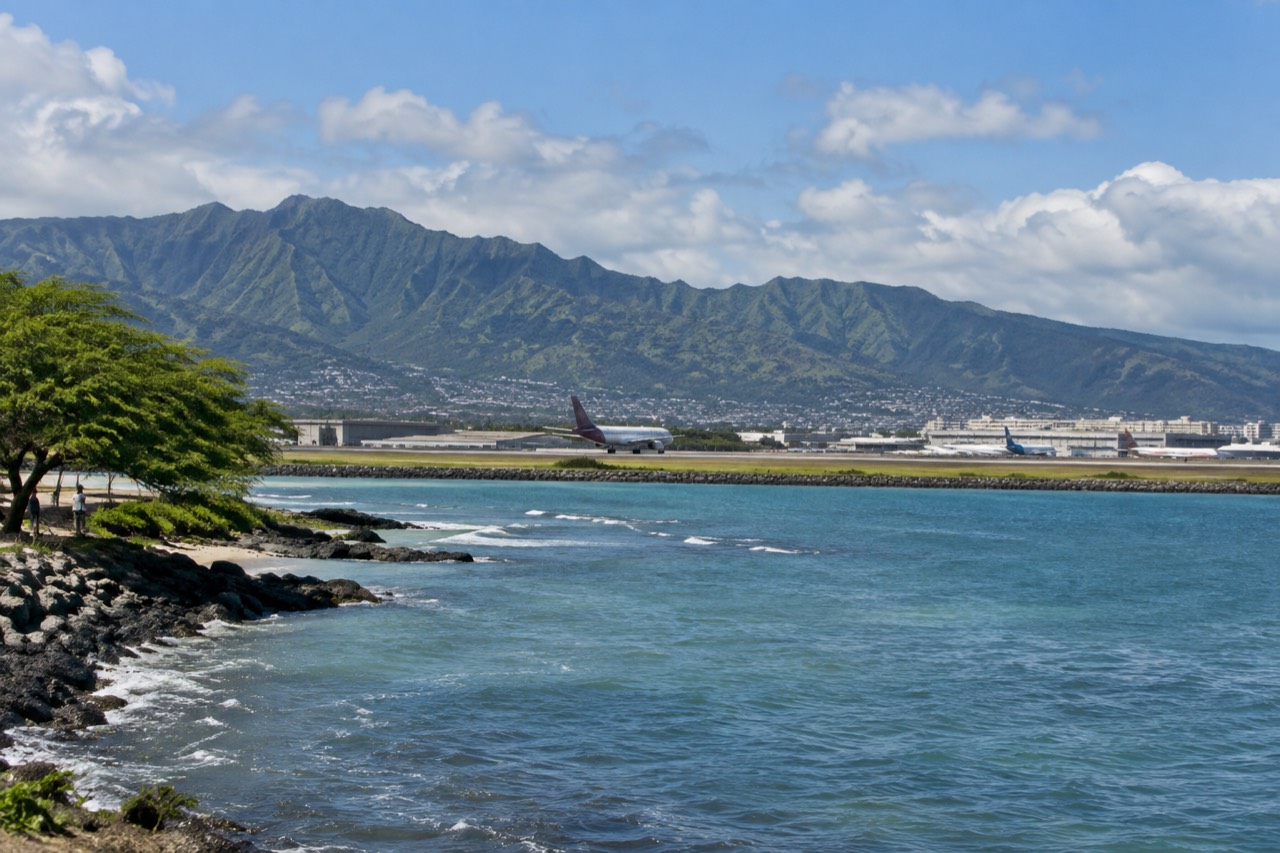
Short answer
Most visitors take a taxi or rideshare from the airport curb, which is the fastest door-to-door option. Budget travellers can ride TheBus with a HOLO card, and the Skyline rail now serves the airport, but there is no Waikiki station, so a bus transfer is still required. Check whether your hotel arranges a shuttle and what it costs, and a rental car only makes sense if you plan to leave Waikiki repeatedly.
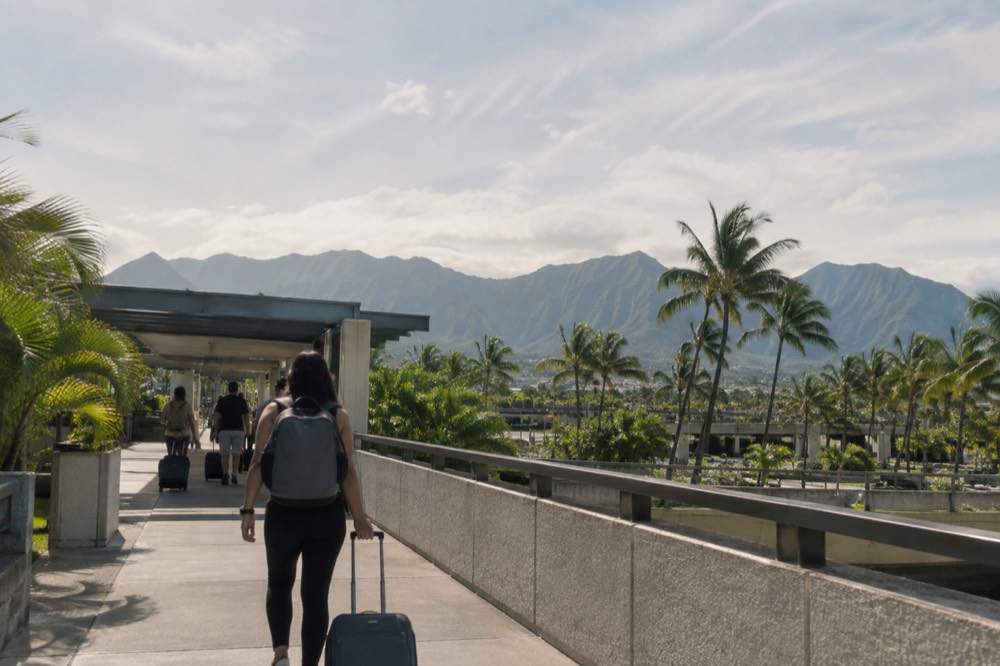
Landing at Daniel K. Inouye International Airport puts you on the leeward side of Oʻahu's south shore, with Waikīkī sitting a short way east along the coast. The run between the two is the single most-repeated journey on the island: Oʻahu took 5,679,047 visitors by air in 2025, and nearly all of them made some version of this trip within an hour of landing. That volume is exactly why the choice matters. Pick wrong and you queue twice, overpay, or stand at a bus stop with four bags in island heat.
This guide compares every realistic option: taxi, rideshare, private transfer, TheBus, the Skyline rail, and a rental car. The fares below come from the City & County of Honolulu's published transit fare structure and from what operators actually state on their listings, not from travel-forum folklore. Where a number is genuinely unknowable in advance, such as a taxi meter total in traffic, it says so plainly.
What Are Your Options For Getting From Honolulu Airport To Waikīkī?
You have five realistic choices: a taxi from the curb, a rideshare app, a pre-booked private transfer, public transport combining TheBus or Skyline with a bus connection, or a rental car picked up at the airport. Do not assume your hotel includes an airport ride: ask it directly. Paid shared shuttles are another option alongside private vehicles. Every option trades cost against convenience, and the right one depends on luggage, party size and how much of the island you plan to see.
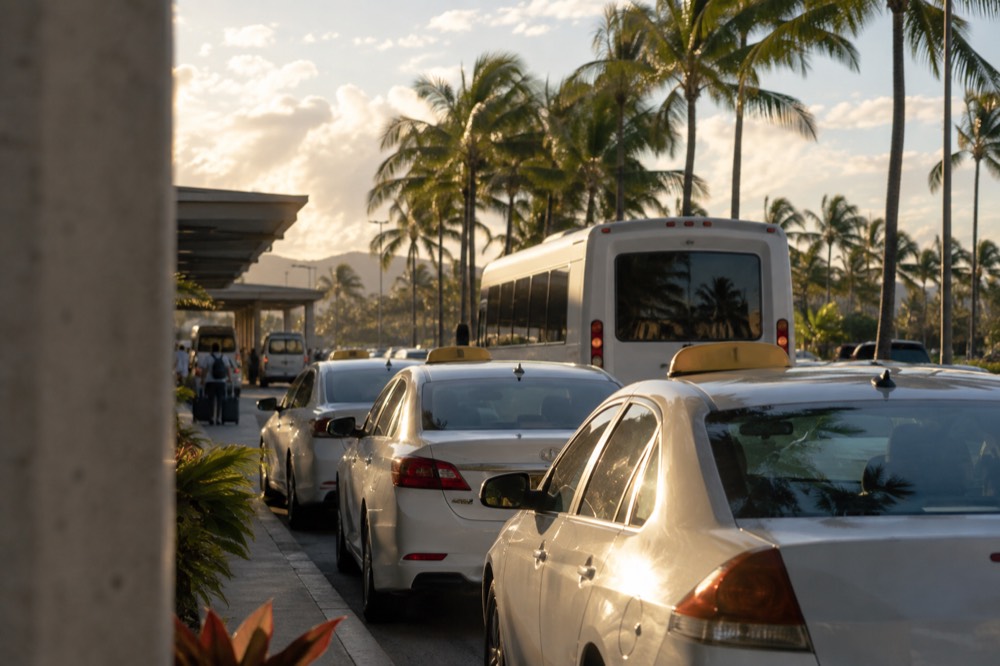
The airport sits west of Waikīkī, and the route runs along the edge of Honolulu before curving toward the beach. It is a simple drive with almost no chance of getting lost, which is why self-drive and rideshare both work well here. What surprises first-time visitors is not the distance but the arrival experience: the airport is open-air in places, the pickup zones are hot, and the queue for a taxi moves in bursts as aircraft land.
A note on naming, because it trips people up. Locals and airlines still say "Honolulu Airport" or "HNL" for the interisland and overseas terminals, but the official name is Daniel K. Inouye International Airport, and the Skyline rail station at the airport carries the Hawaiian name Lelepaua. All three names refer to the same place. The airport code HNL is what appears on your boarding pass.
Here is the honest shape of the decision:
| Option | Best for | Main drawback |
|---|---|---|
| Taxi from the curb | Arriving late, no phone plan, heavy bags | Meter total varies with traffic |
| Rideshare app | Most solo travellers and couples | Surge pricing at peak arrival hours |
| Pre-booked private transfer | Groups, families with car seats, first landings | Compare the full quote and waiting terms |
| TheBus with HOLO card | Budget and solo travellers packing light | Luggage space is limited |
| Skyline rail plus bus | Transit-confident travellers | No Waikīkī station, transfer required |
| Rental car | Trips that leave Waikīkī often | Waikīkī hotel parking is expensive |
Should You Take A Taxi, Rideshare, Or Private Transfer From Oahu Airport?
A taxi from the airport curb is the simplest landing-day choice: you queue at a designated zone, the fare is metered, and the driver takes you to your hotel door. Rideshare apps pick up from a separate area and usually cost less outside surge windows, but prices spike when several aircraft land together.
A pre-booked private transfer lets you settle the vehicle and pickup arrangements in advance. Confirm the price, child seats and waiting policy; traffic and baggage delays still affect the journey.
Taxis at HNL queue at a marked zone outside baggage claim, and a dispatcher keeps the line moving. You pay a metered fare, which means the total depends on traffic and the exact location of your hotel within Waikīkī, so treat any flat figure quoted online with caution unless it comes from the operator's live listing. Tipping is customary, and a taxi takes card as well as cash.
Rideshares collect from a different pickup point than taxis, so follow the app's walking directions rather than joining the taxi queue. The app quote may be lower or higher than a taxi, especially during surge pricing. The honest planning advice: if you land mid-afternoon alongside several international arrivals, expect the app price to be unattractive, and the taxi queue to look suddenly reasonable.
Private transfers are sold as standalone products and as components of larger packages. Compare a suitable vehicle for your actual group and bags; four people do not automatically require two cars. For child seats, confirm availability and type before booking. A private booking should be for your party; shared shuttles are a separate product, so check the service description.
One warning that applies to all three: do not accept a ride from anyone who approaches you inside the terminal offering a deal. Unlicensed soliciting is a known problem at this airport, and every legitimate option collects you at a designated zone, never in the arrivals hall.
Is Public Transport A Realistic Way To Reach Waikīkī?
Yes, and it is cheaper than most visitors expect, with a catch: TheBus and the Skyline rail share one fare system, a HOLO card caps your daily spending, but no rail line reaches Waikīkī, so a rail ride always ends with a bus transfer. A single adult cash fare on TheBus is $3.25 with no transfers, while a HOLO two-hour pass costs $3.00 and includes unlimited transfers.
The day cap is $7.50, after which further rides that day are free. The W Line also runs directly from HNL toward Waikiki, so a rail journey is not required for the airport trip.
The fare structure is the part worth knowing cold, because it is genuinely good and badly explained elsewhere. The City & County of Honolulu publishes the whole table, and the numbers below are exactly what it states:
| Fare product | Price | What it covers |
|---|---|---|
| Adult cash single ride | $3.25 | One TheBus ride, exact fare, no transfers |
| HOLO 2-Hour Pass | $3.00 | Unlimited transfers on TheBus and Skyline for 2 hours |
| 24-Hour Pass | $7.50 | A full day from first tap |
| Daily cap | $7.50 | Maximum charged per day, then free |
| 3-Day Pass | $20.00 | 72 hours from first tap |
| 7-Day Pass | $45.00 | 168 hours from first tap |
| Monthly cap | $90.00 | Maximum charged per calendar month |
| HOLO card itself | $2.00 | Initial and replacement card fee |
One child aged five or under rides free with each fare-paying rider when not occupying a seat. The card loads money online at holocard.net, by phone, or at retail locations, and the daily cap means a day of hopping on and off costs no more than $7.50 no matter how many rides you take.
The Skyline rail now reaches the airport, with a Lelepaua Daniel K. Inouye International Airport station and an ʻĀhua Lagoon Drive station nearby. This is the genuinely new information that most transfer guides, written before the extension, get wrong or omit entirely. But be clear-eyed about what the rail does for a Waikīkī-bound traveller: there is no Waikīkī station, and there will not be one on your arrival day. You ride Skyline toward town, then transfer to a bus, using the W Line toward Waikīkī among the connecting routes the city publishes. The transfer is included in the same HOLO fare window, so it costs nothing extra, just time.
For luggage, be honest with yourself. TheBus takes what fits on your lap or at your feet. A large rolling suitcase on a crowded route at 3 p.m. is miserable for you and for the residents commuting home. The bus is a genuine option for a backpacker with one pack, and a poor one for a family of four with checked bags.
Should You Rent A Car At The Airport For An Oahu Trip?
A rental car makes sense only if you plan to leave Waikīkī repeatedly, for a North Shore day, a windward coast loop, or a run to Kualoa, because Waikīkī itself is walkable and its hotel parking is expensive. If your plan is beach, restaurants and one or two organised day tours, a car spends the week in a garage costing you money.
Rental rates at HNL vary enormously by season and by company, so no honest guide quotes a reliable number.
HNL’s consolidated rental-car facility is opposite Terminal 2 near baggage claims 26 and 31. Some Terminal 2 passengers can walk; other arrivals use the designated rental-car shuttle. Follow the instructions for your terminal and company. The wider set of guides lives on Oahu Travel Guide.
The real decision is not the rental price but the parking price. Waikīkī hotels charge for overnight parking, the rates are high and they change, and self-parking versus valet are priced differently at the same property. No figure in this article is reliable enough to print because hotel parking on this island moves with demand. Call your hotel before you book a car and get the nightly number in writing. That single phone call decides the whole question for most travellers.
There is also a middle path that this site recommends often: transfer to Waikīkī without a car, then rent for a single day mid-trip from an agency in town on the day you actually need wheels. You pay one day of rental and one night of hotel parking instead of seven, and you spend your arrival day on a curb instead of at a counter.
If you do drive, two local notes. Do not leave anything visible in a parked rental car, break-ins at beach and trailhead lots are a chronic island problem. And if your mid-trip plans include a circle of the island, the alternative is to let someone else drive:
A Waikiki pickup tour can be a separate option for a sightseeing day later in the trip. It is not an airport transfer, and its route, duration and pickup must fit that later day.
How Much Does An Oahu Airport To Waikīkī Transfer Cost?
Public transport is the cheapest by far at $3.00 per adult on a HOLO two-hour pass, capped at $7.50 for a full day of riding. A taxi or rideshare costs several times that, with the meter or app total varying with traffic and demand, so no honest source can print a fixed figure. Compare a pre-booked transfer’s actual quote rather than assuming it is always the most expensive option.
Compare the total party fare and luggage practicality separately: a taxi may be more convenient, but that does not make it cheaper than four bus fares.
The comparison that matters is total party cost, not per-person cost. Work it through for a family of four with checked bags. Four HOLO passes is $12 for the ride, but four large suitcases on a bus is the part the arithmetic does not capture. Check that the assigned vehicle can take all four people and their bags; a standard taxi’s capacity may not be enough. That is why the bus recommendation in this guide is aimed at solo travellers and light packers, and why families should not feel guilty about the curb.
| Option | Per adult cost | Party of 4, realistic | Luggage handling |
|---|---|---|---|
| TheBus with HOLO | $3.00 (2-hour pass) | $12.00 | You carry everything |
| Skyline plus bus | Same HOLO fare | $12.00 | You carry everything |
| Rideshare app | Varies with surge | One vehicle, one fare | Trunk space |
| Taxi, metered | Varies with traffic | One vehicle, one fare | Trunk space |
| Private transfer | Check the quoted total | Depends on vehicle capacity | Confirm meeting and bag arrangements |
One more cost that belongs in the arrival-day ledger: the Transient Accommodations Tax rose from 10.25% to 11.00% on 1 January 2026 under Act 96, and it applies to your accommodation, not to your transfer. You will sometimes see this described online as a new "green fee" tourists pay on arrival, which is wrong. Nothing is collected at the airport. Budget for it on the hotel bill, not at the curb.
Tipping on island transport follows mainland norms: roughly 15 to 20% on a taxi or rideshare, and a few dollars on a private transfer at the end of the ride.
What Should You Know Before You Land At Daniel K. Inouye International?
Three things change how your arrival goes: the airport is open-air and hot, so dress and hydrate accordingly on the aircraft; bags move slowly at peak international arrival banks, so a pre-booked transfer with waiting time included removes the stress; and the pickup zones for taxi, rideshare and private vehicles are separate areas, so know which zone you need before you walk out.
A downloaded offline map of Waikīkī and your hotel address written down both cost nothing and each saves a stranded moment at the curb.
The arrivals experience at HNL is more relaxed than most big airports, and less air-conditioned. Walkways between terminals are open to the air, which delights visitors from cold climates in February and wilts everyone in August. The lei greeting stands in baggage claim are a genuine Hawaiian tradition and a lovely arrival, sold as a bookable product if you want someone waiting with flowers rather than a sign.
Agriculture is the one thing that can genuinely delay you. Hawaii inspects for invasive species, and the declaration form is not decorative. Declare plants, produce and anything agricultural. The fine is real, and the inspection queue moves faster if you have already filled the form honestly.
For the curb itself, the layout is straightforward once you know it. Taxis queue at a dispatcher-managed zone, rideshares collect from a different designated point that the app will walk you to, and pre-booked vehicles and hotel shuttles use their own pickup bays. If someone approaches you inside the terminal offering a ride, decline, and walk to the zone instead. Every legitimate ride begins at a marked zone outside.
If your first day is short, an evening arrival or a cruise-ship turnaround, there is a case for making the transfer itself the sightseeing. A private transfer can be booked as a brief orientation drive, and the Waikīkī neighborhood guide is worth reading on the aircraft so you know which end of the beach your hotel sits on before you land.
Which Transfer Is Best For Your Trip To Oʻahu?
Choose a taxi or rideshare if you value simplicity and arrive with bags, choose TheBus if you are solo, packed light and want the cheapest ride on the island, and choose a rental car only when your itinerary leaves Waikīkī often enough to justify parking. Skyline plus bus suits a transit-confident traveller on a budget who enjoys the ride as part of the trip.
Most visitors should book the curb ride, settle into Waikīkī, and spend their decision-making energy on what comes after the bags are dropped.
The pattern this site sees again and again: travellers agonise over the transfer for days and then under-plan the week itself. The transfer is one ride. The week is seven days on an island where the genuinely scarce resources are reservations, not transport. Hanauma Bay's booking window opens two days ahead at 7 a.m. HST, Diamond Head requires an out-of-state reservation for entry and parking, and the USS Arizona Memorial program is free but reserved through recreation.gov with a small per-ticket management fee. Those clocks matter more to your trip than fifteen minutes saved at the curb.
Once you are installed in Waikīkī, the island opens up in layers. The foundation is the things to do in Oahu page, which is the full rundown. From there, most first visits bend toward the North Shore, and the North Shore Oahu guide covers the country side of the island, Haleʻiwa town and the beaches between.
If you would rather not drive any of it, two styles of tour do the work for you:
Guided circle-island tours follow their listed sightseeing routes, while the hop-on hop-off trolley is a separate paid sightseeing service around Waikiki and Honolulu. It does not accept the HOLO transit fare or provide an airport ride. Check the chosen service’s current route, validity and pickup points.
And if your trip has more than a first day in it, the 1 day Oahu itinerary shows how to spend the hours after your bags land, whether you arrive at dawn or mid-afternoon. This desk's standing advice, earned the hard way by every traveller who has done it the other way: transfer simply, drop the bags, and let the island do the impressing.
Common Questions About Oahu Airport To Waikīkī Transfers
Most questions about this transfer come down to three things: what it costs, how long it takes, and whether the cheap options are worth the hassle. The honest answers are that bus fare is fixed and published at $3.00 on a HOLO two-hour pass, that taxi and rideshare totals vary with traffic and surge so no fixed figure is honest, and that the bus is excellent for light packers and poor for families with checked luggage.
The Skyline rail reaches the airport but not Waikīkī, so rail always ends in a bus transfer.
How do I get from Honolulu Airport to Waikīkī cheaply?
Take TheBus using a HOLO card. A two-hour pass costs $3.00 and includes transfers, and your spending is capped at $7.50 for the whole day no matter how many rides you take. The trade-off is luggage space: the bus suits a backpack or small case, not a family's worth of checked bags.
Does the Skyline train go from the airport to Waikīkī?
Partly. Skyline now serves the airport through the Lelepaua Daniel K. Inouye International Airport station, but there is no Waikīkī station, so you ride the rail toward town and transfer to a bus, such as the W Line, for the final leg. The transfer is covered by the same HOLO fare window.
How much is a taxi from Honolulu Airport to Waikīkī?
The fare is metered, so the total varies with traffic and your exact hotel location, and no honest guide prints a fixed figure. Expect it to cost several times the bus fare for the whole vehicle. Taxis queue at a dispatcher-managed zone outside baggage claim.
Is Uber or a taxi cheaper on Oʻahu?
It depends on the arrival window. Rideshare apps usually price below a metered taxi outside surge, but when several international flights land together the app price can spike above the taxi meter. Check the app while you wait at baggage claim, then decide before you commit to either queue.
Do I need a car in Waikīkī?
Not for Waikīkī itself, which is walkable, and not if your day trips are organised tours. A car earns its cost only when you plan to drive the island repeatedly, and even then, hotel parking in Waikīkī is expensive and its rates change, so confirm the nightly figure with your hotel before booking any rental.
Are there hotel shuttles from Honolulu Airport?
Ask your hotel whether it arranges a shuttle and whether the ride is included or charged separately. Paid shared shuttles and private transfers also serve HNL; compare vehicle capacity, stops, meeting arrangements and the total quote.
Choose Your Arrival Transport
Start with an HNL-to-hotel quote, or choose another arrival plan. Enter flight details, passengers, bags and child-seat needs with the provider.
Arrange Your HNL Arrival Ride
For a pre-arranged arrival ride, enter your hotel and flight details and check the quoted vehicle capacity. Confirm the meeting point and waiting policy before arrival.
Enter your hotel, flight, passengers and bags for a quote. Confirm child-seat requirements and vehicle capacity before booking.
Compare Arrival Quotes
Enter USD totals for the same one-way airport-to-hotel trip and everyone in your party. Put the transfer quote in the first field, then only extras not included in it. In the third field enter the complete taxi, rideshare, shuttle or public-transport alternative, including any new HOLO cards. Do not compare a week-long rental with one airport ride.
Select the arrival time and destination with Welcome Pickups. Provider quotes are checked there; the calculator uses only your own estimates.