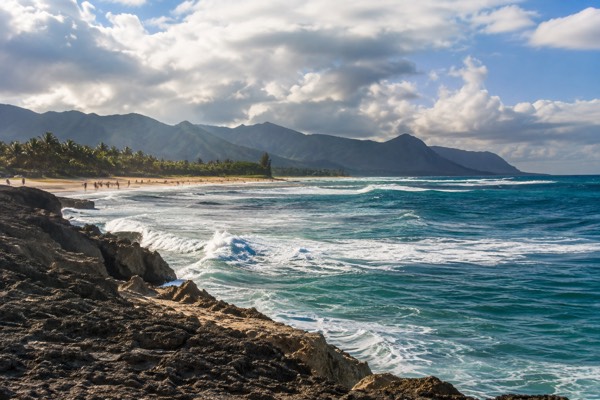
North Shore Oahu Guide: Beaches, Timing, And How To Do It Right
The North Shore of Oahu is a 20-odd mile stretch of coast where the ocean, not the resort, sets the agenda. Here is how to plan around it.
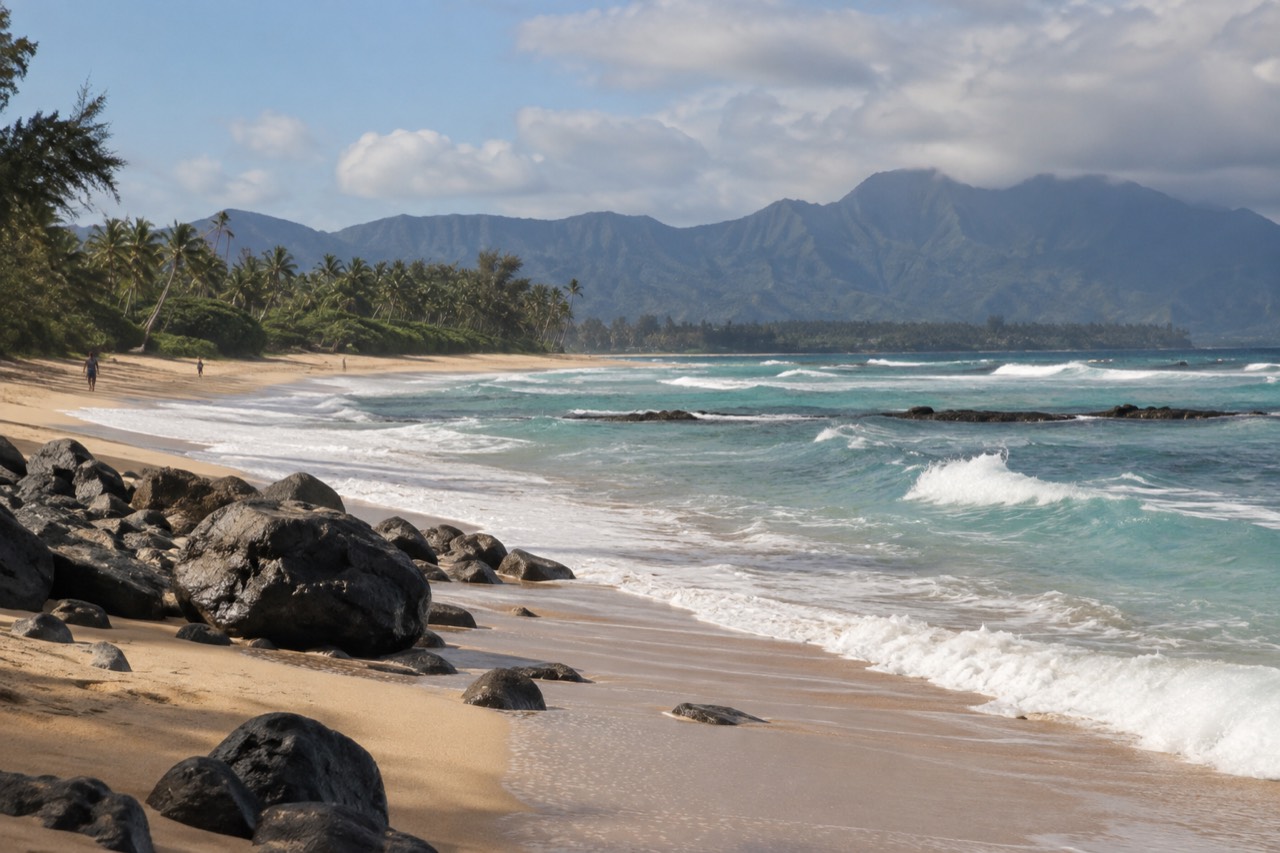
Short answer
The North Shore is Oahu's quiet, rural coast, home to Waimea Bay, Sunset Beach, Laniakea and Haleʻiwa town. It suits travellers who want beaches, food trucks and a slower pace, with strong winter surf and often smaller summer surf; check conditions every day.
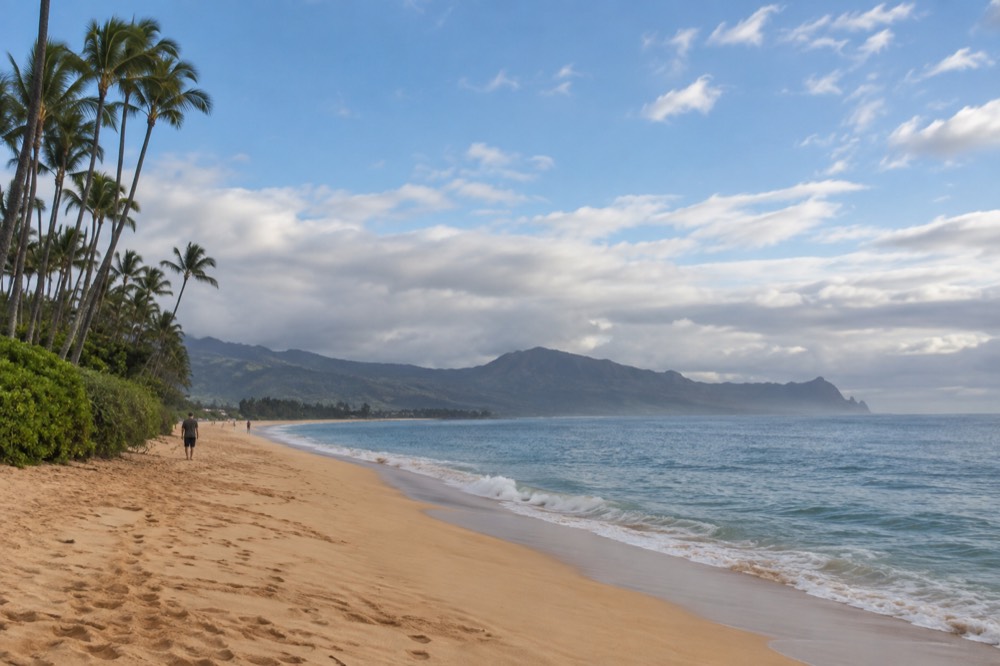
The North Shore of Oahu runs from Kaʻena Point in the west to Kahuku Point in the east, and for most of that run there is not a single resort tower in sight. What there is: Waimea Bay, Sunset Beach, Laniakea, the food shrimp trucks near Kahuku, and Haleʻiwa, a plantation-era town of roughly 4,000 people that has learned to carry an enormous number of visitors on a two-lane highway. This Oahu Travel Guide article covers the coast as both a day out from Waikīkī and a base to sleep in, because those are two quite different trips.
One thing to settle at the top. The North Shore is a working community, not a theme park. The advice below leans on official access rules and posted closures.
What Is The North Shore Of Oahu?
The North Shore is the rural, ocean-facing coast of Oahu between Kaʻena Point and Kahuku, anchored by the town of Haleʻiwa and a chain of famous beaches: Waimea Bay, Ehukai, Sunset Beach and Laniakea. It has no resort strip and no high-rise zone. Its character is set almost entirely by the season: enormous winter surf and often smaller summer surf on the same sand, with conditions varying daily.
Most first-time visitors arrive thinking of it as one place. It is better understood as three. The western end, around Mokulēʻia and toward Kaʻena Point, is quiet and windy; check current state-park notices before visiting the point. The middle, from Waimea Bay to Sunset Beach, is the stretch people picture, the one with the big waves and the shrimp trucks a short drive inland. The eastern end, toward Kahuku and Turtle Bay, is greener, slower and where much of the eating happens.
The scale surprises people. This is not a walkable district. The beaches are separated by miles of Kamehameha Highway, and the practical unit of North Shore travel is the car, the bus, or a booked tour, not a stroll.
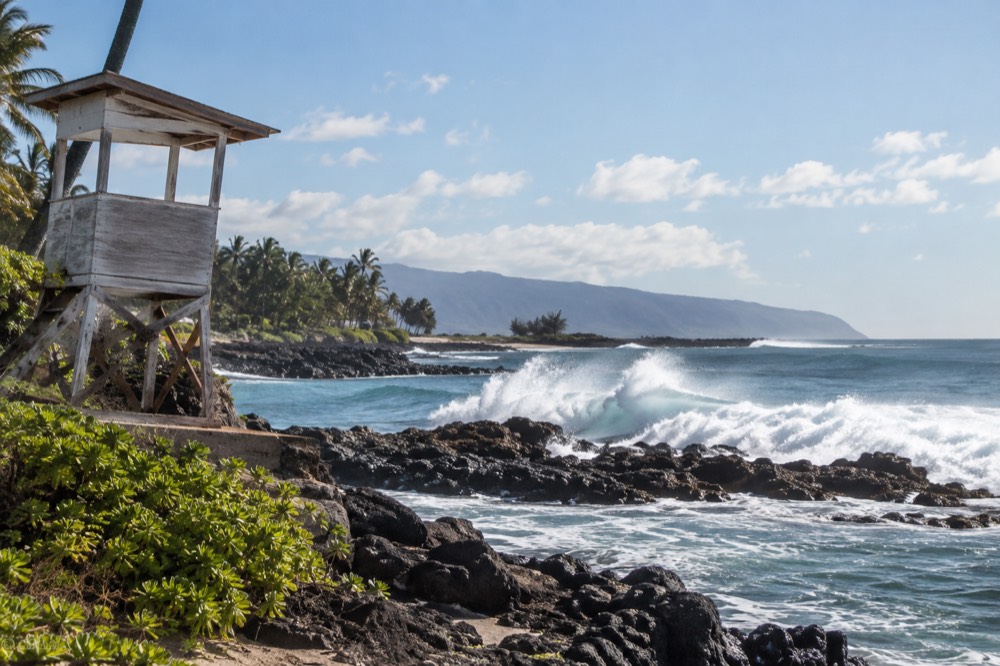
Which North Shore Beach Should You Go To?
Waimea Bay is the headline beach, with a big sandy bay and a famous jumping rock, but it is not automatically safe to swim or jump there in summer. Sunset Beach is wide and beautiful, with potentially strong currents that can make entering the water unsafe. Laniakea is the turtle beach, but parking there is restricted and changing. In winter, swimming at all of them can be dangerous and the lifeguards' word is final.
The honest answer is that the right beach depends on the month and on what you want from the water, so here is a plain comparison.
| Beach | Best for | The catch |
|---|---|---|
| Waimea Bay | Beach scenery; swimming only when conditions permit | Crowds, currents and shorebreak; ask lifeguards before entering |
| Sunset Beach | Shoreline scenery from a safe distance | Strong currents; not a beginner swim beach |
| Laniakea | Seeing honu from the sand | Authorized parking only; the shoulder is barriered and the layout is changing with a highway drainage project |
| Sharks Cove | Snorkelling in calm summer water | Rocky entry; effectively a summer-only spot |
| Kawela Bay (near Turtle Bay) | Shade, quiet, a walk among ironwood trees | Reached through resort-adjacent paths; check access on arrival |
Two rules to carry. First, the honu, the green sea turtles, are protected, and 10 feet is the recommended viewing distance, a guideline rather than a statute, but touching or harassing a turtle is illegal regardless. Second, never dig into or probe the dunes anywhere on this coast: shoreline areas across Oahu hold unmarked ancestral burials, and disturbance is both illegal and deeply offensive.
If turtles are the main reason you are headed north, remember that Laniakea sightings are not guaranteed. The snorkelling guide also covers other locations; a Waikiki departure is on a different coast and does not replace a North Shore visit.
When Is The Best Time Of Year For The North Shore?
Roughly May to September often brings smaller surf and more opportunities for snorkelling; November to February is more associated with big surf. Check daily conditions before entering the water in any season. The two experiences barely resemble each other. The island's shores run out of phase by aspect: north-facing shores peak in winter, south-facing in summer, so on a summer day the North Shore can be nearly flat while the south shore carries the swell.
That last point is worth dwelling on, because almost no guide grounds it. The National Weather Service surf forecast for Oahu is published by shore aspect, and on a September day in 2026 the south shore was running 4 to 6 feet while the north shore sat at 1 to 3. In January the tables turn, and the same bays that were glassy in July hold some of the most watched waves in the world. The practical consequence: do not promise yourself a swim at Waimea in December, and do not promise yourself giant waves in August.
Crowds track the calendar too. Summer weekends bring local families and moderate numbers. Winter brings the surf world, and on the biggest days the highway can slow to a crawl between Haleʻiwa and Waimea. If a big-swell day is on the forecast and you want to watch, go early; if you just want a beach day, pick a different week entirely.
Here is the year at a glance, with the honest caveat that the exact dates shift every season and the lifeguard stand outranks any table.
| Period | Water conditions | Who it suits |
|---|---|---|
| May to September | Often smaller surf; daily conditions still govern water entry | Swimmers, snorkellers, families, first-time visitors |
| October | Transitional; swells arrive unpredictably | Flexible travellers who will follow the forecast |
| November to February | Large surf; swimming often closed | Surf watchers, photographers, repeat visitors |
| March to April | Surf easing, water still cool-ish | Anyone who wants quiet beaches and doesn't mind variability |
Do You Need A Car To Visit The North Shore?
You do not need one, but a car is the practical choice for most people. The North Shore's beaches and food stops are spread along miles of two-lane highway with no rail connection, and TheBus serves the coast but slowly and infrequently compared with urban routes. A booked day tour is the third option, and for many visitors it beats driving themselves.
The public transit fare is genuinely cheap: $3.25 for an adult cash ride on TheBus, or a $7.50 daily cap on a HOLO card, which also covers the Skyline rail. The trade-off is time and frequency. The routes that reach the North Shore from Honolulu are long, and the beach stops you actually want, Waimea, Sunset, Laniakea, sit along a corridor where the bus is a lifeline for residents rather than a sightseeing service.
If you drive, three things matter. Park only in designated areas; the shoulder of Kamehameha Highway is not a parking lot, and at Laniakea barriers now restrict it. Do not stop in a travel lane to look at turtles, which happens constantly and is exactly the hazard the current drainage project is trying to fix. And check your North Shore plans against the closure list before you set out, using current DLNR notices for Kaʻena Point and the Nuʻuanu Pali Lookout rather than relying on a fixed itinerary after storms.
The tour option deserves more credit than it usually gets. A circle-island or North Shore day tour handles the driving, the parking and the timing, which is most of the actual difficulty of this coast. The North Shore day trip from Waikīkī guide breaks down the trade-offs, including which stops a tour version skips.
What Else Is There To Do On The North Shore Besides The Beaches?
The non-beach list is longer than most itineraries allow for: Waimea Valley's botanical garden and waterfall walk, ziplining above Keana Farms, horseback rides at Gunstock Ranch, a shark cage dive out of Haleʻiwa, and the food trail from shrimp trucks to shave ice. Several of these are booked experiences on private land, which is the honest reason they cost money.
Waimea Valley is the standout. It is a managed botanical and cultural site, currently listing Tuesday–Sunday hours with seasonal variations, and general adult admission at $26 and discounted kamaʻāina and military rates on the same official page. The walk to the waterfall is paved and gentle, and the valley's swimming status at the falls is decided daily by the lifeguard rather than being a guaranteed feature, so treat a swim as a possibility, not a promise.
The adventure operators cluster here because the land is private and the terrain is dramatic. Climb Works runs an eight-line zipline over Keana Farms. Gunstock Ranch runs sunset rides. North Shore Shark Adventures runs a cage dive out of Haleʻiwa that has become one of the coast's signature bookings. None of these are things you can self-organise, and the private-land point matters: most of the "secret waterfall" content about Oahu is trespassing with better photography.
For many visitors the shark dive is the one booking that defines the day, because it offers a cage-based encounter offshore from Haleiwa. No swimming skills are listed as necessary, but ladder access, fitness and operator requirements still apply.
The zipline is the better fit for a different kind of traveller: someone who wants the aerial view of the coast's farm country and a controlled adrenaline dose, without ocean contact. The operator sets minimum age and height requirements, weight limits and other participation conditions. Between them, these two cover most of the adventure appetite a North Shore trip brings.
If your trip is more water than adrenaline, the pattern reverses: the calm-water months are when the North Shore's snorkelling and surf-lesson economy runs. Beginners should note that the famous learn-to-surf spots are actually on the south shore, in Waikīkī, where lessons are widely available. North Shore lessons also depend on the actual break, daily conditions and instructor assessment; famous big-wave breaks are not beginner venues.
Where Should You Eat On The North Shore?
The eating is built around three things: the shrimp trucks around Kahuku and Haleʻiwa, plate-lunch and food-truck stops scattered along the highway, and Haleʻiwa town's sit-down options, including its famous shave ice. Food trucks generally suit informal stops, while sit-down restaurants may take or require reservations. Plan around the places you actually want to eat.
The shrimp trucks are the institution. They sit along Kamehameha Highway near Kahuku and around Haleʻiwa, they serve garlic shrimp plates at picnic tables, and they are cash-friendly, weather-proof and fast. The dedicated North Shore shrimp trucks guide covers which trucks sit where and what to order; the short version is that the Kahuku cluster and the Haleʻiwa cluster are different stops, not substitutes.
Haleʻiwa town itself rewards an hour. It is small, walkable in a way the rest of the coast is not, and it holds the island's most famous shave ice along with galleries and a general store that predates the tourism. The Haleʻiwa town guide goes deeper on the town's layout and stops.
One planning note that matters more than any single restaurant: the North Shore's food economy runs on a two-lane road carrying resident traffic, farm traffic and visitor traffic at once. Eating at off-peak times, mid-afternoon rather than 12:30, is not just a queue hack, it is the difference between a relaxed day and a day spent in a car park looking for a space.
How Do You Visit The North Shore Respectfully?
Respect on the North Shore comes down to four behaviours: park only where parking is authorised, keep the recommended distance from turtles and seals, never take sand, rock or coral from the shoreline, and do not stack rocks or leave offerings at cultural sites. The wildlife distances are guidelines in some cases and law in others, and the distinction is worth getting right.
For the animals: 100 yards from humpback whales and 50 yards from spinner dolphins are law. The 10-foot distance from honu and the 50-foot distance from monk seals are recommended guidelines, but harassment itself is illegal regardless of distance, and Hawaii law makes taking a monk seal a felony. If a turtle hauls out on the sand next to your towel, the move is to give it the beach, not to move closer for the photo.
For the land: removing sand, dead coral or rock from the shoreline is prohibited under Hawaii law, and that is the actual reason, not the folk story about bad luck that tour drivers invented in the 20th century. Rock stacking is discouraged by the state because it disturbs habitat and misleads hikers who read cairns as trail markers, and it is not the Hawaiian practice that social media imagines.
For the community: Haleʻiwa, Waimea and the country towns absorb enormous visitor pressure on infrastructure built for residents. Park legally, even when a shoulder looks empty. Do not treat a driveway as overflow. And if you see a posted kapu sign, it means forbidden, full stop; it is not an invitation to negotiate.
Because the wildlife rules are the ones people most often get backwards, here they are in one place, with the legal status stated honestly rather than flattened.
| Animal | Distance | Status |
|---|---|---|
| Humpback whale | 100 yards | Law |
| Hawaiian spinner dolphin | 50 yards, no swimming-with | Law, since the 2021 federal rule |
| Hawaiian monk seal | 50 feet, 150 feet for a mother with pup | Recommended guideline; harassment itself is illegal |
| Green sea turtle (honu) | 10 feet | Recommended guideline; harassment itself is illegal |
Common Questions About The North Shore Of Oahu
Most questions about the North Shore come down to four things: the season, because winter and summer are different beaches; the drive, because nothing on this coast is close together; the access notices, because storms can change which sites are open; and the turtles, which are wild animals with protected status and specific viewing distances. Get those four right and the rest of the day plans itself.
Is the North Shore good for swimming?
Summer often has smaller surf, but no beach is automatically safe for swimming. Ask lifeguards about currents and shorebreak on the day. Winter can bring very large surf; stay out when advised.
Can you see turtles on the North Shore?
Yes, Laniakea is the known spot, but parking there is restricted and the configuration is changing with an ongoing highway project. Turtles are wild and a sighting is never something to assume; keep the recommended distance and do not disturb them.
Is Kaʻena Point open?
Check current DLNR notices for the Mokuleʻia and Keawaʻula sections before travelling. Access can change after storms, so an older closure report is not a reliable answer for your visit.
How long should you spend on the North Shore?
A day trip covers the highlights: Haleʻiwa, one or two beaches, and a food stop. Two days lets you add Waimea Valley and the Kahuku end without rushing, and it spreads the driving.
Do you have to book anything in advance?
Waimea Valley sells admission and can be booked ahead, and the booked experiences, ziplines, horseback rides and shark dives, run on fixed schedules; check your preferred date and the participation requirements. The beaches themselves need nothing but a parking plan.
What is the best month for the North Shore?
Summer usually offers smaller surf and winter more opportunities to watch large waves. Swells and currents vary within either season; choose by your interests, then check the daily forecast and lifeguard advice.
The North Shore rewards visitors who match their expectations to the season and keep their plans light on the schedule. Pick your month, pick your beach accordingly, eat where the trucks are, and leave the shoulder of the road to the highway it belongs to.
Plan Your North Shore Day
Compare a guided day from Waikiki with independent travel, a local activity or a North Shore stay. Each choice opens a separate provider booking; no combined package is sold here.
North Shore And Waimea Valley Day Tour
Compare a guided day with your independent route, then confirm the Waikiki pickup and Waimea operating day before reserving.
The listed 9-hour tour includes selected Waikiki hotel pickups and Waimea Valley admission. It is not suitable for children under 5. Check the date-specific route and seasonal Monday closure; waterfall swimming is not guaranteed.
Compare A Driving Day With A Guided Day
Enter USD totals for the same date and whole party. Include rental taxes in the first field, then only additional fuel, parking and admission. The guided-day total should include every passenger and any separate transport or admission needed. Do not count Waimea entry again when your chosen tour already includes it. These are your estimates, not live quotes.
Select dates and everyone travelling on the provider’s website, then review the final price and booking conditions.