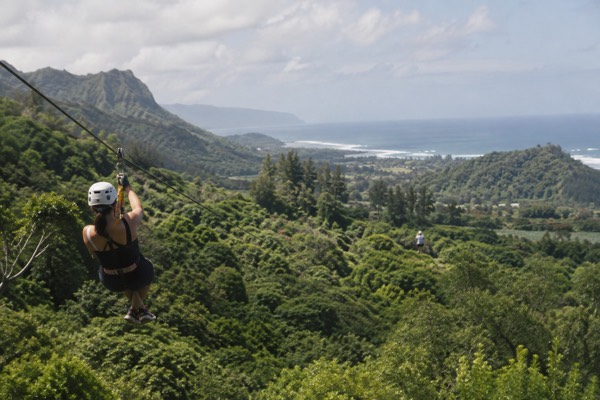
Haleiwa Town Guide: What The North Shore's Country Capital Is Really Like
Haleʻiwa is the small, working town at the heart of Oʻahu's North Shore, and it runs on a two-lane highway, plantation-era storefronts and a rhythm that has nothing to do with Waikīkī.
Short answer
Haleʻiwa is a small country town on Oʻahu's North Shore, about an hour from Waikīkī by road, known for its old storefronts, shave ice, galleries and its position as the stop between the island's most famous surf beaches.
Haleʻiwa is the small, working town at the heart of Oʻahu's North Shore, and it runs on a two-lane highway, plantation-era storefronts and a rhythm that has nothing to do with Waikīkī. People come up from the resort side of the island for shave ice, for the beaches and for the feeling of distance, and the town itself is small enough that you can walk its main stretch in twenty unhurried minutes. This guide covers what Haleʻiwa is actually like, whether it works as a base, and what to know before you point a car up Kamehameha Highway.
One thing to know before anything else: this is a residential community carrying enormous visitor pressure on a two-lane road, not a theme park. The town works best for visitors who park legally, move slowly and treat the place as somewhere people live. Everything below is written with that in mind.
What Is Haleiwa Town, Exactly?
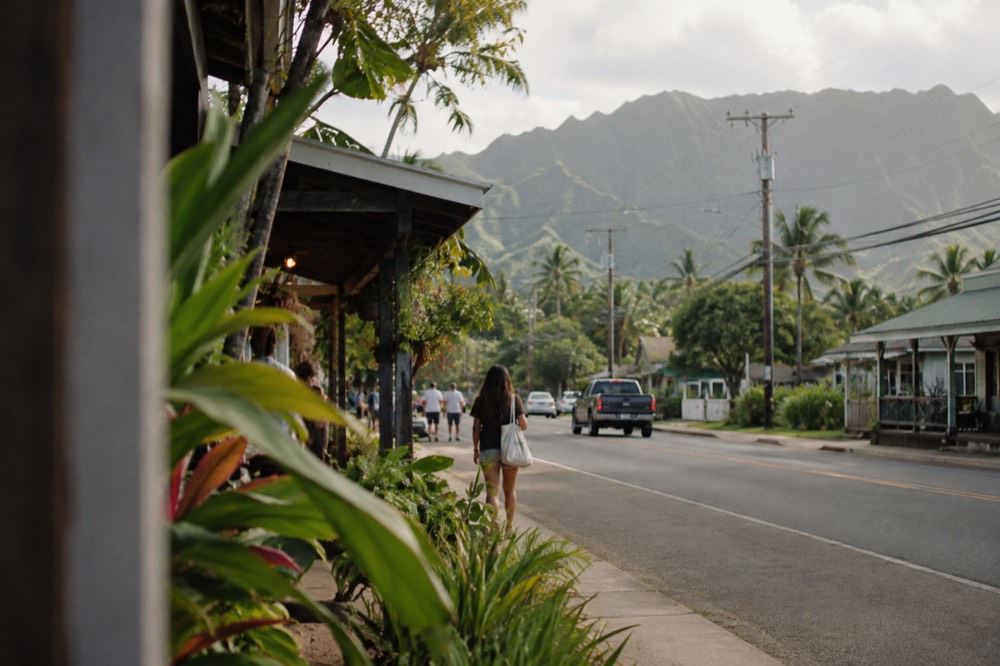
Haleʻiwa is a small town on Oʻahu's North Shore, built around a stretch of old plantation-era storefronts along Kamehameha Highway and the two roads that cross it. It is the commercial and social centre of the North Shore, the place between the island's most famous surf beaches where people stop to eat, shop and cool off. It has no resort towers, no valet stands and almost nothing taller than two storeys. The name carries the ʻokina, and the signposted spelling matches. What you get is a real country town that happens to sit in front of some of the most photographed coastline in the Pacific.
The town grew up around the sugar plantation era, and its buildings still show it: low wooden storefronts with deep porches, painted in faded pastels, most of them now holding shave ice counters, surf shops, galleries and plate-lunch kitchens. That texture is the reason people photograph the main street. It is not a reconstruction, and it is not maintained for tourists, which is precisely why it looks the way it does.
What Haleʻiwa is not is a beach. The town sits just inland of Haleʻiwa Harbor and Waialua Bay, but the famous sand of the North Shore, Waimea, Sunset, Laniakea, is spread along the highway to the east and northeast. The town is the stop, not the destination itself, and planning around that distinction is the difference between a good day and a frustrated one.
It is also the anchor of a wider community. Haleʻiwa, Waialua and Mokulēʻia together form the loose sprawl people mean when they say "the North Shore", and the town is where that community buys groceries, goes to church and argues about traffic. Roughly 5.7 million visitors came to Oʻahu by air in 2025, preliminary state figures, and a very large share of them make the drive up at least once. The residents notice.
Where Is Haleiwa And How Do You Get There?
Haleʻiwa sits on Oʻahu's North Shore, at the junction where Kamehameha Highway and Joseph P. Leong Highway meet, roughly an hour's drive from Waikīkī depending on traffic and the route you choose. There is no passenger rail service to town; you arrive by rental car, by tour bus, or by TheBus routes that serve the North Shore. Most visitors drive themselves or ride a circle-island tour. The drive is part of the point: you come up through the central plain or around the eastern tip of the island, and the scenery shifts from suburbia to pineapple fields to open coastline.
Two main routes lead in. From Waikīkī and Honolulu, most drivers take the H-1 and H-2 freeways north and then cut across the island's waist on the Kamehameha Highway, approaching Haleiwa from the south. The alternative is the full circle-island drive up the windward side, past Kāneʻohe and Lāʻie, which takes longer and delivers you from the east. Either way, the last stretch is two-lane road through farmland, and that two-lane character is permanent.
If you would rather not drive it at all, check the actual stops and time in town before choosing a guided tour. The Grand Circle listing offers a 6.5-hour Dole and Haleiwa itinerary alongside a 9-hour island circuit, and they solve the two problems self-drivers underestimate: parking in Haleʻiwa in the middle of the day, and the sheer length of the loop if you try to do it all in one go.
Public transit exists and is cheap, with TheBus running North Shore routes, but it is a commitment rather than a convenience: fares are $3.25 cash per adult ride or capped at $7.50 a day on a HOLO card, and the ride is long. It suits travellers with time and no agenda more than families on a schedule.
| Way in | What it involves | Best for |
|---|---|---|
| Rental car via H-2 and Kamehameha Highway | Self-drive, park in town's public lots, set your own pace | Most independent visitors |
| Circle-island drive up the windward side | Longer route, arrives from the east, more scenery | Photographers, first-timers with a full day |
| Guided tour with Haleiwa | Confirm the selected itinerary, pickup and time in town | Visitors who prefer a fixed itinerary with transport |
| TheBus | $3.25 cash or HOLO day cap $7.50, long ride | Budget travellers with time |
| Taxi or rideshare | Price the journey and confirm return availability | Visitors with a confirmed pickup plan |
Is Haleiwa A Good Base For An Oahu Trip?
Haleʻiwa works as a base for one kind of trip and not another. It suits travellers whose priorities are surf, beaches, hiking and slow mornings, and who accept that dinner options narrow early and that every trip to the windward side or Pearl Harbor becomes a long drive. It does not suit visitors who want nightlife, walkable dining after dark or quick access to the island's museums and historic sites. The honest trade is space and quiet against convenience.
Lodging on the North Shore is mostly small hotels, vacation rentals and a resort or two toward Turtle Bay, and the inventory is thin compared with Waikīkī. What you get in exchange is the thing Waikīkī cannot sell: you are already on the side of the island where the famous beaches are, so early starts may be easier, although parking availability is never guaranteed. Day-trippers from the resort side arrive mid-morning and leave by late afternoon; a Haleʻiwa base means you can be at the beach before them and gone before the highway chokes.
The counterweight is drive time. From Haleʻiwa, Pearl Harbor, downtown Honolulu, Diamond Head and Hanauma Bay are all serious drives, and the island's reservation-dependent sites punish late arrivals. If your list is heavy on those, base yourself near Honolulu and visit the North Shore as a day trip instead; the North Shore day trip from Waikīkī is a well-worn route for exactly that reason.
A useful middle path: split the stay. Two or three nights on the North Shore for beaches and slow mornings, then the rest of the trip in or near Waikīkī for the museums, the harbor and the airport. If you are weighing the two sides against each other, the Waikīkī vs North Shore comparison breaks the decision down by traveller type.
One arrival detail worth planning before you fly: a traditional lei greeting at the baggage claim is the kind of thing that is far easier to arrange in advance than at the carousel, and it sets the tone for a slower, more deliberate trip than the standard airport shuffle. It pairs oddly well with a North Shore itinerary, because both are about arriving properly rather than arriving fast.
What Are The Best Things To Do In Haleiwa?
The core of a Haleʻiwa visit is the walkable town itself: the old storefronts, the shave ice counters, the galleries and surf shops, and the harbor just down the road. Around it sit Waialua Bay, the beach parks, the surf breaks of the North Shore and the valley attractions inland, including Waimea Valley, which is a drive northeast and currently lists Tuesday–Sunday hours with seasonal variations. Most visitors spend an hour or two in town and the rest of the day on the coast, and that split is the right one.
In town, the pace is the attraction. The main buildings cluster at the crossroads, and the honest advice is to park once, walk everything and not try to drive between stops. Shave ice is the ritual, and the queues at the best-known counter are a North Shore institution; go early or go late to avoid standing in the sun. Beyond shave ice, the town holds surf shops worth browsing, small galleries, and a harbor where fishing boats and the shark-dive fleet tie up.
Out of town, the list is short but strong:
| Activity | What it is | Notes |
|---|---|---|
| Waimea Valley | Botanical and historical valley walk to a waterfall | Currently Tuesday to Sunday, 9 a.m. to 4 p.m.; hours vary seasonally; adult admission $26, kamaʻāina and military adults $10 |
| Haleʻiwa Harbor and Waialua Bay | Working harbor, calm bay, tide station location | Low-key, good for an unhurried hour |
| North Shore surf beaches | Waimea Bay, Sunset Beach, Ehukai and more | Seasonal; see the surf section below |
| Laniakea Beach | Shoreline where honu often rest in the water | Park only in designated areas; the highway configuration has been changing with a road project |
| Shark cage tours | Boat trips out of the harbor | Operators run from Haleʻiwa; check the listing for current details |
Waimea Valley deserves its own sentence because it is the one inland attraction near town that is worth considering, with published admission details: its page currently lists Tuesday through Sunday hours, 9 a.m. to 4 p.m., with adult entry at $26 and discounted kamaʻāina and military rates. Whether the waterfall pool is open for swimming is decided day to day by staff, so treat swimming as possible rather than promised.
Two things to check when planning. Review current access notices for the Mokulēʻia and Keawaʻula sections of Kaʻena Point State Park at the western end of the coast. Also, the North Shore's "secret spots" framing you will see online mostly points at parking-starved residential streets; the North Shore Oahu guide covers the coast honestly, including where you can and cannot legally stop.
What About The Beaches And The Surf Near Haleiwa?
The North Shore's surf runs on a winter schedule: north-facing shores, which is this whole coast, get their biggest waves in the winter months, while the south and east shores peak at other times of the year. The National Weather Service's daily Oʻahu surf forecast publishes all four shore aspects in one table, and on a September day in 2026 the south shore was running larger than the north, the exact inversion of the winter pattern. Summer often has smaller surf, while winter can bring dangerous waves. Check daily conditions and lifeguard advice in either season.
That seasonality is the single most useful piece of North Shore planning knowledge, and it is grounded in the live NWS forecast rather than surf folklore. July often has smaller surf and winter can bring hazardous waves, but neither a safe swim nor a dramatic surf spectacle is guaranteed by the month. Check the forecast for the day you are actually there, not the season's reputation. Everything else covered here is indexed on Oahu Travel Guide.
The beaches themselves are spread along Kamehameha Highway east of town, and each has its own character and its own parking reality. Laniakea, the beach where green sea turtles rest near shore, is the one where visitor behaviour matters most: honu are protected, 10 feet is the recommended viewing distance, and the highway there has an ongoing drainage and safety project that has been changing where parking is legal. Do not stop in the travel lane, ever, no matter what the car in front of you did.
If you are in the water anywhere on this coast, read the Oahu ocean safety guide first, and take the winter surf seriously: this coastline produces waves that kill experienced swimmers, and the lifeguarded stretches exist for a reason. Summer conditions can be calmer, but do not assume a clear-looking bay is safe.
When Is The Best Time To Visit Haleiwa?
Midweek mornings outside the winter peak are the quietest times in Haleʻiwa, and winter weekdays are when the surf spectacle peaks but the crowds and the highway pressure peak with it. Summer often brings smaller surf but the town still fills by midday, because the town itself is a year-round stop for many guided itineraries. There is no month when the North Shore is empty; there are only hours.
The structural fact behind the crowds is that Haleʻiwa sits on the one road. Kamehameha Highway is two lanes, and everything that visits the North Shore shares it. The practical consequences: arrive before mid-morning or after mid-afternoon, never plan a tight connection on the far side of the island, and treat the drive back to Waikīkī in the late afternoon as a slow one.
Weather-wise, the North Shore does not have Waikīkī's climate. The verified rainfall data for Oʻahu shows how radically the island's rain varies by place: Honolulu's airport records 16.41 inches a year, while the Lyon Arboretum station in Mānoa, five miles inland, records 150.96 inches, and every single month there is wetter than the airport's wettest month. Those stations do not measure Haleiwa directly. Check a North Shore forecast for your date; the Oahu weather by month guide has broader planning context.
One more planning note: storms can affect park access, including Kaʻena Point and the Nuʻuanu Pali Lookout. Check current DLNR notices. If your route touches either, check the DLNR State Parks notices the week you travel, because this list has been changing.
Where Do You Eat In Haleiwa?
Eating in Haleʻiwa means plate lunches, shrimp from the trucks parked along the highway, shave ice, and a handful of sit-down kitchens, with the whole scene weighted toward lunch and early dinner rather than late nights. The shrimp trucks are the famous part, the town kitchens are the reliable part, and the shave ice is the ritual that bookends both. Kitchens close early by city standards; plan lunch as your main meal here.
The shrimp trucks along Kamehameha Highway are the North Shore's signature food stop, parked at intervals along the highway with picnic tables under tents. Order at the window, eat at a plastic table, and expect garlic butter to get everywhere. It is cheap, fast and exactly as advertised. The North Shore shrimp trucks guide covers the scene in detail.
In town, the range runs from plate-lunch counters to a few proper restaurants, and the honest advice is to treat Haleʻiwa as a lunch town. By early evening many kitchens are winding down, and the late-night dinner you might expect from a tourist town does not exist here. If dinner matters to your day, eat early in Haleʻiwa or plan to eat back toward the resort side.
| Eating in Haleʻiwa | What to expect | Planning note |
|---|---|---|
| Shrimp trucks | Garlic-butter or spicy plates, picnic tables | The classic North Shore stop; cash-friendly habits help |
| Plate lunch counters | Local standards, generous portions | Fast, filling, lunch-oriented |
| Shave ice | Flavoured ice over ice cream or beans, in the town's famous counters | Queue early or late; the midday line is real |
| Sit-down kitchens | A small number, quieter than the trucks | Book or arrive early; several close by early evening |
What Should You Know About Visiting Haleiwa Respectfully?
Haleʻiwa is a residential community on a two-lane highway, and the respectful version of visiting it comes down to parking legally, spending money in local businesses, staying off residents' driveways and treating the beaches and wildlife by the rules rather than by what you see others do. The turtles at Laniakea, the surf breaks and the town streets are all places where visitor behaviour is the difference between a place surviving tourism and being degraded by it. None of this is complicated, and all of it matters.
Concretely: park in designated lots and legal stalls, not on shoulders or driveways. Do not stop in travel lanes at Laniakea, which is both dangerous and the exact behaviour the highway project there is trying to end. Keep the recommended distance from honu in the water and on the beach, and remember that approach distances for seals and turtles are guidelines while the underlying prohibition on harassing protected wildlife is law. Do not take sand or rock from any shoreline; it is prohibited under state law, and the folkloric "curse" story you may have read is a modern invention rather than a Hawaiian tradition.
The town's residents are locals and Hawaii residents, and "Hawaiian" refers to people of Native Hawaiian ancestry, not to everyone who lives on this island. The distinction matters in a place where Native Hawaiian history is not backdrop but present tense, from the heiau above Waimea Bay to the valley names on every sign. Read the cultural context on the best luaus on Oahu if you want to understand the performance side of that culture before you buy a ticket for one.
And a note on the phrase you will see in marketing everywhere: there is no secret spot left on this coast. Every "hidden gem" article is pointing at a beach whose residents are already overwhelmed. The honest version of Haleʻiwa, the one worth visiting, is a small town that is glad to see you if you behave like a guest.
Common Questions About Haleiwa Town
Most questions about Haleʻiwa come down to three things: the drive, the timing and the parking. The town is small and walkable once you arrive, the beaches are spread along the highway rather than clustered in town, and the two-lane road means your day is shaped by when you travel it. Everything else, the shave ice, the shrimp trucks, the surf, is easy once those three are settled. Here are the questions visitors ask most.
How far is Haleiwa from Waikiki?
Roughly an hour by car via the H-1, H-2 and Kamehameha Highway, longer in afternoon traffic or if you drive the scenic windward route instead. There is no rail service to the North Shore and no shortcut; the last stretch is two-lane road. Budget more time than the map suggests, especially for the return leg.
Can you swim at Haleiwa?
Waialua Bay beside the harbor is the calm-water option near town, sheltered compared with the open surf beaches. Conditions still vary by season, and the North Shore's winter surf is dangerous everywhere along this coast. Swim where lifeguards are present and check the daily surf forecast before you go.
Is Haleiwa worth visiting if you don't surf?
Yes. The town itself, the shave ice, the shrimp trucks, Waimea Valley and the harbor are all options without surfing, while swimming depends on daily conditions even in summer. Winter is worth the drive purely to watch the surf from the sand, from a safe distance.
What is the best time of day to visit Haleiwa?
Mid-morning, before the tour buses and the lunch rush stack up, or late afternoon, after they leave. The town's shops and counters are busiest from late morning to mid-afternoon, and the two-lane highway is at its worst in the same window. Early is better in every season.
Where do you park in Haleiwa?
Use the public lots and legal street stalls in town and park once, then walk; the town's core is compact. Do not park on residential driveways or highway shoulders, and at the beaches use designated lots only. At Laniakea in particular, the parking situation has been changing with an ongoing highway project, so park only where it is clearly permitted.
Is one day in Haleiwa enough?
One day covers the town, a beach and a meal comfortably. Add a second if you want Waimea Valley, more beach time or a slow circle-island drive, and consider staying overnight if your priority is early-morning surf or less driving before your morning plans, although parking availability is not guaranteed.
Haleʻiwa rewards the visitors who arrive early, park legally and let the town set the pace rather than the other way around, and that is the whole secret of a good day on the North Shore. Plan the drive, check the surf forecast, and the rest of it takes care of itself.
Choose How To Visit Haleiwa
Compare a visit with transport included, your own rental route, or a local harbor activity. For an overnight stay, check the exact address rather than assuming every North Shore listing is in Haleiwa.
Dole And Haleiwa, Or A Full Island Day
Check the Dole and Haleiwa option for town time, or the separate full circle itinerary. Confirm the selected pickup and duration before reserving; Dole train and maze tickets are not included in the shorter option.
Select the 6.5-hour Dole and Haleiwa option for the focused town outing, or the distinct 9-hour circle itinerary. Confirm Waikiki pickup for your choice. Lunch and optional Dole train or maze tickets are extra.
Compare A Driving Day With A Guided Day
Enter USD totals for the same date and whole party. Include rental taxes in the first field, then only additional fuel, parking and admission. Include every passenger in the guided-day total, plus any separately purchased Dole train or maze ticket you intend to use. These are your estimates, not live quotes.
Choose dates and your party on the booking page. The booking link is not an on-page availability calendar.