Oʻahu With Kids: The Family Travel Guide
Oʻahu works well for families, but the island rewards planning: reservation windows, transit caps and seasonal surf all shape what your kids can actually do.
Short answer
Yes. Oʻahu is a strong family destination: TheBus and Skyline share a $7.50 daily fare cap, most marquee sites need reservations booked days ahead, and the south shore stays swimmable year round.
Oʻahu took 5,679,047 visitors by air in 2025, and a large share of them arrived with children in tow. The island handles families well, but it is not a turn-up-and-improvise destination. Hanauma Bay opens reservations two days ahead at 7 a.m. Diamond Head requires out-of-state visitors to reserve before arriving, a rule in force since May 2022. The Bus and the Skyline rail share one fare structure with a $7.50 daily cap, which quietly changes the maths on renting a car. This guide lays out the practical layer, sourced from official pages, so the planning does not eat the trip.
Is Oʻahu A Good Island For A Family Trip?
Yes, and for reasons that are easy to verify rather than vibes. Oʻahu concentrates most of its family infrastructure inside a short radius: calm south-shore beaches, a rail line that reaches the airport, and a bus network that shares fares with it. The reservation system is the main friction, and it is solvable with a calendar reminder. Children 12 and under enter Hanauma Bay free, and kids 5 and under ride TheBus free.
The honest caveat is crowding. Oʻahu's visitor volume runs near six million a year, and the places families want, Hanauma Bay, Kailua, the North Shore, carry that pressure on limited parking and two-lane roads. The island does not need more "secret spot" content, and this guide will not add to it. What it will do is tell you where the reservation windows, the closed days and the fare caps sit, because those are the things that actually decide whether a day with kids goes smoothly.
Weather is on your side more than on most islands. Day length varies by only about 2 hours 35 minutes across the year, so winter days are not short, and harbour water temperatures run from roughly 78°F in the coolest months to the low 80s in late summer. It is never cold water by mainland standards.
What Should You Sort Before You Fly?
Three things genuinely need advance work: the Hanauma Bay reservation, the Diamond Head reservation and your arrival-day logistics. Hanauma Bay opens booking exactly two days ahead at 7:00 a.m. HST, and it is closed Mondays and Tuesdays, so a Monday 7 a.m. session books your Wednesday. Diamond Head requires non-residents to reserve entry and parking up to 30 days out, with no on-site sales at all.
Set two phone alarms, one for Hanauma Bay and one for Diamond Head, and treat them as non-negotiable. The Hanauma Bay window is the tighter of the two: two days ahead means you are booking mid-trip, not before you fly, so the reminder has to survive the time change. Children 12 and under enter free but still need to be included in the booking. Hawaii residents enter free with no reservation, and US military with ID do too.
Diamond Head's rule dates from 12 May 2022 and a lot of older guides still describe turning up and paying cash. That is wrong twice over: reservations are mandatory for non-residents, and the gate takes card only. Entry is $5 per person, parking inside the crater is $10 per vehicle, and children 3 and under enter free.
For everything else, the pressure is lower than the internet suggests. The Oʻahu cruise ship day itinerary exists because even a single day is workable, and families with a week have real slack. If you want the big day out handled by someone else, the two strongest options are below.
A note on the USS Arizona Memorial, because it comes up in every family plan. It is a war grave: 1,102 sailors and Marines remain in the ship. The program is free, reserved through the federal recreation site, and the only charges are a $1 non-refundable per-ticket management fee and $7 per day parking. Bags of any kind are prohibited, including backpacks and purses, which matters a great deal when you are travelling with children: storage exists near the entrance for a small fee, but the amount is not published, so plan to leave bags in the car.
Which Reservations And Closed Days Catch Families Out?
The closed days are the quiet trap. Hanauma Bay closes Monday and Tuesday, Waimea Valley closes Monday, the Polynesian Cultural Center closes Sunday and Wednesday, and Pearl Harbor's visitor center closes on Thanksgiving, Christmas and New Year's. Two of the island's best-known lookouts, Nuʻuanu Pali and Kaʻena Point, are closed until further notice for hurricane repairs as of the September 2026 state parks notice. Build the week around these, not around distance.
This is the table to screenshot:
| Site | Closed days | Reservation rule | Non-resident cost | Kids |
|---|---|---|---|---|
| Hanauma Bay | Mon, Tue, Dec 25, Jan 1 | Opens 2 days ahead, 7:00 a.m. HST | $25 + 2.35% online fee | 12 and under free |
| Diamond Head (Lēʻahi) | Christmas, New Year's | Required for entry and parking, up to 30 days out, card only | $5 person, $10 vehicle | 3 and under free |
| Pearl Harbor / USS Arizona | Thanksgiving, Christmas, New Year's | Free timed tickets via the federal recreation site | $1 per-ticket management fee; parking $7/day | Same $1 fee applies |
| Waimea Valley | Monday | Booking available, not stated as required | $26 adult, $18 child 4–12 | Under 4 free |
| Kualoa Ranch | Christmas, New Year's | Advance booking strongly advised; valleys accessible only on a paid tour | Set by tour | Varies by tour |
The Nuʻuanu Pali Lookout and Kaʻena Point closures are live as of the DLNR notice dated 9 September 2026, following Hurricane Lowell. If a guide you read elsewhere sends you to the Pali Lookout, check the state parks notices page before you drive, because the closure has no stated end date. The Nuʻuanu Pali Lookout guide and the Kaʻena Point State Park guide on this site both carry the closure status, and they are re-checked when the notice changes.
How Do You Get Around Oʻahu With Kids?
TheBus and the Skyline rail share one fare structure, and that is the fact that changes family budgeting. A single adult cash ride on TheBus is $3.25 with no transfers, but a HOLO card charges $3.00 for two hours of unlimited transfers across bus and rail, and no rider ever pays more than $7.50 in a day. A child 5 and under rides free with a paying adult, and the card itself costs $2.00.
If you would rather sort admission and rides in one go, book an all-inclusive attractions pass here.
The full fare card, from the city's transit page:
| Fare | Price | Notes |
|---|---|---|
| Adult cash, TheBus only | $3.25 | No transfers, exact fare |
| HOLO 2-Hour Pass | $3.00 | Unlimited bus and rail transfers for 2 hours |
| 24-Hour Pass / daily cap | $7.50 | Max charged per day, then free |
| 3-Day Pass | $20.00 | 72 hours from first tap |
| 7-Day Pass | $45.00 | 168 hours from first tap |
| Monthly cap | $90.00 | |
| Child 5 and under | Free | With a paying rider, not occupying a seat |
The catch with Skyline is geography: there is no Waikīkī station. The line reaches the airport, with a bus transfer onward to Waikīkī, and its Hālawa Aloha Stadium station is the stop for Pearl Harbor. That makes rail genuinely useful for the airport run and for Pearl Harbor, and mostly irrelevant for beach days. The Honolulu Skyline rail guide covers the transfer detail.
Whether you need a car at all is the biggest single planning decision, and the honest answer is that it depends on where you are staying and how many lookout-heavy days you want. The do you need a car on Oʻahu guide runs the numbers; the short version is that a Waikīkī base plus transit plus one or two booked tour days often beats a week of rental parking.
Which Beaches Are Right For Children?
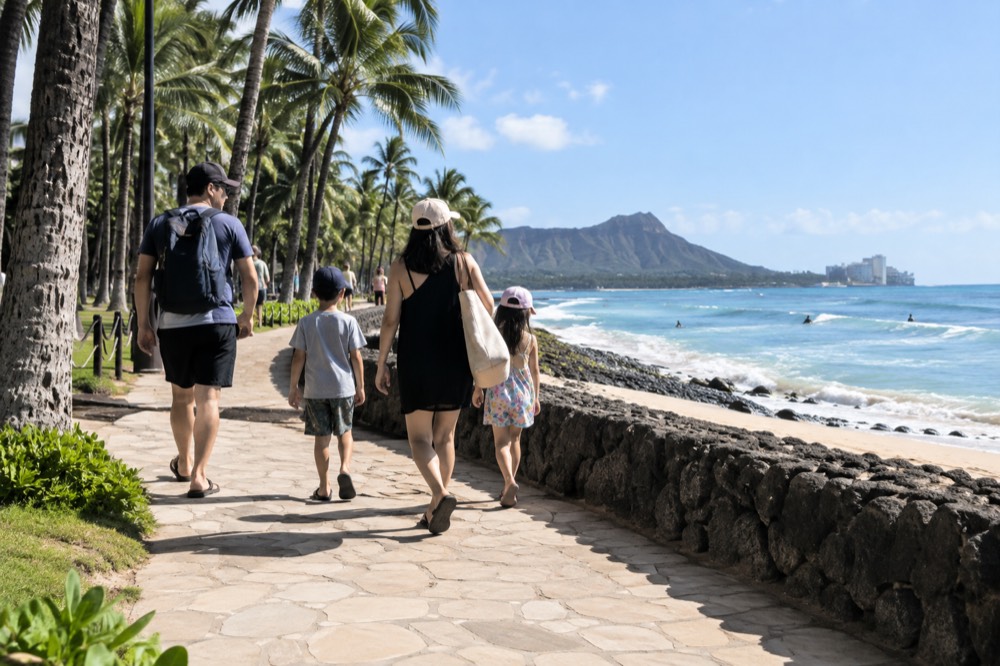
The south shore is the family shore. Waikīkī, Ala Moana and the Kāneʻohe-side bays are protected reefs or shallow shelves, and the south-facing coast peaks in summer, the inverse of the north shore's winter cycle.
The National Weather Service surf forecast publishes all four of Oʻahu's shore aspects in one table, and on a September 2026 morning it showed the south shore running 4 to 6 feet while the north shore sat at 1 to 3. Everything else covered here is indexed on Oahu Travel Guide.
The seasonal inversion is the single most useful ocean fact for families, and it is grounded in the NWS forecast product rather than surfer folklore. In winter the north shore, Sunset, Waimea, can carry surf that closes beaches outright, while the south shore flattens. In summer the pattern flips. A family that books a North Shore beach day in December and a Waikīkī day in July has it backwards both times.
For calm-water days with small children, the standard shortlist holds: Lanikai Beach and Kailua Beach Park on the windward side, and Ala Moana Beach Park closer to town. Lanikai carries a real caveat: there is no public parking lot, the residential streets are posted no parking with towing enforcement, and the nearest legal lot is at Kailua Beach Park. That is not a reason to skip it, it is a reason to park at Kailua and walk, or to take the bus.
Wildlife rules matter more with children than with anyone else, because kids want to touch. Humpback whales at 100 yards and spinner dolphins at 50 yards are law. Monk seals at 50 feet and green turtles at 10 feet are guidelines, but harassment itself is illegal regardless of distance. The Oʻahu ocean safety guide and the box jellyfish calendar cover the rest of what a beach week needs.
What About Rain And Downtime?
Rain on Oʻahu is a place question, not a season question. The airport on the leeward side records 16.41 inches a year, while the Lyon Arboretum station in Mānoa, five miles inland, records 150.96 inches, and every single Mānoa month is wetter than the airport's wettest month. If it is pouring where you are, drive ten minutes toward the coast, because the same island holds a ninefold rainfall range within a short distance.
That contrast comes from the 1991–2020 climate normals, and it is the reason a "rainy day" on Oʻahu usually means a rainy valley, not a rainy island. Families staying near Waikīkī can outrun most rain by moving along the coast. The rainy day activities guide and the Oʻahu rainy season guide build on the same data.
For genuinely wet days, the indoor layer is real: the Bishop Museum, the Waikīkī Aquarium, the Honolulu Zoo and the ʻIolani Palace tour all work with children and none of them depends on weather. Mānoa Falls is the one hike families consistently ask about in rain context; the trail itself is free, but the parking lot is private and charges a fee, and the trail gets slick. The Mānoa Falls trail guide has the current arrangement.
Which Tours Are Actually Worth Booking With Kids?
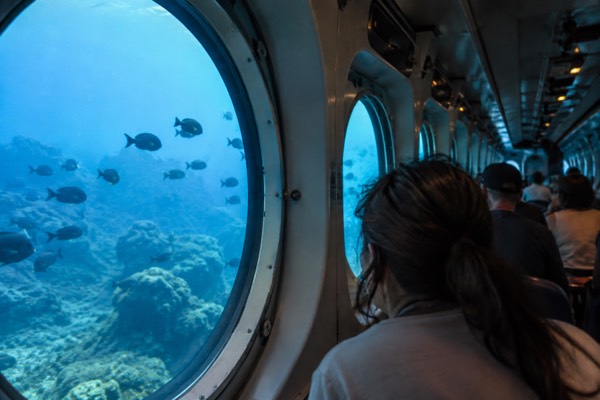
Three kinds earn their price on this island: a circle-island day, a snorkel boat, and one adventure activity matched to your children's ages. The circle-island tour solves the logistics of the North Shore, Dole Plantation and the windward coast in a single booked seat, which is worth a lot when bus transfers with children are the alternative. A turtle snorkel from Waikīkī gets you on the water in two hours.
The adventure tier, zipline, ATV, shark cage, is where age minimums do the deciding for you, so check each listing before you promise a child anything.
The most-booked circle-island day is the one to start with, and it is this site's pick for families for a simple reason: it converts the island's hardest driving day into a seat.
For the water day, the turtle snorkel from Waikīkī is a two-hour trip with a turtle guarantee, which is about the right duration for children whose attention runs out at the ninety-minute mark.
And for the adventure day, the North Shore zipline is the standout: eight lines over a working farm, two and a half hours, and the strongest rating on the site's roster.
What to skip with children: anything that pretends the island's two closed lookouts are open, and anything that promises "swimming with dolphins" in the sense of approaching them. Spinner dolphins are protected by a 50-yard approach and swim-with prohibition under federal law. Tours that observe dolphins from a boat, at legal distance, are a different product and an honest one.
How Do You Build The Week?
Anchor the week with two fixed days, Pearl Harbor and the circle-island tour, and leave the rest loose. Book Hanauma Bay for a Wednesday through Sunday, because the two-day reservation window means you book it mid-trip anyway. Put the North Shore inside the circle-island day rather than driving it separately, and keep one full day with no plan at all, because the beach your kids like best will probably be the one nearest your hotel.
A shape that works for a first family week:
| Day | Plan | Why it is ordered this way |
|---|---|---|
| 1 | Arrival, Waikīkī beach, early night | Jet lag with children is real; the south shore is calm and walkable |
| 2 | Pearl Harbor morning, afternoon pool | The memorial is a morning program; bags are prohibited, so travel light |
| 3 | Circle-island tour day | One booked seat covers the North Shore, Dole and the windward coast |
| 4 | Hanauma Bay, booked two days ahead at 7 a.m. | Closed Mon and Tue; children 12 and under free |
| 5 | Kailua or Lanikai, park at Kailua Beach Park | No parking at Lanikai itself |
| 6 | Adventure pick, matched to ages | Zipline, ATV or the turtle snorkel |
| 7 | Loose day, International Market Place or aquarium | Buffer for weather and tiredness |
The Oʻahu itinerary with kids expands this into full days with meal stops, and the 5-day family itinerary compresses it if your week is shorter.
One budget note that is easy to get wrong: Hawaii's "green fee" is not an airport charge and not something your family pays on arrival. It is an increase to the existing accommodations tax, from 10.25% to 11.00%, effective 1 January 2026, and it applies to where you sleep, not to your entry anywhere. The Oʻahu vacation cost breakdown covers where the money actually goes.
For the final big decision of the week, here are the three tours this guide would book again, in order.
Common Questions About Visiting Oʻahu With Kids
Most family questions about Oʻahu come down to three things: the reservation calendar, the fare cap and the shore aspect. Hanauma Bay and Diamond Head are the two bookings that fail if you leave them to the day, the $7.50 transit day cap makes car-free weeks viable from a Waikīkī base, and the surf forecast, read by shore rather than by season, decides which beach is safe on any given morning.
Is Oʻahu good for kids?
Yes. The island combines calm south-shore swimming, a bus and rail network with a $7.50 daily fare cap, free entry for children at several major sites and a compact set of attractions. The main planning burden is the reservation calendar, not the island itself.
Do kids need tickets for Hanauma Bay?
Children 12 and under enter free, but they must be included in the reservation. Booking opens exactly two days ahead at 7:00 a.m. HST, and the bay is closed Mondays and Tuesdays.
Can children visit the USS Arizona Memorial?
Yes. The program is free apart from a $1 per-ticket management fee, and the visit is short and structured. Note that all bags are prohibited at Pearl Harbor, including backpacks and purses, which is the main complication with children.
Is it safe to swim at Oʻahu beaches with children?
Generally yes on the south and windward shores, which are reef-protected or shallow. Read the National Weather Service surf forecast, which lists all four shore aspects, and remember the pattern: north shore peaks in winter, south shore in summer.
Do you need a car seat on TheBus?
TheBus is a practical family option, and a child 5 and under rides free with a paying adult. Check the operator's current policy on car seats and strollers before relying on it for airport transfers.
What is the best age for Oʻahu tours?
Circle-island tours suit most ages because they are seated and narrated. Snorkel boats suit confident swimmers, and adventure activities, ziplines, ATVs, carry operator-set age and height minimums, so check the listing for each product before booking.
Oʻahu with children is a logistics problem with a very good payoff, and the logistics are all published: the reservation windows, the closed days, the fare caps and the surf forecast are each one official page away. Sort those four things and the island does the rest.