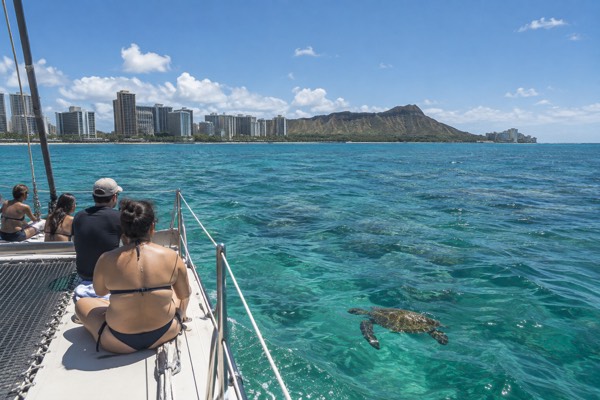
Waikīkī Aquarium: What A Visit Actually Involves, From Cost To Timing
The Waikīkī Aquarium sits at the quiet east end of Waikīkī, next door to the Honolulu Zoo and across the road from Kapiʻolani Park. It is small, walkable from most Waikīkī hotels, and dedicated almost entirely to Hawaiian marine life, which makes it a different kind of visit from the big mainland aquariums people sometimes compare it to.
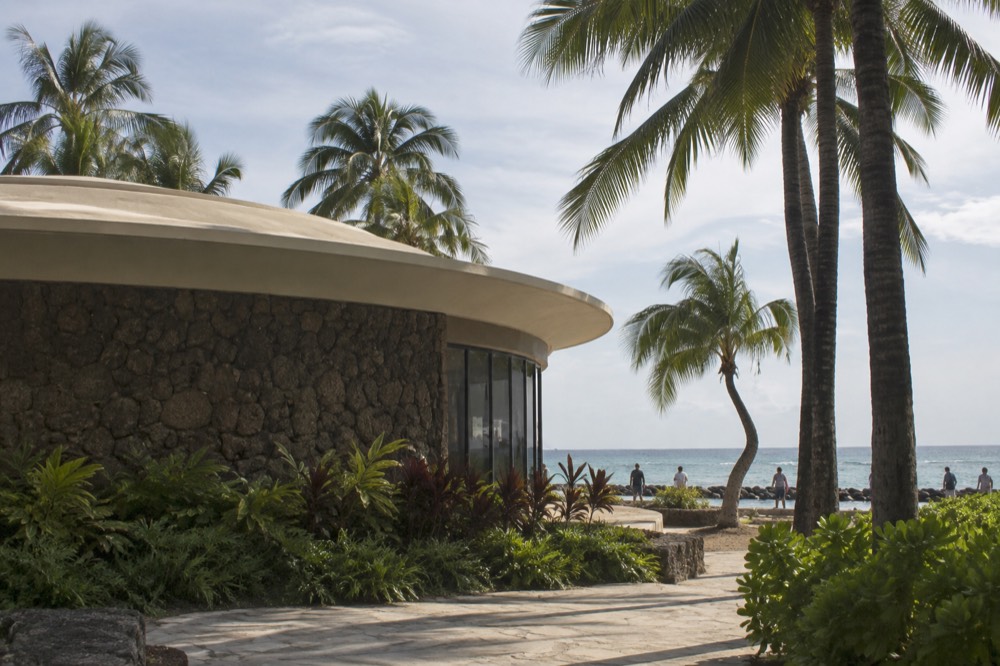
Short answer
The Waikīkī Aquarium is a compact, marine-focused aquarium at the east end of Waikīkī, walkable from most hotels in the neighbourhood and reachable by TheBus or the hop-on hop-off trolley. Admission is charged per person, with current prices listed on the aquarium's own site, and most visits run one to two hours.
The Waikīkī Aquarium occupies a small parcel of land at the Kapiʻolani Park end of Kalākaua Avenue, where the hotel towers thin out and the neighbourhood turns back into park and beach. That location is most of its practical appeal: you can walk here from the middle of Waikīkī in well under half an hour, or arrive by bus, and the aquarium's focus on Hawaiian and Pacific marine life means the tanks describe the very water sitting a few hundred metres away. This guide from Oahu Travel Guide covers what a visit actually involves: how to get there, what it costs, when to go, and how to weigh it against everything else competing for a day on Oʻahu.
This is a small institution, and reviews that treat it like a two-hour mega-aquarium are reviewing the wrong place. The people who rate it well tend to be the ones who arrived on foot, spent ninety minutes, and left for the beach. The people who rate it badly tend to have driven in, paid for parking, and expected a different scale of attraction.
What Is The Waikīkī Aquarium?
The Waikīkī Aquarium is a small, long-established public aquarium at the east end of Waikīkī, next to Kapiʻolani Park and the Honolulu Zoo, focused on Hawaiian marine life and Pacific reef ecosystems. Most visits run one to two hours. It is a walk-up neighbourhood attraction rather than a full-day destination, and its value depends heavily on whether you are already staying nearby or combining it with other stops.
The aquarium's whole reason for existing is the local ocean. Where a large mainland aquarium might spread its tanks across penguins, sharks, Amazon river fish and a dolphin theatre, the Waikīkī Aquarium concentrates on what lives in Hawaiian waters: reef fish, corals, invertebrates, and the endangered Hawaiian marine species that are hard to see in the wild. For a visitor who is about to snorkel at Hanauma Bay or Turtle Canyon, that concentration is genuinely useful, because the tanks work as a preview and an identification lesson before you get in the water yourself.
It also sits inside a cluster of walkable stops. The Honolulu Zoo is the next lot over along Kalākaua Avenue, Kapiʻolani Park wraps around the whole corner of the island, and Waikīkī Beach continues past the front door. A family with small children can do the aquarium in the morning, the park at midday, and the beach in the afternoon without ever moving the car, which on an island where parking is a constant tax on your patience is worth more than it sounds.
The scale question deserves a straight answer too. If your reference point for aquariums is a multi-building campus, you will be underwhelmed. If your reference point is "an hour of air conditioning that teaches me what I am about to swim over," it does its job well. Set expectations accordingly and the price of admission, listed on the aquarium's own site, makes sense; arrive expecting something else and it will not.
How Do You Get To The Waikīkī Aquarium?
From central Waikīkī the aquarium is a walk of roughly fifteen to twenty minutes along Kalākaua Avenue, past the zoo and into Kapiʻolani Park. TheBus serves the area on multiple routes, the hop-on hop-off trolley stops nearby, and Skyline does not reach Waikīkī at all, so rail riders must transfer to a bus for the final leg. Driving is possible but parking is limited and paid.
Walking is the honest first recommendation. The route along Kalākaua is flat, shaded in stretches, and runs the length of the visitor strip before ending almost at the aquarium's front steps. If you are staying anywhere in Waikīkī, the aquarium is close enough that any other transport mode is a choice rather than a necessity, and the walk passes the zoo, the bandstand in Kapiʻolani Park, and the start of the beachfront walkway.
Staying close enough to walk the whole strip. Book a hotel here.
For transit, the fare structure matters more than the route. TheBus and Skyline share one fare system, and the daily cap is the number worth remembering:
| Fare option | Price | What it covers |
|---|---|---|
| Adult cash single ride, TheBus only | $3.25 | One ride, no transfers, exact fare |
| HOLO card 2-Hour Pass | $3.00 | Two hours of unlimited transfers on TheBus and Skyline |
| 24-Hour Pass | $7.50 | A full day of rides |
| Daily cap on a HOLO card | $7.50 | The most you pay per day, then rides are free |
| 7-Day Pass | $45.00 | 168 hours from first tap |
A HOLO card costs $2.00 to obtain and can be loaded online, by phone, or at retail locations. The practical takeaway: a solo rider making one round trip pays less with cash, but a family or a multi-stop day hits the $7.50 cap quickly, and after that every additional bus ride is free. The one thing not to plan around is rail: Skyline has no Waikīkī station, and anyone arriving from the airport or Pearl Harbor direction by train transfers to a bus for the last stretch.
The hop-on hop-off trolley is the third option, and for visitors who want the aquarium to be one stop inside a loop of Honolulu sightseeing rather than a dedicated trip, it fits naturally. The trolley day pass covers the transport and the sightseeing in one product, which is why we list it below alongside the attraction pass and the circle-island day tour as the three picks most often paired with a Waikīkī-based visit.
Driving, for completeness: it works, but it is the weakest option. Street parking around Kapiʻolani Park is metered and contested, and the aquarium does not sit inside a big dedicated garage the way a larger attraction would. If a rental car is your only mode, pair the aquarium with the zoo and the park so one parking hunt covers three stops.
How Much Does The Waikīkī Aquarium Cost?
Admission is charged per person at the door, with discounted rates for children, and the current figures are published on the aquarium's own site, which is the only place to check before you go, because ticket prices change more often than guides do. There is no separate parking fee built into admission, and the aquarium participates in multi-attraction passes, which can undercut the walk-up price if it is one of several paid stops on your itinerary.
The per-person price is exactly the kind of figure that drifts out of date between a guide being written and a reader standing at the ticket window, and the aquarium's own site is the authoritative source. What we can say usefully is how the cost behaves relative to the rest of an Oʻahu trip.
The first behaviour: as a standalone purchase, the aquarium is a modest line item compared with luaus, boat tours or helicopter flights. It is priced like a neighbourhood museum, not like a marquee attraction. The second behaviour: it stops being a simple line item the moment it joins a pass. The Go City all-inclusive pass covers more than forty Oʻahu paid activities, and the arithmetic of that pass improves with every additional stop you genuinely intend to visit. Someone doing the aquarium plus two or three other included sites may come out ahead; someone doing the aquarium alone almost certainly will not.
The third behaviour: for Hawaii residents and military visitors there are separate discounted rates, again listed on the aquarium's site, and it is worth checking those before paying full walk-up price if anyone in your group qualifies.
A rough budgeting frame for the visit itself: admission per person, plus nothing else unless you buy from the small gift counter. There is no meal stop inside worth budgeting for; the food options are all outside in Waikīkī proper. Most families should budget the admission, an hour or two of time, and then plan the rest of the day around the park and beach that surround the building.
When Is The Best Time To Visit The Waikīkī Aquarium?
Mornings are the best time: the aquarium opens early, the tanks are calmer before the midday tour groups arrive, and you can follow the visit with the beach or park while the day is still fresh. Weekdays beat weekends, and the building's small size means even a modest crowd changes the feel of the rooms quickly, so timing matters more here than at a large aquarium.
The crowd logic is simple. The aquarium's floor space is compact, so twenty people in a gallery feels busy in a way it would not at a big-city aquarium. Late morning through mid-afternoon is when the walk-in traffic from Waikīkī peaks, and that is also when the adjacent zoo and park are busiest. Arriving within the first hour of opening buys you the quietest version of the visit.
Weather barely matters, and that is a point in the aquarium's favour. Oʻahu's rain is wildly uneven by location: the official climate normals put Honolulu's airport at about 16 inches of rain a year, while the Lyon Arboretum station in Mānoa, five miles inland, records more than nine times that amount annually. But the leeward coast where Waikīkī sits is the dry side of the island, so the aquarium's neighbourhood gets less rain than almost anywhere else you could spend a day. The honest use of the aquarium as a rainy-day fallback is therefore narrow: it works for a passing shower, but a genuinely wet day on the south shore is uncommon, and the rainy day activities on Oʻahu guide lists fuller options for the rare days when it matters.
Seasonality is mostly a crowd question rather than a weather one. Oʻahu received about 5.7 million visitors by air in 2025, and the busiest months concentrate in summer and the December holiday window. If you are visiting in those periods, the early-morning advice doubles in weight.
What Will You See Inside, And How Does It Connect To The Ocean Outside?
The aquarium's tanks concentrate on Hawaiian reef life: the fish, corals and invertebrates of the nearshore waters, along with exhibits on endangered native species and the ecosystems you can snorkel over elsewhere on Oʻahu. The connective tissue of the visit is identification, because the building effectively previews the reefs at places like Hanauma Bay, and the ocean it describes is visible from the front steps.
The most useful way to read the aquarium is as a field guide you can walk through before you get in the water. The reef fish families that dominate Hawaiian nearshore waters, the butterflyfishes, tangs, wrasses and triggerfishes, are the core of the collection, alongside live coral displays that are themselves a rare thing in aquariums. If your trip includes any snorkelling, an hour here first measurably changes what you notice in the water afterward.
The endangered-species side of the collection deserves particular attention. Hawaiian waters carry protections that visitors routinely misunderstand, and the aquarium is one of the few places to learn them correctly before you swim. The distances themselves break into two legal categories:
| Animal | Distance | Law or guideline |
|---|---|---|
| Humpback whale | 100 yards | Law |
| Hawaiian spinner dolphin | 50 yards, swim-with prohibited | Law |
| Hawaiian monk seal | 50 ft recommended, 150 ft for a mother and pup | Guideline; harassment itself is illegal |
| Green sea turtle (honu) | 10 ft recommended | Guideline; protected under state and federal law |
The distinction matters. A guide that calls every distance a law is wrong, and a guide that treats them all as polite suggestions is more wrong. Whales and spinner dolphins carry legal approach distances; monk seal and turtle distances are official recommendations, while harassing or touching any of them is illegal regardless. The aquarium's native-species exhibits are the right place to absorb that hierarchy, and the ocean safety guide extends it.
Season adds one more layer. Humpback whales are present in Hawaiian waters from November through April, per the Hawaiian Islands Humpback Whale National Marine Sanctuary, and the aquarium's marine-mammal content lands differently depending on when you visit. In winter, the exhibits about whales describe animals that are genuinely out there beyond the reef; in summer, they describe a migration you missed by a few months. Neither version changes the tanks, but it changes what you do next: whale-watch boats run in season, and the Oʻahu whale season guide covers the window.
For visitors who want the water itself, not just the preview, the practical pairing is a snorkel trip. The guided snorkel runs out of Waikīkī to the Turtle Canyon reef, with a turtle guarantee, are among the most-booked marine options on the island and depart from the beach a short walk from the aquarium's end of the strip. Doing the aquarium first and the snorkel the following morning is a better sequence than the reverse, because the tanks teach you what you will be looking at.
Is The Waikīkī Aquarium Worth It?
For most visitors staying in Waikīkī with a free morning, yes: it is inexpensive relative to Oʻahu's other paid activities, walkable, air-conditioned, and it genuinely improves the snorkelling you will do afterward. For visitors staying elsewhere on the island, driving in specifically for the aquarium alone, the answer is usually no, and the same time is better spent on a reef, a hike or a beach.
The verdict splits cleanly by location and by itinerary. Inside Waikīkī, the aquarium is close to free in effort terms: no drive, no parking hunt, no half-day committed. Against that near-zero cost, an hour of well-labelled Hawaiian marine interpretation is easy to recommend, especially for families with children too young to snorkel unsupervised and for adults who want to recognise what they swim over.
Outside Waikīkī, the calculus changes. If you are based in Ko Olina or the North Shore, the aquarium is not a destination; it is one small stop attached to a trip you were making anyway. Fold it into a day that already includes the zoo, the park, or the beach, or skip it without guilt. Oʻahu's underwater life is best seen underwater, and the island's snorkel sites, covered in the best snorkeling spots on Oʻahu guide, deliver the real thing at several beaches reachable by bus.
The pass question is the one worth doing arithmetic on. If the aquarium is your third or fourth paid attraction of the trip, a multi-attraction pass can make each stop cheaper than its walk-up price, and the pass also covers the decision fatigue: you stop evaluating every admission fee individually and simply go. The same logic applies to the trolley for transport and to a circle-island tour for the day you want someone else to handle the driving.
For the circle-island day specifically, note that it is the opposite kind of experience: a long guided sweep of the whole island rather than a self-directed hour. Some travellers do both, the aquarium on a slow Waikīkī morning and the circle-island tour on the one day they commit to seeing the North Shore and windward coast. Doing them on the same day is possible but pointless, because the tour occupies most of it.
And for getting around the neighbourhood without walking the full length of the strip, the trolley remains the lazy-but-sensible option, hopping between the aquarium end of Waikīkī, downtown and the shopping stops.
Common Questions About The Waikīkī Aquarium
Most questions about the Waikīkī Aquarium come down to four things: how long a visit takes, whether the admission price is worth it, how to reach the building without a car, and whether children will get enough out of it. The short answers are one to two hours, yes if you are already in Waikīkī, easily by foot or bus, and yes, the tanks suit school-age children well.
How long does a visit to the Waikīkī Aquarium take?
Plan on one to two hours. The building is compact, and even a slow, read-every-sign visit rarely runs past two hours. Families with young children sometimes finish in under an hour, and the adjacent park and beach make it easy to extend the outing without a second admission.
Is the Waikīkī Aquarium worth the admission price?
For visitors already in Waikīkī, generally yes: the effort to reach it is near zero, the price is modest by Oʻahu activity standards, and the Hawaiian marine focus genuinely improves later snorkelling. For anyone driving in from another part of the island for the aquarium alone, the value is weaker, and pairing it with the zoo, the park or a beach day is the better play.
Can you get to the Waikīkī Aquarium without a car?
Yes, easily. From central Waikīkī it is a flat walk along Kalākaua Avenue of roughly fifteen to twenty minutes, TheBus serves the area, and the hop-on hop-off trolley stops nearby. Skyline rail does not reach Waikīkī, so rail riders transfer to a bus for the final leg. A HOLO card caps bus and rail spending at $7.50 per day.
Is the Waikīkī Aquarium good for kids?
Yes. The scale is an advantage with children rather than a drawback: nothing takes more than a few minutes to reach, the tanks are at eye level for smaller visitors, and the reef fish and coral displays hold attention well. Combining the aquarium with the Honolulu Zoo next door and Kapiʻolani Park makes a full, inexpensive morning for families.
Should you visit the aquarium before or after snorkelling?
Before, if you can. The tanks work as an identification lesson for the fish, corals and protected species you will encounter at sites like Hanauma Bay or on a Turtle Canyon snorkel, and visitors who know what they are looking at report more from the same reef. The aquarium's focus on Hawaiian waters is precisely what makes it a useful preview rather than a generic exhibit hall.
Is the Waikīkī Aquarium a good rainy-day activity?
It works for a passing shower, but Waikīkī sits on Oʻahu's dry leeward coast, so sustained rain there is uncommon. The aquarium is better treated as a slow-morning activity than as a fallback, and if the whole island's weather turns, the fuller rainy-day options are collected in our rainy day guide.
The Waikīkī Aquarium will never be the headline of an Oʻahu trip, and it does not need to be. Its role is the quiet, walkable hour that makes everything you do in the water afterward mean more, and for that role, at the east end of a neighbourhood built for walking, it earns its place on the itinerary.