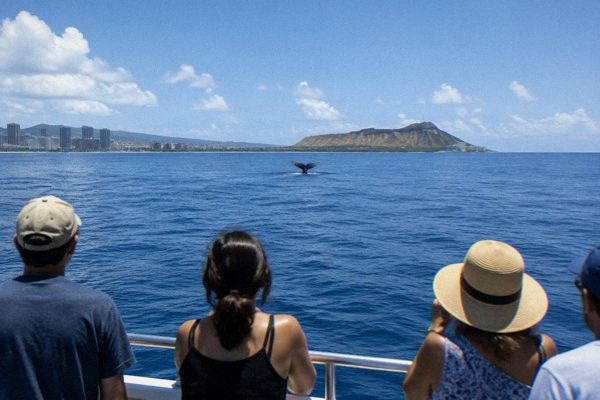
Oahu Whale Season Guide: When Humpbacks Arrive, Where To Watch, And The Rules That Apply
Humpback whales visit Hawaii from November through April, and Oahu's south and west shores are workable places to see them. Here is what the sanctuary actually says, what the law requires, and how to plan around it.
Short answer
Humpback whale season in Hawaii runs November through April, per the Hawaiian Islands Humpback Whale National Marine Sanctuary. Boats must stay 100 yards from humpbacks by law. On Oahu you can watch from shore or take a seasonal whale watching tour.
Humpback whales are in Hawaii's waters from November through April. That is the window the Hawaiian Islands Humpback Whale National Sanctuary states, verbatim: "From November through April, visitors to the sanctuary can see whales from shore and at sea." Oahu sits at the edge of the main breeding grounds, which concentrate in the shallower banks between the islands, and sightings from the island's shores and boats are routine within that window. Outside it, seeing a humpback is possible but not something to plan around.
That is the whole answer in two sentences, but the useful planning detail lives underneath it: which months actually deliver, where to stand on Oahu to see whales without a boat, what the law says about how close anyone may get, and how the seasonal tours differ from the year-round ones. This guide works through each of those, using the sanctuary's own guidance and the verified fare and tour data for the island.
One framing note before anything else. Plenty of content online says "peak season is January to March" with confidence. The primary source gives a season, not a peak.
When Is Whale Season On Oahu?
Humpback whales are in Hawaii's waters from November through April, a window the Hawaiian Islands Humpback Whale National Marine Sanctuary states on its own site, adding that visitors can see whales from shore and at sea throughout it, while naming no peak month, so any specific best-month promise beyond the season itself is a writer's invention rather than a sourced fact.
The migration is not a switch that flips. Whales arrive over weeks and leave over weeks, so November sightings tend to be scattered and April sightings thin out. If your trip sits at the shoulder of the season, treat a whale sighting as a genuine possibility rather than a certainty, and build the day around other things too. A shore lookout costs nothing and pairs well with a coastal hike; a paid boat tour in a thin month is a bigger bet.
For trip timing, the season overlaps cleanly with Oahu's winter surf season on the north shore and with the island's peak visitor months. The practical consequence is that a winter trip can combine whale watching with big-wave spectating, but it also competes with the highest crowds of the year. Oʻahu counted 527,241 visitors in January 2026, the highest month in that year's workbook so far, against a low of 436,756 in February. Those are preliminary DBEDT figures for visitors by air, and they say plainly: winter is busy, and February is the softer month inside whale season.
| Month | Whale status | Planning note |
|---|---|---|
| November | Early arrivals, scattered sightings | Shoulder of the season; do not build a day around it |
| December | Season underway | Whale watching tours typically running; also busy visitor month |
| January | Mid-season | Highest visitor month in the 2026 DBEDT workbook so far |
| February | Mid-season | Softest visitor month inside the season per the same data |
| March | Mid-season | Winter surf still active on north-facing shores |
| April | Late season, sightings thin out | Last reliable month per the sanctuary's window |
Can You See Whales From Shore On Oahu?
Yes, and shore watching is free, which makes it the best first move for any whale season trip, because humpbacks surface, blow and raise their flukes visibly from headlands and any elevated coastal vantage with a clear ocean view, with the classic Oahu lookouts sitting on the south and west shores where whales pass through the channel waters between the islands.
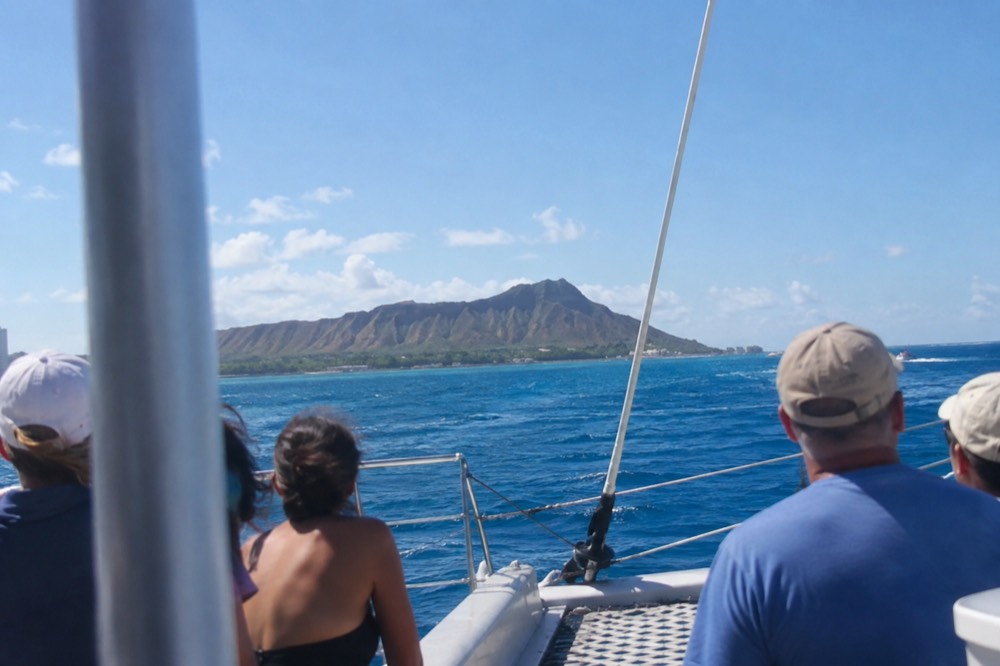
The classic approach on Oahu is a south or west facing lookout, since the whales pass through the waters between Oahu and the neighboring islands. Good vantage candidates include the south shore lookouts around the Diamond Head area and the Mākapuʻu Point lighthouse trail on the southeast coast, both of which sit above open water with long sightlines. On the west side, any elevated coastal stop facing the channel toward Kauaʻi can pay off. None of this requires a tour, a reservation or a fee, which matters if you are traveling on a tight budget or your dates sit at the edge of the season.
Bring binoculars if you have them, scan for the blow, the tall misty exhale that shows up long before the body does, and settle in for a stretch rather than a quick glance. Two cautions. First, the Mākapuʻu trail is exposed, so carry water and go early in the day. Second, check current closures before you drive anywhere: as of the DLNR notice dated 9 September 2026, Nuʻuanu Pali State Wayside, Kaʻena Point State Park's Mokuleʻia and Keawaʻula sections, and Wahiawā Freshwater State Recreation Area remain closed for Hurricane Lowell repairs. Do not plan a whale watch from the Pali Lookout or Kaʻena Point until those reopen.
If you want to build a whale watch into a bigger island day rather than a single stop, a circle island tour covers the coastal viewpoints in one move.
What Are The Rules For Getting Close To Whales?
Boats and swimmers must stay 100 yards from humpback whales, and that distance is federal law rather than advice, per the Hawaiian Islands Humpback Whale National Marine Sanctuary, which also sets 1,000 feet for aircraft, leaves no exception for tour boats, kayakers, paddleboarders or swimmers, and makes harassment separately illegal, so any operator closing to a whale inside that distance is breaking the law with you aboard.
The sanctuary states it plainly: "Always keep a safe and legal distance (100 yards) from humpback whales." The 100 yard rule matters for how you read tour marketing. A responsible whale watch is a boat that positions itself where whales are and lets the whales decide the encounter, and any listing promising "up close" contact with humpbacks is describing something that cannot legally happen. Reviews of whale watching tours consistently mention the same thing: the best trips are the ones where a curious whale approaches the stopped boat on its own terms, which is legal because the whale closed the distance.
Oahu's other marine wildlife carries different rules, and conflating them is the most common error in this content. Here is what the verified sources actually support.
| Animal | Distance | Law or guideline |
|---|---|---|
| Humpback whale | 100 yards | Law, per the NOAA sanctuary |
| Hawaiian spinner dolphin | 50 yards, approach and swim-with prohibited | Law, 2021 federal rule |
| Hawaiian monk seal | 50 ft recommended, 150 ft for a mother with pup | Guideline; harassment itself is illegal |
| Green sea turtle (honu) | 10 ft recommended | Guideline; protected under federal and state law |
The distinction in the last two rows is worth stating carefully. For monk seals and honu, the distances are recommendations, but take and harassment remain illegal regardless of how far away you are. For whales and spinner dolphins, the distances themselves are law. A guide that calls all four "rules" flattens a real legal difference, and a reader who pushes a seal because "10 feet is just a guideline" has still broken the harassment law.
Which Oahu Whale Watching Tour Should You Book?
The seasonal whale watch out of Waikīkī is the direct answer, because it is built for the migration, runs only while whales are present, and carries a live rating on the operator's listing, while beyond it the honest choice depends on whether a whale sighting is the point of the trip or a bonus, since a dedicated watch maximizes the chance and a circle island day treats whales as a possible extra.
The 2-Hour Oahu Whale Watch from Ala Wai Harbor runs about two hours and leaves from Ala Wai Harbor in Waikīkī. The comparison below uses the verified listing data for each product. Prices shown are the "from" figures recorded at research time; live pricing sits on each operator's listing and moves with dates and demand.
| Tour | What it is | Duration | Best for |
|---|---|---|---|
| 2-Hour Oahu Whale Watch from Ala Wai Harbor | Dedicated seasonal whale watch by boat from Waikīkī | 2 hours | Travelers whose main goal is seeing a whale |
| Oahu Grand Circle Island Tour | Full-day guided coach loop of the island | 6 hours 30 minutes | A full island overview with coastal viewing built in |
| Hidden Gems of Oahu Circle Island Tour | Longer circle island day including Byodo-In Temple | 9 hours | A deep, unhurried island day with room for a shore watch |
A dedicated whale watch earns its cost when whales are the reason you are on the water. Two hours is the right length for it: long enough to reach the grounds and wait out a sighting, short enough that a rough sea does not ruin the day. If anyone in your party gets seasick easily, take medication before boarding, sit mid-ship, and pick a morning departure when the wind is usually lighter.
If whales are the reason you are on the water, book a seasonal whale watch boat here.
The circle island tours are a different product. The six-and-a-half-hour Grand Circle Island Tour from Star of Honolulu Cruises and Events is the island's most-booked option of its kind, with the review count to show for it, and it spends its day on stops rather than on whale patience. The nine-hour Hidden Gems tour from Go Tours Hawaii adds Byodo-In Temple and runs at a more deliberate pace. Neither is a whale watch, but both put you on coastal roads where a fluke slap from a headland stop is a real possibility in season.
For a fuller comparison of the boat options that run year-round, including the sunset and dinner cruises that share the same Waikīkī departure points, see our Oahu catamaran cruises guide. If whales are the whole reason for the day, the dedicated whale watching on Oahu page carries the deeper rundown.
What Should You Expect From A Whale Watching Day?
Expect a two hour window on the water, a boat that must obey the 100 yard law, and a sighting that depends on the whales rather than the operator, because humpbacks do not perform on schedule, a good crew reads the water and coordinates with other boats but no lawful operator can promise a whale, and many tours hold a re-ride policy for empty trips that you should check on the listing before booking.
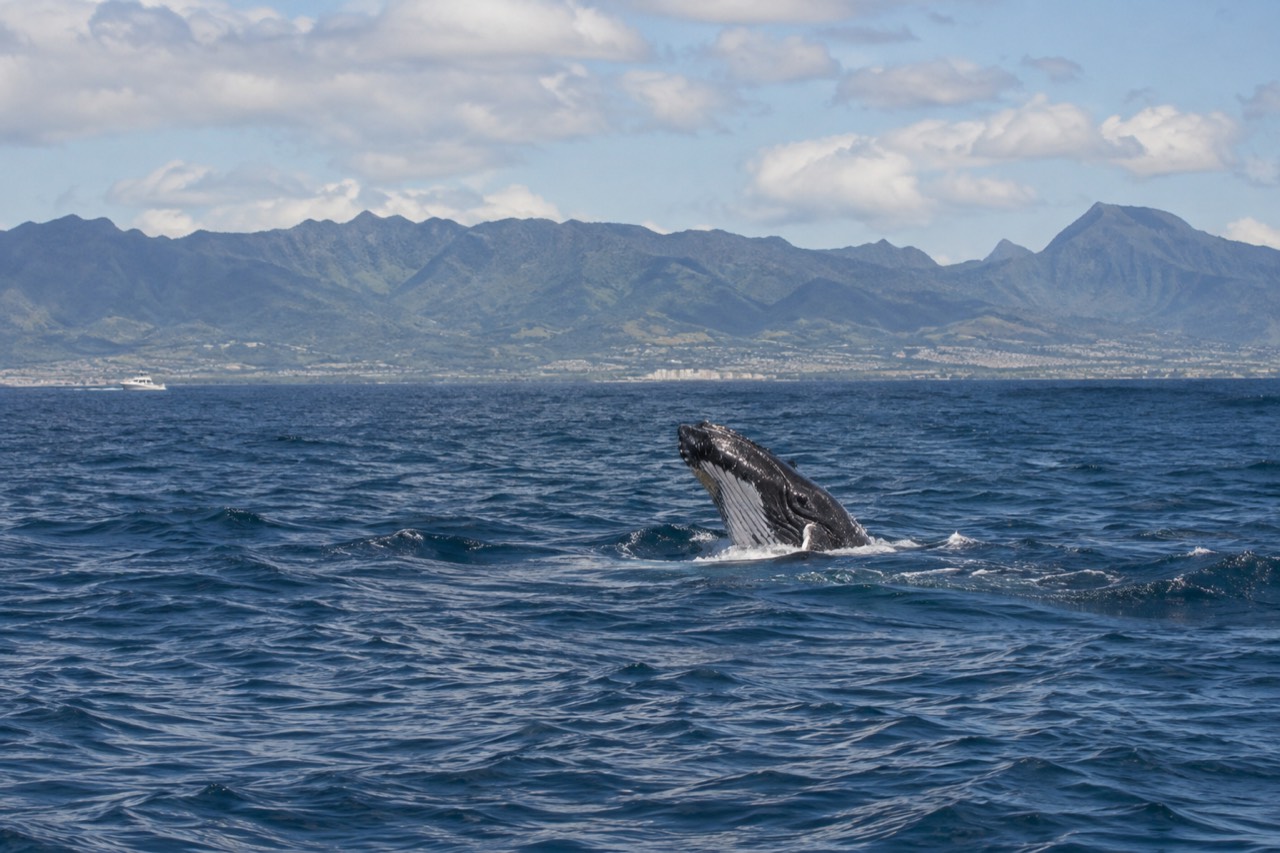
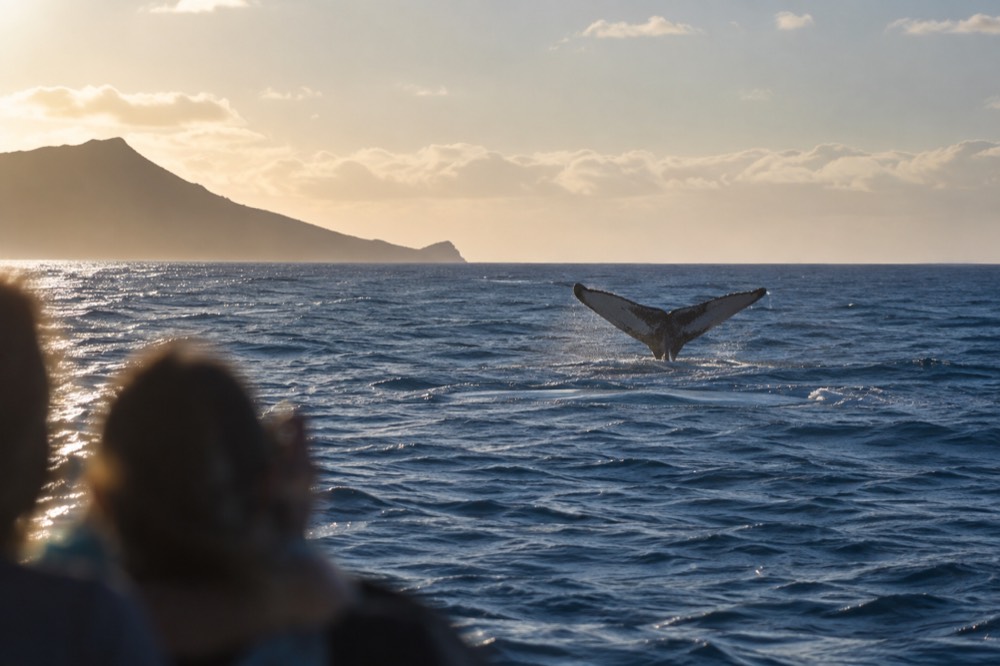
What you are watching for, in order of how early you can spot it: the blow, a tall plume of exhaled breath visible at a distance; the back and dorsal fin on a surfacing; the fluke raised as the whale sounds into a deep dive; and, if you are lucky, a breach, where a whale throws most of its body clear of the water. Calves travel close to their mothers in the breeding grounds, and a mother-and-calf pair surfacing together is the sighting most crews remember.
Practical notes for the day itself. Morning departures tend to run on calmer seas. Sunscreen before boarding, a hat with a brim, and a strap for anything you would hate to see go over the side. The windward and south shore runs can be choppy even in the season, and the crew's instructions about where to stand exist because decks are wet and moving. Children are welcome on most whale watches, but a two hour wait for a sighting tests young patience, so pair the trip with something forgiving afterward.
How Does Whale Season Fit Into A Bigger Oahu Trip?
Whale season, November through April, overlaps winter surf on the north shore, the island's peak visitor months, and the rainy season on the windward side, so the whole trip plan shifts with it, pairing a morning whale watch with an afternoon of watching big waves from the north shore beaches, though this site publishes no specific winter wave heights without a verified source and the daily surf forecast is the reliable check.
The NWS surf forecast, which the island's weather service publishes daily by shore aspect, is the way to know what the water is doing on your dates. The rainfall split matters more than most visitors expect. Honolulu airport's 1991 to 2020 climate normal is 16.41 inches of rain a year, while the Lyon Arboretum station in Mānoa, about five miles inland from Waikīkī, records 150.96 inches. Every single month at the Mānoa station is wetter than the airport's wettest month. The practical reading: a rainy morning in a windward valley does not mean the south shore is wet, and a whale watch out of Waikīkī can run in sunshine while the Koʻolau range is buried in cloud.
Day length is the other quiet constraint. Sunset in Waikīkī never runs later than about 7:17 p.m. in the year, and the shortest days close in around 5:55 p.m. in late December. There are no long summer evenings here even at the solstice, so a winter whale watch that departs in the late afternoon finishes near dusk. Plan the sunset part of the day separately, and our best sunset spots on Oahu page covers where to stand for it.
For travelers fitting whales into a fixed itinerary, the seasonal logic is simple. If the trip is inside November through April, book the whale watch early in the stay so a weather cancellation can be retried later in the week. If the trip is outside it, spend the money on something else and scan the water from a headland on the off chance.
Common Questions About Oahu Whale Season
Most questions about whale season on Oahu come down to three things, the November to April window from the sanctuary, the 100 yard federal approach law, and whether a boat tour is worth it over a free shore watch, because the season is fixed and sourced, the distance rule is law rather than etiquette, and the tour-versus-shore choice is mostly a question of whether whales are the point of the day or a hoped-for bonus.
When is whale season in Oahu?
November through April, per the Hawaiian Islands Humpback Whale National Marine Sanctuary. The sanctuary states that visitors can see whales from shore and at sea throughout that window. It does not name a peak month, and any specific "best month" claim you read elsewhere is not coming from the primary source.
Can you see whales from the beach in Oahu?
Yes. Humpbacks surface visibly from any elevated coastal vantage with open water in view, and the south and east shore lookouts around Diamond Head and the Mākapuʻu lighthouse trail are the classic spots. It costs nothing, needs no reservation, and pairs well with a hike. Bring binoculars and scan for the blow first.
How close can you get to a humpback whale in Hawaii?
100 yards, and it is federal law, not advice. The rule applies to boats, kayaks, paddleboards and swimmers. Aircraft must stay 1,000 feet away. A whale that chooses to approach a stopped boat is legal; a vessel that closes the distance itself is not.
Is whale watching in Oahu worth it?
Inside the season, a dedicated tour is the highest-probability way to see a whale, and the two-hour format keeps the commitment reasonable. At the shoulders of the season, or outside it, a free shore watch from a headland is the better bet and a paid tour is a gamble. Check the operator's sighting-guarantee or re-ride policy on the listing before you book.
Are whale watching tours safe for kids?
Generally yes, with two caveats. The 100 yard law means the boat keeps its distance, so a sighting can feel far away to a small child, and two hours of waiting tests young patience. Pick a calm morning departure, and plan something forgiving for right after the trip.
Whether you watch from a headland or from the deck of a seasonal whale watch boat, the same rule carries the day: the whales set the terms, the season sets the odds, and the visitor who respects both gets the better trip. This Oahu Travel Guide page is one of a set covering the island's wildlife and waters, and the whale season holds the same honest logic as the rest of them.