Best Sunset Spots On Oahu: Where To Watch The Sun Go Down
Oahu's sunsets are best on the island's dry western edge, where the annual rainfall is a fraction of what the valleys get and the sun drops into open ocean. Here is where to stand, when to go, and which famous sunset spots are closed right now.
Short answer
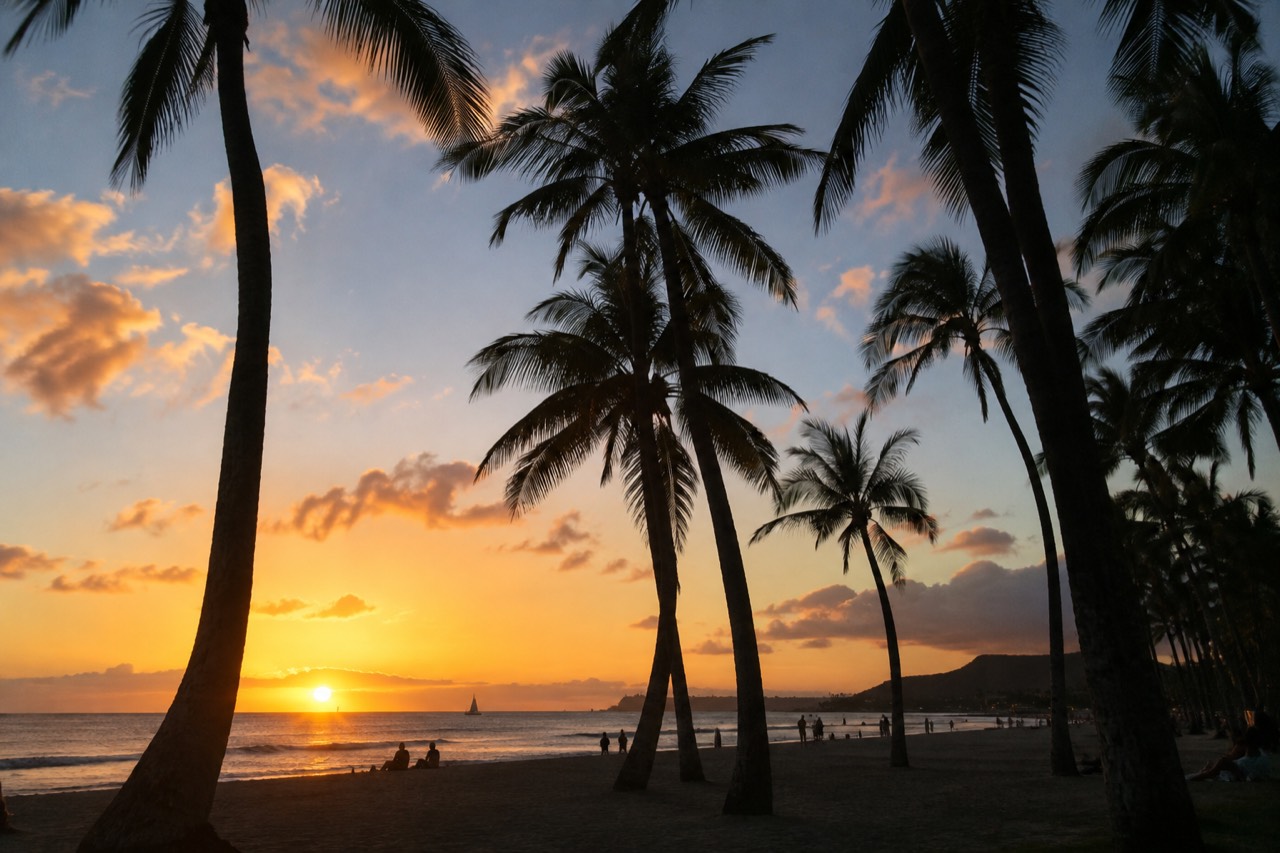
The best sunset spots on Oahu are on its west-facing leeward coast, around Ko Olina, the Waiʻanae coast and beaches near the airport side of the island, because that shore faces the setting sun across open water and sits in Oahu's driest climate zone. Near Waikīkī, Ala Moana Beach Park and the beach itself are the practical picks.
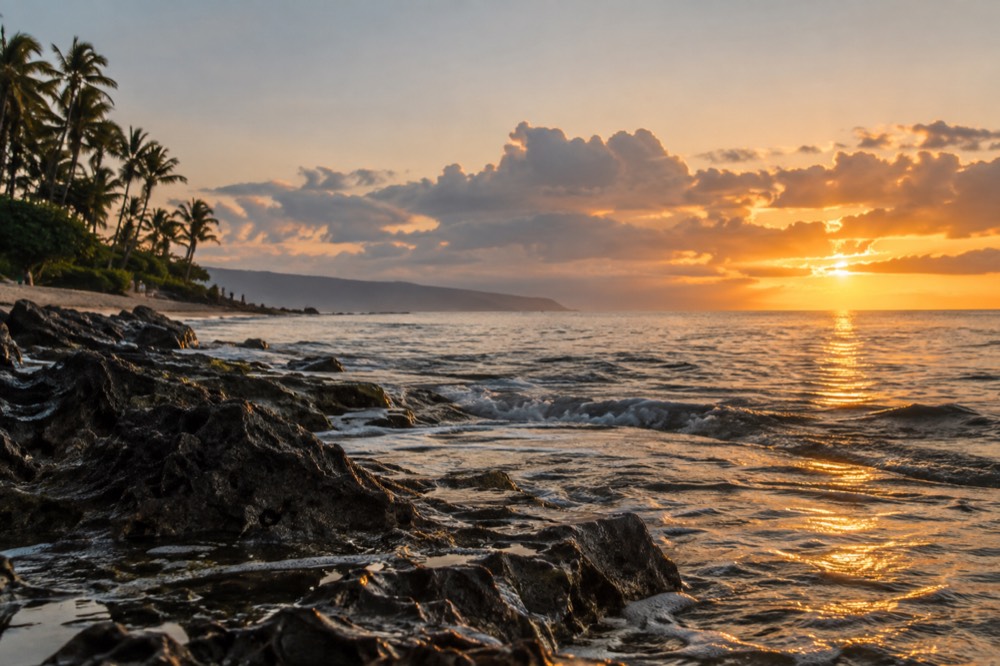
The sun sets over water on Oahu only if you are standing on a west-facing shore, and Oahu has exactly one of those: the leeward coast, the stretch running from the airport side of the island out past Ko Olina to Waiʻanae and Kaʻena. Everywhere else you are watching the sun go down over land, over a ridge, or over someone's hotel. That single geographic fact does more to pick your sunset spot than any list of "top ten views" ever will.
The second fact that matters is rainfall. The leeward coast around Honolulu International Airport averages 16.41 inches of rain a year (NOAA/NCEI 1991–2020 normals), while the Mānoa valley barely five miles inland averages 150.96 inches at the Lyon Arboretum gauge. Every single month in Mānoa is wetter than the airport's wettest month. Clouds kill more Oahu sunsets than rain does, and the west side is where the clouds thin out. This guide is built around those two facts, and around the sun times and closures that are verified.
Where Does The Sun Actually Set On Oahu?
Oahu's sun sets over open ocean only from the west-facing leeward coast, the shore running from the airport side past Ko Olina and Waiʻanae toward Kaʻena. From the south shore, including Waikīkī and Ala Moana, the sun sets over water at an angle toward the island's western end. From the windward and North Shores it drops behind the Koʻolau mountains, a different and often cloudier show.
That geometry has a practical consequence most first-time visitors miss. A "sunset spot" on the windward side, Kailua or Lāʻie for example, is really a sunset-glow spot: the sky colours up beautifully but the sun disappears behind the pali, the mountain wall, well before the horizon show finishes. The light on the Koʻolau range at that hour can be spectacular, and it is a legitimate reason to be there. But if the question is where the sun itself drops into the sea, the answer is the west side, full stop.
The south shore sits in between. From Ala Moana or the Waikīkī waterfront the sun sets out over the water to your right, angled toward the island's western end. You still get an ocean sunset, the sun touches the sea rather than a rooftop, but you are looking along the coast rather than straight into it. For most visitors staying in Waikīkī, that trade is worth making, because the alternative is a drive west with no verified travel time to publish and a sunset that waits for no one.
One more piece of geometry worth knowing: Oahu's sunset never gets very late. The latest sunset observed in the research data for Waikīkī is 7:17 p.m. on 5 July, and by late December it is before 6 p.m. There are no long northern-latitude summer evenings here. Plan dinner and sunset as one event, not two.
What Time Is Sunset On Oahu, Month By Month?
Sunset in Waikīkī ranges from about 5:55 p.m. in late December to 7:17 p.m. in early July, a swing of roughly an hour and twenty minutes across the year. The latest sunrise, 7:11 a.m., falls in mid-January, and total day length varies by about 2 hours 35 minutes between June and December. Sunset never gets later than about 7:17 p.m. at any point in the year.
Here are the sampled sun times from the US Naval Observatory data used in this site's research (coordinates for Waikīkī):
| Date | Sunrise | Sunset | Note |
|---|---|---|---|
| 21 Jun 2026 | 05:50 | 19:16 | Longest days of the year |
| 5 Jul 2026 | 05:54 | 19:17 | Latest sunset observed in the data |
| 15 Jan 2026 | 07:11 | 18:11 | Latest sunrise observed in the data |
| 21 Dec 2026 | 07:04 | 17:55 | Shortest day, about 10 h 51 m of daylight |
Two planning consequences follow from that table. First, winter visitors are chasing a sunset that lands before many restaurants open for dinner, so the local pattern of eating early matters. Second, the earliest sunset of the year actually falls in late November, slightly before the December solstice, a quirk of the calendar that the sampled data flags but did not capture on a specific date. If you are visiting between Thanksgiving and Christmas, treat 6 p.m. as your deadline for being in position.
Golden hour, the roughly forty minutes before the sun touches the water, is when the west side does its best work. Because the leeward coast is the driest part of the island, that light often arrives unfiltered, and the Waiʻanae range catches colour on its seaward slopes. If you want the full effect, arrive with time to spare rather than at the listed sunset time, which is the moment the sun's upper edge crosses the horizon, not the moment the sky peaks.
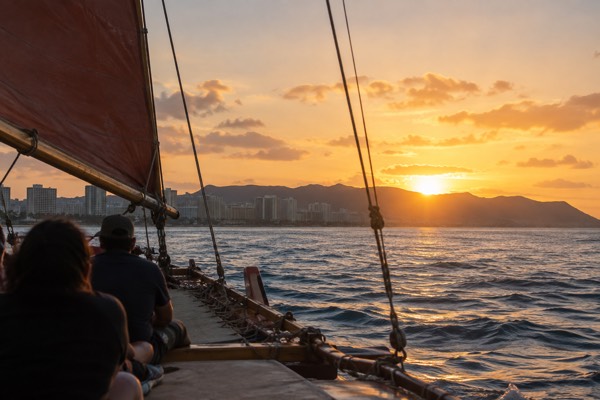
If a boat is your preferred vantage point, a sunset sail is the one way to guarantee the sun is over water in front of you, since the vessel simply turns west. The trio below covers the three sunset-adjacent products in this site's roster, from a short sail out of Waikīkī to a dinner cruise and a lūʻau inside Waimea Valley on the North Shore.
Which West-Side Locations Give The Best Sunset On Oahu?
The leeward coast's best sunset locations are the Ko Olina lagoons, the beaches and shoreline parks of the Waiʻanae coast, and the shoreline near the island's western tip, though Kaʻena Point itself is closed until further notice as of September 2026 following hurricane damage. Ko Olina offers calm, protected water and a manicured setting; Waiʻanae offers a wilder, more local scene with the island's driest skies.
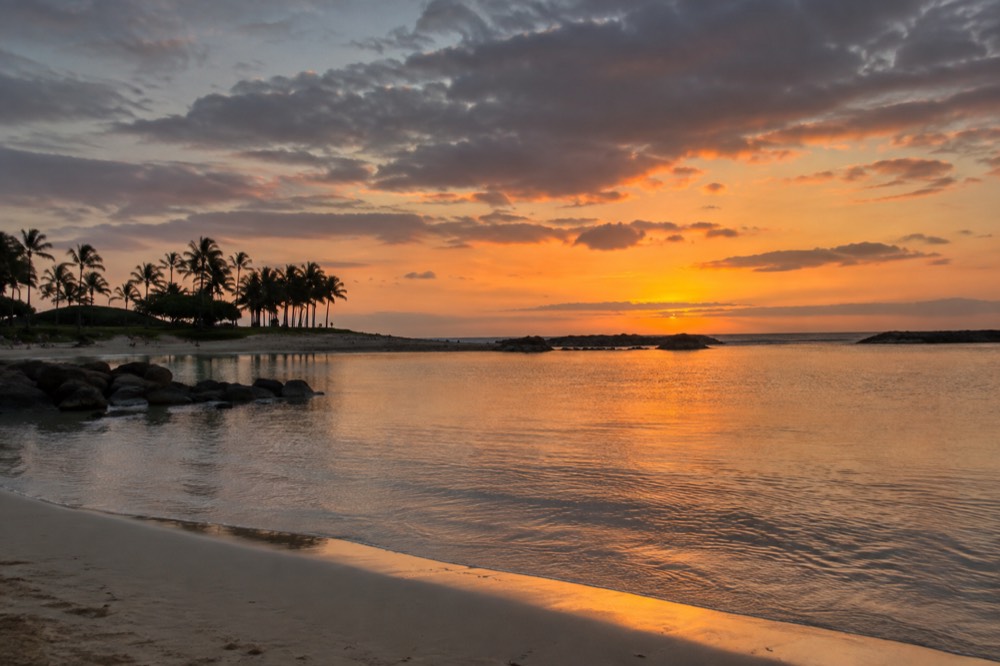
Ko Olina is the easy answer for families and anyone who wants a sunset without logistics. The resort coast has four artificial lagoons with public access, though this site's research could not verify public parking stall counts or lot hours, so arrive early and expect the lots to be the constraint rather than the view. The lagoons face west over calm, reef-protected water, and the sun drops into the channel between Oahu and the horizon with nothing in the way. The Ko Olina guide covers the area in detail.
The Waiʻanae coast beyond it is the connoisseur's version. It is the driest shoreline on the island, sits under the island's clearest evening skies, and carries far less visitor traffic than the south shore. The trade-off is honest: fewer services, a working community rather than a resort strip, and a longer run down a two-lane highway at the end of the day. Park legally, respect that these are residential neighborhoods, and do not treat the coast's beach parks as a photo set. The leeward coast guide has the fuller picture.
Kaʻena Point deserves a specific warning rather than a recommendation right now. The point is a leina a ka ʻuhane, a place where souls depart the living world in Hawaiian tradition, and it is also a protected seabird and monk seal area behind a predator-proof fence. It is not a "great sunset spot" in any copy this site will write, it is a sacred site that also has a sunset. More to the point for planning: Kaʻena Point State Park's Mokuleʻia and Keawaʻula sections are closed until further notice under a DLNR State Parks notice dated 9 September 2026, along with the Nuʻuanu Pali State Wayside and Wahiawā Freshwater State Recreation Area, all pending storm repairs after Hurricane Lowell. Do not plan an evening around it.
Here is how the main west-side options compare:
| Location | What the sunset looks like | Access and caveats |
|---|---|---|
| Ko Olina lagoons | Sun drops into open water over calm lagoon | Public access to lagoons; parking details unverified, go early |
| Waiʻanae coast parks | Wide ocean horizon, driest skies on the island | Working community; park legally, few services |
| Kaʻena Point | Western tip horizon | CLOSED until further notice (DLNR, Sept 2026); sacred site, not a photo backdrop |
| Mākaha and Yokohama beaches | Unfiltered western horizon | Remote, minimal facilities, swim at guarded areas only |
What Are The Best Sunset Spots Near Waikīkī?
The best sunset spots near Waikīkī are Ala Moana Beach Park, the Waikīkī waterfront itself, and any west-facing stretch of sand between the two, because from the south shore the sun sets over the water at an angle toward the island's western end. Ala Moana is the strongest pick: it faces open water, has park space and parking, and sits a short hop from the resort strip.
Ala Moana Beach Park is the practical answer for most visitors, and the Ala Moana guide covers it fully. The park's beach faces south and west across the channel, the sun sets over the water to your right, and the wide lawns and Magic Island peninsula give you room that Waikīkī beach simply does not have at that hour. It is also one of the few south-side spots where the horizon is water rather than buildings for most of the sun's descent.
Waikīkī itself works better than its reputation suggests. The beach's western stretch looks along the coast toward ʻEwa, and on clear evenings the sun goes down over the water with Diamond Head, Lēʻahi, glowing behind you. The crowds are real, and the beach narrows at high tide, but if your hotel is here the sunset is a two-minute walk and the show is free. The Waikīkī neighborhood guide sorts the beach by section.
Two honest caveats for the south shore. First, the port and airport sit to the west, so the very lowest sky near the horizon can carry a haze line on still evenings; the colour above it is usually unaffected. Second, Friday evenings bring the weekly fireworks over Waikīkī, which is either a bonus or an intrusion depending on your taste for crowds. If you want the fireworks and the sunset in one sitting, the waterfront near the Hilton end of the beach is where the two overlap.
For a different vantage without leaving the south shore, the water itself is the move. A catamaran or sail out of Waikīkī turns the angle problem into an asset, and the short sunset sail below boards straight off the beach.
The sail runs about ninety minutes, which is enough to be out for the whole descent and back on the sand before the evening fully darkens. Boarding is straight off Waikīkī beach, so there is no transfer, no parking hunt, and no risk of watching the horizon from a bus window. If that sounds like the right shape for your evening, the box below takes you to the operator's live listing.
Can You Watch The Sunset From The Water On Oahu?
Yes, and it is the one way to guarantee the sun sets over open ocean in front of you, because the boat simply positions itself west of the coast. Oahu's sunset options on the water include a short catamaran sail boarding from Waikīkī beach and a longer dinner cruise with a show, both running in the early-evening window when the sun is low. The sail is the purist's choice.
The sunset sail is the clean version of the idea: a small vessel, a short run, and the sun over water the whole time. Boarding from Waikīkī beach itself removes the transfer question entirely, which matters on an evening when the deadline is a sunset that does not wait. The operator's live listing carries current times, which shift with the season for exactly the reason the sun table above explains.
The dinner cruise is the bundled version. It runs longer, includes a buffet and an evening show, and turns the sunset into the first act of a night out rather than the whole event. For families or travellers who want one evening to do double duty, that bundle is efficient. For photographers and purists, the smaller sail keeps the horizon cleaner.
If a dinner-and-show evening on the water sounds appealing, book a sunset dinner cruise here.
The one thing a boat gives you that no beach can is the east shore turning pink behind you. Looking back at the Koʻolau range from the water at sunset, with the mountains in full colour and the sun ahead of you, is the single best argument for spending the evening afloat.
What About Sunsets From A Lūʻau Or The North Shore?
A lūʻau is a sunset-adjacent evening rather than a sunset viewing: the shows run into darkness and most seat guests in the late-afternoon light, so you get the colour as a backdrop rather than the main event. Waimea Valley on the North Shore hosts a lūʻau inside the valley itself, pairing an afternoon in a botanical garden with an evening show. The North Shore's own beaches catch the evening glow on the right evening.
Sunset Beach on the North Shore carries the name for a reason, though the beach faces mostly north and the sun sets over the land's western shoulder rather than straight out to sea. The evening light on that coast in winter, when the surf is up and the north-facing shore runs its biggest swells, is a different spectacle: the colour lands on the waves rather than the horizon. The North Shore guide covers the coast, and the Sunset Beach guide covers the beach itself.
The lūʻau option deserves a specific mention because of where one of them sits. Waimea Valley is a botanical and historical site inland from Waimea Bay, and the lūʻau held there runs inside the valley, so the evening begins with the garden and ends with the show. It is the closest thing Oahu has to a sunset-and-culture evening in one ticket. The Waimea Valley guide covers the site; note that the valley is closed Mondays and open Tuesday to Sunday, 9 a.m. to 4 p.m., with hours varying seasonally, so the lūʻau is an evening-only use of the site.
A note on the surf-season angle, because it is one of this site's genuinely useful facts: Oahu's shores run out of phase. North-facing shores peak in winter, south-facing shores peak in summer, and on a September day the National Weather Service surf forecast had the south shore running 4 to 6 feet while the north shore sat at 1 to 3. If your sunset plan doubles as a wave-watching plan, the season decides which coast you want.
Is Any Famous Oahu Sunset Or Viewpoint Spot Closed Right Now?
Yes, three, and all under one DLNR State Parks notice dated 9 September 2026 following Hurricane Lowell: Nuʻuanu Pali State Wayside, the Pali Lookout, is closed until further notice, Kaʻena Point State Park's Mokuleʻia and Keawaʻula sections are closed, and Wahiawā Freshwater State Recreation Area is closed. All other Oahu state parks had reopened as of that notice. Storm-related reservation refunds are automatic and take four to six weeks.
The Pali Lookout closure matters for sunset planning more than it might appear, because the lookout is one of the island's famous view points and a lot of older content still sends people there without a status check. This site will not, until the closure lifts. The same notice covers Kaʻena Point, which this guide treats with restraint anyway: it is a sacred site and a protected wildlife area, not a photo backdrop, and right now it is not an option at all.
The practical read: build your sunset plan around the leeward coast's beaches and lagoons, the south shore's parks, or the water, all of which are open, and check the DLNR State Parks notices the week you travel, because storm-repair timelines move. Any page that names the Pali Lookout or Kaʻena Point as open without a date is stale, and you should treat it that way.
What Should You Know Before Chasing A Sunset On Oahu?
Three things decide most Oahu sunset evenings: the sky, the shore, and the clock. The leeward coast's dry climate gives the best odds of clear sky, but every shoreline carries hazards, and the sun sets early enough in winter that plans need a hard deadline. Wildlife rules also apply at dusk, when Hawaiian monk seals and honu haul out onto exactly the beaches people photograph at sunset.
The sky first. The rainfall contrast on this island is extreme and sourced: 16.41 inches a year at the airport gauge against 150.96 inches in Mānoa five miles away. The same physics that makes Mānoa a rainforest makes the Waiʻanae side a sunset coast. If the forecast shows afternoon clouds over the Koʻolaus, that is normal and does not necessarily spoil a west-facing evening, because the clouds sit on the windward side of the mountains. If the clouds are out to the west over the water, pick a spot with an interesting foreground instead of a horizon view.
The shore second. Oahu's beaches carry real hazards, and this site's ocean safety guidance applies at sunset like anywhere else. The leeward coast can look calm and still carry strong afternoon trade-wind chop; swim at guarded beaches, and treat the hour before sunset as a viewing hour rather than a swimming hour. Never turn your back on the water near a shoreline ledge, and do not walk out on wet rock to get a better frame. The ocean safety guide covers this in full.
The wildlife rules deserve their own sentence because dusk is exactly when the conflicts happen. Hawaiian monk seals and green sea turtles, honu, haul out onto sand in the late afternoon, and the recommended distances are 50 feet from a seal and 10 feet from a turtle. Those are guidelines; what is law is the prohibition on take and harassment, and approaching a resting animal for a photo is harassment. Whales are a different category entirely: 100 yards is a legal distance for humpbacks, in season November through April, and a whale breaching in the sunset light is a moment you watch from where you stand.
| Planning factor | What the data says | Source note |
|---|---|---|
| Latest sunset of the year | 7:17 p.m. (5 July, Waikīkī) | US Naval Observatory sample |
| Earliest sunset window | Before 6 p.m., late November onward | Sampled data; earliest date not captured |
| Driest sunset coast | Leeward, ~16.41 in/yr at the airport gauge | NCEI 1991–2020 normals |
| Wettest nearby valley | Mānoa, 150.96 in/yr at Lyon Arboretum | NCEI 1991–2020 normals |
| Closed viewpoints | Pali Lookout, Kaʻena Point, Wahiawā Freshwater | DLNR notice, 9 Sept 2026 |
The clock last. Sunset in Hawaii is not a lingering affair: the tropical day shortens fast, and the good colour lasts maybe half an hour. Pick one spot, be there forty minutes early, and let the evening end on the sand rather than in a car. If you would rather someone else handle the timing, the sunset products in the roster do exactly that, and the trio below is the full set.
Of the three, the Waimea Valley lūʻau is the one that turns the evening into something more than a view: the show runs inside a working botanical and historical site, and the sunset is the opening act rather than the whole story. The card below has the details.
Common Questions About Sunset Spots On Oahu
Most questions about Oahu sunsets come down to four things: which way the coast faces, what time the sun goes down, whether the sky will be clear, and whether the spot you read about is actually open. The answers are geographic and seasonal: the west side faces the sun, the sunset swings between roughly 6 p.m. and 7:17 p.m., the leeward coast is the island's driest, and three well-known viewpoints are closed as of September 2026.
Where is the best place to watch the sunset on Oahu?
The leeward coast, from the Ko Olina lagoons out along the Waiʻanae shore, is the only stretch where the sun sets directly over open ocean, and it sits in the island's driest climate zone. Near Waikīkī, Ala Moana Beach Park is the strongest practical pick, with the sun setting over water at an angle toward the island's western end.
What time does the sun set on Oahu?
Between roughly 5:55 p.m. in late December and 7:17 p.m. in early July, based on the Waikīkī sun-time samples in this site's research. The swing is about an hour and twenty minutes across the year. Sunset never gets later than about 7:17 p.m., so plan evening activities around an early sun.
Can you see the sunset from Waikīkī?
Yes. From the western stretch of Waikīkī beach the sun sets over the water at an angle toward the island's western end, with Diamond Head catching the last light behind you. The crowds are heavy, and Ala Moana Beach Park a short hop away gives a similar view with more room.
Is Kaʻena Point a good sunset spot?
Kaʻena Point is a sacred site, a place where souls depart the living world in Hawaiian tradition, and a protected seabird and monk seal area, so this site does not frame it as a photo backdrop. It is also currently closed: the Mokuleʻia and Keawaʻula sections of Kaʻena Point State Park are shut until further notice under a DLNR notice dated 9 September 2026.
Is the Pali Lookout open for sunset views?
No. Nuʻuanu Pali State Wayside, the Pali Lookout, is closed until further notice as of the DLNR State Parks notice dated 9 September 2026, pending repairs after Hurricane Lowell. Any guide that lists it as open without a recent date is stale. Check the DLNR notices the week you travel.
When is golden hour on Oahu?
Roughly the forty minutes before the listed sunset time, which is when the west-facing coast does its best work. The site's golden hour guide covers the photography side in detail, but the short version is: arrive with time to spare, because the listed sunset time is the moment the sun's edge crosses the horizon, not the moment the sky peaks.
The evening that follows all of this is simple. Stand on the driest coast on the island, or on a boat pointed west, forty minutes before a sunset that lands somewhere between 5:55 and 7:17 depending on the season, and let Oahu's one west-facing shore do the work. This Oahu Travel Guide keeps the closure list and the sun tables current, so the spot you pick is one you can actually stand on.