Ala Moana Beach Park & Ala Moana Center: What A Visit Actually Involves
Ala Moana pairs a calm, protected swimming beach with the largest open-air shopping center in the world, all within walking distance of Waikīkī. Here is what a visit actually involves.
Short answer
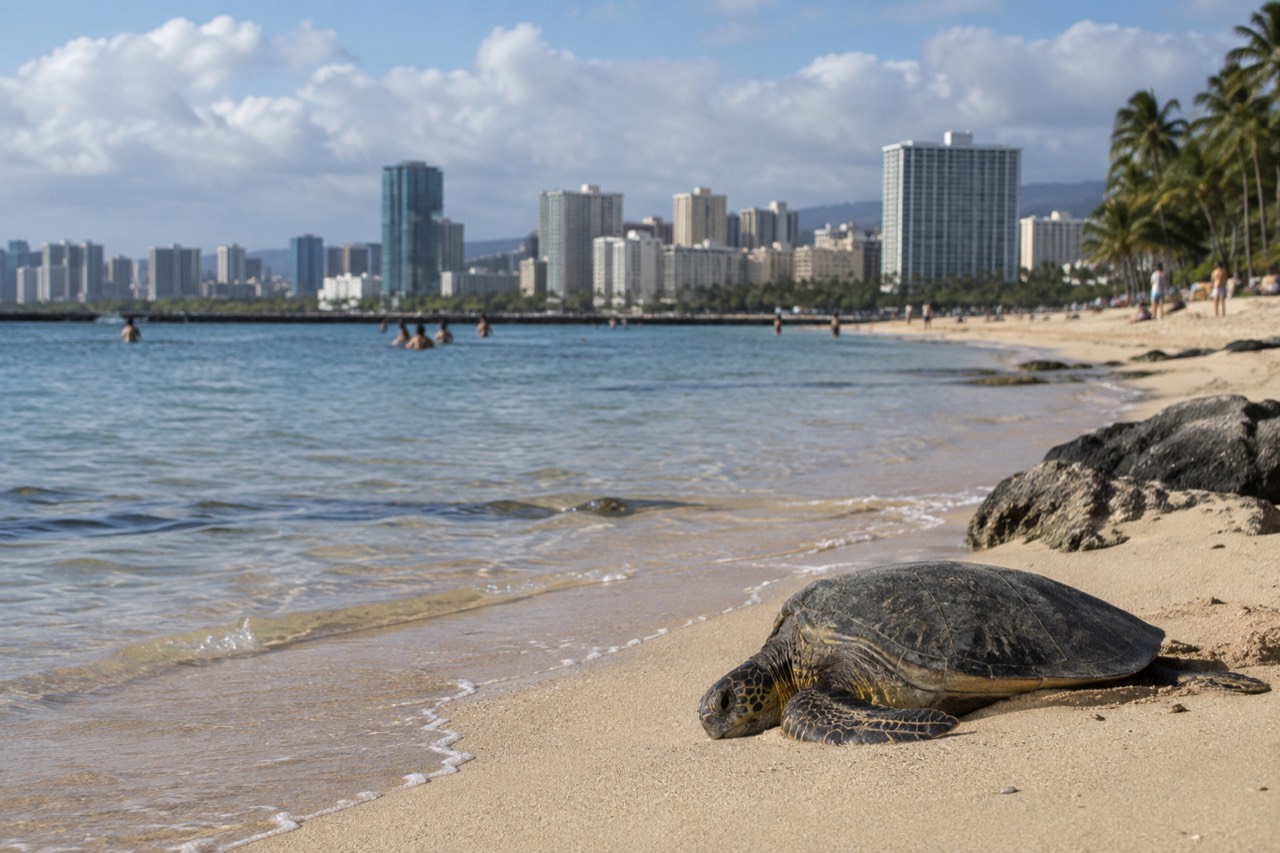
Ala Moana Beach Park is a free public beach with calm, shallow water protected by a fringing reef, sitting directly across the street from Ala Moana Center. You can swim, walk the shoreline path and shop in the same morning without moving your car, and the whole area is reachable from Waikīkī by bus, trolley or a long walk.
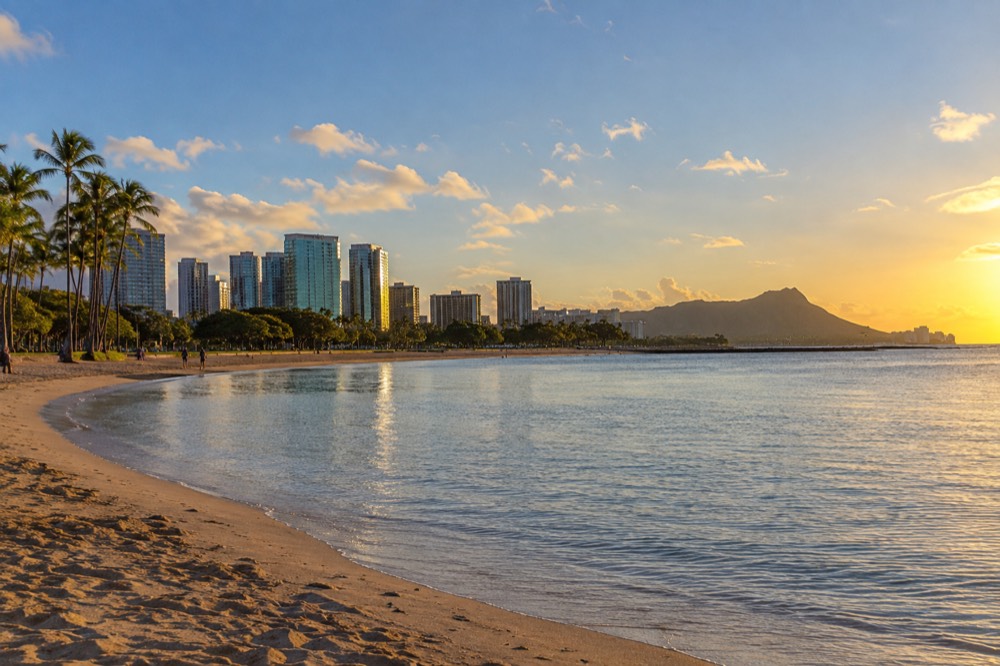
Ala Moana means "path to the sea," and the name fits better here than almost anywhere on Oʻahu. In one small corner of Honolulu you get a reef-protected swimming beach with water shallow enough for toddlers, a shoreline walking path locals use every evening, Magic Island's flat loop at the west end, and, directly across Ala Moana Boulevard, the largest open-air shopping center in the world. Very few places on the island let you swim, eat and shop without ever moving your car.
The pairing is also unusual in a way the guidebooks undersell. The beach park is a genuinely local space: residents swim laps here before work, families set up under the ironwood trees on weekends, and the sunset crowd along the seawall is mostly people who live on this island. The mall, meanwhile, is one of the biggest visitor draws in the state. The two sit across a four-lane road from each other and serve completely different crowds, and knowing which one you are actually visiting shapes the whole day.
This guide covers what a visit involves in practice: how to get there, what it costs, when to go, what the water is really like, and how to plan a day that uses both halves well.
Where Is Ala Moana Beach Park And How Do You Get There?
Ala Moana Beach Park sits on the south shore of Honolulu, directly west of Waikīkī and across Ala Moana Boulevard from the shopping center. There is no Skyline rail station nearby, so the practical options are TheBus, the Waikīkī trolley, a taxi or rideshare, or walking the roughly two miles along the waterfront from central Waikīkī. Several bus routes stop at the Ala Moana Center transit hub, which sits a short walk from the beach.
The transit hub outside the mall is one of the busiest on the island, and that is the useful part: you do not need to know a specific route number in advance, because nearly anything heading west out of Waikīkī will pass through it. A single adult ride on TheBus costs $3.25 in exact cash, but the smarter move is a HOLO card, which caps at $7.50 per day no matter how many times you tap. If you are doing a loop that includes the beach, the mall and a stop elsewhere, the daily cap quietly pays for itself.
The walk from Waikīkī is longer than most people expect, and much of it is genuinely pleasant. The route along the waterfront passes Kapiʻolani Regional Park and then the Ala Wai harbor mouth before reaching the park. Go in the morning before the pavement heats up, and treat the return leg as your bus ride.
If you are driving, arrive early. The beach park's lot is free and fills by mid-morning on weekends, and the mall's paid structure is the fallback, which means paying for parking to visit a free beach. That trade-off decides many people's timing for them.
What Does Ala Moana Beach Park Cost To Visit?
Nothing. The beach park is a public city park with free entry, free restrooms, free showers and free parking in its own lot, subject to availability. There are no gate fees, no reservations and no time slots. The costs that can creep in are paid mall parking if the free lot is full, bus or trolley fare if you are not walking, and whatever you spend at the food vendors and shops across the street.
That "free" needs one honest qualifier: free parking at a popular city beach on an island that hosted 5.68 million air visitors in 2025 is a competitive resource. On a Saturday the lot can be effectively full before 9 a.m. The park itself never turns anyone away; the parking does.
The park's facilities are genuinely good for a free city beach. Restrooms and outdoor showers sit near the central sections, picnic tables and grills are scattered under the trees, and the grassy strip between the lot and the sand is wide enough that the park absorbs crowds without ever feeling wall-to-wall. Lifeguards staff the central towers during the day, which matters more here than at many beaches, and we will come to why in the ocean section below.
For comparison, the paid attractions nearby charge real money. Waimea Valley, on the North Shore, charges $26 for an adult non-resident, and the Diamond Head monument requires a $5 per-person reservation plus $10 to park for non-residents. Ala Moana asks for none of that, which is exactly why residents defend it so fiercely when visitor pressure builds.
| Item | Cost | Notes |
|---|---|---|
| Beach park entry | Free | Public city park, no reservation |
| Park parking lot | Free | Fills early on weekends |
| Mall parking | Paid | Fallback when the park lot is full |
| TheBus single ride | $3.25 cash | $3.00 with a HOLO card, transfers included |
| HOLO daily cap | $7.50 | All TheBus and Skyline rides after that are free |
| Restrooms, showers, picnic areas | Free | Located through the central park |
Is The Water At Ala Moana Beach Park Safe For Swimming?
Yes, for most swimmers most of the time, and it is one of the calmest swimming beaches on Oʻahu. A fringing reef offshore blocks the open-ocean swell, so the water inside the lagoon is shallow, flat and gentle, which is why families with small children favor it.
The real hazards are the boat channel near Magic Island, rocky patches toward the reef edges, and box jellyfish that drift in on certain lunar-cycle days, so check with the lifeguards before getting in.
The reef protection is the whole story here. South-facing shores on Oʻahu take their swell mainly in the summer months, when the surf forecast shifts to the south aspect; in winter the south shore typically settles while the north shore wakes up. Even when the south shore is running a swell, the reef at Ala Moana flattens what arrives inside, so the lagoon stays swimmable on days when nearby Sandy Beach Park, which faces the open ocean with no protecting reef, would be genuinely dangerous for a casual swimmer.
Two things to respect regardless of the forecast. The boat channel that runs along the west side toward Magic Island is deeper and is used by small craft, so stay out of the marked channel when swimming. And the bottom inside the lagoon is sand in the middle but rocky toward the reef edges, so water shoes earn their keep, especially at low tide.
The jellyfish calendar deserves a real mention because calm inshore water is exactly where box jellyfish show up. They tend to arrive on Oʻahu's south shores in predictable windows roughly eight to ten days after a full moon, and the numbers vary. If you are visiting during one of those windows, ask the lifeguards; they will know by mid-morning whether any have washed in. Our Oʻahu ocean safety guide covers the full set of hazards, and the box jellyfish calendar for Oʻahu tracks the arrival windows in detail.
The water itself is warm year-round. The NOAA gauge in Honolulu Harbor, which runs a touch warmer than open water off the beaches, recorded a monthly mean of 78.0°F in February and 82.7°F in August across 2025, so "too cold" is never really the problem.
| Condition | What to expect | When it matters most |
|---|---|---|
| Surf inside the lagoon | Near-flat; reef blocks the swell | Always, this is the draw |
| South shore swell outside | Larger in summer months | Swimmers staying near the reef line |
| Boat channel | Deeper water, small craft use it | Swimming near Magic Island |
| Bottom | Sand centrally, rock toward reef edges | Low tide, water shoes help |
| Box jellyfish | Periodic arrivals after the full moon | Check with lifeguards first |
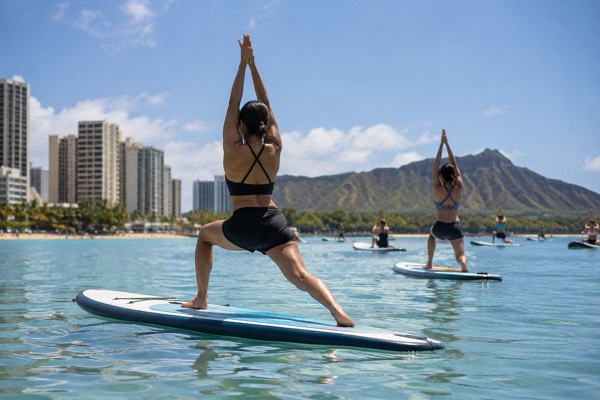
Because the lagoon is calm and close to Waikīkī, it also works as a base for getting out on the water rather than just swimming in it. These are the tours that pair naturally with a beach day here.
What Is Ala Moana Center And Is It Worth Visiting?
Ala Moana Center is the largest open-air shopping center in the world, with hundreds of stores and restaurants arranged around a central courtyard, sitting directly across the boulevard from the beach park. Whether it is worth visiting depends on what you want: as a shopping destination it is genuinely world-class, and as a shelter from midday heat or rain it is the best one on this side of the island, but it is not a cultural attraction and does not pretend to be.
The scale is the thing that surprises people. The center holds the full range from everyday brands to flagship luxury houses, plus a large food court, a rooftop garden level and a supermarket, which makes it a practical stop as much as a shopping one. Visitors staying in Waikīkī without a car use it for things a resort neighborhood cannot supply: affordable meals, pharmacy items, beach gear, and dry clothes on a rainy afternoon.
The open-air design matters in the tropics. The corridors are roofed but the courtyards are open to the sky, so the mall breathes in the trade winds instead of sealing you into air conditioning, and you can walk from one end to the other without ever feeling boxed in. The center court, with its stage and garden, hosts free performances regularly, and catching one by accident is one of the nicer unplanned moments a Honolulu afternoon can produce.
For food, the food court is the budget play and the surrounding streets are the interesting one. Our guide to the best restaurants in Waikīkī covers the neighborhood a short bus ride east, and the Waikīkī neighborhood guide explains how the two areas connect. If you want to try local food in a more deliberate way, the food tours that operate out of Honolulu are worth a look on our things to do in Oahu page.
One honest caution: this is a shopping mall, and prices reflect where you are. Anything you could buy at home, buy at home. What the center does uniquely well is the combination of scale, shelter and location, and that is what you should plan around.
When Is The Best Time Of Day To Visit Ala Moana?
Morning is best for swimming and parking, late afternoon is best for atmosphere, and midday is the time to cross the street into the mall. The park's free lot fills by mid-morning on weekends, the lagoon is calmest and clearest before the wind picks up around late morning, and the seawall sunset crowd is one of Honolulu's genuine daily rituals, so the strongest plan splits the day: beach early, mall in the heat, seawall for sunset.
The wind pattern drives a lot of this. Trade winds typically strengthen through the late morning and afternoon, which does two things to the lagoon: it puts a light chop on the water and it blows sand along the beach, which is exactly as pleasant as it sounds. Swimmers who arrive before 9 a.m. get glassier water, easier parking and shade still on the sand.
Midday is when the beach stops being the best place to be and the mall starts being exactly the right place to be. The open-air corridors stay shaded, the food court does a brisk lunch, and the center's air-conditioned stretches are a legitimate relief when the sun is overhead. This is the natural rhythm of the pairing, and it is why the two halves of Ala Moana work so well together: they cover each other's weak hours.
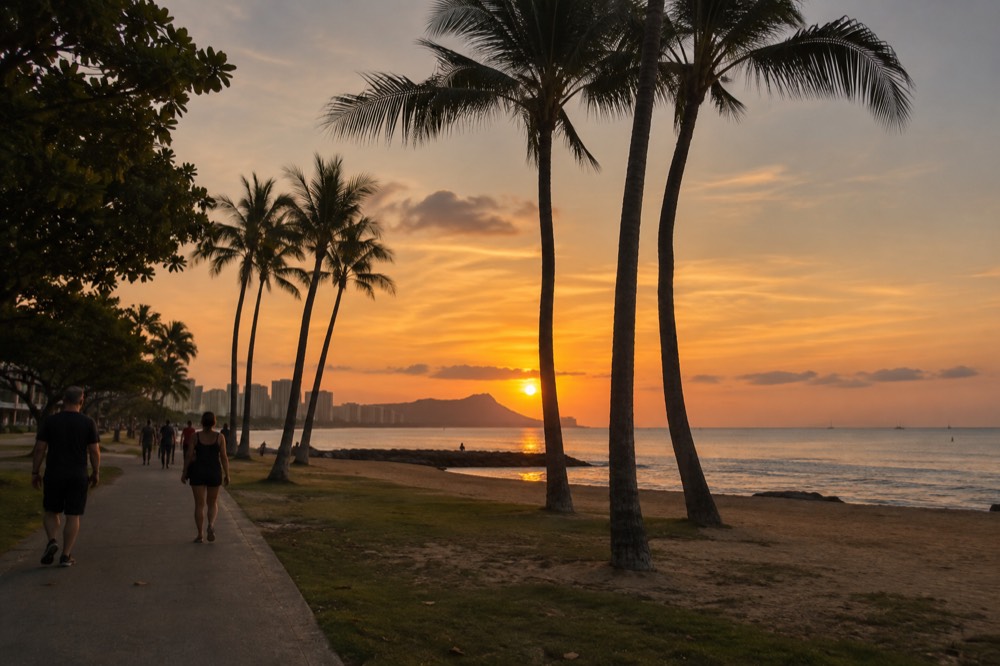
Sunset is the locals' hour. The sun sets over the water here, facing west along the channel toward the Waiʻanae coast, and the seawall, the Magic Island loop and the grass fill with residents walking, swimming and just sitting. Honolulu's latest sunset of the year is around 7:17 p.m. in early July and closer to 5:55 p.m. at the December solstice, so the evening window shifts a lot by season; in winter the sunset crowd arrives straight from work and in summer it lingers for an hour after.
| Time | What works | What to watch |
|---|---|---|
| Before 9 a.m. | Calm water, free parking, shade on the sand | Nothing; this is the prime window |
| Mid-morning to noon | Beach time before the wind rises | Sand blowing once trades strengthen |
| Midday | Cross to the mall for lunch and shade | Park lot is full by now |
| Late afternoon | Return for a swim, walk the Magic Island loop | Jellyfish check if near a full moon |
| Sunset | Seawall and grass; the local evening ritual | Latest sunset is about 7:17 p.m. in July |
Can You Do Ala Moana Beach Park And Ala Moana Center In One Day?
Yes, easily, and combining them is the smart way to do both. The two are a five-minute walk apart across Ala Moana Boulevard, so a single visit can hold a morning swim, a shaded mall lunch, an afternoon of shopping or a movie, and a sunset walk on the seawall, all without moving the car once.
The only real constraint is parking: arrive early enough to get a free space in the park lot, or accept paid mall parking for the day.
The practical shape of the day writes itself. Start at the beach while the water is calm and the lot is open. Walk over to the center when the sun gets high; eat in the food court or at one of the sit-down restaurants, then do whatever shopping or browsing actually interests you. Come back across the street in the late afternoon for another swim, and stay for sunset. If you have kids, the shallow lagoon in the morning and the mall's air conditioning in the afternoon is a combination families have been running for decades.
The one-day version also handles bad weather better than almost any other beach plan on the island, which sounds like faint praise until you have sat through an Oʻahu downpour. If a shower arrives, you are minutes from shelter, food and a roof, and the showers on this side of the island are usually brief. Remember the rainfall contrast from earlier: a wet afternoon in Mānoa can be a dry one here, so a forecast that cancels a valley hike does not cancel an Ala Moana day.
If you want more than the beach and mall can offer, the surrounding area adds options. The harbor sits at the east end of the park, with boat tours and catamaran sails leaving from nearby slips, and the snorkel trips to Turtle Canyon depart from Waikīkī, a short ride away. A morning on the water and an afternoon at Ala Moana is a genuinely full day.
Want to end the day out on the water? Book a sunset catamaran cruise here.
How Does Ala Moana Compare With Waikīkī Beach?
Ala Moana is calmer, roomier and more local; Waikīkī is denser, more convenient and better served by tours and lessons. The water at Ala Moana is flatter and shallower inside its reef, the sand strip is wider with far more grass and shade behind it, and the crowd skews resident rather than visitor. Waikīkī concentrates the hotels, the surf-lesson economy and the evening energy, and the two are close enough to use both.
The differences that matter day-to-day are practical. Parking at Ala Moana is free versus paid structures around Waikīkī. Space on the sand is easier to find, especially midweek. The swimming is better for small children because the lagoon is shallower and flatter than most of Waikīkī's beach. But Waikīkī wins on services: it is where the surf schools, the catamaran launches, the beach-gear rentals and the overwhelming majority of the island's visitor infrastructure sit, and it is where most people are already staying.
The crowd difference is real and worth naming plainly. Waikīkī is a visitor district that locals pass through; Ala Moana is a city park that visitors pass through. That does not make either better, but it changes the etiquette. At Ala Moana you are, in a meaningful sense, a guest in a neighborhood park, and the resident families around you are not part of the scenery. Keep the volume down, pack out what you bring, and do not set up in the middle of the grassy areas locals use for games and gatherings.
For a fuller treatment of the trade-offs, including where to stay, our Waikīkī vs North Shore comparison covers the bigger decision, and the Waikīkī neighborhood guide goes deep on the district itself.
| Factor | Ala Moana Beach Park | Waikīkī Beach |
|---|---|---|
| Water | Flatter, shallower, reef-protected lagoon | Gentle but busier, more boat and board traffic |
| Parking | Free park lot, fills early | Paid structures, limited street options |
| Crowd | Skews local, roomier | Skews visitor, dense |
| Shade and grass | Wide grass strip, mature trees | Narrow, mostly hotel-fronted |
| Tour access | Few departures nearby | Surf lessons, catamarans, most water tours |
| Best for | Calm swimming, family days, sunset | Convenience, lessons, nightlife nearby |
What Should You Know About Magic Island And The Rest Of The Park?
Magic Island is the flat, man-made peninsula at the west end of the park, built from the fill of a development project that was stopped before it became the resort complex originally planned, and it is now a park with a walkable loop, a second beach cove and the best sunset seats in the area.
The rest of the park stretches east from it along a long stretch of sand, with the calmest swimming in the central sections near the lifeguard towers.
Magic Island rewards a walk even if you never swim there. The loop is flat and paved, popular with runners and strollers, and the outside edge faces the open channel toward the Waiʻanae coast, which is where the sunset actually lands. The small cove inside the peninsula is protected again from the wind and is a second shallow swimming spot, though the boat channel runs just beyond it, so stay out of the marked lane.
The main beach east of Magic Island is the classic Ala Moana experience. The sand is golden and wide, the slope into the water is gentle, and the reef line sits far enough out that most swimmers never reach it. The sections near the central towers are the busiest and best patrolled; walk east toward the harbor end and it thins out, which is where residents tend to settle.
A note on the harbor end: the Ala Wai Small Boat Harbor and the walk toward Waikīkī start there, and the seawall and channel area are working waterfront, not a photo set. Boats come and go, and the channel markers are there for a reason. It is a pleasant walk, not a swimming area.
What Would A Perfect Ala Moana Day Look Like?
Arrive before 9 a.m. and park free in the park lot, swim in the flat lagoon while the water is glassy, walk the Magic Island loop before the trades strengthen, cross to the center at midday for lunch and shade, return mid-afternoon for a second swim, and finish on the seawall for sunset with dinner either at the mall or back toward Waikīkī.
That single arc uses every strength of the pairing and dodges its two real weaknesses, midday heat and full parking.
The morning is the part worth protecting. Everything else in the day is flexible, but the early arrival is what buys you the free parking space and the calm water, and neither comes back once gone. If you are coming from Waikīkī by bus, aim for a departure that puts you at the transit hub before 9, which is easy on the frequent routes.
Midday is deliberately mall time. Two or three hours in the center covers lunch, any shopping that matters, and a genuine escape from the sun. If shopping does not interest you at all, the food court and the people-watching still earn the visit; this is one of the most diverse public spaces on the island, and the lunch hour is when you see it.
The late-afternoon return is optional but recommended. The wind has usually settled a little, the crowd has thinned, and the light gets good for photographs along the seawall. Then sunset, which here faces west over the channel and the distant Waiʻanae coast, is the daily show the whole neighborhood turns out for.
If you want the water involved, a morning snorkel trip to Turtle Canyon sails from nearby Waikīkī and returns by early afternoon, which slots into this plan almost perfectly: turtles before lunch, mall in the heat, sunset on the seawall.
Common Questions About Ala Moana Beach Park And Ala Moana Center
Most questions about Ala Moana come down to three things: the pairing of a free public beach with a paid commercial space, the calm-water conditions that make the lagoon swimmable when other south-shore beaches are not, and the timing that gets you free parking and glassy water before the trades rise. Everything else, from jellyfish to bus fares, is a detail hanging off those three, and the answers below handle the details.
Is Ala Moana Beach Park free?
Yes. The park is a public city beach with free entry, free restrooms, free showers and a free parking lot. The only costs are paid mall parking if the lot is full, transit fare if you are not walking, and anything you buy across the street.
Can you swim at Ala Moana Beach Park?
Yes, and it is one of the calmest swimming beaches on Oʻahu. A fringing reef blocks the open-ocean swell, leaving shallow, flat water inside the lagoon. Watch for the boat channel near Magic Island, rocky patches toward the reef line, and box jellyfish in the days after a full moon; ask the lifeguards before getting in.
How far is Ala Moana Center from the beach park?
They face each other across Ala Moana Boulevard. The walk from the central park to the mall's entrances takes about five minutes, which is why the two work so well as a single outing.
Can you walk from Waikīkī to Ala Moana Beach Park?
Yes. The waterfront route is roughly two miles from central Waikīkī and passes the harbor mouth on the way. Most people walk one direction and take the bus back; the transit hub at the mall connects to nearly every route heading east.
Is Ala Moana Center the largest mall in the world?
It is the largest open-air shopping center in the world, with hundreds of stores and restaurants. Indoor malls elsewhere are larger, but none combine this scale with open-air corridors and courtyards.
When is sunset at Ala Moana?
Latest sunset of the year is about 7:17 p.m. in early July; by the December solstice it is closer to 5:55 p.m. The seawall and Magic Island loop are the classic viewing spots, and the local crowd turns out for it year-round.
Ala Moana earns its place on an Oʻahu itinerary not because either half is extraordinary alone, but because the pairing is unmatched anywhere on the island. A reef-flat lagoon you can actually swim in, a free park with real facilities, and the biggest shopping and dining concentration in the state sitting five minutes from the sand: plan the day around the parking and the wind, respect that the park belongs to the people who use it every evening, and you will understand why the path to the sea is so well worn. For everything else on the island, Oahu Travel Guide has the rest.