Whale Watching On Oahu: Season, Tours And Where To Watch From Shore
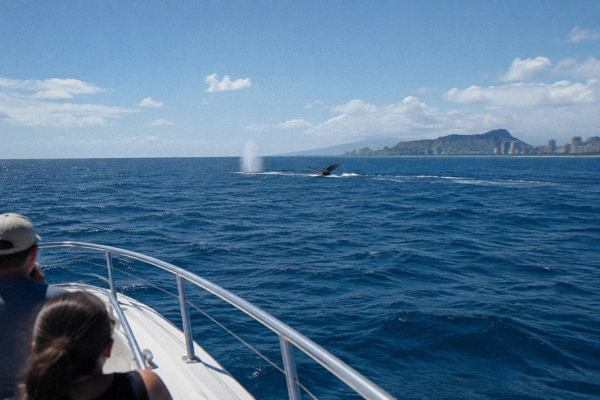
Humpback whales are in Hawaiian waters from November through April, and Oahu is one of the easier places in the state to watch them, from a boat out of Waikiki or from several shoreline lookouts.
Short answer
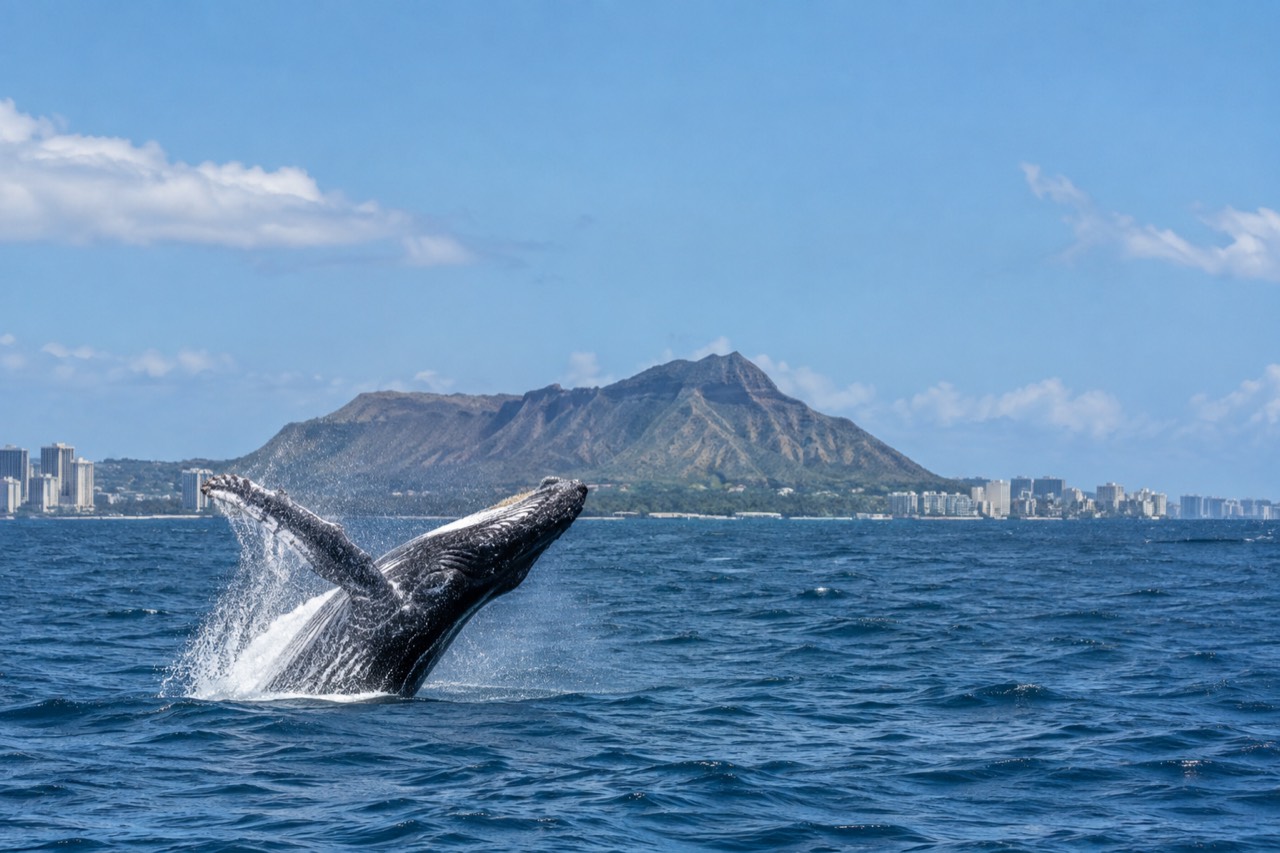
Humpback whales are in Hawaiian waters from November through April. On Oahu you can watch them from shore at lookouts along the south and east coasts, or from a whale watching boat out of Waikiki. Federal law requires everyone to stay at least 100 yards from a humpback whale, so no tour can promise a close approach.
Humpback whales travel to Hawaiian waters every year, and the Hawaiian Islands Humpback Whale National Sanctuary puts the visible season plainly: from November through April, visitors can see whales from shore and at sea. Oahu sits inside the sanctuary's coverage, and its south and east facing shores give land-based watchers real odds, not just promises. This guide lays out the season, the legal distance rules, the tour options and the practical details, using the sanctuary's own guidance and the operators' live listings rather than folklore.
When Is Whale Watching Season On Oahu?
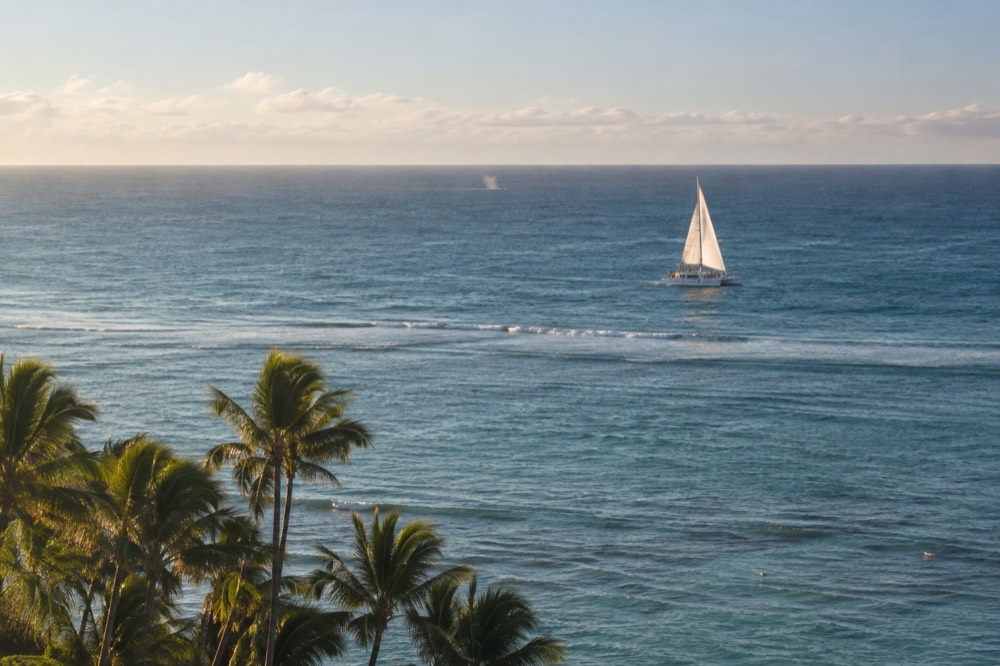
Humpback whales are present in Hawaiian waters from November through April, per the Hawaiian Islands Humpback Whale National Marine Sanctuary, which states that visitors can see whales from shore and at sea during those months. The sanctuary does not name a peak month, so any tour promising one specific best week is guessing. Operators state their own seasons, and those listings govern whether a given trip runs at all.
The humpbacks come to Hawaii to calve and to breed, in the warm, relatively shallow waters around the main islands, and Oahu lies within the sanctuary boundary. The season is long but not uniform: sightings in November are fewer and less predictable than in the middle of the season, when the population is at its fullest. The honest planning advice is to treat November and April as shoulder months with lower odds, and the middle of the window as the time when a dedicated whale watch trip is most likely to pay off.
One detail worth knowing: the tour operators themselves state their own seasons, and these can be narrower than the sanctuary's. If you are booking a specific trip, the operator's stated season governs whether that trip runs at all, not the sanctuary's broader visible window.
The timing of your trip interacts with the rest of an Oahu itinerary in ways worth planning around. The middle of the whale season overlaps the period when north shore surf builds, which is why a winter visit can pair a morning whale watch on the calm south side with an afternoon watching big waves from Sunset Beach. It also overlaps the busiest visitor months, so the same advice about booking ahead applies to whale watches as to luaus. The best time to visit Oahu guide breaks down the trade-offs month by month, and the Oahu whale season guide goes deeper on what the sanctuary does and does not say about peaks.
Where Can You See Whales From Shore On Oahu?
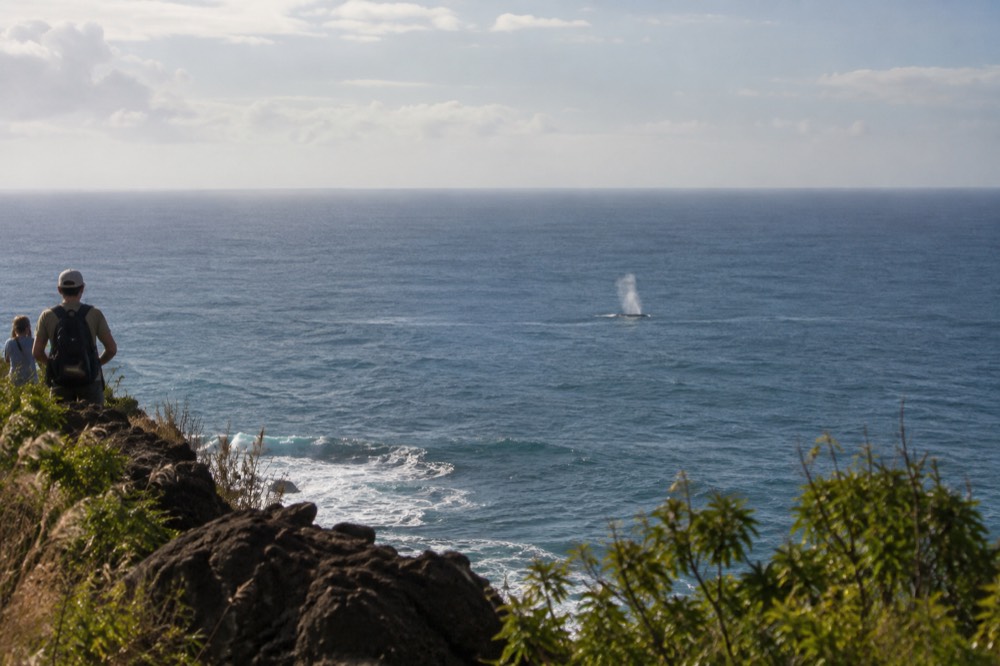
You can watch humpbacks from several Oahu shorelines without a boat, and the sanctuary explicitly endorses shore watching as a way to see them. Any elevated, open outlook over the south or east facing shores works: headlands and cliffside trails beat beach level, because a whale spout a mile out is easier to spot from above. The Mākapuʻu Point Lighthouse Trail is the classic choice.
The reason the east and south shores are the productive ones is simple geography. The whales work the channel and offshore waters, and a viewpoint that commands a long horizon lets you scan it. From the Mākapuʻu trail you look out over the Kaiwi Channel toward Molokaʻi, a known corridor for humpbacks moving between the islands. From Diamond Head, Lēʻahi to use its Hawaiian name, you are above the same stretch of water that the Waikiki whale watch boats search.
Bring binoculars if you have them, and learn to read the surface. A blow, the tall single spout of an adult humpback, is visible a long way off. A big splash with no boat nearby often means a breach. Patience matters more than luck: pick a spot, sit, and scan the water in sectors rather than staring at one patch of ocean.
The best sunset spots on Oahu list overlaps with several good whale watching vantage points, which is handy if you want to combine both in one evening.
| Shore lookout | What you look out over | Why it works for whales |
|---|---|---|
| Mākapuʻu Point Lighthouse Trail | Kaiwi Channel toward Molokaʻi | Elevated, open horizon on a known whale corridor |
| Diamond Head crater rim (Lēʻahi) | South shore toward Waikiki and beyond | Height over the same water the tour boats search |
| Hālona Blowhole area | Open south-facing ocean | Long horizon, easy roadside access |
| Sandy Beach Park | South-facing coast | Wide ocean view from a popular local beach |
| Laniakea stretch of Kamehameha Highway | North-facing water | Bonus turtles year-round; scan seaward in season |
A note on the north shore: it faces the wrong way for the calmest whale watching conditions in winter, because that is exactly when the surf is largest, but whales do pass along every coast in season. The productive move there is to pick an elevated spot, stay well back from the water on high surf days, and treat any sighting as a bonus on top of the waves.
Which Oahu Whale Watching Tour Should You Book?
The dedicated whale watch out of Waikiki is the 2-Hour Oahu Whale Watch from Ala Wai Harbor, a 2-hour boat trip that leaves from Waikiki. If you want whales as part of a bigger island day, the full circle island tours pass along the same coasts and stop at lookouts where whales are often visible from land.
The dedicated boat trip is the pure option: you leave from Waikiki, spend two hours on the water with a crew whose job that day is finding whales, and get back in time for lunch. The trade-off is inherent to wildlife, and honest operators say so. Humpbacks are wild animals in a large ocean, and no responsible tour guarantees a sighting. What a good trip does guarantee is time on the water inside the season, a crew scanning for spouts, and a boat that is already out there when the whale shows up.
If the dedicated boat trip appeals, book a whale watching tour here.
If you would rather stack the odds differently, a circle island tour puts you on a route that hugs the coast for hours. The Grand Circle Island tour, a 6 hour 30 minute day run by Star of Honolulu Cruises and Events, is the most booked option on the island, rated 5 from 19,401 reviews. The Hidden Gems of Oahu tour with Byodo-In Temple, a 9 hour day run by Go Tours Hawaii rated 4.9 from 4,210 reviews, covers similar ground at a slower pace. Neither is a whale watch, but both travel shorelines where humpbacks appear in season, and both stop at vantage points where you can scan the water yourself.
| Tour | Operator | Duration | Rating and reviews | Best for |
|---|---|---|---|---|
| 2-Hour Oahu Whale Watch from Ala Wai Harbor | Not stated on listing | 2 hours | Shown on the listing | Whales as the whole point of the trip |
| Grand Circle Island Tour | Star of Honolulu Cruises and Events | 6 hours 30 minutes | 5, 19,401 reviews | Whales as a bonus on a full island day |
| Hidden Gems of Oahu with Byodo-In Temple | Go Tours Hawaii | 9 hours | 4.9, 4,210 reviews | A slower day with more lookout stops |
How Close Can You Get To A Humpback Whale?
Federal law requires 100 yards from a humpback whale at all times, for boats, swimmers and paddlers alike, per the Hawaiian Islands Humpback Whale National Marine Sanctuary. No Oahu tour can legally approach closer, and the whales themselves sometimes come to the boat, which is legal because the approach is theirs. This is a law, not a guideline.
The 100 yard figure is the number to remember, and it is worth being precise about which wildlife rules are law and which are recommendations. For humpback whales the distance is law. The same is true for Hawaiian spinner dolphins, which must be given 50 yards. But the commonly quoted distances for Hawaiian monk seals and green sea turtles are guidelines, not statutory distances, even though harassing or taking those animals is separately illegal. A lot of coverage flattens all four into one rule, and that is a mistake readers can check.
| Animal | Distance | Law or guideline |
|---|---|---|
| Humpback whale | 100 yards | Law |
| Hawaiian spinner dolphin | 50 yards | Law |
| Hawaiian monk seal | 50 ft, 150 ft for a mother with pup | Recommended distance; harassment itself is illegal |
| Green sea turtle (honu) | 10 ft | Recommended distance; protected regardless |
For a whale watcher this means two practical things. First, dismiss any operator implying they will get you right up next to a whale; they either cannot or will not. Second, do not chase whales yourself if you rent a kayak or paddleboard in season. Whales surface without warning, a 40 ton animal moves faster than it looks, and the law does not have a "I didn't see it" exception for a collision.
The same honesty applies to the water you share with them. If you are swimming or snorkeling in season, the Oahu ocean safety guide covers the conditions side of the equation, and the Oahu snorkeling guide covers where the water is calm enough to enjoy. Whales are rarely an in-water encounter on purpose, and the law is designed to keep it that way.
What Should You Bring On A Whale Watching Trip?
Bring reef-safe sunscreen applied before boarding, a hat with a retention strap, polarized sunglasses, water and a light rain layer, because ocean spray reaches every seat on a small boat. Seasickness remedies are worth taking even if you have never been seasick, since a drifting whale watch boat rolls in ways a ferry does not. Binoculars matter more from shore than from the boat.
The polarized sunglasses deserve a specific mention because they genuinely change what you see: they cut surface glare and make blows, flukes and body silhouettes visible that a bare-eyed watcher misses. Binoculars are the shore watcher's tool more than the boat watcher's, since on a good day the whale is close enough that wide eyes beat magnification.
The seasickness point is not a throwaway. Whale watch boats, by design, slow down and drift when they find whales. A boat that is drifting beam-on to the swell moves differently from one under way, and that rolling motion is what turns marginal stomachs. Take the remedy before you board, not after you feel it, because afterward is too late for anything but the horizon and regret.
| Item | Why it matters on a whale watch |
|---|---|
| Polarized sunglasses | Cuts glare; makes blows and silhouettes visible at distance |
| Strap hat and light layer | Wind and spray reach every seat on a catamaran |
| Seasickness remedy, taken early | Drifting boats roll; remedies work best preventively |
| Water and a snack | Two hours on the water is longer without either |
| Binoculars | Most useful from shore lookouts; optional on the boat |
| Reef-safe sunscreen | Hawaii law requires reef-safe products; apply before boarding |
Can You See Whales From A Circle Island Tour?
Yes, in season, though no circle island tour is a whale watch and none should be booked as one. These tours drive and stop along the south, east and north coasts for most of a day, and humpbacks surface off all of them between November and April. The stops at coastal lookouts are where you get your best scanning time.
The circle island product is worth understanding on its own terms because it is the most booked tour category on the island, and for many visitors it is the single biggest excursion of the trip. The Grand Circle Island day includes Haleʻiwa town and the North Shore stops; the Hidden Gems variant adds Byodo-In Temple and a slower, longer route. Both pass the Mākapuʻu area and the east coast lookouts, which are the same vantage points the shore watching section above recommends.
A whale sighting from a tour bus stop is a bonus, not a plan. If whales are the reason you are on Oahu, book the dedicated whale watch and treat anything you see from a lookout as a second sighting. If whales are one item on a long list, a circle island day gives you a real, if uncontrolled, chance of seeing one while you tick off everything else.
What About Whale Watching From A Cruise Ship Day?
If Oahu is a cruise port stop, a whale watch is one of the better shore excursions you can pick in season, because the boats leave from Waikikī and the harbor area and the trip fits inside a typical port day. The two-hour boat format is short enough to combine with a morning at Pearl Harbor or an afternoon in town. Confirm transfer time against your ship's all-aboard time first.
Cruise passengers have a specific planning problem: the port is at Aloha Tower downtown, and most tour departures are in Waikiki. The Oahu cruise ship day itinerary covers how to sequence a port day, and the whale watch belongs in the block of the day you are willing to lose if the sea state turns. Operators cancel for safety reasons when conditions are poor, and a cancellation on a port day is an inconvenience rather than a disaster if you have not built the whole day around it.
The seasonal point matters for cruisers more than for hotel guests, because your dates are fixed by the ship. If your sailing falls inside November to April, the odds are with you; outside it, no Oahu operator is running a whale watch for you, and the sanctuary's own season statement is the check to make against your calendar.
One more cruise-specific wrinkle: Hawaii's transient accommodations tax was extended to cruise ship operators' gross fares from 1 January 2026 under Act 96, so the fare you paid already carries the state's tourism taxes rather than a separate charge at the pier. That does not change your whale watch booking, but it is the kind of detail that answers a question you did not know you had.
Common Questions About Whale Watching On Oahu
Most questions about whale watching on Oahu come down to four things: the season runs November through April per the sanctuary, the 100 yard distance is federal law and not negotiable, shore watching from east and south coast lookouts is free and genuinely productive, and no tour can promise a sighting because humpbacks are wild animals. Get those four straight and the rest of the planning follows.
When is whale watching season on Oahu?
Humpback whales are in Hawaiian waters from November through April, per the Hawaiian Islands Humpback Whale National Marine Sanctuary, which states that visitors can see whales from shore and at sea during those months. Individual tour operators state their own windows, which can be narrower.
Can you see whales from the beach on Oahu?
Yes. The sanctuary explicitly notes that whales can be seen from shore in season. Elevated lookouts on the south and east coasts, including the Mākapuʻu Point Lighthouse Trail and the Diamond Head crater rim, give you a long horizon to scan, and a whale blow is visible from a considerable distance.
How close can a whale watching boat get to a whale?
Federal law requires 100 yards from a humpback whale at all times, for boats, swimmers and paddlers. No tour may approach closer. Whales sometimes approach boats on their own, which is legal because the approach is the whale's choice, but the operator cannot engineer it.
Is whale watching on Oahu guaranteed?
No responsible operator guarantees a sighting, because humpbacks are wild animals in open ocean. A dedicated whale watch maximizes your odds by putting a crew on the water whose job is finding whales, inside the season, for the full trip duration. Treat any guarantee as a marketing claim.
What is the best month for whale watching on Oahu?
The sanctuary gives the visible window as November through April and does not name a peak month, so any specific "best month" claim is a guess rather than a sourced fact. As a practical matter, the middle of the season has more whales in the water than the shoulder months at either end.
Do you need to book a tour to see whales on Oahu?
No. Shore watching is free and the sanctuary endorses it. A tour adds time on the water, a crew scanning for spouts, and a much closer legal view when a whale appears near the boat, which is why many visitors book one trip and also watch from lookouts on other days.
Whether you watch from the Mākapuʻu trail with binoculars or from a catamaran with a crew calling out the spouts, whale watching on Oahu is one of the island's most reliable seasonal experiences, and the Oahu Travel Guide covers the rest of what to do around it. Pick your dates inside the season, respect the 100 yard law, and give the water enough of your time for a whale to find you.