Best Time To Visit Oahu: Month By Month, With Real Weather Data
The honest answer to when to visit Oahu depends less on the calendar than on which side of the island you plan to see, because rainfall, surf and crowds all shift by coast rather than by month alone.
Short answer
The best time to visit Oahu is mid-April to early June or September to mid-December, when airfares and crowds drop, the weather stays dry on the leeward side and the ocean is at its warmest. Whales arrive in November and the biggest north-shore surf shows up in winter.
Oahu took 5,679,047 visitors by air in 2025, and they did not spread themselves evenly across the year. January 2026 alone brought 527,241 arrivals to the island, while February of the same year brought 436,756. That swing is the single most useful planning fact on this page: the same beaches, the same weather, roughly ninety thousand fewer people sharing them, depending on when you book.
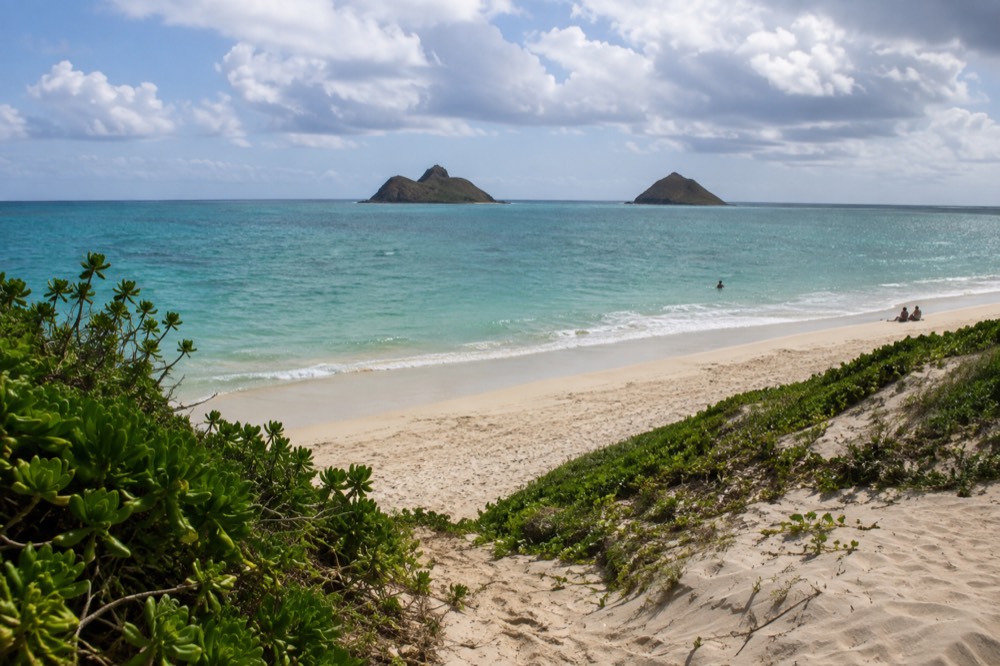
The short version, and the one most guides give, is that the shoulder seasons of mid-April to early June and September to mid-December are the best time to visit Oahu. That is broadly right, and the data below supports it. But the more useful answer is that Oahu's weather runs by geography more than by season. The leeward south and west coasts, where Waikīkī, Ala Moana and Ko Olina sit, stay dry nearly all year. The windward coast and the valleys behind Honolulu take vastly more rain, and they take it in a pattern most first-time visitors never see coming. This guide lays out both, month by month, with the numbers behind them.
What Is The Best Month To Visit Oahu?
For most travellers the best single months are May and September. May sits in the driest stretch of the leeward year, the ocean has warmed past 79 degrees, and the winter crowds have gone. September is the warmest-water month on record at Honolulu Harbor, at 82.4 degrees Fahrenheit on average, with visitor numbers well off their summer peak. Both months avoid the December-to-March surge that fills Waikīkī and drives up hotel rates.
May and September also sit outside the two reservation crunches that cause more planning pain on Oahu than any price does. Hanauma Bay releases its time slots only two days ahead at 7:00 a.m. HST, and it closes on Mondays and Tuesdays, so a short shoulder-season trip needs precise timing rather than a big budget. Diamond Head requires non-residents to reserve entry and parking in advance, a rule in force since 12 May 2022, with no on-site sales at all. Neither of those gets easier in July.
One more thing the shoulder months carry: the surf runs out of phase by shore. On a September day in 2026 the National Weather Service surf forecast showed the south shore at 4 to 6 feet while the north shore sat at 1 to 3. If you want calm water for swimming on the south coast, late summer and early autumn deliver it, while the famous north-shore waves are still asleep.
Which Season Should You Choose For An Oahu Trip?
Winter, from December through March, brings the biggest surf, the whales and the most visitors, along with the wettest weather on the windward side. Summer, June through August, brings the warmest water, the most families and the highest prices. The shoulder seasons of April to early June and September to mid-December hit the sweet spot: dry leeward weather, warm ocean, thinner crowds and lower rates. Choose winter only if big surf or whales are the point of the trip.
Every season on Oahu trades something for something. Here is the honest ledger.
| Season | Months | Weather pattern | Crowds and rates | Best for |
|---|---|---|---|---|
| Winter | Dec to Mar | Wettest on windward and valley areas; big north-shore surf | Highest visitor months; peak rates | Surf watching, whales from November, escaping cold climates |
| Spring shoulder | Mid-Apr to early Jun | Dry leeward; occasional windward showers | Moderate; drops after Easter | First trips, hiking, calm south-shore water |
| Summer | Jun to Aug | Driest overall; warmest air | Family peak; highest rates of the warm months | Beach days, calm north shore, snorkelling |
| Autumn shoulder | Sep to mid-Dec | Warmest ocean; south swells fade late in the period | Lowest from late Sep to early Dec | Value trips, warm water, fewer queues |
The autumn shoulder deserves a specific plug. The water temperature data from Honolulu Harbor shows August as the warmest month at 82.7 degrees Fahrenheit and September essentially tied at 82.4, while the visitor counts for the equivalent period in 2026 show February as the quietest month of that year at 436,756 arrivals. Warm ocean and thin crowds rarely coincide anywhere, and on Oahu they do.
If a circle-island day is on your list, and for most first-time visitors it should be, the shoulder seasons are when it works best: enough daylight, dry lookouts on the leeward half of the route, and tour seats available without booking weeks ahead. The two most popular options are below.
How Different Is The Weather On Each Side Of Oahu?
Enormously different, and this is the fact most Oahu planning content gets wrong. Honolulu International Airport on the leeward coast averages 16.41 inches of rain per year, while the Lyon Arboretum in Mānoa valley, about five miles inland, averages 150.96 inches. Every single month in Mānoa is wetter than the airport's wettest month, so a rainy forecast for one side can mean a dry day on the other.
The numbers come from the NOAA and NCEI 1991 to 2020 climate normals, and they describe two different islands sharing one coastline. The airport, at six feet of elevation on the leeward side, records its wettest month as March at 2.36 inches and its driest as June at 0.50 inches. Mānoa, at 500 feet in a windward-facing valley, records its wettest month as July at 15.35 inches. July. The middle of summer.
The practical consequence is simple. A rain forecast for Honolulu does not cancel your beach day, and a sunny forecast for Waikīkī does not mean the Mānoa Falls trail is dry. If hiking is the plan, check the rain for the valley, not the airport. If the beach is the plan, the leeward forecast is the one that matters. For more on the wettest walks, see our Mānoa Falls trail guide, and for the driest beaches, our best beaches on Oahu overview.
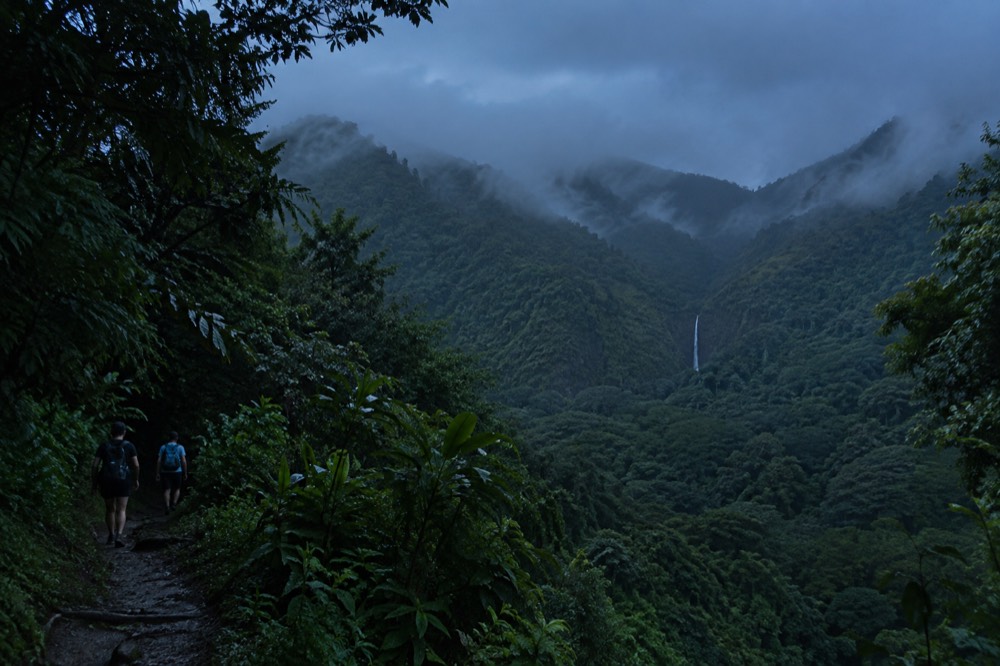
Rainfall also shapes which month you should pick for a windward trip. Kāneʻohe Bay on the windward coast averages 27.82 inches per year, wettest in November. The windward side is greener, lusher and, in the honest trade, wetter. That is the price of the scenery.
When Is The Ocean Warmest For Swimming And Snorkelling?
The ocean around Oahu is warmest in August, which averaged 82.7 degrees Fahrenheit at Honolulu Harbor across 2025, and stays close to that through September and October at 82.4 and 82.5 degrees. The coolest months are February and March, both averaging 78.0 to 78.2 degrees, still swimmable for most people. The annual range across the whole of 2025 ran from 75.7 to 84.0 degrees.
One caveat matters here: those readings come from a NOAA gauge inside Honolulu Harbor, which runs slightly warm against open water off Waikīkī. Treat them as harbour readings and round down a little for the open ocean.
| Month | Mean water temp (Honolulu Harbor) | Month | Mean water temp (Honolulu Harbor) |
|---|---|---|---|
| January | 78.2 °F | July | 81.3 °F |
| February | 78.0 °F | August | 82.7 °F |
| March | 78.2 °F | September | 82.4 °F |
| April | 79.3 °F | October | 82.5 °F |
| May | 79.7 °F | November | 81.2 °F |
| June | 80.6 °F | December | 80.4 °F |
For snorkellers the September-to-November window is the sweet spot: warm water, fading south swell, and Hanauma Bay's reservation system slightly easier to hit outside the summer rush. Our Oahu snorkeling guide covers where to get in the water, and the best snorkeling spots on Oahu page ranks the sites.
If warm-water swimming is the reason you are picking a month, a guided circle-island day pairs well with it, since the operator handles the timing and the route while you enjoy the season you chose.
When Is The Best Time For Surf On Oahu?
North-facing shores peak in winter, from roughly November through March, when the big swells arrive at the North Shore. South-facing shores peak in summer, with the largest south swell typically from May through September. The two seasons run completely out of phase, so at any point in the year one coast is calm while another is firing.
On 10 September 2026 the forecast showed the south shore at 4 to 6 feet and the north at 1 to 3.
That inversion is the whole trick to planning a surf trip, or a swimming trip, on Oahu. If you want to watch the world-famous winter surf, you must come between roughly December and February, and you should know that specific wave heights at Waimea Bay, Pipeline and Sunset are forecast-dependent, not calendar-dependent. If you want flat, safe water for a beginner surf lesson in Waikīkī, the summer south swell is the thing to check instead. Our Oahu surfing guide breaks down the seasons by break.
For swimmers rather than surfers, the same table reads in reverse. Winter means you check the surf report before every beach day, because north-shore locations like Sunset Beach and Sharks Cove go from snorkel spots in summer to closed-to-swimming wave zones in winter. The Oahu ocean safety guide covers how to read the conditions before you go.
When Can You See Whales On Oahu?
Humpback whales are visible in Hawaii from November through April, according to the Hawaiian Islands Humpback Whale National Marine Sanctuary, which states that visitors can see whales from shore and at sea across that whole window. The sanctuary does not publish a peak month, so book any month in the window rather than gambling on an unnamed peak. Boats must legally stay 100 yards from humpbacks, so whale watching on Oahu is a viewing activity, never a swim-with activity.
That 100-yard rule is federal law, not a guideline, and it matters when choosing a tour. Our Oahu whale season guide covers the season in detail, and the whale watching on Oahu page compares the boat options. If whales are the reason for the trip, the November-to-April window overlaps with the winter high season, so the value play is booking early in the window, in November or early December, before the December-to-March crowd peak arrives.
What Are The Busiest And Quietest Months On Oahu?
January was the busiest month recorded on Oahu in 2026 so far, with 527,241 visitors by air, and February was the quietest at 436,756. Across 2025 the island took 5,679,047 visitors, down about 2 percent on 2024's 5,794,854. Most July 2026 visitors, 387,063 out of 499,197, visited only Oahu and did not island-hop, so the crowds you meet are concentrated on this one island.
The counterintuitive part of that data is January. Most people assume the winter holidays are the peak, and the December holidays are busy, but the January numbers show the post-holiday month is when the island is at its fullest, driven by visitors escaping cold climates. February, by contrast, is the value month: the fewest visitors, the coolest water, and the biggest north-shore surf for those who want to watch it.
| Period | Visitor volume | What it means for planning |
|---|---|---|
| January | 527,241 arrivals (Jan 2026, preliminary) | Busiest month recorded; book tours and tables well ahead |
| February | 436,756 arrivals (Feb 2026, preliminary) | Quietest month; best winter value, coolest water |
| July | 499,197 arrivals (Jul 2026, preliminary) | Family summer peak; warm ocean, calm north shore |
| Full year 2025 | 5,679,047 visitors by air | Down about 2 percent on 2024 |
These are preliminary DBEDT figures for visitors arriving by air, so treat them as directional rather than exact, and do not add cruise arrivals to them.
Crowd timing also interacts with the reservation systems. In the busy months, Hanauma Bay's two-days-ahead-at-7-a.m. release becomes a genuine contest, and Diamond Head's 30-day reservation window fills for the most popular morning slots. In February you can be more relaxed about both. The Oahu Travel Guide homepage tracks the live reservation rules for every major site.
How Does Daylight Affect Your Planning?
Oahu's day length varies by only about 2 hours 35 minutes across the whole year, from roughly 13 hours 26 minutes on 21 June to about 10 hours 51 minutes on 21 December. Sunset never gets later than about 7:17 p.m., observed on 5 July, and the latest sunrise is about 7:11 a.m., on 15 January. Oahu has no long summer evenings, so plan sunset activities early.
That small daylight swing surprises visitors from northern latitudes who expect 9 p.m. summer sunsets. They do not happen here. In December the sun is down before 6 p.m., which compresses any itinerary that mixes a north-shore drive with a sunset stop. Our best sunset spots on Oahu page lists where to be, and the golden hour photography guide covers the timing.
The practical rule: in winter, front-load the driving and save the sunset for somewhere close to where you are staying. In summer you have an extra two hours of evening to work with, which is exactly when the shoulder-season advantage compounds.
What About Rainy Season And Hurricane Season?
Oahu's rainy season runs roughly November through March, when the leeward coast still stays comparatively dry, with Honolulu airport's wettest month at 2.36 inches, while the valleys take heavy rain. Hurricane season in the Central Pacific runs June through November, and it is a real but manageable risk: as of 9 September 2026, three Oahu state parks were closed for repairs after Hurricane Lowell, including Nuʻuanu Pali State Wayside and Kaʻena Point.
The hurricane point is worth stating plainly rather than glossing. Storms are rare, but when they happen they close specific places, and the closures linger for repairs. If your itinerary includes the Pali Lookout or Kaʻena Point, check the DLNR State Parks notices the week you travel, because both were still closed as of the September 2026 notice, along with Wahiawā Freshwater. Our Oahu hurricane season guide and Oahu rainy season guide cover both risks in depth, and the rainy day activities on Oahu page gives you a plan B.
Rain itself rarely ruins an Oahu trip, because of that leeward and windward split covered above. The flash-flood risk in the valleys is the serious one: never enter a stream valley during or right after heavy rain. The Oahu flash flood safety page explains why.
How Do Taxes And Prices Change With The Season?
Hawaii's Transient Accommodations Tax rose from 10.25 percent to 11.00 percent on 1 January 2026 under Act 96, and it now also applies to cruise-ship fares. There is no separate green fee collected at the airport; it is a tax on accommodations, built into your hotel bill. Seasonal rate swings in Waikīkī hotels dwarf the tax change, so the timing of your booking matters far more than the tax rate.
Act 96 is the most misrepresented number in current Hawaii coverage, so it is worth being precise: the state Department of Taxation describes it as an increase to the existing TAT, not a new fee you pay on arrival. What you will notice is the total on your hotel folio, and that total moves much more with the calendar than with the statute. February and late September through early December are the value windows; January and mid-June through August are the expensive ones.
Attraction pricing is flat across the year, which is another argument for the shoulder seasons: the same Hanauma Bay entry, the same Diamond Head reservation, the same luau, with fewer people competing for it. For the full budget picture, see cost of a trip to Oahu and the Oahu vacation cost breakdown.
Which Tours Are Worth Booking Ahead, And When?
The tours that need advance booking in busy months are anything involving boats, luau seating and Kualoa Ranch, whose valleys and movie sites can only be visited on a paid guided tour because the land is private. A circle-island tour is the most time-efficient way to cover the island's lookouts in one day. In the shoulder seasons you can book these closer to your dates; in January and July, book the first week your dates are fixed.
The circle-island day deserves its reputation. It bundles the lookouts, the North Shore and Haleʻiwa into a single guided loop, which matters if your trip is short. Our 1 day Oahu itinerary shows what the same route looks like self-driven if you would rather go alone.
If your dates are flexible and you want the deeper version, the circle-island route that includes the Byodo-In Temple adds a windward stop that most first-timers miss.
And if you are staying a week or more and plan to hit many paid sites, the multi-attraction pass changes the arithmetic on how many things to do in Oahu per day.
Whatever month you settle on, the same three tours anchor most first visits, and all three reward booking ahead in the busy windows.
Common Questions About The Best Time To Visit Oahu
Most questions about Oahu timing come down to three things: which coast you will actually spend time on, whether you want big surf or calm water, and how early you are willing to book reservations. The calendar matters less than the geography, because the leeward side stays dry even in the rainy season while the valleys stay wet even in summer. Get those three decisions right and almost any month works.
What is the best month to visit Oahu?
May and September are the strongest months for most travellers. May offers dry leeward weather and post-Easter thinning crowds; September offers the warmest near-shore water of the shoulder season at an average of 82.4 degrees Fahrenheit in Honolulu Harbor and visitor numbers well off the summer peak.
What is the cheapest month to go to Oahu?
February is the quietest month in the recent visitor data, with 436,756 arrivals in February 2026 against 527,241 in January, and hotel rates generally follow demand downward with it. The water is at its coolest then, around 78 degrees, and the north shore is at its biggest, so it suits surf watchers and value hunters more than swimmers.
When is Oahu's rainy season?
Roughly November through March, but with a huge geographic split. The leeward coast around Waikīkī stays comparatively dry all year, with Honolulu airport's wettest month at 2.36 inches, while the windward coast and the valleys behind Honolulu take most of the island's rain. Kāneʻohe's wettest month, November, averages 3.68 inches.
When is whale season on Oahu?
November through April, per the Hawaiian Islands Humpback Whale National Marine Sanctuary, which says whales can be seen from shore and at sea across that entire window. Boats must keep 100 yards from humpbacks by law, so whale watching is always a viewing activity.
When is the best time to visit Oahu for good weather?
For beach weather, mid-April through early June and September through mid-December, on the leeward coast. The south and west shores stay dry in nearly every month, the ocean is warm from July through November, and the biggest crowds of January and midsummer are absent.
Is summer or winter better for a first trip to Oahu?
For a first trip, the shoulder seasons beat both extremes. Summer gives you the warmest air and calm north-shore water but the thickest family crowds; winter gives you the biggest surf and the whales but the busiest arrival months and wetter windward weather. April to early June or September to mid-December deliver the scenery of both with fewer people competing for it.
The best time to visit Oahu, in the end, is the window that matches what you came for: winter for surf and whales, summer for flat water and family beach days, and the two shoulder seasons for everything else at a lower price. Pick the coast, check the reservation windows, and the month mostly takes care of itself.