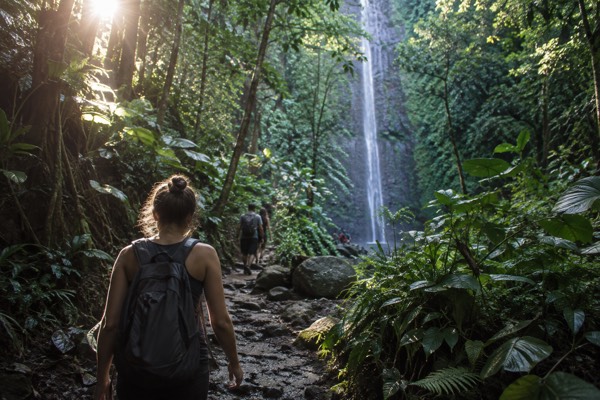
Mānoa Falls Trail: What The Hike Is Really Like
The Mānoa Falls Trail is a short rainforest walk in the back of Mānoa Valley, reachable by city bus plus a walk from the stop. Here is what the trail, parking and weather mean for your visit.
Short answer
Mānoa Falls is a free rainforest hike: the state trail map lists 0.8 mile (1.3 km) each way, with extra walking from parking or the bus stop. Allow roughly 1.5–2 hours on the trail, more for stops and slow footing. Swimming is prohibited; check trail notices and valley weather before setting out.
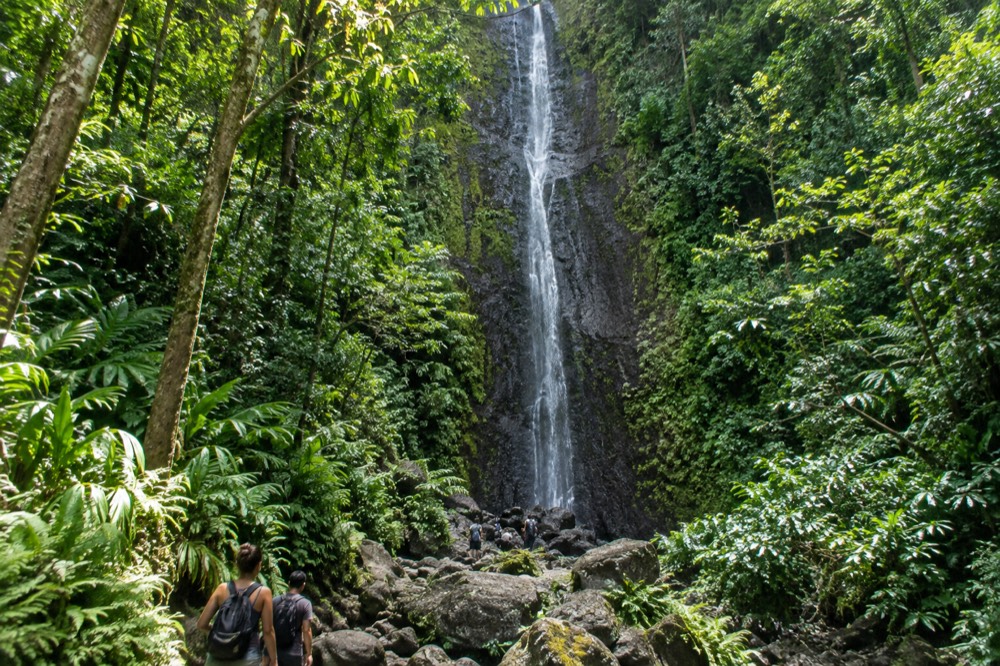
The Mānoa Falls Trail is the hike most Waikīkī visitors can actually do. It sits at the back of Mānoa Valley, a residential neighbourhood about five miles inland from the beach, and it ends at a 150-foot ribbon of water dropping down a sheer volcanic cliff face. The trail is free. The rainforest around it is genuinely lush, the kind of dense green wall people fly ten hours to see, and unlike most Oʻahu waterfall hikes it does not require a rental car, a four-wheel drive or an act of trespass.
That accessibility is also the catch. This is one of the most popular short hikes on the island, the mud is permanent, and the valley's weather behaves nothing like the beach weather you left behind. This guide covers the trail itself, how to get there, what it costs, when to go, and an honest verdict on whether the falls deliver.
What Is The Mānoa Falls Trail?
The Mānoa Falls Trail is a roughly 1.3-kilometre walk each way through rainforest in the back of Mānoa Valley, climbing over uneven terrain to the waterfall. It is free to hike and takes most people 1.5 to 2 hours round trip including time at the falls. The path runs over dirt, rock steps, boardwalk and stream crossings, and it is muddy in almost all conditions.
The waterfall pool at the end is closed to swimming.
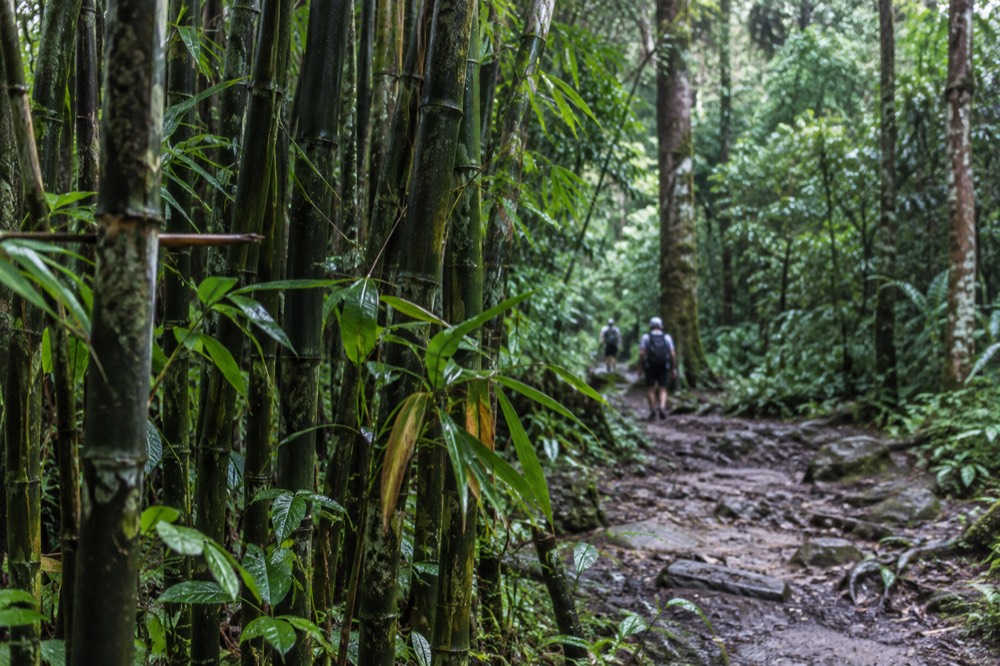
The trail's character changes three or four times over its short length, which is a big part of why it feels longer than the distance suggests. The first stretch passes through tall bamboo groves where the light goes green and the sound of traffic disappears entirely. Further up, the route crosses open sections of broken rock, the remains of old rockfall from the cliff walls above, and the footing here demands attention even in dry weather. Near the top the trail narrows through dense native and introduced forest before opening at the base of the falls.
The waterfall itself is a thin, high cascade rather than a thundering one. After heavy rain it runs wide and brown with sediment; in dry spells it can shrink to a trickle down the rock face. The cliff it drops over is the visual payoff, a sheer wall of volcanic rock that makes the scale of the Koʻolau range suddenly legible. You arrive, you look up, you take the photo, and then you turn around, because there is nowhere further to go. The pool at the base is roped off and swimming has been prohibited for years, both for safety and because the rocks around the base are unstable.
How Do You Get To The Mānoa Falls Trailhead?
The trailhead sits at the end of Mānoa Road in the back of Mānoa Valley, and you can reach it three ways: drive to a paid private parking lot next to the trailhead, take TheBus from Waikīkī or downtown Honolulu, or book a tour that includes round-trip transport. The bus is the cheapest option and avoids the parking problem entirely. Rideshare also works, with drop-off at the trailhead entrance.
This is the part of the trip that catches people out. The trailhead does not have a government-run car park. Parking is handled by a private lot next to the entrance, operated separately from the trail, and it charges by the vehicle. The current fee is posted at the lot, and because it is a private operation the number can change, so check the posted rate when you arrive rather than relying on figures copied from older blog posts. The lot fills early on weekends, and the overflow situation on the surrounding residential streets is not something you want to be part of; the neighbourhood's residents deal with heavy visitor traffic already and street parking is restricted.
Taking the bus is genuinely easy and most guides undersell it. From Waikīkī you can reach the valley with a single transfer, connecting to Route 5 from Ala Moana toward Manoa, then walking from the upper-valley stop to the trailhead. Check current stop diversions before travelling. The adult cash fare is $3.25 on TheBus, or you can tap a HOLO card, which caps at $7.50 per day of unlimited rides once you have spent that much. That daily cap is worth knowing if you plan to ride the bus both ways and maybe again later: after reaching the cap, further eligible rides that day incur no additional fare. HOLO’s adult single fare is $3 with two hours of transfers; cash does not include transfers. Our TheBus on Oʻahu guide covers routes, fares and the HOLO card in detail.
| Access option | What it involves | Best for |
|---|---|---|
| Private parking lot | Paid lot next to the trailhead, fee posted on site, fills early on weekends | Families, early arrivals, anyone with gear |
| TheBus | Route 5 serves the valley from Ala Moana; connections depend on origin. $3.25 cash per boarding or HOLO fares capped at $7.50/day | Budget travellers, anyone avoiding parking stress |
| Tour with transport | Shuttle picks up in Waikīkī and handles the trailhead transfer | Visitors who prefer an arranged transfer |
If you are staying in Waikīkī without a car, the bus-plus-hike combination makes Mānoa Falls one of the most doable rainforest experiences on the island. If you are driving, plan to arrive before mid-morning, because the lot and the trail both get crowded by late morning, and the valley road itself is narrow.
How Hard Is The Hike And How Long Does It Take?
Most visitors finish the round trip in 1.5 to 2 hours at a relaxed pace, including time at the waterfall. The short distance does not capture the difficulty of the surface: mud, wet roots, broken rock sections and a couple of stream crossings rather than steep climbing. Shoes with grip and the ability to manage uneven footing both matter.
Calling this hike easy undersells the mud, and calling it hard undersells the grade. The honest description is that it is an easy climb on a demanding surface. The bamboo sections are flat and pleasant. The middle third crosses old rockfall, bare rock fragments that shift slightly underfoot, so take particular care with footing. The final third climbs steadily on steps and packed dirt that stay damp even when it has not rained in days, because the valley canopy holds moisture in.
Time estimates vary with conditions and crowds. A fit hiker walking straight through can do the round trip in an hour. A family with young kids, stopping at the falls for photos and negotiating the mud carefully, should budget closer to two and a half hours. Add time on weekends, when the trail runs like a slow conveyor of visitors and passing takes patience.
Two safety notes worth taking seriously. First, flash floods are a real hazard in this valley, and you should not start the hike if heavy rain is falling or forecast; our Oʻahu flash flood safety guide explains how valley streams behave and how to read the forecast before a waterfall hike. Second, the rocks at the base of the falls are off-limits, and the roped-off pool area is closed for a reason: rockfall from the cliff has injured visitors in the past, and the signs are not decorative.
Does The Mānoa Falls Trail Cost Anything?
Hiking the trail itself is free. There is no entry fee, no permit and no reservation system for the trail. The only charge most visitors encounter is the private parking lot next to the trailhead, which bills per vehicle at a rate posted on site, and bus riders avoid that entirely. Tour inclusions vary. The self-guided shuttle listed here pays for transport, with no hiking guide or trail admission charge.
The free trail plus paid parking combination confuses a lot of first-time visitors, because the two get muddled together in older write-ups. To be clear about what is what: the trail is public access and costs nothing to walk. The parking lot is a private commercial operation that happens to sit at the trailhead, and its fee is separate. Some tour products bundle round-trip transport from Waikīkī, which sidesteps the parking question altogether, and for visitors without a car that is often the deciding factor rather than a guiding service, which this shuttle does not include.
If you are building a budget, treat the hike as a free activity with a transport cost attached. The bus option brings that transport cost down to a few dollars each way. Driving adds any rental cost, fuel and the private lot’s fee, plus time on a narrow valley road.
When Is The Best Time To Hike Mānoa Falls?
Morning can help avoid busier periods, but check the trail’s current access hours, weather and warnings before choosing a start time. Weekday mornings are noticeably quieter than weekends, when the trail runs crowded from late morning on. Recent rain can increase the flow and worsen footing. Heavy rain or flood warnings are reasons to postpone rather than chase a stronger waterfall.
The timing advice for this trail is less about heat and more about light. Mānoa Valley sits in the shadow of the Koʻolau ridge, and the sun arrives late and leaves early compared with Waikīkī. By early afternoon, clouds commonly sit over the upper valley, the falls lose their light, and the trail feels dimmer and damper. Hikers who arrive at the falls at 9 a.m. and hikers who arrive at 1 p.m. often see noticeably different scenes. The rest of the planning pages sit on Oahu Travel Guide.
That rainfall figure is the single most useful planning fact about this hike, and almost no competing guide carries it. The valley you are walking into is one of the wettest inhabited corners of the island, five miles from a coast whose airport station records roughly one ninth as much rain. The practical consequence: check the Mānoa forecast, not the Waikīkī one, and treat "dry trail" as a state that does not exist here, only "less muddy".
Can You Swim At Mānoa Falls?
No. The pool at the base of the waterfall is closed to swimming and roped off, and the closure is enforced by signs and physical barriers rather than being a suggestion. The reasons are rockfall from the cliff above and unsafe conditions in the pool itself. Visitors stay on the viewing area, take photos from behind the barrier, and do not cross the ropes. This has been the standing rule for years.
Older blog posts and stock photos show people in the pool, and those images are the reason this question comes up constantly. The reality on the ground is different: the area at the base is signed, roped, and treated as closed. The rock face above the pool sheds material, and the pool's own conditions have made it a recurring injury site. The respectful and safe move is to enjoy the falls from the designated viewing spot, which is genuinely a good vantage, and save swimming for somewhere designed for it.
If a swim is part of your waterfall plan, other options on the island handle that better, and our best waterfalls on Oʻahu guide compares them honestly, including which ones permit in-water access and under what conditions. Waimea Valley on the North Shore is the usual alternative, though whether its waterfall is open for swimming on any given day is a decision its lifeguards make daily based on conditions, so check with the valley before you go expecting to get in the water.
What Should You Bring To Hike Mānoa Falls?
Bring shoes with real grip, a change of footwear for afterwards, water, insect repellent, a light rain layer, and a small towel or wipes for the mud. Do not bring drones, which are prohibited in the area, and leave valuables out of sight or at home since vehicle break-ins occur at trailheads island-wide. The trail has restroom facilities near the trailhead but nothing along the route. Trekking poles help on the rock sections.
The mud deserves its own paragraph. It is not a sometimes condition on this trail, it is the default surface, and it clings to shoes, hems and anything you put down on the ground. Visitors in flip-flops make this hike regularly and regret it in the first ten minutes. Old running shoes with worn tread are barely better than flip-flops on the wet rock sections. The single best gear decision you can make here is footwear with tread you trust, and the second best is not wearing those shoes to dinner afterwards.
| Item | Why it matters | Priority |
|---|---|---|
| Grippy closed-toe shoes | Mud and wet rock are the trail's main hazard | Essential |
| Water | 1.5 to 2 hours of exertion in humidity, no water on trail | Essential |
| Insect repellent | The valley is genuinely buggy, especially after rain | High |
| Light rain layer | Valley showers arrive fast regardless of the beach forecast | High |
| Spare footwear for after | Keeps your car or your bus ride mud-free | Nice to have |
| Small towel or wipes | Mud happens, often to children first | Nice to have |
Two things not to bring. Drones are prohibited in the area without a written permit, and flying one over the valley or the falls is not a grey area. Speakers are the other one: the trail's best feature is the sound of the bamboo and the stream, and the crowd shares it. This is also a valley where residents live within earshot of the trailhead, and the volume that feels normal on a beach does not here.
Is Mānoa Falls Worth The Trip?
For most visitors, yes, with the right expectations: it is a short, beautiful rainforest walk with a real waterfall at the end, reachable without a car, and it delivers the jungle experience people picture when they book a Hawaiʻi trip. It is not worth it for visitors seeking solitude, a swimming hole or a dramatic cascade, because the trail is busy, the pool is closed and the falls run thin in dry spells.
The honest verdict depends on what you are comparing it against. Measured against a remote, quiet waterfall hike, Mānoa Falls loses: it is popular, close to town and short. Measured against the realistic alternative, which for most visitors is not hiking at all or driving an hour each way, it wins comfortably. The bamboo groves alone justify the walk, and the combination of bus access, no entry fee and a genuine payoff at the end is hard to match elsewhere on the island.
For visitors who want the rainforest without the logistics, a transport-included option exists that pairs the trail with the transfer from Waikīkī.
If you would rather build your own morning, the trail pairs naturally with other stops in and around the valley, and our Mānoa neighbourhood guide covers the rest of the area, including the Lyon Arboretum up the road, which shares the valley's extraordinary rainfall and adds a second, gentler rainforest walk to the same visit.
For hikers deciding between this and the island's other headline walks, the best hikes on Oʻahu overview ranks the options by difficulty, view and crowd level, and Mānoa’s uneven terrain needs to suit everyone in your group. If rain is falling and you want alternatives that are drier by design, the rainy day activities on Oʻahu guide has indoor and covered options, though note that in this particular valley, rain is not an exception to plan around, it is part of the product.
Common Questions About The Mānoa Falls Trail
Most questions about the Mānoa Falls Trail come down to four things: the mud, the parking, the swimming ban and the weather gap between Waikīkī and the valley. The trail is free, roughly 1.3 kilometres each way, closed to swimming at the falls, and reachable by bus from Waikīkī with a single transfer. The parking lot is private and charges per vehicle at a rate posted on site.
The valley gets far more rain than the coast five miles away, so go early and expect mud.
How long is the Mānoa Falls Trail?
The trail runs roughly 1.3 kilometres each way, about 0.8 mile on the state trail map, plus the approach from parking or the bus stop. Most visitors complete the round trip in 1.5 to 2 hours including time at the waterfall, and families with children often take a little longer.
Is the Mānoa Falls Trail hard?
The climb itself is gentle, but the surface is not: mud, wet roots, broken rock sections and stream crossings make footing the real challenge. It is suitable for children and moderately fit hikers, but shoes with grip and the ability to manage uneven ground both matter, and anyone unsteady on uneven ground will find the rock sections difficult.
Do you have to pay for parking at Mānoa Falls?
The trail is free to hike, but the parking lot next to the trailhead is a private operation that charges per vehicle, with the current rate posted at the lot. Bus riders avoid the charge entirely, and the adult bus fare is $3.25 cash or a HOLO card tap with a $7.50 daily cap.
Can you swim in the waterfall at Mānoa Falls?
No. The pool at the base of the falls is roped off and closed to swimming, because of rockfall from the cliff above and unsafe pool conditions. Photos showing swimmers are not permission to cross the barriers. Enjoy the falls from the viewing area instead.
What is the best time of day to hike Mānoa Falls?
A weekday morning can help with crowds. Check current access hours and the local forecast first; an early start does not guarantee dry or safe conditions.
Can you get to Mānoa Falls without a car?
Yes, and it is one of the few waterfall hikes on Oʻahu where that is true. Route 5 serves Manoa Valley from Ala Moana; your connection depends on where you start, and the trailhead is a walk beyond the stop, and rideshare drop-off works at the trailhead entrance. Several tour products also include round-trip transport from Waikīkī.
If your Oʻahu plan pairs this valley walk with a bigger island day, treat these as separate outings: the Diamond Head hike with its reservation handled, or a sightseeing drive. None is a combined package with the Manoa shuttle; match each booking to its actual route and meeting point.
Whatever way you reach it, allow enough daylight and time for the return, check the valley weather rather than the beach forecast, and wear the shoes you do not mind getting dirty.
Choose Your Manoa Falls Transport
The trail is free. The default below buys a Waikiki shuttle for a self-guided hike; choose public transport if you prefer the lowest-cost approach. Waimea and Diamond Head are separate outings.
Manoa Falls Self-Guided Hike With Waikiki Shuttle
Confirm pickup and the operator’s requirements before booking. The outing supplies transport for a self-guided hike; trail admission is free.
Round-trip Waikiki shuttle for a self-guided hike; no hiking guide. The rocky trail requires moderate fitness. Review age and health restrictions and confirm pickup. Book only if you need transport; swimming is not permitted.
Compare Independent Travel With The Shuttle
Use USD estimates for the same date and whole party. Enter your rental, bus or rideshare total, then only extra fuel and parking. The shuttle quote must include everyone. Trail admission is free; do not add a ticket charge. These are reader estimates, not live quotes.
Select dates and everyone travelling on the provider’s website, then review the final price and booking conditions.