Best Waterfalls On Oahu: Manoa, Waimea And How To Check Legal Access
Mānoa and Waimea are two straightforward waterfall choices for visitors, but they are not the island’s only legal options. Other routes can require permits, depend on garden opening hours or cross land that is closed to visitors.
Short answer
Choose Mānoa for a free rainforest trail or Waimea for a paid paved garden walk. Swimming is prohibited at Mānoa and conditional at Waimea. Other waterfalls need individual access checks: Lulumahu requires a reservation permit, and Lyon Arboretum’s ʻAihualama Falls depends on garden access and recent rain.
Oahu is not a big waterfall island. That surprises people, because the island's social media presence suggests a cascade around every bend in the Koʻolaus. Two straightforward visitor options are Mānoa Falls above Honolulu and Waimea Falls inside Waimea Valley on the North Shore. Other waterfalls need individual access checks: some require permits, some are within gardens, and others have no legal approach. This guide compares the two main choices, what they cost, when they run, and how to tell the difference between a legal trailhead and a trespassing route dressed up as a hiking tip.
Which Waterfall Is The Best On Oahu?
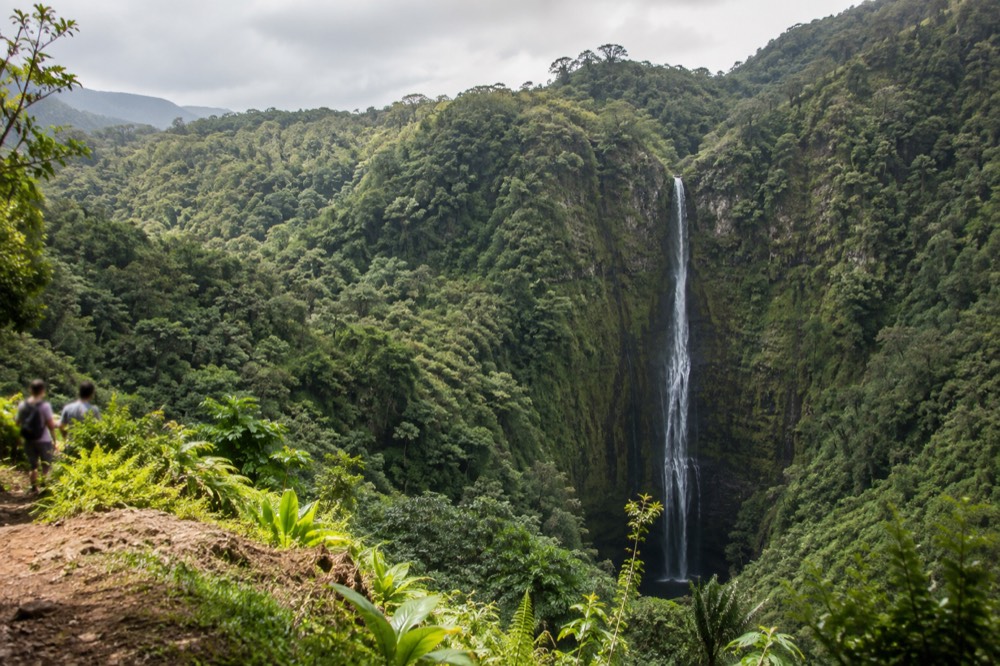
Mānoa Falls is the best waterfall on Oahu for most visitors: a roughly 150 foot ribbon cascade inside a rainforest valley a short drive or bus ride from Waikiki, on a maintained trail that is free to walk. Waimea Falls is the strong alternative, a wide plunge inside a botanical garden on the North Shore, paved the whole way and reachable in regular shoes. Other legal visits may be possible with the relevant permit or garden access; check each route separately.
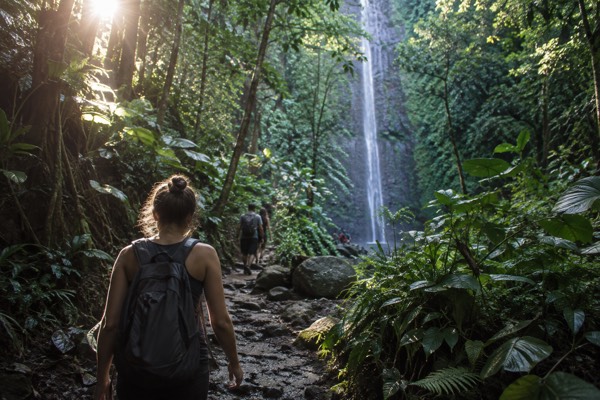
The two are different products. Mānoa Falls is the hike. You earn it: the trail climbs gently through bamboo and ginger, the canopy closes overhead, and the falls appear at the head of the valley as a tall, thin thread of water against dark rock. The pool at the base is closed to swimming and has been for years, and the rocks around it are slick and have injured people, so treat the endpoint as a viewpoint and not a beach. Our full trail write-up covers the route in detail at the Mānoa Falls trail guide.
Waimea Falls is the stroll. The path through Waimea Valley is paved, flat, and shaded, winding past botanical collections and Hawaiian cultural sites, and the waterfall at the end drops into a broad pool. Whether swimming is open on any given day is decided by the lifeguard on duty based on conditions, so check with the valley on the day rather than assuming. The Waimea Valley and Waimea Falls guide covers hours, admission and what the valley itself is, because the waterfall is only part of what you are paying for there.
If you only have time for one, choose by where you are staying and what you want from the day. Staying in Waikiki without a car and wanting a real rainforest experience points you to Mānoa. Driving the North Shore and preferring a paved route points you toward Waimea; confirm any specific mobility needs with the valley.
Why Does Mānoa Falls Have Water When The Rest Of The Island Looks Dry?
Mānoa sits in one of the wettest places in Hawaii: the Lyon Arboretum station in the valley records an annual normal of 150.96 inches of rain, more than nine times the 16.41 inches recorded at Honolulu airport about five miles away. Every single month in Mānoa is wetter than the airport's wettest month. That is why the falls run while the leeward side of the island can go weeks looking bone dry.
This is the single most useful thing to understand about waterfalls on Oahu, and almost no guide explains it. The island's rainfall is not evenly spread, it is stacked by topography. Moisture rides the trade winds up the Koʻolau mountains, cools, and dumps on the windward valleys. Honolulu airport, on the leeward coastal plain, is one of the driest places in the state. Mānoa, five miles inland over a low ridge, has a tropical rainforest environment. The falls at the head of Mānoa Valley are fed by that catchment, which is why they keep flowing even in the dry season when everything along the south shore is brown.
The practical consequence for a waterfall hunter: judge flow by valley, not by what you see outside your hotel window. A cloudless week in Waikīkī tells you nothing about the head of Mānoa Valley, and a rainy morning in Kāneʻohe does not mean the falls will be raging, though it does mean you should think about flash floods before you walk up a stream bed. Our Oahu rainy season guide goes deeper on when the wet months fall.
The other consequence is that "waterfall season" on Oahu is a soft concept. Mānoa can have flow in every season, but recent rain affects how much water you see. Falls on drier parts of the island, the ones you occasionally see in photos from leeward gulches, are seasonal and can be a damp rock face by the time you get there. Water flow and legal access are separate checks; a photogenic cascade does not establish permission to reach it.
If the self-guided waterfall experience appeals, there is a package built around exactly this: round-trip transport from Waikiki paired with the Mānoa Falls trail, run by Kaimana Tours.
What Does It Cost To Visit Waimea Falls?
Waimea Valley charges admission: adults pay $26, seniors 62 and over and students pay $20, and children 4 to 12 pay $18, with children 3 and under free. Hawaii residents and military visitors pay much less, $10 for adults and $6 for children. The valley currently lists Tuesday–Sunday, 9 a.m.–4 p.m., with seasonal variations; confirm the schedule for your visit.
Admission buys more than the waterfall. Waimea Valley is a living botanical collection and a Hawaiian cultural site, with planted areas along the whole walk and cultural programming that is worth slowing down for. Racing to the falls and back misses most of what the fee pays for. Treat it as a garden with a waterfall at the end, not a trailhead with a toll.
| Ticket type | General admission | Kamaʻāina / military |
|---|---|---|
| Adult | $26 | $10 |
| Senior 62+ | $20 | $8 |
| Student | $20 | $8 |
| Child 4–12 | $18 | $6 |
| Child 3 and under | Free | Free |
| Group of 10 adults | $22 per adult | $8 per eligible adult |
Mānoa Falls, by contrast, costs nothing to walk. The trail itself is free. What is not free is parking: the lot serving the trailhead is privately operated, and the widely repeated fee figure for it comes from the operator rather than a government source, so check current pricing before you go rather than budgeting from a number you read online. The bus is the alternative, and our TheBus guide on Oahu covers fares and routes, including the HOLO card's daily cap that makes a day of transit inexpensive.
One note on how the two visits stack up as a day out. Waimea is a half-day commitment once you include the drive from the south, while Mānoa can be done in a morning and still leave your afternoon free for the beach. That asymmetry shapes most itineraries, and it is why some travellers do Mānoa on their own and save Waimea for a full North Shore day that also takes in the shrimp trucks and the beaches.
Can You Swim In An Oahu Waterfall?
At Waimea Falls, swimming is sometimes allowed and the decision is made daily by the lifeguard on duty, based on conditions, so check with the valley that morning. At Mānoa Falls, the pool at the base is closed to entry, the rocks are slick, and rockfall and water hazards make the barriers important. Do not assume another waterfall pool allows swimming merely because its trail has legal access.
The distinction matters because waterfall swimming is one of those things Oahu content oversells. Waimea is the only waterfall pool on the island with lifeguarded access, and even there it is conditional. When it is open, life vests are part of the arrangement and the lifeguard's word is final. When rain has been heavy upstream, it closes, and that is the correct call: waterfall pools in Hawaii fill with runoff that carries debris and shifts the bottom.
The no-entry barriers at Mānoa’s pool must be respected. The basin under the falls is shallow, the surrounding rock is coated in algae, and the injuries from slips there are a recurring item in local news. The viewpoint is a few metres back and loses almost nothing.
For the unofficial spots, the situation is structural. Most of the "secret waterfall" content about Oahu involves routes across private land, and landowners in the Koʻolau valleys have closed access precisely because of visitor volume. A fence at a trailhead is not a suggestion. If a route requires you to park on a residential street and walk past posted signs, it is not a hike, it is trespassing, and the waterfall at the end does not change that.
Which Waterfall Hikes On Oahu Are Legal, And Which Are Trespassing?
Mānoa Falls and Waimea Valley are two established visitor options. Lulumahu Falls is another route with legal access only through the required reservation permit, and Lyon Arboretum maps a route to ʻAihualama Falls during garden access. Other advertised routes may cross closed or private land; assess each one individually.
This is where being honest costs us nothing and earns your trust. The internet is full of Oahu waterfall lists with six or eight entries. Some routes cross private or restricted land in the valleys behind Kāneʻohe, Kailua and Hauʻula, while legal trails can still be dangerous in rain. Landowners have responded to traffic with fences, gates and security, and some routes that appear in years-old blog posts now end at a locked barrier a few hundred metres in.
| Waterfall | Access status | What you actually get |
|---|---|---|
| Mānoa Falls | Legal, maintained public trail | A roughly 150 foot cascade in true rainforest, no swimming, free entry |
| Waimea Falls | Legal, paid entry to a botanical valley | A wide plunge into a lifeguarded pool, paved walk, swimming conditional on the day |
| Lulumahu Falls | Reservation permit required for restricted watershed access | Confirm official terms before hiking; do not assume swimming is allowed |
| ʻAihualama Falls, Lyon Arboretum | Follow garden hours, closures and trail rules | Seasonal flow; the garden map notes it can be dry |
| Hamama Falls | No legal access according to DLNR/Board of Water Supply | Do not use an unofficial route |
| Leeward gulch falls | Seasonal, often dry | A damp rock face for most of the year |
| Kaʻena area coastal features | Coastal park access, not a waterfall alternative | Check current park notices before planning a separate visit |
Check current notices for any additional park stops, including Nuʻuanu Pali and the Mokuleʻia or Keawaʻula sections of Kaʻena Point. An old storm notice cannot establish access for your date. Our Nuʻuanu Pali Lookout guide covers that separate stop.
The rule of thumb: if a waterfall guide cannot tell you who owns the land under the trail, it is hiding something. Use the responsible land manager’s rules and current notices to establish access before setting out.
When Is The Best Time To Visit Oahu Waterfalls?
A weekday morning can help with crowds, but check the local forecast, upstream rain and access notices first. A dry day does not guarantee safe trail or stream conditions. Rain falls in every season at Mānoa, but check recent conditions rather than assuming a particular flow.
The morning advice is not a platitude, it is logistics. Mānoa's trailhead sits at the end of a residential street with limited parking, and by mid-morning on a weekend the situation degrades badly. Arriving early can help with crowds, but does not guarantee a parking space or particular light. The same logic applies to Waimea, which is a regular stop on North Shore circuits: the valley fills through the late morning as tour vans arrive from the south.
Weather timing is the part that matters for safety. Stream beds and narrow valleys on Oahu can flash flood, and the rain that triggers it can fall in the mountains behind you while you stand under blue sky. Check the forecast for the valley, not the beach, and if rain has been heavy overnight, pick a different day or a coastal activity instead. Our Oahu flash flood safety guide explains the pattern and the warning signs in detail, and it is worth five minutes of reading before any valley hike on this island.
Seasonality, honestly stated: there is no bad month for Mānoa Falls. The Lyon Arboretum's rainfall record shows every month of the year is wet, with July actually the wettest month in the record at 15.35 inches, which inverts most visitors' assumptions about a Hawaiian summer. Winter brings the bigger surf to the North Shore, which affects your drive to Waimea more than the waterfall itself. Our best time to visit Oahu guide covers the island-wide picture.
What Should You Bring On A Waterfall Hike On Oahu?
Bring shoes with real grip, water, insect repellent, and a light rain layer, and leave the drone and the rock-stacking plans at the hotel. The trails are muddy even in dry spells, mosquitoes own the valley, and brief showers arrive without warning. Drones are prohibited in Hawaii state parks without a written permit, and stacking rocks is discouraged by land managers because it misleads hikers and disturbs the ground.
Footwear is the item people get wrong. Both main waterfall walks look easy on paper, and Waimea's path is paved, but Mānoa's trail is dirt and root and mud, and the section near the falls is polished slick by traffic. Slides there send people to urgent care. Running shoes with worn tread are worse than they look on wet Hawaiian clay.
Check the rules of the actual land manager: Waimea Valley prohibits drones, and a general state-park rule is not permission to fly elsewhere. The rock-stacking point is smaller but real. Cairns are trail markers, and decorative stacks mislead the next hiker and disturb the surface beneath them. Leave the stream bed as you found it.
| Item | Why it earns its place in the pack |
|---|---|
| Shoes with grip | Mānoa's trail is mud and slick rock even in dry weather |
| Water | The Mānoa round trip takes a couple of hours in humidity, and there is nothing to buy on the trail |
| Insect repellent | Valley mosquitoes are active year round in the rainforest |
| Light rain layer | Showers arrive fast in Mānoa, whatever the Waikīkī sky says |
| Reef-safe sunscreen | For the walk in, even if you are not swimming |
| Nothing to take home | Removing rock and sand from the shoreline is prohibited under state law, and the "curse" story is a modern invention anyway |
That last row deserves a sentence of explanation, because it is the one item on the list that gets pushback. Leave rocks and plants where they are and follow the site’s collection rules. The shoreline restrictions should not be treated as a blanket legal description of every stone everywhere in Hawaii.
Is A Guided Waterfall Tour Worth It On Oahu?
A shuttle can be worthwhile if you need Waikiki transport, but it does not include a hiking guide and the trail itself still requires care. A self-guided package that includes round-trip transport from Waikiki and the trail arrangements is listed as about three and a half hours, with prices depending on the booking, and avoids arranging your own trailhead parking. If you have a rental car and a free morning, walking it yourself is perfectly reasonable, and the bus reaches the valley too.
The arithmetic depends on what your time on Oahu is worth. The trail is free, but the parking lot is private, fills early, and charges by the vehicle. The bus is cheap but slow. A package with pickup collapses all of that into one decision, but you still need to confirm the pickup and assess whether the self-guided hike suits everyone in your party.
Other activities can fit on separate days if you are building a wider itinerary. The Diamond Head hiking package handles the island's other famous walk, tickets and shuttle included, while a separately planned sightseeing day serves a different purpose from a waterfall hike.
None of these tours take you to a waterfall you could not reach alone. What they can supply is specific transport or admission logistics: check what the selected booking actually includes, before deciding whether the convenience is worth the price. Whether that is worth it depends entirely on the rest of your schedule and how many people you are moving around.
Common Questions About Waterfalls On Oahu
Most questions about Oahu's waterfalls come down to three things: which ones you can legally visit, whether they will have water when you arrive, and whether you can swim at the end. The short answers: Mānoa Falls and Waimea Falls are two established visitor options, Mānoa can have flow in every season, with the volume depending on recent rain, and swimming is conditional at Waimea and closed at Mānoa. The detail follows below.
What is the best waterfall on Oahu?
Mānoa Falls is the best waterfall on Oahu for most visitors: a roughly 150 foot cascade in genuine rainforest, minutes from Waikiki, on a free, maintained trail. Waimea Falls is the best alternative for a paved, no-hiking-gear walk on the North Shore, with a lifeguarded pool that opens for swimming when conditions allow.
Can you swim at Mānoa Falls?
No. The pool at the base of Mānoa Falls is closed to entry, and the surrounding rock and water can be hazardous. Treat the falls as a viewpoint. If swimming under a waterfall is the goal, Waimea Falls is the only lifeguarded option, and it is open for swimming only when the lifeguard on duty decides conditions allow it.
Does Mānoa Falls run all year?
Yes. The valley's rain gauge at the Lyon Arboretum records more than 150 inches of rain a year, and every month of the year is wetter than the wettest month at Honolulu airport a few miles away. Flow is possible in every season, but a particular water level is not guaranteed.
Why do so many Oahu waterfall lists mention hikes you cannot legally do?
Because most of the island's waterfalls sit on private land in the Koʻolau valleys, and older blog content published routes before landowners fenced and posted them. Check each route rather than judging by the length of a list. Mānoa and Waimea are straightforward visitor options; Lulumahu requires a reservation permit, and ʻAihualama Falls depends on Lyon Arboretum access.
Is there a waterfall near Waikiki?
Mānoa Falls is the closest real waterfall to Waikiki, in the valley immediately behind Honolulu. The trailhead is a short drive away and reachable by bus. It is covered in full in our Mānoa Falls trail guide.
Is waterfall hiking on Oahu dangerous?
Yes, hazards remain even on maintained, legal trails. Grippy shoes and respecting barriers help, but do not remove the risk of falls, rockfall or flooding. The real hazard is flash flooding in valleys and stream beds after heavy rain in the mountains behind you. Check the valley forecast, not the beach forecast, and if rain has fallen heavily upstream, save the hike for another day.
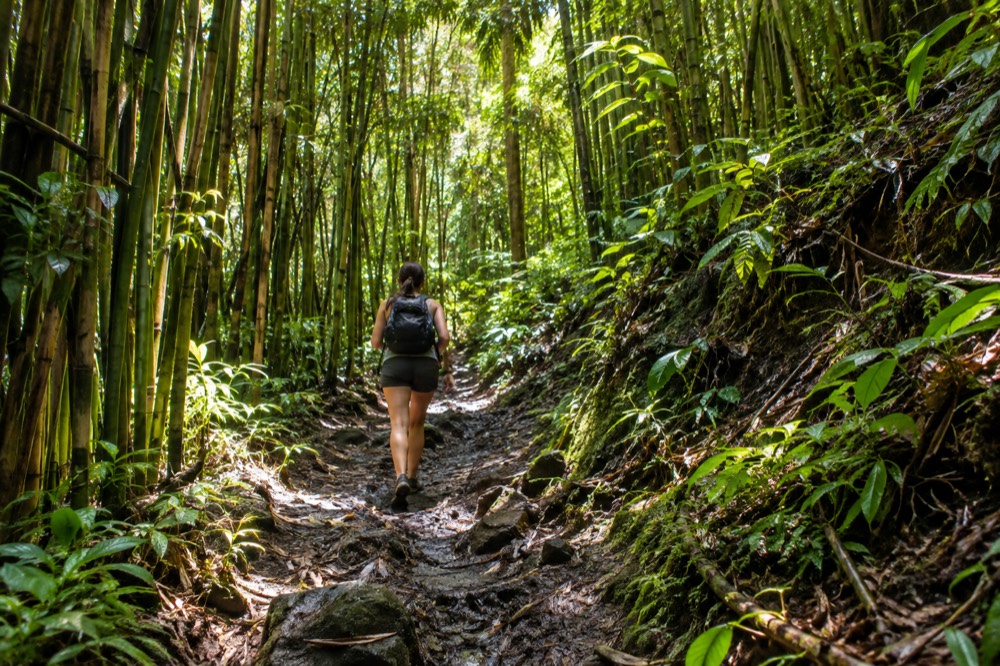
The short version of this whole guide: choose a waterfall with confirmed access, allow enough daylight, check weather and warnings, and do not swim at Mānoa. The island's rainforest valleys are genuinely spectacular, and Mānoa and Waimea are useful starting points without relying on unofficial access routes. More of the island's water-side planning, from swimming beaches to snorkelling spots, is in the things to do in Oahu roundup, and the planning basics live in the Oahu Travel Guide homepage.
Choose A Waterfall Visit That Fits
Choose a self-guided Manoa hike with Waikiki transport, Waimea admission with your own journey, or a North Shore day that includes valley entry. Free independent options remain available.
Manoa Falls Self-Guided Hike With Waikiki Shuttle
Confirm pickup and review the operator’s age, health and hiking requirements. This is transport for a self-guided hike, not paid trail admission.
Round-trip Waikiki shuttle for a self-guided hike; no hiking guide. The rocky trail requires moderate fitness. Review age and health restrictions and confirm pickup. Book only if you need transport; swimming is not permitted.
Compare Independent Manoa Travel With A Shuttle
Use USD totals for the same party and date. Enter public fares, rideshares or rental costs, then only additional parking/fuel. Compare with the shuttle quote for everyone. Manoa trail entry is free. This compares transport to Manoa, not the different Waimea or luau experiences.
Select dates and everyone travelling on the provider’s website, then review the final price and booking conditions.