Waimea Valley & Waimea Falls: What A Visit Actually Involves
Waimea Valley combines botanical gardens, Hawaiian cultural sites and a paved waterfall walk on one admission ticket on Oʻahu’s North Shore. Here is what the visit involves.
Short answer
Waimea Valley currently lists Tuesday–Sunday, 9 a.m.–4 p.m., with seasonal variations. General adult admission is $26; eligible Hawaii residents and military adults pay $10 with ID. The paved walk is ¾ mile each way, typically 20–30 minutes without long stops. Waterfall swimming depends on the daily lifeguard decision.
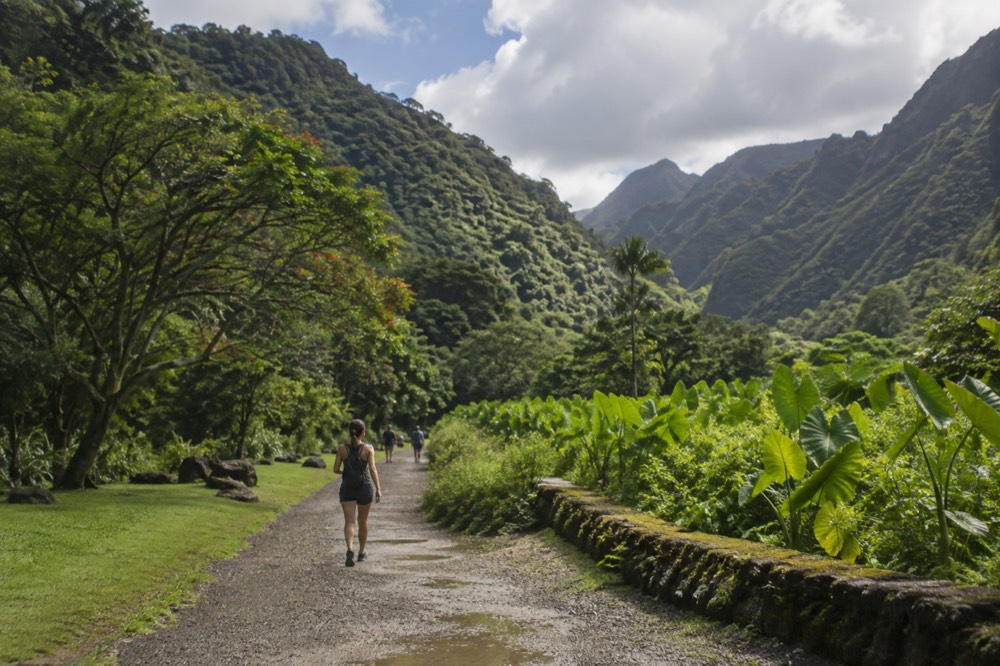
Waimea Valley sits behind Waimea Bay on Oʻahu's North Shore, and it is one of the few places on the island where a rainforest walk, a botanical collection and a waterfall all arrive on the same admission ticket. The valley has been a site of Hawaiian settlement, agriculture and religious practice for centuries, and it is managed today as both a botanical garden and a living cultural site rather than as a simple park. That dual identity shapes everything about a visit, from what you can touch to how you behave near the archaeological features along the path.
This guide covers the practical questions: what admission costs, when the valley is open, what the walk to Waimea Falls involves, and whether the ticket is worth it compared with the free alternatives nearby. The honest short version: it is a paid experience, the price is published plainly on the operator's own admission page, and the free substitutes, such as the Mānoa Falls trail, give you a waterfall but not the botanical garden, the cultural programming or the lifeguarded swimming option.
How Much Does Waimea Valley Cost To Visit?
Adult admission is $26, seniors 62 and over and students pay $20, children aged 4 to 12 pay $18, and groups of 10 or more pay $22 per adult. Hawaii residents and military visitors pay far less: $10 for adults, $8 for seniors and students, and $6 for children, with children 3 and under free. These are the operator's own published rates, and the valley is open Tuesday through Sunday, 9 a.m. to 4 p.m., with seasonal variations.
Those kamaʻāina and military rates matter more than most visitors realise. Eligible visitors with the required Hawaii or military ID can use the discounted rate; do not assume one person’s ID discounts the whole travelling party. Bring the ID, because the discount is checked at admission.
The pricing structure also tells you what the valley thinks it is selling. This is not a state park with a nominal parking fee; it is a managed attraction with horticultural staff, cultural practitioners and a lifeguard operation at the waterfall, and the ticket funds all three. Comparing it to a free trailhead misses the point in both directions: you are paying for things a free trail does not offer, and you should expect a maintained, staffed experience rather than a wilderness hike.
| Ticket type | General admission | Kamaʻāina / military |
|---|---|---|
| Adult | $26 | $10 |
| Senior (62+) | $20 | $8 |
| Student | $20 | $8 |
| Child (4–12) | $18 | $6 |
| Group adult (10+) | $22 | $8 |
| Child 3 and under | Free | Free |
One point of honesty: the operator's admission page lists the rates and the hours, and those are verified here. Whether you must book in advance is not stated as a requirement on that page; a "Book Now" link exists, and using it is sensible in peak periods, but walk-up admission is the normal pattern. Advance booking does not guarantee queue-free entry. Add parking to your budget: the valley currently lists non-kamaʻāina parking at $2 for one hour or $5 for up to four hours; it is not beach parking.
What Is The Walk To Waimea Falls Like?
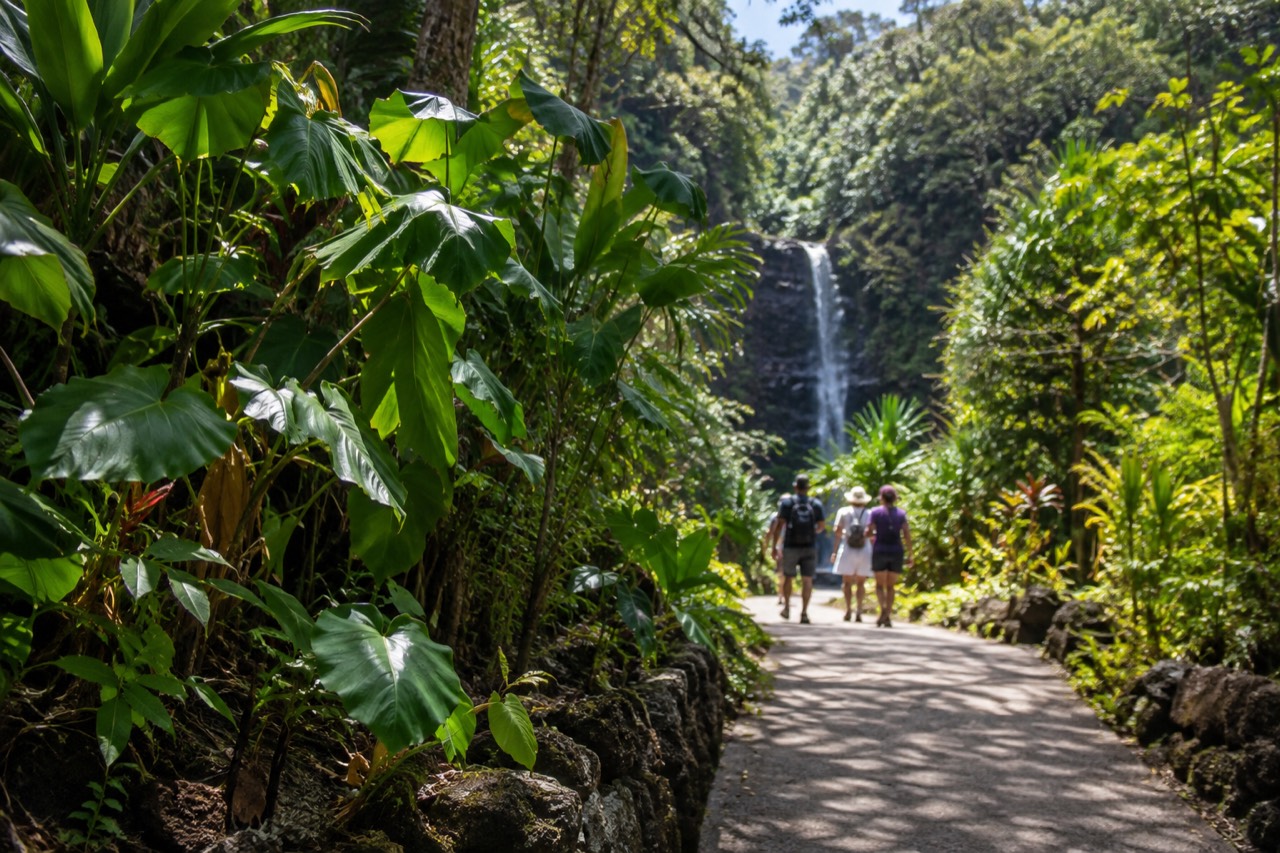
The walk to Waimea Falls runs ¾ mile each way along a paved, mostly flat path up the valley floor, taking most visitors 20 to 30 minutes at a relaxed pace. The route passes through a botanical garden of thousands of planted species, alongside stream channels, kalo loʻi and archaeological features, ending at the waterfall amphitheatre. There is no climbing or scrambling; the surface suits strollers and wheelchairs for most of its length.
That last detail separates Waimea Valley from nearly every other waterfall walk on Oʻahu. The Mānoa Falls trail is dirt and mud and tree roots; the path here is a road-width paved surface. If you are travelling with small children, an older relative or a wheelchair user, the paved route may suit your group better than a muddy trail, and the valley's own accessibility information is worth checking before you go for the specific details of the final stretch.
The botanical garden is not decoration along the route; it is the route. The collection is organised by region and includes signage, and the plantings give the valley a deliberately cultivated character rather than raw forest. Some visitors find that cultivated character a downside, expecting jungle and finding something closer to an arboretum with a waterfall at the end. Knowing that in advance prevents the disappointment. If you want wild, the free trails elsewhere on the island will serve you better; if you want an easy, informative, shaded walk, this is the strongest option on the North Shore.
Along the path you will pass signs of the valley's long history of Hawaiian use, including agricultural terraces and the sites associated with the heiau that sits above the valley mouth. These are not ruins in a display case; they are features of a living cultural landscape. Stay on the marked path, do not move or climb on stones, and treat roped or signed areas as closed. The valley also runs cultural programming, and if a demonstration or talk is scheduled during your visit, it is usually included with admission and worth the time.
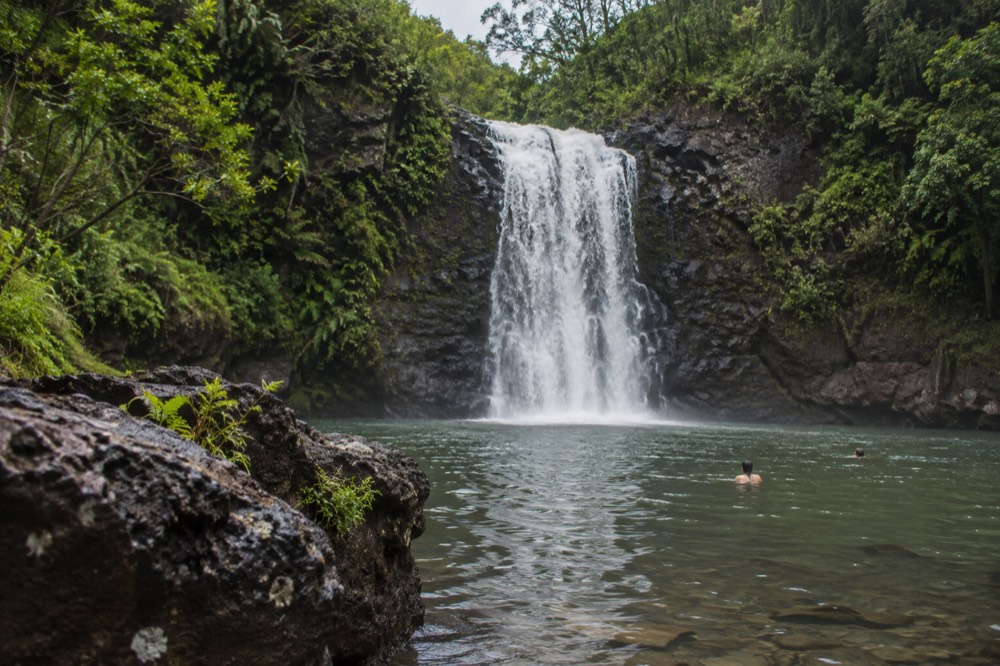
The waterfall itself drops into a natural pool at the head of the valley, and the setting is genuinely dramatic: a rock amphitheatre, high walls covered in hanging green, and cold freshwater. The pool is the reason many people buy the ticket, and it is the one part of the visit that cannot be guaranteed in advance.
Can You Swim At Waimea Falls?
Swimming at the waterfall is allowed only when the on-site lifeguard permits it, and the decision is made daily based on water level, rainfall and conditions in the pool. The operator’s visitor tips explain that lifeguards determine swimming status daily; no ticket promises a swim. Life jackets are required and supplied without charge. If swimming is open, the lifeguard's instructions are absolute, and if it is closed, the pool remains viewable but off-limits for entering the water.
This is the single most misunderstood part of a Waimea Valley visit. Buy the ticket for the walk, the garden and the cultural site, and treat a swim as a possible bonus. The valley sits in a rainforest catchment, and after heavy rain the pool fills with runoff, the current changes and swimming closes. The day you arrive, the answer may be no.
The distinction matters because plenty of competing content states flatly that you can swim at Waimea Falls. That is not what the operator's own materials support. What is supported is that a lifeguard operation exists at the pool and that swimming is conditional. Plan for the walk, check at the ticket counter on arrival, and you will not be disappointed.
For a separate beach stop, Waimea Bay is across the highway. Conditions still decide whether you can enter the ocean; no beach guarantees a swim. Our Sunset Beach guide covers another stop farther along this coast. Winter is another matter entirely: the bay is one of the most famous big-wave surf spots in the world, and entering the water then is for experienced surfers only, not visitors with a rented snorkel set.
When Is The Best Time To Visit Waimea Valley?
The valley is open Tuesday through Sunday from 9 a.m. to 4 p.m., with seasonal variations, so the first scheduling decision is simply picking a day it is open. Arriving near opening can help you avoid the midday heat; parking and crowds still vary. Hours can vary seasonally, and the waterfall pool's condition changes with recent rainfall, so check the operator's site the morning you go.
The Monday closure catches a remarkable number of visitors, because the North Shore circuit is often planned as a Monday day trip when other things feel less crowded. If your itinerary has the North Shore on a Monday, check the actual seasonal schedule before including the valley. The same planning logic applies to Shark's Cove and the rest of the circuit: shore access depends on conditions, while the valley also has scheduled opening hours.
Weather is the second variable; an early start does not guarantee a dry walk. The verified climate data for Oʻahu shows how sharply rain varies by location: the Lyon Arboretum station in Mānoa, five miles from Waikīkī, records an annual normal of 150.96 inches, against 16.41 inches at Honolulu's airport. Those stations do not measure Waimea Valley. Use the local forecast and current warnings for your date rather than assuming another valley’s rainfall pattern applies.
Seasonally, the valley is a year-round visit, and the waterfall runs harder after wet periods. Summer brings flatter surf to Waimea Bay across the road, which pairs well: valley in the morning, then a beach stop only as conditions allow. Winter pairs it in reverse, with big-wave watching at the bay and a valley walk in the middle of the day.
Is Waimea Valley Worth The Ticket Price?
For most visitors, yes, if you arrive knowing what you bought: a botanical garden, a cultural site and an easy waterfall walk on one maintained path, not a wild jungle hike. At $26 for an adult it costs more than a free trail but far less than most guided Oʻahu tours, and kamaʻāina and military rates drop it to $10.
The value depends on whether your group wants the gardens, culture and maintained walk; swimming is a conditional extra.
The honest comparison set is the island's other waterfall experiences. The Mānoa Falls trail is free to walk, but its parking lot is privately operated and its swimming is prohibited outright, so the two experiences differ in kind, not just price. Waimea Valley gives you the possibility of a lifeguarded swim, a surface you can push a stroller on, and a staffed site with programming; Mānoa gives you mud, roots and a genuinely wilder feel for nothing. Compare your group’s mobility and interests: Waimea offers a paved route; Manoa involves unpaved terrain. Ask the valley about specific access needs before booking.
There is also a cultural dimension to the value question that deserves plain language. The valley is a place of continuing Hawaiian significance, and part of what admission funds is the stewardship of that landscape, including the archaeological features along the walk and the native plant collection. A visitor who engages with the signage and any programming on offer gets a substantially richer visit than one who power-walks to the waterfall and back. Give it half a day rather than an hour, and the ticket earns itself.
A final practical note: the valley pairs naturally with the rest of the North Shore. Waimea Bay is across the highway, Haleʻiwa town is a short drive further along Kamehameha Highway for food afterwards, and the whole circuit is covered in our North Shore guide. If you are planning the day from scratch, the things to do in Oahu page is the place to sequence it.
What Should You Know Before You Go?
Bring water, sun protection for the unshaded entrance stretch, and footwear you are happy to get wet if swimming opens. The path is shaded for most of its length, but the parking area and entrance are not. Carry a light day bag and check the valley’s current visitor rules. A towel and a change of clothes are the two things visitors most often wish they had.
One more item for the list: leave the drone at home. Waimea Valley’s own rules prohibit drones. The walk is short enough that most people carry very little and enjoy it more for that.
A few behavioural notes that apply to the valley as much as anywhere on the island. Do not stack rocks along the path: it disturbs archaeological surfaces and misleads other hikers, and it is not a Hawaiian practice despite its popularity online. Do not remove rocks, sand or plant material; taking rock and sand from the shoreline is prohibited under Hawaii law, and the same respect applies inside the valley. If you see a roped or signed area, it is closed, and that includes areas around archaeological features.
Respect for wildlife applies on the walk too. If you encounter a Hawaiian monk seal or a green sea turtle near the stream mouth or the bay, keep the recommended distance, 50 feet for seals and 10 feet for turtles, and understand that these are guidelines protecting the animals, while harassment itself is illegal under federal and state law. Humpback whales, seen from shore in season from November through April, carry a legal 100-yard approach distance on the water.
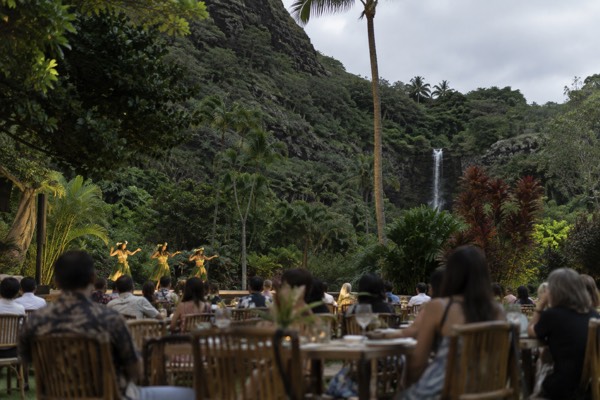
The valley also hosts a lūʻau. The Toa Luau operates inside Waimea Valley, and it is one of the stronger options on the island precisely because the setting is a real valley rather than a hotel lawn. If an evening at the lūʻau appeals, booking it for the same day as your valley visit is an efficient plan, since valley entry is included with the luau. Check both schedules: a Monday luau may run while the gardens are closed.
How Does Waimea Valley Compare With Other Oʻahu Waterfall Walks?
Waimea Valley is Oʻahu's easiest and most managed waterfall walk, with a paved ¾-mile path each way, a botanical garden and a lifeguard at the pool. Mānoa Falls is the free, wilder alternative with a dirt trail and no swimming, while Lulumahu Falls in Nuʻuanu is in a restricted watershed requiring a reservation permit. Waimea has a paved accessible route and a conditional swimming area; check individual access needs with the valley.
The comparison is less about scenery and more about what your group can actually manage, because all three walks end at a green-walled amphitheatre with falling water. The table below sets the main options against each other honestly. Note that the Mānoa Falls parking fee widely quoted online comes from a private, non-government lot, so treat parking costs at Mānoa as something to check on arrival rather than a figure to plan around.
| Waterfall walk | Surface | Swimming | Cost | Best for |
|---|---|---|---|---|
| Waimea Valley | Paved, mostly flat, ¾ mile each way | Conditional, lifeguard-dependent, decided daily | $26 adult, $10 kamaʻāina/military | Families, accessibility, cultural interest |
| Mānoa Falls | Dirt, mud, roots, moderate grade | Not permitted | Trail free; parking charged by a private lot | Fit walkers on a budget |
| Lulumahu Falls, Nuʻuanu | Unpaved watershed access | Do not plan a swim | Reservation permit required; check current access terms | Hikers who have confirmed legal access |
The deeper point is that waterfall walks on Oʻahu sort by effort and access, not by beauty. What differs is the approach: Waimea Valley sells you ease and interpretation, Mānoa sells you wildness for free, and the longer trails sell you solitude. Choose by who is in your group, not by photographs, because the photographs all look alike.
For a fuller run-down of the island's waterfall options, see our best waterfalls on Oʻahu guide, and for a self-guided rainforest option with transport sorted, the Mānoa tour below handles the logistics.
Common Questions About Waimea Valley
Most questions about Waimea Valley come down to three things: the seasonal schedule, the conditional swimming, and the ticket price relative to free trails. The valley is open Tuesday to Sunday, 9 a.m. to 4 p.m., adult admission is $26 with steep kamaʻāina and military discounts, and swimming at the falls is decided daily by the lifeguard rather than promised in advance. Everything else, from parking to what to bring, follows from those three facts.
How much does Waimea Valley cost?
General admission is $26 for adults, $20 for seniors 62+ and students, and $18 for children 4 to 12, with children 3 and under free. Hawaii residents and military visitors pay $10, $8 and $6 respectively, and groups of 10 or more pay $22 per adult. These are the operator's published rates.
Can you swim at Waimea Falls?
Only when the on-site lifeguard allows it, and that decision is made daily based on water level and recent rainfall. The admission page does not promise swimming, so plan for the walk and treat a swim as a bonus. If swimming is open, follow the lifeguard's instructions exactly.
Is Waimea Valley open on Mondays?
The current published schedule is Tuesday–Sunday, 9 a.m.–4 p.m.; Monday opening varies seasonally. Hours can vary seasonally, so confirm on the operator's site before you set out, especially around holidays.
How long is the walk to the waterfall?
About ¾ mile each way on a paved, mostly flat path, which takes most visitors 20 to 30 minutes each direction at a relaxed pace. The paved route is wheelchair accessible; confirm your specific needs with the valley. The optional shuttle cannot accommodate collapsible wheelchairs.
Is Waimea Valley worth it compared with free waterfall hikes?
It depends on your group. If you want an easy, shaded, informative walk with the possibility of a lifeguarded swim, it is worth the ticket. If you are a fit hiker on a budget who wants wild terrain, the free trails elsewhere on the island will serve you better. Kamaʻāina and military visitors pay $10, which makes it an easy call.
Can you visit Waimea Bay and Waimea Valley on the same day?
Yes, and it is a natural pairing, since the bay is directly across Kamehameha Highway from the valley entrance. A morning valley walk can pair with a beach stop, but check lifeguard advice before considering a swim even in summer. In winter the bay hosts some of the largest surf on the island, and swimming there is not for visitors.
If you also plan Diamond Head, arrange its separate reservation and leave time for that outing on another part of the island.
Waimea Valley rewards visitors who arrive early, on the right day, with the right expectations: a garden and a cultural landscape first, a waterfall second, and a swim only if the lifeguard says so. Plan it that way and the ticket is easy to justify, as the Oahu Travel Guide team lays out across the rest of the North Shore coverage.
Choose Your Waimea Valley Visit
Choose admission only, a day with Waikiki transport, or a luau that already includes valley admission. The Manoa alternative is a separate outing on another part of Oahu.
Waimea Valley General Admission
Check the valley’s opening date and your party’s admission. Arrange your own journey and budget any optional on-site shuttle separately.
Self-guided garden and waterfall access; transport is separate. Opening days vary seasonally and waterfall swimming depends on conditions. Do not buy another ticket if admission is already included in your tour.
Compare Admission Plus Transport With A Tour
Enter USD estimates for the same date and whole party. Add admission to your independent travel, parking and optional valley-shuttle costs. For the tour total, include every traveller and any extras you actually want; do not add valley admission or included transport twice. These are estimates, not live prices.
Select dates and everyone travelling on the provider’s website, then review the final price and booking conditions.