Sunset Beach Oahu: What A Visit Actually Involves
Sunset Beach is the long golden arc of sand on Oahu's North Shore, famous for enormous winter surf and quiet summer water. Here is what getting there, timing it and swimming there actually involves.
Short answer
Sunset Beach is free to visit, with no entry fee and free beach park parking, and it is at its most dramatic from roughly November through March when the north shore carries the season's largest surf. In summer the water flattens and the same sand becomes one of the island's calmer swimming beaches, though you should always check conditions before entering.
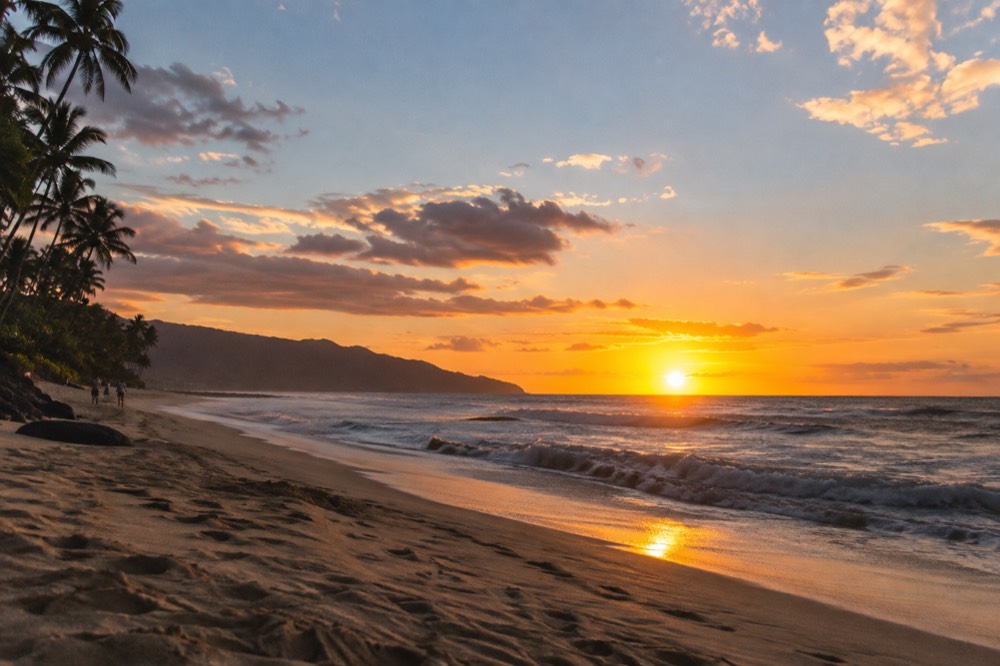
Sunset Beach is a roughly two-mile ribbon of sand between Paumalū and Waimea on Oahu's North Shore, and for half the year it is one of the most photographed pieces of coastline in Hawaiʻi. For the other half it is a place where locals swim laps in flat, glassy water while tourists wander around wondering where all the waves went. Both versions are the same beach. The island's surf runs out of phase by shore, and the North Shore's cycle is the strongest of all: the National Weather Service's daily surf forecast publishes Oahu's heights by shore aspect, and on a September day in 2026 the south shore was running four to six feet while the north shore sat at one to three. In winter that table inverts completely.
That single fact drives almost every practical decision about visiting. When you come, whether you swim, where you park and what you pack all depend on which half of the year you arrive in. This guide covers the mechanics: access, timing, cost, ocean safety, and an honest answer to whether the trip is worth it from Waikiki.
Where Is Sunset Beach And How Do You Get There?
Sunset Beach sits on Oahu's North Shore, along Kamehameha Highway between Haleʻiwa town and Waimea Bay, roughly an hour's drive from Waikiki depending on traffic. There is no entry fee and no gate; the beach is fronted by a public beach park with restrooms, outdoor showers and a free parking lot along the highway side. The beach itself is a short walk from any of the pullouts.
To make the drive up from Waikiki on your own schedule, book a rental car here.
The drive up is part of the experience. Kamehameha Highway is a two-lane country road that threads through working communities, and the site's advice is to treat it that way: park legally, never stop in a travel lane, and never treat a resident's driveway as overflow parking. This is not a theme park corridor. It is a place carrying enormous visitor pressure on a road that was never designed for it.
The parking situation is genuinely easier than at some North Shore spots. The beach park lot fills early on high-surf winter days, when people come to watch the waves, but there is additional roadside parking along the highway shoulder where signed. In summer the pressure drops noticeably. If you are combining Sunset Beach with other stops, our North Shore Oahu guide lays out how the towns and beaches chain together along the same stretch of road.
A few practical notes on the drive itself. The highway has few safe overtaking opportunities and no alternative route, so on peak days the traffic simply moves at the road's pace and the honest move is to build that into the plan rather than fight it. Fuel, food and restrooms thin out between Haleʻiwa and the beach, so top up before you leave town. Cell coverage along this stretch of coast is patchy in places, which matters if you are relying on a maps app for turn-by-turn directions rather than knowing the route in advance. None of this is a reason to skip the beach; it is a reason to leave Waikiki earlier than feels necessary.
One planning note worth knowing before you drive up: as of the DLNR notice dated 9 September 2026, Nuʻuanu Pali Lookout and Kaʻena Point remain closed for storm repairs after Hurricane Lowell, so if your route or day plan assumed either stop, re-check the DLNR State Parks notices before you set out. Sunset Beach itself is unaffected.
Is It Free To Visit Sunset Beach?
Yes, Sunset Beach is completely free. There is no entry fee, no beach pass and no parking charge at the beach park. The only costs are the ones you choose: food from the shrimp trucks and food stands scattered along the North Shore, gear rental if you want it, and a tour if you would rather have someone else handle the driving. Nothing about the beach itself costs money.
This puts it in the same category as most of Oahu's best coastline. The island's paid experiences are concentrated in a handful of places: Hanauma Bay's $25 non-resident entry, Diamond Head's $5 per person plus $10 per vehicle for non-residents, and the private attractions like Kualoa Ranch, where the valleys cannot be visited without a paid tour because the land is private. The beach parks, by contrast, are open and free, and Sunset Beach is one of the best of them.
| Cost item | At Sunset Beach | Notes |
|---|---|---|
| Beach access | Free | No gate, no pass |
| Beach park parking | Free | Fills early on big winter surf days |
| Restrooms and showers | Free | In the beach park |
| Food nearby | Pay as you go | Shrimp trucks and stands along the highway |
| Surf lesson or tour | Optional | See the options below |
It is worth being precise about what "free" buys you here, because the contrast with the paid sites is stark. At Diamond Head, a non-resident needs a reservation made up to thirty days ahead, pays by credit card only, and cannot simply turn up; at Hanauma Bay the reservation window opens just two days ahead at 7 a.m. HST and the preserve closes Mondays and Tuesdays entirely. Sunset Beach has none of that machinery. You arrive, you park, you walk onto the sand. For travellers who find Oahu's reservation calendar exhausting, and it is a real planning burden, this beach is a genuine relief, and that alone earns it a slot on many itineraries.
If budget is the frame for your whole trip, our Oahu on a budget guide and the free things to do in Oahu roundup both lean heavily on exactly this kind of stop.
When Should You Visit, Summer Or Winter?
Visit in winter, roughly November through March, if you want to see the North Shore's famous large surf from the sand; visit in summer, roughly May through September, if you actually want to swim, snorkel or take a first surf lesson in gentle water. The same beach swaps personality between the two seasons, and picking the wrong half for your goal is the most common planning mistake.
The mechanism is the swell, not the weather. North-facing shores receive their largest surf in winter, when North Pacific storms send long-period swell south; south-facing shores peak in summer on the same logic reversed. The National Weather Service's Honolulu surf forecast, which we check for the site's own data, publishes all four shore aspects at once, and it is the honest answer to "where are the biggest waves on Oahu right now" on any given day.
Winter also overlaps with humpback whale season. The Hawaiian Islands Humpback Whale National Marine Sanctuary states plainly that from November through April visitors can see whales from shore and at sea, and the North Shore's open ocean horizon is a reasonable place to scan. If you are on the water instead, keep the legal distance in mind: 100 yards from humpbacks is law, not etiquette, and 50 yards from Hawaiian spinner dolphins is law too. Monk seals and green sea turtles have recommended distances instead, 50 feet and 10 feet respectively, and the distinction matters because a guideline is not a statute.
Weather barely enters the decision. Oahu's rainfall is famously lopsided by side of the island: the leeward coast around Honolulu airport averages about 16 inches a year, while the Lyon Arboretum station in Mānoa, five miles inland, records over 150 inches. The North Shore sits between those extremes, and passing showers on this coast are usually brief. The water temperature, from monthly harbour readings at Honolulu, ranges from about 78 °F in February to just under 83 °F in August, so the ocean is never cold; the surf, not the temperature, is the only real constraint.
| Season | North Shore surf | What Sunset Beach is good for |
|---|---|---|
| Winter (Nov–Mar) | Largest of the year | Watching waves, photography, beach walks; swimming usually unsafe |
| Spring (Apr–May) | Dropping, variable | Transition; check the daily forecast |
| Summer (May–Sep) | Smallest, often flat | Swimming, snorkelling, beginner surf, relaxed beach days |
| Autumn (Oct–Nov) | Building | First winter swells arrive; conditions change fast |
Timing within the day matters less for the water than you might think, but a lot for the light. The latest sunset of the year on Oahu, from US Naval Observatory data for Waikīkī, is about 7:17 p.m. in early July, and by late December the sun is down before 6 p.m. Oahu simply does not have long high-latitude summer evenings; the swing in day length across the whole year is only about two and a half hours. If you want the beach's namesake sunset in winter, you need to be in position by mid-afternoon, not early evening.
Can You Swim At Sunset Beach?
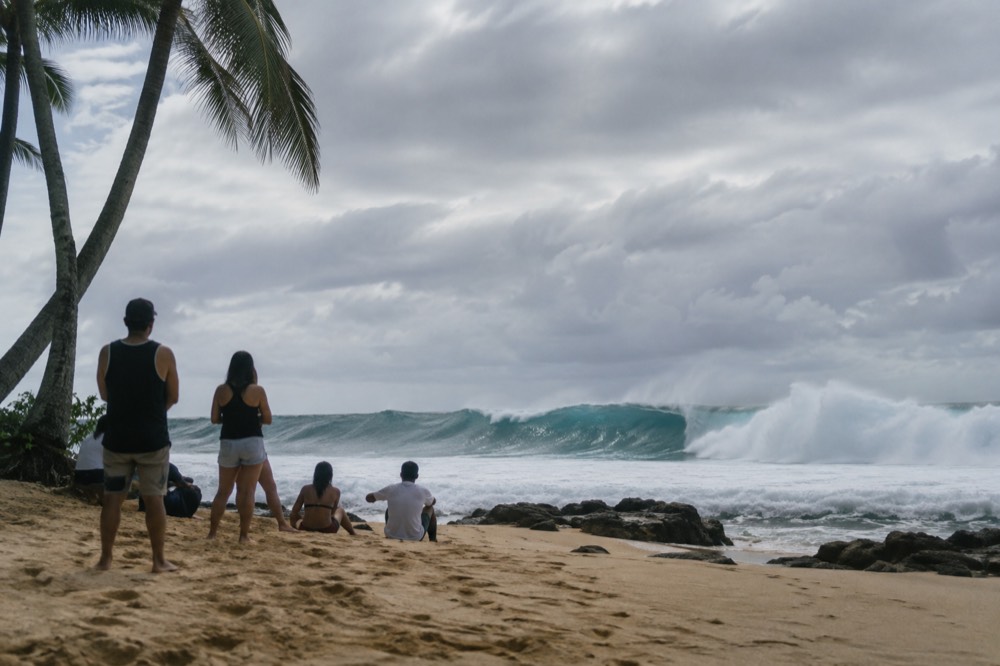
In summer, yes, and it is one of the North Shore's better swimming beaches once the surf settles, with a sandy bottom and wide sandbar room at low tide. In winter, generally no: the same sandbar that makes summer swimming pleasant becomes the platform for heavy, fast-breaking shorebreak, and the beach's winter water is for expert surfers only, not for swimmers or bodyboarders.
The beach has two entirely different risk profiles. The summer one is ordinary beach caution: check for currents, swim near lifeguards, watch children. The winter one is genuinely dangerous. Large north shore surf breaks in shallow water with enormous force, and the injuries that bring people to North Shore medical care in winter are overwhelmingly neck and back injuries from being driven into the sand bottom. This is not a reason to avoid the beach in winter; it is a reason to stay on the sand, which is where the best viewing is anyway. The wider set of guides lives on Oahu Travel Guide.
The site's Oahu ocean safety guide goes into the details, including the box jellyfish calendar, which matters because influxes tend to arrive on a predictable lunar schedule and can close beaches to swimming for a day. The general rules that apply everywhere on this coast: never turn your back on the ocean, never swim alone, and never assume yesterday's conditions predict today's. The daily surf forecast changes everything.
If flat-water swimming with marine life is the actual goal of your trip, the guided options on the sheltered side of the island do that job better than any North Shore beach in any season. The Waikiki Turtle Canyon snorkel is the site's standard recommendation for exactly this: it runs on the calm south shore, carries a turtle guarantee, and puts a crew between you and the conditions. It is a two-hour trip, rated 4.8 from thousands of traveller reviews, and it removes the two variables that make independent snorkelling stressful, namely where to go and whether today is safe.
What Else Is Near Sunset Beach?
Sunset Beach sits in the densest stretch of the North Shore's sights: Waimea Bay and Waimea Valley are a short drive west, Haleʻiwa town with its food trucks and shave ice is just beyond them, and Laniakea Beach, where turtles haul out, lies a short drive east. You can comfortably build a half-day around the beach alone or a full day around the whole run.
The cluster works in either direction. Coming from Waikiki, most people drive up through Wahiawā or the Likelike and hit the coast at Haleʻiwa, then work east: Waimea Valley, Waimea Bay, Sunset Beach, and onward toward Turtle Bay. Waimea Valley is worth a stop in its own right; it is closed Mondays, open Tuesday to Sunday, and adult non-resident admission is $26, with kamaʻāina and military rates far lower. Our Waimea Valley and Waimea Falls guide covers it properly.
Laniakea deserves a caution rather than a hard sell. The beach is a genuine turtle-haul-out spot, but the parking arrangement has been in flux with an ongoing highway drainage and safety project, and the site's rule for the North Shore applies with force here: do not stop in travel lanes, do not block residents' driveways, and if there is no legal space, come back later or skip it. The turtles are protected, ten feet is the recommended distance, and harassment is illegal regardless of distance.
Food is part of the North Shore's draw and Sunset Beach sits in the middle of it. The shrimp trucks around Haleʻiwa and Kahuku are the famous ones, and our North Shore shrimp trucks guide sorts the established names from the seasonal stands. Closer to the beach itself the options are thinner and more casual, so if a proper lunch matters to your day, plan it around Haleʻiwa on the way up rather than counting on something at the beach park.
| Nearby stop | What it is | Practical note |
|---|---|---|
| Waimea Bay | Classic North Shore swimming and surf beach | Winter surf, summer calm, same rules as Sunset |
| Waimea Valley | Botanical garden walk to a waterfall | Closed Mondays; adult admission $26 |
| Haleʻiwa town | Food trucks, shave ice, galleries | Main North Shore base town |
| Laniakea Beach | Turtle haul-out | Parking in flux; never stop in the road |
| Turtle Bay resort area | Eastern end of the North Shore | Good sunset and walk access |
For the full run of the coast, our best Oahu day trips and the North Shore day trip from Waikiki planners sequence these stops hour by hour.
Is Sunset Beach Actually Worth The Trip?
For most visitors, yes, provided you match the season to the goal. Winter delivers the North Shore spectacle that made the coast famous and costs nothing to watch; summer delivers a genuinely pleasant swimming beach that most tourists never associate with the North Shore. The trip is only a disappointment when someone arrives in July expecting giant waves, or in January expecting to swim.
The honest case against is travel time and crowding. It is a long drive from Waikiki for a beach you can, in summer, approximate closer to town, and on peak winter days the highway slows and the lots fill. The honest case for is that the winter surf viewing is not approximable anywhere, and that the summer version, a calm, wide, golden-sand beach with a fraction of Waikiki's density, is one of the island's better-kept seasonal secrets.
The site's own numbers support the crowding concern without hand-wringing. Oʻahu took about 5.68 million visitors by air in 2025, down roughly two percent on 2024, and most of them concentrate in the Waikiki corridor. The North Shore absorbs its share, but the pressure is seasonal and time-of-day dependent, and an early morning arrival solves most of it.
If the answer for your trip is "yes, but I want the water activities too", the guided options cover the gap. A beginner group surf lesson in Waikiki, rated 4.9, teaches in the gentle reform waves of the south shore rather than the North Shore's heavy breaks, which is where first-timers belong in any season. And for something quieter altogether, paddleboard yoga on flat water, a 75-minute class rated 4.9, works for visitors who want the ocean as calm as a studio floor.
The broader planning context lives in the site's main Things to Do in Oahu roundup, which places Sunset Beach in the full island picture, and in the best sunset spots on Oahu guide for readers whose real question is the evening light rather than the surf. For day-by-day sequencing, the 3-day Oahu itinerary gives the North Shore a full day, which is what it deserves.
Common Questions About Sunset Beach Oahu
Most questions about Sunset Beach come down to three things: which half of the year you are visiting, whether the water is safe on that particular day, and how the drive fits the rest of a North Shore day. The beach is free, the parking is free, and the only genuinely consequential decision is seasonal, because the same sand is a spectacle in winter and a swimming beach in summer, and confusing the two is where plans go wrong.
Is Sunset Beach free?
Yes. There is no entry fee, no beach pass and no parking charge at the beach park. Your only costs are optional: food, gear rental or a tour.
Can you swim at Sunset Beach?
In summer, when the north shore surf settles, yes, and it is one of the calmer North Shore beaches for it. In winter, no: heavy surf breaks in shallow water and the beach is for watching, not swimming. Check the daily surf forecast either way.
When is the best time to visit Sunset Beach?
November through March for the famous large surf and dramatic scenes; May through September for swimming, snorkelling and relaxed beach days. Arrive early on winter weekends, when the parking fills fastest.
How far is Sunset Beach from Waikiki?
Roughly an hour's drive each way along Kamehameha Highway, depending on traffic. Most visitors fold it into a half- or full-day North Shore loop with Haleʻiwa, Waimea Bay and Waimea Valley rather than driving up for the beach alone.
Is Sunset Beach good for beginners to learn to surf?
Not in winter. The North Shore's winter breaks are for experts only. First-timers should learn on the south shore, where Waikiki's gentle reform waves are the standard teaching ground in every season.
Are there turtles at Sunset Beach?
Turtles are seen along the North Shore, but the reliable haul-out spot nearby is Laniakea Beach, a short drive east. Keep the recommended 10-foot distance from honu, and never stop in the travel lane to look for parking there.
Sunset Beach rewards visitors who know which version of the beach they are going to meet, and it punishes nobody but the ones who arrive with the wrong expectations. Go in winter for the show, go in summer for the swim, and either way the price of admission stays the same: nothing at all.