Oahu On A Budget: What A Cheap Trip Actually Costs And How To Spend Less
Oahu rewards budget travellers more than any other Hawaiian island, because the best of it, beaches, hikes and the Pearl Harbor National Memorial, costs little or nothing. The money goes to rooms, rental cars and food, and every one of those has a cheaper workaround.
Short answer
You can do Oahu cheaply by skipping the rental car some days, riding TheBus and Skyline on a $7.50 daily cap, hiking free trails instead of paid lookouts, and booking the few reservation-only sites, Hanauma Bay and Diamond Head, yourself rather than through middlemen. Most of the island's best experiences cost nothing at all.
Oahu took 5,679,047 visitors by air in 2025, and most of them spent their money on the same three things: a room in Waikīkī, a rental car, and paid tours. The island's actual highlights undercut that whole budget. The Pearl Harbor National Memorial is free. The best hikes cost nothing. The beaches are public. What does cost money, entry fees at Hanauma Bay and Diamond Head, a lūʻau, Kualoa Ranch, is priced in ways a first-time visitor cannot guess from a search results page.
This guide is the sourced version of "Oahu on a budget": what things genuinely cost, which free alternatives are genuinely good, and where spending a little actually saves a lot. Every fee below comes from the official operator or agency page, not from a forum thread.
Is Oahu Actually Expensive, Or Does It Just Look That Way?
Oahu is the cheapest of the four main Hawaiian islands to visit, because Honolulu is the only place in the state with genuine budget infrastructure: hostels, a real public transit system, cheap plate lunch, and free access to nearly every beach and trailhead. The island's headline costs, hotels and car rental, are what push a trip over budget, and both are avoidable for days at a time. The paid attractions cluster into a handful of reservation sites, and everything else, from Waimānalo Beach to the Mākapuʻu lighthouse trail, costs nothing. A traveller who pays for a room and nothing else can still have a full week.
The budget problem on Oahu is not the price of any single thing. It is that the default itinerary most people arrive with, rental car every day, a lūʻau, a snorkel tour, a circle-island tour, a helicopter, stacks four or five mid-priced items on top of accommodation. Strip the list back to what the island is actually known for and the number falls fast.
Two structural facts help. First, the Pearl Harbor National Memorial is a fee-free park: the USS Arizona Memorial program itself costs nothing, with only a $1 non-refundable management fee per ticket when reserving through the official reservation system. Second, TheBus and the Skyline rail share one fare structure, with a $7.50 daily cap on a HOLO card, which makes a car-free day genuinely cheap rather than a hardship.
What Does A Budget Day On Oahu Cost?
A realistic bare-bones day runs about $30 to $60 per person beyond your room: $7.50 capped transit, roughly $15 to $25 on food if you eat plate lunch and grocery store poke, and either $0 for a beach or hike day or $5 to $25 for the occasional entry fee. The expensive days are the ones with a booked activity on them, and even those have cheap official channels. Diamond Head is $5 per non-resident plus $10 to park, Hanauma Bay is $25, and both are booked direct. A week mixing free days with two or three paid ones lands far below what most visitors spend.
| Item | What it really costs | How to pay less |
|---|---|---|
| Getting around | $3.25 per cash bus ride, or $7.50 daily cap on a HOLO card | Buy a HOLO card for $2 and never pay cash fares |
| Breakfast and lunch | Plate lunch and poke bowls, typically well under a sit-down restaurant | Grocery stores beat restaurants on the same food |
| Beach day | $0, plus whatever parking you choose | City beach parks have free lots |
| Diamond Head | $5 per person, $10 per vehicle, card only, reservation required | Bus or walk-in avoids the parking fee entirely |
| Hanauma Bay | $25 entry plus online service fee, children 12 and under free | Residents free; everyone else books two days ahead at 7 a.m. HST |
| Pearl Harbor | Park entry free, Arizona program free, $1 per ticket booking fee, $7 per day parking | Skyline's Hālawa station plus a short walk avoids parking |
The pattern to notice: the entry fees are small and the parking fees are what add up. A family of four driving into Diamond Head pays $20 in people and $10 for the car. The same family arriving by bus pays $20 total and skips the reservation scramble for parking, which is the part that actually sells out.
Food is the other lever. The plate lunch, two scoops of rice, macaroni salad, a protein, is Oahu's working lunch and it costs a fraction of a Waikīkī restaurant dinner. Shave ice, food trucks and the North Shore shrimp trucks are cheap by intention, not as a compromise. For a full treatment see the best food on Oahu and the food truck guide.
If your itinerary is heavy on paid attractions, the maths changes, and that is where a pass can earn its keep.
If your itinerary leans toward paid attractions, book a multi-attraction pass here.
Which Free Things On Oahu Are Actually Worth Building A Trip Around?
The free list is not filler: Pearl Harbor's visitor centre and the Arizona program, nearly every beach on the island including Waimānalo, Kailua and Lanikai, the Mākapuʻu Point lighthouse trail, the Mānoa Falls trail, Koko Head, and the Byodo-In grounds' exterior areas are all free, and several of them are the reason people come to Oahu in the first place. The USS Arizona Memorial is the single most requested experience on the island and it costs one dollar to reserve. No budget guide to any other destination can say anything comparable.
| Free experience | What you get | Catch |
|---|---|---|
| USS Arizona Memorial program | A 45-minute program including the boat to the memorial | Reserved tickets, a $1 fee per ticket, bags prohibited |
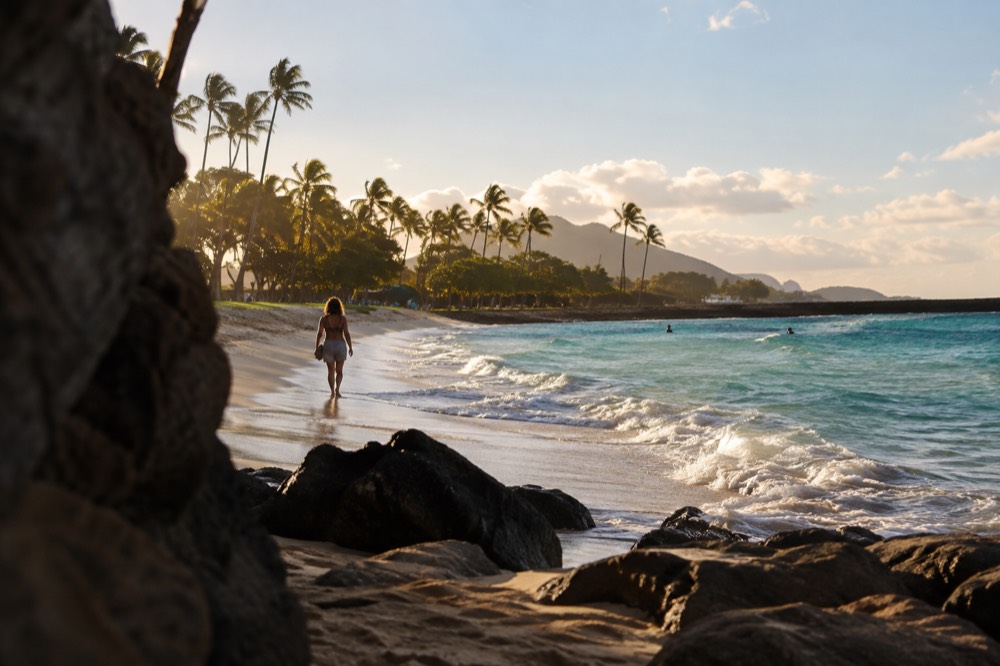
| Waimānalo and Kailua beaches | Long white-sand windward beaches with free park parking | Lanikai has no public lot; park at Kailua Beach Park |
| Mānoa Falls trail | Rainforest valley walk to a waterfall, no trail fee | Parking is a private lot that charges; arrive by bus to pay nothing |
| Mākapuʻu Point lighthouse trail | Paved coastal climb with whale-viewing in season | None |
| Koko Head summit trail | Steep railway-tie climb, free, no fee station | Hard climb, no water, go early |
| Waikīkī Beach itself | The famous beach, free, all of it | Umbrella and chair rentals are where the money goes |
Two honesty notes. The Arizona Memorial is a war grave where 1,102 sailors and Marines remain in the ship; treat the visit accordingly and do not frame it as a bargain. And the Mānoa Falls parking lot is privately operated, so the trail is free but the convenient parking is not; the bus removes that cost too.
The rainforest worth knowing about here: Mānoa's Lyon Arboretum, five miles from Waikīkī, records 150.96 inches of rain a year against the airport's 16.41. Free trail days in that valley can be wet ones, and that is part of what makes the waterfall run. Check the Mānoa Falls trail guide before you go.
Where Do Budget Travellers Actually Sleep On Oahu?
Waikīkī has the island's hostels and its cheapest legal rooms, but the real savings come from two moves: staying outside Waikīkī, in Kailua, Kapolei or along the Waiʻanae coast where rates drop, and avoiding resort parking fees entirely by going car-free for part of the stay. A room plus a rental car plus resort parking can cost more per night than the room itself. A room near a bus line with no car attached is the single biggest budget decision on the island.
What holds true regardless of the season: taxes add materially to the posted rate. The state Transient Accommodations Tax rose from 10.25% to 11.00% on 1 January 2026 under Act 96, often called the green fee, and it is an increase to the existing accommodation tax, not a separate fee collected at the airport. Budget on the tax-inclusive number, not the headline rate.
| Sleep strategy | Trade-off | Best for |
|---|---|---|
| Waikīkī hostel or budget hotel | Walkable, transit-rich, noisier | Car-free first-timers |
| Kailua or Kāneʻohe windward stay | Quieter, beach-town feel, fewer budget options | Families who want calm water |
| Kapolei or Ko Olina area | Cheaper rooms, far from most sights | Drivers doing a circle-island style trip |
| Vacation rental with kitchen | Cooking breakfast saves real money across a week | Stays of five nights or more |
The kitchen point deserves its own sentence: on an island where restaurant breakfasts add up fast, a rental with a kitchen is a budget instrument, not a convenience.
If a pass covering paid attractions fits your list, this is the moment to check it against your own itinerary, prices and inclusions change, so verify on the operator's live listing before you buy.
Do You Need A Rental Car On Oahu?
No, not every day, and that distinction is where the money is: TheBus reaches nearly every part of the island on a fare capped at $7.50 a day on a HOLO card, and Skyline now serves the airport, so a car-free arrival and several car-free days are genuinely practical. Renting a car for only the two or three days you need one, a North Shore day, a windward day, beats paying for seven days of a car that sits in a $7-a-day spot at Pearl Harbor or worse at a hotel. The honest answer is a hybrid trip.
The fare structure is the same across both systems: $3.25 for a single cash bus ride with no transfers, but $3.00 on a HOLO card with two hours of unlimited transfers, a $7.50 daily cap, and a $90 monthly cap. The card itself costs $2. That daily cap is the number that makes Oahu's bus network a budget tool rather than a last resort.
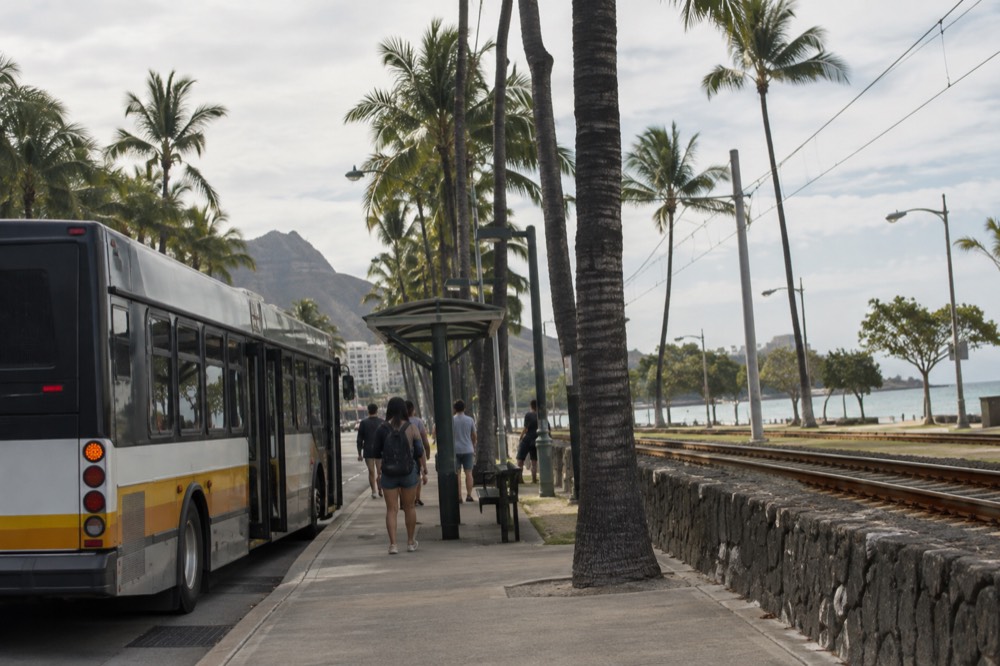
The catch is geography. There is no Skyline station in Waikīkī, so rail trips from Waikīkī always start with a bus transfer. And the windward and North Shore beaches are served by buses that run less often than the urban corridors, which is exactly why the hybrid pattern works: transit days for town, Pearl Harbor, Diamond Head and Hanauma Bay; one rented car day for the North Shore. The do you need a car on Oahu guide breaks the routes down stop by stop, and the Oahu parking guide covers where the free lots actually are.
Which Reservation Rules Catch Out Budget Travellers?
The two that matter are Hanauma Bay, which opens reservations exactly two days ahead at 7:00 a.m. HST and is closed Mondays and Tuesdays, and Diamond Head, which requires non-residents to reserve entry and parking in advance with no on-site sales, a rule in force since May 2022. Both are cheap when booked direct and expensive when improvised, because the workaround people reach for, a resold tour ticket, costs multiples of the official fee. The reservation window, not the price, is Oahu's real planning problem.
Hanauma Bay's arithmetic is stark: $25 entry plus a 2.35% online service fee, children 12 and under free, Hawaii residents free with no reservation at all. The booking opens two days out at 7 in the morning, and the phrasing on the official page is precise: Monday at 7 a.m. you can begin reserving a Wednesday slot. Anyone telling you it opens three days or a week ahead is working from stale information.
Diamond Head's version is quieter but trips more people, because a large share of online content predates the 2022 rule. Non-residents pay $5 per person and $10 per vehicle, credit card only, and there is no gate to pay at. Hawaii residents enter free with ID. Book up to 30 days ahead, or let a tour operator handle the ticket and shuttle for you.
One more: the Pali Lookout and Kaʻena Point were closed for storm repairs as of the DLNR notice dated 9 September 2026, so check the state parks page before you build a free day around either.
What About Luaus, Tours And The Big Ticket Items?
A lūʻau is the one budget line most visitors refuse to cut, and that is a defensible choice, but the range between options is wide, from around the mid-$100s per adult on the island's established luaus to considerably more for premium seating packages, so the savings come from choosing the tier rather than skipping the night. The other big-ticket items split cleanly: some, like Kualoa Ranch's valleys, cannot be seen without a paid tour because the land is private, while others, like snorkelling, have free DIY versions at Sharks Cove and Hanauma Bay that cost only the entry fee or nothing.
| Splurge category | Budget move | What you give up |
|---|---|---|
| Lūʻau | Standard admission instead of premium seating; compare shows first | Front-row seats and drink packages |
| Kualoa Ranch movie sites | A tour is genuinely required, the valleys are private property; pick the shortest tour that covers what you want to see | Nothing, there is no free alternative |
| Snorkelling | Shore-snorkel Sharks Cove or book Hanauma Bay direct at $25 | Boat access to offshore reefs |
| Whale watching | Watch from shore at Mākapuʻu or any high coastal point, November through April | Close-up views |
| Helicopter and skydiving | Skip it; there is no budget version | The aerial view |
The whale point is worth pausing on, because it is one of the few genuine freebies in the splurge category: the Hawaiian Islands Humpback Whale National Sanctuary states plainly that from November through April visitors can see whales from shore as well as at sea. A cliffside bench in that window does a fair impression of a $100 boat ticket.
For choosing between luaus rather than choosing whether, see the best luau on Oahu comparison, and for the snorkelling side, the Oahu snorkeling guide covers which sites are free and which need a boat.
What Does A Whole Budget Week Look Like, Day By Day?
A workable cheap week is two transit days in Honolulu covering Pearl Harbor, Diamond Head and Waikīkī, one windward day for Kailua and Waimānalo beaches by bus, one rented-car day for the North Shore and Haleʻiwa, one Hanauma Bay day booked two days ahead, and one flexible day for a lūʻau or a rain plan, with total activity spending concentrated in just three of the seven days. The other four cost transit fares and food. That shape, not any single hack, is what a budget Oahu trip is.
Day one, Pearl Harbor by transit: Skyline to Hālawa station, the free visitor centre, the $1-per-ticket Arizona program reserved in advance. Bags are prohibited, so travel light, and the parking fee is avoided entirely. Day two, Diamond Head early, reserved ahead, walked or bused in, then the rest of the day on Waikīkī Beach, which costs nothing.
Day three, windward: bus to Kailua Beach Park, swim, then the beach itself. Day four, the one splurge day with a rental car: the North Shore, Haleʻiwa town, Sharks Cove for snorkelling, sunset at the beach parks. Day five, Hanauma Bay, booked at 7 a.m. two days before, $25, closed Mondays and Tuesdays so plan around it. Day six, the lūʻau, the one line in the budget most people keep and should. Day seven, buffer: rain plan, the rainy day activities on Oahu guide covers the free indoor options including Bishop Museum's grounds and the city's libraries and botanical gardens.
Common Questions About Oahu On A Budget
Most questions about doing Oahu on a budget come down to three things: whether the free beaches, hikes and the Pearl Harbor memorial are genuinely good, which reservation windows for Hanauma Bay and Diamond Head you must hit, and whether the passes and packages pay off against a specific list of paid attractions, so price your own itinerary first. The free beaches, hikes and the Pearl Harbor memorial are not consolation prizes, they are the island's headline experiences, and they anchor most of a cheap week. The reservation rules for Hanauma Bay and Diamond Head punish improvisation more than they punish thin wallets. And the passes only pay off against a specific list of paid attractions, so the honest advice is always to price your own itinerary first.
How much money do you need per day on Oahu?
Beyond your room, a budget traveller can run on roughly $30 to $60 a day: $7.50 capped transit, $15 to $25 on plate lunch and grocery food, and either nothing for a beach or hike day or $5 to $25 for an entry fee. Days with booked activities cost more, but most activities on a budget itinerary are free.
What is the cheapest way to get around Oahu?
A HOLO card, which costs $2, with fares capped at $7.50 a day across both TheBus and Skyline. Cash bus fares are $3.25 with no transfers, so the card pays for itself almost immediately. Renting a car for only the two or three days you truly need one is cheaper than a full week plus hotel parking.
Is Pearl Harbor really free?
Yes. The national memorial is a fee-free park, and the USS Arizona Memorial program itself is free, with a $1 non-refundable management fee per ticket when reserving on the official reservation site. Parking is $7 per day, but Skyline's Hālawa station serves the memorial, so transit avoids that too. Bags of any kind are prohibited.
Can you do Oahu without a rental car?
Yes, with planning. TheBus reaches the North Shore, windward beaches and Hanauma Bay, and Skyline connects the airport to town. The trade-off is frequency: urban corridors run often, rural ones do not. A hybrid of transit days plus one or two rented car days suits most budgets.
Are the Hawaii attraction passes worth it?
Only against your own list. A pass covering forty-plus attractions beats per-ticket pricing if you would otherwise buy several of those tickets, and loses to the official direct fees if your week is mostly free beaches and hikes. Price your actual itinerary, including the free days, before buying any pass.
What is the cheapest month to visit Oahu?
The cheapest months for rooms are typically the shoulder periods outside peak holiday weeks, but we do not print specific rate figures because hotel pricing moves constantly. The structural point holds year-round: the island's best experiences, beaches, hikes and the memorial, cost the same in every month, which is nothing.
If you take one thing from this guide, take the shape of the week rather than any single price: a room near transit, a HOLO card, two or three paid days, and the island's free coastline doing the rest. That is what Oahu on a budget actually looks like, and the Oahu Travel Guide homepage has the rest of the island laid out the same way.
Which Paid Experiences Should A Budget Traveller Actually Book?
Book the things that are cheap direct and impossible free: the Arizona program at its $1 booking fee, Hanauma Bay at $25, Diamond Head at $5, and then put your remaining activity budget into one or two genuine splurges, a lūʻau or a Kualoa Ranch tour, rather than scattering it across mid-priced middleman products. The pattern that fails is buying five mediocre tickets. The pattern that works is three nearly-free official bookings plus one memorable night.
The middleman problem is real on Oahu. Hanauma Bay and Diamond Head both sell direct through official systems, and the resale market around them exists precisely because people do not know that. The official channels are cheaper and they are the same tickets. The same logic applies to the shuttle-and-ticket bundles around Diamond Head: if the reservation scramble is what you are paying to avoid, that is a fair purchase, but know that is what you are buying.
For the splurge tier, the best luau on Oahu guide compares the major shows on the same page, and the North Shore day trip from Waikīkī guide shows how to spend the one day a rented car is genuinely worth its price. Whatever you book, read the cancellation terms on the operator's live listing before you pay, because Oahu weather reshuffles itineraries more often than visitors expect.
One more option belongs in this conversation, because it sits between the free stuff and the splurges. A hop-on hop-off trolley day pass is the cheapest paid way to cover Honolulu's spread-out sights when you do not want to plan bus routes, and it pairs naturally with a pass-heavy itinerary.
What Is The Single Biggest Budget Mistake On Oahu?
Paying for a rental car all week and then paying again to park it, at $7 a day at Pearl Harbor, $10 at Diamond Head and hotel rates on top, is the mistake that quietly adds hundreds to a trip, and it is entirely avoidable because the island's transit cap is $7.50 a day and its best free experiences sit on bus lines. The second-biggest is buying resold tickets to things that sell direct and cheap. Both mistakes come from the same instinct, treating Oahu like a drive-everywhere mainland destination, and the island simply is not one.
The counter-instinct is worth practising. Before you book anything on Oahu, ask whether an official channel sells it direct, whether a bus goes there, and whether the free version of the experience is the famous one. On this island, three times out of five, the answer to the last question is yes, and a budget trip stops being a compromise and becomes the version of the trip that actually works.