Free Things To Do On Oahu: Beaches, Hikes And Sites That Cost Nothing
Oahu's best experiences are mostly free: the beaches, the lookouts, the historic sites and the wildlife. This guide covers what genuinely costs nothing, what carries a reservation or parking catch, and how to plan around both.
Short answer
The best free things to do on Oahu are its beaches, its trail network, Pearl Harbor National Memorial's free entry, the lookouts along the leeward and windward coasts, and wildlife watching from shore. The catches are reservations: Diamond Head requires one for non-residents, and Hanauma Bay charges non-residents $25 entry.
Oahu runs on a simple truth most visitors never fully absorb: the island's headline experiences, its beaches, its ridgelines, its reefs and its history, are either free or close to it. The money goes to hotels, food and the tours you choose on top. Oʻahu took 5,679,047 visitors by air in 2025, preliminary DBEDT figures, and most of them spent their days on things that cost nothing at the gate.
This guide is the honest ledger. What is genuinely free, what looks free but carries a reservation requirement or a parking fee, and what is worth the small charges you cannot avoid. The Oahu Travel Guide desk keeps this checked against official sources, and a few entries here carry closures and rules that most competing pages have not caught up with.
What Are The Best Free Things To Do On Oahu?
The best free things to do on Oahu are its public beaches, the Diamond Head and Mānoa Falls trails, Pearl Harbor National Memorial's free visitor experience, the windward coast lookouts, and shoreline wildlife watching. Every one of those costs nothing at the gate. The catches are reservations and parking: Diamond Head requires non-residents to book ahead, and some trailhead lots charge private fees, so free entry and a free day are not always the same thing.
That distinction matters more on Oahu than on most islands, because the state runs two different systems side by side. Some sites are genuinely open access: you arrive, you park legally, you walk in. Others are free or cheap to enter but gated behind a reservation system designed to control numbers. Getting this wrong does not cost money, it costs the visit, because there is no on-site sale at Diamond Head for non-residents and no way to talk your way in.
The other thing worth knowing before you plan: free does not mean empty. The island's most famous free sites, the beaches of Waikīkī, the Makapuʻu lighthouse trail, the Halona Blowhole lookout, carry serious crowds at midday, and the fix is almost always timing rather than money. Go early. The sunrise crowd at Diamond Head is a fraction of the 10 a.m. crowd, and the beaches are at their calmest and least busy before the trade winds pick up.
If your trip mixes free sites with paid ones, there is a middle path worth knowing about:
An all-inclusive attractions pass covering more than 40 Oahu activities sits in the same ecosystem as the free list: it makes sense when your itinerary leans toward ticketed sites, and makes no sense at all if you plan to spend the week on beaches and trails. Run the numbers against your actual list before buying anything.
Which Oahu Beaches Cost Nothing To Visit?
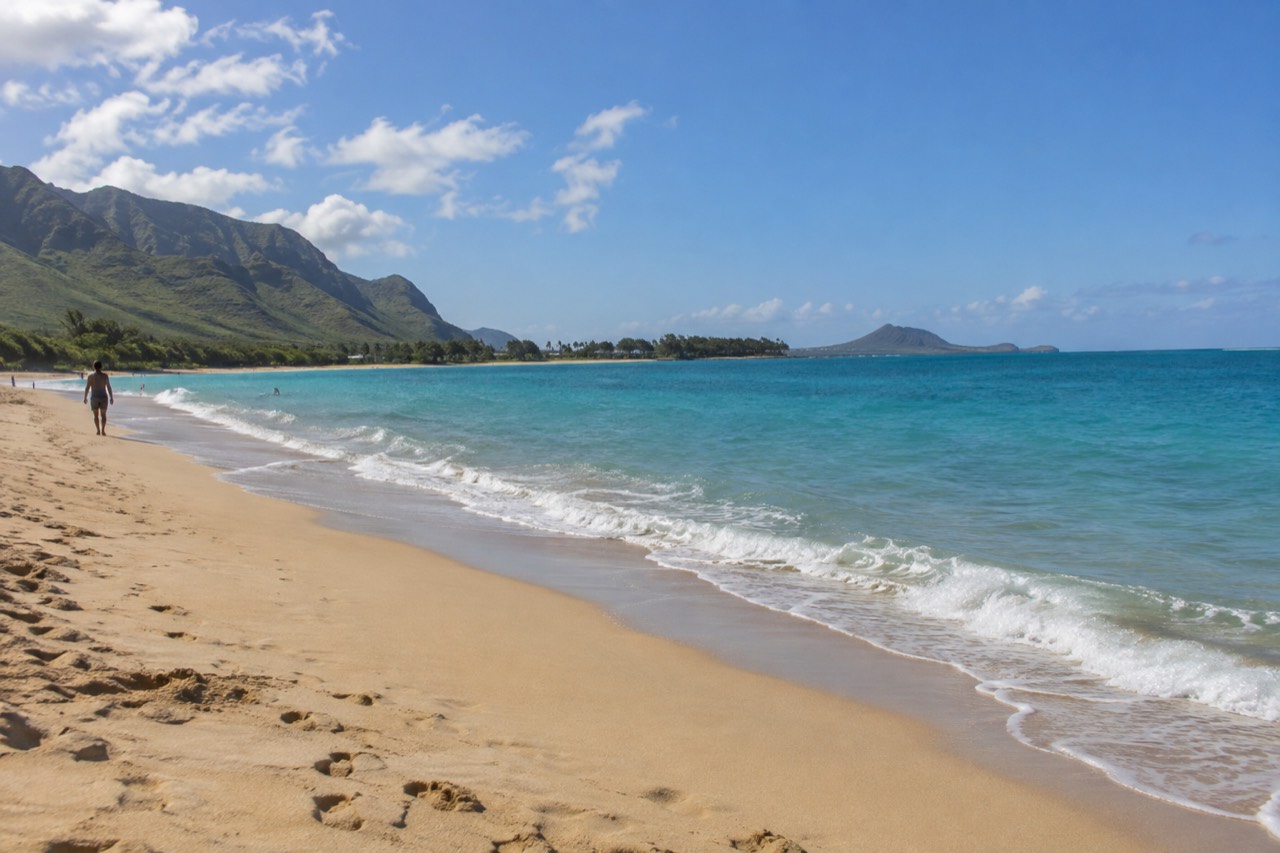
Every beach on Oahu below the vegetation line is public and free by state law, including the sand in front of the resorts, and there are no private beaches on the island. What you sometimes pay for is parking and facilities, not the sand itself. Kailua, Waimānalo, Ala Moana and the North Shore beaches are all free to visit, with free or cheap public lots at most beach parks.
That "all beaches are public" rule is the single most useful fact for a budget trip. The stretch of sand in front of a luxury resort is not the resort's; public access corridors run between the properties along much of the coast, and the state guarantees shoreline access. You cannot use the resort's pool or loungers, but the water in front of them is yours.
Where free gets complicated is parking. Lanikai Beach, the one people most want to visit, has no public lot at all: it is residential streets only, with "No Parking Any Time" restrictions on the two main drives and towing enforcement, so the practical free option is the Kailua Beach Park lot a short way down the coast and a walk or bike ride in. Laniakea, the turtle beach on the North Shore, has had its shoulder parking restricted with barriers while a highway drainage and safety project runs, so check the current configuration before you count on it.
The honest beach plan for a free day looks like this:
| Beach | Entry | Parking | The catch |
|---|---|---|---|
| Kailua Beach Park | Free | Public lot | Popular; fills by mid-morning |
| Waimānalo Beach Park | Free | Public lot | Long, often quieter stretch |
| Ala Moana Beach Park | Free | Public lot | Calm water, city crowds |
| Lanikai Beach | Free | None; residential streets only | Walk or bike in from Kailua |
| Sunset Beach | Free | Roadside and small lots | Winter surf closes swimming |
| Sandy Beach | Free | Roadside lot | Strong shorebreak; strong swimmers only |
One safety note that belongs in any free-beach list: Oahu's surf runs out of phase by shore. North-facing shores peak in winter, south-facing shores peak in summer, and the National Weather Service forecast publishes all four aspects daily. The beach that was flat in June can be closed-to-swimming in January, and it is the same sand. Check the surf forecast, not last month's reviews.
Which Free Hikes Give You The Best Views On Oahu?
Oahu's best free hikes are the Makapuʻu Point lighthouse trail, the Lanikai Pillbox trail, the Mānoa Falls trail and Koko Head crater trail, all of which cost nothing to walk. Diamond Head is the exception that proves the rule: the trail is free for Hawaii residents with ID, but non-residents pay $5 per person and $10 per vehicle, and must reserve in advance, a rule in force since May 2022 with no on-site sales.
Diamond Head is where most free-hike plans quietly stop being free, so start there. Non-residents book entry and parking up to 30 days ahead, pay by credit card only, and cannot buy at the gate. Residents enter free with a Hawaii ID. The monument is open 6 a.m. to 6 p.m. daily, with the last reservation at 4 p.m. and last entry at 4:30 p.m. If the reservation system is full for your dates, a guided option bundles the ticket and the shuttle:
The genuinely free trails are excellent, and several rival Diamond Head for views. The Makapuʻu lighthouse trail is paved the whole way, which makes it one of the few summit-grade walks on the island that works for strollers and wheels. The Lanikai Pillbox trail climbs above Kailua with two open bunkers at the top and a panorama over the Mokulua islands. Koko Head is the island's honest staircase test, an old railway line up the crater's flank, free and unstaffed. Mānoa Falls runs through rainforest to a waterfall; the trail itself is free, though the adjoining private lot charges for parking, so arrive early for street options or budget for the lot.
| Trail | Entry fee | Reservation | Character |
|---|---|---|---|
| Makapuʻu Point lighthouse | Free | None | Paved, coastal, family-friendly |
| Lanikai Pillbox | Free | None | Short, steep, sunrise classic |
| Koko Head crater | Free | None | Strenuous stair climb, no shade |
| Mānoa Falls | Free | None | Rainforest, waterfall, muddy after rain |
| Diamond Head (Lēʻahi) | $5 non-resident | Required for non-residents | Iconic crater rim |
Two closures to check before you plan any hiking day: Nuʻuanu Pali Lookout and Kaʻena Point State Park were both closed until further notice as of the DLNR notice of 9 September 2026, following storm damage from Hurricane Lowell. Do not build an itinerary around either until you have re-checked the DLNR State Parks notices, because this is a moving situation and repairs have no published end date.
Rain matters more than most visitors expect, and the numbers explain why. Honolulu airport records an annual normal of 16.41 inches of rain, which sounds like a dry island, but the Lyon Arboretum station in Mānoa, five miles from Waikīkī, records 150.96 inches, and every single month there is wetter than the airport's wettest month. A "dry day in Waikīkī" tells you nothing about the Mānoa Falls trail, which is why the trail is often muddy when the beach is postcard-perfect.
What Can You Do Free In Waikīkī And Downtown Honolulu?
Waikīkī gives you free beach time, free Friday-night fireworks visible from the sand, the Ala Wai canal walk and Kapiʻolani Park, while downtown offers free visits to the exterior grounds of ʻIolani Palace, Aloha Tower's observation levels and the Chinatown historic district on foot. None of these charge admission, and all are walkable or a short bus ride apart.
Waikīkī at night is one of the island's underrated free experiences, and the weekly fireworks over the water are the anchor: they are visible from the beach itself, which means you get the show without a boat ticket. The full run of evening options is covered in things to do in Waikīkī at night, from the torch-lighting ceremony on the beach to the night market energy of the International Market Place, which costs nothing to wander.
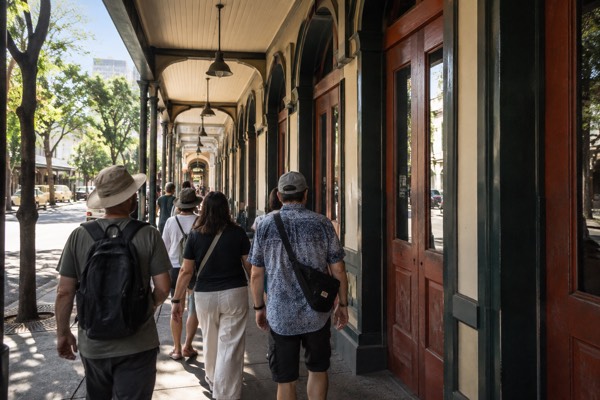
Downtown and Chinatown reward walkers. The grounds of ʻIolani Palace are free to stroll, the only royal palace on United States soil, and the building's exterior and the gilded statue of Kamehameha I nearby are worth the trip even if you skip the paid interior tour. Chinatown's historic district, its markets and its murals are an open-air visit. The downtown Honolulu guide and the Chinatown guide break both down street by street.
Getting between these areas is where a small budget decision lives. TheBus costs $3.25 cash for a single adult ride with no transfers, but a HOLO card caps your day at $7.50 with unlimited transfers across TheBus and the Skyline rail, so a day of hopping between downtown, Waikīkī and Kapiʻolani Park costs less than lunch. Note that Skyline has no Waikīkī station; you transfer to a bus for the final leg.
If you would rather not plan bus routes at all, a hop-on hop-off trolley loops the main visitor corridor:
The trolley is not free, but it competes with free transport on convenience, and it is the one paid getting-around option that pairs naturally with a free-things itinerary, since the stops sit at or near the free sites in this section.
Where Can You See Wildlife On Oahu For Free?
You can see green sea turtles hauling out at Laniakea, monk seals resting on North Shore and windward beaches, and humpback whales from shore between November and April, all without paying for a boat. The rules matter as much as the sightings: keep 100 yards from humpbacks and 50 yards from spinner dolphins, which are law, and stay back 10 feet from turtles and 50 feet from monk seals, which are recommended guidelines backed by anti-harassment law.
Shore-based wildlife watching is genuinely one of the island's best free activities, and in whale season it rivals any paid cruise. The sanctuary's own guidance is that visitors can see humpbacks from shore and at sea from November through April, and the windward coast's elevated lookouts are the free vantage points. The Oahu whale season guide covers the shore-watching spots in detail.
Turtles are the everyday sighting. Laniakea Beach on the North Shore is the reliable one, and the Laniakea guide covers the current parking situation, which has been in flux during the highway project. Honu graze at many reefs around the island, and a mask and fins at any free beach gives you a decent chance without a tour.
Monk seals are rarer and deserve more space when they appear. Volunteers typically rope off a resting seal's stretch of sand; give it the full distance and keep dogs away. The legal framing is worth getting right, because a lot of copy gets it wrong: the turtle and seal distances are guidelines, but harassing, touching or taking either is illegal under federal and state law, and taking a monk seal is a class C felony under Hawaii law. The whales and dolphins are different: their approach distances are federal law, full stop.
The one free wildlife experience that is not free for everyone is Hanauma Bay. Hawaii residents enter free with no reservation, but non-residents pay $25 plus a service fee and must reserve, with the booking window opening two days ahead at 7 a.m. HST sharp. It closes Mondays and Tuesdays. If you are a resident it belongs on this list; if you are not, it belongs on the paid list, and the Hanauma Bay guide walks through the reservation mechanics.
What Free Historic Sites Are On Oahu?
The free historic sites on Oahu are the Pearl Harbor National Memorial visitor center and its museums, the USS Arizona Memorial program itself, the grounds of ʻIolani Palace, the National Memorial Cemetery of the Pacific at Punchbowl and the heiau, the stone temples, at Puʻu o Mahuka above Waimea. The Arizona program is free apart from a $1 per-ticket reservation fee, though parking at the visitor center costs $7 per day and bags are prohibited.
The USS Arizona Memorial deserves plain words. It is a war grave: 1,102 sailors and Marines remain in the ship. The program that carries visitors out to the memorial is free, reserved through the federal recreation site, with a $1 non-refundable management fee per ticket. The visitor center's museums and shoreline exhibits are also free. What is not free is convenience: parking is $7 per day, bags of any kind are prohibited, and storage near the entrance carries a small fee whose amount the park does not publish. The Pearl Harbor guide covers the full reservation picture.
Punchbowl, the National Memorial Cemetery of the Pacific, is free and open to visitors, and it is a place for quiet rather than a photo stop. The Punchbowl guide sets out what to expect and how to behave there.
The heiau are the island's oldest free sites and the least understood. Puʻu o Mahuka Heiau above Waimea Bay is the largest on Oahu, and Ulupō Heiau in Kailua sits beside the Kawainui wetlands. These are temples, not ruins: stay on marked paths, do not climb or move stones, do not enter roped areas, and leave nothing behind. Wrapped rocks and stacked stones left by visitors are a known problem, and neither is the practice imitators think they are copying. Photography is generally permitted; reverence is expected.
Does Free On Oahu Come With Hidden Reservation And Parking Costs?
Free on Oahu usually means free entry with two possible catches: a reservation requirement and a parking charge. Diamond Head needs a non-resident reservation plus $5 per person and $10 per vehicle, Hanauma Bay needs a $25 non-resident ticket booked two days ahead, Pearl Harbor needs a free ticket reserved in advance, and several trailheads and beach parks charge for parking while the site itself costs nothing. Planning around those three systems is the real skill.
The pattern to internalise: entry, reservation, parking, three separate gates that may or may not line up. A site can be free to enter but charge for parking, like the state beach parks with pay lots. A site can be cheap to enter but impossible without a reservation, like Diamond Head. And a site can be completely free but require a timed ticket, like the Arizona Memorial. Budget travelers who only check the first gate get turned away at the second.
| Site | Entry | Reservation | Parking |
|---|---|---|---|
| Diamond Head (Lēʻahi) | $5 non-resident, free for residents | Required for non-residents, up to 30 days ahead | $10 non-resident vehicle |
| Hanauma Bay | $25 non-resident, free for residents | Two days ahead, 7 a.m. HST | $3 non-resident, cash |
| Pearl Harbor visitor center and Arizona program | Free, $1 ticket fee | Required for the Arizona program | $7 per day |
| Makapuʻu lighthouse trail | Free | None | Small free lot |
| Waimea Valley | $26 adult, closed Mondays | Not required per the admission page | On-site lot |
| Mānoa Falls trail | Free | None | Private lot charges a fee |
Two traps close this out. First, the widely repeated claim that Hanauma Bay reservations open 48 hours or a week ahead is wrong; the official page says two days ahead at 7 a.m., and the bay closes Mondays and Tuesdays. Second, the "green fee" you may have read about is not a fee you pay anywhere on this list: it is an increase to the existing accommodations tax, from 10.25% to 11.00%, effective 1 January 2026, which shows up in hotel bills, not at beach park gates.
For travelers whose list mixes free sites with paid ones, here are the three products that most often pair with an itinerary like this:
Common Questions About Free Things To Do On Oahu
Most questions about free things to do on Oahu come down to three things: whether free entry also means free parking, whether a reservation is needed before you leave the hotel, and whether the site is actually open this week. The beaches are always free and mostly need no booking, the big hikes and Hanauma Bay need reservations or fees for non-residents, and the September 2026 storm closures show why checking official notices the day before matters.
What is completely free on Oahu?
All beaches, the Makapuʻu, Lanikai Pillbox, Koko Head and Mānoa Falls trails, the Pearl Harbor visitor center and the USS Arizona Memorial program, the grounds of ʻIolani Palace, Punchbowl, the heiau and shoreline wildlife watching. Parking may still cost money at some of these.
Is Diamond Head free?
It is free for Hawaii residents with ID. Non-residents pay $5 per person plus $10 per vehicle and must reserve in advance; there have been no on-site sales since May 2022.
Can you visit Pearl Harbor for free?
Yes. The visitor center and its museums are free, and the USS Arizona Memorial program is free apart from a $1 per-ticket reservation fee. Parking is $7 per day and bags are prohibited.
Is Hanauma Bay free?
Only for Hawaii residents, who enter with no reservation and no fee. Non-residents pay $25 plus a service fee and must reserve two days ahead at 7 a.m. HST. The bay is closed Mondays and Tuesdays.
What free things can you do on Oahu when it rains?
The Bishop Museum and ʻIolani Palace interior tours are paid, but Chinatown, downtown Honolulu's historic district and the International Market Place cost nothing to explore, and short rain bursts on the coast often do not reach the leeward side at all.
Are the lookouts on Oahu free?
Most are, including Tantalus and the Halona Blowhole, but Nuʻuanu Pali Lookout was closed until further notice as of the September 2026 DLNR notice, so check before driving there.
Build your free days around the coasts and the trails, reserve the two sites that demand it, and check the official closures the week you fly, and Oahu will hand you its best material for nothing but an early alarm.