Shark's Cove Oʻahu: Snorkeling, Timing And What A Visit Actually Involves
Shark’s Cove is a rocky snorkelling and tide-pool spot on Oʻahu’s North Shore. Summer often brings smaller surf, but daily conditions and rocky access matter in every season.
Short answer
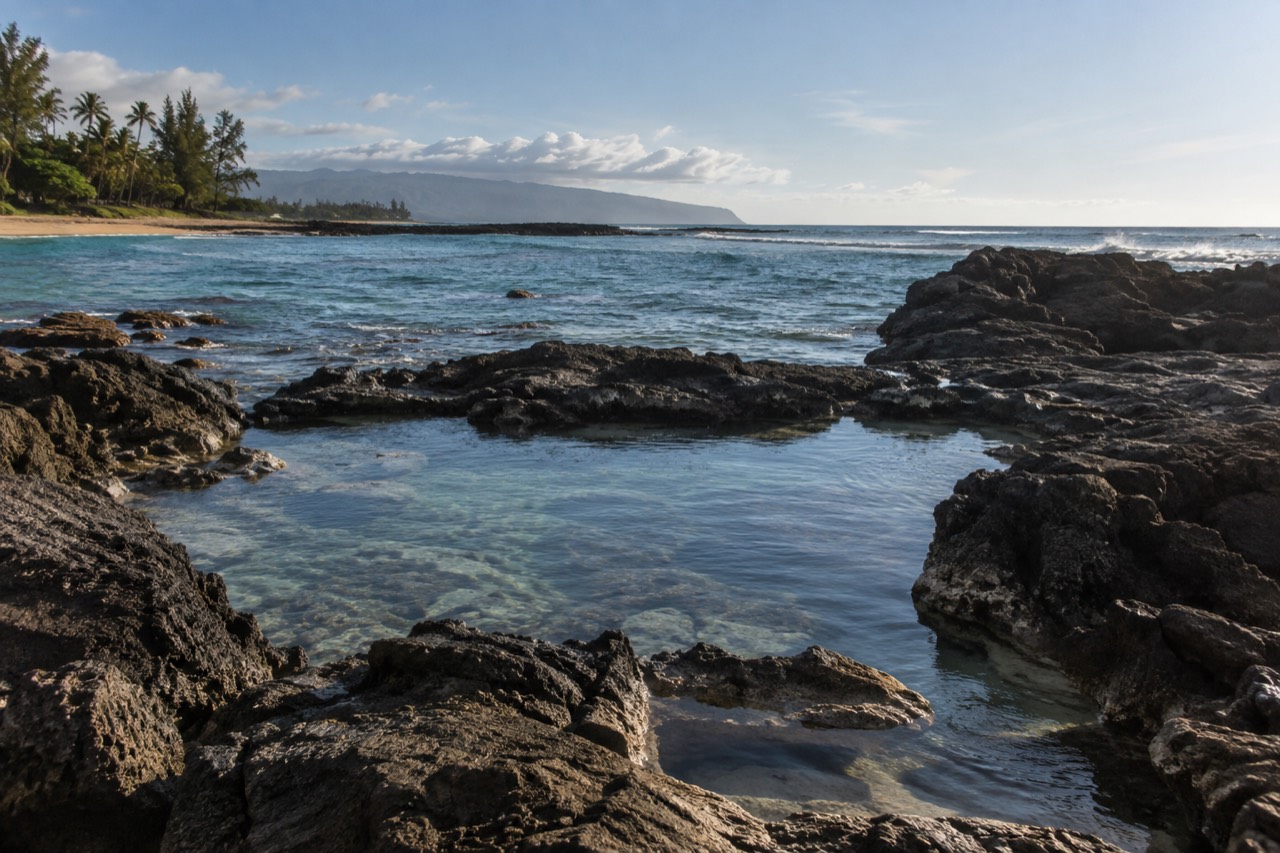
Shark’s Cove sits in Pūpūkea on Oʻahu’s North Shore, northeast of Waimea Bay and Haleʻiwa. Entry is free. Summer often has smaller surf, while winter waves can make the cove dangerous; check conditions on the day, and stay out if unsure.
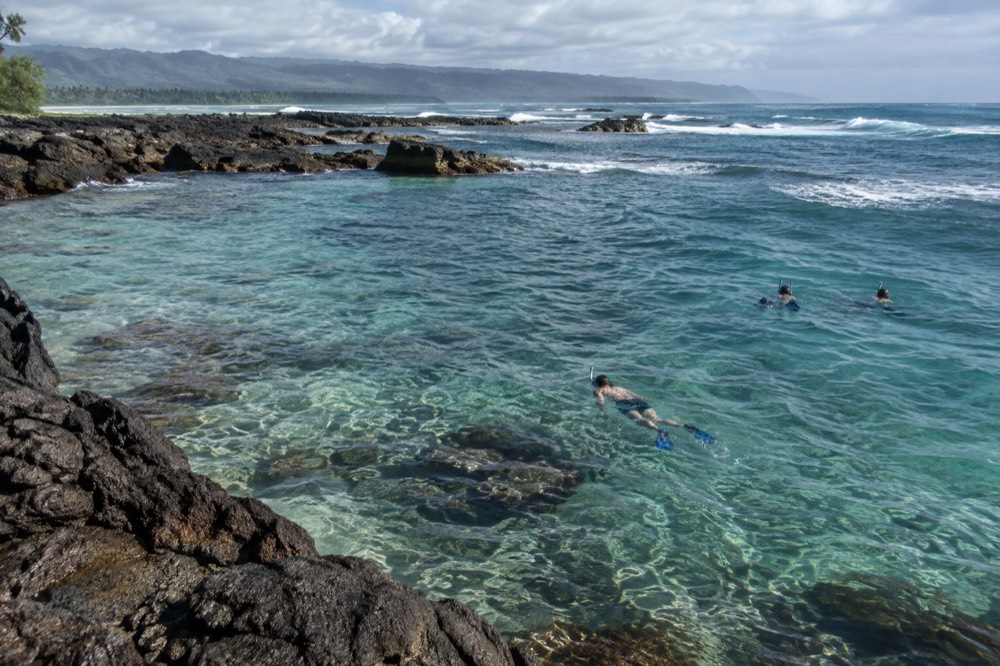
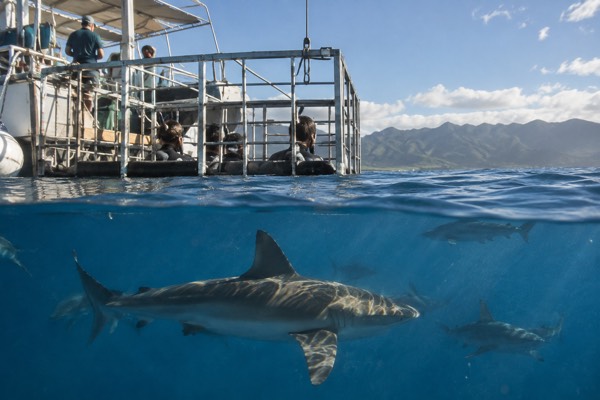
Shark's Cove is a small, rocky cove in Pūpūkea on Oʻahu's North Shore, northeast of Waimea Bay. Its name should not be taken as a promise of shark sightings, and the sharks most visitors to this stretch of coast actually meet are the ones viewed from a cage on a boat out of Haleʻiwa. What the cove itself offers is lava shelf, tide pools and, in the right season, some of the clearest shore snorkeling on the island.
Shark's Cove is not a swimming beach. There is no sand to speak of, entry is over rock, and the whole character of the place flips with the swell. The same North Shore that hosts world-famous big-wave surfing in winter sends water that makes the cove unswimmable, while smaller summer surf can bring clearer snorkelling conditions. Calm-looking water is not proof of safety. Every other question about visiting, cost, safety, parking, timing, answers back to that one fact.
This guide covers what a visit actually involves: what the cove is, when to go, what it costs, safety, the marine life you are likely to see, what else is nearby, and whether the trip deserves a slot in your itinerary. For the wider picture of the coast, our North Shore Oʻahu guide covers the towns, beaches and driving logic, and the best snorkeling spots on Oʻahu puts the cove in context against Hanauma Bay and elsewhere.
What Is Shark's Cove And Where Is It?
Shark's Cove is a rocky snorkeling cove in the community of Pūpūkea on Oʻahu's North Shore, northeast of Waimea Bay and farther northeast along the coast from Haleʻiwa town. It is not a sandy beach but a lava-rock shoreline with tide pools, known primarily as a shore snorkeling and freediving spot. Despite the name, it is not a shark habitat in any special sense.
The cove sits at the point where Kamehameha Highway passes some of the most famous surf breaks on earth. Waimea Bay, the Eddie Aikau break, is the next bay west. Ehukai and Pipeline are a short distance further along the highway. That geography is the single most important thing to understand: this is a coast whose entire rhythm is set by surf, and a spot that is superb in one season can be closed to common sense in another.
The shoreline itself is a shelf of exposed lava rock, with a small protected inner area that fills at high tide and drains across the rocks at low. Tide pools along the outer shelf hold small fish, crabs and the occasional octopus, and they are the reason families with small children stop here even when nobody snorkels. The bottom drops away fairly quickly outside the inner cove, which is why the snorkeling is good, and also why conditions need to be taken seriously.
For planning purposes, treat the cove as one stop in a North Shore day rather than a destination in itself. The coast from Haleʻiwa through Waimea to Pūpūkea packs several stops along a two-lane highway, and the cove pairs naturally with Waimea Bay, the Waimea Valley and Waimea Falls walk across the highway from Waimea Bay, and the food trucks of Haleʻiwa. Park legally, avoid stopping in travel lanes, and treat the residential and country-road character of the area with the patience it asks for.
When Is The Best Time To Snorkel Shark's Cove?
The best time to snorkel Shark's Cove is the North Shore's small-surf season, roughly May through September, when north and west swells fade and the water inside the cove settles. Winter, roughly November through March, brings the large north surf the coast is famous for and makes the cove unsafe. Within a good day, morning usually offers the calmest water.
The reason is not local folklore, it is how swells work around the island. The National Weather Service's Honolulu surf forecast publishes Oʻahu surf by shore aspect, and the pattern is consistent: north-facing shores peak in winter and run small in summer, while south-facing shores do the reverse. On a sample September day the south shore was running four to six feet while the north shore sat at one to three in the morning, dropping to zero to two in the afternoon. That inversion is the whole planning calendar for this coast.
| Shore aspect of Oʻahu | Peak surf season | Small-surf season | What it means for Shark's Cove |
|---|---|---|---|
| North-facing (Shark's Cove, Waimea, Pipeline) | Winter, roughly November to March | Summer, roughly May to September | Check daily conditions even in summer; winter surf can be dangerous |
| West-facing | Winter, with north and west swells | Summer | Same seasonal logic as the north shore |
| South-facing (Waikīkī, Ala Moana) | Summer | Winter | Compare south-shore conditions in winter; no guaranteed safe alternative |
| East-facing (Kailua, Waimānalo, Hanauma Bay side) | Year-round trade swell exposure, boosted by former tropical cyclones | Calmer when trades ease | Check daily, wind matters more than season |
Practical reading of that table: if your trip falls in winter and snorkeling is the priority, compare conditions at alternative locations, and our Oʻahu snorkeling guide covers the alternatives. If your trip falls in summer, Shark's Cove is arguably at its best, and the north shore in summer is a different, gentler place than the winter footage that made it famous.
Two more timing points. First, check the surf forecast the morning you go, not just the season; a summer north swell or tropical-cyclone swell can make conditions unsuitable even in July. Second, go early. The small parking area fills, the morning light is better for seeing into the water, and the trade-wind chop that muddies visibility usually builds through the afternoon.
Offshore shark trips are another North Shore activity, with different meeting points and participation requirements.
Cage and cageless outings operate from Haleiwa Harbor and look for sharks offshore; wildlife encounters vary. They are a completely different experience from snorkeling the cove itself, and for many visitors they are the reason "shark" and "North Shore" end up in the same sentence at all.
How Much Does It Cost To Visit Shark's Cove?
There is no entry fee for Shark's Cove itself. It is an open shoreline, and unlike Hanauma Bay there is no reservation system, no mandatory orientation video and no per-person charge. Your real costs are the ones you bring yourself: snorkel rental if you do not own gear, food and water, and the transport to reach the North Shore.
The comparison with Hanauma Bay is worth spelling out, because it is the question most snorkelers are actually weighing. Hanauma Bay charges non-residents $25 per person plus a 2.35% online service fee, requires a reservation that opens two days ahead at 7:00 a.m. HST, and is closed Mondays and Tuesdays. Shark's Cove has none of that structure. The trade is that Hanauma Bay is a sheltered bay with a sandy beach, a tram down the hill and a visitor program, while Shark's Cove is a raw rocky shoreline where rocky access and daily conditions require careful judgement.
| Cost item | Shark's Cove | Hanauma Bay (for comparison) |
|---|---|---|
| Entry fee, non-resident adult | Free | $25 plus 2.35% service fee |
| Children 12 and under | Free | Free |
| Hawaii residents (kamaʻāina) | Free | Free, no reservation, with HI ID |
| Reservation required | No | Yes, opens 2 days ahead at 7:00 a.m. HST |
| Closed days | None posted; conditions decide | Mondays and Tuesdays, Dec 25, Jan 1 |
| Entry type | Rock and tide-pool entry, no sand | Sandy beach inside a sheltered bay |
| Gear | Bring or rent in town | Rental available on site |
The honest cost of the trip is therefore mostly transport. The cove is on the far side of the island from Waikīkī, and whether you drive, take a tour or ride TheBus, the journey is the thing you are paying for in time. Our do you need a car on Oʻahu guide covers the trade-offs; the short version is that a North Shore day by public bus is possible but slow, and most visitors drive or take a circle-island tour.
Guided snorkelling and rentals are separate purchases. Commercial use in the Pūpūkea area is restricted by permits; confirm an operator’s current meeting point, permissions, equipment and participation requirements rather than assuming any advertised tour operates inside the cove.
Is Shark's Cove Safe For Snorkelers And Kids?
Smaller surf does not make Shark’s Cove safe for everyone. Winter and other swells can make it dangerous. Rocky access is a major hazard: entry and exit are over lava shelf, surge can push swimmers onto the rocks, and the bottom drops off quickly outside the inner cove. Tide pools also have slippery rock and wave hazards; supervise children closely.
The rock is the thing people underestimate. Unlike a sandy beach where a wave just pushes you up the sand, a rocky shoreline with surge can put a swimmer against hard stone, and that is the mechanism behind most injuries at places like this. If you are uncertain, stay out of the water and well back from breaking waves; the tide pools are not a safe fallback when conditions are poor. Our Oʻahu ocean safety guide covers the island-wide picture, including the box jellyfish calendar, which matters because jellyfish arrivals affect south shore beaches more than the north shore but are worth checking any day you plan to swim.
A few specific points worth stating plainly:
- Assess entry and exit before entering. Do not follow a crowd as proof of safety; lava rock is slippery, surge can change, and an exit must remain usable.
- Never snorkel alone. This is standard advice everywhere, and it matters more on a rocky coast with no lifeguard tower dedicated to the cove itself.
- Watch the tide. The inner cove and tide pools change character between low and high tide, and an exit that was easy on the way in can be awkward on the way out.
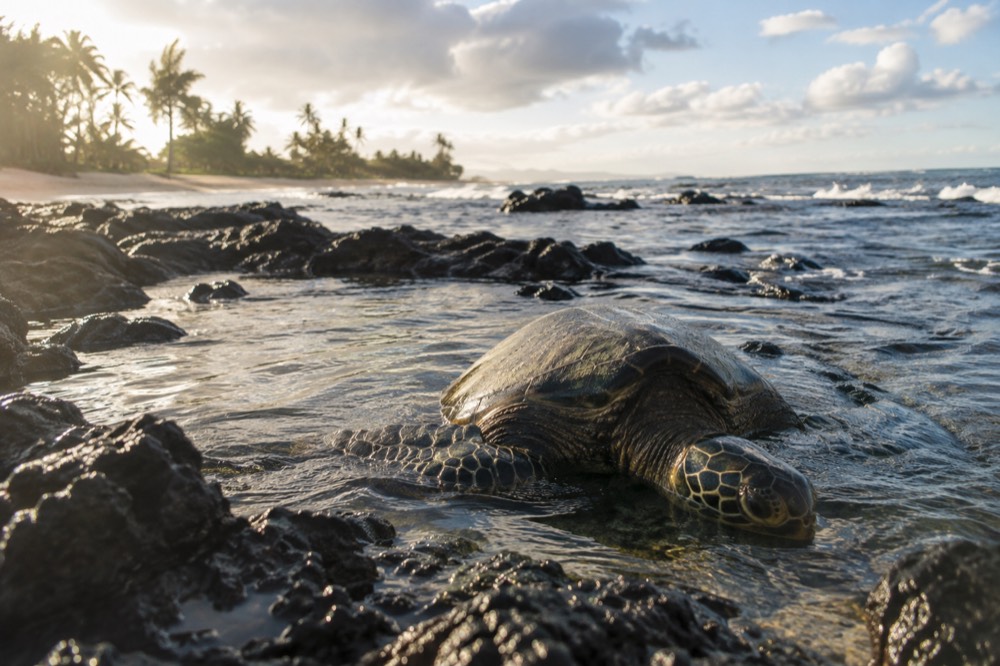
- Respect the wildlife distances. Green sea turtles, honu, are common on this coast, and the recommended viewing distance is 10 feet; that is a guideline, but harassing or touching a turtle is illegal under state and federal law. For humpback whales, seen from shore in season, the legal distance is 100 yards for any vessel.
- Do not take rock or sand. Removing rocks, sand or coral from the shoreline is prohibited under Hawaii law, and the reason is the law, not any superstition.
For families, a shore visit may be the better choice. Shallow pools still need close supervision and can be reached by waves; keep children away from slippery edges and unsafe water. The full family picture, including which North Shore stops work with small kids, is in our Oʻahu with kids family travel guide.
What Marine Life Will You See At Shark's Cove?
In calm summer conditions Shark's Cove offers reef fish in quantity, including surgeonfish, wrasse, butterflyfish and triggerfish, plus sea turtles resting on the outer reef and, for sharp-eyed snorkelers, octopus in the tide pools. Visibility is best in the morning before wind chop builds. The cove is not known for sharks, despite the name.
The fish community is the standard Hawaiian reef assemblage, and the cove's mix of shallow tide pools, inner basin and quick drop-off concentrates it in a small area, which is exactly why snorkelers rate the place. The outer ledge, where the bottom falls away, is where the larger animals show up: turtles most reliably, reef fish in schools, and occasionally a reef shark passing well below, which is a reason to leave the water quickly and calmly, following Hawaii DLNR shark-safety guidance.
| Animal | Where you typically see it | Distance rule | Law or guideline |
|---|---|---|---|
| Green sea turtle (honu) | Resting on reef, feeding in shallows | 10 feet recommended | Guideline; take and harassment are illegal |
| Reef fish (surgeonfish, wrasse, butterflyfish, triggerfish) | Everywhere, densest near the drop-off | None; do not touch or feed | Do not stand on or touch coral |
| Octopus | Tide pools and rock crevices | Observe without pursuing | Guideline |
| Hawaiian monk seal | Hauling out on North Shore beaches occasionally | 50 feet recommended, 150 feet for a mother with pup | Guideline; harassment is a state felony |
| Humpback whale | Offshore, November through April, from shore | 100 yards for vessels, law | Law |
Two honesty notes on that table. First, the turtle and seal distances are recommended guidelines, not statutory numbers, and the correct way to think about them is that the guideline keeps you clear of the actual law, which prohibits harassing, touching or otherwise taking protected wildlife. Second, the whale season, November through April, is the sanctuary's official window; whales are regularly visible from North Shore lookouts in that period, but the cove itself is a snorkeling spot, not a whale-watching perch.
Feeding fish, standing on coral and chasing turtles are the three behaviors that degrade a site like this fastest, and all three are visible here on busy summer days. The reef is the whole reason the cove is worth visiting, and it is slower to recover than most visitors assume.
What Else Is Near Shark's Cove On The North Shore?
Waimea Bay lies southwest along the coast, with Waimea Valley across the highway from the bay. Haleʻiwa and its food stops are farther southwest. Further east along Kamehameha Highway are Ehukai, Pipeline and Sunset Beach. In summer, Waimea Bay's sand is the swimming complement to the cove's rocks; in winter, the whole stretch becomes a big-wave watching coast.
The pairing that works best is cove plus bay plus valley. Consider Shark’s Cove in the morning only if conditions permit, move to Waimea Bay's sand when the rock entry has lost its appeal, and walk the Waimea Valley botanical trail in the afternoon when the sun is high and a shaded path is the right place to be. Waimea Valley is open Tuesday to Sunday, 9 a.m. to 4 p.m., with seasonal variations; adult admission is $26 with kamaʻāina and military rates lower, so check the current rates before you go.
East of the cove, the coast is a chain of famous breaks, and in winter they are worth stopping for precisely because they are unswimmable. Watching twenty-foot surf from a safe, legal vantage point at Waimea or Sunset is one of the free highlights of an Oʻahu winter trip. Summer often brings smaller waves, but neither safe swimming nor empty beaches is guaranteed.
Food is the other reason to be here. Haleʻiwa is the town that anchors this stretch, and the shrimp trucks and shave ice stops of the North Shore are a genuine part of the day rather than a tourist tax; our North Shore shrimp trucks guide covers where they are and how to read the differences between them. Bring water regardless. The cove itself has no food, no shade to speak of, and no shop.
For the full assembly of a day or two up here, the North Shore day trip from Waikīkī guide lays out the driving order, and the master list of the island's stops is on our Things to Do in Oʻahu page.
Should You Take A Shark Tour Instead Of Snorkeling Shark's Cove?
If seeing sharks is the goal, a North Shore shark tour is the way to do it, because the cove itself has none to speak of. The cage tour out of Haleʻiwa puts you in the water inside a metal cage with Galapagos and sandbar sharks, and the cageless freedive option does the same without a barrier. Both are boat operations, and neither has anything to do with the cove's snorkeling.
The distinction is worth making because the names collide. Visitors searching "sharks cove oahu" are often really asking about one of two different experiences: a free rocky snorkel spot, or a paid boat trip where sharks are the point. The cove is the first. The tours are the second, and their current listings explain the meeting point, physical requirements and terms.
The listed cageless outing takes a small group into open water with a guide and excludes non-swimmers. Compare its actual quote and requirements with the cage trip; do not assume one always costs more.
A third option belongs to a different coast and a different question: if your interest is transport and gear for self-guided snorkelling, a Hanauma Bay shuttle from Waikiki supplies those. It excludes admission and an in-water guide. Confirm the operator’s specific entry instructions rather than assuming the shuttle is an admission ticket.
Between them, the two shark tours cover the range of how close you want to be and how much barrier you want between you and the animals, and both depart from the same stretch of coast you are already planning to visit. Choose by your swimming ability, comfort with open water and the operator’s requirements; a booking does not remove ocean risk.
Is Shark's Cove Worth The Trip?
For summer visitors who snorkel, yes, without much argument: it is free, it is one of the better shore snorkels on the island, and it sits in the middle of a coast that rewards a full day. For winter visitors, no, not for the water; the cove's winter value is as one stop on a big-wave sightseeing drive. Judge it in the right season and it rarely disappoints.
The comparison visitors actually make is against Hanauma Bay, and the honest scorecard is: Hanauma Bay offers a sandy beach, facilities and a managed entry system; Shark's Cove wins on cost, freedom, no reservation system and the absence of a 7 a.m. booking scramble. If you are on the island in summer and you have a car, do the cove on a calm morning and save Hanauma Bay for a day you want the full managed experience. In winter, consider North Shore sightseeing and assess alternative snorkelling locations on their own daily conditions.
One planning fact that most first-timers miss: the island's coasts run out of phase, but that does not guarantee a safe place to snorkel. The National Weather Service surf forecast publishes all four shore aspects in one table, north, west, south and east, and reading it each morning helps you assess conditions; it does not replace local warnings or advice. That single habit does more for a Hawaii trip than any itinerary.
For a wider view of how the island's pieces fit together, the Oʻahu itinerary for first-timers places the North Shore in sequence with Pearl Harbor, Waikīkī and the windward coast, and the best time to visit Oʻahu guide covers the seasonality in depth. This site, Oahu Travel Guide, exists to keep those answers grounded in official sources rather than recycled listicles.
Common Questions About Shark's Cove On Oʻahu
Most questions about Shark's Cove come down to three things: the season, the rocks and the name. The season gives context, but daily surf and access determine whether a water visit is appropriate. Rocks, surge and other ocean hazards matter. The name is not a wildlife guarantee, and the sharks people associate with the North Shore are seen from boat tours, not from the cove's tide pools.
Are there sharks at Shark's Cove?
Not in any special concentration. The name does not promise sightings; the cove is a reef shoreline. Reef sharks pass by occasionally as they do anywhere on the island, but the shark encounters people travel here for happen on boat tours offshore, in a cage or freediving, not at the cove.
Is Shark's Cove free?
Yes. There is no entry fee, no reservation system and no mandatory orientation, which is the main practical difference from Hanauma Bay, where non-resident adults pay $25 plus a service fee and must book two days ahead at 7:00 a.m. HST. Your costs at the cove are gear, food and transport.
Can you swim at Shark's Cove in winter?
Generally no. Winter is the North Shore's big-surf season, and the swells that make Waimea Bay famous make the cove dangerous, with surge onto lava rock. Winter visits are for watching surf from safe vantage points; assess any alternative location separately before entering.
Is Shark's Cove good for kids?
Tide pools are not automatically safe for children. Rock is slippery, waves can reach shallow areas and deeper water is nearby. Supervise closely and stay out if unsure; any later Waimea Bay swim needs its own conditions check.
Do you need a reservation for Shark's Cove?
No. Unlike Hanauma Bay and Diamond Head, both of which require non-residents to book ahead, the cove is an open shoreline with no booking system. The trade-off is that there is no capacity control either, so the small parking area fills on summer mornings, which is the real reason to arrive early.
What is the best time of day to visit Shark's Cove?
Morning, for three stacking reasons: the parking is easier, the trade-wind chop that hurts visibility usually builds through the afternoon, and the low-angle light on the water makes the reef easier to read. Check the surf forecast the same morning, because even in summer a lingering swell can make conditions unsuitable.
Plan Your Shark’s Cove Day
Shark’s Cove has no admission ticket. Arrange transport only if you need it, or choose a separate activity; a shark boat trip is not a visit to the cove.
Compare Honolulu Airport Rentals
Check the rental total and branch hours for your date. Cove entry is free; gear, fuel and any paid stops are separate costs.
The search opens at Honolulu Airport (HNL). Change the pickup location if you need a Waikiki or other branch, then check driver eligibility, payment-card/deposit terms and branch hours. Prices depend on your dates.
Compare Driving With Your Car-Free Plan
Enter USD estimates for the same day and whole party. Include rental taxes, then add only extra fuel, parking and gear. Include public fares or other transport and gear in the car-free total. Cove admission is free. Compare the same activities; a boat tour buys a different experience.
Choose your dates, pickup and driver details on EconomyBookings. This link opens a rental search, not live results on this page.