Mānoa Neighborhood Guide: Oʻahu's Green Valley Above Waikīkī
Mānoa is the rainforest valley immediately behind Honolulu, five miles from Waikīkī as the crow flies and a different island in feel: it rains here, heavily, and that is exactly why the jungle is there.
Short answer
Mānoa is a residential valley on the leeward edge of Honolulu's Koʻolau mountains, best known for the Mānoa Falls trail, the Lyon Arboretum and some of the heaviest rainfall on Oʻahu. It suits travellers who want a quiet, green base close to the city rather than a beach strip.
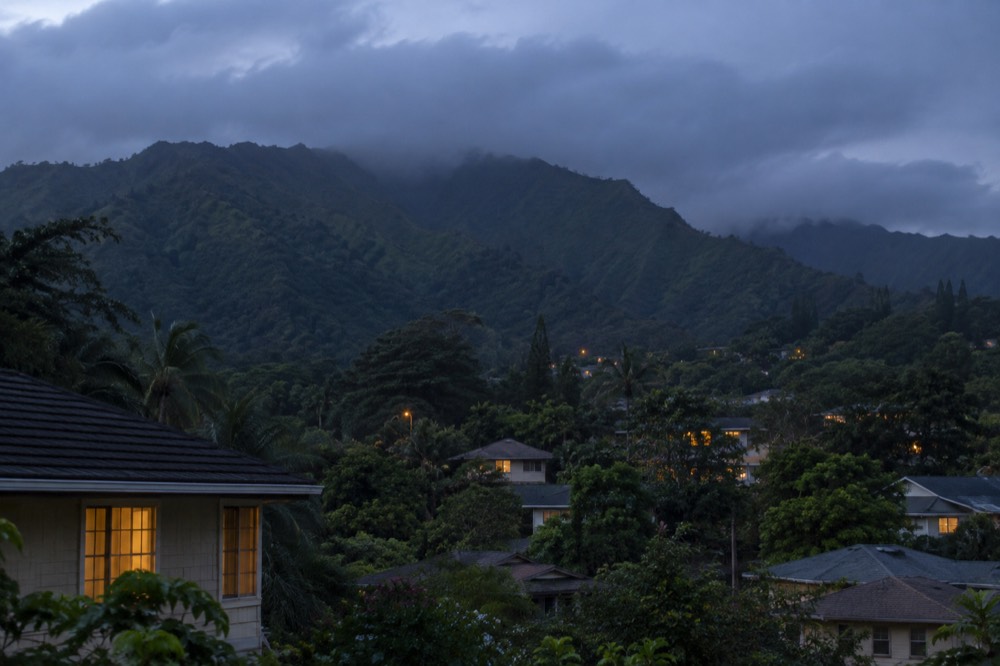
Mānoa is the rainforest valley immediately behind Honolulu, five miles from Waikīkī as the crow flies and a different island in feel. The ridges of the Koʻolau range close around it, the trade winds push clouds up its slopes, and the clouds drop their water. That single fact explains almost everything a visitor notices here: the jungle, the mud, the gardens, and why the valley is green while the beach strip ten minutes away is dry.
Most visitors experience Mānoa as a day out, a waterfall hike and a garden, and then return to their hotel. A smaller number base themselves here, in guesthouses and holiday rentals tucked into the residential streets, trading beachfront for quiet and a genuinely local neighbourhood. Both uses work, and this guide covers both honestly, including the parts the brochures skip: the rain is real, the trail is free but the parking is not, and the valley is home to thousands of people who did not move there to host you.
There is a third way to experience Mānoa that most coverage ignores entirely: the drive-through. A scenic drive may show nearby ridges, but do not assume a circle-island tour enters Manoa or stops at its trail and gardens. Check the actual route. That is a legitimate taste of the valley's character, the green walls, the cloud cap on the ridgeline, but it is a taste, not the meal. If your only exposure to the valley is from a tour bus, this guide is the argument for coming back under your own steam.
The rest of this site's coverage of the island starts at Things to Do in Oahu; this page is the deep dive on one valley.
What Is Mānoa And Where Does It Sit On Oʻahu?
Mānoa is a residential valley inland from central Honolulu, running from the lowlands around the University of Hawaiʻi at Mānoa up into the Koʻolau mountains behind the city. It is not a resort area and has no beach of its own. Its identity is rainforest: the valley catches orographic rainfall off the trade winds, which keeps its trails, gardens and streambeds green year-round while leeward Honolulu stays comparatively dry.
The geography is the story. Oʻahu's weather divides sharply by which side of the mountains you stand on, and Mānoa sits in the belt where moist trade-wind air is forced up the valley walls, cools, and lets go of its water. The National Weather Service's surf and zone forecasts publish Oʻahu conditions by shore aspect for the same reason: this island's weather is local, not island-wide.
Practically, that means a day in Mānoa can be wet on a morning when Waikīkī is dry, and the reverse. It also means the valley holds things the dry side cannot: a rainforest botanical garden, a waterfall trail that flows most of the year, and shade. On a hot August afternoon, that last one matters more than you would expect.
The university shapes the valley as much as the rain does. The University of Hawaiʻi at Mānoa sits at the valley's mouth and is the state's flagship campus, which means the lower valley carries the rhythms of a college town: student traffic, cheap eating, bookshops, and a population that turns over every few years. Above the campus the character changes quickly, from institutional to residential to wild, within the space of a couple of miles and a few hundred feet of elevation.
What the valley does not have is a visitor economy in any real sense. There are restaurants, a small commercial strip, and the university, but the streets above it are houses. Treat it the way you would want your own street treated.
What Should You Actually Do In Mānoa On A Day Out?
The two anchor activities are the Mānoa Falls trail, a free rainforest hike to a roughly 150-foot waterfall, and the Lyon Arboretum, a University of Hawaiʻi botanical garden on the valley's upper slopes. Add the neighbourhood's food spots and you have a comfortable half-day, or a full slow day if the weather is kind.
The trail is free to walk; parking is charged by a private lot, and the fee is not published in our verified sources.
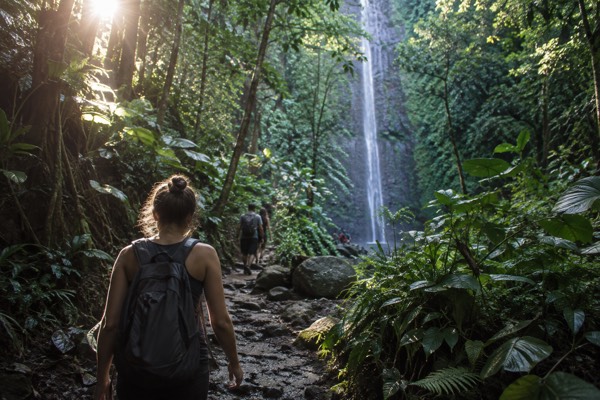
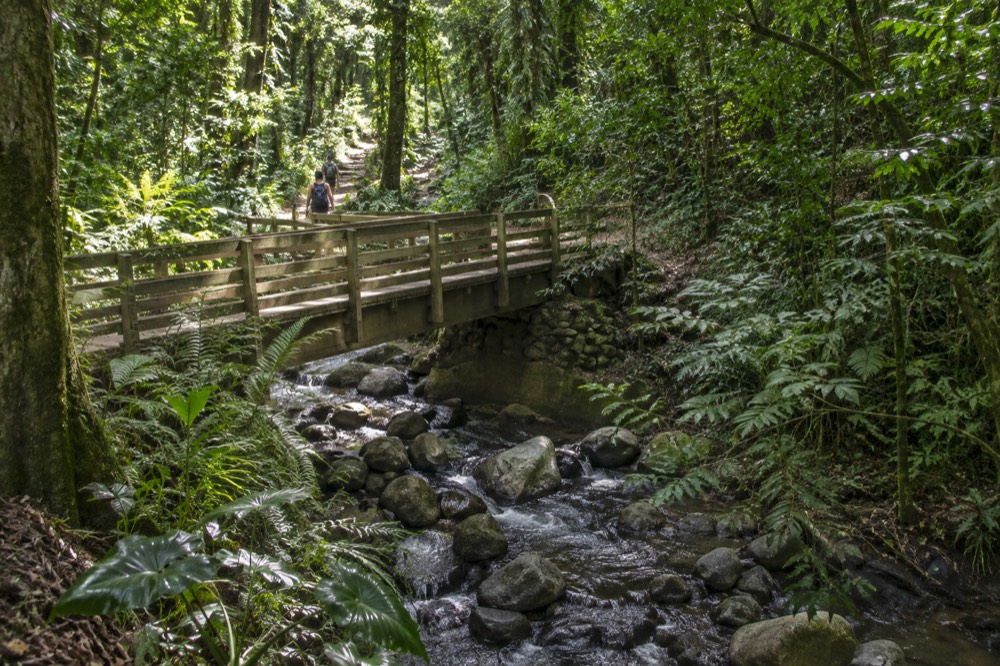
The waterfall is the draw, and the Mānoa Falls trail guide on this site covers the walk in detail: what the path is like, what to wear, and why the rocks at the pool are closed to climbing. The short version is that it is a genuine rainforest walk, muddy in places, with water flow that varies with recent rain. Postpone if heavy rain, flood warnings or closures make the visit unsafe.
The Lyon Arboretum sits above the trailhead and is run by the university as a research and conservation garden rather than a manicured attraction. It is the kind of place where you can walk under native ʻōhiʻa lehua and hear more birds than people. Lyon currently lists weekday hours of 9 a.m.–3 p.m., closing on weekends and state/federal holidays. General admission is free, with a suggested $10 donation. Individual visitors currently need no reservation, but organized groups of 8 or more must arrange ahead. Construction can cause short-notice closures, so check the university’s current calendar.
If you would rather not deal with parking at all, a Waikiki shuttle can handle the falls transfer; the trail itself has no admission ticket.
The self-guided option leaves you to walk without a hiking guide, although the shuttle may be shared. It is a falls outing, not a flexible all-valley tour. A circle-island trip is a separate activity and should not be assumed to include Manoa.
Between the trail and the garden, leave time for food. The valley's commercial strip along Mānoa Road is unglamorous and good: plate lunch spots, cafes and neighborhood bakeries. Details on where to eat are further down this page.
A well-shaped day looks something like this: check the trail and garden opening notices, leave time for the walk, then fit an arboretum visit and lunch around their actual hours. An early start does not guarantee a dry trail or empty parking. If the rain arrives anyway, and it will sometimes, the eating places are the shelter. Build the plan around the weather rather than fighting it and the valley gives you its best version.
Is Mānoa A Good Place To Stay As A Base On Oʻahu?
Mānoa works as a base for a specific kind of traveller: someone who wants quiet, green surroundings and a local neighbourhood, and is willing to trade beach access and nightlife for them. It is a poor base if your holiday is built around the beach, since the valley has no shoreline and every beach day starts with a trip downhill. It is a strong base for hikers, garden lovers, and anyone who finds Waikīkī exhausting.
The honest trade-off table:
| Priority | Mānoa as a base | Verdict |
|---|---|---|
| Beach days | No beach in the valley; every shore trip means transport downhill | Weak |
| Hiking and rainforest | Falls trail and arboretum on your doorstep, plus Tantalus and the Koʻolau trails nearby | Strong |
| Quiet at night | Residential valley, no resort corridor | Strong |
| Food variety | Good neighbourhood eating, limited late options | Mixed |
| Car-free living | Bus service exists but the upper valley is a walk from stops | Mixed |
| Cost | Compare actual dates, space, fees and transport costs | Depends on the booking |
One planning note that matters more than price: the valley is a residential neighbourhood under real visitor pressure, and this site's policy is not to frame parking-starved residential streets as discoveries. Park legally, book accommodation that is licensed to operate as one, and keep expectations of "hidden" Mānoa modest. The residents are not a show.
It is also worth being honest about the valley's limitations as a base, because they are the flip side of its strengths. There is no nightlife to speak of, and the evenings are quiet in the specific way that a residential valley is quiet: dark, early, and closed. Public transport runs on a schedule that suits commuters more than diners. And the rain that makes the valley beautiful makes a week of it feel damp if you are not the sort of person who finds rain beautiful. Know which sort you are before you book.
If you stay in Waikiki, treat Manoa as a separate bus, driving or shuttle outing. A broader island tour only includes the valley if its actual itinerary says so.
Choose the base around your whole itinerary: staying in the valley and visiting from Waikiki have different transport needs.
How Do You Get To Mānoa Without A Car?
You can reach lower Mānoa on public transport: Route 5 serves the valley from Ala Moana, with connecting services from other Honolulu areas, and the fare is $3.25 cash for a single adult ride or $3.00 on a HOLO card with two hours of transfers included. The catch is the upper valley: the trailhead and arboretum sit above the residential streets, and the walk up adds real distance and real sweat. Many car-free visitors solve this with a shuttle package.
The fare structure is verified from the City and County of Honolulu's transit pages, and it is generous once you have a HOLO card:
| Fare item | Price | Notes |
|---|---|---|
| Adult cash, TheBus single ride | $3.25 | No transfers, exact fare |
| HOLO card 2-Hour Pass | $3.00 | Unlimited transfers, TheBus and Skyline |
| 24-Hour Pass | $7.50 | Runs 24 hours from first tap; distinct from the $7.50 daily cap |
| 3-Day Pass | $20.00 | 72 hours from first tap |
| 7-Day Pass | $45.00 | 168 hours from first tap |
| Monthly cap | $90.00 | Then free for the month |
| One child 5 and under per paying rider | Free | Must not occupy a seat |
The Skyline rail line does not reach Mānoa and has no Waikīkī station either; its useful stop for most visitors is the airport end. From Waikīkī, the bus is the practical public option, and the Oʻahu bus guide on this site explains the routes in detail. A shuttle can arrange the transfer, but does not make a hike safe during heavy rain or a closure. The do you need a car on Oʻahu page works through the wider decision.
What is safe to say: the valley is contiguous with Honolulu, not a remote drive, but the upper valley road narrows and parking at the trailhead lot fills early on weekends and after rain.
Cyclists should think twice about the upper valley. The climb from the university to the trailhead area is sustained and the road carries tour traffic in both directions, which is a poor combination on a wet afternoon. The e-bike tours that operate in the city are a better fit for the flatlands than for the valley walls; if riding is your thing, save it for the coast.
What Is The Weather Really Like In Mānoa?
Mānoa is dramatically wetter than the Honolulu coastline a few miles away, and the numbers are not close. The Lyon Arboretum station in upper Mānoa records an annual normal of 150.96 inches of rain; Honolulu's airport, at the coast, records 16.41 inches. Every single month in Mānoa is wetter than the airport's wettest month, and the valley's wettest month, July, averages 15.35 inches on its own.
That comparison is the single most useful piece of information on this page, so it gets its own block:
What this means for planning is straightforward. Do not read a Honolulu weather forecast and assume it describes Mānoa; it undercounts the valley badly. Check the local forecast and trail conditions even for an early start; wet footing can persist throughout the day. Respect weather warnings as well as the scenery: the waterfall you came to see exists because of those numbers.
The valley's rain also explains its role in the island's water story. The streams that run through Mānoa fed loʻi kalo, irrigated taro terraces, in the generations before Honolulu existed, and the valley's name and its water are tied together in Hawaiian place-naming. The water is real, the terraces were real, and the rain that drives both is measured to this day.
There is a seasonal shape to it, too, even if the valley never has a dry month. Summer is technically the wetter half of the year in upper Mānoa, with July the peak, which inverts the intuition most visitors bring from temperate climates. Winter brings the bigger, longer storm systems, the kind that close trails island-wide, while summer rain tends to arrive as heavy afternoon showers that pass. Either way, the packing list is the same: quick-dry clothing, shoes with grip, and a rain layer you will actually use.
Where Do Locals Eat And Shop In Mānoa?
Mānoa's food scene is a neighbourhood scene: plate lunch counters, cafes, bakeries, and the ordinary excellent infrastructure of a place where people live rather than visit. There is no fine-dining strip and no resort pricing, which is most of the appeal. Eat along and near Mānoa Road, and go at lunch rather than dinner, when more of the valley's kitchens are open.
Waioli Kitchen & Bake Shop at 2950 Manoa Road is one established valley stop for baked goods and a meal; check its current opening hours. The wider valley’s eating also follows the university: cheap, generous, and built for students and families rather than tourists. The best food on Oʻahu guide places Mānoa in the island-wide picture, and the shave ice on Oʻahu page covers options around the island.
Shopping is similarly local. There is a farmers market tradition in the valley tied to the university's agricultural roots, and the farmers markets on Oʻahu guide lists where and when; verify the current schedule before planning around it, as market days shift. What you will not find is a mall or a souvenir strip. Come for food, not for shopping.
If your day in the valley is one chapter of a longer itinerary, the comparison below is where most readers land: a focused falls transfer, an independent day with time for the garden, or a valley base for a longer stay.
For food and shopping, an independently planned visit leaves you free to follow local opening hours.
A tour is not required to enjoy Mānoa. The valley's core experiences, the trail, the garden, lunch, are all things you can arrange yourself with a bus pass and a rain jacket.
Common Questions About Mānoa, Oʻahu
Most questions about Mānoa come down to four things: rain, parking, the waterfall, and whether the valley can replace Waikīkī as a base. The rain is heavy and constant by island standards, the trail is free while the private parking lot is not, the waterfall’s flow and trail conditions vary with recent rain, and as a base the valley suits quiet-minded travellers who accept a bus ride to every beach. Everything else is detail, and the detail follows.
Is the Mānoa Falls hike free?
Walking the trail is free. Parking at the private lot near the trailhead is charged separately, and our verified sources do not state the current amount, so check before you drive or take the shuttle package instead.
Does it really rain that much more in Mānoa than in Waikīkī?
Yes. The Lyon Arboretum station in upper Mānoa averages 150.96 inches of rain a year against 16.41 inches at Honolulu airport, per the NOAA 1991-2020 climate normals. Every month in the valley is wetter than the airport's wettest month.
Can you get to Mānoa by bus?
Yes. Route 5 runs from Ala Moana toward Manoa Road/Kumuone, with connections from other areas. An adult cash fare is $3.25, or $3.00 on a HOLO card with two hours of transfers, and the daily cap is $7.50. The upper trailhead area is a long walk from the nearest stops.
Is Mānoa a good place to stay instead of Waikīkī?
For hikers, garden lovers and travellers who want a quiet residential base, yes. For a beach-centred holiday, no: the valley has no shoreline, and every beach day starts with transport downhill.
When is the best time of day to visit Mānoa?
A weekday morning can help with crowds, but check opening hours, closures and the local forecast first. An early start does not guarantee dry footing or safe conditions.
Mānoa rewards the visitor who arrives with the right expectations: a real neighbourhood, a real rainforest, and rain that is not an inconvenience but the entire reason the place looks the way it does. Bring shoes you do not mind muddying, check a current valley forecast before heading uphill and use Oahu Travel Guide for the wider itinerary, and give the waterfall the morning.
Choose Your Manoa Visit Or Base
Compare a Waikiki shuttle to the falls with an independent valley visit or a place to stay. A hike shuttle does not include a Lyon Arboretum visit or a separate accommodation booking.
Manoa Falls Self-Guided Hike With Waikiki Shuttle
Confirm pickup and hiking requirements before booking this self-guided outing. Plan Lyon Arboretum separately if it is part of your day.
Round-trip Waikiki shuttle for a self-guided hike; no hiking guide. The rocky trail requires moderate fitness. Review age and health restrictions and confirm pickup. Book only if you need transport; swimming is not permitted.
Compare Independent Travel With The Shuttle
Use USD estimates for the same date and whole party. Enter your rental, bus or rideshare total, then only extra fuel and parking. The shuttle quote must include everyone. Trail admission is free; do not add a ticket charge. These are reader estimates, not live quotes. This compares a falls day trip, not accommodation costs or an arboretum package.
Select dates and everyone travelling on the provider’s website, then review the final price and booking conditions.