Which Side Of Oahu Has The Best Beaches?
A side-by-side answer to which side of Oahu has the best beaches, comparing the south, windward, north and west shores for swimming, surf, access and safety.
Which Side Of Oahu Has The Best Beaches?
Oahu has four working coastlines, not one, and each does a different job. The south shore around Waikīkī is where swimming, sand and convenience overlap. The windward east coast from Kailua to Waimanalo has the island's most photogenic turquoise water. The north shore is a winter surf stage and a calm summer swim spot. The west side holds the calmest, least crowded water of all. This site exists to help you plan an Oahu trip well, and the beach question is where most planning either comes together or falls apart.
Which Side Of Oahu Has The Best Beaches?
There is no single best side, because Oahu's shores run out of phase with each other. The south shore is the best all-round choice for most visitors: sandy, swimmable, close to hotels and rarely dangerous in summer. The windward coast is the best-looking, with the clearest water and the postcard views. The north shore is the best for surf and the west for calm lagoons, but each is best in its own season, not all year.
The reason the question has no single answer is physical, not a matter of taste. The National Weather Service's Honolulu surf forecast publishes a separate Oahu table for each shore aspect, and on a September day in 2026 it showed the south shore running 4 to 6 feet while the north shore sat at 1 to 3 in the morning. In winter that inverts completely. A beach that is flat and family-friendly in July can carry dangerous surf in January, and a beach that is too rough to swim in December can be a bathtub by August.
So the useful question is not which side is best, but which side is best for you, in the month you are going. The comparison below is the short version, and the sections that follow unpack each coast.
| Side of Oahu | Character | Best for | Main watch-out |
|---|---|---|---|
| South shore (Waikīkī, Ala Moana) | Sandy, protected, urban | Swimming, first-timers, convenience | Crowds; occasional south swell in summer |
| Windward east (Kailua, Lanikai, Waimanalo) | Turquoise water, green backdrop | Photography, kayaking, beach days | Scarce residential parking; no lifeguards at some beaches |
| North shore (Sunset, Waimea, Haleʻiwa) | Big winter surf, calm summers | Surf watching, summer swimming | Winter waves are for experts only |
| West side (Ko Olina, Waiʻanae) | Calm, dry, least visited | Lagoon swimming, quiet | Fewer facilities; long drive from Waikīkī |
For a full rundown of individual beaches rather than coasts, start with the best beaches on Oahu, which covers the whole island beach by beach. If you are still choosing where to stay, Waikīkī versus the North Shore compares the two most common bases.
If your beach day is really a water day, these are the three most-booked options that put you in the ocean rather than beside it:
Why Is The South Shore The Easiest Choice?
The south shore is where most visitors should default, because it combines sand, gentle water and walkable access in a way no other coast matches. Waikīkī Beach is protected by an offshore reef, so the surf reaching the sand is usually small, and Ala Moana Beach Park offers a calmer alternative a short bus ride west. Lifeguards, showers, food and rentals sit steps away. The trade-off is crowds.
Staying near the south shore makes those swim days easy. Book a hotel in Oahu here.
Waikīkī is not a natural beach in the sense Kailua is. It has been engineered, replenished and managed for over a century, and that is precisely why it works for swimmers who would struggle elsewhere. The reef keeps the inside water flat, the sand shelf slopes gently, and lifeguards sit on the busiest stretches. For a first swim in Hawaii, or for anyone travelling with small children, this is the coast that asks the least of you.
The south shore is also where the island's marine life is easiest to reach without a car. Turtle Canyon, a cleaning station for green sea turtles a short boat ride off Waikīkī, is the anchor of the island's most-booked snorkel trip, and the turtles there are wild animals that show up on their own schedule. If that sounds like your kind of beach day, the Turtle Canyon guided snorkel runs two hours from the south shore with a turtle guarantee.
One honest note on the turtles: the 10-foot distance from honu that signs and guides repeat is a recommended guideline, not a statutory distance, though touching or harassing a turtle is illegal under state and federal law. Give them room because it is right, and because the law does bite on the harassment part.
Is The Windward Coast The Prettiest?
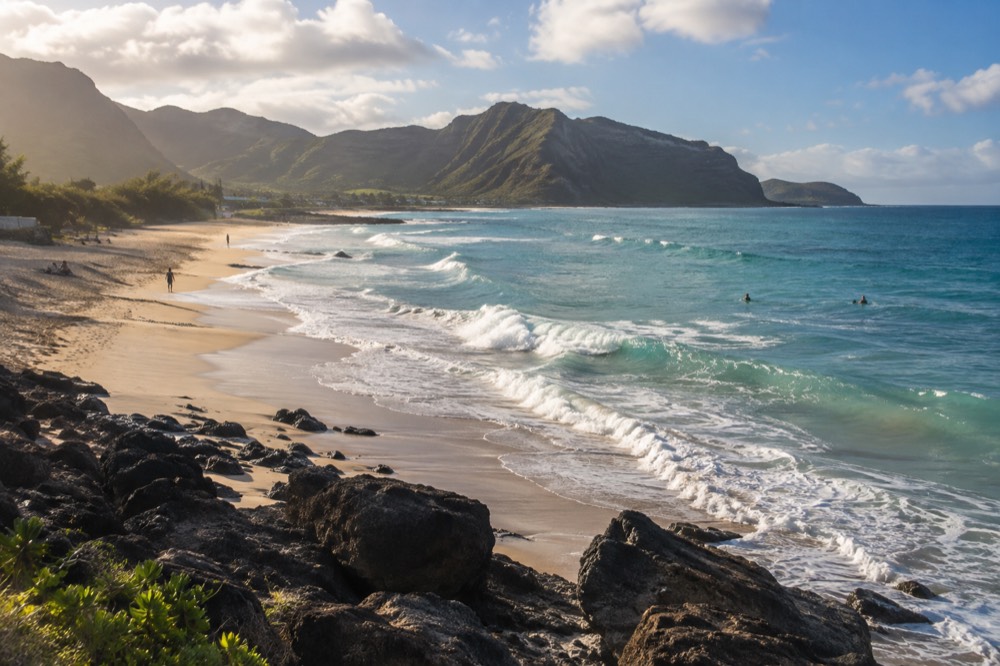
The windward east coast, from Kailua through Lanikai to Waimanalo, is the coast that matches the photograph people bring with them: pale turquoise water, a reef-protected nearshore, and the Koʻolau mountains stacked green behind the sand. Kailua Beach Park is the practical entry point, with lifeguards and facilities, while Lanikai is the postcard. Waimanalo is the longest, quietest stretch of all. The cost of the beauty is parking, which is scarce and strictly enforced.
Kailua Beach Park is the sensible base for a windward day. It has a lifeguard, a real parking lot, calmer water inside the reef and kayak and paddleboard rentals within walking distance. Lanikai, one beach south, has the famous view of the Mokulua islands and no parking lot at all: the surrounding streets are residential, restrictions are tight, and the city has been actively managing the problem. Go early or take the bus, and never treat a resident's driveway as overflow.
Waimanalo Beach Park, further south, is the sleeper. It is a very long stretch of sand with a lifeguard and a parking area, and it draws far less pressure than Lanikai. The water is often a striking blue, and the beach rarely feels full even on weekends. For a family that wants the windward look without the windward parking drama, it is the better pick.
The windward coast is also where rain lives. The Lyon Arboretum station in Mānoa, five miles inland from Waikīkī, records an annual normal of 150.96 inches of rain against Honolulu airport's 16.41 inches, and every single month in Mānoa is wetter than the airport's wettest month. What that means on the ground: the east coast's green backdrop is paid for in showers, and a windward beach day can be rained on while Waikīkī stays dry. Check the sky in the morning, not the forecast you read in Waikīkī.
Are North Shore Beaches Only For Surfers?
The north shore is two different beaches depending on the month. From roughly October through March it is the island's surf stage, with the largest, most dangerous waves in Hawaii breaking at spots like Sunset Beach and Waimea Bay, and swimming is off the table for anyone who is not an expert. From late spring through early autumn the same beaches go calm and flat, and Waimea Bay in particular becomes one of the best swimming beaches on the island.
The seasonal flip is the single most important safety fact on this page. In winter, the water at north shore beaches moves with real force, and the sand can drop away steeply just a few steps in. Lifeguards post signs and close sections when conditions demand it, and the instruction to stay out should be taken literally. Watching the surf from the sand in winter is genuinely spectacular, and it costs nothing. Everything else covered here is indexed on Oahu Travel Guide.
In summer the same coast inverts. Waimea Bay's water settles, the sand builds back, and locals and visitors swim across the bay. Sunset Beach's inside water flattens. Sharks Cove, between Waimea and Sunset, becomes a popular snorkelling spot in calm summer conditions, though it should only be entered when it is genuinely flat. The North Shore guide covers the towns, the beaches and the practical logistics of the coast in full.
If a winter trip has you on the north shore anyway, the beach towns are worth the drive on their own. Haleʻiwa is a working country town carrying heavy visitor traffic on a two-lane highway, so park legally, plan for the drive to take as long as it takes, and do not stop in travel lanes to look at turtles. Laniakea Beach, the well-known turtle beach on the way, has had its roadside arrangement repeatedly changed by an ongoing state highway project, so check current parking rules before you plan a stop rather than trusting older articles.
What About The West Side?
The west side, from Ko Olina up the Waiʻanae coast, is the calmest and driest shoreline on Oahu, and the least visited by visitors. Ko Olina's lagoons are engineered for safe, flat swimming and work well for small children, while the beaches further north toward Waiʻanae are long, quiet and local. The trade-offs are distance from Waikīkī and thinner visitor infrastructure: fewer rentals, fewer food options, fewer lifeguards outside the resort lagoons.
Ko Olina is the family-friendly answer to the west side. Its lagoons are shallow, protected and deliberately calm, which is exactly what some travellers need and exactly what others find dull. If your beach day is a toddler and a shade umbrella, it is a strong choice. Public parking at the lagoons is limited, so arrive early or confirm arrangements with your accommodation.
Beyond the resorts, the Waiʻanae coast is where Oahu's residents go to be away from visitors. The leeward shore sits in the rain shadow of the Waianae range, which is why it is the driest corner of the island, and the beaches are long and often nearly empty. Facilities are thin and some stretches lack lifeguards, so swim where others swim and read the conditions yourself. The leeward coast guide covers it in detail.
One closure to know about on the far northwest tip: Kaʻena Point State Park's Mokuleʻia and Keawaʻula sections are closed until further notice as of the September 2026 hurricane-repair notices from state parks, along with Nuʻuanu Pali Lookout inland. Do not plan a Kaʻena hike or shoreline visit without checking the current state parks notices, because this situation is actively changing.
Which Beaches Are Safest For Swimming?
The safest swimming beaches on Oahu are the ones with lifeguards, protected water and a gentle sand slope: Waikīkī, Ala Moana Beach Park, Kailua Beach Park, the Ko Olina lagoons and, in summer only, Waimea Bay. The north shore in winter is the opposite of a safe swim, and unguarded windward and leeward beaches demand more judgement. Swim near other people, never turn your back on the water, and check the daily surf forecast for your shore.
Oahu's surf forecast is published by shore aspect, which means you can check the shore you plan to visit rather than a single island-wide number. That matters because the shores genuinely run out of phase: a day with 4 to 6 feet on the south shore can be a flat, boring day on the north, and vice versa. Reading the four-aspect table before choosing your beach is the single highest-value habit on this page.
Two seasonal hazards deserve plain language. Box jellyfish arrive on the leeward and south shores on a predictable cycle roughly eight to ten days after each full moon, and the box jellyfish calendar explains the pattern and the signs. Flash floods are the other one for windward valley beaches and stream mouths: the same rainfall that keeps the windward coast green can raise a stream quickly, and the flash flood safety guide covers what that looks like.
| Hazard | Where and when | What to do |
|---|---|---|
| Winter north and west shore surf | Roughly October to March | Watch from the sand; obey all posted closures |
| South swell in summer | South shore, occasional episodes | Check the daily surf forecast for the south aspect |
| Box jellyfish | South and leeward shores, days after the full moon | Check the calendar; rinse with vinegar, not fresh water |
| Flash floods near streams | Windward beaches and valley mouths | Never camp or linger in a streambed |
| Steep winter sand drop-offs | North shore beaches after storms | Enter only where others are swimming |
If flat water is what makes a beach work for you, the gentlest options are also where the calm-water activities cluster. A first surf lesson belongs on the south shore, where the reef keeps the waves small and forgiving, and paddleboard yoga runs on flat, protected water in Honolulu. These are the two most popular calm-water options alongside the turtle snorkel:
Of those three, the surf lesson is the one people most often ask about, because the idea of a first lesson in Hawaii sounds harder than it is. Waikīkī's inside waves are small, slow and forgiving, the lesson ratio is capped so the instructor can actually watch you, and most beginners stand up within the first hour. If you have ever wondered whether you could surf, this is the cheapest way to find out honestly.
When Is Each Side At Its Best?
Each side peaks in a different season. The north shore is best for watching surf from October to March and best for swimming from June to September. The south shore swims well all year but carries its largest swell in summer. The windward coast is beautiful year-round and driest in summer. The west side is good in every season, being the driest coast, though humpback whales appear only from November through April.
The whale window is worth building a trip around if you are on the fence about dates. The Hawaiian Islands Humpback Whale National Marine Sanctuary states plainly that whales can be seen from shore and at sea from November through April, and the 100-yard approach distance for humpbacks is law, not advice. A winter beach day on the north or west shore can include whales visible from the sand at no cost at all.
Water temperature, for what it is worth, barely changes. Readings from the Honolulu Harbor NOAA station averaged 78.0 °F in February and 82.7 °F in August across 2025, a range so narrow that the month you choose matters far more for surf and rain than for how the water feels. Harbour readings run slightly warm against open ocean, so treat those as a floor rather than a promise.
The practical calendar, then, looks like this: summer visitors should weight their trip toward the north shore's calm swimmable phase and the windward coast's drier months, while winter visitors should plan around surf-watching on the north shore, whale watching from November onward, and swimming on whichever shore the forecast says is smallest that day.
Common Questions About Oahu Beaches
Most questions about which side of Oahu has the best beaches come down to three things: what month you are visiting, whether you want to swim or watch surf, and how much parking friction you will tolerate. The south shore wins on convenience in every month, the windward coast wins on looks but demands early arrival, the north shore flips between surf stage and swimming beach, and the west side stays calm and quiet.
Which side of Oahu has the best beaches?
There is no single winner. The south shore is the best all-round choice for swimming and convenience, the windward east coast from Kailua to Waimanalo is the most beautiful, the north shore is best for surf in winter and swimming in summer, and the west side is the calmest and least crowded.
Is the north shore safe for swimming?
Only in the calmer months, roughly late spring through early autumn, and only where lifeguards are present. In winter the north shore carries the island's largest and most dangerous surf, and swimming should be left to experts. The daily shore-by-shore surf forecast tells you which coast is flat that day.
Is Lanikai Beach worth the parking trouble?
The view of the Mokulua islands is genuinely one of the island's best, but Lanikai has no public parking lot and the surrounding residential streets are tightly restricted and enforced. Arrive very early, use the bus, or base yourself at Kailua Beach Park instead, which has a lot, lifeguards and easier water.
Which Oahu beaches are best for small children?
The Ko Olina lagoons on the west side are engineered for shallow, flat swimming and are the safest option for toddlers. Waikīkī and Ala Moana Beach Park on the south shore are close behind, with lifeguards and gentle sand slopes. Kailua Beach Park works well for confident kids.
Can you swim with turtles on Oahu?
Yes, at a respectful distance. Green sea turtles gather at cleaning stations like Turtle Canyon off Waikīkī, and guided snorkel trips visit them. The 10-foot separation is a recommended guideline rather than a statutory distance, but touching or harassing a turtle is illegal under state and federal law.
When can you see whales from Oahu beaches?
Humpback whales are present in Hawaiian waters from November through April, according to the national marine sanctuary, and they are regularly visible from shore on the north and west coasts. Boats must stay 100 yards away, which is law, and shore viewing costs nothing at all.
Whichever side you choose, read the surf forecast for that specific shore on the morning you go, swim near a lifeguard, and give the water the respect it asks for. Oahu's beaches are the reason most people come, and every one of the four coasts will reward a visitor who picks the right beach for the right day.