Oahu Weather By Month: What Each Month Actually Delivers
Oahu's weather barely changes across the year, but the details that do change, rain by side of the island, surf by shore aspect, and whale season, decide which month suits your trip.
Short answer
Oahu stays warm year round, with Honolulu Harbour water temperatures running from about 78°F in winter to just under 83°F in August, and the real monthly variable is not temperature but where the rain falls: the leeward south and west sides stay dry while windward valleys can receive over 150 inches a year.
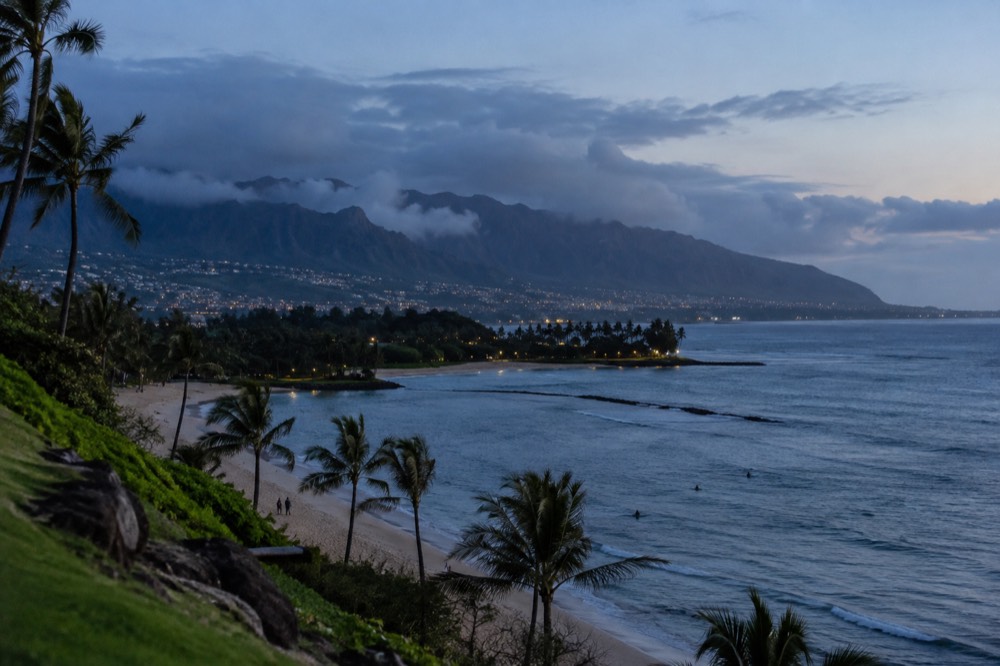
Oahu runs about 5.6 million visitors a year through a climate that most guidebooks describe in one word: consistent. That is broadly true, and it is also lazy, because the island hides two of the sharpest microclimate gradients in the United States inside a single drive. Honolulu International Airport records 16.41 inches of rain in an average year. The Lyon Arboretum in Mānoa, roughly five miles from Waikīkī as the crow flies, records 150.96 inches. Same island, same forecasts, nine times the rain.
This guide takes Oahu's weather apart month by month using primary sources: NOAA water temperature readings from Honolulu Harbour, the 1991 to 2020 climate normals, the National Weather Service surf forecast, and the Hawaiian Islands Humpback Whale National Sanctuary's own season guidance. The result is a planning document, not a postcard.
What Is The General Weather Pattern On Oahu?
Oahu is warm year round with modest seasonal swings: ocean temperatures in Honolulu Harbour average between 78°F in the coolest months and 82.7°F in August, day length varies by only about two hours and thirty-five minutes across the whole year, and the dominant force is the trade wind, not the season. The trades blow from the northeast most of the time, which means windward shores, the east and north coasts, catch the clouds and rain while leeward shores, the south and west, stay dry and sunny. Rainfall, not temperature, is the variable that should shape your plans.
Two consequences follow. First, a "rainy day" on Oahu is usually a rainy morning on one side of the island; the other side is often dry, and a short drive fixes the forecast. Second, the seasons visitors actually notice are surf seasons and whale season, not summer and winter. The National Weather Service publishes its Oahu surf forecast by shore aspect, north, west, south and east facing, precisely because the four coasts run out of phase with each other.
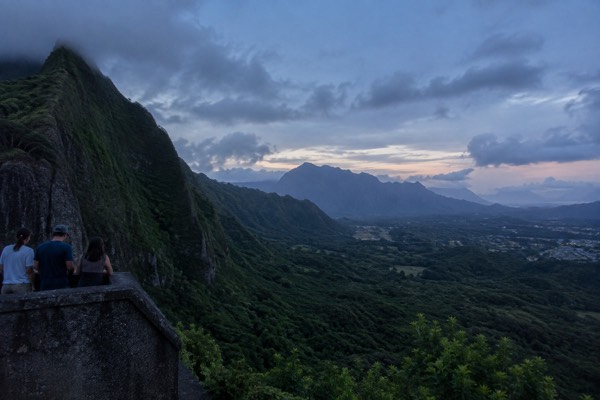
One planning note that outranks any weather advice: three closures were live as of 9 September 2026 following Hurricane Lowell. Nuʻuanu Pali State Wayside, Kaʻena Point State Park's Mokuleʻia and Keawaʻula sections, and Wahiawā Freshwater State Recreation Area are closed until further notice for storm repairs. Check the DLNR State Parks notices before you build an itinerary around either site.
How Warm Is The Ocean On Oahu, Month By Month?
Harbour readings at Honolulu average 78.2°F in January, 78.0°F in February and 78.2°F in March, then climb steadily through spring to 81.3°F in July and peak at 82.7°F in August, with September at 82.4°F and October at 82.5°F close behind. Across the whole of 2025 the hourly readings ranged from 75.7°F to 84.0°F. That is a spread of about eight degrees, which means the ocean never feels cold; it only feels less warm.
The caveat matters: these figures come from NOAA station 1612340, which sits inside Honolulu Harbour. Harbour water runs a little warm against the open ocean off Waikīkī, so treat these as a ceiling rather than an exact open-water number. The month-to-month shape is reliable even if the absolute figure is a touch generous.
| Month | Mean water temperature (Honolulu Harbour) | What it means for swimming |
|---|---|---|
| January | 78.2°F | Comfortable without a wetsuit for most people |
| February | 78.0°F | The coolest month of the year |
| March | 78.2°F | Still fully swimmable |
| April | 79.3°F | Spring warming begins |
| May | 79.7°F | Pleasant everywhere |
| June | 80.6°F | Prime water conditions |
| July | 81.3°F | Warm on every shore |
| August | 82.7°F | The warmest month |
| September | 82.4°F | Warm water, fewer crowds |
| October | 82.5°F | Arguably the best swimming month |
| November | 81.2°F | Barely cooler |
| December | 80.4°F | Still warm by mainland standards |
For most travellers the practical reading is simple: the ocean is warm every month, so water activities should be scheduled around surf, rain and visibility rather than temperature. If your plans lean heavily on being in or on the water, it is worth having a couple of options lined up before you arrive.
Where Does The Rain Fall On Oahu?
The leeward side is dry and the windward side is wet, and the gap is enormous: Honolulu airport averages 16.41 inches of rain a year, Kāneʻohe Bay on the windward coast averages 27.82 inches, and the Lyon Arboretum in Mānoa valley averages 150.96 inches, meaning a valley five miles from Waikīkī receives more than nine times the airport's annual rainfall. Every single month in Mānoa is wetter than the airport's wettest month, March at 2.36 inches. This is the single most useful weather fact on the island.
The reason is topography. The Koʻolau range forces trade wind clouds upward, they drop their moisture on the windward slopes and valleys, and the air descends dry onto the leeward side. So Waikīkī, Honolulu, Kapolei and the Waiʻanae coast sit in a rain shadow, while Kāneʻohe, Kailua, Waimānalo and Mānoa catch the rain. Mānoa's wettest month is July at 15.35 inches, which inverts most people's assumption that summer is the dry season; on the windward slopes the "dry" months are simply less wet.
| Station (1991 to 2020 normals) | Side of the island | Annual rainfall | Character |
|---|---|---|---|
| Honolulu International Airport | Leeward south | 16.41 in | Driest; March wettest at 2.36 in, June driest at 0.50 in |
| Kāneʻohe Bay MCAS | Windward east | 27.82 in | November wettest at 3.68 in |
| Lyon Arboretum, Mānoa | Windward valley, about 5 miles from Waikīkī | 150.96 in | Wettest; July alone brings 15.35 in |
The planning takeaway: a wet forecast for Kailua or Kāneʻohe does not mean a wet day in Waikīkī, and vice versa. If your heart is set on a hike like the Mānoa Falls trail, expect mud and showers on any day of the year, and go in the morning when conditions are usually calmer. If you want guaranteed sun, the leeward south and west shores are the statistically safe bet. For a fuller treatment of the wet half of the year, read our Oahu rainy season guide.
Because the forecast genuinely decides which side of the island you should be on, flexibility is worth money here. A pass covering a large menu of attractions lets you swap an outdoor morning for an indoor afternoon without eating a cancellation fee, which is why we flag it on this page specifically.
When Is Surf Season On Oahu?
North-facing shores peak in winter and south-facing shores peak in summer, so the two coasts run out of phase and there is always a shore with manageable surf: a September 2026 National Weather Service bulletin showed the south shore at 4 to 6 feet while the north shore sat at 1 to 3 feet, a complete inversion of the winter pattern. East-facing shores pick up trade wind and former-cyclone swells, and west-facing shores sit between the two main seasons. This is why the NWS publishes one Oahu forecast table covering all four aspects at once.
For travellers this means the famous big-wave spectacle on the North Shore is a winter phenomenon, while summer delivers the calm, clear swimming conditions on the south shore beaches around Waikīkī and Ala Moana. The same beach can be a bathtub in July and a place you watch from the sand in January. Neither state is a defect; they are different products.
What is safe to say is the pattern itself, which the NWS forecast structure confirms directly. If you are visiting in winter and want to watch rather than swim, the North Shore is the show; if you want to swim in winter, the south and west shores are the place, and you should read our Oahu ocean safety guide before you pick a beach.
What Are Sunrise And Sunset Times On Oahu?
Oahu sits deep in the tropics, so day length swings only about two hours and thirty-five minutes across the year: sunrise runs from about 5:50 a.m. at the summer solstice to about 7:11 a.m. in mid-January, and sunset never gets later than about 7:17 p.m., which falls in early July. At the winter solstice the sun sets at 5:55 p.m. There are no long summer evenings here the way there are in Los Angeles or Europe, and winter darkness arrives early enough that it should shape your dinner and driving plans.
| Date | Sunrise | Sunset | Note |
|---|---|---|---|
| 21 June 2026 | 5:50 a.m. | 7:16 p.m. | Longest day, about 13 h 26 m |
| 5 July 2026 | 5:54 a.m. | 7:17 p.m. | Latest sunset of the year |
| 15 January 2026 | 7:11 a.m. | 6:11 p.m. | Latest sunrise of the year |
| 21 December 2026 | 7:04 a.m. | 5:55 p.m. | Shortest day, about 10 h 51 m |
Two honest caveats. The earliest sunset of the year falls in late November, not at the winter solstice; we sampled the solstice dates, not that one, so treat late November as "dark by dinner" for planning. And golden-hour photographers should note that the low-latitude light turns fast: the useful window around sunrise and sunset is short, so arrive early rather than on time.
The practical consequence for a winter trip is real. If you are planning a North Shore afternoon in December, the light goes at a quarter to six and the drive back is in the dark. Summer visitors get an extra ninety minutes of usable evening, which is exactly enough for a sunset catamaran sail or a late walk on the beach.
When Can You See Whales On Oahu?
Humpback whales are present in Hawaiian waters from November through April, per the Hawaiian Islands Humpback Whale National Marine Sanctuary, which states that visitors can see whales from shore and at sea across that whole window; the sanctuary does not name a peak, and any guide that tells you a peak month is guessing. Approach distance is law: 100 yards from humpbacks, by federal regulation. That season overlaps the cooler, wetter half of Oahu's year, which makes winter the season for both surf spectacle and whale watching.
The sanctuary's phrasing is worth taking literally. Whales can be seen from shore, including from lookout points on the south and east shores, so a whale-watching trip is a bonus rather than a requirement. A dedicated boat tour gets you closer to the water and usually adds interpretation, but the shoreline option is free and real. Our Oahu whale season guide covers the details.
If your trip falls in the November to April window, book a whale watch for early in your stay; if the weather is rough on that day, you will have time to rebook later in the week. If your trip falls between May and October, spend the boat time on snorkelling or a sunset sail instead, because the whales have gone north.
Does Oahu Have A Hurricane Season Or A Rainy Season?
Yes to both: hurricane season in the Central Pacific runs through the summer and autumn months, and Oahu's rainy season broadly occupies the cooler half of the year, with the airport's wettest months in the November to March band and its driest from June through August, though on the windward side it rains substantially every month. The two seasons overlap, which is why late summer and early autumn carry the most weather risk, and why September 2026's Hurricane Lowell left three Oahu state park sites closed at the time of writing.
The hurricane point deserves plain language. Storms are rare, most seasons pass without a direct hit, but the risk is not zero and it is not evenly distributed across the year. When a storm does affect the island, the aftermath outlasts the weather: the Nuʻuanu Pali Lookout and Kaʻena Point closures mentioned earlier are storm-repair closures, not storm-day closures. If you are travelling in the season, build one flexible day into the itinerary and know which of your bookings are refundable.
The rainy season point is where most visitors overcorrect. Yes, winter is wetter at the airport. But the airport's wettest month is 2.36 inches, spread across a whole month, on the dry side of the island. Winter rain on Oahu is overwhelmingly brief, local and shower-shaped rather than day-long and island-wide. Plan for it, do not fear it. Our Oahu hurricane season guide covers storm planning in detail.
Which Month Should You Visit Oahu?
There is no bad weather month on Oahu, only trade-offs: winter brings surf, whales and slightly more rain; summer brings the warmest water, longest days and the biggest crowds; and the shoulder months of May and late September to October deliver warm ocean temperatures, moderate rain and thinner crowds, which is why they are the value picks. February is the coolest month on both air and water and still averages 78°F ocean temperature. Your choice should follow what you want to do, not what the thermometer says.
A quick match of month to traveller. Swimmers and snorkellers: June through October, south shore. Surfers and spectators: December through February, North Shore. Whale watchers: November through April, book early in your stay. Budget travellers: the months outside school holidays, with February's visitor numbers typically among the year's lower. Families with school-date constraints: accept summer and lean on morning activities before the crowds build.
Two practical notes apply in every month. Diamond Head State Monument requires a reservation for out-of-state visitors, for entry and for parking, and the rule has been in force since May 2022; it is permanent, not a pandemic leftover. Hanauma Bay opens reservations two days ahead at 7:00 a.m. HST and is closed Mondays and Tuesdays. Neither is weather, but both will shape a day more than a passing shower will.
If the forecast turns wet on you, the island has strong indoor options that are not rained out: the Bishop Museum, the USS Missouri and USS Bowfin at Pearl Harbor, and a submarine that descends a hundred feet below the surface weather entirely. The last of these is worth singling out, because it is one of the few Oahu experiences that is genuinely indifferent to what the sky is doing.
For something between the two, an underwater scooter ride keeps you below the surface and out of the wind, and it runs on a short schedule that is easy to slot into a weather gap. Any of these can absorb a wet afternoon without feeling like a consolation prize.
The honest summary is that Oahu's weather rewards planning and punishes rigidity. Pick your season for the headline activities, then keep the flexibility to move between sides of the island as the trades dictate. The forecast here is a suggestion, not a verdict, and a visitor who treats it that way will rarely lose a day to it. For the wider question of how to allocate your time, our best time to visit Oahu guide goes deeper than weather alone, and the team at Oahu Travel Guide keeps the month pages current as conditions change.
Common Questions About Oahu Weather By Month
Most questions about Oahu weather by month come down to three things: the ocean is warm in every month, rain depends far more on which side of the island you are standing on than on which month it is, and the seasonal events people actually notice are surf swells and whales rather than temperature swings. Water temperatures span only about eight degrees across the year, day length varies by under three hours, and the biggest weather risks are a summer storm system and a windward downpour that the leeward side never sees. Here are the questions we get most often.
What is the warmest month in Oahu?
August, on the water: Honolulu Harbour readings average 82.7°F that month, the annual peak. September and October run a close second and third at 82.4°F and 82.5°F. Air temperatures move in a narrow band year round, so the ocean is the more useful measure of warmth.
What is the coldest month in Oahu?
February, by a whisker. The harbour average dips to 78.0°F, marginally below January and March at 78.2°F. The latest sunrise of the year, about 7:11 a.m., falls in mid-January, so midwinter mornings feel cool and dark by island standards while staying mild by mainland ones.
What is the rainy season on Oahu?
Roughly November through March, but only on the leeward side's terms: the airport's wettest month is March at 2.36 inches. Windward valleys stay wet all year, with Mānoa averaging 150.96 inches annually. A rainy season forecast usually means passing showers, not washed-out days.
Does it rain every day in Oahu?
Somewhere on the island, very likely. Everywhere you happen to be, almost certainly not. The trade winds push showers onto the windward slopes while the leeward side stays dry, so rain on Oahu is a location question more than a calendar question. Check the forecast for the side of the island you plan to visit, not the island as a whole.
When is surf biggest on Oahu?
Winter, December through February, on the north and west shores. In summer the pattern inverts and the south shore takes the larger swells; a September 2026 forecast showed the south at 4 to 6 feet while the north sat at 1 to 3 feet. There is always a calm shore and a show shore somewhere on the island.
When can you see whales in Oahu?
From November through April, per the Hawaiian Islands Humpback Whale National Marine Sanctuary, which gives that window without naming a peak month. Whales are visible from shore as well as from boats, and federal law requires 100 yards of distance from humpbacks on the water.
Plan around the trades, book the reservation-required sites early, and let the island's geography do the rest. That is the whole weather strategy, and it works in every one of the twelve months.