Oahu Vs Big Island: Which To Choose For Your Hawaii Trip
Oahu and the Big Island are the two most different islands in Hawaii, and the right choice depends less on which is better and more on what kind of trip you want.
Short answer
Choose Oahu if you want beaches, history, food and a lot of activities packed close together with no car required. Choose the Big Island if you want volcanoes, wide-open driving and a slower pace, and you are willing to rent a car and cover real distances.
Roughly six in ten visitors who come to Hawaii by air land on Oʻahu. The state counted 5,679,047 air visitors to this island in 2025 against 9,493,213 statewide, which means most people answering the Oahu vs Big Island question are doing it as a second decision, after already choosing Hawaii. The two islands could hardly be more different: one is a dense city wrapped around a famous beach, the other is a spread-out landscape of lava fields and ranch country where a single road can eat an afternoon.
This comparison sticks to what the numbers and the official sources actually say, because a lot of Oahu-versus-Big-Island content online is written from a single trip and a strong opinion. If you want the full picture of this island's side of the argument, start with things to do in Oahu, and for the money question read the cost of a trip to Oahu.
Which Island Is Easier To Visit Without A Car?
Oahu is the only Hawaiian island you can genuinely visit without renting a car. Honolulu's TheBus and Skyline rail share one fare system, with a $3.25 adult cash bus fare and a $7.50 daily cap on a HOLO card, and Skyline now reaches the airport. The Big Island has no equivalent, so a rental car there is effectively mandatory.
That fare structure is worth spelling out, because it changes the budget math. A visitor staying a week on Oʻahu can ride TheBus and Skyline all day for $7.50 on a HOLO card, and the card itself costs $2. A child five and under rides free with a paying adult. There is a catch, though: there is no Skyline station in Waikīkī, so hotel-zone visitors still transfer between rail and bus. The Honolulu Skyline rail guide covers the current stations and connections.
On the Big Island, the practical reality is that almost everyone drives. The island's two main towns sit on opposite coasts, and the sights people fly in for are scattered between them. If your trip vision involves landing, dropping bags and walking everywhere, that is a Waikīkī trip, not a Kona or Hilo trip.
| Getting around | Oahu | Big Island |
|---|---|---|
| Car-free realistic? | Yes, with TheBus and Skyline | No, a rental car is standard |
| Adult bus fare | $3.25 cash, $3.00 HOLO two-hour | Minimal county bus service |
| Daily transit cap | $7.50 on a HOLO card | n/a |
| Rail | Skyline, airport to Aloha Stadium corridor | None |
| Typical visitor pattern | Walkable Waikīkī base | Highway driving between coasts |
Which Island Is Cheaper?
Neither island is cheap, and the tax structure is identical because both are Hawaii: the state Transient Accommodations Tax rose to 11.00% on 1 January 2026 under Act 96. The real cost difference is what you do: Oahu concentrates free and cheap options like beaches, hiking and Pearl Harbor's free memorial program, while the Big Island's headline experiences are mostly paid activities spread across long driving days.
The Act 96 change is worth understanding properly, because it is widely misreported. It is not a new fee you pay at the airport. It is an increase to the existing TAT, from 10.25% to 11.00%, and it now also applies to cruise-ship fares. A federal court allowed it to take full effect on 1 January 2026, though litigation continues. Both islands charge it, so it does not decide anything between them.
Where the islands genuinely diverge is the activity bill. On Oʻahu, several of the best-known sights cost little or nothing. The USS Arizona Memorial program is free, with only a $1 per-ticket management fee when reserving through recreation.gov. Diamond Head charges $5 per non-resident plus $10 to park. Hanauma Bay is $25. The Oahu vacation cost breakdown itemises these against a realistic weekly budget.
If your Oahu plan is mostly tours, a pass can change the arithmetic. The three options below cover the two most-booked ways to see the island and the multi-attraction pass that suits activity-heavy itineraries.
Which Island Has Better Beaches?
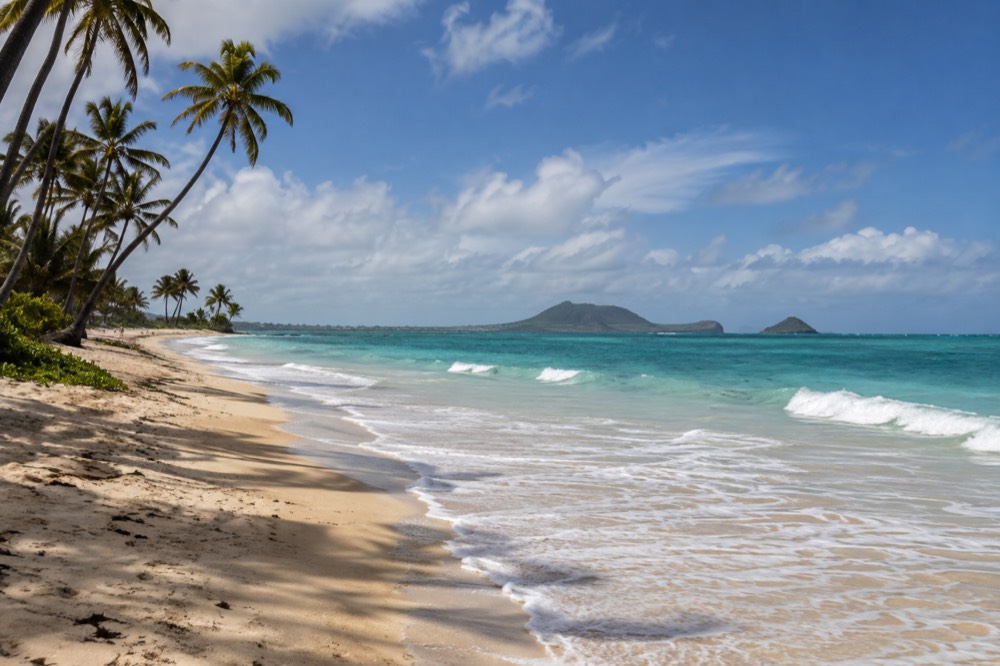
Oahu has the more famous and more accessible swimming beaches: Waikīkī, Kailua, Waimanalo and Ala Moana all sit close to where visitors stay, and most are reachable by bus. The Big Island's beaches are striking but different in character, with black-sand and green-sand stretches reached by rough tracks, and fewer lifeguarded swimming beaches near the main resorts. For a straightforward beach vacation, Oahu wins on convenience.
The honest caveat on Oʻahu's most photogenic stretch: Lanikai has no public parking lot at all. The residential streets carry no-parking signage and towing enforcement, and the nearest legal lot is at Kailua Beach Park. The city has an active transportation management plan for the area precisely because visitor pressure overwhelmed it. So the beach is real, the sand is real, and the parking problem is equally real. Plan around it rather than against it.
The Big Island's shoreline appeal is different. Its celebrated beaches tend to be destinations in themselves, reached by drives and sometimes by hikes, rather than a towel's throw from a hotel. That suits travellers who want the beach to be an event. It suits families with small children less, because the classic swim-and-sandcastles setup is simply easier on Oʻahu, where Ala Moana Beach Park and Waikīkī offer calm, protected water next to everything else you need.
What About Volcanoes And Landscape?
The Big Island is the only island with an active volcano you can visit, and that is its single biggest argument: lava fields, craters and a landscape that is still being built. Oahu's landscape is finished and green, a steep, eroded profile of ridges and valleys, and its drama is ocean-facing. If seeing volcanic activity matters, the Big Island is the answer; if lush ridges, waterfalls and coastal lookouts matter, Oahu delivers them in a smaller, drivable package.
One thing worth saying plainly, because it is the kind of detail most comparison articles miss: Oʻahu's own state parks took a direct hit from Hurricane Lowell in September 2026. The DLNR notice dated 9 September 2026 closed Nuʻuanu Pali State Wayside, Kaʻena Point State Park's Mokuleʻia and Keawaʻula sections, and Wahiawā Freshwater State Recreation Area until further notice for storm repairs. Anyone building an Oahu itinerary around the Pali Lookout right now needs to re-check that before booking anything, and the Nuuanu Pali Lookout guide carries the current status.
The rainfall contrast is the other underappreciated difference, and it is measurable. Honolulu's airport, on the leeward side, records 16.41 inches of rain a year in the 1991–2020 climate normals. Five miles inland, the Lyon Arboretum station in Mānoa records 150.96 inches. Every single month in Mānoa is wetter than the airport's wettest month. That is Oahu's microclimate story: the island packs a desert coast and a rainforest valley within a short drive of each other.
Which Island Is Better For Whales And Wildlife?
Both islands sit inside the same humpback whale sanctuary system, and the official season is identical: November through April, with 100 yards the legal minimum distance from humpbacks under federal regulation. Spinner dolphins carry a 50-yard rule. The difference is incidental wildlife: Oahu's near-shore waters reliably produce sea turtles, while the Big Island is known for manta ray night dives, an experience Oahu does not match.
A distinction that matters, and that most guides flatten: the whale and dolphin distances are law. The commonly quoted 50 feet for Hawaiian monk seals and 10 feet for green sea turtles are guidelines, not statutes, though harassing or taking either animal is illegal in its own right. Getting that distinction right is not pedantry, it is the difference between telling readers what the regulation says and inventing a rule. The full index of guides sits on Oahu Travel Guide.
For whale watching specifically, the practical difference between the islands is less about the animals and more about the logistics. Oahu whale-watching trips leave from Waikīkī and Kewalo Basin, minutes from the main hotel zone, so a two-hour excursion barely dents a day. The Oahu whale season guide covers the window and the operators. On the Big Island, boat trips are one activity among several on a driving day, which is either a plus or a minus depending on how you like to travel.
Which Island Suits A Short Trip?
Oahu is the clear pick for a trip of four days or fewer, because its highlights sit within a compact radius of Waikīkī and even the far North Shore is a single-day loop. The Big Island punishes short stays: with sights strung along two coasts, a three-day visit forces hard choices and long drives. A workable compromise is to base on Oahu and take one interisland day trip.
Leaning toward Oahu for your next trip. Book a flight to Oahu here.
The visitor numbers back this up. In July 2026, 387,063 of Oʻahu's 499,197 air visitors saw only this island, which tells you most people treat Oahu as a complete destination rather than a stopover. The how many days do you need in Oahu question has a well-tested answer, and the 1-day Oahu itinerary through the 3-day Oahu itinerary exist because the island genuinely compresses.
Interisland day trips do work, and the interisland flights from Oahu guide covers the mechanics, including the day trip from Oahu to Big Island. But be honest with yourself about the shape of that day: an early flight, a driving loop, and an evening return. It is a taste, not the island.
| Trip profile | Better island | Why |
|---|---|---|
| 3 to 4 days, one hotel | Oahu | Compact, bus-capable, tours cover the rest |
| 7+ days, happy to drive | Big Island | Distances stop being a penalty |
| First visit to Hawaii | Oahu | Highest concentration of iconic sights |
| Return visit, want something new | Big Island | Landscape unlike anywhere else in the state |
| No rental car | Oahu | TheBus, Skyline and tours cover it |
| Beaches as the main event | Oahu | Accessible, lifeguarded, near lodging |
How Do Crowds And Pace Compare?
Oahu is the busier island by any measure, and the crowding is concentrated: Waikīkī, Hanauma Bay and Diamond Head carry the heaviest visitor load in the state, which is exactly why both natural sites now run reservation systems. The Big Island's crowds are thinner and dispersed across a much larger landmass. If you measure a destination by how often you queue, the Big Island wins; if you measure it by how much is within walking distance, Oahu wins.
The reservation systems are the practical expression of Oʻahu's popularity, and they are the thing first-time visitors most often get wrong. Hanauma Bay opens reservations two days ahead at 7:00 a.m. HST, closes Mondays and Tuesdays, and charges $25 for non-residents while Hawaii residents enter free with ID. Diamond Head has required non-resident reservations for entry and parking since 12 May 2022, with no on-site sales, and a lot of competing content online still predates that rule. Neither system is negotiable, and both are covered in detail in the Hanauma Bay Nature Preserve and Diamond Head State Monument guides.
The Big Island's equivalent friction is distance rather than booking. Its headline park runs its own entry system and its own closures, and as of the September 2026 DLNR notice, several Hawaii Island beach parks including Hāpuna were closed for dangerous surf. The lesson generalises: on either island, check official closures the week you travel, not the month you book.
Which Should You Actually Choose?
Choose Oahu if this is a first Hawaii trip, a short trip, or a trip where you want beaches, history, food and activities stacked within a small radius, and you would rather not drive every day. Choose the Big Island if you have a week or more, you want active volcanic landscape and you enjoy a road trip rhythm. Oahu trades space for convenience, and the Big Island trades convenience for scale.
A useful framing device: ask what you would do on a rainy day. On Oʻahu the answer is long, from Bishop Museum to ʻIolani Palace to the aquarium, and the rainy day activities on Oahu guide lists them. On the Big Island, rain often means driving somewhere it is not raining, which is genuinely possible on an island with that many climate zones, but it eats hours.
For travellers who pick Oahu and want the island covered efficiently, two products do most of that work: the full circle-island day and the longer hidden-gems loop that reaches Byodo-In on the windward side. The pass option below suits anyone planning three or more paid activities.
Whichever way the comparison lands for you, the circle-island day deserves a closer look, because it is the single most efficient way to test whether Oahu's compactness actually suits you. It covers the North Shore, the windward coast and the key lookouts in one guided loop, which means you spend the day looking at the island instead of the road.
If your list of paid activities runs long, the multi-attraction pass is worth a look before you book anything individually, since a handful of entries usually pays for it.
Common Questions About Choosing Between Oahu And The Big Island
Most Oahu-versus-Big-Island questions come down to three things: how long you have, whether you will rent a car, and whether volcanoes or beaches matter more to you. Oahu compresses a complete Hawaii trip into a small, transit-friendly radius and suits stays from three days up. The Big Island rewards a week or more, a rental car and a tolerance for driving, with volcanic landscape no other island matches.
Is Oahu or the Big Island better for a first trip to Hawaii?
Oahu, for most travellers. It concentrates the postcard experiences, Waikīkī, Diamond Head, Pearl Harbor, a North Shore loop, within reach of a single hotel base, and it is the only island where a rental car is optional. The Big Island makes a superb second trip once you know what you want from Hawaii.
Which island is cheaper, Oahu or the Big Island?
Lodging taxes are identical, since both are Hawaii: the state TAT is 11.00% since 1 January 2026. The difference is activity spend. Oahu offers a large free and low-cost tier, including the free USS Arizona Memorial program and inexpensive state park entries, while the Big Island's headline experiences are mostly paid tours. A car-free Oahu week also saves a rental car's cost.
Can you visit the Big Island as a day trip from Oahu?
Yes, and it is a well-established pattern, but budget a full day: an early interisland flight, a driving loop on the Big Island, and an evening return. It is a taste of the volcano landscape, not a substitute for staying there.
Which island is better for whales?
Both sit within the same humpback season, November through April, and the 100-yard approach distance is federal law statewide. Oahu's advantage is logistics: whale-watching boats leave minutes from Waikīkī, so a two-hour trip barely interrupts a day.
Which island is less crowded?
The Big Island, by a wide margin in raw terms, though Oahu's crowding is concentrated in a few famous places. On Oahu, the reservation systems at Hanauma Bay and Diamond Head exist precisely to manage that pressure, so book ahead and the queues mostly disappear.
Do I need a car on Oahu?
Not necessarily. TheBus and Skyline share fares, with a $7.50 daily cap on a HOLO card, and tours cover the North Shore and windward coast. The full reasoning is in the site's guide to whether you need a car on Oahu.
The decision rarely comes down to one island being better. It comes down to whether your trip wants density or distance, and the honest answer is that a lot of travellers eventually do both, Oahu first, the Big Island when the itch to drive across a lava field gets strong enough.