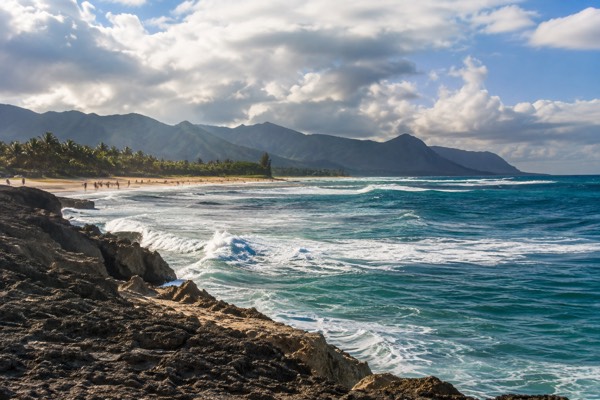
Oahu Photography Spots & Golden Hour Guide
Oahu packs a volcano crater, a windward mountain wall, a working harbour and a city skyline into a frame you can drive across in an afternoon, and the light changes fast enough that timing matters more than gear.
Short answer
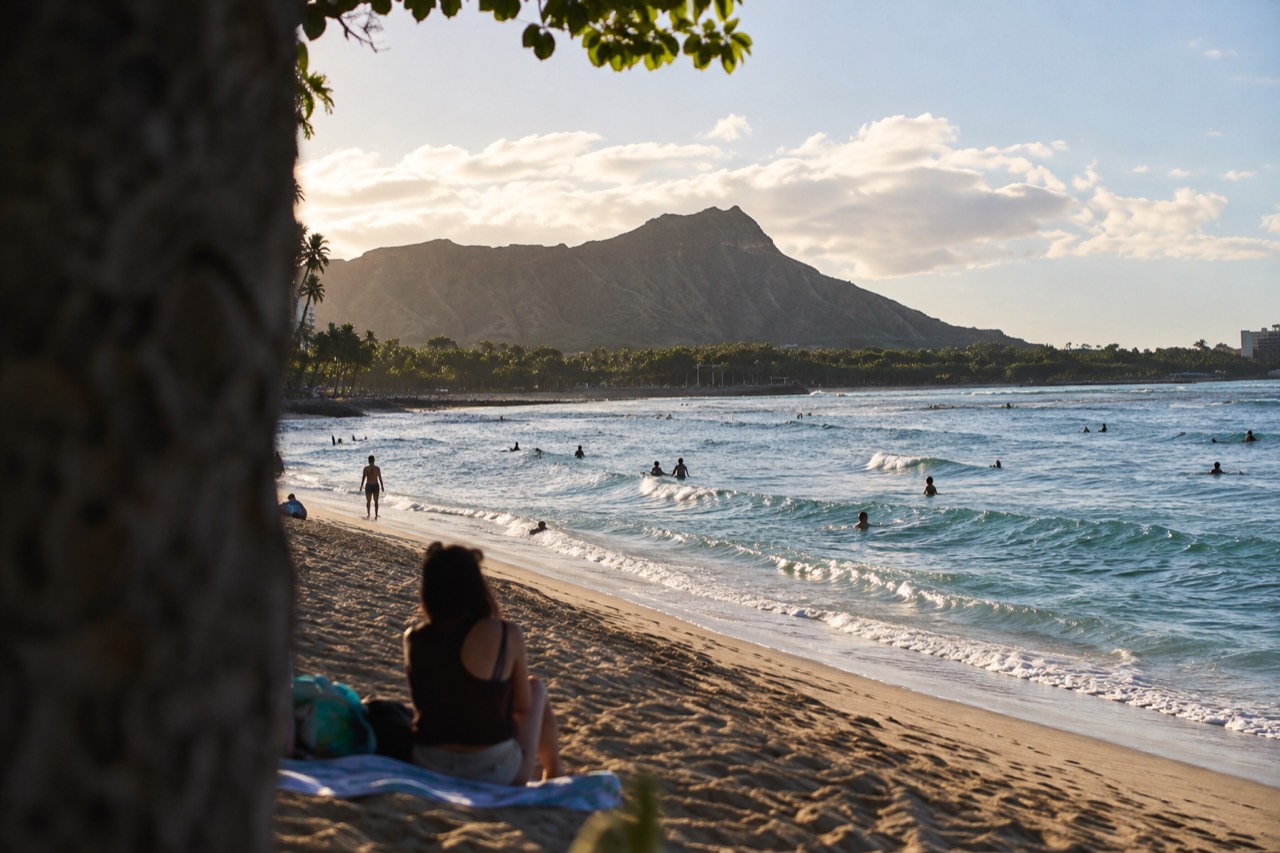
The best photo spots on Oahu are Diamond Head's crater rim at sunrise, the Mākapuʻu lighthouse trail on the east coast, Lanikai Beach and the Mokulua islets from Kailua, the Haleʻiwa town sign and North Shore coastline, and the Honolulu skyline from Ala Moana Beach Park. Golden hour runs roughly 6 to 7 a.m. and 6 to 7 p.m. for most of the year, because sunset never gets later than about 7:17 p.m.
Oahu is a small island with unusually varied light. One September morning the National Weather Service surf forecast showed the south shore running four to six feet while the north shore sat at one to three, an exact inversion of the winter pattern, and the same principle applies to the light: the coasts do not behave alike. A photographer who understands which shore faces which sun, and which valley holds cloud, gets better frames in three days than most visitors get in a week.
This guide covers the locations, the timing, and the rules. The timing comes from primary sources: sunrise and sunset figures are from the US Naval Observatory, the rainfall contrast is from the NOAA 1991-2020 climate normals, and the closures listed near the end are from the state parks notice dated 9 September 2026.
Where Are The Best Photo Spots On Oahu?
The strongest general-purpose photo spots on Oahu are the Diamond Head crater rim at sunrise, the Mākapuʻu Point lighthouse trail on the southeast coast, Lanikai Beach looking out to the Mokulua islets, the Haleʻiwa town sign and North Shore coastline, and the Honolulu skyline seen from Ala Moana Beach Park. Each rewards a specific hour, and two of them, Diamond Head and the windward lookouts, are morning locations where arriving late means shooting into flat light.
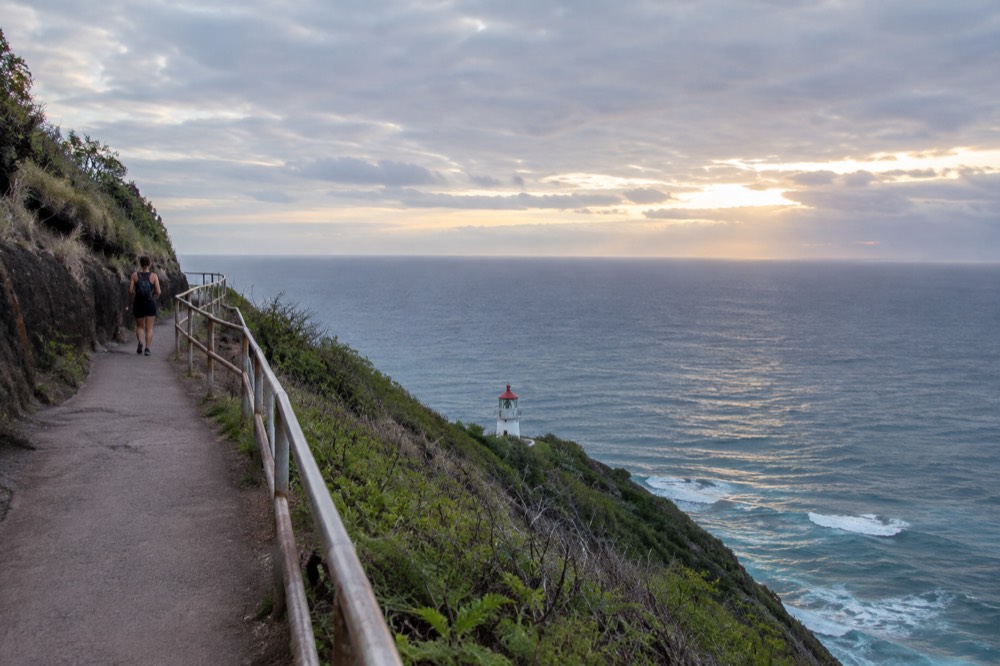
That list is deliberately short. Oahu has hundreds of photogenic places, but a photography plan is not a list of everything, it is a small set of shots matched to the sun. Diamond Head, known in Hawaiian as Lēʻahi, gives you the classic Waikīkī coastline frame from above, and the trail opens at 6 a.m., which puts hikers near the summit for first light in most months. The Mākapuʻu lighthouse trail is paved, short, and faces directly east, so the sun comes up out of the Pacific directly in front of you.
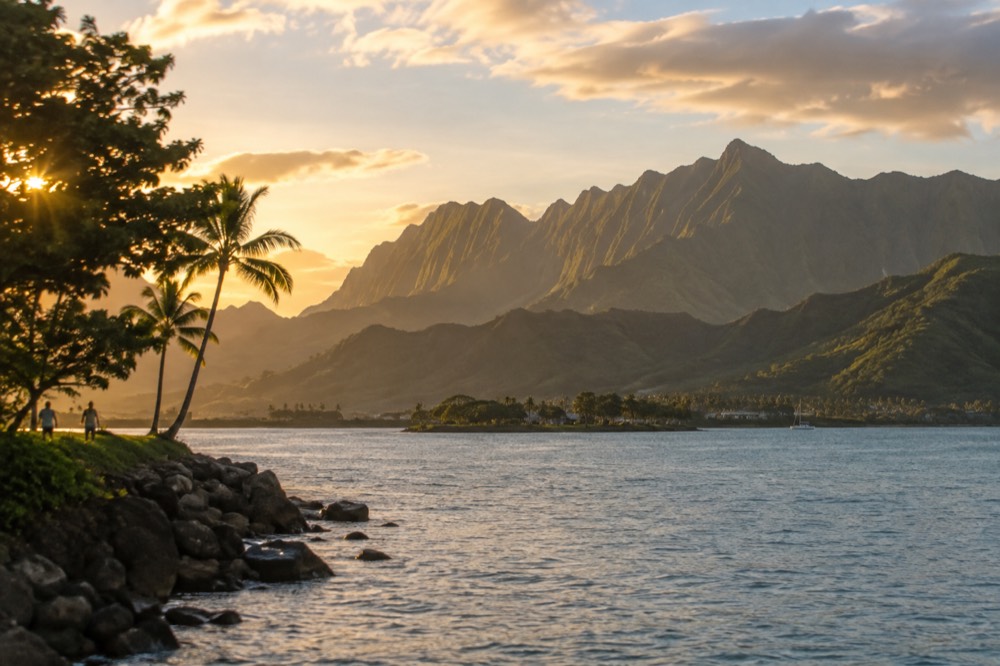
The windward side is the island's scenic engine. The Koʻolau range rises almost vertically behind Kāneʻohe and Kailua, and morning light rakes across those ridges before clouds build. Lanikai Beach looks out at the Mokulua islets, though be aware there is no public parking lot there, only residential streets with strict restrictions, so the practical base is the Kailua Beach Park lot. On the North Shore, Haleʻiwa town, Waimea Bay and Sunset Beach give you a working country landscape rather than a resort one.
For city work, the Honolulu skyline from Ala Moana Beach Park or the waterfront near Aloha Tower is best late in the day, when the low sun lights the buildings from the west. If you want the deeper planning picture, our Things to Do in Oahu page covers the full island, and this Oahu Travel Guide is the site's home base for everything else.
When Is Golden Hour On Oahu, Month By Month?
Golden hour on Oahu falls roughly between 6 and 7 a.m. and between 5:45 and 7 p.m. depending on the season. Sunrise ranges from about 5:50 a.m. in mid-June to 7:11 a.m. in mid-January, and sunset ranges from about 5:55 p.m. at the winter solstice to 7:17 p.m. in early July, the latest sunset of the year.
Oahu never gets the long summer evenings of high-latitude destinations.
These figures come from US Naval Observatory calculations for Waikīkī coordinates, and the small annual range is the point most visiting photographers miss. Day length varies by only about two hours and thirty-five minutes across the whole year. In late June you get roughly thirteen and a half hours of daylight; in late December, about ten and three quarters. There is no 9 p.m. sunset here, ever, and planning a "blue hour city shoot" for 8:30 in May means shooting in full darkness.
| Date | Sunrise | Sunset | Notes |
|---|---|---|---|
| 21 Jun 2026 | 05:50 | 19:16 | Longest day, about 13 h 26 m |
| 5 Jul 2026 | 05:54 | 19:17 | Latest sunset observed all year |
| 15 Jan 2026 | 07:11 | 18:11 | Latest sunrise observed all year |
| 21 Dec 2026 | 07:04 | 17:55 | Shortest day, about 10 h 51 m |
Two practical consequences follow. First, winter sunrise is civilised: a 7:11 a.m. sunrise in January means you can leave Waikīkī in daylight and still be on location before the sun clears the horizon. Second, the earliest sunset of the year falls in late November, not at the solstice, so late November is the season for afternoon golden hour that ends early enough for dinner. One caveat: the sampled dates above are the solstices, extremes and a mid-summer peak, so treat days in between as interpolations and check a current sun table for your exact travel dates.
The other timing trap is the tropics themselves. Because Oahu sits at about 21 degrees north, the sun drops fast and the good light band around sunrise and sunset is shorter than it is in, say, San Francisco. When the sun sets at 7:17 p.m., the useful golden light is largely over by about 6:50. Photographers who "wait for the perfect moment" routinely miss it here; the light does not linger.
Which Photo Spots Can You Reach Without A Car?
You can photograph a surprising amount of Oahu without renting a car, because TheBus, the Skyline rail line and the Waikīkī trolley reach several of the best locations. Ala Moana Beach Park, Waikīkī, Diamond Head and downtown Honolulu all sit on transit routes, and a HOLO card caps daily bus and rail travel at $7.50. The windward beaches and the North Shore are the exception, and those are where a tour or a car earns its place.
The transit facts are worth stating precisely because they are verified. TheBus and Skyline share one fare structure: $3.25 for an adult cash single ride with no transfers, a $7.50 daily cap on a HOLO card, and $90 for a monthly pass. Skyline now reaches the airport and has a Hālawa Aloha Stadium station serving the Pearl Harbor visitor centre, but there is no Waikīkī station, so a transfer is always part of a rail trip from Waikīkī.
For a photographer without a car, the honest split is this: everything from Pearl Harbour in the west to Diamond Head in the east is transit-accessible, and everything beyond, Kailua, Lāʻie, Haleʻiwa, the Mākapuʻu trailhead, is not practical on a morning-light schedule, because buses do not get you there before the good light is gone. That is exactly the gap the tours below fill.
A circle island tour is the single most efficient car-free photography decision on Oahu, because it puts you at the windward and North Shore stops in daylight hours with someone else watching the clock. The trolley day pass is the cheaper, closer-in option and covers the Honolulu and Waikīkī frame. Neither is a sunrise service, so plan your one or two priority sunrise shots around transit-accessible Diamond Head instead, and let the tour handle the midday and afternoon locations.
What Are The Best Sunrise Locations On Oahu?
The best sunrise locations on Oahu are the Diamond Head summit trail, the Mākapuʻu Point lighthouse trail, Lanikai Beach facing the Mokulua islets, and Waimānalo Beach on the windward coast. All four face east or southeast into the rising sun, and all four reward arrival before the sky brightens, because the strongest colour typically sits twenty to thirty minutes before the sun itself clears the horizon.
Diamond Head is the logistics-friendly choice. The state monument opens at 6 a.m. daily, and the trail gains about 170 metres, so an opening-time start reaches the summit with light to spare for most of the year. The frame from the top is the Waikīkī coastline and the Koʻolau range together, which is why it anchors every Oahu photo essay. Note the entry rules in the reservations section below, because they shape how early you can realistically be on the trail.
The Mākapuʻu lighthouse trail is the easiest serious sunrise walk on the island: paved, about two kilometres return, and facing the open Pacific. In winter it doubles as a whale-watch viewpoint, since humpbacks are present in Hawaiian waters from November through April, and the sanctuary's own guidance is to keep 100 yards from them, a distance that is law, not advice. Lanikai gives you the Mokulua islets as foreground silhouettes, but remember the parking situation, there is no public lot, and the residential streets are enforced, so base yourself at Kailua Beach Park and walk. Our Lanikai Beach guide covers the access details honestly.
One sunrise mistake worth correcting: the windward side is where the clouds are. The Mānoa valley, five miles from Waikīkī, receives 150.96 inches of rain a year against the airport's 16.41, per the NOAA 1991-2020 normals, and every single month in Mānoa is wetter than the airport's wettest month. Sunrise over Kailua can be genuinely dramatic for exactly that reason, but it can also be grey. The leeward sunrise spots, Diamond Head and Mākapuʻu, fail less often.
What Are The Best Sunset Locations On Oahu?
The best sunset locations on Oahu are Ala Moana Beach Park for the Honolulu skyline, Waikīkī Beach looking along the coast toward Lēʻahi, the west-facing shores near Ko Olina and Waiʻanae, and the North Shore beaches around Haleʻiwa and Sunset Beach in winter. Since the latest sunset of the year is about 7:17 p.m., be in position by roughly 6:30 p.m. in summer and 5:30 p.m. in winter.
Sunset on Oahu is a west-side event. The sun drops into the ocean only from leeward vantage points, and the Koʻolau range kills the horizon shot from most windward locations long before the actual sunset time. Ala Moana is the classic compromise: the beach faces west, the skyline sits behind you catching the last warm light, and the park is on the transit spine, so no car is needed.
The far leeward coast, Ko Olina and the Waiʻanae coast, gets the cleanest horizon. Our Ko Olina guide and leeward coast guide cover those areas in detail. Check before you drive out.
The North Shore works as a sunset location with a seasonal caveat. Winter brings the big surf, and big surf plus low sun is the single most photographed combination on the island. Summer flattens the North Shore and moves the photographic interest to calm-water sunset silhouettes. For a wider set of options, see our best sunset spots on Oahu guide.
The Friday fireworks over Waikīkī give the evening a weekly punctuation mark, and a sunset sail that stays out for the display is one of the few times a boat is genuinely the best camera platform on the island.
How Does Light And Weather Differ By Coast?
Oahu's coasts behave out of phase with each other in both surf and cloud. North-facing shores see their largest surf in winter and south-facing shores in summer, a pattern the National Weather Service publishes daily by shore aspect, and cloud behaves the same way: the windward side holds the rain and the leeward side stays dry, with the airport recording 16.41 inches a year against Mānoa's 150.96 inches just five miles apart.
| Station | Side of island | Annual rainfall | Character |
|---|---|---|---|
| Honolulu International Airport | Leeward | 16.41 in | Driest; March wettest at 2.36 in |
| Kāneʻohe Bay MCAS | Windward coast | 27.82 in | November wettest at 3.68 in |
| Mānoa, Lyon Arboretum | Windward valley | 150.96 in | Wettest month July at 15.35 in |
For a photographer this table is a planning tool, not trivia. If the forecast shows showers over the Koʻolaus, and it often will, the leeward locations, Ala Moana, Ko Olina, Waiʻanae, are probably under clear sky at the same hour. Conversely, a "cloudy" day in Waikīkī can still mean a dramatic, cloud-torn sunrise over the windward ridges, because that is where the moisture lives. The trade-off is reliability: leeward light is dependable, windward light is spectacular when it works.
The surf phase matters to photographers too, and not only for wave shots. On 10 September 2026 the NWS Honolulu surf forecast showed the south shore at four to six feet and the north shore at one to three, the exact inverse of the winter arrangement. In practice that means summer shorebreak energy belongs to the south and east facing beaches, winter to the north and west, and a photographer chasing water motion should pick the beach to match the season.
What Rules And Closures Should Photographers Check First?
Three things need checking before any Oahu shoot: the Diamond Head reservation requirement for non-residents, in force since 12 May 2022, the closure of Nuʻuanu Pali Lookout and Kaʻena Point State Park as of the 9 September 2026 state parks notice, and the drone ban in Hawaii state parks. Wildlife distances also matter: 100 yards from humpback whales and 50 yards from spinner dolphins are law, while the seal and turtle distances are guidelines.
The closures are live and specific. After Hurricane Lowell, the state parks notice dated 9 September 2026 closed Nuʻuanu Pali State Wayside, Kaʻena Point State Park's Mokuleʻia and Keawaʻula sections, and Wahiawā Freshwater State Recreation Area until further notice for storm repairs. The Pali Lookout is one of Oahu's most photographed vantage points, so this genuinely changes plans: check the state parks notices the week you travel, because this situation is moving. Our Nuʻuanu Pali Lookout page carries the fuller background.
Diamond Head's rules shape sunrise plans directly. Non-residents need a reservation for both entry and parking, there are no on-site sales, entry costs $5 per person plus $10 per vehicle if you drive, payment is credit card only, and reservations can be made up to 30 days ahead. Residents enter free with Hawaii ID. The monument is open 6 a.m. to 6 p.m. with last entry at 4:30 p.m., so a 6 a.m. sunrise start is possible, but only with a booked slot.
| Site | Key rule for photographers | Status |
|---|---|---|
| Diamond Head State Monument | Non-resident reservation required for entry and parking, card only, since May 2022 | Verified |
| Nuʻuanu Pali Lookout | Closed for storm repairs | Closed as of 9 Sept 2026 |
| Kaʻena Point State Park | Closed for storm repairs; also a sacred site and protected seabird area | Closed as of 9 Sept 2026 |
| Hanauma Bay | Closed Mondays and Tuesdays; entry allowed 6:45 a.m. to 1:30 p.m. | Verified |
| State parks generally | Drones prohibited without a written permit | Restriction applies |
Two more rules finish the picture. Drones are prohibited in Hawaii state parks without a written permit, restricted in Honolulu city parks and prohibited in National Park Service units including Pearl Harbor, so leave the drone at home unless you hold a permit. And Kaʻena Point deserves a note beyond the closure: it is a leina a ka ʻuhane, a place where souls depart the living world in Hawaiian tradition, and it should be treated with restraint in copy and in person, not framed as a trophy sunset spot. When it reopens, go quietly.
Do You Need A Tour To Get The Shot?
You do not need a tour for Waikīkī, Diamond Head, Ala Moana or anything on the transit spine, but you do need either a car or a tour for the windward lookouts, Kualoa, the North Shore and any one-day coverage of multiple coasts. A circle island tour solves the sunrise problem less well than a self-drive, because most depart mid-morning, but it solves the parking and navigation problems better than any first-time visitor can.
Want the windward lookouts without driving yourself? Book a half-day scenic tour here.
The honest division of labour is this. Do your priority sunrise yourself, on transit, at Diamond Head. Then let a tour carry the rest of the island. The most-booked circle island day is the volume leader for a reason: it covers the loop in about six and a half hours and hits the classic stops, including Haleʻiwa, which is the North Shore frame most visitors want.
If your shot list leans toward the less-photographed windward interior, the circle island tour that calls at the Byodo-In Temple is the better fit, since that temple, set against the Koʻolau wall, is one of the most striking man-made foregrounds on the island and sits well off the transit network.
And if your day is really a Honolulu day, skyline, waterfront, Ala Moana, the trolley hop-on pass turns the transit question into a one-ticket answer and keeps you free to jump off whenever the light does something worth stopping for.
Whichever of those three fits your plan, the underlying decision is the same one: match the vehicle to the light. Sunrise is a solo, transit-served mission; the rest of the island is a loop, and loops are what tours and cars are for. Here are the three side by side.
Common Questions About Oahu Photography
Most questions about photographing Oahu come down to four things: the sun's schedule, the island's two-sided weather, the reservation and closure rules, and whether a location is reachable at the hour the light is right. Golden hour sits between roughly 6 and 7 a.m. and 5:45 and 7:15 p.m. year-round, the windward side holds the cloud and the leeward side the clear sky, and the best windward and North Shore spots realistically need a car or a tour.
What time is golden hour on Oahu?
It depends on the season, but the band is narrow. Sunrise runs from about 5:50 a.m. in mid-June to 7:11 a.m. in mid-January, and sunset from about 5:55 p.m. in late December to 7:17 p.m. in early July. Plan to be in position 30 minutes before the sun crosses the horizon, because in the tropics the good light does not linger.
Where is the best place to photograph sunrise on Oahu?
The Diamond Head summit trail is the most reliable and transit-friendly option, with the Waikīkī coastline and Koʻolau range in one frame. The Mākapuʻu Point lighthouse trail faces the open Pacific, and Lanikai Beach silhouettes the Mokulua islets, though its parking is residential-only, so start from Kailua Beach Park.
Where is the best place to photograph sunset on Oahu?
Ala Moana Beach Park for the skyline, the leeward coast around Ko Olina and Waiʻanae for a clean ocean horizon, and the North Shore beaches around Haleʻiwa in winter, when the surf and the low sun combine. Windward locations lose the sun behind the Koʻolaus well before sunset, so shoot those in the morning.
Can I fly a drone on Oahu for photos?
Not in Hawaii state parks without a written permit, and they are also restricted in Honolulu city parks and prohibited in National Park Service units including Pearl Harbor. Unless you hold the relevant permit, plan your trip around ground-level shooting.
Is the Pali Lookout open for photos?
As of the state parks notice dated 9 September 2026, Nuʻuanu Pali State Wayside is closed until further notice for storm repairs after Hurricane Lowell, along with Kaʻena Point State Park's Mokuleʻia and Keawaʻula sections. Check the DLNR state parks notices the week you travel, because this is a live situation.
Do I need a reservation to photograph Diamond Head at sunrise?
If you are not a Hawaii resident, yes. Non-residents have needed a reservation for both entry and parking since 12 May 2022, with no on-site sales, and entry costs $5 per person plus $10 per vehicle, credit card only. Book up to 30 days ahead, and target the 6 a.m. opening for sunrise work.
The unglamorous truth about photographing Oahu is that the island does most of the work. The light is fast, the coasts are different from each other, and the rules, reservations, closures, wildlife distances, are knowable in advance if you look. Pick two sunrise locations and two sunset locations that match your transit reality, check the state parks notices the week you fly, and leave room in the plan for the morning the clouds do something over the Koʻolaus that no schedule predicted.