Is Oahu Safe? A Sourced Answer For Visitors
Yes, Oahu is safe for visitors by any reasonable standard, and the risks that actually matter are ocean hazards, sun and a handful of reservation logistics rather than crime.
Short answer
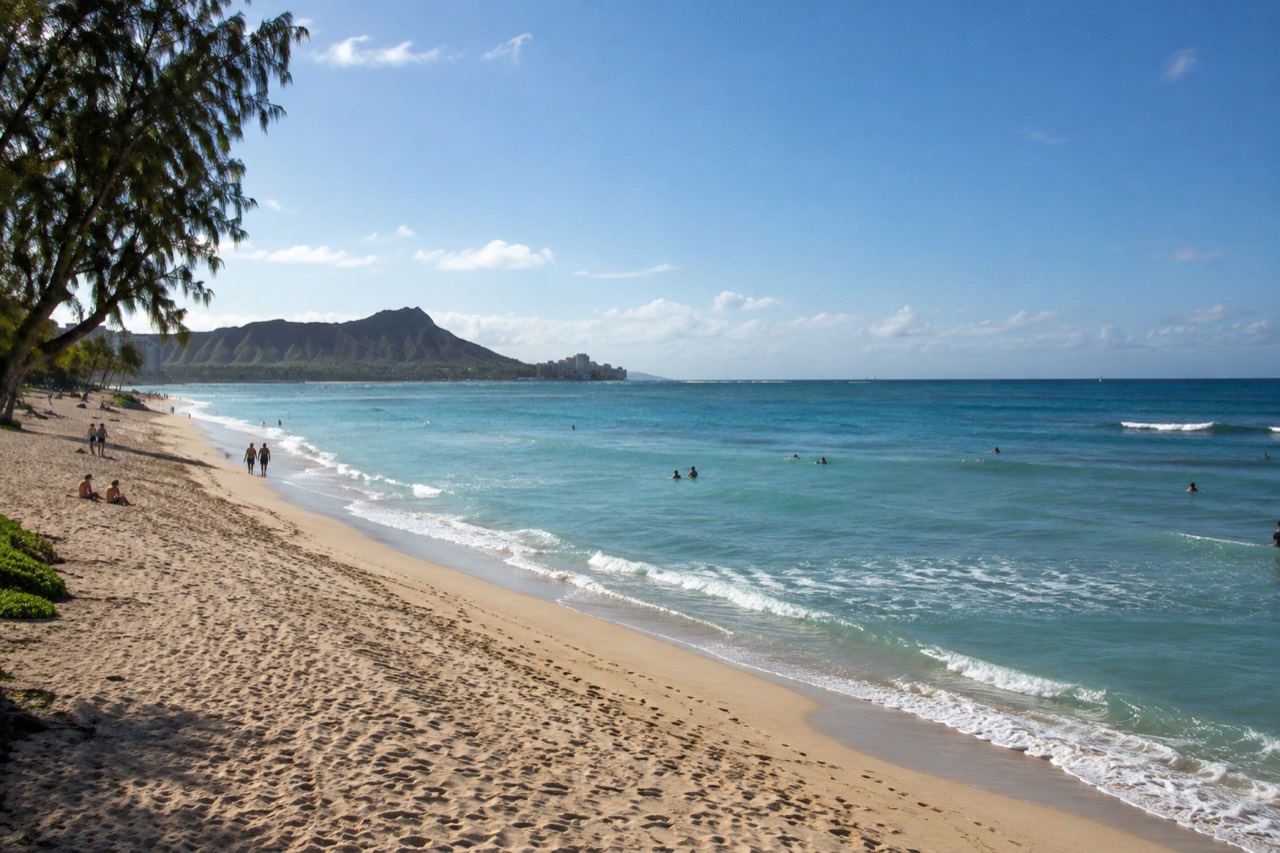
Oahu is safe for tourists. The serious risks are ocean-related: drownings, currents and flash floods, not violent crime. Follow posted ocean warnings, respect wildlife distance rules and check the surf forecast, and Oahu is one of the safer island destinations in the United States.
Is Oahu Safe? A Sourced Answer For Visitors
Oahu is safe for visitors by any reasonable measure, and the hazards that send people to hospital here are overwhelmingly ocean hazards, not crime. The island took 5,679,047 visitors by air in 2025, preliminary DBEDT figures, and the overwhelming majority of those trips end without incident. That does not mean safety is automatic. Drownings at beaches like Sandy Beach, flash floods in Mānoa and box jellyfish arrivals on the south shore are real, predictable and avoidable, and this guide covers each one with the official numbers behind it.
This page is part of the Oahu Travel Guide editorial desk's safety coverage, and every figure below comes from an official source: the National Park Service, NOAA, the National Weather Service, the City and County of Honolulu or the Hawaii Department of Land and Natural Resources.
Is Oahu Safe For Tourists Overall?
Yes, Oahu is safe for tourists, and the risks worth planning around are environmental rather than criminal. The island hosted 5,679,047 air visitors in 2025, down about 2% on 2024, and the safety failures that do occur cluster around the ocean: rip currents, shorebreak and flash floods. Violent crime against visitors is rare. The practical safety skills here are reading a beach warning sign and checking the surf forecast.
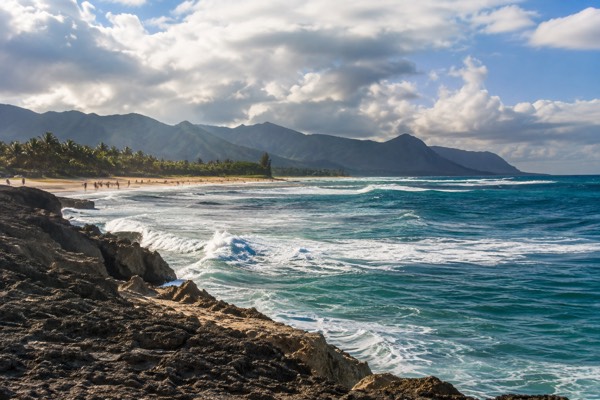
Oahu is a developed American city with a wilderness coastline attached. Honolulu has the infrastructure, emergency services and hospital capacity of any large US county, roughly 988,700 residents by the Census Bureau's Vintage 2025 estimate for Honolulu County. Visitors are far more likely to be hurt by a shorebreak wave at Sandy Beach Park than by a person.
That distinction should shape how you prepare. Most of this guide is therefore about water, weather and wildlife, because those are the hazards the official data actually flags. The oahu ocean safety guide goes deeper on beaches and conditions, and it is worth reading before you pick where to swim.
One cultural note that is also a safety note: "Hawaiian" means a person of Native Hawaiian ancestry. Residents of other backgrounds are locals or Hawaii residents. Getting that right is basic respect, and respect travels both ways when you are asking strangers for help on a trail or at a beach.
Which Parts Of Oahu Deserve Extra Care?
No area of Oahu is off-limits the way the question usually implies, but a few places carry specific, documented risks. Sandy Beach Park has a notorious shorebreak. The Mānoa valley trails flash-flood in heavy rain. Kaʻena Point and Nuʻuanu Pali Lookout are currently closed for storm repairs, per a DLNR notice dated 9 September 2026. Laniakea Beach has an active highway project changing the parking arrangement. None of these are crime problems.
The closures deserve emphasis because a lot of online content still describes the Pali Lookout and Kaʻena Point as open. As of the DLNR State Parks notice of 9 September 2026, Nuʻuanu Pali State Wayside and Kaʻena Point State Park's Mokuleʻia and Keawaʻula sections are closed until further notice following Hurricane Lowell, along with Wahiawā Freshwater State Recreation Area. Do not plan a visit around either site without re-checking the DLNR notices the week you travel.
Kaʻena Point also carries a cultural boundary worth knowing: it is a leina a ka ʻuhane, a place where souls depart the living world in Hawaiian tradition, and it is a protected seabird and monk seal area behind a predator-proof fence. When it reopens, it deserves restraint, not "epic sunset spot" treatment.
The other area-specific caution is the North Shore in winter. The surf is genuinely dangerous, and the specific wave heights at Waimea Bay and Pipeline are forecast-dependent, so rely on the live National Weather Service surf forecast rather than any static figure. In September 2026, for example, the NWS Honolulu surf bulletin had the south shore running 4 to 6 feet while the north shore sat at 1 to 3, the exact inversion of the winter pattern. The coasts run out of phase: north-facing shores peak in winter, south-facing in summer.
If you would rather have a professional handle the driving, parking and judgement calls on a first visit, a guided circle-island day is a reasonable way to see the windward coast and North Shore without white-knuckling Kamehameha Highway:
A guided day is not a safety requirement. It is a convenience that happens to remove some of the moments where visitors get into trouble: parking on road shoulders, misreading private land, arriving at a lookout in fading light.
Is It Safe To Swim And Snorkel On Oahu?
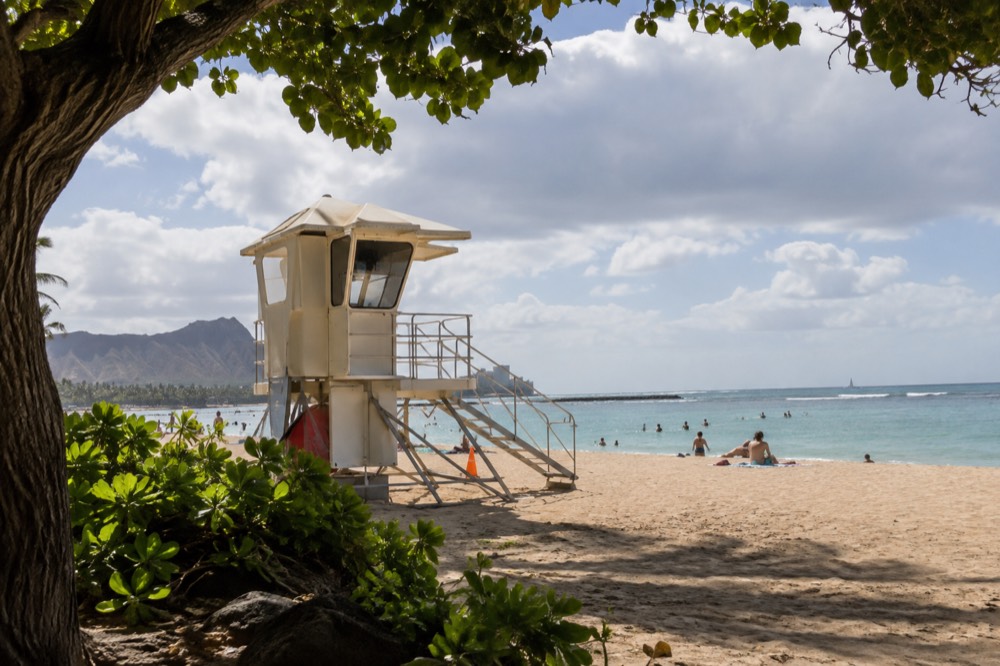
Swimming and snorkeling on Oahu are safe at lifeguarded beaches when you obey the posted conditions, and dangerous when you do not. Hanauma Bay, the island's flagship snorkel site, closes Mondays and Tuesdays and requires a $25 non-resident entry booked exactly two days ahead at 7:00 a.m. HST. The documented drowning risk comes from unguarded beaches, shorebreak and rip currents, not from sharks.
Start with the beaches that have lifeguards and warning signs, and read the signs. Sandy Beach Park's shorebreak is the classic example: the water looks inviting, the sand drops fast, and back injuries from shorebreak waves are a known pattern there. Sandy Beach Park is beautiful and worth seeing; it is not a beginner swimming beach.
For snorkeling, Hanauma Bay Nature Preserve is the marquee site and its rules are strict for a reason. Non-residents pay $25 plus a 2.35% online service fee, children 12 and under are free, and reservations open two days ahead at 7:00 a.m. HST, verbatim from the City and County page: "Monday at 7 a.m. HST you can begin reserving a time slot for Wednesday." Hawaii residents enter free with no reservation. The bay closes Mondays and Tuesdays, plus Christmas and New Year's Day.
If the reservation system defeats you, a snorkel tour that includes transport and equipment is the practical alternative, and the Turtle Canyon snorkel out of Waikīkī is the most-booked version:
Sharks deserve a sober sentence rather than a scare paragraph. Cage dives operate off the North Shore with strong reviews, and the far larger risk in the official data is people swimming alone, at unguarded beaches, in marginal conditions. If a shark encounter is something you want rather than fear, the cage dive is a controlled way to do it.
How Close Can You Get To Oahu's Wildlife?
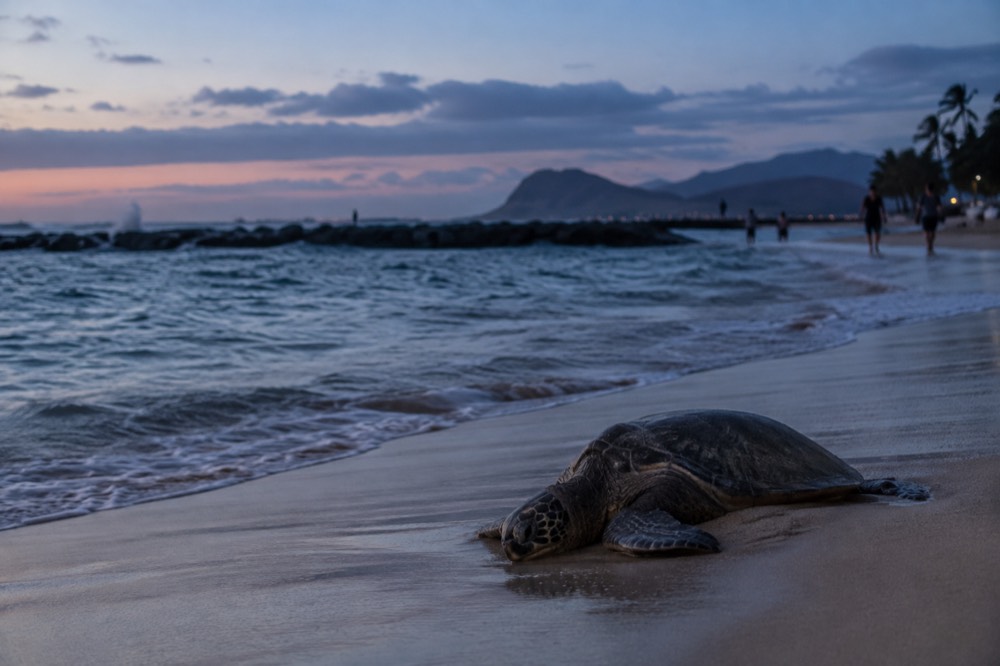
The law requires 100 yards from humpback whales and 50 yards from Hawaiian spinner dolphins, and those distances are regulations, not suggestions. For monk seals the 50-foot distance and for green sea turtles the 10-foot distance are guidelines rather than statute, but harassing either animal is illegal under federal and state law, and taking a monk seal is a class C felony in Hawaii. Give it space, never touch, never chase.
The distinction matters because a lot of travel content flattens all four animals into one "it's illegal to get close" claim, which is wrong in both directions. Whales and dolphins carry binding federal approach distances. Seals and turtles carry recommended distances, with the illegal act being harassment or take rather than proximity itself. Here is the breakdown:
| Animal | Distance | Law or guideline | Source status |
|---|---|---|---|
| Humpback whale | 100 yards | Law | Verified on the NOAA sanctuary page |
| Hawaiian spinner dolphin | 50 yards, swim-with prohibited | Law, 2021 final rule | Federal regulation, effective Oct 2021 |
| Hawaiian monk seal | 50 ft, 150 ft for mother and pup | Guideline; harassment is illegal | Federal and state protection applies |
| Green sea turtle (honu) | 10 ft | Guideline; harassment is illegal | Federal and state protection applies |
The humpback season runs November through April, per the Hawaiian Islands Humpback Whale National Marine Sanctuary, which states plainly that "from November through April, visitors to the sanctuary can see whales from shore and at sea." The sanctuary's guidance on legal viewing distance is the reference to trust on this.
At Laniakea Beach, the honu come ashore regularly and volunteers help keep the spacing. Two cautions: the parking arrangement is in flux because of a Kamehameha Highway drainage and safety project, so park only where it is legal, and never stop in the travel lane to look at turtles. That highway carries residents to work.
Two related rules that visitors trip over: removing sand, coral or rock from the shoreline is prohibited under state law, and stacking rocks is discouraged by both DLNR and the NPS because it disturbs habitat and misleads hikers who read cairns as trail markers. The "Pele's curse" story that circulates as an ancient Hawaiian belief is a 20th-century invention; the actual reason not to take rock is that it is illegal.
Is Oahu Safe From Natural Hazards?
Oahu has real natural hazards, hurricane season, flash floods, box jellyfish and high surf, and every one of them is forecastable if you know where to look. The NWS Honolulu office publishes a daily surf forecast by shore aspect. Flash floods kill in Hawaii valleys, and the rainfall data shows why: Mānoa averages 150.96 inches of rain a year against 16.41 at Honolulu airport, five miles apart.
Hurricane season runs June through November, and the 2026 season is a live demonstration that storms matter here: Hurricane Lowell's damage closed three state park sites into September. The oahu hurricane season guide covers preparation, and storm-related reservation refunds are automatic, minus non-refundable service charges, taking 4 to 6 weeks per DLNR.
Flash floods are the quiet killer in the Mānoa Falls Trail and other valley hikes. The rainfall asymmetry above is the whole story: a valley five miles inland from Waikīkī receives more than nine times the airport's annual rain. Check the forecast for the valley, not the beach, and if rain is falling upstream, leave. The oahu flash flood safety page has the details.
Box jellyfish arrive on south-facing shores, including Waikīkī and Hanauma Bay, on a cycle tied to the full moon, and the box jellyfish calendar tracks it. Waikīkī posts warning signs on affected days. If the signs are up, stay out; stings are painful and occasionally worse.
Ocean temperature, for what it is worth, is not a hazard. NOAA's Honolulu Harbor station recorded a 2025 monthly mean range from 78.0°F in February to 82.7°F in August, harbour readings that run slightly warm against open water off Waikīkī. The water is never cold; the surf is what you plan around.
Sun exposure deserves a line of its own, because it is the hazard visitors most consistently underestimate. The UV index in Hawaii is extreme for much of the year even under cloud, and a serious burn can end a trip faster than any jellyfish. Reef-safe sunscreen, a hat and more water than feels necessary are the cheap fixes.
Is It Safe To Get Around Oahu Without A Car?
Yes, and for many visitors transit is the safer choice because it removes the two things that actually cause trouble: unfamiliar roads and parking decisions. TheBus and the Skyline rail share one fare structure, $3.25 for a cash single ride with no transfers, a $7.50 daily cap on a HOLO card, and $90 for a monthly pass. Skyline reaches the airport but has no Waikīkī station, so a transfer is required.
The fare table, verified from the City and County's transit fares page:
| Fare | Price | Notes |
|---|---|---|
| Adult cash, TheBus only | $3.25 | Exact fare, no transfers |
| HOLO 2-hour pass | $3.00 | Unlimited transfers, TheBus and Skyline |
| Daily cap | $7.50 | Max charged per day, then free |
| 7-day pass | $45.00 | 168 hours from first tap |
| Monthly cap | $90.00 | |
| Child 5 and under | Free | With a paying rider, not occupying a seat |
The practical safety advantage of transit is subtle but real. Skyline's Hālawa Aloha Stadium station serves the Pearl Harbor memorial and visitor centre, which removes both the drive and the $7-per-day parking decision at one of the island's busiest sites. The Honolulu Skyline rail guide and TheBus guide cover the network in detail, and do you need a car on Oahu answers the broader question.
If you do drive, two behaviours matter most. Do not stop in travel lanes on Kamehameha Highway, at Laniakea or anywhere else, no matter how photogenic the turtle. And park legally on the North Shore: Haleʻiwa and Waimea are working towns on a two-lane road carrying enormous visitor pressure, and residents' driveways are not overflow parking. The Oahu parking guide lists the legal options by area.
For visitors who want the island's spread-out sights without the driving, these are the most-booked options:
A note on the USS Arizona Memorial, which belongs in any Oahu safety-and-respect conversation: it is a war grave, 1,102 sailors and Marines remain in the ship, and the program is free with a $1 non-refundable management fee per ticket on recreation.gov. Bags of any kind are prohibited, storage near the entrance carries a small fee, and the shrine room is a place of silence. The Pearl Harbor day trip planner covers the logistics respectfully.
Common Questions About Safety On Oahu
Most safety questions about Oahu come down to three things: which beach you swim at, what the forecast says and how much space you give wildlife. Crime is a minor part of the picture; the ocean is the major one. Plan around lifeguarded beaches, the surf forecast and the two legally binding wildlife distances, and you have handled the risks that appear in the official record.
Is Oahu safe at night?
Waikīkī and central Honolulu are well-lit and busy into the evening, and the things to do in Waikīkī at night options are mainstream: dinners, shows, catamaran sails and the Friday fireworks. The standard urban cautions apply anywhere, and unlit beaches and trailheads are simply places not to be after dark.
Is Oahu safe for solo travellers?
Yes. Solo travellers make up a large share of the island's visitors, and the infrastructure, transit and tour ecosystem make independent travel straightforward. The main solo-specific advice is ocean-specific: swim at lifeguarded beaches and tell someone your plan for valley hikes.
Are there sharks around Oahu?
Yes, sharks live in the water around every Hawaiian island, and encounters are rare. The documented drowning risk comes from currents and shorebreak, not sharks. Cage and cageless dives operate commercially off the North Shore for people who want to see them deliberately.
Is the drinking water on Oahu safe?
Oahu's municipal water is treated to US federal standards and is safe to drink. Visitors from outside the United States will notice no difference from any mainland city's supply.
Is it safe to hike on Oahu?
Yes, with two cautions. Check the rain forecast for the specific valley, because flash floods in places like Mānoa are the real hazard, and respect posted kapu signs and private land. Never dig or probe in shoreline dunes, where ancestral burials are present and disturbance is illegal.
Do I need to worry about hurricanes?
Hurricane season runs June through November, and the 2026 season closed three state park sites after Hurricane Lowell. Storms are forecast days in advance, reservations affected by closures are refunded automatically, and the oahu hurricane season guide explains the practical side.
Oahu is safe, and the preparation that makes it safest is unglamorous: read the beach signs, check the surf forecast by shore aspect, book Hanauma Bay two days ahead at 7 a.m., and give the animals their legally required room. Do that, and the island's real hazards stay statistics rather than stories.