Hidden Gems On Oʻahu: The Quiet Places Worth The Detour
Oʻahu took 5,679,047 visitors by air in 2025, and most of them squeezed into the same few square miles. The rest of the island is still there, and much of it is nearly empty on a Tuesday morning.
Short answer
The best hidden gems on Oʻahu are the places the shuttle buses skip: Hoʻomaluhia Botanical Garden in Kāneʻohe, the Byodo-In Temple in the Valley of the Temples, Foster Botanical Garden in downtown Honolulu, Waimānalo Beach on the windward coast, and the Tantalus lookout above the city. Most are free or cheap, and none require a tour.
Oʻahu took 5,679,047 visitors by air in 2025, according to Hawaii DBEDT's preliminary counts, and nearly 60 percent of everyone who came to the state landed on this one island. The arithmetic explains everything about the crowds at Waikīkī Beach, Diamond Head and Hanauma Bay, and it also explains why the rest of the guidebook feels thin. The visitors are concentrated. The island is not.
This page is about the second island. Some of what follows is genuinely overlooked, like a large botanical garden at the foot of the Koʻolau range that charges nothing at the gate. Some of it is simply scheduled better, because a spot that is packed at 10 a.m. on a Saturday can be empty at 7 a.m. on a Wednesday. And a small part of it is closed right now, after Hurricane Lowell, which matters more than any list of pretty places: two of the island's best-known lookouts are shut for storm repairs as of the DLNR notice dated 9 September 2026.
One honesty note before the list. "Hidden gem" is a phrase this site uses carefully. A beach with no parking where residents are already overwhelmed is not a service to anyone's trip, and we do not route readers toward it. Everything below has legal access, room to absorb a few more people, or both.
What Are The Best Hidden Gems On Oʻahu?
The strongest under-visited places on Oʻahu are Hoʻomaluhia Botanical Garden in Kāneʻohe, the Byodo-In Temple in the Valley of the Temples, Foster Botanical Garden near downtown Honolulu, Waimānalo Beach on the windward coast, and the Tantalus and Puʻu Ualakaʻa lookout above the city. Most cost little or nothing, and all sit within a short drive of better-known stops.
The pattern across all of them is the same: they are near the famous things, not far from them. Foster Botanical Garden is a few minutes from downtown Honolulu and ʻIolani Palace, yet it is one of the quietest green spaces on the island. The Waikīkī Aquarium sits at the east end of the beach everyone is already lying on, and its visitor counts reflect a fraction of the foot traffic passing the door.
The table below is the shortlist, organised by side of the island, because on Oʻahu the side you are on shapes the whole day. The windward side is green and often wet; the leeward side is dry and bright; the North Shore is a working set of country towns, not a theme park.
| Place | Side of island | Why it is quiet | What it costs |
|---|---|---|---|
| Hoʻomaluhia Botanical Garden | Windward, Kāneʻohe | Large, free, and off most itineraries | Free entry |
| Byodo-In Temple | Windward, Lāʻie | Attached to a memorial park most visitors assume is private | Modest admission, on the listing at the gate |
| Foster Botanical Garden | Downtown Honolulu | Downtown is treated as a business district, not a destination | Small entry fee |
| Waikīkī Aquarium | Waikīkī | Everyone walks to the beach, not the aquarium | Ticketed |
| Waimānalo Beach | Windward | Long, wide, and harder to reach than Kailua | Free |
| Tantalus / Puʻu Ualakaʻa lookout | Above Honolulu | A winding residential road filters out tour buses | Free |
| Mokoliʻi | Windward, Kualoa | Usually photographed from the highway, rarely visited | Free to view from shore |
Two entries deserve a cultural note. And the Byodo-In is a functioning place of worship, not a photo prop: it is a non-practicing Buddhist temple built as a memorial, and visitors are asked to behave as they would in any temple.
For a structured introduction to the whole island, our Oahu Travel Guide homepage collects the essentials, and the master list of everything worth doing, famous or not, lives on our Things to Do in Oahu page.
Which Hidden Gems Are Close To Waikīkī?
The best overlooked stops within a short drive of Waikīkī are the Waikīkī Aquarium at the quiet east end of the beach, Foster Botanical Garden near downtown, the Tantalus lookout above the city, and the Ala Moana Beach Park side of the Ala Moana peninsula, which locals treat as their everyday beach. None requires a full day, and all pair naturally with something already on your list.
The aquarium is the easiest win. It sits at the end of Kalākaua Avenue, past the hotels, and it specialises in Hawaiian and Pacific marine life rather than imported showpieces. It is a small facility, which is part of the point: an hour is enough, and the reef exhibits connect directly to what you will see snorkelling elsewhere on the island. Our Waikīkī Aquarium guide covers what is inside and how to fit it into a beach day.
Foster Botanical Garden is the other easy pairing. It sits a few minutes from downtown and ʻIolani Palace, and it holds some of the oldest planted trees in the state, including specimens dating to the garden's founding era under Queen Kalama. The garden is compact enough to see in 90 minutes, and the canopy is genuinely old-growth in feel. Downtown Honolulu rewards a half day in itself; our downtown Honolulu guide maps it.
Tantalus, the residential hill road formally called Round Top Drive, ends at Puʻu Ualakaʻa State Park, a lookout over the whole south side of the island from Diamond Head to Pearl Harbor. The road is narrow, winding and residential, which is precisely why no tour bus runs it. Go in the late afternoon and you get the city below you in the best light of the day. Our Tantalus lookout guide has the driving details and the parking situation at the top.
If you would rather have someone else handle the driving for a day, these guided options cover the island's quieter corners as well as its famous ones:
What Hidden Gems Does The Windward Side Offer?
The windward side's overlooked highlights are Hoʻomaluhia Botanical Garden in Kāneʻohe, the Byodo-In Temple at the foot of the Koʻolau range, Waimānalo Beach's long and usually quiet stretch of sand, and the Kāneʻohe Bay shoreline generally, which stays greener and emptier than the south shore year-round. The windward side is also where the island's rain lives, so plan mornings there and expect clouds by afternoon.
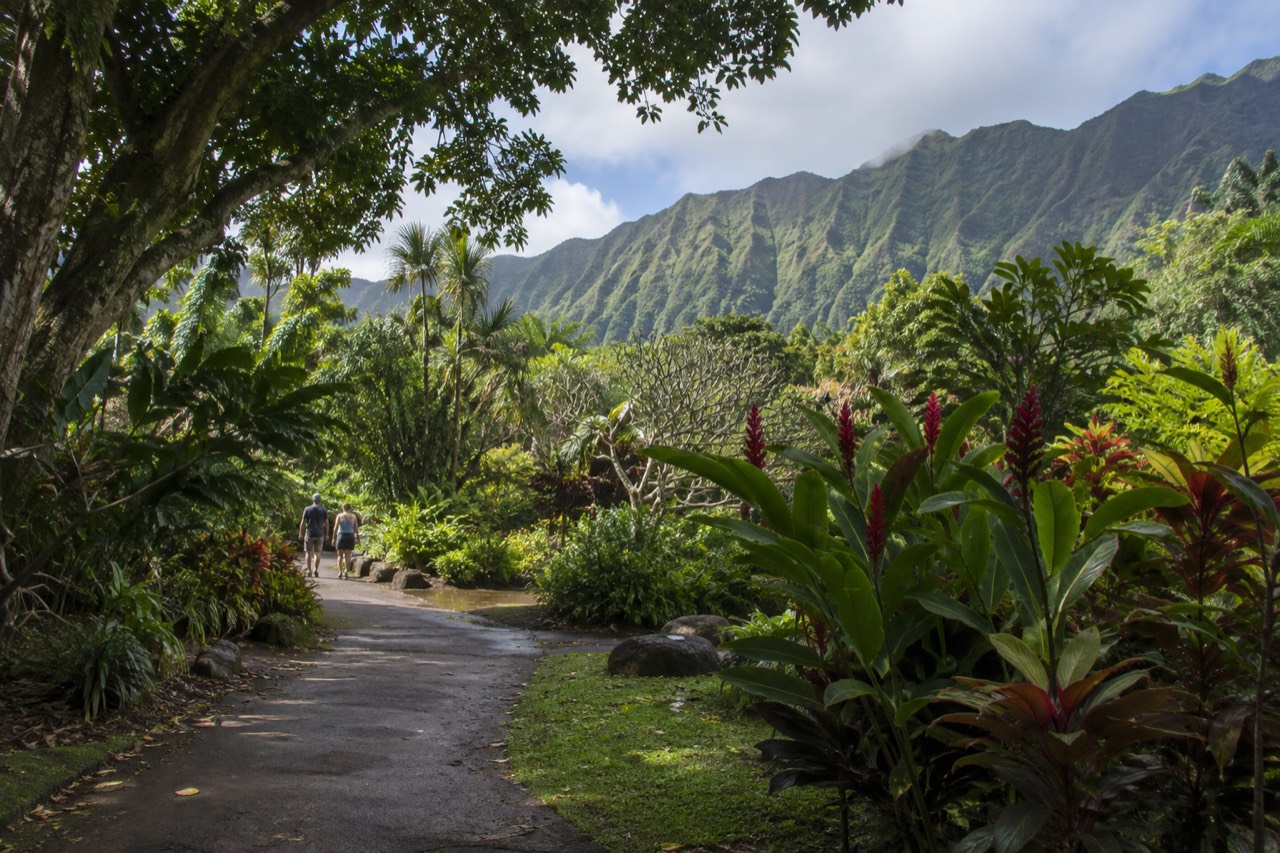
Hoʻomaluhia Botanical Garden is the single best "hidden gem" on Oʻahu by any measure: size, beauty, cost or emptiness. It covers a broad valley at the base of the Koʻolau range, planted in regional sections, with a lake at the bottom of the valley and a campground beyond that. Entry is free. The photograph everyone takes, the one with the road leading toward the sheer green wall of the mountains, is a two-minute walk from the parking area. The garden is open daytime hours; check the current schedule before you go, as hours shift seasonally.
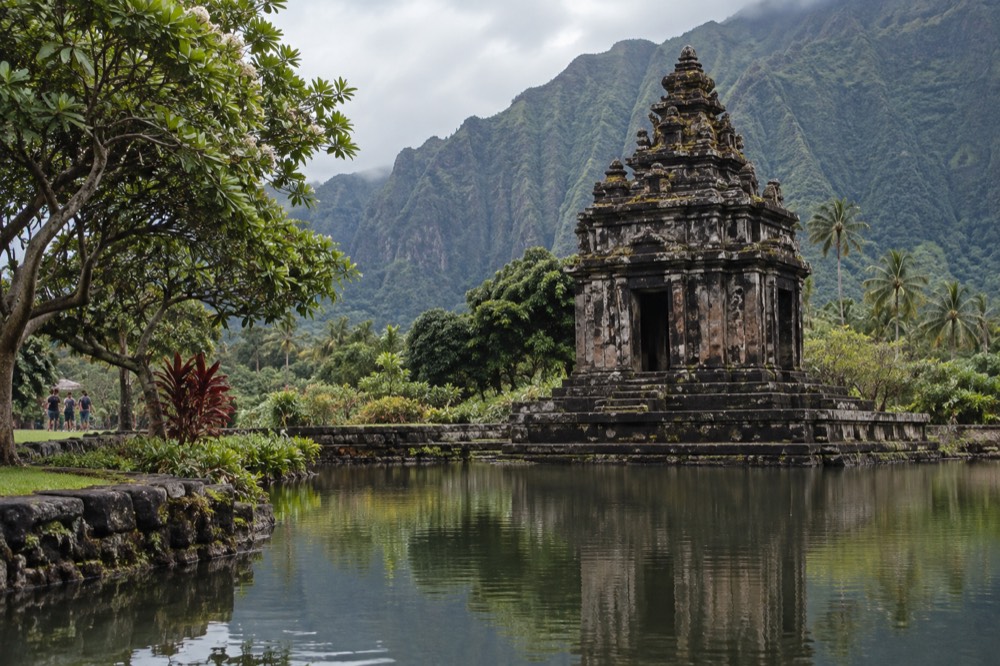
The Byodo-In Temple sits in the Valley of the Temples memorial park in Lāʻie, a full-scale replica of a historic temple in Uji, Japan. The setting is the reason to come: the temple sits against the Koʻolau cliffs, reflected in a pond full of koi, and the grounds are deliberately still. It appears in a remarkable amount of film and television for a place most visitors have never heard of. There is a modest admission charge at the gate; the amount is posted on site. Our Byodo-In Temple guide covers how to reach it and what the visit involves.
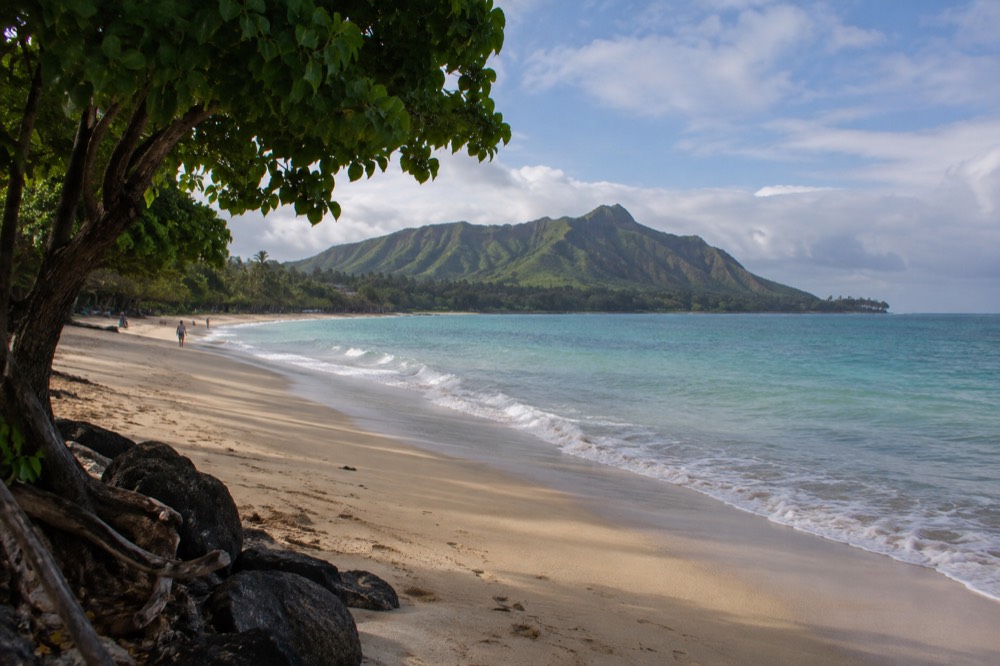
Waimānalo Beach is the windward coast's quiet answer to Kailua. The sand run is long, the water is usually calm, and the backshore is undeveloped in stretches. It is a real neighbourhood beach rather than a resort one, which means the etiquette is local etiquette: park legally, keep the volume down, take everything out that you brought in. Our Waimānalo Beach guide has access points and the parking picture.
The rain point is worth a paragraph of its own, because it is the planning fact most visitors never see. The National Weather Service publishes Oʻahu's surf forecast by shore aspect, and NOAA's climate normals do the same for rain: the numbers are wildly different depending on which side of the mountains you are standing on.
What About The North Shore And Leeward Coast?
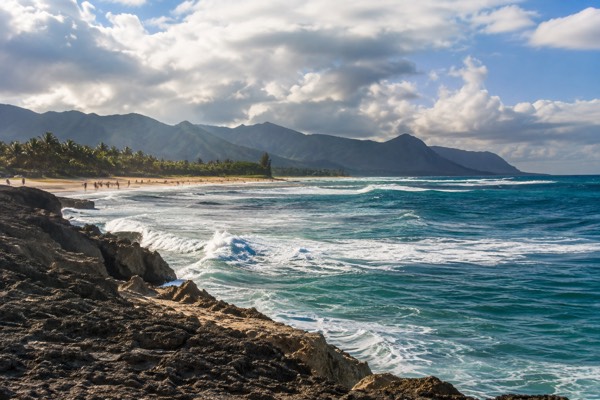
The North Shore's quieter rewards are Sharks Cove outside peak summer hours, the country town of Haleʻiwa before mid-morning, and Mokoliʻi viewed from the Kualoa shoreline; the leeward coast's are the Ko Olina lagoons and the dry, bright stretch toward Waiʻanae.
Both sides carry a warning: the North Shore is a working community on a two-lane highway, and the leeward coast is the island's least-visited and least-serviced stretch, so plan fuel and food accordingly.
Haleʻiwa is not hidden, exactly; it is the North Shore's main town and everyone knows it. But it is empty at 8 a.m. and packed by 11, and the difference is the whole experience. The same is true of Sharks Cove, the snorkelling spot next to Waimea Bay: outside the summer lunch hours it is one of the best shore snorkels on the island, and our Sharks Cove guide covers the seasonal pattern. Winter changes everything on this coast; the NWS surf forecast runs the north and west shores up in winter and the south shore up in summer, out of phase, so check which aspect is firing before you commit a day.
The leeward coast is the island's genuine frontier. Ko Olina's four lagoons are calm, family-friendly and publicly accessible with limited public parking stalls per lagoon, which is the honest caveat: arrive early or be turned away. Beyond that, the coast toward Waiʻanae is dry, open and quiet, with a character closer to the neighbour islands than to Waikīkī. It is also the side with the fewest visitor services, so it rewards a plan and punishes improvisation.
One leeward-side note we will not soften: Kaʻena Point, the western tip of the island, is a sacred site, a leina a ka ʻuhane where souls depart the living world in Hawaiian tradition, and a protected seabird and monk seal area behind a predator-proof fence. It is not a sunset viewing platform that happens to have birds. It is also, as of the DLNR notice of 9 September 2026, closed until further notice for storm repairs, along with the sections of Kaʻena Point State Park on both the Mokuleʻia and Keawaʻula sides. Do not plan around it until the state parks page shows it reopened.
Which Hidden Gems Need Reservations Or Have Access Rules?
Most of Oʻahu's quiet spots need nothing but a car key, but the exceptions matter: Hanauma Bay requires a reservation made two days ahead at 7 a.m. HST and closes Mondays and Tuesdays, Diamond Head requires a reservation for all non-residents, and Waimea Valley sells timed admission with a Monday closure. Getting these three right is the difference between a smooth day and a turned-away day, and none of them can be fixed at the gate.
The reservation system is Oʻahu's real planning problem, more than price. Hanauma Bay's official City and County page is explicit: reservations open two days ahead at 7:00 a.m. Hawaii time, phrased as "Monday at 7 a.m. HST you can begin reserving a time slot for Wednesday." Entry costs $25 per non-resident plus a 2.35 percent online service fee, children 12 and under are free, and Hawaii residents enter free with local ID and no reservation at all. The bay closes Mondays and Tuesdays.
Diamond Head, Lēʻahi in Hawaiian, requires non-residents to reserve both entry and parking in advance, a rule in force since 12 May 2022 with no on-site sales. Entry is $5 per person, parking inside the crater is $10 per non-resident vehicle, payment is card only, and residents enter free with Hawaii ID. A large share of competing guides online predates the 2022 rule, which is why you will still read that you can just turn up.
| Site | Reservation rule | Closed days | Non-resident cost | Resident cost |
|---|---|---|---|---|
| Hanauma Bay | Opens 2 days ahead, 7:00 a.m. HST | Mon, Tue, Dec 25, Jan 1 | $25 + 2.35% online fee; 12 and under free | Free, no reservation, with HI ID |
| Diamond Head (Lēʻahi) | Required for entry and parking, up to 30 days ahead | Christmas, New Year's | $5 person, $10 vehicle, card only | Free with HI ID |
| Waimea Valley | Timed tickets sold online | Monday | Adult $26, child 4-12 $18 | Kamaʻāina adult $10 |
| Hoʻomaluhia Botanical Garden | None | Closed some holidays | Free | Free |
| Byodo-In Temple | None | Open daily, daytime hours | Posted at the gate | Same as non-resident |
| Foster Botanical Garden | None | Closed some holidays | Small entry fee | Small entry fee |
Waimea Valley, on the North Shore, is worth a special mention because it straddles the categories: it is partly a hidden gem and partly a reservation site. The valley holds a botanical collection and a waterfall at the end of a paved walk, admission is tiered at $26 for adults and $18 for children 4 to 12, kamaʻāina rates are lower, and it closes on Mondays. Whether the waterfall pool is open for swimming is decided daily by the lifeguard, not by the website, so treat swimming as a possibility rather than a promise. Our Waimea Valley guide covers the full picture.
What Is Closed Right Now On Oʻahu?
As of the DLNR State Parks notice dated 9 September 2026, three Oʻahu sites remain closed after Hurricane Lowell: Nuʻuanu Pali State Wayside, the Pali Lookout above Kāneʻohe, Kaʻena Point State Park's Mokuleʻia and Keawaʻula sections, and Wahiawā Freshwater State Recreation Area. All other state parks on the island have reopened. These closures are for storm repairs and have no announced end date, so check the DLNR notices page the week you travel.
The Pali Lookout closure is the one that bites most itineraries, because the lookout is a standard circle-island stop and a genuinely great one: the windward coast drops away from the railing at the top of the Nuʻuanu Pali. It is closed until further notice. If your route planned to cross the Pali Highway and stop at the top, the highway itself remains open; only the wayside is shut.
Storm-related reservation refunds, where you had one, are being processed automatically minus non-refundable service charges, and the state says they take four to six weeks. If you hold a reservation for an affected site, you do not need to chase the cancellation yourself.
The honest planning advice is simpler than the list: before you build any day around a state park, look at the notices banner on the DLNR State Parks site that morning. Hawaii's parks close for storms, for repairs and for recovery, and a guide written on any given date, including this one, can only tell you the situation as of that date.
How Do You Visit Hidden Gems Without A Car?
You can reach most of Oʻahu's quiet corners on TheBus and the Skyline rail line using a single HOLO card, at $3.25 for a single cash bus ride, a $7.50 daily cap on the card, and $90 for a monthly pass. The catch is coverage: Skyline has no Waikīkī station, so every rail trip starts with a bus transfer, and the windward botanical gardens need bus routes that run infrequently compared with the urban core.
The fare structure is genuinely simple, which is rare. TheBus and Skyline share one fare system: $3.25 cash for a single bus ride with no transfers, or a HOLO card that charges $3.00 for two hours of unlimited transfers, caps at $7.50 per day no matter how much you ride, and caps at $90 per month. The card itself costs $2. A child five and under rides free with a paying adult.
The rail line now reaches the airport, with a Lelepaua Daniel K. Inouye International Airport station and an Āhua Lagoon Drive station, and the Hālawa Aloha Stadium station serves the Pearl Harbor memorial and visitor centre. But there is no Waikīkī station and there will not be one on the current line: every rail journey from the hotels starts with a bus transfer, typically on the W Line. Our Honolulu Skyline rail guide maps the stations, and our do you need a car on Oʻahu page weighs the whole decision.
For the windward gardens specifically, the bus is possible but slow: the routes exist, the frequency does not compare with the city core, and a day that includes Hoʻomaluhia and the Byodo-In is far easier with wheels. This is the honest case for a guided circle-island day, which we will come to below.
To reach the windward gardens on your own schedule, book a rental car here.
The circle-island structure suits the hidden-gems mission better than it sounds, because the route itself is the point: the windward coastline, the Kualoa shoreline with Mokoliʻi offshore, Haleʻiwa town and the lookouts in between are all seen in one pass, with someone else watching the road.
Should You Book A Tour Or Find These Places Yourself?
Book a tour if your time is short or you would rather not drive the island's winding windward roads, and go yourself if you have a car and a full day, because most of the quiet places on this list are free or cheap and need no guide. The middle option is the strongest: a circle-island tour day combined with two or three self-driven mornings at the near-Waikīkī spots like Foster Botanical Garden and the aquarium.
The trade-off is control against coverage. Self-driving gives you the early mornings, which is when the quiet places are actually quiet, and it costs almost nothing at the garden gates. A guided day gives you the whole island in one pass, a driver who knows the road, and commentary you cannot get from a map, at the cost of a fixed schedule and a group.
Two guided options fit this page well. The full-day grand circle island tour is the island's most-booked structure for a reason, and a hidden-gems variant that reaches the Byodo-In Temple covers the windward highlights without you planning a single turn.
If you plan to string together several paid attractions rather than one tour day, an all-inclusive attractions pass covering a large roster of Oʻahu activities can work out cheaper than individual tickets, though it only pays if you will genuinely use it for several stops.
The pass logic is simple arithmetic: it suits a packed, ticket-heavy week and wastes money on a slow one. Count your planned paid stops before you buy anything.
For the self-driven days, the practical sequence matters more than the list. Do the windward side in the morning, before the clouds build over the Koʻolau range. Do Foster Botanical Garden and downtown in the late afternoon, when the tour buses have gone. And keep at least one morning completely unplanned, because the single best hidden gem on Oʻahu is whatever is near your hotel at 7 a.m., before the island wakes up.
Common Questions About Hidden Gems On Oʻahu
Most questions about Oʻahu's quieter corners come down to three things: access, weather and timing. The access question is solved by checking reservations and closures before you commit, the weather question by remembering that the windward side is a different climate from Waikīkī, and the timing question by going early, since nearly every place on this list is empty before 9 a.m. and busy by 11. The rest is detail, and it follows.
What is the number one hidden gem on Oʻahu?
Hoʻomaluhia Botanical Garden in Kāneʻohe. It is a broad planted valley at the foot of the Koʻolau range, entry is free, the mountain backdrop is the most photographed view on the windward side, and it stays quiet even on weekends because most itineraries never reach it.
Are there hidden gems near Waikīkī?
Yes, several within a short drive: the Waikīkī Aquarium at the quiet east end of the beach, Foster Botanical Garden near downtown, and the Tantalus and Puʻu Ualakaʻa lookout above the city. None takes a full day, and all pair naturally with better-known stops.
Is Lanikai Beach a hidden gem?
No, and this site does not present it as one. Lanikai is a beautiful residential beach with no public parking lot, "No Parking Any Time" restrictions on its main streets, and active towing enforcement. It is worth visiting via the Kailua Beach Park lot, but it is not a secret and treating it as one adds pressure to a neighbourhood that already has none.
Is Kaʻena Point open?
Not as of the DLNR notice dated 9 September 2026. The Mokuleʻia and Keawaʻula sections of Kaʻena Point State Park are closed until further notice for storm repairs following Hurricane Lowell. It is also a sacred site and a protected seabird area, so even when it reopens it deserves restraint rather than a photo-stop treatment.
Do I need a reservation for any of these places?
Most of the quiet spots need nothing, but Hanauma Bay requires a reservation opening two days ahead at 7 a.m. HST, Diamond Head requires one for all non-residents, and Waimea Valley sells timed admission online. None of the three can be sorted at the gate, so book the night before at the latest.
Can I reach the hidden gems without a car?
Partly. TheBus and the Skyline rail line share a HOLO card fare system with a $7.50 daily cap, but there is no Waikīkī rail station, and the windward gardens sit on infrequent bus routes. The near-town spots like Foster Botanical Garden are easy by bus; a windward garden day is much easier with a car or a guided tour.
The quiet island is not a secret, it is just a schedule. Almost everything on this list is within half an hour of a hotel in Waikīkī, and almost all of it is empty before nine in the morning, which is the one planning fact that costs nothing and changes everything.