Byodo-In Temple On Oʻahu: What A Visit Actually Involves
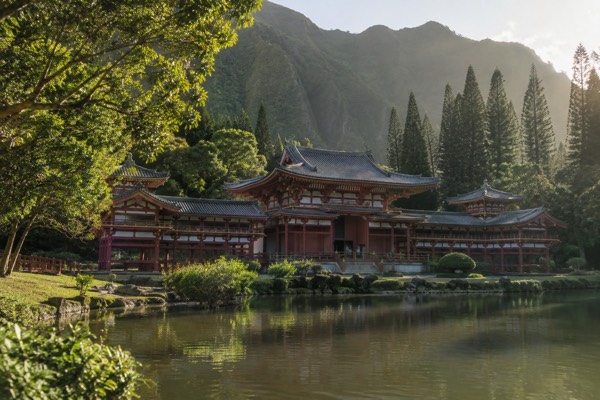
Byodo-In Temple sits at the base of the Koʻolau mountains in Kāneʻohe, on the windward side of Oʻahu, inside a memorial park that most visitors reach by car or on a circle-island tour. It is one of the most photographed buildings on the island, and one of the most commonly misunderstood in terms of what a visit involves.
Short answer
Byodo-In Temple is inside the Valley of the Temples memorial park at 47-200 Kahekili Highway. Allow at least 30–60 minutes for a self-guided visit. General admission is $10 adult, $8 senior and $6 child age 2–12, with parking extra. A circle-island tour includes a short temple stop within a full day; it is not a standalone admission ticket.
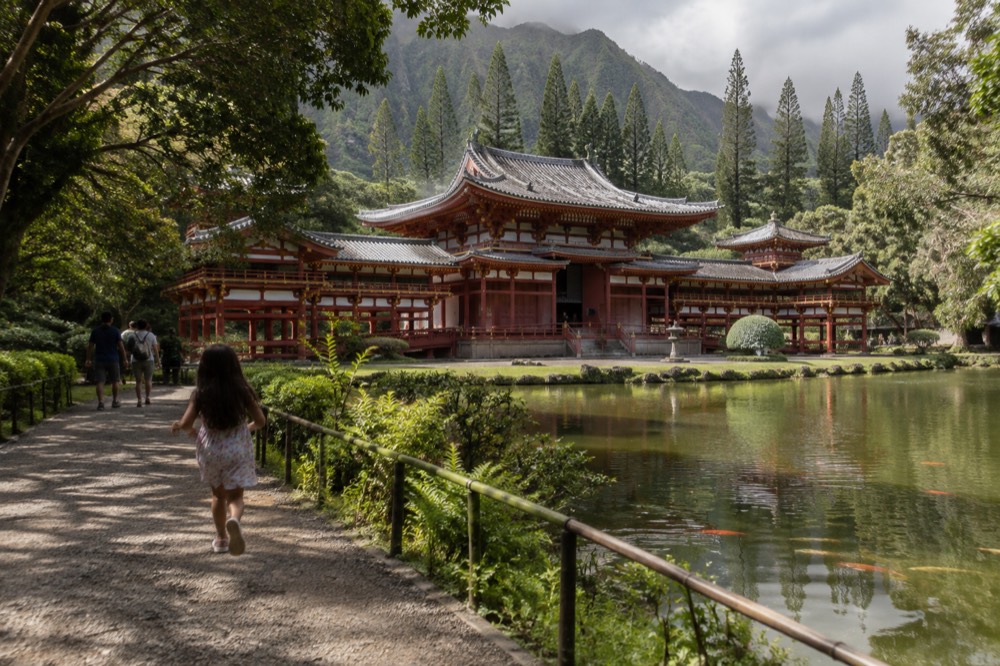
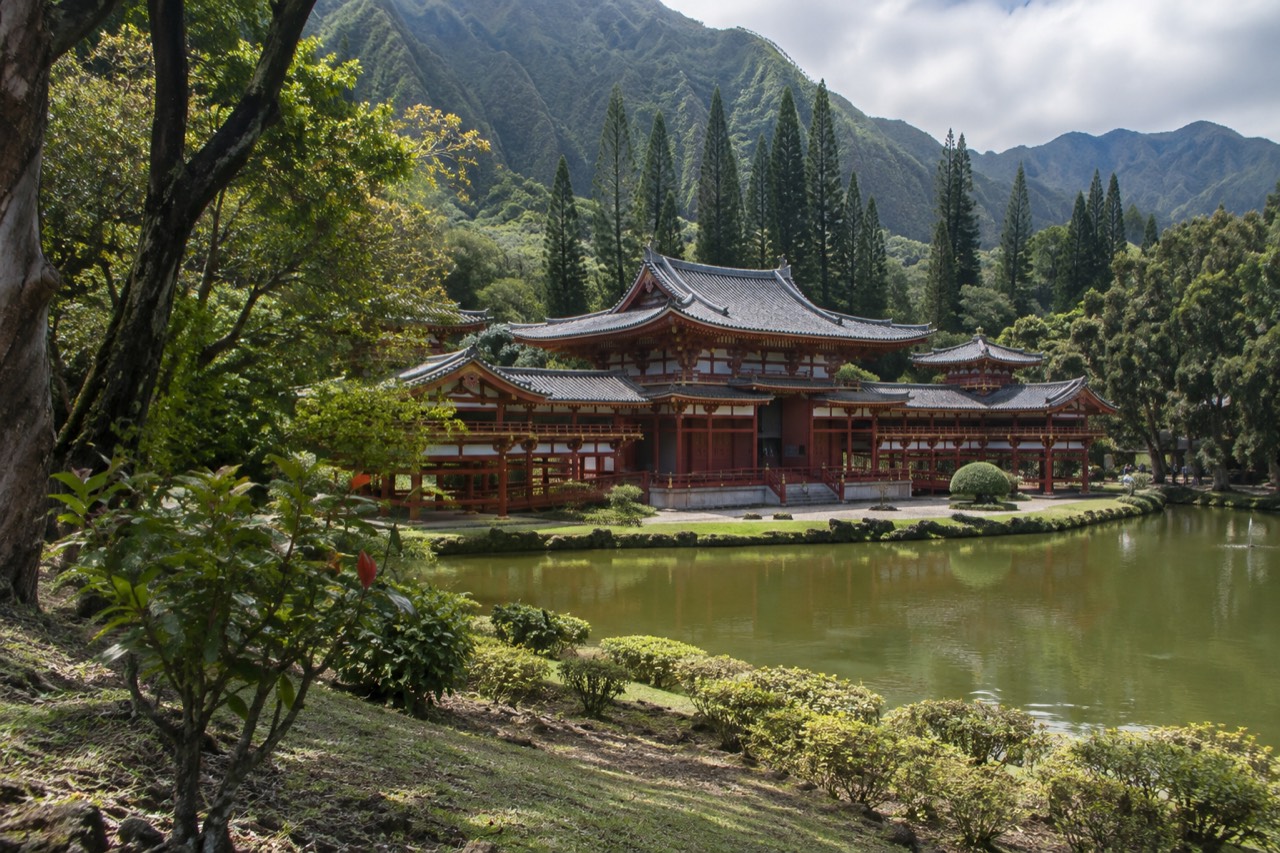
The temple appears in more Oʻahu photographs than almost any building except Diamond Head, and it earns that attention honestly: a red-and-green structure mirrored in a still pond, with the near-vertical green wall of the Koʻolau range rising directly behind it. On a clear morning the reflection is close to perfect, and on a wet one the clouds sit inside the ridgeline, which is a different and arguably better photograph. This guide covers what a visit actually involves: how to get there, what it costs, when the light and the weather work, and how it fits into a windward day. The honest editorial position of this site is laid out plainly in Oahu Travel Guide, and it applies here: Byodo-In is a non-practicing Buddhist temple inside an active memorial park, and it deserves to be treated as one, not as a photo prop.
What Is Byodo-In Temple?
Byodo-In Temple is a Buddhist temple built inside the Valley of the Temples memorial park in Kāneʻohe, on the windward side of Oʻahu. It is not a museum or a historic ruin: it is a non-practicing Buddhist temple welcoming visitors of all faiths, set among gardens and ponds at the foot of the Koʻolau mountains.
Visitors enter through the memorial park, which is a cemetery, so the drive in passes graves and memorials that belong to families, not to tourists.
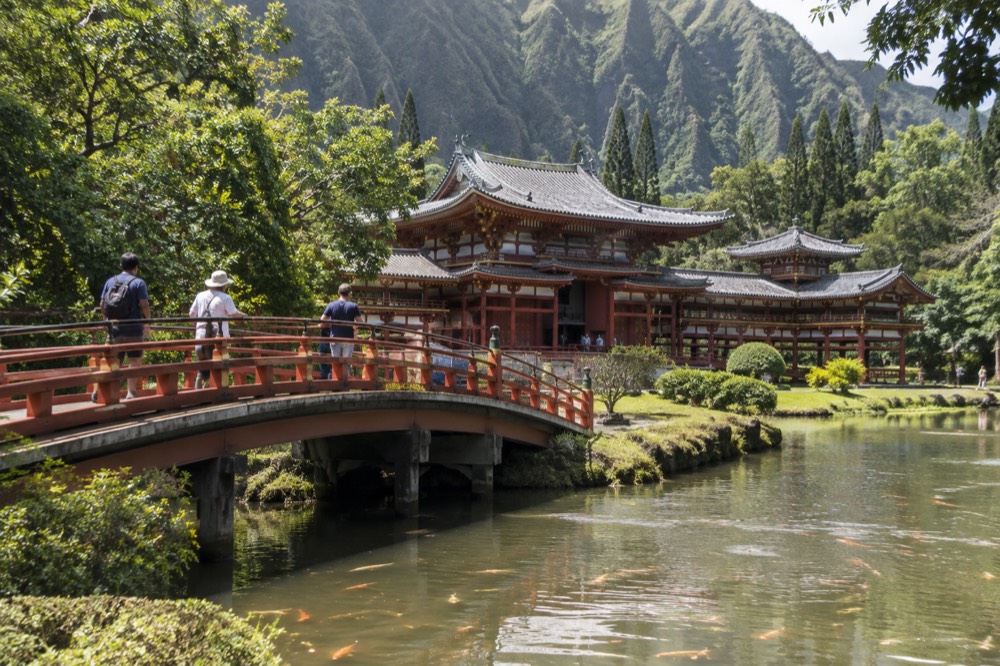
That last point shapes the whole visit more than people expect. The road climbs through the memorial park's grounds, and the temple sits at the back, against the mountain. The park is privately operated, which is why access runs through an entrance gate rather than a public trailhead. The temple recommends allowing at least 30 minutes to an hour, with longer if you want to linger. Inside the temple building there is a seated Buddha figure, and incense is available. Personal handheld photography is allowed; a planned personal or professional photo shoot requires a permit. Respect the temple interior and other visitors. The grounds include a large pond with koi and black swans, and a bell house. Ringing the temple bell is a permitted and customary part of a visit, done with a wooden beam, and it is the one interactive moment most people remember.
The cultural framing matters. This is a Buddhist temple in a Hawaiian valley, and it is also a memorial. Grief is present on this site every day. The site's general guidance on sacred and culturally significant places applies: stay on paths, keep your voice down, and do not treat graves or offerings as foreground material for photos.
Where Is Byodo-In Temple And How Do You Get There?
Byodo-In Temple is at 47-200 Kahekili Highway, inside the Valley of the Temples memorial park in the Kahaluʻu area north of central Kāneʻohe. Follow the memorial park entrance and temple signs. Skyline does not reach the windward coast; independent driving, a hired ride, TheBus plus a walk, or a tour with an included stop are different arrival choices. Parking costs extra.
Driving allows you to set the pace of a wider windward day. Routes from Honolulu include the Pali Highway or H-3, followed by the appropriate roads to Kahekili Highway; follow the memorial park’s signs on arrival. Nuʻuanu Pali Lookout reopened on September 12, 2026, superseding the September 9 closure notice. Check current notices before adding the lookout. Compare the whole driving cost, including temple parking; the linked rental quote is for HNL pickup.
Public transit is workable but slow. TheBus serves the Kāneʻohe side of the island, and fares are shared with Skyline: a single adult cash ride on TheBus is $3.25 with no transfers, while a HOLO card gives you a $3.00 two-hour pass with unlimited transfers and caps your spending at $7.50 per day, after which further rides that day are free. A monthly cap sits at $90. That daily cap is genuinely useful on a windward day that involves two or three buses, but the temple is inside a memorial park at the end of a driveway, so expect a walk from the highway stop, and check current routes before relying on this.
A circle-island tour suits visitors who want the wider itinerary as well as the temple. Check that the selected product explicitly includes Byodo-In admission and a pickup you can reach. Waikiki Trolley is not a temple transfer. If you are planning your whole island day rather than just this stop, our 1 day Oʻahu itinerary helps compare the windward side with the North Shore.
How Much Does It Cost To Visit Byodo-In Temple?
As checked September 19, 2026, general admission is $10 for ages 13–64, $8 for seniors 65+, and $6 for children 2–12; under two is free. Parking is listed at $6 per hour. Pay by credit/debit card or contactless payment, not cash. Kamaʻāina rates are available with valid Hawaiʻi ID. Recheck the selected ticket and current charges before visiting.
The temple is a private attraction inside a memorial park. Its own admission and local-resident rates apply; a state park pass is a different product. The Diamond Head reservation system and the USS Arizona’s free memorial visit do not establish entry rules here. Independent visitors can buy temple tickets online or at the entrance.
For a wider trip, compare a multi-attraction pass only against the activities you will actually use. Go City’s current Oahu offer includes a full circle-island tour that stops at Byodo-In, subject to the selected pass and reservation. That does not establish a standalone temple gate benefit. The tour takes a full day and should not share a day with a luau; check the pass’s current inclusions and booking rules.
Compare the complete pass price with the separate tickets for the same selected activities, including any extras and the time needed to use them. The temple alone is not a reason to assume a pass saves money. If a booked tour already includes temple entry, do not budget for a second admission.
When Is The Best Time To Visit Byodo-In Temple?
Plan around the temple’s current opening hours and your wider journey. The regular hours are 8:30 a.m.–4:30 p.m., with last entrance at 4:15 p.m.; the temple recommends arriving by 3:30 p.m. to allow a visit. Check holiday arrangements separately. Light, wind, rain and tour arrivals vary, so an early visit does not guarantee a still pond or an empty site.
Windward showers can change the experience, but rainfall figures for Honolulu airport or Mānoa do not predict conditions at the temple. Check a local forecast for your date and leave room to adjust the rest of the day. The mountains in cloud can be part of the appeal; persistent rain may change how long you want to stay outdoors.
The regular closing time is earlier than sunset, so do not plan a sunset photo session from general admission hours. A reflection depends on the actual water and weather. For a planned personal or professional shoot, arrange the temple’s required permit rather than assuming an ordinary visitor ticket covers it.
A simple timing guide:
| Visit plan | What to check |
|---|---|
| Opening time | Current hours and the complete journey from your base |
| Independent visit | At least 30–60 minutes, plus arrival and parking |
| Tour stop | The selected itinerary’s stop duration and pickup |
| Afternoon | Arrive with time before the 4:15 p.m. last entrance and 4:30 p.m. close |
| Holiday or photo shoot | Special hours or a required shoot permit |
What Can You Actually Do At Byodo-In Temple?
The core activities are walking the gardens, viewing the seated Buddha, ringing the temple bell, and watching the pond’s koi and birds. Allow at least 30 minutes to an hour. Visits are self-guided, with signage; the temple does not currently provide guided tours. A guide on a circle-island bus is a different service from a dedicated guided temple visit.
The bell is the signature act. It hangs in its own small structure, and it is rung with a suspended wooden beam rather than struck by hand; the sound carries across the pond and up the valley. Ringing it before entering the temple is the customary sequence, and doing so is permitted for visitors. Inside the temple building, the Buddha figure is the focal point, incense is available, and the space is quiet by expectation rather than by rule. Outdoors, the pond holds koi and black swans, and the gift shop sells approved fish food. Use only that food; do not bring your own. The gardens climb gently toward the base of the ridge, and the back corners are where the tour groups thin out.
Stay within marked visitor areas and keep out of the pond. The private memorial park’s rules apply; state-park drone rules do not establish permission here. Check directly before any activity outside an ordinary visit, and do not use the temple as access to private mountain land. Only qualifying ADA service animals are allowed; pets and emotional-support animals are not.
For what it is worth in planning terms, the visit is short, which makes Byodo-In a stop rather than a day. Most itineraries pair it with other windward-side destinations, and our Kāneʻohe and windward coast guide lays out the full set of options in order along the coast.
Is Byodo-In Temple Worth The Trip?
For most visitors, yes, provided the trip is built around it rather than made for it: the temple is one of the most striking man-made settings on Oʻahu, the mountain backdrop is unrepeatable, and the visit is short and inexpensive relative to the reward.
The honest caveat is that it is a single small site on the far side of the island from Waikīkī, so as a standalone out-and-back it consumes a chunk of a day.
If you want a full island outing, the selected nine-hour circle-island tour includes Waikiki pickup and Byodo-In admission, with about 30 minutes at the temple. Meals and tips are extra. Its Kualoa-area sightseeing is not admission to the ranch’s private valleys. Choose it for the whole route, not just a brief temple visit.
If you already hold a pass, confirm the exact included activity and make any required reservation. A pass-listed full-day tour is not permission to walk into the temple independently. Compare any new pass purchase against the wider itinerary using only the current benefits for your selected pass.
On a short trip, compare the complete journey with the activities that matter most to you. A dedicated temple visit can still fit if this is a priority; there is no rule that every short itinerary should replace it with another attraction. Be comfortable with entering an active cemetery, and let the local forecast inform your outdoor time rather than expecting a particular reflection.
A quick comparison against its neighbours:
| Windward-side stop | Character | Time needed | Best paired with |
|---|---|---|---|
| Byodo-In Temple | Quiet, cultural gardens and temple | At least 30–60 minutes, plus arrival | Kāneʻohe coast or a separately timed ranch visit |
| Hōmaluhia Botanical Garden | Free, sprawling, gardens and reservoir | 1–2 hours | Check its own hours before setting the order |
| Kualoa Ranch | Paid tours, private valley, movie sites | Half day | Needs its own booking window |
| Kailua and Lanikai beaches | Sand, paddling, parking pressure | Half day | Afternoon, with parking realism |
What Is Near Byodo-In Temple?
Hōmaluhia Botanical Garden is south of the temple in Kāneʻohe; Kualoa Ranch and the Mokoliʻi viewpoint are north along the coast. Kailua and Lanikai are southeast, reached by a different leg of the drive. Choose a direction and allow for actual opening hours, traffic and any booked check-in rather than treating every stop as one continuous roadside strip.
Hōmaluhia is the underrated pairing. It is a large botanical garden with a reservoir backdrop, it is free, and it sits close enough to the temple that the two stops share a single drive. Hōmaluhia Botanical Garden deserves its own page on this site precisely because so many visitors drive past it on the way to the temple without knowing it exists.
North of the temple, the coastal road reaches Kualoa Ranch and the view toward Mokoliʻi. Public roadside scenery is separate from a booked tour into the private ranch valleys. The selected 90-minute movie-site tour requires arrival at Kualoa 45 minutes early, your own transport and acceptance of its nonrefundable terms. Allow the full check-in and tour window before adding the temple; our Kualoa Ranch guide covers the choices.
Southeast lies the Kailua side: Kailua Beach Park, Lanikai and Waimānalo. A word of honesty about Lanikai, because a lot of content skips it: there is no public parking lot there, only residential streets with heavy restrictions and towing enforcement, and the practical base is the Kailua Beach Park lot.
Common Questions About Byodo-In Temple
Byodo-In is inside an active memorial park, with its own admission and parking charges. Allow at least 30–60 minutes for a self-guided visit and the complete journey there. A full-day tour can include a short stop, but it is a different purchase from independent entry. The answers below cover those practical choices.
Is Byodo-In Temple inside a cemetery?
Yes. The temple sits inside the Valley of the Temples memorial park, a privately operated cemetery, and the drive in passes through the memorial grounds. The temple is at the back, against the Koʻolau mountains. This is why access runs through a park entrance gate and why the setting asks for quiet.
How long should I plan for a visit to Byodo-In Temple?
The temple recommends at least 30 minutes to an hour. Allow longer if you want to linger, plus the complete journey, parking and entry. A circle-island tour uses its own shorter stop schedule.
Can you ring the bell at Byodo-In Temple?
Yes. Ringing the temple bell with the suspended wooden beam is a permitted and customary part of a visit, typically done before entering the temple. It is one of the few interactive moments at the site, and the sound carries across the grounds.
Is Byodo-In Temple accessible without a car?
It is possible but awkward. TheBus serves the Kāneʻohe side, and a HOLO card caps your daily transit spending at $7.50, but the temple sits at the end of a driveway inside a memorial park, so expect a walk from the highway. A circle-island tour with explicit temple admission and Waikiki pickup is another option if the full-day itinerary suits you.
Is Byodo-In Temple worth visiting if it is raining?
It can be, if you are comfortable with the outdoor conditions. Check the local forecast, allow for persistent rain and follow any site notices. Clouds over the mountains can be appealing, but a clear mirror reflection is not guaranteed.
What should I wear to Byodo-In Temple?
Standard respectful-visit clothing: you are entering a place of worship inside a cemetery, not a beach. Nothing formal is required, but swimwear belongs at the beach. Shoes come off inside the temple building, so choose something easy to slip on and off, and the grounds involve some walking on paths.
The temple rewards the visitor who arrives early, expects some windward weather, and gives it an unhurried hour inside a bigger windward day; planned that way, it is one of the most reliable hours on the island.
Plan Your Byodo-In Temple Visit
Visit independently and pay temple admission, or choose a full-day circle-island tour with entry and Waikiki pickup. The pass and Kualoa choices serve wider plans; they are separate purchases, not a combined package.
Circle-Island Tour With Byodo-In Temple
Temple entry and a short stop are part of a nine-hour circle-island outing.
The listed 9-hour trip includes Waikiki pickup and Byodo-In admission; meals are extra. Wheelchairs must be foldable and guests must be able to board without a ramp.
Compare Two Complete Visit Plans
Enter USD estimates for the same party and date. Option A combines your activity or admission total with transport and unbundled extras. Option B is your complete alternative plan. Count included temple entry or pickup only once, and compare the actual stops and time as well as cost. These are reader estimates, not live quotes.
Choose dates and your party on the booking page. The booking link is not an on-page availability calendar.