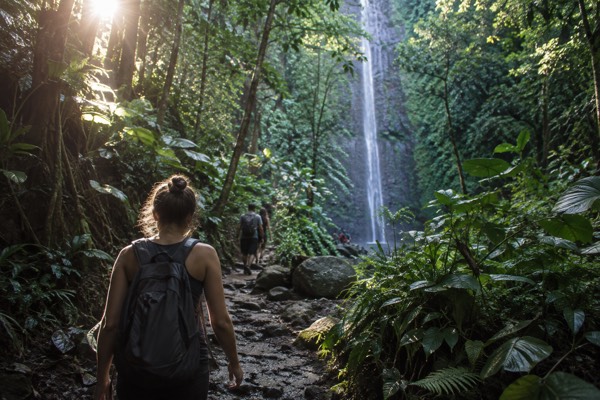
Hoʻomaluhia Botanical Garden On Oʻahu: What A Visit Actually Involves
Hoʻomaluhia Botanical Garden sits at the foot of the Koʻolau range in Kāneʻohe, on Oʻahu's windward side, and it is one of the few major green spaces on the island where the mountain, not the ocean, is the whole point of the visit.
Short answer
Hoʻomaluhia is a free, 400-acre botanical garden at 45-680 Luluku Road in Kāneʻohe. Regular hours are 9 a.m.–4 p.m.; it closes Thursdays, Christmas Day and New Year’s Day. Allow for your complete journey and walking inside the grounds. Fishing and camping have separate city reservation or permit arrangements.
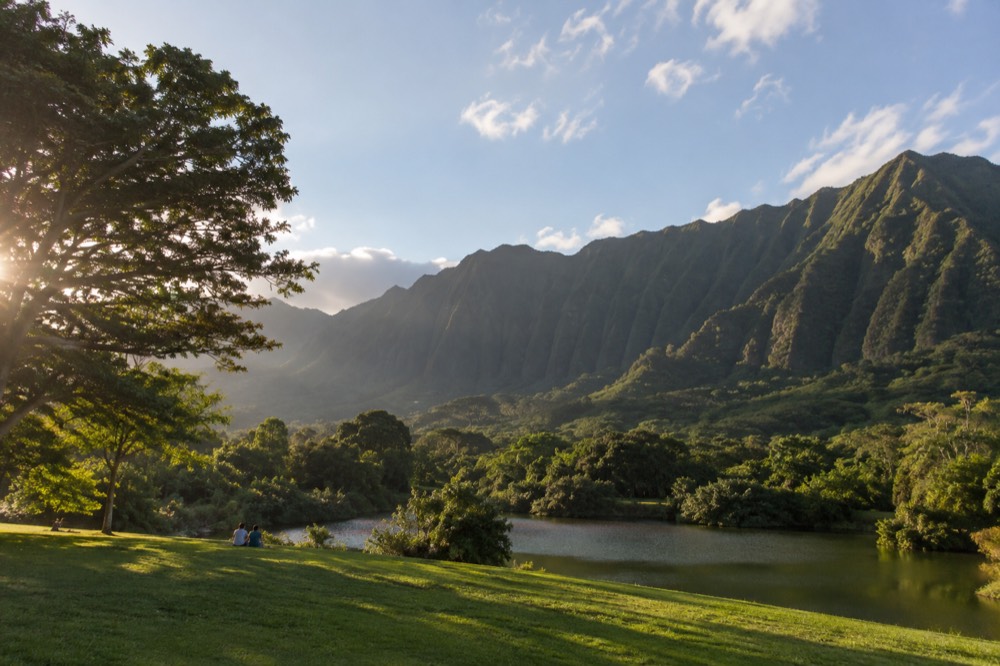
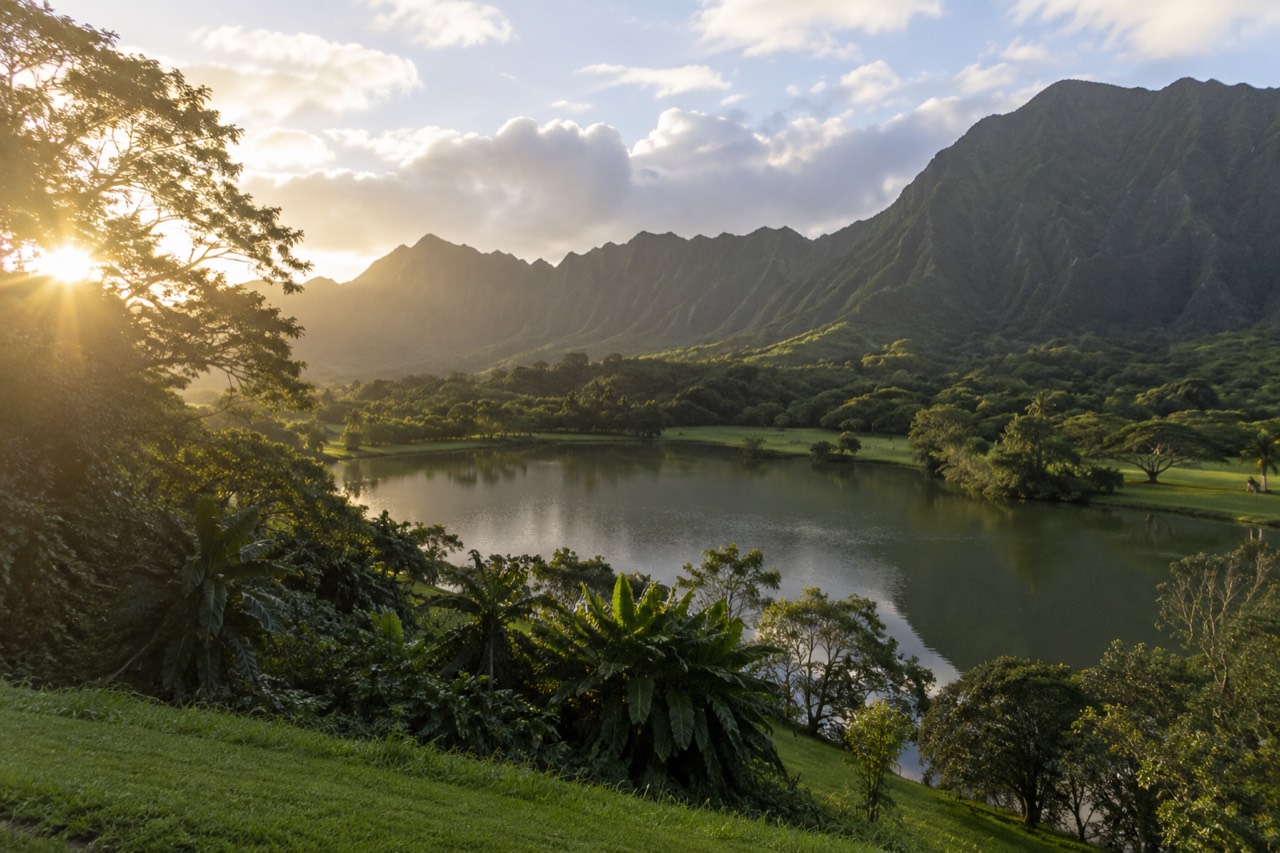
The Koʻolau range does something strange in Kāneʻohe. The ridges stand so close, and so sheer, that photographs of them routinely get dismissed as backdrops. Hoʻomaluhia Botanical Garden is the place where that backdrop becomes the entire visit: a broad garden laid out under the cliffs, with a freshwater lake in the foreground, plant collections arranged by region, and enough lawn that the mountain has room to be seen whole.
The name means, roughly, a place of peace and comfort, and the garden sits on Oʻahu’s windward side below the Koʻolau range. This page covers how to get there, what costs to allow for, when to go and whether it earns a slot in your trip. The city’s current garden information confirms free admission, opening hours, and separate fishing and camping arrangements; check notices for your date before setting out.
What Is Hoʻomaluhia Botanical Garden?
Hoʻomaluhia is a botanical garden in Kāneʻohe, on Oʻahu's windward side, laid out across the plain directly below the Koʻolau mountains and organised around a freshwater lake. It is a garden of plant collections and walking routes rather than rides or concessions, and its defining feature is the mountain wall behind it. Visitors come for the landscape photographs, the shaded paths and the quiet, and most visits run a couple of hours.
The garden's plantings are arranged geographically, so a walk moves you between collections from different parts of the tropical world rather than through a single themed display. The lake sits at the centre of the layout, and the open lawns around it are what make the photographs work: there is enough clear ground that the Koʻolau ridgeline is visible as one continuous wall rather than peeking between trees.
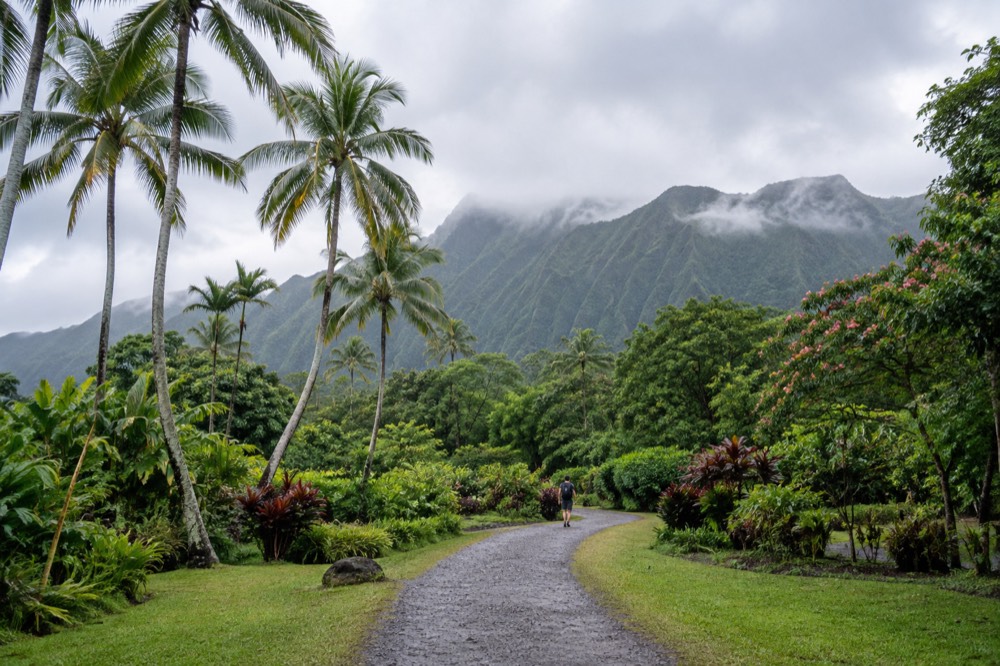
What surprises many first-time visitors is the scale of the sky. The windward side is the wet side of the island, and the cliffs generate their own weather. Clouds pour over the ridgeline, break apart, and reform, sometimes within minutes. A grey morning in Kāneʻohe can turn into a sunlit one without warning, and the reverse. That is not a reason to skip the garden; it is the reason the photographs look the way they do.
It is also worth being honest about what the garden is not. It is not a beach, it is not a hike with a summit, and it is not an activity park. If your group needs constant stimulation, plan a shorter visit and pair the garden with something else on the windward side. The Kāneʻohe and windward coast guide covers the surrounding area, and the overview of Things to Do in Oahu places the garden in the context of the whole island.
How Much Does It Cost To Visit Hoʻomaluhia Botanical Garden?
Admission to Hoʻomaluhia is free. Your main ordinary-visit costs are transport and anything you bring for the day. Camping is a separate paid permit, while the city’s catch-and-release fishing program is free with its own reservation process. As checked September 19, 2026, the garden does not require a multi-attraction pass.
A free garden visit and an optional hired journey are different purchases. You can explore independently during open hours without paying for a guided tour. If you drive, include the full rental period, fuel and any parking charges at other stops; if using TheBus, count fares for your whole party and allow for the final walk.
Transport is the main cost to plan for an ordinary garden visit. The table below shows the main adult visitor fares for TheBus and Skyline, which share fares, loaded onto a HOLO card:
| Fare | Price | What it covers |
|---|---|---|
| Adult cash single ride (TheBus only) | $3.25 | One ride, no transfers, exact fare |
| HOLO 2-Hour Pass | $3.00 | 2 hours of unlimited transfers, bus and rail |
| 24-Hour Pass | $7.50 | A full day from first tap |
| Daily cap | $7.50 | Maximum charged per day, then free |
| 3-Day Pass | $20.00 | 72 hours from first tap |
| 7-Day Pass | $45.00 | 168 hours from first tap |
| Monthly cap | $90.00 | Maximum charged per calendar month |
| HOLO card itself | $2.00 | Initial and replacement |
For a visitor using public transport, the $7.50 daily cap is per adult HOLO rider; the $2 card cost is separate. A cap limits fares within its daily window, while a purchased 24-hour pass has its own time window. Plan the actual connections, walk and return rather than assuming every windward stop fits one convenient route.
If your wider trip includes several paid attractions, compare the selected Oahu pass with those same tickets bought separately. Count only current inclusions you can realistically use, including any reservations or extras. Hoʻomaluhia’s free entry contributes no admission saving.
What Can You Actually Do At Hoʻomaluhia?
The core activity is exploring the tropical plant collections, open lawns and permitted lakeside areas. Plan roughly one to three hours according to your interests and walking ability. Fishing and camping are separate activities with city reservations or permits; an ordinary visit does not authorize either. Stay out of the lake and follow current shoreline closures.
Walking and looking closely are the point of the visit. The garden covers 400 acres, so choose a manageable area instead of assuming every path is an easy, short loop. Footing and gradients vary, especially after rain. The regional collections give the visit structure, while the lake and mountain views offer places to pause. Photograph from permitted areas: the city prohibits photography on roadways and the front entrance road. Commercial photography or filming requires a permit requested at least three weeks ahead.
The lake is a flood-control feature as much as an aesthetic one, and that is worth understanding before you plan around it. The garden sits below a watershed that comes down the Koʻolau slopes, and the impoundment is part of how Kāneʻohe manages stormwater. The practical consequence for visitors: after heavy rain, the lake rises, paths near the water can be closed, and the water itself is not for swimming in any case. Treat it as scenery.
Weekend camping requires a city permit. The current garden page lists $32 per campsite for Friday–Monday, covering up to ten people, three ground tents and three vehicle permits; camping in or on vehicles is not allowed. Online reservations open Fridays at 5 p.m. Hawaiʻi time two weeks ahead. Check the chosen campsite’s current conditions and permit terms before packing.
The free catch-and-release fishing sessions run Wednesdays and Saturdays, 10 a.m.–noon and 1–3 p.m. Reservations open Wednesdays at 5 p.m. Hawaiʻi time two weeks ahead through the city’s PROS system, with up to five people per reservation. A limited number of walk-in places may be available; do not rely on one. Loan bamboo poles are provided, and the lake is about a 20-minute walk from the Education Center. Follow the program’s bait, supervision and handling rules; no swimming, wading or feeding birds. Parking is not guaranteed by a reservation.
For families, the open lawns are the draw, and there is real space for children to run that Waikīkī cannot offer. For photographers, the garden is one of the island's most reliable mountain-backdrop locations, and the Oʻahu photography spots and golden hour guide covers when the light works. For everyone else, it pairs naturally with the windward coast: Kailua Beach Park and Lanikai Beach are the obvious next stops, though Lanikai's residential streets have no public lot, so plan parking around Kailua.
If you want someone else to handle a wider day’s driving, Halia’s private tour can be customized around a requested garden stop. Confirm that stop, its self-guided time and the pickup before committing; the operator describes visitor-center drop-off and restrictions on commercial vehicles beyond it. Choose the actual six-, nine- or twelve-hour option, with meals, paid admissions and equipment rentals extra. The selected ticket is nonrefundable.
When Is The Best Time To Visit Hoʻomaluhia Botanical Garden?
Visit during the regular 9 a.m.–4 p.m. opening window, avoiding Thursdays, Christmas Day and New Year’s Day. Check the local forecast and garden notices, particularly after heavy rain. A morning visit can leave time for other windward stops, but it does not guarantee clear mountains or dry paths.
Choose an arrival that leaves enough time to explore and leave by closing. Clouds over the Koʻolau can be part of the view.
Weather differs across the island, and the garden’s foothill setting can be wet when another area is dry. Airport, coastal air-station and Mānoa climate averages are not a forecast for this garden. Use the actual date’s local conditions for planning:
| Planning need | What to check |
|---|---|
| Opening day | Closed Thursdays, Christmas Day and New Year’s Day |
| Walking | Current path and shoreline notices, footwear and ability |
| Photography | Permitted locations, actual light and weather |
| Fishing or camping | Your reservation or permit and any cancellation notice |
The garden’s lake is part of a flood-protection system. March 2026 storms damaged its shoreline; the city restored partial access in June and announced the fishing program’s return in July. That history is a reason to check current signs and notices, not to assume every shoreline section is open. Keep out of closed areas even if the sky has cleared.
Closing time is the practical limit for an ordinary day visit. The garden closes at 4 p.m., before sunset, so plan photography within its opening hours. The direction and quality of light vary with your position, season and cloud; no fixed mid-morning window guarantees the view.
Rain can affect the paths and the length of an outdoor visit. Check a forecast for the garden’s area rather than relying only on Waikīkī’s weather. The Oʻahu rainy season guide gives broader context, but current warnings and garden notices should guide the day’s decision.
How Do You Get To Hoʻomaluhia Without A Car?
Take TheBus to the Kāneʻohe area, then allow for the walk to the garden entrance at 45-680 Luluku Road and onward to the areas you want to see. Check current stops, connections and the return route. Skyline does not serve the windward coast. A hired ride or a private tour with a confirmed garden stop is a separate alternative.
Public transport may suit visitors comfortable with the full journey and walking distances. Use a HOLO card for eligible transfers and fare caps; exact cash fares on TheBus do not include transfers. Check the current route from your actual base before deciding, and do not assume the trip from Waikīkī will take under an hour.
Driving gives you flexibility within the garden’s designated road and parking areas. Parking is limited, so carpool where practical and obey signs; an early arrival does not reserve a space. Allow for traffic, the rental pickup and return, and other stops’ parking charges. The linked quote is for HNL collection, not a Waikīkī or garden pickup.
Waikiki Trolley serves its advertised Honolulu routes, not this garden. For a guided island outing, confirm an actual Hoʻomaluhia stop and the time available on foot; a generic circle-island route or a viewpoint overlooking the area is not the same visit.
Is Hoʻomaluhia Worth The Trip From Waikīkī?
Hoʻomaluhia can be worth the journey for tropical plants, mountain scenery and a quiet outdoor visit, with free admission. Pair it with other windward stops only if the route and time suit your group. Kailua’s beaches and Byodo-In Temple require separate drives, and their access rules and costs differ.
A dedicated garden outing can be worthwhile for plant lovers, photographers or anyone wanting a slower day. Allow for the full return journey rather than treating it as a quick detour from Waikīkī.
The choice depends on what you want from a limited trip. Pearl Harbor, Hanauma Bay, luaus, the North Shore and the windward coast have different time and booking needs. The garden offers an independently paced alternative; you do not need to buy another activity to justify it.
One possible independent route pairs the garden with Byodo-In Temple to the north, or Kailua’s beaches to the southeast. Check each stop’s hours and leave enough time for the actual journey. Byodo-In has separate admission and parking charges; Lanikai has no public beach lot, facilities or lifeguards.
For a private island day, Halia offers six-, nine- and twelve-hour options in different group-size bands. Ask for a self-guided garden stop before booking and settle which other stops fit around it; the six-hour mini-circle covers one side rather than a full island circuit. Confirm pickup, any child-seat or mobility requirements, and the nonrefundable booking terms.
A garden visit works best when you leave space to enjoy it. Respect other visitors, the surrounding neighborhood and the plant collections. Use designated parking and permitted photography locations, and keep a flexible plan for weather and access changes.
For the widest view of what the island offers, the Oahu Travel Guide homepage and the best day trips on Oʻahu round-up place the windward side against every other region.
If you are comparing a garden day with paid activities elsewhere, count the garden’s admission as zero. Compare the full transport and activity totals for your party using the decision tool below; separate providers do not form one bookable package.
Common Questions About Hoʻomaluhia Botanical Garden
Admission is free, regular hours are 9 a.m.–4 p.m., and the garden closes Thursdays, Christmas Day and New Year’s Day. Plan the complete arrival and return journey. Fishing and camping have their own city arrangements; ordinary free entry does not replace those reservations or permits.
Is Hoʻomaluhia Botanical Garden free?
Yes, ordinary admission is free. Budget separately for transport and any optional activities. Camping needs a paid permit; fishing is a free city program with its own reservation process.
How do I get to Hoʻomaluhia from Waikīkī?
Check TheBus connections to the Kāneʻohe area and allow for walking from the stop to 45-680 Luluku Road and inside the grounds. Driving is another option, with traffic, pickup time and designated parking to consider. Skyline does not reach the garden.
What is the best time of day to visit Hoʻomaluhia?
Choose a time within 9 a.m.–4 p.m. that allows the walking and return you want. Avoid Thursdays and the listed holiday closures. Check the local forecast and current shoreline notices; a morning arrival does not guarantee clear views.
Can you camp or fish at Hoʻomaluhia?
Yes, through separate city arrangements. Weekend camping requires a paid permit; the free catch-and-release fishing program runs Wednesday and Saturday sessions with reservations and limited walk-ins. Check the current date and program conditions. Swimming and wading are prohibited.
Is Hoʻomaluhia worth visiting with kids?
Yes, for the open space. The open lawns give children room to explore. Choose paths that suit your family’s ability and supervise children around roads, plants and the lake. Pair it with Kailua Beach Park for a full windward day, and note that Lanikai has no public parking lot, so plan around the Kailua lots.
How long should I spend at Hoʻomaluhia?
Plan for one to three hours. Choose open paths and collections that fit your walking ability rather than assuming the entire shoreline is accessible. Allow longer if you are sketching, birdwatching or exploring more of the grounds, and leave by the 4 p.m. closing time.
Hoʻomaluhia offers space to enjoy tropical plants and the Koʻolau backdrop at your own pace. Use its current hours and access notices to shape the day, arrange the complete return journey and add other windward stops only if you want them.
Choose Your Garden-Day Transport
Garden admission is free. Compare independent driving with a private island outing that can arrange a self-guided garden stop. A pass is only for separate paid activities elsewhere; no pass is needed to enter this garden.
Compare Honolulu Airport Rentals
Compare a rental collected at HNL with your actual complete journey.
Check the supplier’s age, licence, payment-card, deposit and pickup conditions. Quote totals and branch hours depend on your dates.
Compare Two Complete Garden Days
Enter USD estimates for the same party and date. Option A combines transport with fuel, food and any separately paid stops. Option B is the complete alternative journey or private outing plus its extras. Garden admission is zero. Do not double-count included transport or treat separate bookings as one package. These are reader estimates, not live prices.
Choose your dates, pickup and driver details on EconomyBookings. This link opens a rental search, not live results on this page.