Tantalus Lookout (Puʻu ʻUalakaa State Park) On Oʻahu: What A Visit Actually Involves
Tantalus Lookout, inside Puʻu ʻUalakaa State Park above Honolulu, is one of the few Oʻahu viewpoints you can reach without a car, a reservation or an entry fee, and it answers the question most visitors ask within seconds of arriving: yes, the whole southern half of the island really does sit right there below you.
Short answer
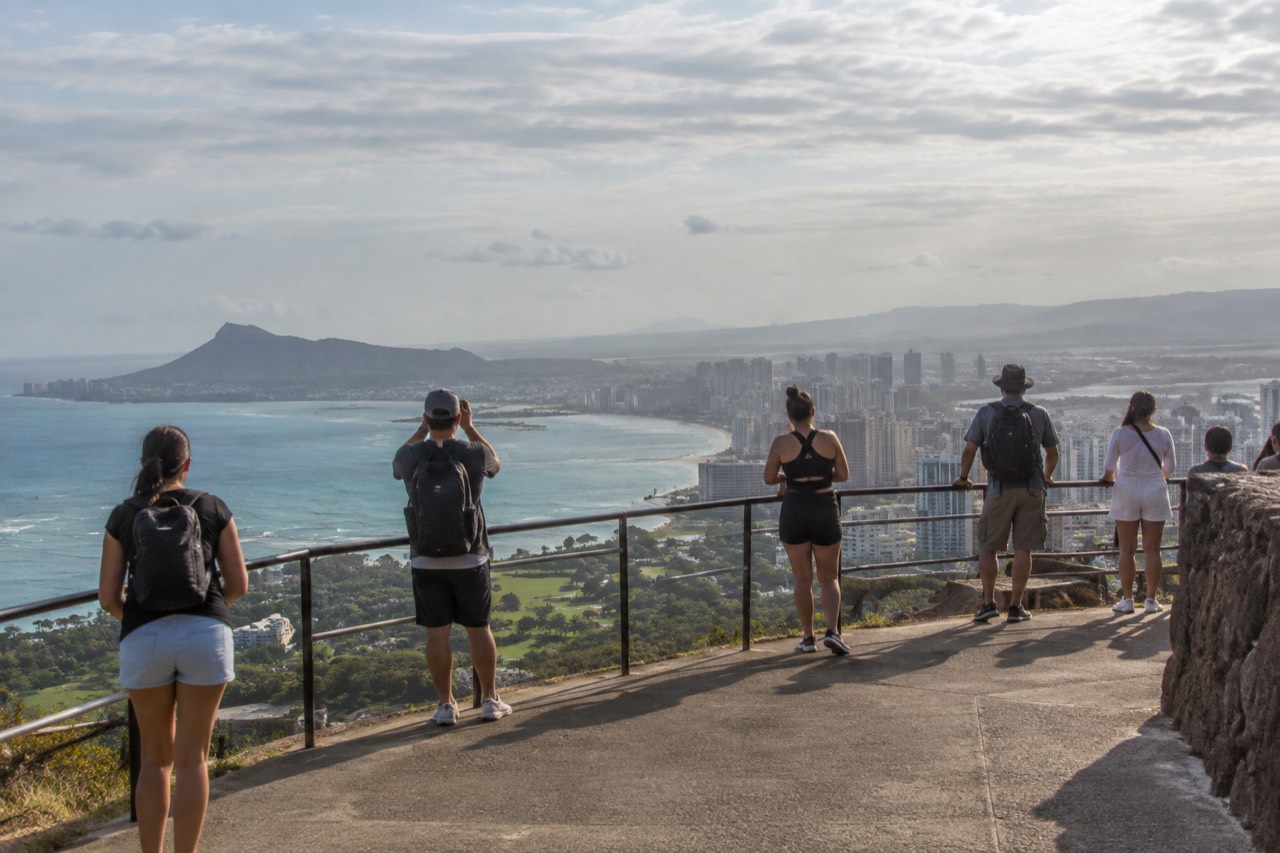
Tantalus Lookout is a free, reservation-free viewpoint inside Puʻu ʻUalakaa State Park, a short drive or bus ride up from downtown Honolulu, with a sweeping view over the city, Waikīkī, Diamond Head and, on clear days, the Waiʻanae Range. No entry fee is charged, no reservation is required, and the lookout is the easiest high viewpoint on Oʻahu to reach by public transport.
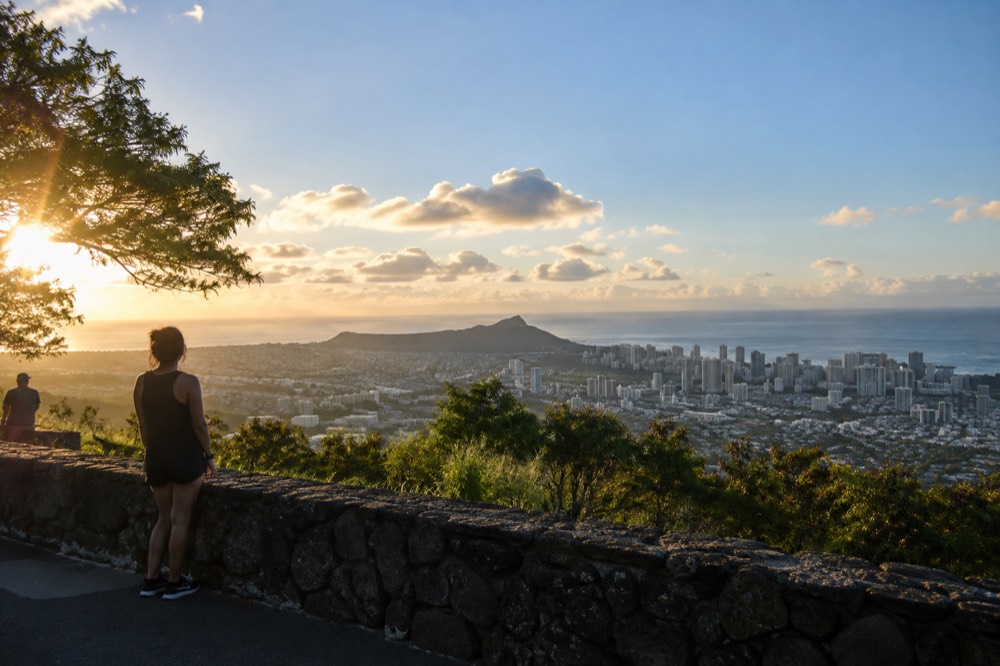
Tantalus Lookout sits at the top of Puʻu ʻUalakaa State Park, on the rounded ridge above the Mānoa and Nuʻuanu valleys, and it does one thing better than any other viewpoint on Oʻahu: it shows you the city. Diamond Head gives you the ocean from inside a crater. The Pali gives you the windward coast. Tantalus gives you Honolulu, Waikīkī, Ala Moana and Diamond Head laid out in a single frame, with the Waiʻanae Range behind them when the air is clean.
This guide covers what a visit actually involves: how to get there, what it costs, when to go, and whether it deserves a slot in your itinerary. The short version is that it is free, needs no reservation, and is one of the very few high viewpoints on the island you can reach by city bus. The longer version, including why the air up there is nothing like the air at the beach, is below.
Where Is Tantalus Lookout And What Do You See From It?
Tantalus Lookout is the main viewing terrace of Puʻu ʻUalakaa State Park, on a ridge above the Mānoa and Nuʻuanu valleys on the southern edge of Honolulu. From the platform you look south over downtown Honolulu, Waikīkī, Ala Moana and the Diamond Head crater, with Pearl Harbor and the Waiʻanae Range appearing on clear days. The park sits only a few miles from the hotels, but the climb puts you above the city grid entirely.
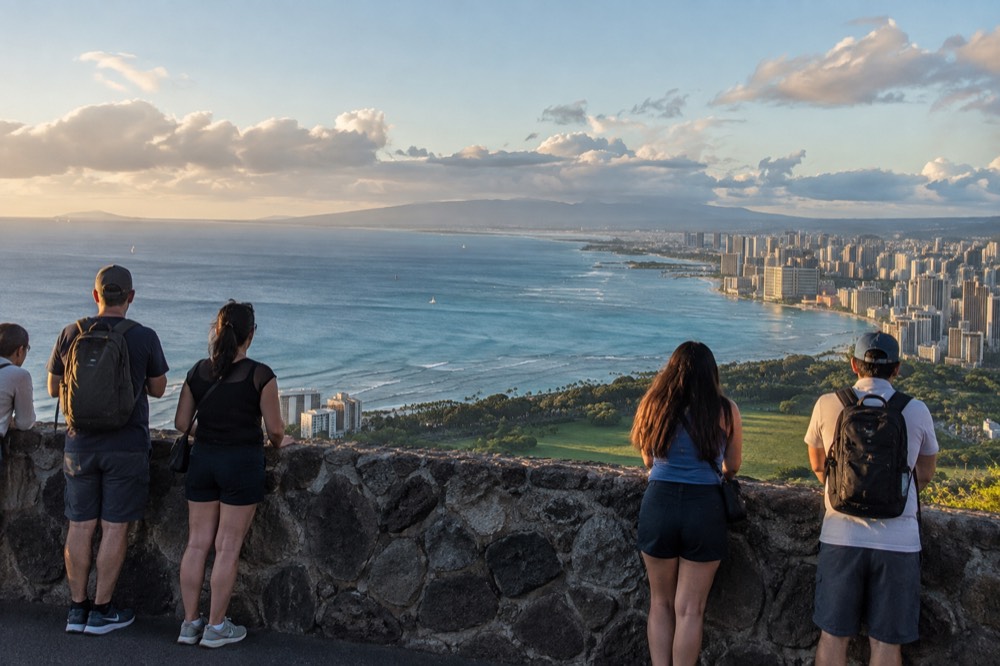
The view is the reason people come, and it is worth being precise about what is in it. Directly below is the residential sprawl of the valleys, the Mākiki and Mānoa neighbourhoods stitched with trees. Beyond them the towers of downtown and Waikīkī line up along the coast, and Lēʻahi, the Hawaiian name for the crater signposted as Diamond Head, closes the right side of the frame. To the west, on days when the vog or haze lifts, you can pick out Pearl Harbor and the long spine of the Waiʻanae Range.
The lookout itself is a modest paved terrace with a low stone wall. There is no visitor centre, no gift shop and no interpretive trail system at the platform, just the view and whatever breeze is coming off the ridge. That simplicity is part of the appeal. You drive or ride up, you stand there, and you look.
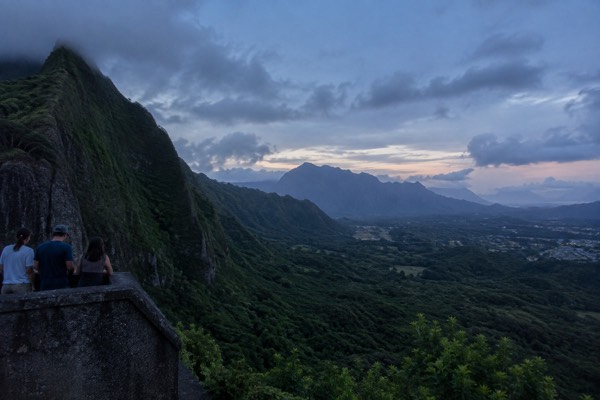
One honest caveat: the view quality depends heavily on the air. Honolulu's air is usually good, but southern and southwesterly winds sometimes bring volcanic haze from the island of Hawaiʻi across the channel, and on those days the Waiʻanae Range disappears entirely. Mornings tend to be clearer than late afternoons in that respect, while late afternoon wins on light for photography.
How Do You Get To Puʻu ʻUalakaa State Park Without A Car?
You can reach Tantalus Lookout by city bus, though the ride involves a transfer and a walk, or by car up the winding Tantalus Drive, a residential mountain road with no separate parking fee at the park. TheBus serves the area on routes connecting through downtown Honolulu, and a HOLO card day cap of $7.50 covers unlimited rides on TheBus and Skyline combined. There is no shuttle, so the bus plus foot option is the genuine car-free route.
The practical reality is that the park sits at the top of a steep residential road, and the bus stop sits at the bottom of the final climb. Budget more time than the flat mileage suggests, because the road gains serious elevation through switchbacks, and walking it in island heat is a workout rather than a stroll. Check current route and schedule details on the transit pages before you go, because mountain spur service changes more often than mainline service.
If you are driving, the road up is narrow, winding and shared with the people who live on it. It is a residential street, not a highway, and residents' driveways are not overflow parking. The park has its own small lot, which fills around sunset on good evenings, and street parking outside the park is limited and posted. Our Oʻahu parking guide covers the general rules that apply, and the broader question of whether you need a car at all is worked through in do you need a car on Oʻahu.
For fares, the verified numbers are these: an adult cash single ride on TheBus is $3.25 with no transfers, a HOLO card two-hour pass is $3.00 with transfers included, and the daily cap is $7.50, after which further rides that day are free. A HOLO card itself costs $2.00. Those fares are shared between TheBus and the Skyline rail line, so a day of sightseeing that mixes both modes is capped at the same $7.50.
| Transport option | Cost | Notes |
|---|---|---|
| TheBus, cash single ride | $3.25 | No transfers, exact fare |
| HOLO card 2-hour pass | $3.00 | Unlimited transfers, TheBus and Skyline |
| HOLO daily cap | $7.50 | All further rides that day free |
| HOLO card itself | $2.00 | Initial and replacement |
| Drive and park at the park | Free | Small lot, fills around sunset |
If driving the mountain road yourself does not appeal, a guided scenic tour is the middle path. The half-day seven-lookouts tour includes high viewpoints across Honolulu in one loop, which matters here because Tantalus is awkward to combine with anything else under your own steam if you would rather not drive at night.
How Much Does It Cost To Visit Tantalus Lookout?
Nothing. Puʻu ʻUalakaa State Park charges no entry fee for the lookout, requires no reservation, and has no timed-entry system of the kind now in force at Diamond Head and Hanauma Bay. That makes it one of the last genuinely free high viewpoints on Oʻahu, and the contrast with its neighbours is stark: Diamond Head charges $5 per non-resident plus $10 to park, and Hanauma Bay charges $25 per non-resident snorkeller.
Tantalus asks for nothing but the drive up.
The free access is worth pausing on, because Oʻahu's planning problem in recent years has been reservations rather than price. Diamond Head has required a non-resident reservation for both entry and parking since 12 May 2022, with no on-site sales. Hanauma Bay opens its booking system two days ahead at 7:00 a.m. HST and closes Mondays and Tuesdays. Tantalus has none of that machinery. You decide on the day, you drive up, you park, you look.
That freedom cuts both ways. Because there is no reservation controlling demand, the small lot and the terrace can crowd up around sunset, which is when most visitors want to be there. The crowd is never festival-sized, but if you want the wall to yourself, arrive early morning rather than golden hour.
Here is how the island's main viewpoints compare on access and cost, using only figures verified against official sources:
| Viewpoint | Entry fee (non-resident) | Reservation required? | Current status |
|---|---|---|---|
| Tantalus Lookout (Puʻu ʻUalakaa) | Free | No | Open |
| Diamond Head (Lēʻahi) | $5 per person, $10 per vehicle | Yes, for non-residents, since May 2022 | Open, 6 a.m. to 6 p.m. |
| Hanauma Bay | $25 plus online service fee | Yes, opens 2 days ahead at 7 a.m. | Closed Mondays and Tuesdays |
| Nuʻuanu Pali Lookout | n/a | n/a | Closed until further notice, storm repairs |
| Kaʻena Point | n/a | n/a | Mokuleʻia and Keawaʻula sections closed until further notice |
The Pali Lookout row matters more than it looks. The Pali, historically the other great windward-facing viewpoint a short drive from town, is closed until further notice following the September 2026 storm damage listed in the DLNR State Parks notices, along with the Kaʻena Point sections. That closure pushes more of the island's lookout traffic toward the spots that are open, and Tantalus is the best of them on the Honolulu side.
When Is The Best Time Of Day To Visit Tantalus Lookout?
Late afternoon into sunset is the most popular time, because the lookout faces the city and the light softens as the sun drops behind the Waiʻanae Range, but sunrise and mid-morning typically deliver the clearest air and the emptiest terrace. Oʻahu's sunset never runs later than about 7:17 p.m. even in midsummer, so the golden hour here is short by mainland standards. Arrive 45 minutes to an hour before sunset to get a parking spot.
The island's day length swing is small, roughly two hours and thirty-five minutes between the longest and shortest days of the year, which is a fact visitors from high latitudes consistently underestimate. There are no long summer evenings on Oʻahu. The sun sets around 5:55 p.m. near the December solstice and around 7:17 p.m. in early July, and the window between good light and darkness is compact. More of these guides are collected on Oahu Travel Guide.
What the light does at Tantalus is specific to the angle. The lookout faces south toward the ocean, so as the sun drops west it lights the Koʻolau ridge behind you and throws the city into warm relief rather than putting glare between you and the view. Photographers tend to prefer the last hour before sunset; people who just want to see the island clearly tend to prefer the morning. Both are right, for different goals.
Weather is the other variable, and this is where the geography gets interesting. The ridge above Mānoa sits in one of the wettest corners of urban Honolulu, and the valley a few miles away is dramatically wetter than the coast. More on that in the section below, because it changes what you should pack even for a twenty-minute lookout stop.
Why Is The Weather Up There So Different From Waikīkī?
The ridge above Mānoa sits in one of the wettest places in urban Honolulu, because the Koʻolau mountains force the trade winds to rise and drop their moisture on the windward and valley sides. The Lyon Arboretum station in Mānoa, about five miles from Waikīkī, records an annual normal of 150.96 inches of rain against 16.41 inches at Honolulu airport, more than nine times as much.
Every single month in Mānoa is wetter than the airport's wettest month.
That figure comes from the NOAA and NCEI 1991–2020 climate normals, and it is the single most useful thing to know about packing for Tantalus. The lookout itself sits high enough to catch passing showers that never reach the beach, and a brief rain up there is normal rather than a sign that your day is ruined. Showers on the ridge often pass in minutes, and the view after one is frequently the best of the day, scrubbed clean and sharp.
The practical consequences are simple. Bring a light rain layer even on a bright day in Waikīkī. Do not treat a shower at the hotel as a reason to skip the lookout, because the two weather systems are genuinely different. And if you are pairing the lookout with a valley hike, check the flash flood guidance in our Oʻahu flash flood safety guide, since stream crossings in the valleys respond to rain you may never have seen falling.
Is Tantalus Lookout Worth The Trip Compared With Other Oʻahu Viewpoints?
Yes, if what you want is the city-and-ocean panorama, because no other open viewpoint on Oʻahu shows Honolulu, Waikīkī, Diamond Head and the south shore in one frame. It is less essential if you specifically want the windward coast, which the Pali Lookout served and which is currently closed for storm repairs. It is free, reservation-free and bus-reachable, and those three facts alone justify the drive for most visitors.
The honest comparison is with Diamond Head, which costs $5 per non-resident plus $10 to park and requires a reservation, but delivers a completely different picture: the ocean from inside the crater, looking out rather than looking down. The two are complements, not rivals. If your itinerary can hold both, do both; if it can hold one and you care about the city view, Tantalus wins on cost and flexibility.
For visitors who want the ridge experience with a destination attached rather than just a view, the Mānoa Falls trail is the natural pairing, sitting in the same valley system below the lookout. The trail itself is free, though the parking lot at its base is a private commercial operation, and waterfall conditions depend on recent rain, which in Mānoa means usually. Our best hikes on Oʻahu overview places it in context.
The self-guided Mānoa Falls option pairs a shuttle with independent hiking time, which suits travellers who want the rainforest without committing to a guided walk. It covers the logistics that are otherwise the fiddly part of a valley visit.
What Else Can You Do Around Tantalus And Mānoa?
The Puʻu ʻUalakaa ridge has more than the main terrace, including forested road shoulders used by runners and a loop road popular with cyclists, while the Mānoa valley below holds the Mānoa Falls trail, the Lyon Arboretum and one of Honolulu's leafiest neighbourhoods. A visit to the lookout combines naturally with any of them, since they sit within the same few square miles of ridge and valley.
Most visitors spend twenty minutes at the terrace and leave, but half a day up here is easy to fill.
The road itself, Tantalus Drive and Round Top Drive, forms a loop that locals treat as a scenic drive in its own right. If you are cycling, be aware it is a climb with traffic; if you are driving, be aware the cyclists and runners have as much right to it as you do. There is no trail network signed from the lookout terrace itself, and the surrounding slopes are steep and, in places, part of the watershed, so this is not the place to improvise a shortcut down the hillside.
In the valley, the Mānoa neighborhood guide covers the cafés, the university edge and the residential feel that makes Mānoa feel like a different island from Waikīkī. The rainforest around the falls is genuinely rainforest, not marketing copy, and the rainfall figures earlier in this article are the reason why.
For sunset hunters, the lookout is one entry in a long list, and the best sunset spots on Oʻahu guide ranks it against the beach and west-side alternatives. Tantalus is the urban pick, the one where the sunset happens over a city instead of over water.
If you decide to add Diamond Head to the same day, a tour that bundles the entry ticket and the shuttle removes the two-step reservation process, which is the part of that hike most likely to go wrong for a visitor booking from overseas.
Common Questions About Tantalus Lookout (Puʻu ʻUalakaa State Park) On Oʻahu
Most questions about Tantalus Lookout come down to three things: it costs nothing and needs no reservation, it is the only major Oʻahu viewpoint you can genuinely reach by city bus, and the best time to visit depends on whether you want clear air or golden light, since mornings deliver the first and late afternoon delivers the second. Everything else, from parking to weather to what you can see, follows from those three facts.
Is Tantalus Lookout free?
Yes. Puʻu ʻUalakaa State Park charges no entry fee for the lookout and operates no reservation system. That contrasts with Diamond Head, which charges $5 per non-resident plus $10 per vehicle and requires a reservation, and Hanauma Bay at $25 per non-resident.
Do you need a reservation for Tantalus Lookout?
No. There is no timed entry, no booking system and no capacity cap. The trade-off is that the small parking lot fills on good evenings around sunset, so arriving early is the only substitute for a reservation.
Can you get to Tantalus Lookout by bus?
Yes, with a transfer and a walk from the stop up to the park. A HOLO card caps all TheBus and Skyline rides at $7.50 for the day, and a cash single ride is $3.25. Check current routes before you go, since mountain spur service changes periodically.
When is sunset at Tantalus Lookout?
Sunset on Oʻahu ranges from about 5:55 p.m. near the December solstice to about 7:17 p.m. in early July, the latest sunset of the year. Arrive 45 minutes to an hour early if you want a parking spot and a place at the wall.
Is Tantalus Lookout open right now?
Puʻu ʻUalakaa State Park was not among the closures listed in the DLNR State Parks notices dated 9 September 2026, which closed Nuʻuanu Pali State Wayside and the Kaʻena Point sections for storm repairs. Check the DLNR notices page before you go, since the storm closure list has been changing.
Is Tantalus Lookout worth visiting at night?
The city lights view after dark is real, and the lookout does get evening visitors for it, but the terrace is unlit and the road down is winding and dark. If you stay for night, drive down slowly and watch for runners and cyclists who use the road regularly.
If reading this has you mapping out a full day of viewpoints rather than a single stop, the guided loop is worth one more look: it stacks several of the lookouts covered above into one afternoon, with the driving handled.
Tantalus Lookout will never have the name recognition of Diamond Head or the Pali, and that is quietly part of its value. It is the viewpoint that asks nothing of you: no fee, no booking, no timed slot, no parking charge. You can decide to go while eating breakfast and be standing at the wall half an hour later, looking down on five and a half million people's worth of annual visitor traffic spread out along the coast below. On an island where the planning conversation is increasingly about which reservations you managed to secure, a viewpoint with no gate is a small luxury, and it happens to come with the best city panorama on Oʻahu.