Is $1,000 Ok For A Week In Hawaii? An Honest Oahu Answer
A grounded answer to whether $1000 covers a week in Hawaii, using verified Oahu entry fees, transit fares and tax rates, with a realistic budget breakdown and ways to stretch the money.
The honest answer is that $1000 can cover a week on Oahu, but only with a hostel or vacation rental bed, TheBus instead of a rental car, and a schedule built around the island's free beaches and low-cost state parks. It cannot cover a week that includes resort nights, a rental car and three paid tours. Oʻahu is the one Hawaiian island where the bare-bones version genuinely works, because its best assets, the beaches, the hiking and the Pearl Harbor National Memorial, are either free or close to it.
This page grounds every number it can in a verified source: official entry fees, published transit fares and the state's own tax announcements. Where a cost varies too much to quote, mainly lodging and food, it says so instead of inventing a figure. For the fuller treatment, the cost of a trip to Oahu breaks the same question down across hotel tiers.
Is $1000 Ok For A Week In Hawaii?
Yes, if the week is on Oahu and the budget covers everything except the flight: a shared or basic room, TheBus instead of a rental car, and days built around free beaches and $5 state monument entries. No, if the $1000 has to include airfare, or if the week is on Maui or Hawaiʻi Island with a rental car. Where you sleep and whether you drive decide the whole outcome.
That answer needs one clarification up front. Almost everyone asking this question means "$1000 spending money on the ground," because the flight to Honolulu is priced separately and swings too widely by season and origin city to fold into a fixed number. This article treats $1000 as the on-island budget: lodging, getting around, food, entries and at most one or two paid activities.
The reason Oahu is the island where this works is structural. Honolulu is a real city with a real transit system, so the rental car, the single biggest avoidable cost on the neighbour islands, is optional here. The getting around without a car question has a full treatment, but the short version is that TheBus and the Skyline rail share one fare structure and reach most of what a first-time visitor wants.
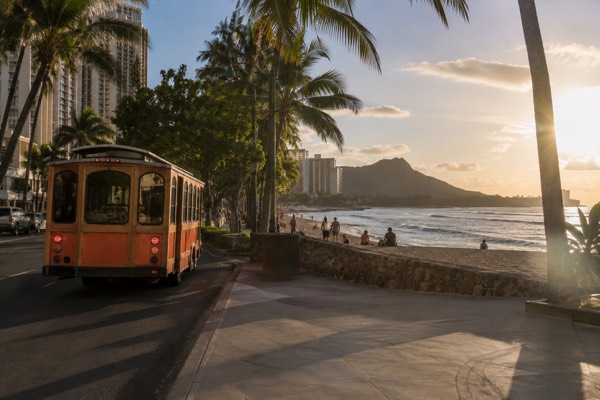
It also matters that the headline sights skew free. The USS Arizona Memorial program at Pearl Harbor is free, with a $1 per ticket non-refundable management fee if you reserve through the official reservation system. Waikīkī Beach, Lanikai, Kailua and Waimānalo cost nothing. Diamond Head, the one hike almost everyone does, is $5 per non-resident plus $10 to park, and the parking fee disappears entirely if you arrive by bus.
What Does A Week On Oahu Actually Cost?
A realistic bare-bones week hinges on lodging at hostel or budget-room rates, seven days of unlimited transit under the HOLO card's $7.50 daily cap, and a food spend that depends almost entirely on whether you cook. Entry fees for a full sightseeing week, Diamond Head, Hanauma Bay and Waimea Valley, sit between nothing and $26 per site. The unbudgetable lines are the bed and the food, and they are where the $1000 holds or breaks.
The transit number is the most grounded figure on this page. The City and County of Honolulu publishes the fare structure directly: $3.25 for a single cash bus ride with no transfers, $3.00 for a two-hour HOLO pass with transfers included, and a hard daily cap of $7.50 after which every further ride that day is free. A visitor riding TheBus and Skyline all week never pays more than that cap on any given day. The HOLO card itself costs $2.
What can be said honestly is the shape of the decision: a dorm bed in a Honolulu hostel or a private room in a budget vacation rental is the difference between a week that fits $1000 and one that does not. Check live rates for your dates rather than trusting any published figure, and read the Oahu on a budget guide for the full strategy.
Food is the same story. Grocery-store cooking, plate lunches and food trucks keep a week's eating well inside the budget; resort restaurants and Waikīkī dinner seating will consume it in two evenings. The best food on Oahu and food trucks on Oahu pages cover where the affordable, genuinely good versions of both live.
Here is the budget skeleton with every figure that can be grounded:
| Budget line | Cost for one week | Source status |
|---|---|---|
| Transit, HOLO daily cap | $7.50 per day, capped | Published fare structure |
| HOLO card fee | $2.00 one time | Published fare structure |
| Diamond Head entry, non-resident | $5.00 per person | DLNR official page |
| Diamond Head parking | $10.00 per vehicle, avoided by bus | DLNR official page |
| Hanauma Bay entry, non-resident 13+ | $25.00 plus online service fee | City & County official page |
| Waimea Valley adult entry | $26.00 | Official admission page |
| Pearl Harbor USS Arizona program | Free, $1 per-ticket management fee when reserved | NPS and reservation system |
| Lodging, 7 nights | Not quotable: check live rates | Unverified, varies |
| Food, 7 days | Not quotable: depends on cooking | Unverified, varies |
Add the verified entries and transit together and the fixed, knowable portion of the week is a handful of single-digit and low-double-digit fees, none of them large. Everything else is the bed and the food.
Where Does The Money Go: The Big Three Lines?
Sleeping, eating and moving are the three lines that decide the week, and together they are the great majority of any realistic Oahu budget. Entry fees, the thing most visitors worry about, are comparatively trivial: the island's headline natural sites cost between nothing and $26. A traveler who controls the big three with a hostel bed, self-catering and the bus has already won the budget; one who does not cannot rescue it by skipping a $5 hike.
The tax environment is worth knowing because it touches every transaction. Since 1 January 2026, Hawaii's Transient Accommodations Tax has been 11.00%, up from 10.25%, under Act 96, the change widely but inaccurately called a "green fee." The state Department of Taxation's own announcement describes it as an increase to the existing TAT rather than a new fee collected at the airport, and it now also applies to cruise-ship fares. Hotel bills additionally carry general excise tax pass-through, so the sticker rate understates the real cost of a room.
That is the strongest argument for the vacation-rental or hostel route on a $1000 week: the tax is charged either way, but the base it applies to is far smaller. It is also why the Oahu vacation cost breakdown treats lodging as the line to attack first.
Movement is the second decision point. Waikīkī hotel parking and resort valet rates are among the most volatile numbers in Hawaii travel, which is itself the warning: whatever the number is, it is not small.
The third line, food, is the one with the widest spread and the most room to move. A visitor eating two grocery or plate-lunch meals a day and one restaurant meal spends a fraction of what three restaurant days cost, and the affordable end of Oahu food is genuinely excellent rather than a consolation prize.
Can You Do Oahu Without A Car On $1000?
Yes, and on this budget you should. TheBus and the Skyline rail share one fare structure, a HOLO card caps at $7.50 per day, and a 7-day pass costs $45. The rail line reaches Daniel K. Inouye International Airport, though there is no Waikīkī station, so a transfer is required. The trade-off is time: buses to the North Shore and the windward coast run less often, so a car-free week means fewer destinations per day.
The published fare table makes the arithmetic simple. Beyond the $7.50 daily cap there is a $20 three-day pass, a $45 seven-day pass and a $90 monthly cap, so a visitor staying exactly a week can choose between capped daily fares and the $45 pass. Children 5 and under ride free with a paying adult. The full fare detail is in the TheBus on Oahu guide, and the rail system's stations and transfer points are in the Honolulu Skyline guide.
| Fare product | Price | What it covers |
|---|---|---|
| Adult cash, single bus ride | $3.25 | One ride, no transfers, exact fare |
| HOLO 2-hour pass | $3.00 | 2 hours of unlimited transfers, bus and rail |
| 24-hour pass | $7.50 | A full day, also the daily cap |
| 3-day pass | $20.00 | 72 hours from first tap |
| 7-day pass | $45.00 | 168 hours from first tap |
| Monthly cap | $90.00 | Calendar month |
| HOLO card | $2.00 | Initial and replacement |
The places the bus serves well are the places a budget week should concentrate on: Waikīkī, Ala Moana, downtown Honolulu, Pearl Harbor via the Hālawa Aloha Stadium station transfer, Kailua and Waimānalo on the windward side, and the North Shore with patience. Diamond Head has bus service, which converts the $10 parking fee into a $3.00 two-hour pass. The wider set of guides lives on Oahu Travel Guide.
Curious about downtown Honolulu beyond the bus stop? Book a historic downtown walking tour here.
For the one or two days when the schedule demands more range than the bus allows, a day tour is often cheaper than a week of rental car. The most-booked circle island tour is the strongest example:
It runs the full loop, the windward coast, Haleʻiwa town and the North Shore, in about six and a half hours, which on a car-free week replaces a full day of transfers and waiting.
What Can You Do Free Or Almost Free On Oahu?
A remarkable share of Oahu's best is free: Waikīkī, Kailua, Lanikai, Waimānalo and the North Shore beaches, the Pearl Harbor visitor center and the USS Arizona Memorial program, the Mānoa Falls trail and the Koko Head stairs. The paid tier is thin and cheap: $5 at Diamond Head, $25 at Hanauma Bay, $26 at Waimea Valley. A week on the free tier plus two or three paid entries is close to the full experience.
The free list deserves specificity because it is the engine of the whole budget. Pearl Harbor's visitor center and museums are free to enter, and the Arizona Memorial program itself is free, though it is a war grave where 1,102 sailors and Marines remain in the ship, and it deserves to be treated as one rather than as a ticket item. The Pearl Harbor planner covers reservations and the bag policy, which prohibits backpacks and purses.
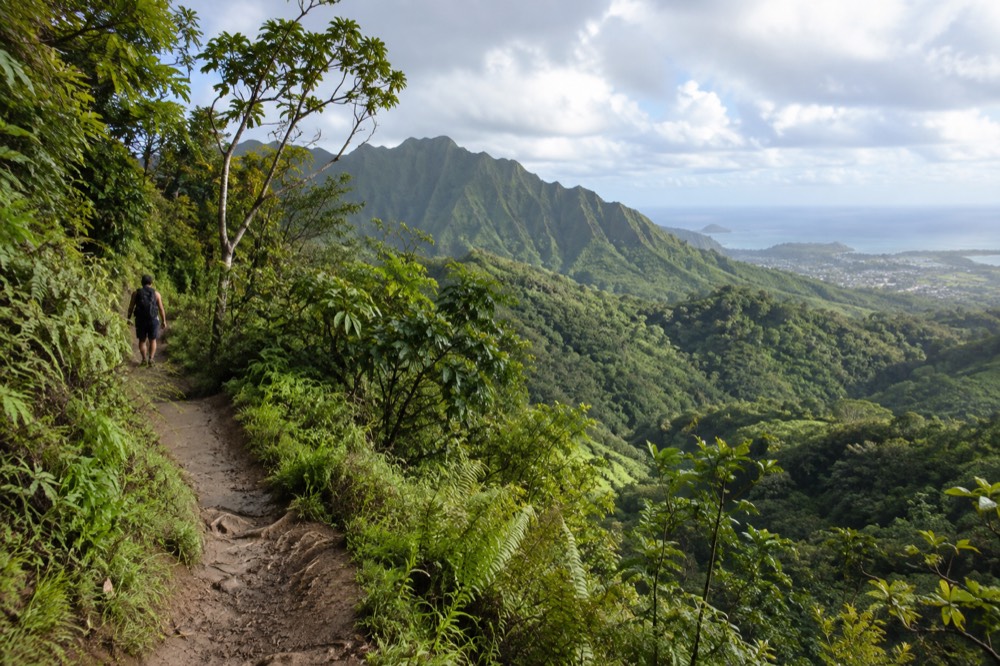
The hikes are free at the trailhead. Mānoa Falls runs through rainforest to a waterfall, the Koko Head stairs climb an old railway line up a crater ridge, and the Mākapuʻu lighthouse trail paves its way along the eastern coast. Parking is the catch at some of these, and the best hikes overview notes where the bus solves it.
Two closures matter to anyone planning from older content. As of the state parks notice dated 9 September 2026, Nuʻuanu Pali State Wayside, Kaʻena Point State Park's Mokulēʻia and Keawaʻula sections, and Wahiawā Freshwater State Recreation Area are closed until further notice for Hurricane Lowell storm repairs. Do not build an itinerary around the Pali Lookout without re-checking it.
| Activity | Entry cost | Notes |
|---|---|---|
| Waikīkī, Kailua, Lanikai, Waimānalo beaches | Free | Bus-accessible |
| Pearl Harbor visitor center and Arizona program | Free, $1 per-ticket reservation fee | Bags prohibited; storage costs extra |
| Mānoa Falls trail | Free | Private lot charges for parking |
| Koko Head stairs, Mākapuʻu trail | Free | Parking at district park |
| Diamond Head | $5 per person, $10 to park | Non-resident reservation required |
| Hanauma Bay | $25 plus service fee, 12 and under free | Closed Mondays and Tuesdays |
| Waimea Valley | $26 adult | Closed Mondays |
The free things to do on Oahu page carries the full list, and it is long enough that a $1000 week does not feel like a compromise.
For a paid afternoon that costs less than a restaurant dinner, the trolley day pass loops the main Honolulu sights on a hop-on basis:
How Do You Stretch $1000 Across Seven Days?
Book the bed before anything else, because lodging is the only line that can break the budget on its own. Buy a HOLO card on day one and let the $7.50 daily cap do its work. Reserve the two things that genuinely require reservations, Diamond Head and Hanauma Bay, on the official systems rather than through resellers. Cook or eat plate lunches most days, and spend the savings on one or two paid experiences that actually need a ticket.
The reservation mechanics are where budget travelers lose money without noticing. Hanauma Bay's official system opens reservations two days ahead at 7:00 a.m. HST, and the preserve is closed Mondays and Tuesdays. Diamond Head requires non-residents to reserve both entry and parking in advance, with no on-site sales, a rule in force since May 2022 that a large share of older travel content still gets wrong. Miss the reservation and the fallback is paying a tour operator to sort the ticket, which is exactly what the Diamond Head shuttle-and-ticket tour exists for.
Weather planning is free money too. The rainfall split on this island is extreme and documented: Honolulu airport's 1991-2020 normal is 16.41 inches a year, while the Lyon Arboretum station in Mānoa, five miles away, records 150.96 inches. Every month in Mānoa is wetter than the airport's wettest month. The practical use is simple: keep the Mānoa Falls and rainforest days flexible, and hold the beach days for the leeward side, where the same clouds often are not.
Timing the trip also moves the number. The cheapest month to visit question and the best time to visit Oahu both bear on it, and the rainy season guide explains why the shoulder months are where value and weather overlap.
A sample shape for the week, using only the grounded figures: three beach days costing nothing but bus fare, one Diamond Head morning at $5 by bus, one Hanauma Bay day at $25, one Pearl Harbor day at effectively $1 reserved, and one paid circle island tour day. Entries and transit across that shape stay small, leaving the majority of the $1000 for the bed and the food, which is exactly where a careful traveler wants the flexibility.
Common Questions About A $1000 Week In Hawaii
Most questions about whether $1000 is enough come down to three things: whether the flight is included, whether a rental car is assumed, and how many paid tours the traveler expects. On Oahu the answer is yes for a flight-exclusive budget with hostel or rental lodging, bus-based transport and a free-tier activity plan. The island's fee structure genuinely supports the cheap version, which is not true of every island.
Is $1000 ok for a week in Hawaii?
Yes, on Oahu, if the $1000 is on-island spending and excludes the flight. The combination of a $7.50-per-day transit cap, free headline beaches and entry fees of $5 to $26 makes it workable. It does not work if the money must include airfare, a rental car or resort accommodation.
Does the $1000 need to include the flight?
Almost never in practice. Airfare to Honolulu varies too much by origin and season to fold into a fixed figure, and everyone asking this question is really asking about ground costs. If the flight must come out of $1000, a week is not realistic.
What is the biggest cost to avoid on a budget week?
The rental car. Between the daily rate, fuel and parking, none of which this site could verify as stable figures, it is the one line that can consume the budget alone. TheBus and Skyline cover a Waikīkī-based week under the $7.50 daily cap.
Are the good beaches free on Oahu?
Yes. Waikīkī, Kailua, Lanikai, Waimānalo, Waiʻalae and the North Shore beaches charge nothing. The costs arrive through parking, which the bus avoids, not through entry.
Is food affordable on a $1000 week?
It can be, through plate lunches, food trucks and self-catering, but no specific meal prices are quoted here because none were verified in the research. The affordable end of Oahu's food scene is real and well documented on this site's food pages.
Which Hawaiian island is cheapest for a tight budget?
Oahu, and it is not close. It is the only island with a rail line and an island-wide bus network that make a car optional, and its highest-profile sites, the beaches and the Pearl Harbor memorial, are free. The neighbour islands generally require a rental car, which changes the arithmetic immediately.
The final word is that $1000 is a real budget on Oahu rather than a dare, provided the money goes to the bed and the food while the island's free tier carries the itinerary. The traveler who arrives with a HOLO card, a Diamond Head reservation and a grocery plan will spend a week among beaches and sites that cost less than the airport sandwich on the way home, and that is the honest version of the answer.