Oahu Itinerary With Kids: A Realistic Five-Day Plan
A family trip to Oahu fails for scheduling reasons far more often than for money reasons, and this plan is built around the reservation windows, closed days and nap schedules that actually decide how the week goes.
Short answer
Five days is the sweet spot for an Oahu itinerary with kids: two days around Waikiki and Honolulu, one windward day, one Pearl Harbor morning and one North Shore day. Book Hanauma Bay and Diamond Head reservations before you fly, keep every afternoon short, and leave one day deliberately unplanned.
Oahu took 5,679,047 visitors by air in 2025, preliminary DBEDT figures show, and a large share of them arrived with children and a plan built from a list of fifteen attractions. That plan collapses by day two. The island rewards families who do fewer things, book the few reservation-controlled sites early, and treat the afternoon as recovery time rather than a second shift. This itinerary is built on that principle: five days, one anchor activity each morning, and a lot of deliberate slack.
Everything below is grounded in the current official rules: Hanauma Bay's two-day reservation window, Diamond Head's mandatory non-resident reservations, the Pearl Harbor bag policy, and the three sites still closed after Hurricane Lowell as of the September 2026 DLNR notice. If you read nothing else, read the reservation table halfway down, because that is where family trips to Oahu are actually won or lost.
How Many Days Does An Oahu Itinerary With Kids Need?
Five days is the realistic sweet spot for a family trip to Oahu, and four is the honest minimum. Three days can work only if you skip the North Shore entirely and accept that Hanauma Bay may not happen. The reason is structural, not preference: the island's best family activities sit on three different coasts, the reservation windows open on fixed schedules, and children under ten stop absorbing new experiences around mid-afternoon.
Choosing where the whole family will stay. Book a hotel in Oahu here.
The math behind that is simple. Waikiki and Honolulu hold the walkable attractions, the windward side holds the calm water and the botanical garden, and the North Shore holds the turtles and the shrimp trucks. Each coast wants a day of its own, and the drive between them eats real time on a two-lane highway that carries an enormous resident workload on top of the visitor traffic. Add a Pearl Harbor morning, which deserves to be unhurried, and you are at four days before you have built in a single rest block.
Families on shorter trips should cut the North Shore, not the windward side. Kailua and Waimanalo give children the beach day they actually remember, while the North Shore is at its best in winter, when the waves that make it famous also make several beaches actively unsafe for swimming. A winter trip with young swimmers should treat the North Shore as a scenic drive with food, not a beach day.
If you are still sketching the wider trip, our Things to Do in Oahu page is the full index, and the Oahu itinerary for first-timers covers the no-kids version of this same problem. The skeleton below is the five-day shape this article builds out.
| Day | Base | Morning anchor | Afternoon |
|---|---|---|---|
| 1 | Waikiki | Beach, jet lag recovery | Pool or naps, early dinner |
| 2 | Honolulu | Diamond Head or zoo | Waikiki Aquarium, beach |
| 3 | Windward | Kailua or Waimanalo beach | Hoʻomaluhia Botanical Garden |
| 4 | Pearl Harbor | USS Arizona Memorial program | Free afternoon |
| 5 | North Shore | Scenic drive, turtles from a distance | Haleʻiwa, shave ice, return |
What Should Day One In Waikiki Look Like?
Day one should be deliberately empty: a beach morning within walking distance, food at normal mealtimes, and nothing with a start time. After a five or six hour flight from the west coast, or a red-eye from further east, children's body clocks are the real itinerary constraint. The families who have a good week are the ones who let day one be short, slow and close to the room.
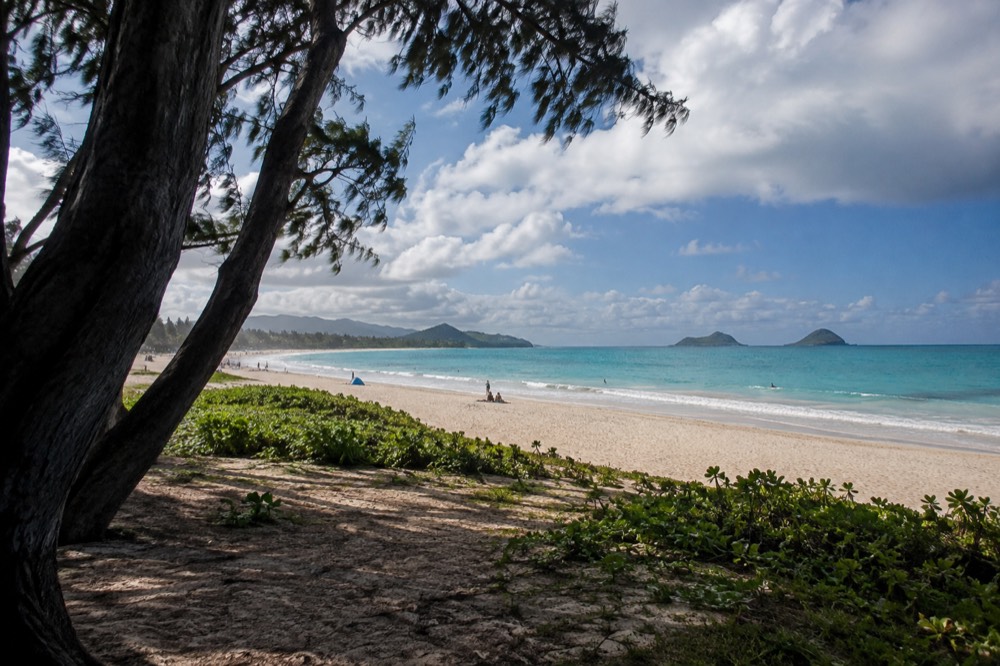
Waikiki is built for exactly this. The beach along Kūhiō Beach Park has gentle sand and lifeguard towers, the Waikiki Neighborhood Guide maps the quieter stretches, and the walkable food options mean nobody has to negotiate a car seat on day one. If the flight landed early and everyone is genuinely rested, the Honolulu Zoo and the Waikiki Aquarium are both short, flat, stroller-friendly and finishable in ninety minutes, which is the correct attention budget for an arrival day.
Resist the urge to buy a multi-attraction pass on day one and immediately extract value from it. A pass only pays if you have the energy to use it, and day one energy is always overestimated. Decide on day two, with a real read on your group's pace, whether the pass math works for the rest of the week.
One practical note: the beach itself is free, and the paid activities along it, like a first-time surf lesson, are better scheduled mid-week when everyone is adjusted. Day one is for sand, water and an early night.
Which Oahu Sites Need Reservations Before You Leave Home?
Two sites need advance reservations, one needs a same-week booking and the rest do not. Hanauma Bay reservations open exactly two days ahead at 7:00 a.m. HST, so you book from your hotel room, not from home. Diamond Head requires non-residents to reserve entry and parking up to thirty days ahead, with no on-site sales. Pearl Harbor's USS Arizona program is reserved on recreation.gov and carries only a $1 per-ticket management fee.
This is the table to screenshot. It is the difference between a smooth week and a string of 6 a.m. disappointments.
| Site | Reservation rule | Non-resident cost | Closed days |
|---|---|---|---|
| Hanauma Bay | Opens 2 days ahead, 7:00 a.m. HST | $25 plus a 2.35% online fee; children 12 and under free | Mondays and Tuesdays, Dec 25, Jan 1 |
| Diamond Head (Lēʻahi) | Required for non-residents, entry and parking, up to 30 days ahead | $5 per person plus $10 per vehicle, card only | Christmas and New Year's |
| USS Arizona Memorial | Reserved on recreation.gov; program is free, $1 fee per ticket | Free; parking $7 per day | Thanksgiving, Christmas, New Year's |
| Waimea Valley | Booking available but not stated as required | Adult $26, child 4 to 12 $18 | Mondays |
Three details trip families up. First, Hanauma Bay's window means Monday at 7 a.m. HST opens Wednesday's slots; if your heart is set on a specific day, you are setting an alarm two days out, on vacation, from a time zone several hours behind. Second, Hawaii residents enter both Hanauma Bay and Diamond Head free with state ID and do not need Hanauma reservations at all, so a mixed party with local family should split the booking. Third, the USS Arizona program prohibits all bags, including backpacks, purses and camera bags, and while storage exists near the entrance for a small fee, the price is not published, so the honest advice is to take nothing you cannot carry in a pocket.
The Hanauma Bay Nature Preserve and Diamond Head State Monument guides carry the full rules, including the kamaʻāina and military exemptions.
How Do You Handle Pearl Harbor With Children?
Treat Pearl Harbor as a single quiet morning built around the USS Arizona Memorial boat program, which runs about 45 minutes and is free apart from a $1 per-ticket reservation fee. Do not stack the battleship and submarine museums onto the same morning with young kids; the visitor center grounds themselves are free, shaded and walkable, and children do better with the program plus open space than with four hours of interior exhibits.
The memorial is a war grave, and the tone of the visit follows from that. The program begins with a documentary film, then a Navy-operated boat ride to the floating structure above the sunken ship, where 1,102 sailors and Marines remain. The shrine room is a place of silence. Children who are old enough to understand the film generally meet the moment; toddlers will not, and the honest family plan is to split the party or wait a few years.
Logistics matter more here than anywhere else on the island. Bags of every kind are prohibited, so leave backpacks in the hotel or the car. Parking is $7 per day. If you are staying in Waikiki without a car, the Skyline rail reaches Hālawa Aloha Stadium station with a bus transfer onward, though there is no rail station in Waikiki itself.
For families who want the history without self-managing the logistics, a guided half-day tour handles tickets and transport. The Pearl Harbor day trip planner compares the approaches in detail.
What Does A Windward Day With Kids Actually Look Like?
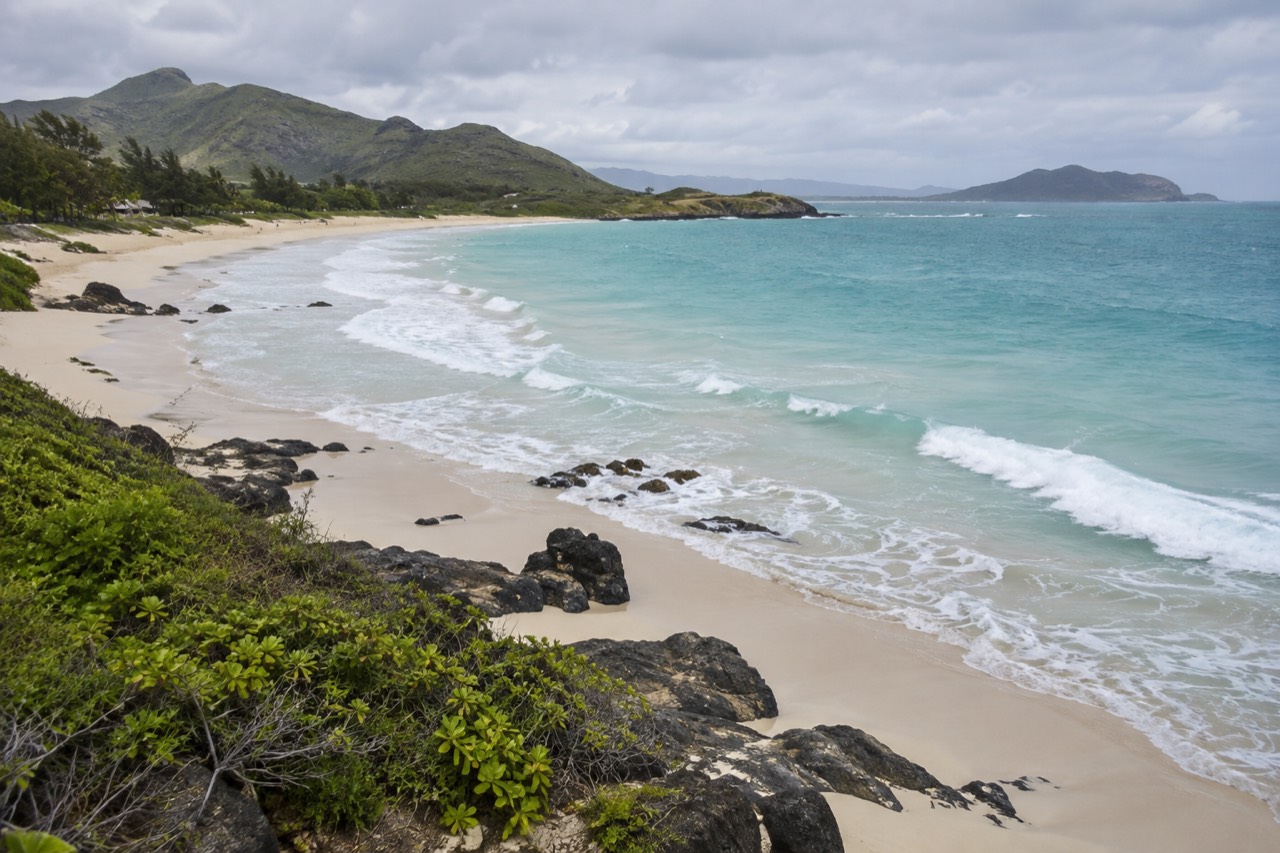
The windward day is the beach day, and it should be built on Kailua Beach Park or Waimanalo Beach rather than Lanikai, because Lanikai has no public parking lot at all and its residential streets are restricted and towed. The pattern that works: beach in the morning while energy is high, a casual lunch, then Hoʻomaluhia Botanical Garden in the afternoon, which is free, flat and has restrooms, and ends the day at walking pace.
Kailua's water is the calmest on the island's most family-friendly stretch of coast, and the beach park has the facilities, parking and lifeguards that a morning with children requires. The Kailua Beach Park and Waimanalo Beach guides cover the specifics. One legal note worth knowing: city ordinance prohibits commercial tour activity at Kailua and Kalama beach parks, so the experiences sold here are rentals and self-guided trips, not bus tours.
Lanikai is genuinely beautiful and genuinely parking-starved. The city's transportation management plan for the area restricts parking on the main residential drives and enforces towing, and the nearest legal lot is back at Kailua Beach Park. Arriving by the island's public bike or a long walk from Kailua is the realistic way to see it, and even then, mid-morning, not golden hour with tired children.
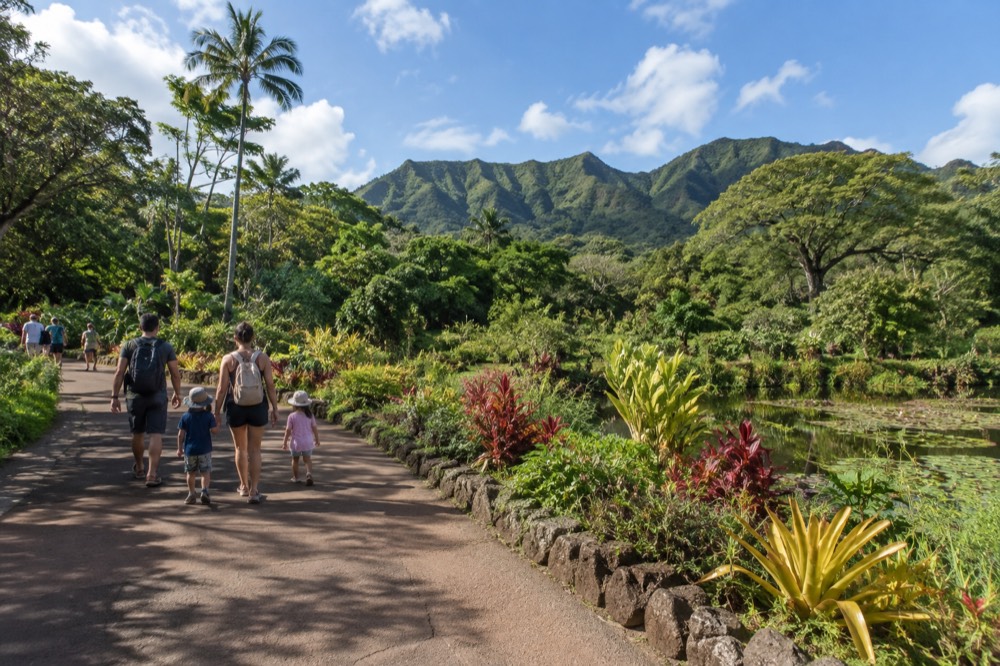
Hoʻomaluhia in the afternoon is the underrated half of this day. The botanical garden sits against the Koʻolau mountains, the entrance road is one of the most photographed views on the island, and the scale is forgiving: you can see the best of it in an hour of slow walking. Rain is more likely here than in Waikiki, which is the next point.
Is The North Shore Doable With Kids?
Yes, as a full-day loop with the beach time built around the season. In summer the water is calm and the North Shore works as a swimming day; in winter the famous waves arrive and several beaches become viewing-only, so the day becomes a scenic drive with turtles, food and Haleʻiwa. Either way, Laniakea is the turtle stop, and parking there is restricted to designated spaces under an ongoing highway project.
The honest version of this day has three anchors and a lot of driving between them. Laniakea Beach, where honu rest near the shore, is the stop children remember. Watch from the recommended distance of about 10 feet, which is a guideline rather than a law, though harassing or touching turtles is illegal under state and federal protection. Do not expect to park on the shoulder: barriers and enforcement have changed the old pattern, and the highway configuration is still shifting with the drainage project.
Waimea Bay and Sunset Beach are the wave beaches; whether your family swims there depends entirely on the season and the day's forecast, and the lifeguard towers make that call, not a guide. Sharks Cove, next to Waimea, is a summer snorkeling spot and a winter stay-out.
Haleʻiwa is the turnaround town: shave ice, the shrimp trucks nearby, and a walkable main street. The North Shore day trip from Waikiki page covers the route and the food stops in detail, and the Haleʻiwa Town Guide is the deeper dive on the town itself.
One closure to check before you plan any route: after Hurricane Lowell, the DLNR notice dated 9 September 2026 lists Kaʻena Point State Park's Mokuleʻia and Keawaʻula sections and Nuʻuanu Pali Lookout as closed until further notice. If the Pali Lookout is on your route card, verify its status the week you travel, because this list is moving.
Should You Book A Circle Island Tour Instead Of Driving?
For many families, yes, and day three or four is the right slot for it. A guided circle-island tour converts a day of driving, parking and navigation into a seat-managed loop, which matters most with children too young for a long road day or groups who would rather not rent a car at all. The trade is real: you lose the ability to linger or leave early, and you gain a driver who already knows the closures.
The two strongest options do the loop differently. The most-booked full-day grand circle tour runs about six and a half hours and pairs the scenic loop with a Haleʻiwa stop, while the hidden-gems version runs about nine hours and adds Byodo-In Temple, a site that is genuinely magical for children, with its koi pond and the mirror-still valley setting. Nine hours is a long day for a five-year-old; six and a half is the family-safe version.
Families who do drive themselves should treat this as the day to start early, beat the beach-parking crunch, and keep the food stops flexible. The Byodo-In Temple and Kualoa Ranch guides cover the two paid windward anchors if you would rather build the loop yourself. Note that Kualoa's valleys and movie sites can only be visited on a paid guided tour, as the land is private; the visitor centre and café are accessible without one.
How Do You Get Around Without A Car On This Itinerary?
You can run this entire five-day plan on TheBus, Skyline and a couple of rideshares, because the bus network covers Waikiki, Honolulu, the windward coast and the North Shore, and fares are capped. A single adult cash ride is $3.25, a HOLO card day caps at $7.50, and children five and under ride free with a paying adult. The one structural gap is that Skyline has no Waikiki station, so rail trips start with a bus transfer.
The fare structure is shared between TheBus and Skyline, which makes the HOLO card the obvious move: it costs $2, loads online, and caps at $7.50 a day no matter how many buses you board. For a family, the card fee pays for itself within the first day of hopping between the zoo, the aquarium and the beach.
| Fare | Price | Notes |
|---|---|---|
| Adult cash, TheBus only | $3.25 | Exact fare, no transfers |
| HOLO 2-hour pass | $3.00 | Includes transfers, bus and rail |
| Day cap | $7.50 | Everything after the cap is free that day |
| 7-day pass | $45.00 | 168 hours from first tap |
| Child 5 and under | Free | With a paying rider, not occupying a seat |
The car-free version of this itinerary swaps the North Shore loop for either a guided circle-island tour, which is why the tour question above matters more for car-free families, or a slower second windward day. The do you need a car on Oahu and TheBus guide pages carry the full analysis, and the 3 days in Oahu without a car plan shows the compressed version.
What About Rainy Days And Downtime?
Every family itinerary needs one genuinely empty afternoon, and the rainy-day shelf should be decided before the trip, not improvised during it. Oahu's indoor options are real but finite: the Bishop Museum, the zoo and aquarium on lighter showers, and the children's areas around Waikīkī. The mistake to avoid is scheduling a paid activity into every slot, because a rigid plan with no slack turns a two-hour delay into a lost day.
Rain on Oahu is heavily a matter of where you are standing. A shower in Waikiki can coexist with sunshine in Kāneʻohe and a downpour in Mānoa, so a wet morning at the beach is often solved by driving to the other side of the island rather than cancelling the day. The rainy day activities on Oahu page is the full shelf, and the Oahu rainy season guide explains the pattern.
The Bishop Museum is the heavyweight indoor anchor and deserves a half day. The zoo and aquarium are the light-rain fallback, close to Waikiki and short enough to finish before attention runs out. Beyond those, the honest advice is that Oahu's best bad-weather activity is an earlier dinner and a beach tomorrow; the island's climate means most rain events are brief and localized.
Downtime is not a failure of planning. Children who spend five consecutive mornings on structured activities stop enjoying them by day four, and the parents stop enjoying them a day earlier. The five-day skeleton above has one deliberately free afternoon in it, and the weeks that go well are the ones where nobody feels guilty about using it.
Common Questions About An Oahu Itinerary With Kids
Most questions about a family Oahu itinerary come down to three things: the reservation calendar, the season you are travelling in, and how much structure your children can absorb. Hanauma Bay's two-day booking window and Diamond Head's advance reservation rule decide which mornings are even possible; winter surf closes several North Shore beaches to swimming; and the single biggest predictor of a good week is leaving one afternoon empty. Everything else is preference.
Is Oahu good for a family trip with young kids?
Yes, and it is arguably the best Hawaiian island for one. Waikiki's calm water, the concentration of short walkable attractions, the shared bus and rail fare system with a $7.50 daily cap, and the range of beaches from bathtub-calm to watch-only mean you can scale the island to your children's age rather than the reverse.
How many days in Oahu is enough with kids?
Five is the sweet spot and four is the honest minimum. Three works only if you drop the North Shore. The constraint is not the number of attractions, it is that the best family activities sit on three different coasts and the reservation-controlled sites run on fixed booking schedules.
Do kids need a reservation for Hanauma Bay?
Yes, everyone except Hawaii residents needs a reservation, but children 12 and under enter free, so you reserve their slot without paying for it. Slots open two days ahead at 7:00 a.m. HST, and the bay is closed Mondays and Tuesdays, which shapes which day of your week it can be.
Can children do the Diamond Head hike?
Generally yes for ages six and up; it is a paved and stepped trail with some steep sections and a tunnel. Non-residents of every age need a reservation, entry is $5 per person plus $10 per vehicle, and the park takes cards only. The Diamond Head State Monument guide covers the full rules.
What is the best month for an Oahu itinerary with kids?
There is no single answer, but the trade is this: winter brings the big North Shore surf, which is spectacular to watch and closes several beaches to swimming, while humpback whales are in Hawaiian waters from November through April. Summer flips it: calm North Shore water for swimming, no whales. The best time to visit Oahu page breaks the year down month by month.
Is a luau worth it with children?
Most families find one evening luau worth it, and the Polynesian Cultural Center, Chief's Luau and the Waimea Valley luau are the three strongest options, each with different trade-offs on drive time and show style. Book show seating well ahead. The best luau on Oahu comparison covers which suits which ages.
The plan above is deliberately conservative: five days, one anchor each morning, and an empty afternoon built in from the start. Families who follow the reservation calendar, respect the closed days and stop when the children stop, leave Oahu with the week they came for. The Oahu Travel Guide homepage carries the live surf forecast by shore and the current closure notices, both worth a glance the week you fly.
If the week leaves one water morning free, the turtle snorkel out of Waikiki is the easiest paid activity to add with children: two hours on the water, close to shore, and a sighting guarantee that removes the gamble from the one thing kids most want to see.
Whatever you book, book the reservation-controlled sites first and the tours second. The tours run every day; the reservations do not.