Oahu Itinerary For First-Timers: A Realistic First Visit, Day By Day
Most first visits to Oahu fail on logistics, not on the island itself. This itinerary is paced to the time you actually have.
Short answer
First-timers should plan on five to seven days, book Diamond Head and Hanauma Bay reservations before flying, put Pearl Harbor on its own morning, split the island by weather rather than by checklist, and leave one afternoon deliberately unplanned.
Oʻahu took 5,679,047 visitors by air in 2025, and the overwhelming majority of them were first-timers trying to see the same island in four days. The result is predictable: a rushed loop of lookouts, missed reservations, and a Hanauma Bay slot that never materialised. The island itself is not the problem. The plans are.
This itinerary is built around the three things that actually constrain a first visit: reservation windows (Diamond Head and Hanauma Bay both require booking ahead, and one of them opens only two days out), the island's shape (the North Shore, the windward coast and Waikīkī are far enough apart that you cannot sensibly mix them in one afternoon), and weather that flips by shoreline (north-facing shores peak in winter, south-facing in summer, so the "best beach today" answer depends on the date). Get those three right and almost everything else falls into place.
One honest note before the day-by-day plan: as of the DLNR notice dated 9 September 2026, Nuʻuanu Pali Lookout, Kaʻena Point State Park and Wahiawā Freshwater are closed until further notice for storm repairs following Hurricane Lowell. Many older itineraries put the Pali Lookout on day one. Check the State Parks site the week you travel, because this changes.
How Many Days Do You Actually Need On Oahu?
Five days is the honest minimum for a first visit, and seven is comfortable. Three days works only if you cut the North Shore or the windward coast entirely, not both. The reason is geometry: the island's headline stops sit on opposite coasts, and each reservation-locked site needs its own morning. A five-day plan gives you one day each for Pearl Harbor, the east side, the North Shore, Waikīkī and Diamond Head, plus a spare day.
The most common first-timer error is booking four days and then discovering that Hanauma Bay is closed Mondays and Tuesdays, that Diamond Head reservations open up to 30 days ahead, and that the Pearl Harbor boat program runs on a federal reservation system. That is three separate booking rhythms, and none of them can be solved on the day.
The second error is treating Oahu as a checklist of single stops. The island rewards depth: a morning at Hanauma Bay, an afternoon in Kailua, a full unhurried day on the North Shore. The visitors who enjoy Oahu most are the ones who gave something up.
If you only have three days, see how many days you need in Oahu for a trimmed plan, and accept that you will come back. If you have ten, the 10-day Oahu itinerary adds Molokaʻi-view days and the leeward coast.
| Trip length | What fits comfortably | What you sacrifice |
|---|---|---|
| 3 days | Pearl Harbor, Diamond Head, Hanauma Bay or the North Shore, not both | One entire coast, any spontaneity |
| 5 days | All of the above plus the windward coast and a luau | Interisland day trips, second hikes |
| 7 days | Everything above at a human pace, plus a spare weather day | Almost nothing |
| 10+ days | Add the leeward coast, a Maui or Big Island day trip, repeat beach days | Nothing, if you pace it |
What Should You Book Before You Fly?
Book four things from home: your hotel, a luau date, a Pearl Harbor boat ticket on recreation.gov, and a Diamond Head entry reservation up to 30 days ahead. Hanauma Bay cannot be booked early at all: its reservations open two days ahead at 7:00 a.m. HST, so that one is booked from your hotel room. The two most famous sites run on completely different clocks.
With your dates in mind, start with where you will sleep, book a hotel in Oahu here.
Diamond Head State Monument requires a reservation for non-residents, for both entry and parking, and has done since 12 May 2022. There are no on-site sales. Entry is $5 per person plus $10 per vehicle if you drive in, credit card only, and Hawaii residents enter free with ID. The reservation window runs up to 30 days ahead, which makes it the one hike you should lock in the moment your flights are confirmed.
Hanauma Bay is the opposite. The official City and County page states the window plainly: reservations open two days ahead at 7:00 a.m. HST, phrased as "Monday at 7 a.m. HST you can begin reserving a time slot for Wednesday." Entry costs $25 plus a 2.35% online service fee, children 12 and under are free, and the bay is closed Mondays and Tuesdays. Hawaii residents enter free without a reservation. Set an alarm, book at 7:00 a.m. sharp, and do not plan the bay for a Monday or Tuesday.
Pearl Harbor's USS Arizona Memorial program is free, with a $1 non-refundable management fee per ticket when you reserve on recreation.gov. Bags of any kind are prohibited inside the memorial area, and storage near the entrance carries a small fee, so travel light that day. Parking is $7 per day. The release schedule for tickets is not published in a form we can verify, so watch the recreation.gov listing rather than trusting a blog's claim about release times.
A luau is the fourth booking, and it matters more than first-timers expect: the best ones genuinely sell out. Our best luau on Oahu comparison breaks down the trade-offs between the valley setting at Waimea, the big-stage production near Waikīkī and the Polynesian Cultural Center's full evening.
| What | When to book | Where | Cost |
|---|---|---|---|
| Diamond Head entry + parking | Up to 30 days ahead | State Parks reservation site | $5 per person, $10 per vehicle, card only |
| Hanauma Bay | 2 days ahead, 7:00 a.m. HST | Official City & County site | $25 + 2.35% fee, 12 and under free |
| USS Arizona boat program | As early as the listing allows | recreation.gov | Free program, $1 per-ticket fee |
| Luau | 1 to 2 weeks ahead | Operator listings | Varies by show and seating tier |
What Does A Realistic Five-Day Oahu Itinerary Look Like?
Day one goes to Pearl Harbor and downtown Honolulu, day two to Diamond Head and Waikīkī, day three to Hanauma Bay and the south-east coast, day four to the windward side and Kailua, and day five to the North Shore. The order is deliberate: it front-loads the reservation-locked sites, keeps each day on one side of the island, and leaves the weather-dependent North Shore last so you can swap it with the spare day.
Day 1, Pearl Harbor and Honolulu. Give the memorial a full morning, not a drive-by. The visitor centre is open 7 a.m. to 5 p.m. daily, the boat program runs about 45 minutes, and the whole site deserves slow attention: it is a war grave, and the shrine room is a place of silence. Bags are prohibited, so bring pockets. Afternoon options in central Honolulu include ʻIolani Palace and the Bishop Museum, and both are indoors, which makes day one the natural bad-weather day.
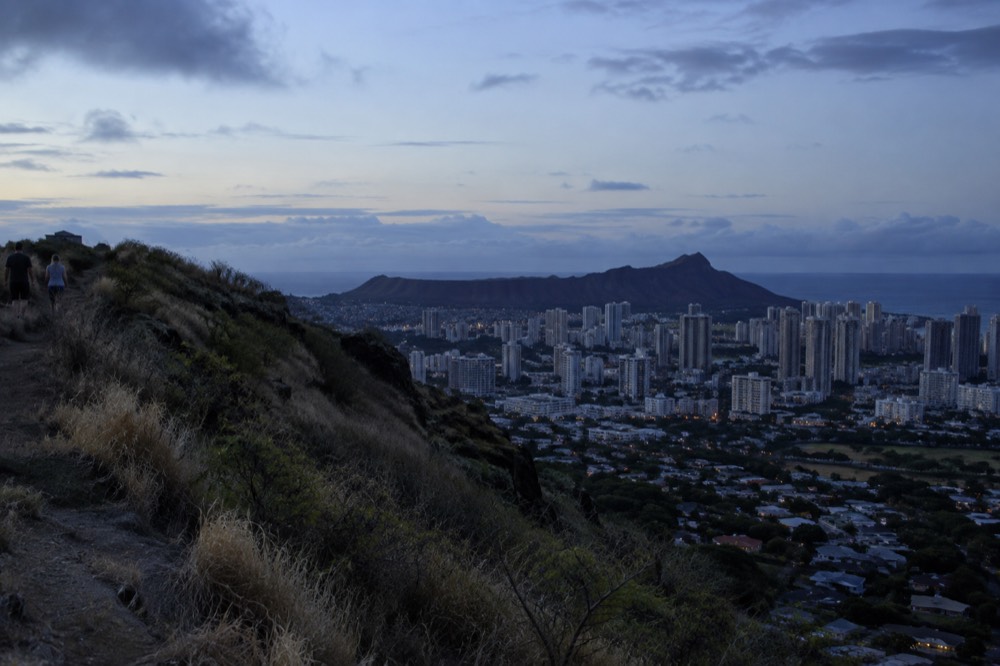
Day 2, Diamond Head and Waikīkī. Go early: the monument is open 6 a.m. to 6 p.m., last reservation 4 p.m., last entry 4:30 p.m. The trail gains about 170 metres on a mix of paved and stepped path, and the summit view over Waikīkī is the island's signature panorama. Spend the afternoon on the beach or at the Waikīkī Aquarium, and the evening at a luau if you booked one for tonight.
Day 3, Hanauma Bay and the south-east. Your 7 a.m. reservation effort pays off with the island's best accessible snorkelling. All visitors must be out by 4 p.m., and entry is capped at 1:30 p.m., so a morning slot is the right call. Afterwards, work the coast east: the Hālona Blowhole, Sandy Beach and the Mākapuʻu Point Lighthouse Trail, which is paved and steady rather than steep.
Day 4, the windward side. Kailua and Lanikai are the east coast's headline beaches, but know the parking reality before you go: Lanikai has no public lot at all, only residential streets with active towing enforcement, and the legal fallback is the Kailua Beach Park lot. Kāneʻohe and the Byodo-In Temple fill the middle of the day, and Hoʻomaluhia Botanical Garden is free and enormous. If you would rather have someone else handle the driving on this coast, the circle island tour via Byodo-In is the guided version of exactly this day.
Day 5, the North Shore. Waimea Valley is open Tuesday to Sunday, 9 a.m. to 4 p.m., closed Mondays, adult admission $26. Haleʻiwa town, the shrimp trucks and the beaches between Waimea Bay and Sunset Beach fill a full day without effort. Note that Kaʻena Point, at the coast's western end, is closed until further notice as of September 2026, so the drivable North Shore ends at Mokulēʻia for now.
Should You Rent A Car On Oahu?
Most first-timers should rent a car for part of the trip, but not necessarily all of it. Waikīkī works fine without one, because TheBus and the Skyline rail share a fare system with a $7.50 daily cap on a HOLO card, and Skyline now reaches the airport.
But the North Shore, the windward coast and Kailua are genuinely hard without wheels, so the common pattern is three or four car days between car-free Waikīkī days at either end.
The transit numbers are better than most visitors expect. A single adult cash ride on TheBus is $3.25 with no transfers, but a HOLO card gives you two hours of unlimited transfers for $3.00, a 24-hour pass for $7.50, and a hard daily cap at $7.50 after which rides are free. A monthly cap sits at $90. The card itself costs $2.
The catch is geography: there is no Skyline station in Waikīkī, so every rail trip starts with a bus transfer. The rail reaches the airport and Hālawa, and the Hālawa Aloha Stadium station is the stop for Pearl Harbor. Our do you need a car on Oahu guide works through the decision in full, and the Oahu parking guide covers where the car is more trouble than it is worth, which includes Lanikai and most of Haleʻiwa on a weekend.
If you decide against driving at all, the honest answer is a guided circle-island day: it is the only realistic way to reach the North Shore, Kāneʻohe and the lookouts in one outing without a car.
What Should First-Timers Skip?
Skip the Pali Lookout and Kaʻena Point from your plan for now, because both are closed until further notice as of September 2026 after storm damage. Skip any itinerary that puts three headland stops in one afternoon. Skip "secret spot" hunting entirely, because the places marketed that way, Lanikai, Laniakea and Mānoa among them, are residential areas already carrying more visitor traffic than their parking can hold.
The closure point matters because the Pali Lookout appears in nearly every published Oahu itinerary, including ones updated this year. The DLNR notice of 9 September 2026 closed Nuʻuanu Pali State Wayside, Kaʻena Point State Park's Mokuleʻia and Keawaʻula sections, and Wahiawā Freshwater State Recreation Area for storm repairs. Re-check the State Parks notices the week you fly; the rest of Oahu's state parks have reopened. More of these guides are collected on Oahu Travel Guide.
The "secret spot" point matters for a different reason. Laniakea's roadside arrangement has been reshaped by an ongoing highway drainage and safety project, Lanikai has no legal parking beyond the beach park, and Mānoa's trail lot is privately run. A first-timer driving to any of these on a Saturday loses an hour to parking alone. The hidden gems on Oahu guide is honest about which of these are worth the friction and which are not.
Island-hopping deserves its own sentence: a Maui or Kauai day trip eats a full day for a few hours on the ground, and Oahu itself has a coast most first-timers never reach. If your trip is seven days or more, the day trip from Oahu to Maui is viable; below that, it is a way to see two airports.
What About Weather, Waves And Rain?
Oahu's weather splits by shoreline, not by season, and that shapes the whole plan. North-facing shores peak in winter and south-facing shores peak in summer, so the calm beach in January is not the calm beach in July. Rain splits even harder: Honolulu airport records 16.41 inches a year while Mānoa, five miles inland, records 150.96 inches, so a sunny Waikīkī morning tells you almost nothing about the waterfall trail.
That rainfall contrast is the single most useful planning fact on the island, and it is grounded in the 1991 to 2020 NOAA climate normals. Every single month in Mānoa is wetter than Honolulu airport's wettest month. Practical consequence: check the sky over the Koʻolau range, not the sky over your hotel, before driving to a waterfall.
The surf pattern is equally concrete. The National Weather Service's Honolulu surf forecast publishes Oahu by shore aspect, and on a sample September day in 2026 the south shore was running four to six feet while the north shore sat at one to three: the exact inversion of the winter pattern. In January, flip it. First-timers swimming at Waimea Bay in winter should not, and first-timers wondering why Waikīkī has a shorebreak in August now have the answer.
| Shore | Calmest for swimming | Character |
|---|---|---|
| South (Waikīkī, Ala Moana) | Summer months | Sheltered, busiest, lifeguarded |
| East (Waimānalo, Kailua) | Year-round, trade-wind chop | Long sand, steady breeze |
| North (Waimea, Sunset) | Summer | Winter brings the large swells |
| West (Ko Olina, Nānākuli) | Generally calmer | Farther from Waikīkī, lagoon swimming |
For month-by-month detail, the Oahu weather by month and best time to visit Oahu guides carry the full breakdown.
Where Does The Money Go, And What Will Surprise You?
The surprises are taxes and fees, not sticker prices. Hawaii's Transient Accommodations Tax rose from 10.25% to 11.00% on 1 January 2026 under Act 96, sometimes reported as a "green fee", and it is an increase to the existing hotel tax, not a separate charge collected at the airport. Add Oahu's general excise tax and parking, and the nightly hotel price you booked is meaningfully lighter than the one you pay.
Act 96 also extended the tax to cruise-ship fares, which matters if your Oahu visit is a port call. The state Department of Taxation states the change plainly: the TAT increase applies to gross rental proceeds from transient accommodations, effective 1 January 2026.
The activity budget is more predictable than first-timers fear, because the headline outdoor sites are cheap or free: Diamond Head is $5 per person, Hanauma Bay is $25, the Arizona Memorial program is free, and the bus caps at $7.50 a day. The expensive line items are the ones you choose, luaus, helicopter flights, guided tours, and our Oahu vacation cost breakdown prices them honestly.
If you plan to stack several paid attractions, the one pass, forty attractions product bundles a large set of them, and the Oahu on a budget guide covers the free tier, which is deeper than most visitors expect.
Hanauma Bay is the one reservation-locked site where a tour can genuinely help: the shuttle-and-ticket products handle the 7 a.m. booking scramble and the transport from Waikīkī, which matters if you would rather not set an alarm on holiday.
For travellers who prefer to have the whole day's logistics handled, the guided options below cover the circle-island loop and the Pearl Harbor morning, the two days where a tour replaces the most planning.
Should You Take A Guided Tour Or Go It Alone?
Go alone for anything inside Waikīkī, Diamond Head and Hanauma Bay, because reservations and a bus or car cover them. Take a guided tour for Pearl Harbor if you want the history narrated rather than read, and for the circle-island day if you would rather not drive the whole loop yourself. The island's logistics are easy; its context is not, and a good guide is worth paying for exactly where the context matters.
Pearl Harbor is the clearest case. You can visit entirely free and self-guided, and many people should. But the site's story is dense, and a guided half-day turns four museums into a narrative. The Pearl Harbor day trip planner walks through the self-guided version, including the other vessels at the site beyond the memorial itself.
The circle-island question comes down to driving. The loop touches a dozen stops across a full day, parking at several of them is non-trivial, and a tour removes both. The trade-off is control: you cannot linger in Haleʻiwa for an extra shave ice if the bus is leaving. First-timers who value ease take the tour; first-timers who value lingering rent the car.
Diamond Head is the one hike where a tour can also solve a problem: the ticket-and-shuttle products bundle the reservation and the transport from Waikīkī, which is useful if the 30-day window has already passed or you simply want the early start handled.
Common Questions About A First Oahu Itinerary
Most first-timer questions come down to three things: booking rhythm, island geometry and weather. Diamond Head books up to 30 days out, Hanauma Bay opens two days ahead at 7 a.m., the island's coasts are too far apart to mix casually, and the wettest valley on the island sits five miles from the driest airport. Every answer below follows from one of those facts, and none of them requires insider knowledge, only a calendar and a reservation site.
Is three days enough for a first Oahu trip?
Three days is enough to see Pearl Harbor, Diamond Head, Hanauma Bay and one coast, but you will sacrifice either the North Shore or the windward side entirely. Treat three days as a taster, book the reservation-locked sites before you fly, and plan a return trip rather than a rushed loop.
What should I book before flying to Oahu?
Book your hotel, a luau date, a USS Arizona boat ticket on recreation.gov, and a Diamond Head entry and parking reservation up to 30 days ahead. Hanauma Bay cannot be booked early: its reservations open two days ahead at 7:00 a.m. HST, so that one is booked from your accommodation.
Do I need a rental car on Oahu?
Not for Waikīkī: TheBus and Skyline share fares with a $7.50 daily cap on a HOLO card, and rail now reaches the airport. You do want a car for the North Shore, Kailua and the windward coast, so many first-timers rent for the middle three or four days only. Note there is no Skyline station in Waikīkī.
Which side of Oahu should I visit first?
Front-load the reservation-locked sites: Pearl Harbor on day one, Diamond Head on day two, Hanauma Bay on day three if your 7 a.m. booking succeeds. Save the North Shore for late in the trip so a winter swell or rain band can be swapped with your spare day.
Is Hanauma Bay worth it for first-timers?
Yes, if the reservation works. It is the island's most accessible high-quality snorkelling, entry is $25 plus a service fee, children 12 and under are free, and it is closed Mondays and Tuesdays. Book exactly two days ahead at 7:00 a.m. HST, and take a morning slot, since entry closes at 1:30 p.m.
What is the biggest first-timer mistake on Oahu?
Trying to see everything. The island's headline stops sit on opposite coasts, several require reservations on different clocks, and the famous "secret" spots are parking-starved residential areas. Pick one coast per day, leave a spare day, and skip anything closed, which as of September 2026 includes the Pali Lookout and Kaʻena Point.
Plan the reservations, split the coasts, keep a spare day in your pocket, and Oahu will do the rest. The island is small enough to feel manageable in a week and varied enough that a first trip never feels like enough, which is the best possible problem a destination can give you.