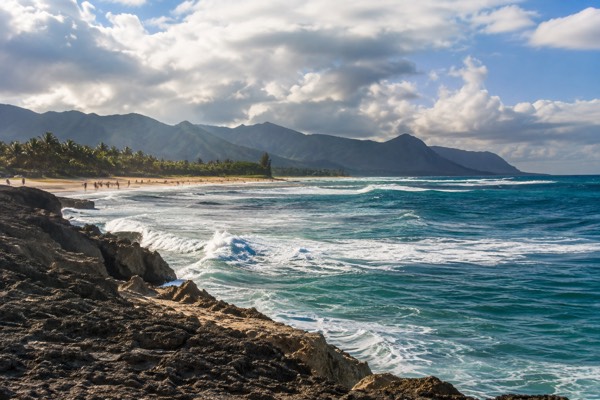
5-Day Oahu Itinerary For Families: A Realistic Plan Day By Day
Five days is enough for Oahu with kids if you respect two things: the reservation calendar and the island's traffic. This plan does both.
Short answer
Spend Day 1 on WaikiKI and Diamond Head, Day 2 at Pearl Harbor, Day 3 on the east side around Kailua, Day 4 on the North Shore, and Day 5 on a circle-island tour or at Hanauma Bay. Book Diamond Head and Hanauma Bay reservations before you fly, and keep every afternoon short.
Oʻahu took 5,679,047 visitors by air in 2025, and a large share of them arrived with children and five days. That is enough time to see the island properly, but only if the plan is honest about what five days holds: two reservation deadlines that matter, one long driving day, and the simple fact that kids melt down at hour six, not hour nine. This itinerary is built around that reality, and every figure in it comes from official sources checked in September 2026.
One closure to know about before anything else: Nuʻuanu Pali Lookout and Kaʻena Point are closed until further notice following Hurricane Lowell, per the DLNR State Parks notice dated 9 September 2026. Several older itineraries still route families through the Pali Lookout. Do not build your day around it until DLNR confirms it has reopened.
How Does This 5-Day Oahu Itinerary For Families Actually Work?
The plan runs one anchor activity per morning, one optional short stop per afternoon, and nothing scheduled after dinner. Days 1, 2 and 3 stay close to Waikīkī to limit driving, Day 4 commits to the North Shore, and Day 5 either loops the island on a guided tour or goes to Hanauma Bay. Two things must be booked before you fly: the Diamond Head reservation and the Hanauma Bay slot.
The reason the plan looks the way it does is the island's own geometry. What is verifiable is that each day here keeps the driving to one direction rather than zigzagging.
The single most useful thing you can do is treat the reservation calendar as part of the itinerary. Hanauma Bay opens bookings two days ahead at 7:00 a.m. HST, and the official City & County page phrases it plainly: Monday at 7 a.m. you can begin reserving a time slot for Wednesday. Diamond Head accepts reservations up to 30 days ahead for non-residents, and non-residents must have one for entry and parking, a rule in force since 12 May 2022. If your trip includes a weekend, book Diamond Head the day the window opens.
| Day | Anchor morning | Afternoon option | Booking needed |
|---|---|---|---|
| 1 | Diamond Head early, Waikīkī beach after | Waikīkī Aquarium or hotel pool | Diamond Head reservation (non-residents) |
| 2 | Pearl Harbor National Memorial | USS Bowfin or downtown Honolulu | Arizona program ticket on recreation.gov |
| 3 | Kailua and Lanikai area | Hoʻomaluhia Botanical Garden | None |
| 4 | North Shore: Haleʻiwa and Waimea | Laniakea Beach from a legal parking spot | None |
| 5 | Circle-island tour, or Hanauma Bay | Swap to whichever you did not do | Hanauma Bay slot, 2 days ahead, 7 a.m. |
A note on the fifth day. The circle-island tour and Hanauma Bay are alternatives, not a double-up. Hanauma Bay closes Mondays and Tuesdays, and entry is only allowed between 6:45 a.m. and 1:30 p.m., with everyone out by 4 p.m., so it consumes a morning and part of an afternoon on its own. If you could not get a slot, the guided loop is the better use of the day anyway.
Day 1: Diamond Head And Waikīkī, The Easy Landing Day
Start with Lēʻahi, the crater signposted as Diamond Head, first thing in the morning, then spend the rest of the day near your hotel. Out-of-state visitors pay $5 per person to enter plus $10 per vehicle, Hawaii residents enter free with ID, and non-residents need a reservation for entry and parking, with no on-site sales. The gate runs 6 a.m. to 6 p.m., last entry 4:30 p.m., credit card only.
The reason Day 1 starts here is jet lag, or rather the useful version of it. Mainland families wake early in Hawaiʻi for the first few days, and a 7 a.m. crater start uses that wake-up instead of fighting it. The trail is paved for most of its length and finishes with stairs and a tunnel; bring water, and do not plan it for midday. The Diamond Head State Monument guide covers the reservation system in detail.
If you would rather not handle the reservation and the drive yourself, a shuttle-and-ticket product exists that bundles both, which is a genuinely reasonable choice with kids on day one:
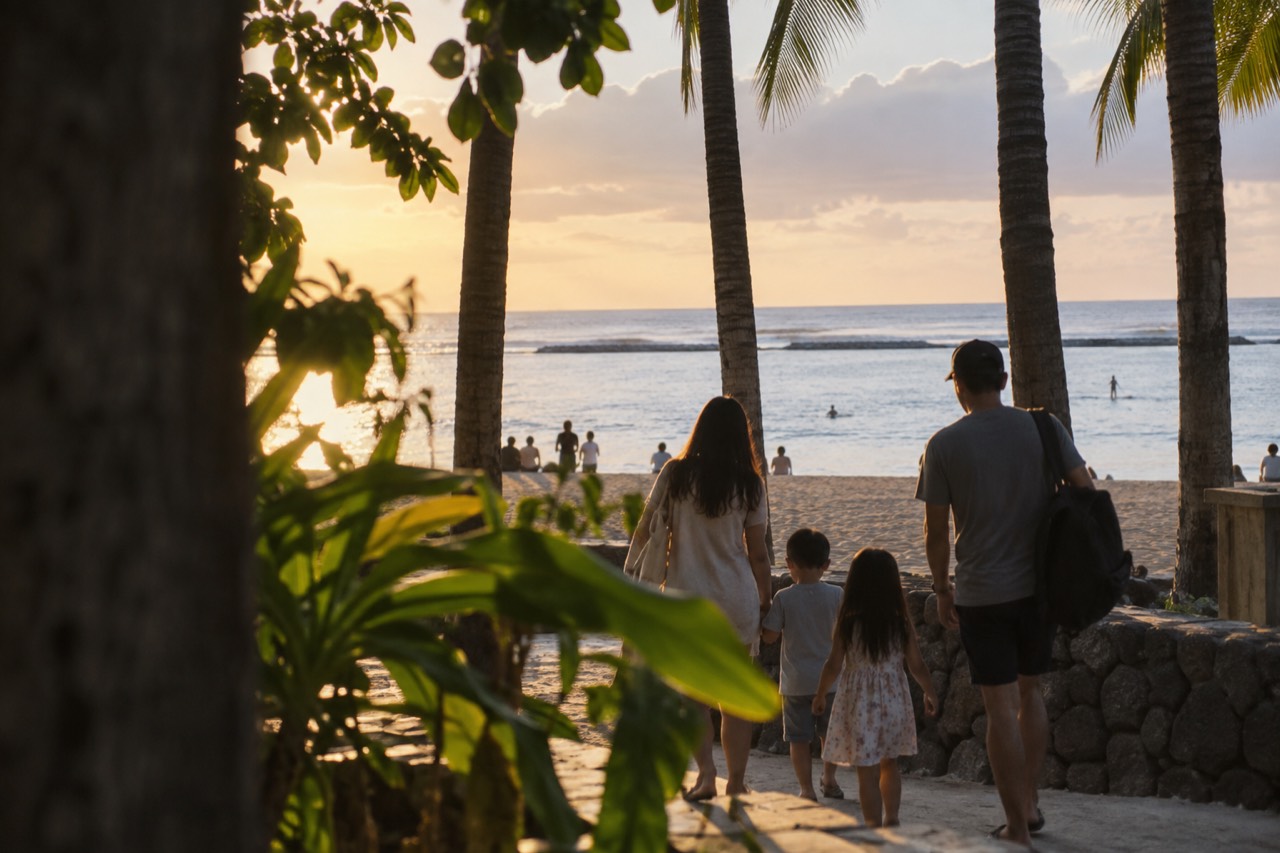
Afternoon belongs to Waikīkī. The beach's protected stretch at the Queen Kapiʻolani end is where beginner surf lessons happen for a reason, the water is shallow and the reef blocks the swell. A first-timer group lesson is one of the few tours that fits naturally into a landing day because it starts and ends at the beach you are already sitting on. The Waikīkī neighborhood guide maps the blocks worth walking.
Evening: dinner early, in. The latest sunset of the entire year in Waikīkī is about 7:17 p.m., in early July, and by winter it is closer to 5:55 p.m. Oʻahu does not have long summer evenings the way mainland destinations do, and families who plan a 7 p.m. beach sunset in December will miss it.
Day 2: Pearl Harbor, Handled Respectfully And Early
Pearl Harbor National Memorial is free to enter, and the USS Arizona Memorial program is free, reserved through recreation.gov with a $1 non-refundable management fee per ticket. The visitor center opens 7 a.m. to 5 p.m. daily, the program runs about 45 minutes, and bags of any kind are prohibited, with paid storage near the entrance. Parking is $7 per day. The memorial is a war grave.
Book the earliest program slot you can get. The morning is cooler, the queues are shorter, and the whole family is fresher. The boat out to the memorial and the shrine room are quiet places; the National Park Service asks for silence in the shrine room, and that is worth explaining to children before you board rather than after. The Pearl Harbor and USS Arizona Memorial guide covers what to expect minute by minute.
If you want the day structured and the transport handled, a half-day guided tour covers the memorial plus the essentials, and several operators run hotel pickup from Waikīkī. That matters more than it sounds on Day 2, when you have not yet worked out the roads.
The trade-off with a guided half-day is simple: you give up control of the schedule and get back a driver, a reservation already handled, and a fixed finish time you can plan lunch and naps around. For families with children under about ten, that trade is usually worth it, because the alternative is coordinating your own recreation.gov tickets, parking at the $7 lot, and herding everyone through the bag-storage line before the program.
For the afternoon, you have two honest options. The USS Bowfin submarine museum sits within the same complex and is a hit with school-age kids who can handle the tight spaces, or you can drive back toward town for ʻIolani Palace and a slower afternoon. Do not try to do both halves of Pearl Harbor and downtown in one day with children; the memorial morning is emotionally and physically heavier than it looks on a map.
Day 3: The East Side, Kailua And The Windward Coast
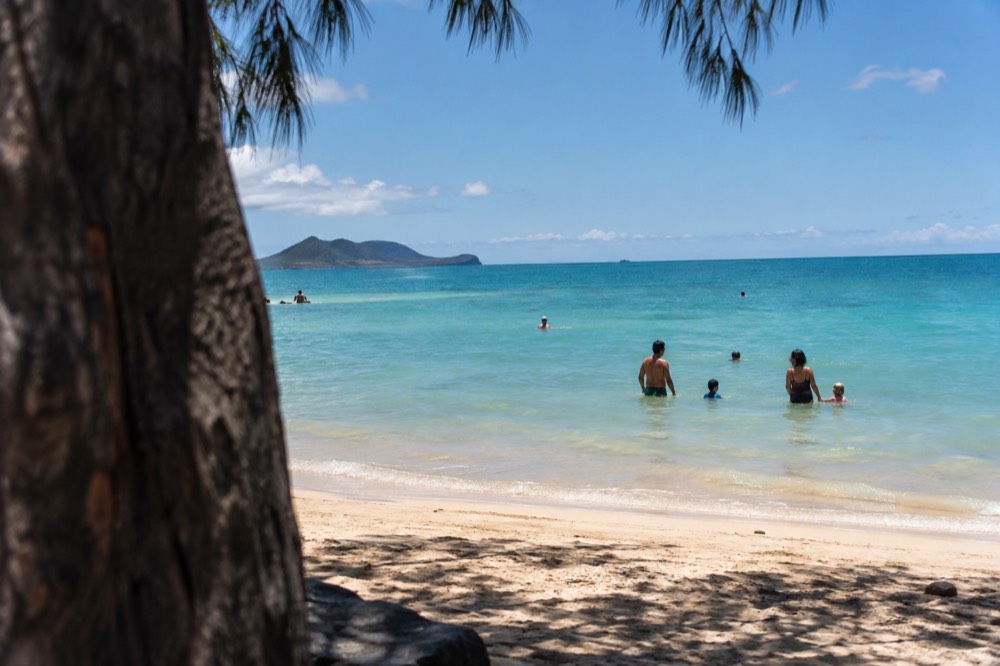
Day 3 goes over the Koʻolau range to Kailua and the windward coast, and the honest headline is a parking one: Lanikai Beach has no public parking lot at all, only residential streets with no-parking restrictions and towing enforcement, so the legal plan is the Kailua Beach Park lot and a walk. Kailua Beach Park itself is the easier family beach anyway, with a lifeguarded stretch, restrooms and calmer water than the open coast.
Kailua Beach Park and Kalama Beach Park have one more thing worth knowing: a City & County ordinance prohibits commercial tour activity and recreational stops by commercial operators there, so this is a do-it-yourself day by design. Rent kayaks or paddleboards locally, or just set up for the morning. The Kailua guide and the Kailua Beach Park page cover the practical details.
For families who want the water time but not the logistics, a guided kayak and snorkel trip out towards the Mokulua islands runs from Kailua Bay with lunch included, and it is the one east-side product that operates from the bay rather than the restricted parks:
Afternoon: Hoʻomaluhia Botanical Garden, free and flat, with a lake at the end of the drive and the Koʻolau wall as the backdrop. It is the best shaded, stroller-friendly stop on this side of the island. If the family still has gas, the Lanikai Pillbox hike is short but steep at the start; save it for a morning, not a 3 p.m. after-beach attempt.
One east-side fact worth carrying: the windward coast is wetter than town, and dramatically so. A passing shower on this side of the island is normal and usually brief; pack the rain shell and do not cancel the day for clouds.
Day 4: The North Shore, With Realistic Expectations
Day 4 is the long drive day: Haleʻiwa town in the morning, Waimea Bay and the surrounding beaches at midday, and Laniakea Beach for turtles only if you can park legally. The North Shore is a working community on a two-lane highway carrying enormous visitor pressure, so park in designated areas only, never stop in the travel lane, and never treat a resident's driveway as overflow. Laniakea's shoulder parking has been restricted with barriers.
To add an evening show to the North Shore day, book a luau package here.
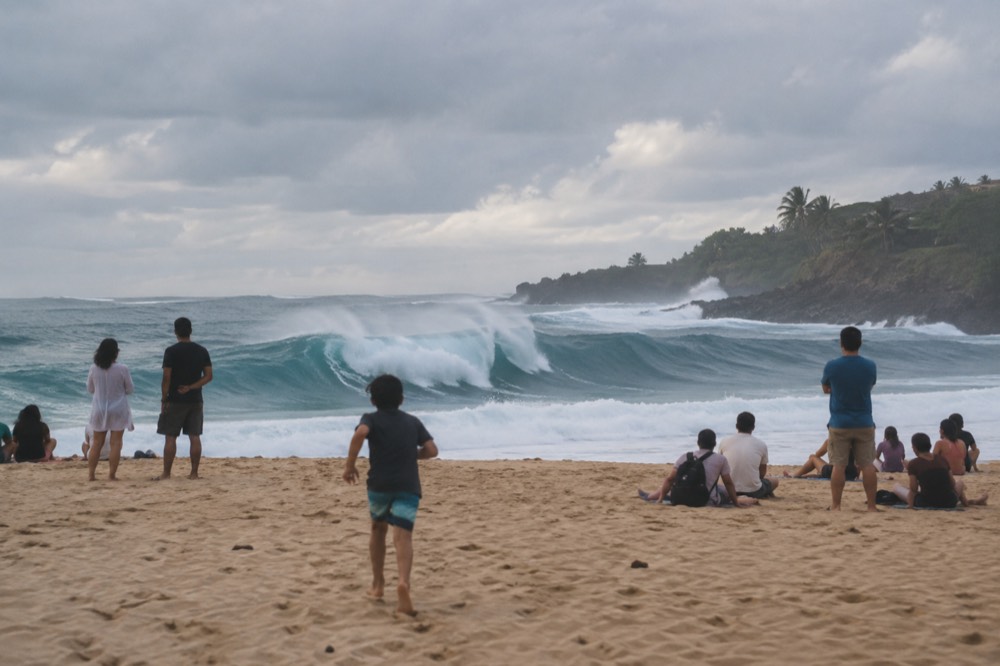
Haleʻiwa first, for shave ice and the town itself, before the parking fills. Then the beaches: Waimea Bay in summer is a swimming hole, and in winter it is a big-wave spot you watch from the sand, and the difference is not a detail, it is the whole decision. The North Shore guide and the Haleʻiwa town guide break the day down.
Waimea Valley is the North Shore's best family stop and the one most itineraries underuse. It is open Tuesday to Sunday, 9 a.m. to 4 p.m., closed Mondays, and admission is $26 for adults, $18 for children 4 to 12, with kamaʻāina and military rates lower. The walk to the falls is paved and flat, roughly a mile each way through a botanical collection, which makes it one of the few North Shore activities that works for every age at once. The Waimea Valley guide covers what to expect; whether swimming at the falls is allowed is decided daily by the lifeguard, so ask at the desk rather than assuming.
Two wildlife rules to carry on this coast. If a Hawaiian monk seal is hauled out on the sand, stay back about 50 feet, 150 for a mother with pup; those are recommended distances, but harassing a seal is illegal under state law and a class C felony. For honu, the green sea turtles, keep about 10 feet back, and never block their path to the water. The Laniakea Beach page explains the parking situation in detail, and the honest advice is that if the legal spots are full, skip it and come back another year.
Day 5: The Circle Island Tour, Or Hanauma Bay
Day 5 is one of two things. If you secured a Hanauma Bay slot, that is your morning: entry is allowed 6:45 a.m. to 1:30 p.m., everyone out by 4 p.m., non-resident entry is $25 plus a 2.35% service fee, children 12 and under free, and the bay is closed Mondays and Tuesdays.
If not, a guided circle-island tour covers the whole island in one booked day, which with kids is the easier plan.
The circle-island option deserves its place in a family itinerary for a mechanical reason: it converts the island's hardest logistics into someone else's job. The most-booked version runs about six and a half hours with a Haleʻiwa stop built in, and a longer hidden-gems variant adds the Byodo-In Temple, whose grounds are one of the most peaceful stops on the island for children and adults alike. The Byodo-In Temple guide shows what the stop looks like.
If Hanauma Bay is the choice, set an alarm. Reservations open two days ahead at 7:00 a.m. HST, and slots for good morning times go fast. Hawaii residents enter free with no reservation, US military and dependents free with ID, and parking at the bay is $3 for non-residents, cash only. The Hanauma Bay guide covers the mandatory orientation video and what the reef actually looks like. A shuttle-and-snorkel tour exists that handles the timing, which is worth considering if the 7 a.m. booking scramble failed:
Whichever way Day 5 goes, keep the evening free. The last night of a family trip is for packing and one last beach walk, and sunset in Waikīkī never runs later than about 7:17 p.m. even at the year's peak.
What Should Families Know About Getting Around Oahu Without A Car?
TheBus and Skyline share one fare structure: $3.25 for an adult cash single ride on TheBus with no transfers, a $3.00 HOLO card two-hour pass with unlimited transfers on both systems, and a $7.50 daily cap, after which rides are free. A HOLO card costs $2, children 5 and under ride free, and the monthly cap is $90. Skyline reaches the airport but has no Waikīkī station.
| Fare | Price | Notes |
|---|---|---|
| Adult cash, TheBus only | $3.25 | No transfers, exact fare |
| HOLO 2-hour pass | $3.00 | Unlimited transfers, TheBus and Skyline |
| 24-hour pass / daily cap | $7.50 | Max charged per day, then free |
| 7-day pass | $45.00 | 168 hours from first tap |
| Monthly cap | $90.00 | Max charged per month |
| Child 5 and under | Free | With a paying rider, not occupying a seat |
For this itinerary specifically, a car is useful but not mandatory. Days 3 and 4 are the car days; Days 1, 2 and 5 are all reachable from Waikīkī by shuttle, tour pickup or a short bus ride. If you do rent, read the Oahu parking guide before you go, because parking, not driving, is the part that punishes families on this island.
The reservation calendar, condensed, because this is the part people get wrong:
| What | When to book | Official window |
|---|---|---|
| Diamond Head entry and parking (non-residents) | Up to 30 days ahead | Mandatory, no on-site sales |
| Hanauma Bay time slot | Exactly 2 days ahead, 7:00 a.m. HST | Bay closed Mondays and Tuesdays |
| USS Arizona Memorial program | On recreation.gov, as early as possible | $1 management fee per ticket |
| Waimea Valley | Walk-up usually fine; book for weekends | Closed Mondays |
One tax note, because it affects the family budget and is widely misreported. What people call the "Green Fee" is not a fee you pay at the airport. Act 96 raised the existing Transient Accommodations Tax from 10.25% to 11.00% effective 1 January 2026, and extended it to cruise-ship fares. It shows up inside your hotel bill, not as a separate charge on arrival.
Common Questions About A 5-Day Oahu Family Itinerary
Most questions about a five-day family trip to Oahu come down to three things: the two reservations that can sink a day if missed, the fact that the island's best family beaches sit on opposite coasts, and the short evenings, with sunset never later than about 7:17 p.m. in Waikīkī. Get Diamond Head and Hanauma Bay booked correctly and five days is genuinely enough.
Is 5 days in Oahu enough for a family?
Yes, for one island. Five days covers Waikīkī, Pearl Harbor, the east side, the North Shore and either a circle-island tour or Hanauma Bay. It is not enough to add a second island without losing a day to interisland flights, and most visitors do not island-hop anyway: in July 2026, 387,063 of Oahu's 499,197 visitors by air saw only Oahu.
Which day should we do Pearl Harbor with kids?
Day 2 works best because it is a short trip from Waikīkī and the memorial program is only about 45 minutes. Book the earliest slot, explain the shrine-room silence to children beforehand, and remember bags of any kind are prohibited, with paid storage near the entrance.
Can we do Hanauma Bay without a reservation?
Not as a non-resident. Hawaii residents enter free with no reservation, but everyone else needs a timed slot booked through the official system, which opens two days ahead at 7:00 a.m. HST. Children 12 and under are free but still need to be included in the booking.
Is the North Shore worth it with young children?
In summer, yes: Waimea Bay becomes a calm swimming hole and the town of Haleʻiwa is an easy stop. In winter the same bay carries big waves that are for watching, not swimming. Waimea Valley, with its paved flat walk, works in every season and for every age.
Do we need to rent a car for this itinerary?
Not for the whole trip. Days 1, 2 and 5 work with shuttles, tour pickups and TheBus, whose $7.50 daily cap on a HOLO card makes transit cheap. A rental car earns its cost on Days 3 and 4, the Kailua and North Shore days, where the stops are spread out and parking, not driving, is the real challenge.
What is the one thing families most often get wrong?
Assuming Oahu has long summer evenings. It does not. Day length varies by only about two and a half hours across the year, and sunset never runs later than about 7:17 p.m. Plan the beach walk for the actual sunset time, not for a mainland summer habit.
The plan holds together because it asks one thing of each day and nothing of the evenings. Book the two reservations before you fly, keep the driving pointed in one direction, and the island does the rest. For everything beyond these five days, the Oahu Travel Guide homepage and the full things to do in Oahu index are the next stops.