USS Bowfin Submarine Museum & Park On Oʻahu: What A Visit Actually Involves
USS Bowfin Submarine Museum & Park sits inside the Pearl Harbor Historic Sites complex, a short walk from the USS Arizona Memorial program. It is the one part of Pearl Harbor where you can go below deck on a real submarine, and it rewards visitors who plan the timing around it rather than treating it as an afterthought.
Short answer
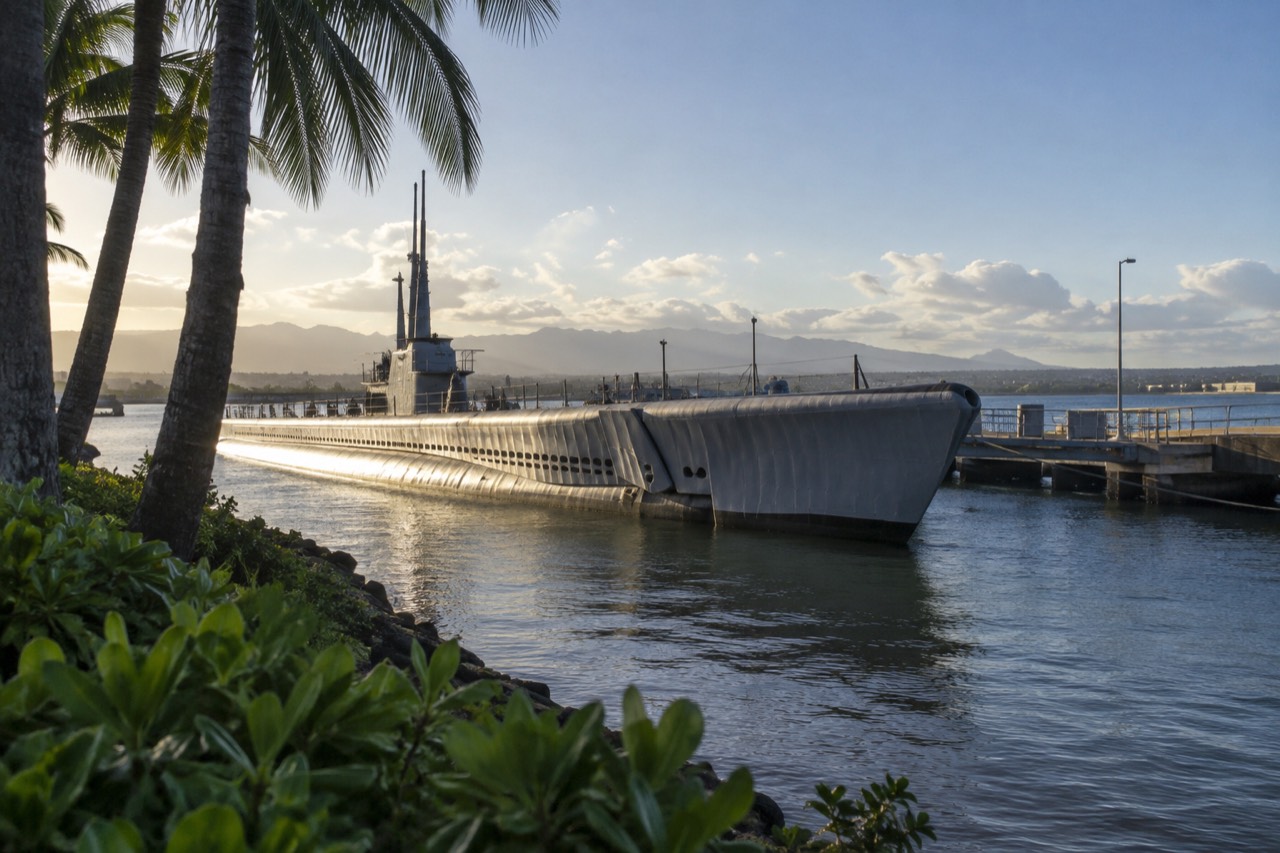
USS Bowfin Submarine Museum & Park is a restored fleet submarine and waterfront museum inside the Pearl Harbor visitor center campus on Oʻahu. You can walk through the boat, tour the indoor exhibits and the memorial waterfront on the same ticket, and most visits run one to two hours. It is reached through the same entrance, parking and security rules as the USS Arizona Memorial.
The USS Arizona Memorial program at Pearl Harbor is free, and that fact pulls most of the planning attention on Oʻahu's south shore. But the campus around it holds more than the memorial, and the piece visitors most often underestimate is USS Bowfin Submarine Museum & Park. It is the only place in the complex where you physically descend into a vessel, squeeze past torpedoes and climb through a watertight hatch, and it sits roughly a two-minute walk from the Arizona program's departure point. This guide covers what a Bowfin visit actually involves: how you get there, what it costs to plan for, how long it takes, and how to slot it into a day that also honors the memorial.
One note on tone before anything else. Pearl Harbor is an active military base and a place where more than a thousand sailors and Marines remain entombed in the USS Arizona. The Bowfin is a museum, and visiting it is a normal, enjoyable thing to do. But the wider site is not a theme park, and this guide treats it accordingly. For the full picture on the memorial itself, start with our Pearl Harbor and USS Arizona Memorial guide, and for the broader island picture, the Oahu Travel Guide homepage collects everything in one place.
What Is USS Bowfin Submarine Museum & Park?
USS Bowfin Submarine Museum & Park is a museum complex at the Pearl Harbor visitor center campus featuring a restored fleet submarine you can walk through, an indoor museum on the submarine service, and a waterfront memorial walk. It operates separately from the National Park Service's USS Arizona Memorial program, so it needs its own ticket even though you reach it through the same entrance, parking lot and security screening as everything else at Pearl Harbor.
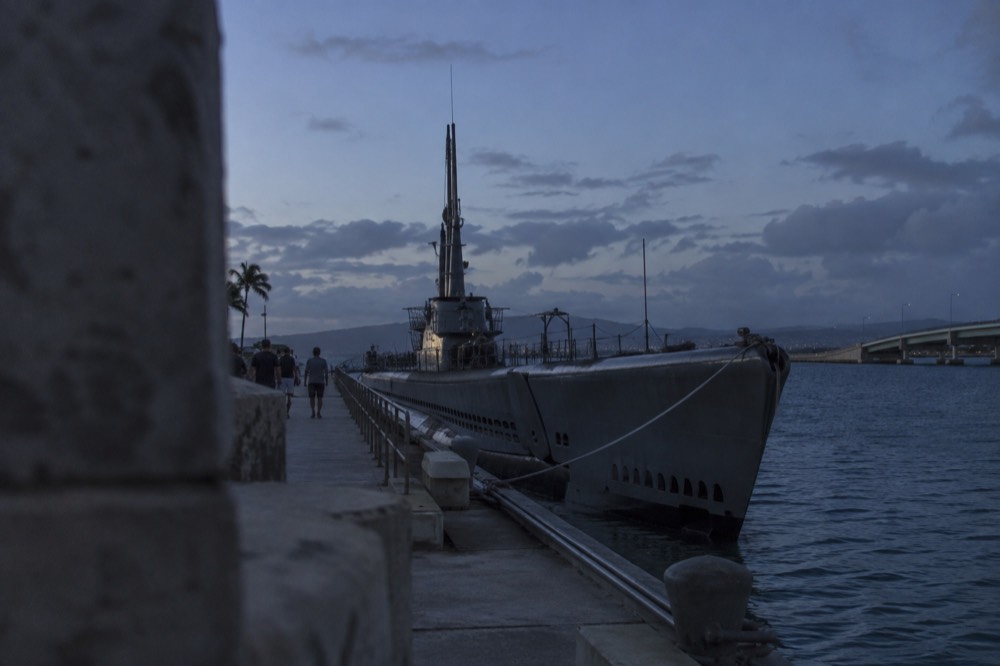
The submarine itself is the draw. You enter on a self-guided route that takes you through the boat from bow to stern, or as close to it as the museum layout allows, passing through the tight corridors that defined submarine life. The companion museum building holds the larger story: exhibits on the submarine war in the Pacific, torpedo and weapons displays, and memorials to the submariners who did not come home. Outside, the waterfront park includes memorials and views across the harbor toward the USS Arizona Memorial and the ships of the active fleet when they are in port.
The practical point, and the one people miss: the Bowfin is not run by the National Park Service. The park service manages the USS Arizona Memorial program, which is free. The Bowfin, the Battleship Missouri and the Pearl Harbor Aviation Museum are separate attractions with separate admission, run by separate nonprofit organizations on the same campus. That matters for planning, because a "Pearl Harbor ticket" does not exist as a single item covering everything. You assemble the day yourself, or you take a tour that assembles it for you.
Where Is USS Bowfin And How Do You Get There From Waikīkī?
USS Bowfin sits inside the Pearl Harbor National Memorial campus on Oʻahu's south shore, immediately adjacent to the visitor center, roughly a two-minute walk from the USS Arizona Memorial program departure point. You reach it by car via the visitor center parking lot, by TheBus routes serving the area, or by Skyline rail with a bus transfer onward. Entrance, parking and security screening are shared with the entire campus.
Driving is the straightforward option for most visitors. The lot at the visitor center charges $7 per day, paid by mobile app or QR code, and it is the same lot for the Arizona program, the Bowfin, the Battleship Missouri and the aviation museum. Arrive early if you want a spot close to the entrance; the campus draws heavy traffic, and the early-morning hours are when the Arizona program's first departures fill up.
Public transit works better here than visitors expect. TheBus and Skyline share a fare structure: an adult cash single ride on TheBus is $3.25 with no transfers, while a HOLO card gives you a two-hour pass with unlimited transfers for $3.00, and daily charges cap at $7.50 no matter how much you ride. The rail line's Hālawa Aloha Stadium Station is the stop the city names for the Pearl Harbor memorial and visitor centre, with bus transfers onward. There is no Skyline station in Waikīkī, so rail riders transfer to a bus for the final leg. For the full fare and route picture, see our Honolulu Skyline rail guide and TheBus on Oʻahu guide.
Tours and shuttles are the third option, and for many visitors the best one. A guided tour handles the two things that are genuinely hard about Pearl Harbor on your own: the drive from Waikīkī and the timing of the Arizona program's reserved tickets. Several operators run half-day formats that pair the memorial program with the surrounding historic sites.
How Much Does A Bowfin Visit Cost, And Do You Need To Book Ahead?
The Bowfin is a separately ticketed attraction, and its current admission prices are set by the museum, so check the posted rates at the ticket counter or the operator's live listing before you go; unlike the USS Arizona Memorial program, there is no free federal entry here.
Budget for three separate possible costs: Bowfin admission, the $7 per day visitor center parking if you drive, and the $1 per-ticket recreation.gov management fee if you reserve the Arizona program yourself.
The cost structure of a Pearl Harbor day confuses people because it mixes a free federal program with paid private museums. Multi-attraction combinations covering the Bowfin, the Missouri and the aviation museum are sold, and they usually beat single tickets if you plan to see more than one. The table below lays out what is what, using only figures the official sources publish.
| Item | Cost | Who sets it | Notes |
|---|---|---|---|
| USS Arizona Memorial program | Free, plus $1 per-ticket management fee on recreation.gov | National Park Service / recreation.gov | Reserve online; the fee is non-refundable |
| Visitor center parking | $7 per day | Pearl Harbor campus | Paid by mobile app or QR code |
| USS Bowfin admission | Priced by the museum; check at the counter or listing | USS Bowfin museum | Separate from the federal program |
| Battleship Missouri admission | Priced by the Missouri's operator; check the listing | Battleship Missouri memorial | Separate attraction on the same campus |
| Bag storage | A small fee exists; amount not published | Pearl Harbor campus | Avoid by bringing no bag at all |
Booking ahead matters less for the Bowfin than for the Arizona program. The memorial program's tickets are the scarce commodity at Pearl Harbor; the Bowfin is a museum with capacity that flexes across the day. The sensible sequence is to reserve your Arizona program slot first, then plan the Bowfin around it, either before your program time or after you return to shore. If you are buying a multi-attraction pass, do the math against what you will realistically see: a pass covering three sites is wasted if your Arizona time lands at 2 p.m. and you only have the morning.
If assembling all of this yourself sounds like work, a guided tour bundles the transport and the memorial program into one booking. The cheapest guided option that still includes the Arizona Memorial is a compact four-hour format.
Should You Take a Tour or Visit Independently?
Going independently works well if you have a car, you are confident about reserving the Arizona program on recreation.gov, and you want flexibility to linger at the museums. A guided tour is the better call if you are staying in Waikīkī without a vehicle, you want the memorial program's logistics handled, or you are on a cruise-ship day with a hard afternoon deadline. Tours cost more than the sum of the parts, but the parts include a drive and a reservation system that trips up a lot of first-time visitors.
The honest trade-off is about time and stress, not knowledge. The National Park Service's own program at the Arizona includes a documentary film and the boat ride to the memorial, and it is delivered by the park, not by a commercial operator. What a paid tour adds is transport, a fixed itinerary and someone who handles the clock. What it subtracts is the ability to spend forty extra minutes in the Bowfin's museum because a display caught your attention.
How Long Should You Plan For The Bowfin Itself?
Most visitors spend one to two hours at USS Bowfin Submarine Museum & Park: about thirty to forty-five minutes walking through the submarine, and another thirty to sixty in the museum building and waterfront memorials. Add fifteen minutes for ticketing and walking from the visitor center entrance. Combined with the USS Arizona Memorial program, budget a half day for the two together, and a full day if you add the Battleship Missouri or the aviation museum.
The walk-through of the boat is the fixed-cost item, and it is not skippable in either sense: you cannot shorten the route much, and you should not skip it. The interior is a series of tight passages, and on a busy day the flow of visitors moves at the pace of the slowest person ahead of you. Morning visits before tour groups arrive tend to move faster, which is one more argument for building your day around an early start.
The museum building is where time flexes. Visitors with a strong interest in the Pacific war can spend an hour or more among the exhibits; visitors with kids in tow may move through it in twenty minutes and spend the balance of their time at the waterfront, where the memorials and harbor views are. There is no wrong answer, but knowing the split exists helps you plan the rest of the day.
A rough day-shape for a full Pearl Harbor morning looks like this:
| Time | Activity | Notes |
|---|---|---|
| 7:30 to 8:00 a.m. | Arrive, park, clear security | No bags; the $7 parking is paid by app |
| 8:00 to 9:15 a.m. | USS Arizona Memorial program | Reserve ahead on recreation.gov; $1 fee per ticket |
| 9:30 to 11:00 a.m. | USS Bowfin submarine and museum | Walk-through plus exhibits |
| 11:00 a.m. to 12:30 p.m. | Battleship Missouri, if adding | Separate admission; check the listing |
| Afternoon | Return to Waikīkī or continue to Punchbowl | The cemetery closes mid-afternoon; check hours |
What Will You Actually See On Board The Bowfin?
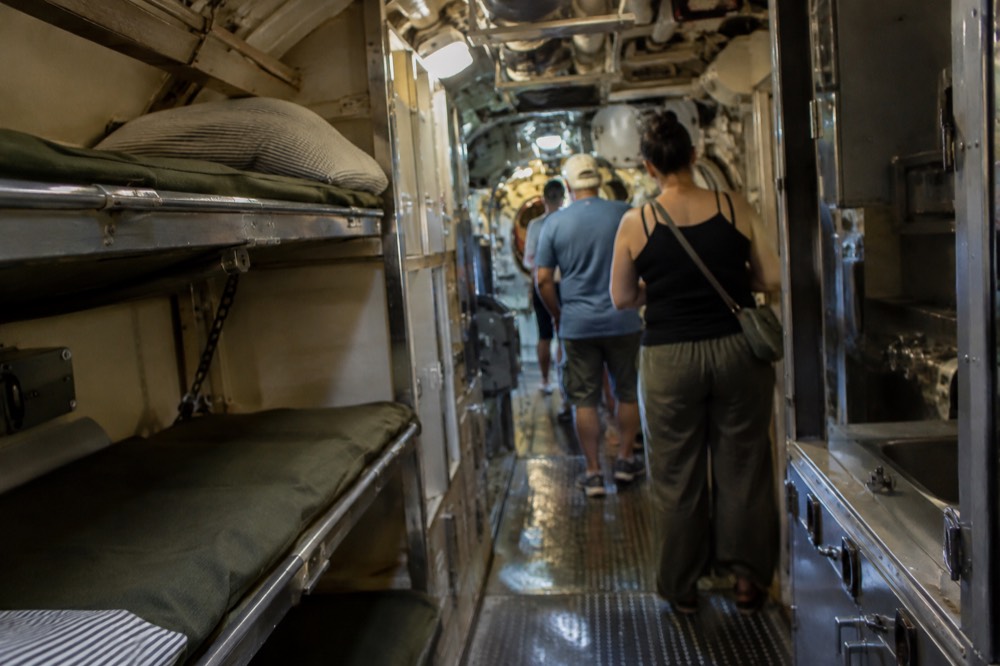
The submarine walk-through takes you through the boat's interior compartments on a set route: the torpedo rooms at the ends, the control room, the crew's living and eating spaces, and the engine rooms, all restored and interpreted with signage along the way. You will see where torpedoes were stored and loaded, where the crew slept in stacked bunks beside their working equipment, and how little separation existed between the men and the machinery.
The route involves hatches, ladders and tight passages, and it is the most physically immersive exhibit at Pearl Harbor. The experience is compact and dense. Fleet submarines were not built with visitor comfort in mind, and that is precisely the exhibit's power: the tightness of the passage, the proximity of the bunks to the machinery, and the sheer amount of equipment packed into a steel tube communicate what no wall panel can. Expect to duck, expect to single-file in places, and expect children to find it either thrilling or claustrophobic, sometimes both within a minute.
The museum building complements the boat rather than duplicating it. Where the walk-through shows you the physical reality of submarine service, the exhibits give it context: the weapons, the campaigns, and the cost, including memorials to submariners lost in the Pacific war. Take the two together rather than choosing one; the boat without the museum is a fun obstacle course, and the museum without the boat is a set of panels about a machine you never stood inside.
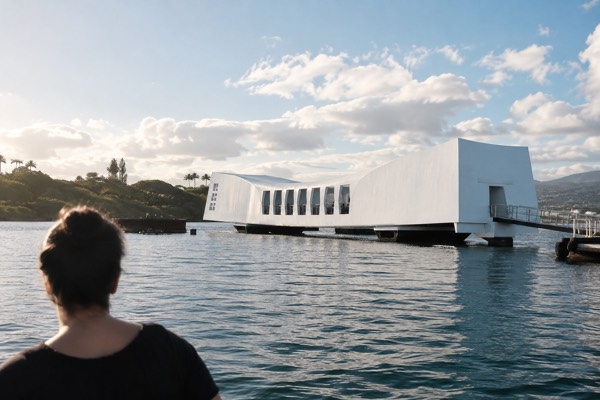
The waterfront park ties the visit to the harbor itself. The memorials there, and the view across the water toward the USS Arizona Memorial, place the Bowfin in its actual setting. It is also the quietest corner of the campus, and a reasonable place to sit for a few minutes before or after your Arizona program slot.
What Should You Know Before Boarding? Bags, Kids And Tight Spaces
Three rules shape a Bowfin visit more than anything on the ticket. First, Pearl Harbor prohibits bags of every kind, including backpacks, purses and camera bags, and the only storage option near the entrance charges a fee the official pages do not specify, so arrive with nothing but pockets. Second, the submarine's route includes hatches, ladders and low clearances, and it is not stroller-friendly, so very young children may need to be carried.
Third, wear closed-toe shoes you can climb a ladder in.
Leave anything you would have to set down inside the boat in your car. The bag rule deserves the most emphasis because it catches the most people. It applies to the entire Pearl Harbor campus, not just the Arizona program, and it is enforced at the security screening you pass through to reach everything, the Bowfin included. Visitors who arrive with a day-pack either surrender it to paid storage or walk back to the car. The clean solution is to plan the day around it: phone, wallet, keys, water bottle in hand, nothing else.
The physical interior is the second gatekeeper. The route is genuinely tight in places, and visitors with mobility limitations or significant claustrophobia should know that before buying a ticket rather than discovering it at the first hatch. The museum building and waterfront, by contrast, are conventional museum spaces, so a party can split: one adult walks the boat with the older kids while the other takes the younger ones through the exhibits. Ask the staff at the counter about current access provisions; they deal with these questions all day and the arrangements are theirs to describe, not ours to guess.
Timing with children also works better in the morning, for a reason that has nothing to do with the museum: the Bowfin's interior is warm by midday, and small children in a warm, tight steel tube have a way of shortening the visit. An early slot, a water bottle and a promise of shave ice afterward is the pattern that works.
How Does The Bowfin Fit Into A Full Pearl Harbor Day?
The Bowfin slots most naturally into the gap around your USS Arizona Memorial program time: before it, if your slot is late morning, or immediately after it, if you are on an early program. Because the Bowfin, the Battleship Missouri and the Pearl Harbor Aviation Museum are separately ticketed, a full Pearl Harbor day means choosing two or three sites rather than attempting all of them plus the memorial program.
Most visitors do best with the Arizona program plus one or two paid sites.
Leave the rest for a second visit or skip them without guilt. The sequencing logic is simple. The Arizona program has a fixed start time you reserved; everything else flexes around it. The Bowfin is the closest paid site to the program's departure point, so it is the natural first add-on. The Battleship Missouri sits at the far end of Battleship Row and requires a shuttle or a longer walk; the aviation museum is on Ford Island, reached by shuttle, and it is the site most often dropped when time runs short. Our USS Missouri Battleship Museum guide covers that side of the campus in detail.
For cruise-ship passengers and short-stay visitors, the calculus changes: a half-day tour that bundles the Arizona program with the surrounding sites is frequently the only way to see Pearl Harbor properly and still make the ship. For those on a longer stay, our Pearl Harbor day trip planner breaks the whole campus down by ticket and by hour.
The guided formats that pair the memorial with the historic sites come in two broad shapes: a half-day version that gets you back to Waikīkī by early afternoon, and a longer version that adds the Battleship Missouri and runs six to seven hours. The half-day suits first-timers and families; the full version suits visitors with a deep interest in the Pacific war.
If you want the Missouri on the same ticket as the Arizona Memorial, the combined tour is the one to look at.
Common Questions About The USS Bowfin On Oʻahu
Most questions about the Bowfin come down to three things: its relationship to the free USS Arizona Memorial program, the bag and security rules that apply across the whole Pearl Harbor campus, and how much time a visit really needs. The Bowfin is a separately ticketed museum reached through the same entrance and parking as the memorial program, bags are prohibited campus-wide, and a realistic visit runs one to two hours.
Combined with the Arizona program, that becomes a half day, and the answers below cover the specifics.
Is USS Bowfin part of the USS Arizona Memorial ticket?
No. The USS Arizona Memorial program is run by the National Park Service and is free apart from a $1 per-ticket management fee on recreation.gov. USS Bowfin Submarine Museum & Park is a separate attraction with its own admission, run by its own organization on the same campus. You reach both through the same entrance, parking and security screening, but you buy the Bowfin ticket separately.
Can you go inside the submarine at USS Bowfin?
Yes. The core of the visit is a self-guided walk-through of the submarine's interior, following a set route through the torpedo rooms, control room, crew spaces and engine rooms. The route involves hatches, ladders and tight passages, so wear sensible shoes and be prepared for low clearances and warm conditions by midday.
How much does USS Bowfin cost?
Admission is set by the museum and changes, so check the posted rates at the ticket counter or the operator's live listing rather than relying on older figures circulating online. Budget separately for the $7 per day visitor center parking if you drive, and remember the USS Arizona Memorial program is free apart from its $1 reservation fee, since the two are often confused.
How long does a USS Bowfin visit take?
Plan on one to two hours: roughly thirty to forty-five minutes for the submarine walk-through and the rest for the museum building and waterfront memorials. Combined with the USS Arizona Memorial program, budget a half day. Add the Battleship Missouri or the aviation museum and you are looking at a full day on the campus.
Can you bring a bag to USS Bowfin?
No. The bag prohibition applies to the entire Pearl Harbor campus, including backpacks, purses and camera bags, and it is enforced at the security screening you pass through to reach the Bowfin. Storage exists near the entrance for a small fee, but the amount is not published; the simplest plan is to arrive with nothing that needs storing.
Is USS Bowfin worth it if you only have half a day at Pearl Harbor?
For most visitors, yes. The Bowfin is the only place on the campus where you go below deck on a real vessel, and it sits closest to the Arizona program's departure point, so it is the easiest paid site to pair with a reserved memorial slot. If your half day starts early, the Arizona program plus the Bowfin fits comfortably, and a guided half-day tour can bundle both with transport from Waikīkī.
A Pearl Harbor day planned this way, one reserved program, one submarine, no bags and an early start, tends to run smoothly while the improvised version tends not to. The Bowfin rewards the plan.