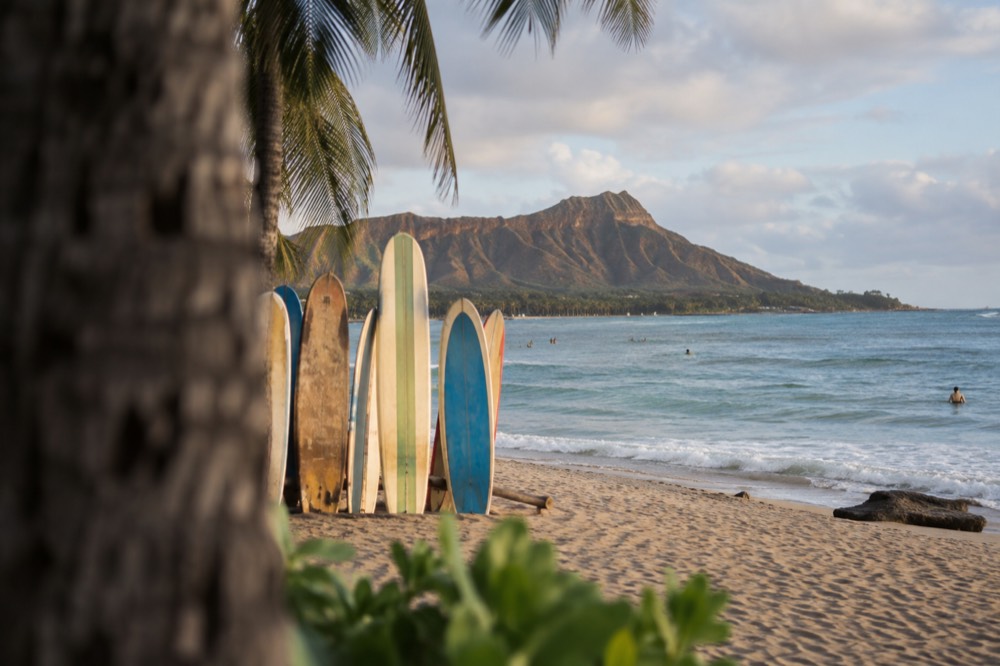
Surf Lessons On Oahu: Where To Learn, What To Expect, And How To Book
Surfing was invented in Hawaiʻi, and Oʻahu is still the easiest place in the islands to stand up on your first wave. Here is where to learn, what a lesson actually covers, and when to go.
Short answer
Take your first surf lesson in Waikiki, where gentle, consistent summer-style waves break over a sandy bottom all year. A typical beginner lesson runs about two hours, includes the board and reef-safe instruction, and can be booked on the operator's live listing.
Surfing is not a tourist import on this island. It is a Hawaiian practice with deep roots here, and Waikiki is where most of the world first met it, when beachboys taught visitors to ride the gentle rolls a century ago. That tradition is still the reason Oʻahu is the best place in Hawaiʻi to learn: the waves that break along Waikiki's reefs are small, predictable and forgiving in a way almost nowhere else on the island can match.
This guide covers the practical decisions: where to book, what a lesson includes, what it costs to get started, when to come, and how to stay safe while you do it. Everything here is drawn from official sources and live operator listings, and where a number changes, the listing is the authority. For the wider picture of riding rather than learning, see our Oahu surfing guide, and for fitting a lesson into a bigger trip, things to do in Oahu is the master list.
Where Should You Take Your First Surf Lesson On Oahu?
Waikiki is the standard answer, and it is the correct one for almost every beginner. The waves there break small and slow over mostly sandy and reef-protected ground, the surf school ecosystem is the largest on the island, and lessons run year-round because the south shore almost never goes flat in summer. The North Shore is Oʻahu's famous surfing coast, but its winter surf is for experienced riders, and beginners should not book there in that season.
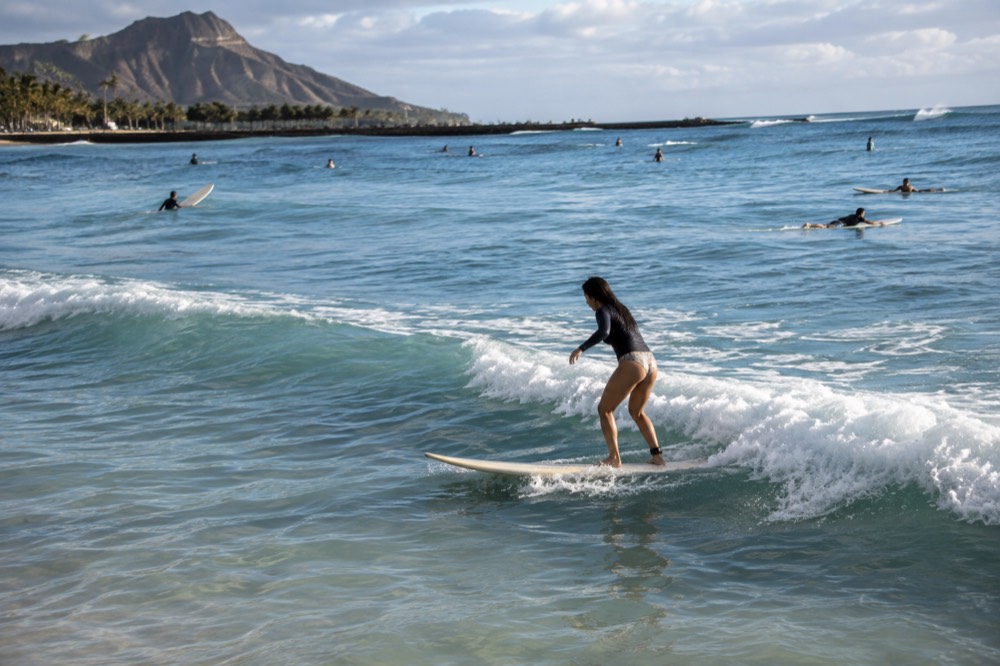
The reason Waikiki works is physics, not marketing. South-facing shores pick up summer swells, and the reef shelves at Waikiki stretch the incoming swell into long, slow rides that give a first-timer several seconds to find their feet. The waves at Queens and Canoes, the two classic beginner breaks, are typically waist-high rollers. You fall off; you climb back on. That loop, repeated for two hours, is how people learn.
The North Shore inverts this completely in winter. The same swell energy that makes Waimea Bay and Pipeline world-famous from roughly November through March makes the entire coast unsuitable for beginners, and most reputable schools move their beginner operations elsewhere during those months. In summer the North Shore flattens out and some schools do teach there, but if your trip falls in winter, stay south. Our North Shore Oahu guide covers what that coast is actually like the rest of the year.
There is one structural fact worth knowing before you book anything on the windward side: a City and County ordinance prohibits commercial tour activity and recreational stops by commercial operators at Kailua Beach Park and Kalama Beach Park. In plain terms, licensed beginner surf lessons are a Waikiki and, to a lesser extent, a West Side product, not something you can legitimately buy at Kailua.
For a first lesson, the most-booked beginner option on the island is the group lesson in Waikiki, which keeps the instructor-to-student ratio small and handles the board. Check availability on the operator's live listing for current dates and pricing.
Ready to try those gentle Waikiki waves yourself? Book a group surfing lesson here.
What Does A Beginner Surf Lesson On Oahu Actually Include?
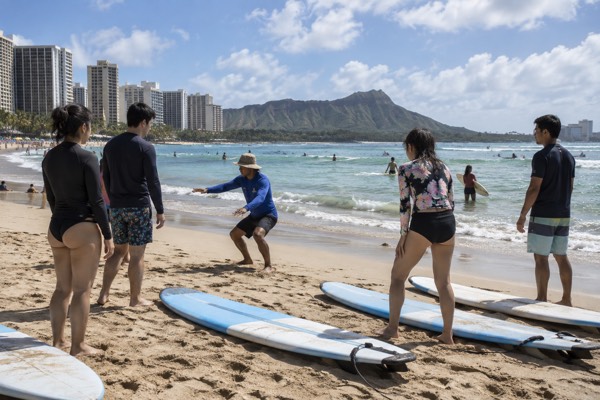
Almost every Oahu beginner lesson follows the same arc: a land session covering stance, pop-up and safety, then a water session with the instructor pushing you into waves, all within roughly two hours. The board, a rash guard and usually reef-safe sunscreen are included in the price, and group lessons cap the number of students per instructor. What is not included is a guarantee of standing up, though most people manage it on day one.
The land portion matters more than first-timers expect. Ten or fifteen minutes on the sand, practising the pop-up from lying to standing in one motion, is where the muscle memory gets built. Instructors at Waikiki schools teach it the same way because it works: feet positioned along the stringer, hands under the chest, one explosive push. If you can do it on sand, you can usually do it on water.
In the water, the instructor does the hard part at first. They position the board, time the wave, and give you a push so you only have to stand. This is why Waikiki's slow waves matter: the push puts you on a wave that holds its shape for long enough that standing up is not a race. As the lesson progresses, most instructors move students toward catching waves themselves.
A few practical notes that first-timers ask about constantly:
| Question | The practical answer |
|---|---|
| Do I need to know how to swim? | You should be comfortable in water over your head, but the beginner zone at Waikiki is shallow and the instructor stays close. Tell the school your swimming level when booking. |
| What should I wear? | Swimwear you can move in, plus the provided rash guard. Boardshorts over a swimsuit works fine. |
| Do I tip the instructor? | Tipping is customary for good instruction; there is no fixed amount. |
| Will I stand up? | Most people stand on their first or second lesson at Waikiki. Nobody guarantees it, and a school that does is selling you something. |
| Can kids join? | Many Waikiki schools take children, often in family or private lessons. Check the age minimum on the listing before booking. |
One thing worth saying plainly: a surf lesson is physical. Two hours of paddling, falling and climbing back onto a board is a genuine workout, more than most people anticipate. Do not book a lesson for the afternoon of the day you land, and do not book it the morning after a luau. Mid-trip, once you are on island time, is the sweet spot.
How Much Do Surf Lessons On Oahu Cost?
Lesson prices are set by the operators and change with season and demand, so the honest answer is on the live listing, not in a fixed number here. What is stable is the structure: group lessons cost the least, private lessons cost the most, and the board and instruction are always bundled into one price. Booking through the operator's listing shows the current rate before you commit, and most bookings carry free cancellation up to a day ahead.
High season fills Waikiki's schools, and rates respond. A printed number in a travel article is a snapshot that goes stale, while the operator's live listing is the number you will actually pay. The same applies to ratings and review counts: they update continuously.
What you can plan around is the shape of the choice:
| Lesson type | Best for | Trade-off |
|---|---|---|
| Group lesson | First-timers on a budget | Shared instructor attention, but the beginner break makes this workable |
| Semi-private | Couples and friends | More individual coaching at a mid price |
| Private lesson | Fast progress, nervous swimmers, kids | The most expensive option by a wide margin |
| Multi-day package | People who want to actually learn, not just try | Cheaper per session, but commits your itinerary |
If the budget question is really a whole-trip question, a surf lesson belongs in the splurge column: it is the one activity most visitors cannot replicate on their own, and it is worth planning the rest of the trip around rather than squeezing out.
When Is The Best Time Of Year To Learn To Surf On Oahu?
Any month works for a beginner lesson in Waikiki, because the south shore stays rideable through the year and water temperature never drops below the high 70s Fahrenheit. The real seasonal variable is which shore is receiving swell: south-facing shores peak in summer, north-facing shores peak in winter, and the two run out of phase. Summer trips get the calmest North Shore conditions, while winter trips should keep lessons in Waikiki.
The water temperature data makes the year-round point concrete. These are monthly means computed from hourly NOAA readings at the Honolulu harbor station across 2025, and they should be read as harbor readings that run slightly warm against open water off Waikīkī:
| Month | Mean water temp (°F, Honolulu harbor) | Month | Mean water temp (°F, Honolulu harbor) |
|---|---|---|---|
| Jan | 78.2 | Jul | 81.3 |
| Feb | 78.0 | Aug | 82.7 |
| Mar | 78.2 | Sep | 82.4 |
| Apr | 79.3 | Oct | 82.5 |
| May | 79.7 | Nov | 81.2 |
| Jun | 80.6 | Dec | 80.4 |
Across the whole year the harbor gauge never read below 75.7°F. No wetsuit is needed for a lesson in any month; the rash guard is for sun and board rash, not warmth.
The out-of-phase surf pattern is the detail most competing guides get wrong or skip. The National Weather Service's Honolulu surf zone forecast publishes Oʻahu's surf by shore aspect, and on a September day in 2026 it showed the south shore running 4 to 6 feet while the north shore sat at 1 to 3 feet, a complete inversion of the winter picture. In practice: from roughly May through September, the North Shore is often at its most beginner-friendly while Waikiki carries the season's south swell, and from November through March the roles flip, with the North Shore at its most dangerous.
One timing note that has nothing to do with surf: sunrise. Waikīkī's latest sunset of the year is about 7:17 p.m. in early July, and the island's day length varies by only about 2 hours 35 minutes across the whole year. Oʻahu simply does not have long summer evenings the way high-latitude destinations do, so if you want a full beach day around your lesson, book the morning session.
Is Waikiki Really The Best Place To Learn, Or Are There Other Options?
For a first lesson, yes, Waikiki is the best place on Oahu, and it is not close. The wave quality for beginners, the concentration of schools, the walkable access from most visitor accommodation and the shallow, protected water together make it the default. Alternatives exist, mainly on the West Side and, in summer, the North Shore, but each trades away something, usually convenience or consistency.
Waikiki's other advantages are logistical. If you are staying in the neighborhood, your lesson is a walk away, and the waves at the beginner breaks hold up through most weather. The beach also has the island's lifeguard infrastructure, which matters for a first-timer even with an instructor present.
The West Side is the honest runner-up. Some operators run beginner lessons around tracks near Ko Olina and Waiʻanae, and the crowds are thinner. The trade is the drive: without verified drive times to publish, the general point stands that the West Side is a genuine trip from Waikīkī, and a lesson there is a half-day commitment, not a morning errand.
The North Shore in summer deserves a mention for a specific kind of visitor: someone on their second or third lesson who wants to say they surfed the North Shore. In the flat months, conditions can be gentle. In winter, do not even consider it as a beginner; the coast that hosts the world's most famous big-wave spots is no place for a first pop-up.
If your trip is short and you want the lesson plus a full island experience, some visitors fold the morning lesson into a bigger day. The two most-booked ways to see Oʻahu beyond Waikīkī are the full-day circle island tour, which reaches the North Shore with a guide, and the hidden gems circle island tour with Byodo-In, which adds the temple in Kāneʻohe.
How Do You Stay Safe In The Water On Oahu?
The safety rules for a beginner in Waikiki are simple: swim near a lifeguard, never turn your back on the ocean, stay off the reef, and give sea turtles and monk seals space if you see them. The legal distances that matter are 100 yards from humpback whales and 50 yards from spinner dolphins, both law, while the distances for turtles and monk seals are guidelines rather than statutes. Your instructor covers the local version on the sand.
Reef etiquette deserves its own sentence. Waikiki's beginner waves break over reef, not sand, and falling badly onto coral hurts and damages the reef. Schools teach the flat-fall reflex, landing flat rather than diving headfirst, for exactly this reason. It also protects you: shallow reef is where beginner surfers get their scrapes.
The wildlife rules are worth getting exactly right, because a lot of online content flattens them. The distinction is between law and guideline:
| Animal | Distance | Status |
|---|---|---|
| Humpback whale | 100 yards | Law |
| Hawaiian spinner dolphin | 50 yards, no swimming with | Law, in force since 2021 |
| Hawaiian monk seal | 50 ft recommended, 150 ft for a mother with pup | Guideline; harassment itself is illegal |
| Green sea turtle (honu) | 10 ft recommended | Guideline; protected under state and federal law |
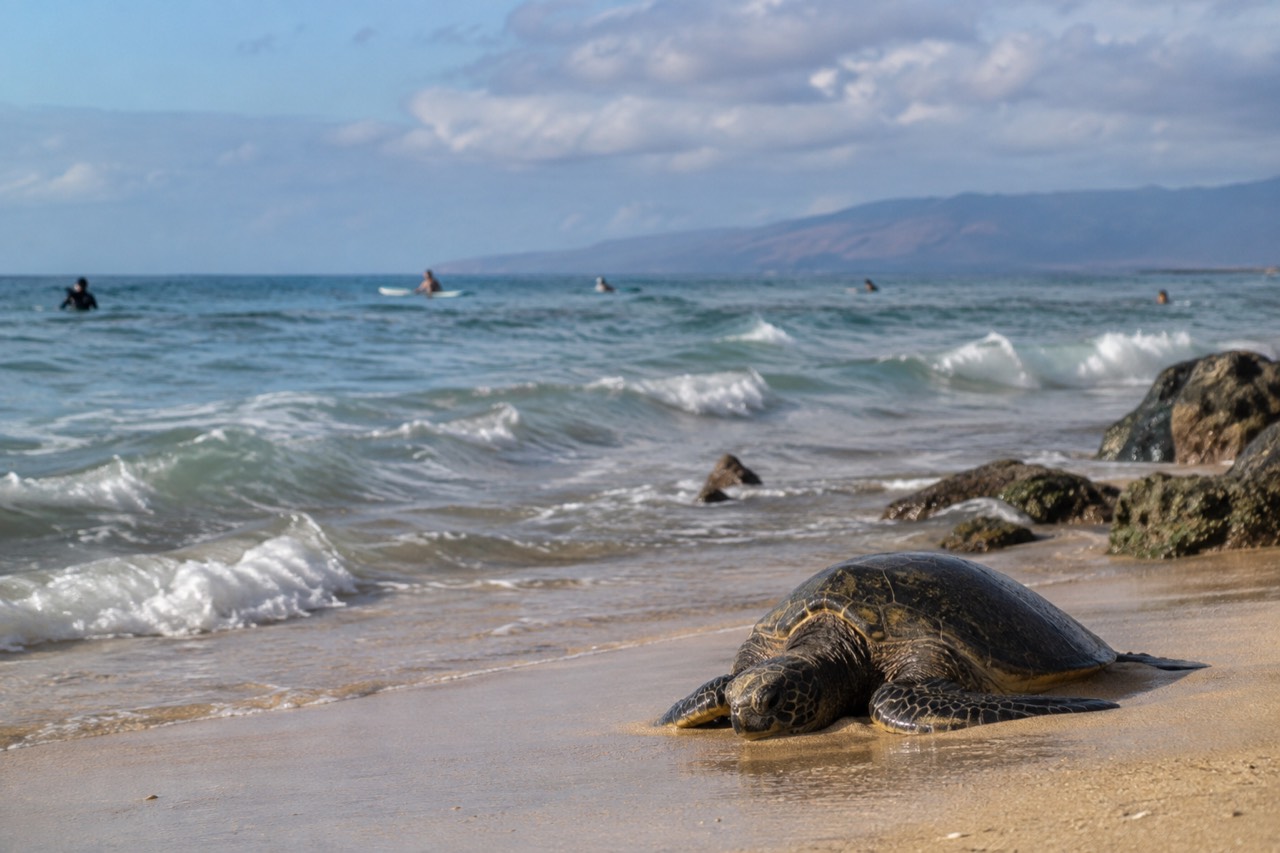
Turtles surface near Waikiki's breaks regularly, and the correct response is to let it pass rather than paddle toward it. Your instructor will signal if one is near. For the full treatment of rip currents, box jellyfish days and reef hazards, read our Oahu ocean safety guide before your first session; the box jellyfish calendar matters because it predicts the few days a month when Waikiki's water is best avoided.
A final note on sun. Two hours on a board in Waikiki's morning light will burn unprotected skin faster than almost any activity on the island, because you get direct sun plus reflection off the water. Reef-safe sunscreen is required by law in Hawaiʻi, and most schools provide it, but bring your own as well and apply it before the land session, not after you are already pink.
What Should You Bring To Your First Surf Lesson?
Bring swimwear, a towel, water, reef-safe sunscreen and very little else; the school supplies the board, leash and usually a rash guard. Leave valuables at the hotel, wear the sunscreen on before you arrive, and eat something light an hour or two before rather than arriving either full or empty. Everything else, including the awkward first attempts, is the school's problem.
The minimal packing list reflects how the day actually runs. You check in, get your rash guard, do the sand session, and paddle out. There is no locker situation to manage in most cases, which is exactly why the hotel-safe advice matters: a phone left on a beach towel at Waikiki is a phone at risk, and you will not be able to check it from the water.
Footwear is the one item people overthink. Barefoot is standard on the board, and the walk from the beach to the water at Waikiki is sand. Reef walkers or similar water shoes are unnecessary for a beginner lesson there; if you are sensitive, a cheap pair of swim socks solves the board-rash issue without changing how the lesson works.
If you wear glasses or contacts, plan for it. Prescription sports sunglasses exist for surfing but are overkill for lesson one; most people just go without and let the instructor be their eyes. If you cannot function without correction, tell the school at booking, since some instructors will adjust how they run the water session for you.
Common Questions About Surf Lessons On Oahu
Most questions about learning to surf on Oahu come down to three things: where, when and how much, and the answers are stable across all of them. Waikiki is where, any month is when, and the price lives on the operator's live listing rather than in any article, including this one. The recurring worries beyond those are swimming ability, age limits, standing up on the first day and what the ocean might do.
Do I need to know how to swim to take a surf lesson on Oahu?
You should be comfortable in water over your head, but you do not need to be a strong swimmer for a Waikiki beginner lesson. The water where you start is shallow, the instructor stays within arm's reach, and most schools ask about swimming ability when you book. Be honest on that form; it changes how closely they watch you.
Can children take surf lessons in Waikiki?
Yes, many Waikiki schools teach children, usually in family, semi-private or private lessons rather than adult groups. Age minimums vary by operator, so check the listing before booking. The gentle summer-style waves at the beginner breaks suit kids well, and the sand-session format works for shorter attention spans.
Will I actually stand up on my first lesson?
Most people do, usually within the first hour at Waikiki, because the instructor pushes you into waves that hold their shape. Nobody can promise it, and a school that guarantees it is overselling. What is fair to expect is several attempts, at least one ride to the beach, and a new appreciation for how fit surf instructors are.
Is winter a bad time to take a beginner lesson?
No, not in Waikiki. The south shore stays gentle through winter even while the North Shore turns dangerous, and the water stays in the high 70s Fahrenheit. Winter is only a problem if you were hoping to learn on the North Shore, which beginners should not attempt in that season.
Should I book a group lesson or a private lesson?
A group lesson is the right call for a first-timer who is comfortable in the water and wants the standard experience at the standard price. Choose private if you are a nervous swimmer, traveling with young kids, or picking the lesson up fast and wanting coaching rather than just supervision. The board and instruction are included either way.
What happens if the surf is too big on my lesson day?
Schools cancel or reschedule when conditions exceed what is safe for beginners, and a reputable operator will move you rather than push you into surf you cannot handle. Waikiki's beginner zone is protected enough that full cancellations are rare, but book with free cancellation anyway so a weather call costs you nothing.
If the lesson hooks you, the natural next step is a second session a day or two later, when the pop-up is muscle memory and the coaching can move from standing to steering. This site, Oahu Travel Guide, keeps every reservation window, closure notice and seasonal change under watch, and the sea does the rest.