Oahu Wheelchair Accessible Travel Guide: What Actually Works
Oahu is one of the more workable Hawaiian islands for wheelchair users, but accessibility here is uneven: the transit system is genuinely good, several major sites are paved and step-free, and the beaches need more planning than the attractions do.
Short answer
Yes, Oahu is largely wheelchair accessible in its core visitor zones. Waikiki, Ala Moana and downtown Honolulu have wide paved walkways, TheBus and Skyline are fully accessible on shared fares, and many major attractions are step-free. Beaches, hikes and some lookouts need case-by-case planning, and a few popular stops are simply not workable in a chair.
Oahu took 5,679,047 visitors by air in 2025, per preliminary DBEDT figures, and a meaningful share of them arrived with a mobility device, a companion carer, or both. The island's answer to those visitors is genuinely better than most tropical destinations, but it is patchy in ways that only show up on the ground. The paved Waikiki waterfront is excellent. The Bus system is one of the most accessible in the United States. And then a reader arrives at a trailhead with a locked gate and a staircase, and the day changes shape.
This guide, from the Oahu Travel Guide editorial desk, lays out what is verified, what is checkable, and what needs a phone call before you commit a day to it.
Is Oahu Wheelchair Accessible Overall?
Oahu is wheelchair accessible in its core visitor zones and uneven everywhere else. Waikiki, Ala Moana, downtown Honolulu and Kapiʻolani parkland are flat, paved and continuously improved, and the island's public transit is fully accessible with low-floor buses and a rail line. Beaches, valley trails and rural North Shore stops are the weak points, and a few popular sites cannot be reached in a chair at all.
Oahu splits into two products. The urban south shore, from Waikīkī through Ala Moana into downtown, behaves like a modern American city: curb cuts, ramps, wide sidewalks, accessible restrooms in the major parks and shopping centres. The windward coast, the North Shore and the interior valleys behave like rural Hawaiʻi, because that is what they are, and rural Hawaiʻi was mostly built before accessibility law existed.
That does not mean a wheelchair user is confined to Waikīkī. It means the island rewards planning. Several of the highest-value experiences on the island, including things to do in Oahu that draw the biggest crowds, are either step-free or reachable on a guided tour with vehicle support. The sections below take each category in turn: transit first, because it decides everything else, then beaches, then attractions, then tours that do the driving for you.
One planning note that no first page of search results carries: Oahu's real constraint for every visitor, wheelchair user or not, is reservations rather than price. Hanauma Bay releases slots two days ahead at 7:00 a.m. HST, closes Mondays and Tuesdays, and charges non-residents $25 plus a 2.35% online service fee. Diamond Head has required non-resident reservations for both entry and parking since 12 May 2022, with no on-site sales. Build the accessible itinerary around those windows, not around a price list.
Which Oahu Beaches Are Wheelchair Accessible?
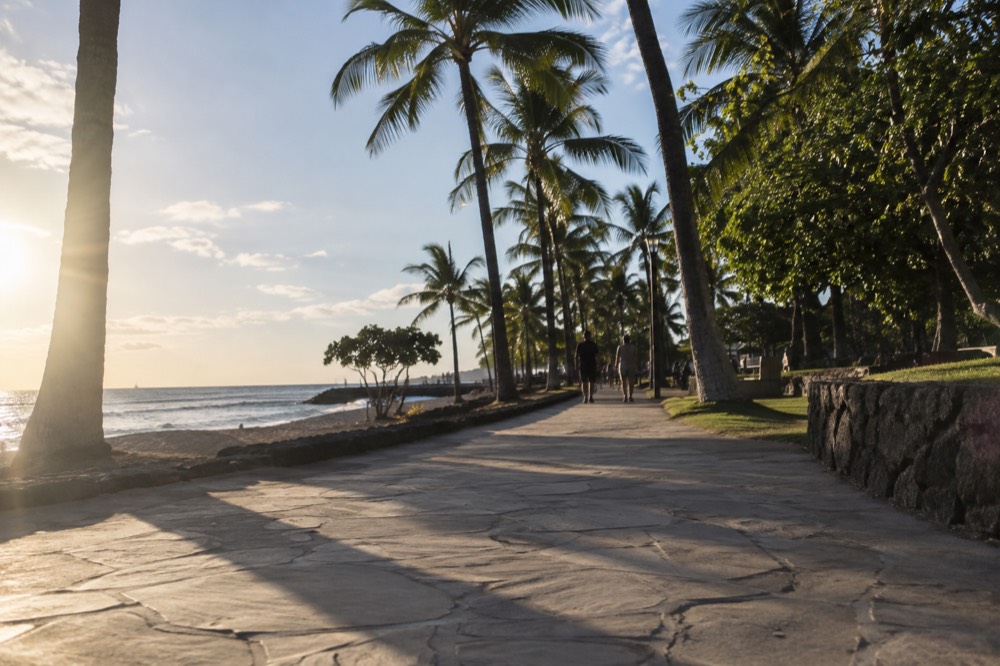
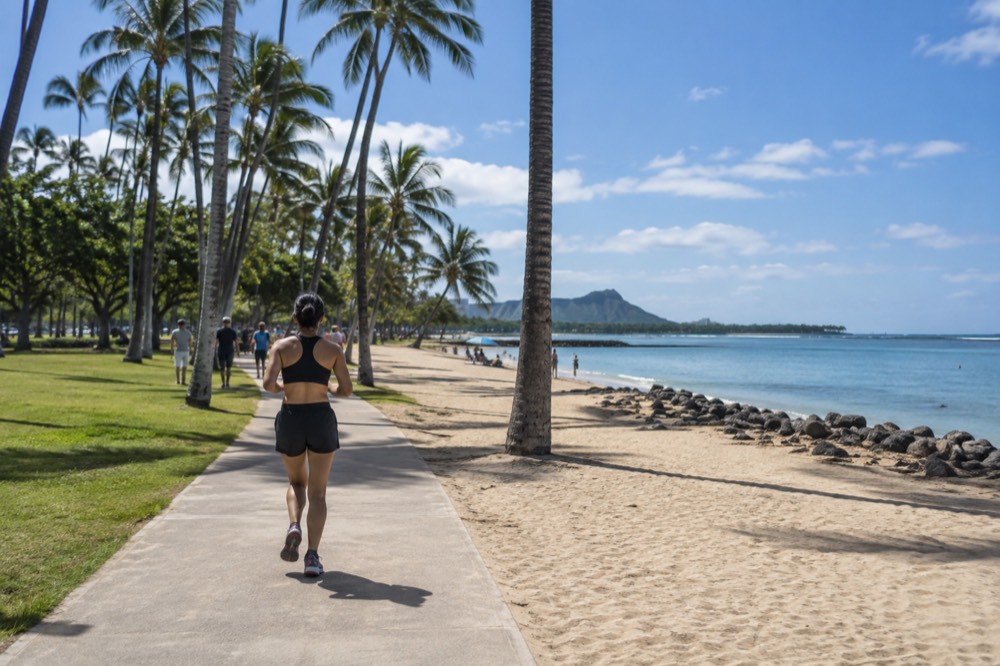
No Oahu beach is naturally wheelchair friendly, because sand defeats wheels, but the beach parks around the sand mostly are. Ala Moana Beach Park, Kailua Beach Park and the Waikīkī waterfront offer firm, paved paths along or close to the water, accessible parking stalls and accessible restrooms, and beach wheelchairs exist on the island through loaner arrangements that vary by park and must be confirmed by phone before you go.
The distinction that matters is beach versus beach park. The park, the strip of grass and paving behind the sand, is where the accessible facilities live: parking, restrooms, showers, picnic tables and shade. The sand itself is a separate problem, and Oahu's sand is soft enough that a standard manual chair will not cross it.
Practical answers, park by park:
- Waikīkī (Kuhio Beach and Queens Beach). The waterfront walkway runs continuously behind the sand, so a chair can travel the whole stretch with the ocean in view. Ramps connect the walkway to the sand at several points. For actual sand and water access, ask about beach wheelchair availability before you go; arrangements change, and the honest answer is to call rather than trust a listing.
- Ala Moana Beach Park. A long, calm, protected lagoon beach behind a wide park road, with the full Ala Moana Beach Park and Ala Moana Center facility set around it. The calm water is the reason families and less confident swimmers use it. Our ocean safety guide covers why calm matters.
- Kailua Beach Park. Windward side, with a large public lot, restrooms and a paved path along the park edge. The Kailua guide covers the town around it.
What to avoid promising yourself: Lanikai has no public parking lot at all, only residential streets with no-parking enforcement, which makes it a poor target even before the sand question. Laniakea's roadside arrangement is in flux with an ongoing highway project. Sandy Beach is a beautiful but powerful shorebreak not suited to casual water access for anyone.
| Beach park | Paved access | Water access in a chair | Notes |
|---|---|---|---|
| Waikīkī waterfront | Continuous walkway, ramps to sand | Beach wheelchair, confirm by phone | Most developed option on the island |
| Ala Moana | Park road and paths beside lagoon | Calm, shallow lagoon, chair-to-water needs help | Restrooms and parking in park |
| Kailua Beach Park | Paths along park edge | Soft sand beyond path | Large lot, windward side |
| Ko Olina lagoons | Lagoon-edge walkways | Calm, rocky-bottom lagoons | Public stalls limited, arrive early |
| Lanikai | None | Not practical | No public parking lot |
How Do You Get Around Oahu In A Wheelchair?
TheBus and the Skyline rail line are both fully accessible and share one fare system, which is Oahu's biggest accessibility advantage. Every bus is low-floor with a ramp or lift and two wheelchair securement positions, Skyline stations have elevators, and a HOLO card caps fares at $7.50 per day, so a full day of accessible travel costs less than eight dollars including the $2 card itself.
The fare structure, verified from the City and County of Honolulu transit page, is flat and simple: $3.25 adult cash on TheBus only with no transfers, a $3.00 two-hour HOLO pass with transfers across both bus and rail, a $7.50 24-hour pass, and a $7.50 daily cap, meaning once you have tapped $7.50 in a day every further ride is free. A 7-day pass is $45.00 and a monthly cap is $90.00. The HOLO card itself costs $2.00. One child aged five and under rides free with a paying rider.
Two structural facts shape the network. First, Skyline now reaches the airport, with a Lelepaua Daniel K. Inouye International Airport station and onward bus transfers, but there is no Skyline station in Waikīkī: a transfer is required. Second, the Hālawa Aloha Stadium station is the rail stop for Pearl Harbor's visitor centre, which puts the island's most visited historic site on the accessible network without a car.
For visitors who want guided transport rather than self-planned transit, two products fit a wheelchair itinerary well. The hop-on trolley covers the Waikīkī to downtown corridor, and a circle-island tour covers the coast that the rail line will never reach.
A wheelchair user deciding between them should weigh vehicle type and stops, both of which are stated on each operator's live listing, against the kind of day wanted. The trolley is a city tool. The circle-island day is a rural Oahu tool, and rural Oahu is exactly the part of the island that transit does not serve.
For trips that transit cannot cover, accessible parking placards from the mainland are recognised in Hawaiʻi, and rental agencies on the island offer hand-controlled vehicles, though stock is limited and advance booking is the norm. Our car rental on Oahu guide covers the rental landscape, and the Oahu parking guide covers where parking is actually hard, which is most of the North Shore and all of Waikīkī on a weekend.
Which Major Oahu Attractions Are Wheelchair Accessible?
Most of Oahu's headline attractions are at least partially step-free, and several are fully so. Pearl Harbor's visitor centre and USS Arizona Memorial program, the Bishop Museum, ʻIolani Palace's ground floor, Waimea Valley's paved core and the Polynesian Cultural Center are all workable in a chair, while Diamond Head's summit trail and Mānoa Falls are not. Each one deserves a check of its current access details before you commit a day.
The attraction-by-attraction reality:
- Pearl Harbor National Memorial. The visitor centre is level and step-free, and the USS Arizona Memorial program is free, with a $1 non-refundable management fee per ticket when reserving on recreation.gov and $7 per day parking. Bags of any kind are prohibited, per the National Park Service, which matters for a chair user who normally carries a daypack: travel light and plan for storage. The memorial itself is reached by boat, and access details for the boat transfer should be confirmed with the park directly. Our Pearl Harbor day trip planner covers the mechanics.
- ʻIolani Palace. Ground-floor access exists; the upper floors are stair-only. Verify current tour options with the palace before booking.
- Waimea Valley. Closed Mondays, open Tuesday to Sunday, 9 a.m. to 4 p.m., with adult admission at $26 and kamaʻāina and military rates lower. The paved walk toward the falls is the island's most chair-friendly valley experience, though the full route to the waterfall should be confirmed with the valley on the day, since conditions change.
- Polynesian Cultural Center. Closed Sundays and Wednesdays, with village paths that are largely level. Confirm seating and route details when booking.
- Diamond Head State Monument. The entry road and initial area are workable, but the summit trail includes stairs and tunnels and does not reach the rim in a chair. Non-residents pay $5 per person plus $10 per vehicle, card only, with reservations required since 12 May 2022. The Diamond Head guide covers the reservation rules.
| Attraction | Chair access | Reservation rule | Fee notes |
|---|---|---|---|
| Pearl Harbor visitor centre and Arizona program | Step-free visitor centre, boat transfer to memorial | recreation.gov, tour id 16 | Program free, $1 management fee, $7 parking |
| ʻIolani Palace | Ground floor only | Book ahead | Check with the palace |
| Waimea Valley | Paved valley route, confirm full length | Book-ahead link on site | Adult $26, closed Mondays |
| Polynesian Cultural Center | Largely level village paths | Strongly advised for packages | Tiered packages, closed Sun and Wed |
| Diamond Head | Not to the summit | Required for non-residents since May 2022 | $5 person, $10 vehicle, card only |
| Hanauma Bay | Steep road into the bay, tram exists, confirm | Two days ahead, 7:00 a.m. HST | $25 non-resident, closed Mon and Tue |
Hanauma Bay deserves its own caution. The road from the entrance down to the beach is a serious grade, and while a shuttle tram runs it, a wheelchair user should call the preserve directly about current arrangements before reserving a $25 slot. The bay also closes Mondays and Tuesdays, and every visitor must watch the mandatory orientation, so build a slower morning than the snorkel guides suggest.
Are Oahu Tours Workable For Wheelchair Users?
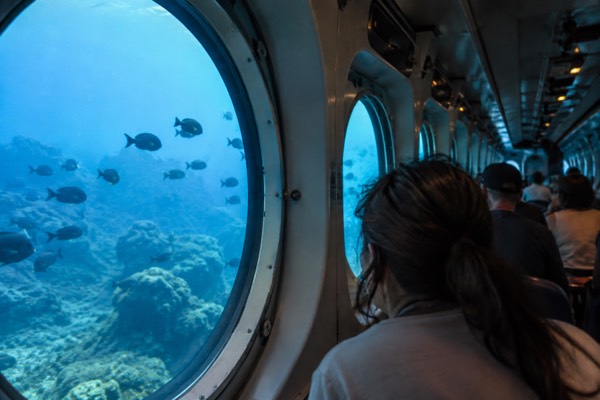
Yes, a meaningful subset are, and the right question is vehicle and stop design rather than the tour category. Circle-island bus tours, the hop-on trolley and several cultural site visits can work in a chair, but Oahu's adventure products, ziplines, ATVs, horseback rides, most snorkel boats and submarine tours, have transfer requirements that exclude many wheelchair users, so always message the operator through the listing before booking.
The honest mechanism here is the listing itself. Every tour on this site carries a live listing, and the accessibility question, whether the vehicle has a lift, whether stops involve steps, whether a companion carer ticket is needed, is answered by the operator, not by us. Ask before you pay, in writing, through the platform's messaging, and keep the reply.
The tours most likely to fit a chair-centred day are the island tours, because they are built around vehicle sightseeing with short, optional stops:
The full-day grand circle island tour is the strongest single candidate for a wheelchair user who wants rural Oahu, because it delivers the North Shore, Haleʻiwa town and the windward lookouts without any of the driving, parking or soft-surface problems. Stop durations are short and mostly optional, which suits a day built around seeing rather than hiking.
The Byodo-In variant adds the temple, which sits on level ground with a paved approach and is one of the more chair-friendly cultural stops on the island, and runs longer at nine hours with a broader set of stops. Confirm the vehicle type with the operator before booking either tour.
For a cultural evening that pairs with a chair-friendly day, book an Aliʻi Lūʻau package here.
For a city-only itinerary, the trolley is the third option, and its hop-on structure means a wheelchair user can ride the accessible corridors and skip the rest:
What to treat with scepticism: any product that transfers you out of a chair and into a seat, harness, saddle or water. Ziplines, ATVs, horseback rides, jet skis, parasailing and submarine dives all involve transfers that most operators cannot safely support, and several have minimum physical requirements stated in the listing. That is not a reason to skip the category entirely, it is a reason to ask first and assume no.
What About Accessible Lookouts And Outdoor Sights On Oahu?
Oahu's lookouts are mostly drive-up, which makes them unusually accessible, but two major ones are closed as of September 2026 and one is not reachable in a chair. The Nuʻuanu Pali Lookout and Kaʻena Point are closed until further notice for storm repairs after Hurricane Lowell, per the DLNR notice dated 9 September 2026, and the Mānoa Falls trail is a dirt rainforest path that is not wheelchair accessible.
Check the DLNR notices the week you travel.
The closure point is not a footnote. The Pali Lookout is one of the island's signature stops and appears on nearly every circle-island route, so any itinerary or tour description you read that treats it as open may be stale. The state parks notices page is the live source, and tour operators re-route around closures when they happen.
Lookouts that work from a vehicle, once the closures are checked: the Tantalus lookout above Honolulu, the Mākapuʻu lighthouse trail's car park area, and the many highway pull-offs along the windward coast, all of which deliver the Koʻolau ridge views without more than a few steps. The Mākapuʻu trail itself is paved but climbs steadily, so judge it as a push, not a stroll.
For green space without a trail, the island's botanical gardens are the answer. Hoʻomaluhia on the windward side and Foster Botanical Garden in town both offer level, planted grounds with vehicle access close to the core, and both are far quieter than the beach parks. The Mānoa neighborhood guide covers the valley area if rainforest scenery is the goal, with the caveat that the waterfall trail itself is off the table in a chair.
A respectful note that applies to every outdoor site on Oahu: heiau, burial areas and posted kapu sites are not photo backdrops, and some marked areas are closed to all visitors regardless of mobility. The Kaʻena Point guide explains what that site is and why it is treated with restraint here.
Common Questions About Oahu Wheelchair Accessibility
Most questions about wheelchair travel on Oahu come down to three things: transit, which is genuinely excellent and cheap; sand, which is the island's hardest surface and needs a beach wheelchair; and reservations, which gate the most popular sites on fixed release schedules. Get the HOLO card sorted on day one, call ahead about beach wheelchairs, and set alarms for the Hanauma Bay and Diamond Head booking windows, and the island opens up.
Is Waikīkī wheelchair accessible?
Yes, extensively. The waterfront walkway runs the length of the beach, hotels are ADA-regulated, and sidewalks, curb cuts and accessible restrooms are continuous through the main visitor zone. Sand and water access needs a beach wheelchair, which should be arranged by phone in advance.
Are Oahu buses wheelchair accessible?
Yes. TheBus fleet is low-floor with ramps or lifts and securement positions, and the Skyline rail stations have elevators. Both share one fare system: $3.25 cash on the bus, or a $2 HOLO card with a $7.50 daily cap covering unlimited bus and rail rides after the cap is reached.
Can you get from Honolulu airport to Waikīkī without a car?
Partly by rail. Skyline now serves the airport, but there is no Waikīkī station, so the trip involves a rail leg plus a bus transfer. Allow extra time for the transfer with luggage and a chair, and check the transfer routes on the Skyline pages before landing.
Is Diamond Head wheelchair accessible?
Not to the summit. The entry area is workable, but the trail climbs via stairs and tunnels to the rim. Non-residents still need a reservation for entry and parking, in force since 12 May 2022, at $5 per person plus $10 per vehicle, card only.
Are there beach wheelchairs on Oahu?
Yes, through loaner arrangements at some city beach parks, but availability, hours and booking procedures vary and change. The reliable approach is to call the specific beach park or hotel concierge a few days ahead rather than assume a chair will be waiting.
Is Hanauma Bay accessible in a wheelchair?
Partially. The preserve requires a steep descent from the entrance to the beach, and a tram runs that road. Call the preserve about current accessible arrangements before reserving, remember it is closed Mondays and Tuesdays, and note the $25 non-resident fee plus the online service charge.
The short version of this whole guide: Oahu rewards a wheelchair user who plans like a local, uses the $7.50 transit day cap, calls ahead about sand and slopes, and books the reservation-gated sites the moment their windows open. The island's urban core is one of the most accessible in the Pacific, its rural half is reachable by guided vehicle rather than independently, and the difference between a frustrating day and a great one is almost always a phone call made the day before.