Queen Emma Summer Palace On Oʻahu: What A Visit Actually Involves
Queen Emma Summer Palace sits in the Nuʻuanu valley a short drive out of downtown Honolulu, and a visit is quieter, greener and more low-key than almost anything else on a first-time Oʻahu itinerary.
Short answer
Queen Emma Summer Palace is a small historic house museum in Nuʻuanu, about ten minutes from downtown Honolulu. Visits are short, the grounds are the real draw, and current hours and admission should be checked on the official site before you go.
Queen Emma Summer Palace sits in the Nuʻuanu valley a short drive out of downtown Honolulu, and a visit is quieter, greener and more low-key than almost anything else on a first-time Oʻahu itinerary. Most people arrive on a circle-island loop or a lookouts tour, spend under an hour, and leave wishing they had known a little more about what they were walking into. This guide covers the practical side: how to get there, what a visit involves, what it costs to plan around, and an honest verdict on whether it earns a slot in a packed week.
Everything here is about how the visit works and how to fit it into an Oʻahu trip; the current numbers live on the operator's own page, and you should check them the week you travel. For the wider picture of the island, start with our Oahu Travel Guide and the big list of Things to Do in Oahu.
What Is Queen Emma Summer Palace?
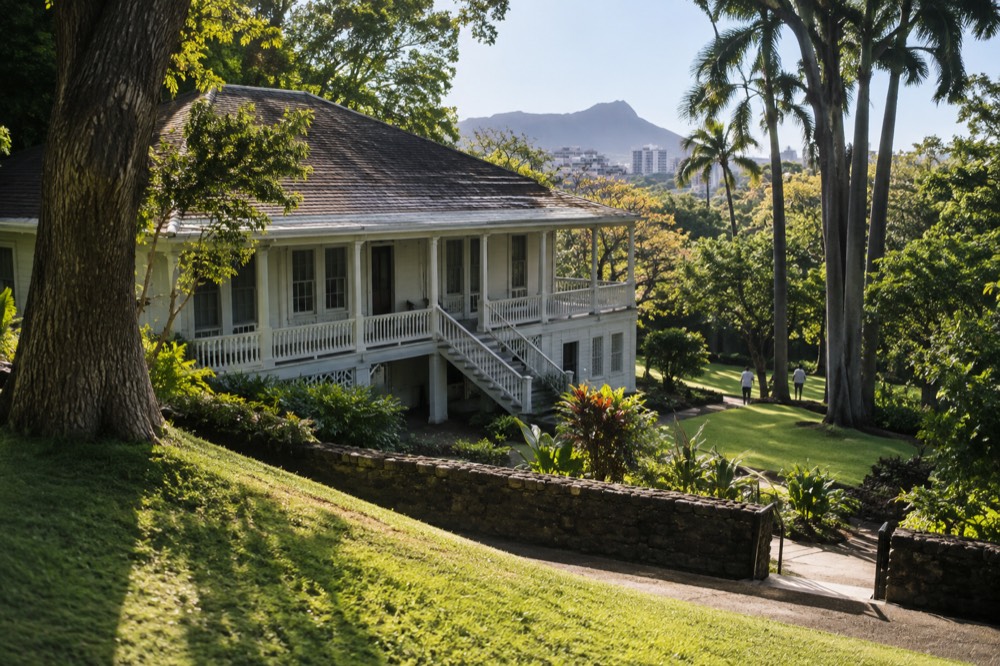
Queen Emma Summer Palace is a historic house museum in the Nuʻuanu valley just north of downtown Honolulu, preserved as a royal-era residence and surrounded by gardens. It is one of the smaller heritage sites on Oʻahu, and a typical visit runs well under two hours including the grounds. The house is reached by a residential valley road rather than a resort corridor, which is part of why it feels so different from Waikīkī.
The palace is a period house rather than a palace in the European sense. Think verandas, dark timber interiors, and rooms arranged as they would have been used, not a grand state building. The site is run by a heritage organisation, and the interior is generally seen on a guided or semi-guided basis rather than as a free-roam museum. That shapes the visit: you get interpretation you would not otherwise have, but you are also tied to the schedule of the day.
The distinction matters for planning. Visitors expecting ʻIolani Palace, the grand state palace in downtown Honolulu, sometimes arrive at the summer palace expecting the same scale and are caught out. The two sites are complements, not substitutes. If royal-era Hawaiʻi is your interest, pair the summer palace with ʻIolani Palace downtown and treat the Nuʻuanu house as the domestic, valley-side half of the story.
One more framing note. This is a site connected to the Hawaiian monarchy, and it deserves the same restraint in person as in print. Hawaiian history here is not a theme; it is the actual subject of the place, and the guides who work there are the right people to carry it.
Where Is Queen Emma Summer Palace And How Do You Get There?
The summer palace sits on Nuʻuanu Avenue in the Nuʻuanu valley, a residential corridor running north out of downtown Honolulu. By car it is a short hop from downtown or Waikīkī via the H-1 and then the valley road. By public transport, TheBus serves the Nuʻuanu corridor, and the valley is also a stop on several sightseeing loops. There is no rail station nearby, so Skyline riders transfer to a bus.
The valley road is the thing to understand. Nuʻuanu is a narrow, green residential valley that climbs toward the Koʻolau range, and the palace sits in the lower reaches where the road is still an easy drive. Traffic is light by Oʻahu standards except at Honolulu commute hours, when the corridor feeds downtown. Mid-morning and early afternoon are the calm windows.
Public transport works, with a caveat. TheBus and Skyline share one fare structure, which makes the maths simple: a HOLO card caps at $7.50 per day no matter how many times you tap, and a single adult cash fare on TheBus alone is $3.25 with no transfers. The card, at $2 to buy, is the better deal the moment you ride more than twice in a day.
| Fare | Price | Notes |
|---|---|---|
| Adult cash, TheBus only | $3.25 | No transfers, exact fare |
| HOLO 2-hour pass | $3.00 | Unlimited transfers, bus and Skyline |
| 24-hour pass | $7.50 | Also the daily cap |
| 7-day pass | $45.00 | 168 hours from first tap |
| HOLO card itself | $2.00 | Initial and replacement |
There is no Skyline station in Waikīkī or in Nuʻuanu, so rail is not part of this trip; the useful line, if you are staying near the airport end, ends with a bus transfer onward. Most visitors, in practice, reach the palace in one of three ways: a rental car combined with other Nuʻuanu and windward stops, a hop-on hop-off trolley day, or a guided circle-island or lookouts tour that includes the valley. If you are weighing car versus no-car at all, our Do You Need a Car on Oahu? guide works through the trade-offs valley stops like this one raise.
If you would rather let someone else handle the driving, these are the products that fit a Nuʻuanu-and-beyond day:
How Much Does A Visit Cost?
Admission is set by the heritage organisation that operates the site, and the current figure belongs on its official page rather than in a travel article, because small heritage sites on Oʻahu adjust their pricing more often than major attractions do. What you can plan around is the shape of the cost: a per-person admission, possible separate rates for guided interior access versus grounds only, and no parking charge on the scale of Diamond Head or Hanauma Bay.
That last point deserves spelling out, because parking is the hidden cost on much of this island. Diamond Head charges $10 per non-resident vehicle plus $5 per person, and Hanauma Bay's entry is $25 for non-residents before you even reach the parking lot. A small valley heritage site is a different animal: you are paying for the interpretation, not for a beach or a crater.
The honest budgeting frame is to compare it against what else the site buys you. The grounds are genuinely pleasant, shaded, and a rare thing on Oʻahu: a historic landscape you can sit in rather than queue for. If your alternative is a second beach hour, the palace is a harder sell. If your day already includes ʻIolani Palace, the Bishop Museum or the Pali road, it slots in naturally.
| Cost item | What to expect | Where to confirm |
|---|---|---|
| Admission, adult | Per-person rate set by the operator | Official site, week of travel |
| Guided interior access | May be separate from grounds access | Official site |
| Parking | Small on-site lot, no state-park-scale fee | Official site |
| Getting there | $7.50 HOLO day cap by bus, or a rental car already in the budget | Transit fare page |
| Combined sightseeing | Often cheaper via an attractions pass if the palace is included | Pass listing |
For visitors building a multi-stop sightseeing week, the pass question is real. An all-inclusive attractions pass covering dozens of Oʻahu sites only pays if you genuinely stack the included stops, so the arithmetic is worth doing before you buy rather than after. The card below is the one to run those numbers against.
If the pass maths does not work for your list, that is a fine outcome too; plenty of visitors do better paying per site. Either way, the decision is worth making before your first sightseeing morning, not during it.
What Can You Actually See And Do There?
The visit has two halves: the house interior, seen with interpretation, and the gardens, which you walk at your own pace. The interior rooms hold period furnishings and royal-era objects displayed in a domestic setting, and the grounds hold mature trees, shaded paths and quiet corners that most visitors underestimate. Photography is generally welcome outdoors; inside, follow the site's rules, which the staff will state on arrival.
The interior is the reason to go rather than just drive past. A house museum seen with a guide gives you context that a plaque never does, and at a site this size the guides are typically people who have spent years with the collection. Ask questions; small sites reward curiosity in a way that crowded attractions cannot.
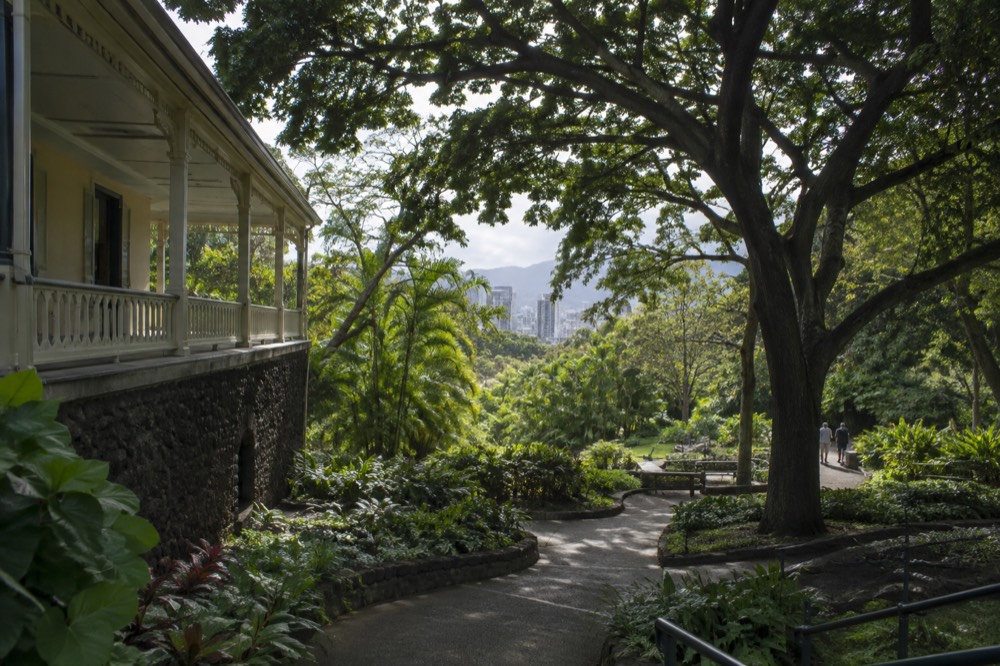
The grounds are the underrated half. Nuʻuanu's climate, valley shade and rainfall keep the planting lush in a way that lowland Honolulu cannot match, and the site is small enough that you can see the whole garden in half an hour without rushing. That makes it one of the few Oʻahu stops that works in the heat of the afternoon, when beaches and crater hikes do not.
Plan for somewhere between forty-five minutes and two hours depending on whether you take the interior tour and how long you linger in the garden. Families with young children tend to move faster; readers with a history interest should budget for the full guided experience and let the schedule of the day set the pace.
When Is The Best Time To Visit?
The best time to visit the summer palace is mid-morning on a weekday, when the valley is cool by Oʻahu standards, the commute traffic on Nuʻuanu Avenue has cleared, and tour groups are thinner. The site itself is a valley location, which means it is greener and slightly wetter than Waikīkī, so a morning slot gives you the best of both light and weather. Avoid the Honolulu rush hours in both directions if you are driving.
The rainfall point is not folklore, and this is where a bit of verified climate data changes how you plan the island. NOAA's 1991-2020 climate normals put Honolulu International Airport at 16.41 inches of rain per year. The Lyon Arboretum station in Mānoa, a comparable valley about five miles from Waikīkī, records 150.96 inches per year, and every single month in that valley is wetter than the airport's wettest month. Nuʻuanu shares the same mechanics: valley walls catch the trade-wind lift, and the clouds dump on the green side of the ridge.
| Station | Annual rainfall | Character |
|---|---|---|
| Honolulu International Airport (leeward) | 16.41 in | Driest; June lowest |
| Kāneʻohe Bay MCAS (windward coast) | 27.82 in | November wettest |
| Lyon Arboretum, Mānoa (windward valley) | 150.96 in | Every month beats the airport's wettest |
The practical read: showers in Nuʻuanu are normal, brief and part of why the gardens look the way they do. A morning visit beats a late-afternoon one for light under the tree canopy, and the valley's greenness is the feature, not a fault. Bring nothing more than a light rain layer and the patience to wait out a five-minute squall under the veranda.
Is Queen Emma Summer Palace Worth The Trip?
For most first-time visitors doing a five-to-seven-day trip, the summer palace is a strong half-hour-to-two-hour stop on a Nuʻuanu or windward day rather than a destination in its own right. It earns its slot if royal-era Hawaiian history, gardens or a quiet contrast to Waikīkī appeal to you. Skip it without guilt if your list is already heavy on beaches, hikes and the big-name sites.
The honest comparison is against the other royal-era site in town. ʻIolani Palace downtown is the state showpiece, grander and more formal; the summer palace is smaller, softer and set in a garden. Visitors with room for only one usually choose downtown. Visitors with an afternoon, a car and an interest in the period do both, and the contrast between the two is the actual payoff.
Where it shines is as part of a route. The Nuʻuanu valley road continues up toward the Koʻolau headwall and, beyond it, the windward side. A morning at the palace, a drive up the valley, and an afternoon in Kailua or Kāneʻohe is one of the better unhurried days on this island, and it barely touches a queue.
If you would rather ride than drive, the hop-on hop-off trolley is the simplest way to put a Nuʻuanu stop inside a sightseeing day without parking logistics.
The trolley suits a Honolulu-focused day. If your plan stretches around the whole island, a guided circle-island tour is the better vehicle, and the pass question from earlier still applies if you are stacking paid stops.
What Else Is Near Queen Emma Summer Palace?
The Nuʻuanu valley and its neighbouring ridges hold several of Oʻahu's best short stops: the Tantalus lookout over Honolulu, the Mānoa Falls trail, the National Memorial Cemetery of the Pacific at Pūowaina, and the road up toward the windward coast. One caution is live right now: Nuʻuanu Pali State Wayside, the famous lookout at the head of the valley, is closed until further notice for storm repairs following the September 2026 DLNR notice.
Plan around it rather than to it.
The Pali closure is the planning detail most guides will get wrong this season. The DLNR notice dated 9 September 2026 lists Nuʻuanu Pali State Wayside, Kaʻena Point State Park's Mokuleʻia and Keawaʻula sections, and Wahiawā Freshwater State Recreation Area as closed until further notice after Hurricane Lowell. The valley road itself and the palace are unaffected, but if your mental map of Nuʻuanu ends at the lookout, redraw it.
| Nearby stop | What it is | Status and notes |
|---|---|---|
| Nuʻuanu Pali Lookout | Head-of-valley viewpoint over Kāneʻohe | Closed until further notice, DLNR, Sept 2026 |
| Tantalus / Puʻu Ualakaa | Lookout over Honolulu and Diamond Head | Check the state park page before going |
| Mānoa Falls trail | Rainforest valley hike to a waterfall | Trail free; parking is a private lot, fee on site |
| Pūowaina (Punchbowl) | National Memorial Cemetery of the Pacific | A place for quiet respect, not a photo stop |
| Downtown Honolulu | ʻIolani Palace, Chinatown, the Capitol district | Short drive back down the valley |
Two of those deserve a sentence more. The Mānoa Falls trail is the closest thing to the summer palace's climate that you can walk: the same valley-rainfall mechanics that keep the palace gardens green keep that trail a rainforest, and the Mānoa Falls Trail guide covers access and the parking arrangement. Punchbowl is a national cemetery, an active place of burial and remembrance, and it should be visited the way you would visit any cemetery: quietly, with no urgency and no photo-op framing.
The other natural pairing is the windward side beyond the head of the valley. If the Pali lookout is closed, the Kāneʻohe and windward coast route via the H-3 or the back roads still delivers the same cliffs from the other side, and the Kāneʻohe and Windward Coast guide lays out that day in full.
Common Questions About Queen Emma Summer Palace
Most questions about the summer palace come down to three things: what the current hours and admission are, which the operator's official page answers better than any article can; how to fit the stop into a Nuʻuanu or windward day, which is a routing question; and whether the interior tour is worth it, which depends on your interest in Hawaiian history. The answers below handle each of those in turn.
How do I get to Queen Emma Summer Palace without a car?
Take TheBus up the Nuʻuanu corridor from downtown Honolulu. A HOLO card caps at $7.50 per day with unlimited transfers, and the card itself costs $2. Skyline does not serve the valley, so rail riders transfer to a bus. Check the current route serving Nuʻuanu Avenue on the transit site before you travel.
How long should I spend at Queen Emma Summer Palace?
Between forty-five minutes and two hours. The interior visit runs on the site's own tour schedule, and the gardens are a relaxed half-hour walk. Budget the longer end if Hawaiian history is a main interest, and the shorter end if the palace is one stop on a full driving day.
Is Queen Emma Summer Palace worth visiting with kids?
It works as a short, shaded stop rather than a half-day attraction. The gardens give children room to move, and the valley's cooler air is a genuine midday advantage. Very young children may find the interior tour slow, so check whether the site's schedule lets you do grounds only.
Can I visit the Pali Lookout on the same trip?
Not right now. Nuʻuanu Pali State Wayside is closed until further notice for storm repairs under the DLNR notice dated 9 September 2026, along with Kaʻena Point and Wahiawā Freshwater. The valley road and the palace are unaffected, so plan the stop and check the state parks page the week you travel.
Does it rain at the summer palace?
Yes, and more than in Waikīkī. Valley stations on the wet side of the Koʻolau ridge record around nine times the airport's annual rainfall in comparable valleys, per the NOAA 1991-2020 normals. Showers are usually brief, and they are the reason the grounds stay green. A light rain layer is enough.
Should I book anything in advance?
Check the operator's official page for tour times and reserve if the site asks you to, since small heritage sites often run fixed guided slots. For the wider sightseeing day, a trolley pass or a circle-island tour is worth booking ahead in peak season, and an attractions pass only makes sense after you have counted the stops you will genuinely visit.
A final word on how to use this stop. The summer palace is at its best as the quiet, green hour inside a bigger day: up the valley in the morning, over or around the ridge by early afternoon, and the windward coast after that. It is not the loudest thing you will do on Oʻahu, and that is exactly the point of it.