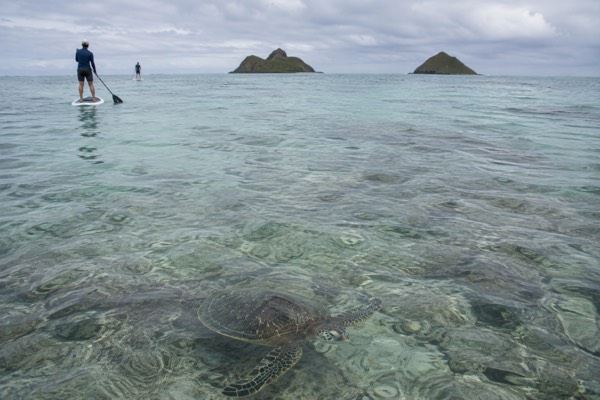
What Is The Secret Spot In Oahu? An Honest Answer
There is no single secret spot in Oahu. The honest answer is the leeward coast, off-season timing, and knowing which famous secrets are already gone. Here is what the data says.
What Is The Secret Spot In Oahu?
Every Oahu listicle eventually promises a secret. A secret beach, a secret waterfall, a secret shave ice stand that locals supposedly guard. The pattern repeats across hundreds of pages, and the tell is always the same: the "secret" has thousands of reviews, a queue for parking and a gift shop. This page takes the question seriously instead, and gives you the answer the search results will not, because the honest version is genuinely more useful than a fabricated hidden cove.
What Is The Secret Spot In Oahu?
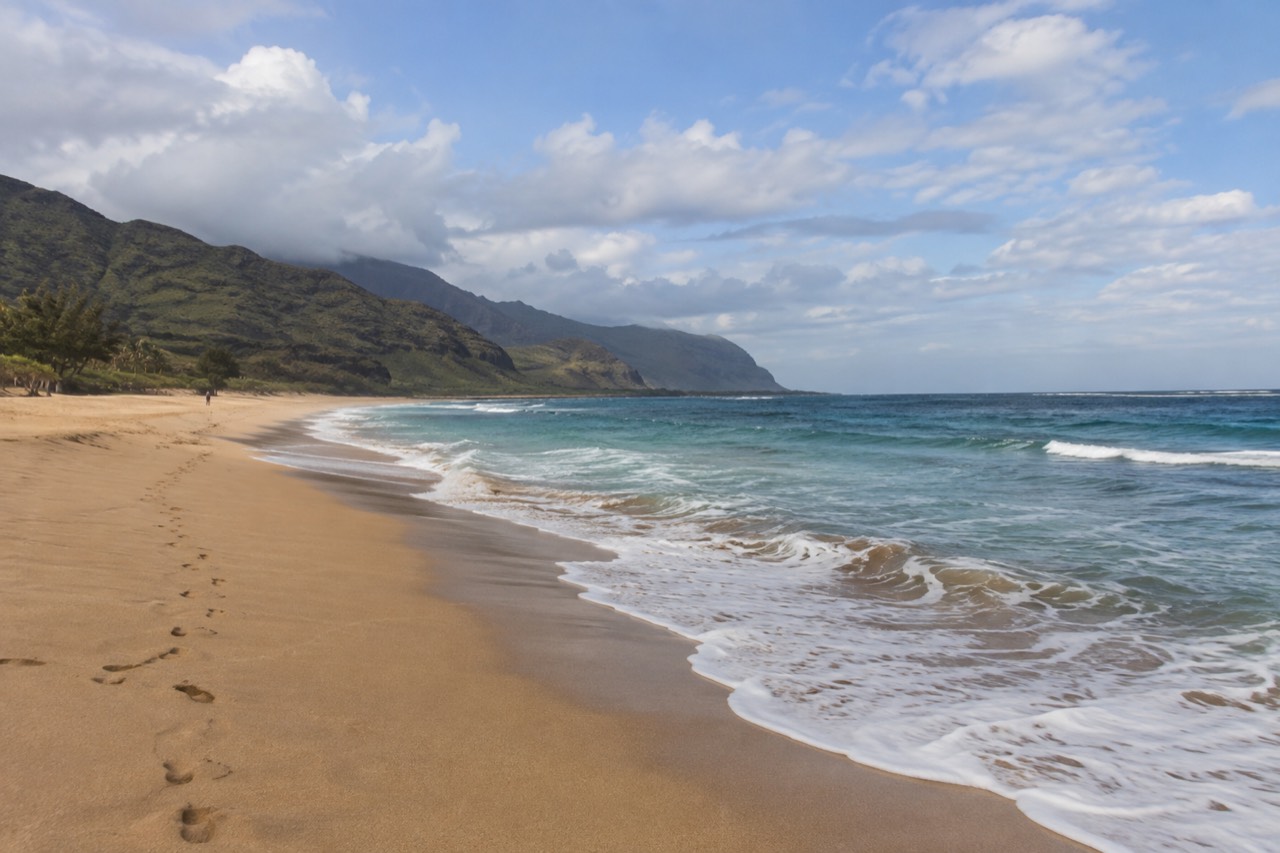
There is no single secret spot in Oahu, and any page naming one is guessing. The closest honest answer is the leeward coast, the Waiʻanae side west of Pearl Harbor, which sees a small fraction of the island's visitor traffic compared with Waikīkī and the North Shore. The second honest answer is timing: the same famous places feel empty at 7 a.m. and mobbed by 10.
The numbers back this up. Oʻahu took 5,679,047 visitors by air in 2025, preliminary DBEDT figures, and the overwhelming majority of them concentrate in a corridor running from Waikīkī to Diamond Head, with day-trip surges to Hanauma Bay, Kualoa Ranch and the North Shore. Most of July 2026's 499,197 visitors saw only Oʻahu and never island-hopped, which means nearly half a million people a month are competing for the same dozen postcard locations.
When five and a half million people a year are being routed toward the same spots, a place stops being secret the moment it appears in a "secret spots" article. The genuinely under-visited parts of the island are under-visited for structural reasons: they are farther from the hotel rooms, they have thinner food and retail infrastructure, and the tour buses do not stop there. That is not a mystery. It is arithmetic.
The practical takeaway is that you can manufacture the experience people are actually hunting for, the empty beach, the uncrowded trail, the sense of having found something. You do it by choosing the right side of the island and the right hour of the day, not by chasing a name.
Why The West Side Feels Like A Different Island?
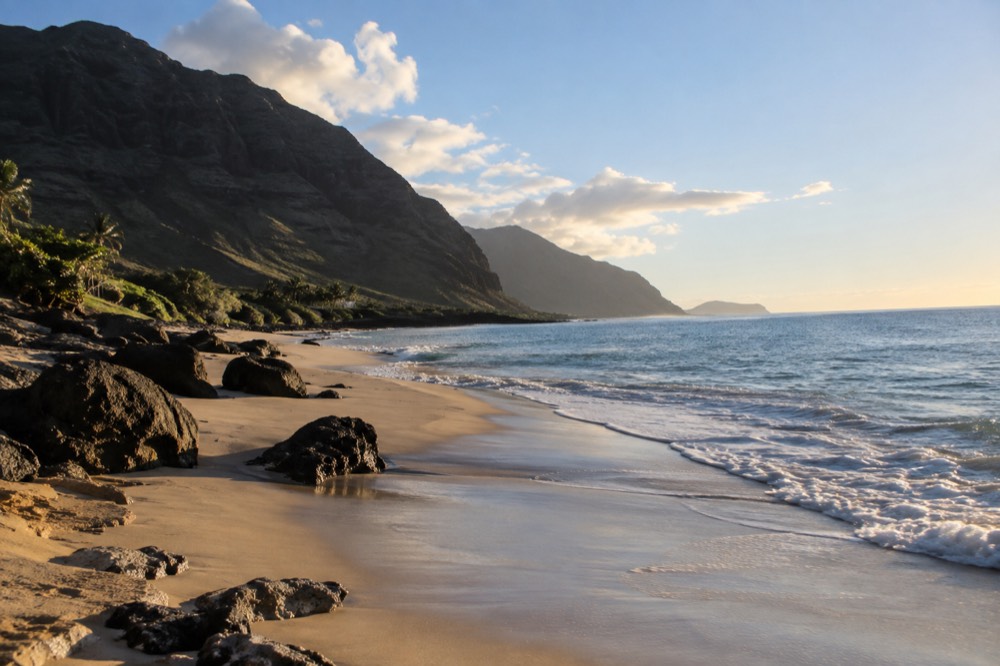
The leeward coast, from about ʻEwa Beach out through Waiʻanae and up toward Kaʻena, sits outside the standard visitor loop, so its parks and beaches carry a fraction of the crowding you see in Waikīkī or Kailua. It is also dramatically drier: Honolulu's airport records about 16 inches of rain a year, while the Mānoa valley, five miles inland, records more than nine times that.
That rainfall contrast is the single most under-used fact in Oahu planning. The official NOAA climate normals put Honolulu International Airport at 16.41 inches of precipitation per year, while the Lyon Arboretum station in Mānoa, roughly five miles away, records 150.96 inches. Every single month in Mānoa is wetter than the airport's wettest month. What that means in practice: the windward and valley destinations people photograph, the waterfalls, the rainforest trails, exist because that side of the island is a different climate. The leeward side is near-desert by comparison, which is exactly why its beaches photograph so reliably.
The west side is not a blank map. It has real destinations: Waiʻanae coast communities, Ko Olina's lagoons, and beach parks that local families use on weekends. It also has fewer restaurants per mile, less shade, and longer stretches where the highway is the only thing between you and the water. Go prepared, with water and sunscreen, and do not treat residential streets as scenic parking.
What the west side does not have is the pressure. On a day when the Hanauma Bay parking lot is full before 8 a.m., the leeward beach parks still have sand to spare. If the question behind "what is the secret spot in Oahu" is really "where can I sit on a beach without a crowd", the west side is the most defensible answer on the island.
A guided loop is one way to sample the perimeter, but the west side rewards a slower, self-directed day even more. Pick one beach park, arrive mid-morning after the commute traffic clears, and stay through the afternoon trade winds. The savings in stress are real, and so is the sand.
If a guided loop through the scenery appeals, book a scenic lookout tour here.
Which "Secret" Spots Are Actually Still Quiet?
A few places keep low crowding because access is genuinely limited rather than because nobody knows about them: Hōmaluhia Botanical Garden on the windward side, the Sandy Beach stretch of the southeast coast, and the Mākaha end of the leeward coast. Meanwhile the places most often sold as secrets, Lanikai, Laniakea, Mānoa Falls, are all heavily visited and parking-starved.
The distinction matters, because directing more traffic to the second group actively harms the residents who live there. Lanikai has no public parking lot at all; its residential streets carry no-parking restrictions and towing enforcement, and the nearest legal parking is the Kailua Beach Park lot. Laniakea's roadside turtle viewing has been reshaped by an ongoing highway drainage and safety project, with shoulder parking restricted. These are working neighbourhoods absorbing enormous visitor pressure on a two-lane road, not discoveries waiting to happen.
The table below sorts the island honestly.
| Place | Often sold as a secret? | Reality | Better plan |
|---|---|---|---|
| Lanikai Beach | Constantly | No public lot, residential streets, towing enforced | Use Kailua Beach Park and walk |
| Laniakea Beach | Constantly | Highway project has changed parking, turtles draw roadside stops | Park only in designated areas |
| Mānoa Falls | Often | Popular trail, private paid parking lot | Go early, expect company |
| Hōmaluhia Botanical Garden | Rarely | Spacious, genuinely uncrowded on weekdays | Bring the family, no reservations needed for entry |
| Sandy Beach Park | Rarely | Local favourite, strong shorebreak, fewer visitors | Strong swimmers only, watch the water |
| Waiʻanae coast beaches | Almost never | Far from Waikīkī, thin services, real space | Self-drive with supplies |
Hōmaluhia deserves the mention it rarely gets. It is a sprawling botanical garden at the foot of the Koʻolau range in Kāneʻohe, with a reservoir, camping by permit, and enough room that even a busy Saturday does not feel crowded. The full garden guide covers the details. Sandy Beach, east of Diamond Head on the way to the Mākapuʻu lighthouse trail, is where local families bodyboard, and its shorebreak demands respect; it is not a swimming beach for small children.
The pattern across all of these is the same. Quiet places on Oahu are quiet either because they are far, because access is limited, or because the experience requires something of you, fitness, caution, or early alarms. None of them are secret.
What About Kaʻena Point, The Island's Wild Tip?
Kaʻena Point, the trackless western tip where the road ends, is the place many locals would name if you pressed them for a real secret, but it is currently closed. The DLNR State Parks notice dated 9 September 2026 closes the Mokuleʻia and Keawaʻula sections for storm repairs after Hurricane Lowell, with no reopening date.
Even when open, it is a sacred site, a leina a ka ʻuhane where souls depart the living world, and a protected seabird and monk seal area behind a predator-proof fence.
Two things follow from that. First, check the DLNR notices before you plan any trip to the point; the closure is live as of this page's research and the reopening date is not fixed. Second, when it reopens, go with the right frame. Kaʻena is not a sunset photo backdrop with a hike attached. It is one of the last intact stretches of native coastal ecosystem on the island, and Hawaiian tradition holds it as a leina, a place where spirits of the dead leap from the world. Stay on the trail, keep distance from any monk seal hauled out on the sand, 50 feet is the recommended guideline, and do not cross the predator-proof fence line.
The same notice closed Nuʻuanu Pali State Wayside, the Pali Lookout, and Wahiawā Freshwater State Recreation Area. If your itinerary was built from older content, re-check it, because a large share of published Oahu pages predates the storm closures entirely.
Is The Real Secret Timing Rather Than Place?
Yes, and the evidence is in the reservation systems. Hanauma Bay opens reservations exactly two days ahead at 7 a.m. HST, closes Mondays and Tuesdays, and charges non-residents $25 plus a 2.35% online fee. Diamond Head requires non-residents to reserve entry and parking in advance, card only, $5 per person and $10 per vehicle, a rule permanent since 12 May 2022.
The island's most famous places are rationed by clock, so the travellers who win are the ones who set alarms.
This is the information most competing pages miss entirely. The Oahu planning problem in 2026 is not price and it is not finding a secret. It is reservation windows.
| Site | Reservation rule | Fee, non-resident | Closed |
|---|---|---|---|
| Hanauma Bay | Opens 2 days ahead, 7:00 a.m. HST | $25 + 2.35% online fee; children 12 and under free; kamaʻāina free with HI ID | Mondays, Tuesdays, Dec 25, Jan 1 |
| Diamond Head (Lēʻahi) | Required for entry and parking, up to 30 days ahead, no on-site sales | $5 per person, $10 per vehicle, credit card only | Christmas, New Year's |
| USS Arizona Memorial | Free tickets reserved on recreation.gov, $1 per-ticket management fee | Park entry free; parking $7 per day | Thanksgiving, Christmas, New Year's |
| Waimea Valley | Book-ahead link on the admission page, not stated as required | $26 adult, $18 child 4–12, kamaʻāina rates lower | Mondays |
Read the Hanauma Bay row carefully, because it is the one people get wrong. The official City and County page states it plainly: Monday at 7 a.m. you can begin reserving a Wednesday slot. Not 48 hours before your visit in a rolling sense, not a week ahead. Two days ahead, at 7 in the morning, Hawaii time. Visitors on mainland time have a natural advantage here; 7 a.m. HST is 10 a.m. on the West Coast, mid-morning on the East. The people who secure Hanauma Bay are the people who were awake and refreshing.
The timing principle extends past reservations. Sunrise at Waikīkī falls around 5:50 a.m. in late June and 7:11 a.m. in mid-January, per US Naval Observatory data, and sunset never runs later than about 7:17 p.m. all year. Oahu's day length swings by only about two and a half hours across the seasons, so there are no long summer evenings to rescue a late start. The practical version of the secret: be at the trailhead at opening, and you will share even the most famous places with a fraction of the crowd.
Are There Places You Should Not Go Looking For Secrets?
Yes, and this matters more than any recommendation. Do not chase waterfalls on private land in the Koʻolau valleys, do not enter heiau beyond marked paths, and never probe or dig in coastal dunes, because unmarked ancestral burials, iwi kūpuna, are present across Oahu's shorelines and disturbing them is both illegal and deeply offensive. Much of the "secret waterfall" content circulating online is trespassing with better photography, and this site will not repeat it.
The heiau are temples, not ruins. Puʻu o Mahuka above Waimea, Ulupō in Kailua and Keaīwa above ʻAiea are living religious sites; stay on marked paths, move nothing, and leave nothing. The rock-stacking you see on social media is not a Hawaiian practice, it misleads hikers who read cairns as route markers, and DLNR and NPS both discourage it.
Kualoa Ranch's valleys are the clearest commercial example of the boundary: the movie sites and valley interiors cannot be visited except on a paid guided tour, because the land is private. That is not gatekeeping to be routed around; it is a working ranch managing its own property, and the Kualoa guide explains what is and is not accessible.
One more correction worth carrying: if you have read that taking a lava rock home brings bad luck through an ancient curse, that framing is wrong. The "Pele's curse" story is a 20th-century invention, not traditional Hawaiian belief. The real reason not to pocket sand, coral or rock is that removing them from the shoreline is prohibited under state law. Give the legal reason and skip the folklore.
How Do You Reach The Quiet Side Without A Rental Car?
A circle-island tour is the practical answer, and the two strongest options are the full-day Grand Circle Island tour, about six and a half hours covering the North Shore, the windward coast and Haleʻiwa, and the Hidden Gems of Oahu tour, a nine-hour loop that adds Byodo-In Temple.
Both solve the same problem: the quiet parts of Oahu are spread around the island's perimeter, and a guided loop reaches them in one day without a rental car.
The circle-island format is underrated precisely because it is popular. People assume a heavily booked tour must be a crowded experience, but the crowds are in the vehicle, not at the stops, and the stops are chosen partly for access. The Grand Circle Island tour is the single most-booked product on this site's roster, and it earns that with a simple promise: Haleʻiwa town, the North Shore beaches and the windward lookouts in one guided day.
The Hidden Gems variant is the closer fit for this page's question. It runs a longer loop and includes Byodo-In, the replica temple set against the Koʻolau mountains in Kāneʻohe, which is non-resident temple grounds that many visitors never reach. The Byodo-In guide covers what to expect there.
For travellers planning several paid attractions, the Go City Oahu pass bundles more than forty things to do across a two-to-seven-day window, and it is worth doing the arithmetic against your own list rather than assuming a pass saves money. The pass makes sense when your itinerary stacks admission-priced sites; it does not when your days are built around beaches and free trails.
One planning note that belongs on every Oahu page: the Oahu Travel Guide homepage tracks the current reservation rules, storm closures and seasonal data in one place, and given how much of the island's access picture changed in 2026, checking it against your dates is the cheapest insurance you can get.
Common Questions About Secret Spots On Oahu
Most questions about secret spots on Oahu come down to three things: whether a specific place is genuinely uncrowded, whether it is legal and respectful to visit, and how to reach it without a car. The honest pattern is that truly quiet places are quiet for a reason, distance, limited access or effort, and that timing beats insider knowledge every time.
What is the secret spot in Oahu?
There is no single secret spot. The closest honest answer is the leeward, Waiʻanae side of the island, which sees a small fraction of Oahu's visitor traffic, combined with early-morning timing at the famous places. Any page naming one specific "secret" beach is describing somewhere with thousands of reviews.
Is Lanikai a hidden gem?
No. Lanikai Beach has no public parking lot, no-parking restrictions on its residential streets with towing enforcement, and heavy visitor pressure. The nearest legal parking is the Kailua Beach Park lot. It is a beautiful beach that residents live beside, not a discovery.
Is Kaʻena Point open?
As of the DLNR notice dated 9 September 2026, the Mokuleʻia and Keawaʻula sections of Kaʻena Point State Park are closed for storm repairs after Hurricane Lowell, with no reopening date. Check the DLNR notices before planning a visit, and when it reopens, treat it as the sacred and protected site it is.
Why is Hanauma Bay so hard to book?
Reservations open exactly two days ahead at 7:00 a.m. HST, the bay closes Mondays and Tuesdays, and daily entry is capped. Non-residents pay $25 plus a 2.35% online service fee; children 12 and under and kamaʻāina with Hawaii ID enter free. The constraint is the clock, not the price.
Are the secret waterfall hikes online real?
Mostly not as presented. Much of the "secret waterfall" content for the Koʻolau valleys involves private land, and publishing access routes to it would be directing trespass. The legal waterfall experiences, such as the Mānoa Falls trail or Waimea Valley, are well known and busy for exactly that reason.
Can you see the quiet side of Oahu without a car?
Yes. Full-day circle-island tours cover the North Shore, windward coast and Haleʻiwa in one guided loop, and longer variants add Byodo-In Temple. TheBus and Skyline also share a fare system, with a $7.50 daily cap on a HOLO card, though there is no Skyline station in Waikīkī, so a transfer is required.
The question "what is the secret spot in Oahu" has an answer, just not the one the listicles want. The island's real quiet is on its leeward coast, at the opening hour of its rationed parks, and along its perimeter on a day you planned around reservation clocks rather than hashtags.