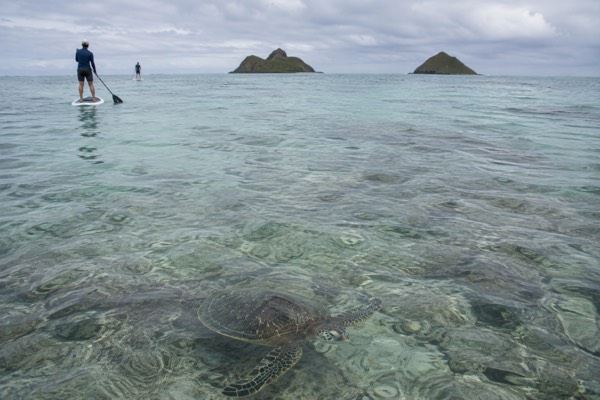
What Are The Least Crowded Beaches On Oahu?
A direct, sourced answer to which Oahu beaches stay quiet, why, and when, from Waimānalo to the leeward coast.
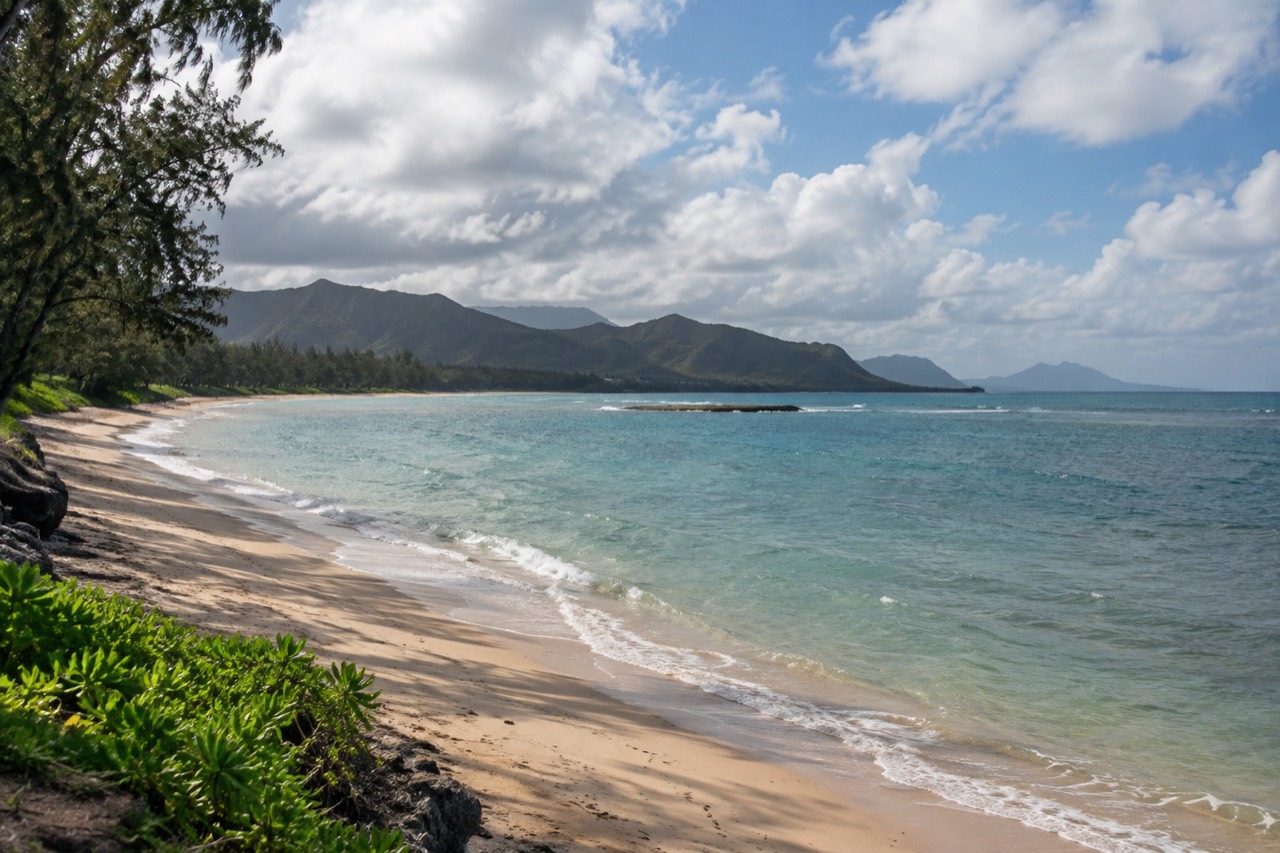
Oʻahu took just over 5.6 million visitors by air in 2025, and a large share of them spent their beach days on the same two miles of sand in Waikīkī. The island has far more coastline than that one strip, though, and most of it never sees a tour bus. The short answer is that the quietest swimming beaches sit on the windward coast east of the Koʻolau range, on the leeward coast west of Pearl Harbor, and at a handful of North Shore spots that flip between empty and packed depending on the season.
What Are The Least Crowded Beaches On Oahu?
The beaches that most consistently stay quiet are Waimānalo Beach and Kailua Beach Park on the windward coast, the Ko Olina lagoons on the leeward side, the Waiʻanae coast beaches such as Mākaha, and the North Shore's summer beaches when the surf is flat. Sandy Beach Park on the southeast coast fills on weekends but runs near-empty on weekday mornings. What they share is distance from Waikīkī hotel rooms.
The pattern is simple once you see it. Crowds on Oʻahu follow hotel density and parking supply, not beach quality. Waikīkī sits at the centre of the island's resort capacity, so it absorbs the default beach day of nearly every visitor who does not plan ahead. Drive east over the ridge into Kailua and Waimānalo, or west past Ko Olina toward Waiʻanae, and the visitor-to-sand ratio drops fast.
This matters for how you read the list below. A beach is not "uncrowded" in any absolute sense. Waimānalo on a Saturday morning in July is a busy place by local standards. The same beach at 8 a.m. on a Tuesday in February can feel like a private cove. Every recommendation here comes with the timing that makes it true.
One honest caveat before the list. Some of the beaches that appear in "secret Oahu" listicles online are quiet because they have no legal parking, no lifeguards, or no safe entry, and a few sit in front of residential streets that residents are asking visitors to stop treating as overflow lots. Those are not on this list. The beaches below are real public beaches with real access, and staying quiet is a property of their geography, not of trespass.
| Beach | Coast | Why it stays quieter | Best window |
|---|---|---|---|
| Waimānalo Beach Park | Windward | Long sand stretch far from any resort, ample park space | Weekday mornings |
| Kailua Beach Park | Windward | Big lot, wide beach, spread-out use | Weekdays year-round |
| Ko Olina lagoons | Leeward | Four lagoons spread visitors out; resort-adjacent but public | Early morning |
| Mākaha and the Waiʻanae coast | Leeward | Rarely on visitor itineraries at all | Any calm day |
| Sharks Cove | North Shore | Packed in summer surf season, quiet the rest of the year | Autumn and spring |
| Sandy Beach Park | Southeast | Strong shorebreak keeps casual crowds short | Weekday mornings |
If you want a single answer to plan around: pick a windward or leeward beach, go on a weekday, and arrive before 9 a.m. That formula beats any specific beach name, because it attacks the two things that actually create crowds, the weekend and the mid-morning arrival.
The other way to escape the beach crowd entirely is to be on the water rather than on the sand. A catamaran snorkel trip out of Waikīkī puts you over a reef with a fraction of the people within arm's reach of a beach towel, and the operators below run exactly that kind of morning.
Why Is Waimānalo Usually Quieter Than Waikīkī?
Waimānalo sits on the windward coast about a 30 to 40 minute drive from Waikīkī, and almost nobody is staying within walking distance of it. Waikīkī's crowd is a walking crowd: it is dense because tens of thousands of hotel rooms sit directly behind the sand. Waimānalo has no resort strip, so its visitors all made a deliberate choice to drive there, and far fewer people make that choice.
The beach itself helps. Waimānalo Beach Park fronts a long, unbroken stretch of sand with the Koʻolau range behind it, and the width of the beach means even a busy day spreads out. The water is typically calmer than the North Shore in winter, and the setting, mountains straight up out of the valley, is one of the most photographed on the island without ever being a "photography spot" people queue for.
The honest downside is the trade you make for quiet. Windward beaches are further from food, from rental stands and from the rest of a day's plans. Kailua Beach Park, ten minutes up the coast, softens that trade with a proper parking lot, showers and a small commercial strip in Kailua town, which is why our Kailua Beach Park guide treats it as the practical windward pick for families. Waimānalo is the quieter of the two precisely because it offers less.
There is also a weather fact that most first-time visitors miss, and it decides which coast you should pick. The windward side of the island is dramatically wetter than the leeward side. Official 1991-2020 climate normals put Honolulu airport at about 16 inches of rain a year, while the Lyon Arboretum station in Mānoa, five miles away, records over 150 inches. Windward valleys catch the trade-wind clouds as they pile into the Koʻolau range. What that means for a beach day: the windward coast gets more passing showers and more green, while the leeward coast around Ko Olina and Waiʻanae runs drier and sunnier. Neither is wrong. But if your beach day is your one guaranteed sunny day, the leeward side is the safer bet, and if you want the postcard mountain backdrop, you accept the shower risk on the windward side.
When Do Oahu Beaches Get Crowded?
Oahu beaches crowd on three cycles at once: the weekly cycle, where weekends roughly double beach traffic; the seasonal cycle, where summer brings families and winter brings surf watchers to different shores; and the daily cycle, where the hours between 10 a.m. and 3 p.m. are peak. Beat any one of those cycles and most beaches feel quiet. Beat two and almost any beach feels empty.
The weekly cycle is the strongest. Residents use these beaches too, and they use them on Saturday and Sunday. A beach that feels lonely at 8 a.m. on a Wednesday can have a line for parking by 10 a.m. on a Sunday. If your itinerary allows exactly one non-Waikīkī beach day, make it a weekday.
The seasonal cycle is more interesting because it is inverted by coast. In winter, roughly October through March, the North Shore draws the surf crowd and the surf itself closes most of those beaches to swimming. In summer the North Shore flattens out, the surf crowd leaves, and beaches like Sharks Cove and Sunset Beach become calm snorkelling and swimming spots with a fraction of their winter foot traffic. The south shore runs the opposite pattern: it is the summer surf coast, which is why Waikīkī and the south-facing beaches carry more energy, and more people, from May through September.
| Period | What happens | Where it is quietest |
|---|---|---|
| Weekday mornings, any season | Beaches fill slowly | Almost anywhere outside Waikīkī |
| Weekends | Resident traffic roughly doubles | Beaches with big lots: Kailua, Waimānalo |
| Summer (Jun to Aug) | Peak visitor season, south shore surf | North Shore flat-water spots |
| Winter (Nov to Feb) | North Shore surf season, whale season begins | Leeward coast lagoons |
| Mid-September and October | Visitor numbers dip between school holidays | Everywhere, especially windward |
The daily cycle rewards early risers more than any other tactic on this page. Sunrise in Honolulu ranges from about 5:50 a.m. at the summer solstice to about 7:11 a.m. in mid-January, so in summer you can swim before 7 a.m. in full daylight. Sunset never runs later than about 7:17 p.m., which is worth knowing too: Oʻahu does not have high-latitude summer evenings, so the golden-hour crowd at any beach is short and ends early.
Which North Shore Beaches Stay Calm In Summer?
Sharks Cove, Sunset Beach and Waimea Bay are quiet-water swimming beaches from roughly June through September, when the big north swell is absent and the surf drops to near flat. The same beaches are effectively closed to casual swimming from October through spring, when the North Shore hosts the world's heaviest surf. Visiting them in the wrong season is how people end up disappointed, and visiting them in the right season is how you get empty sand.
The North Shore's crowd is a winter crowd, and it is really a spectator crowd. People come to watch enormous waves, not to swim, and the beaches that host that spectacle, Waimea, Sunset, Pipeline, are standing-room in peak winter swell and empty of swimmers by law of common sense. Flip the season and the whole coast changes character. The coves flatten out, the spectators vanish, and our North Shore guide rates Sharks Cove as one of the island's best snorkelling sites precisely because summer visitors so often assume the whole coast is dangerous year-round.
Two cautions keep this honest. First, never swim on a North Shore beach in winter; the lifeguard towers and posted signs are not decoration. Second, the North Shore is a working community on a two-lane highway, and its beach parks have finite parking. Go early, park legally, and do not treat a residential driveway or a highway shoulder as a spot. The quietest beach day on the North Shore is a weekday morning in June, in the water by 8 a.m., out before the lots fill.
What About The Leeward Coast?
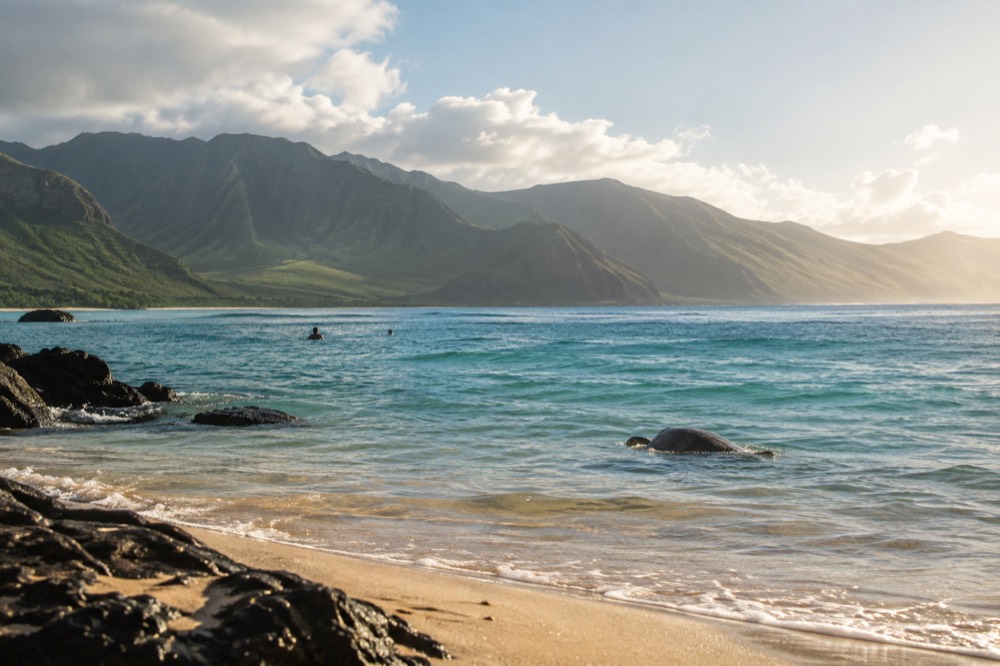
The leeward coast, from Ko Olina west through Waiʻanae and Mākaha, is the least visited stretch of accessible coastline on Oahu, because almost no visitor itinerary goes there. It is the driest and sunniest coast on the island, the water is typically calm inside the lagoons and bays, and its beaches are busy mainly on weekends with local families. For a genuinely uncrowded beach day it is the strongest play on the island.
Ko Olina is the gentle entry point. Its four man-made lagoons have public access with limited public parking, so the crowds that do come are capped by stall count rather than by fame, and the lagoons are about as safe as Oʻahu swimming gets: no shorebreak, no reef passage, calm water year-round. Arrive early, because the public stalls are the constraint and they fill on weekends.
Go further west and you reach the Waiʻanae coast, which is where the "least crowded" answer becomes almost literal. Mākaha and the beaches around it see a fraction of the visitor traffic of any windward or North Shore spot, partly because the drive is longer and partly because no tour operator routes there. Our leeward coast guide covers the practicalities, and the honest ones are simple: fewer services, fewer lifeguards, fewer food options, and a local community that is not set up as a visitor playground. Go with what you need, leave nothing, and be a guest rather than a spectacle.
The leeward coast is also where the island's whale watching quietly happens in season. Humpbacks are in Hawaiian waters from November through April, and a leeward or west-facing beach in that window can give you whales from shore with nobody else on the sand. The 100-yard approach distance is law for boats; from a beach you are free to watch.
One closure note that matters for west-side planning: Kaʻena Point State Park, the wild point at the island's northwest tip, has been closed for storm repairs following Hurricane Lowell, per a DLNR notice dated 9 September 2026. Do not plan a Kaʻena hike or beach day without checking the current DLNR State Parks notices; the point is a sacred site and a protected seabird area, and the closure is real.
How Do You Avoid Crowds Without Being The Problem?
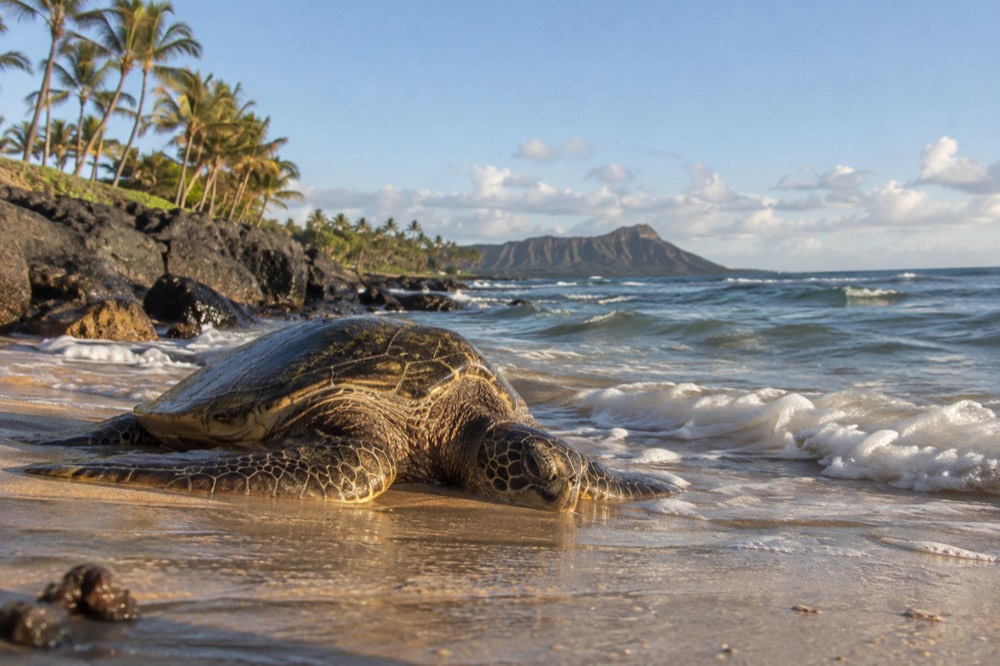
The two rules are timing and respect. Go on a weekday, arrive before 9 a.m., and pick a beach with a real parking lot so your visit does not spill into a residential street. Then treat the quiet as something you are borrowing: pack out everything you brought, keep the recommended 10 feet from honu on the sand, never touch a resting monk seal, and take no sand, rock or coral home, which is illegal under Hawaii law.
The timing half is covered above. The respect half deserves its own paragraph because "least crowded" content is exactly the content that can wreck a quiet place. The beaches on this list are quiet for structural reasons, distance from hotels, limited parking, season, and those same structures are what protect the residential neighborhoods behind them. Lanikai is the cautionary example: it is a spectacular beach with no public lot, and its residential streets have borne so much visitor pressure that the city has had to rework parking rules. If a beach has no legal parking, that is not a puzzle to solve, it is a signal to go elsewhere, and the beaches above give you better options anyway.
The wildlife rules are worth knowing precisely. For green sea turtles, the 10-foot distance is a guideline, but harassing or touching one is illegal under state and federal law, and the same is true of Hawaiian monk seals, where harassment is a felony under Hawaii statute. If a turtle hauls out on the sand next to your towel, you move, not the turtle. That is the whole rule.
Taking sand, dead coral or rock from the shoreline is prohibited under Hawaii Revised Statutes 205A-44. Ignore the "Pele's curse" framing you may have read; that story is a modern invention, not a Hawaiian tradition. The law is the actual reason, and it is reason enough.
Is Being On The Water A Way Around The Beach Crowd?
Yes, and it is often the better day out. A catamaran, a surf lesson at a break away from the main strip, or a paddleboard session on flat morning water puts you in the ocean with a handful of people instead of sharing sand with hundreds. Oʻahu's operators run small-group mornings for exactly this, and the tours below are the most reliable ways to buy your way off the crowded beach.
The turtle snorkel out of Waikīkī is the strongest example: it runs to a reef offshore, guarantees turtles, and takes about two hours, so it slots into a morning before the beach crowds peak. A beginner surf lesson works the opposite angle, putting you in the water at a managed break with an instructor, which is a calmer experience than fighting for a Waikīkī board rental at noon. And paddleboard yoga runs on flat water in a small class, early, which is about as far from a crowded beach as a beach-adjacent activity gets.
For the flat-water morning, the paddleboard yoga class below is a one-hour-15 session that runs on calm Honolulu water in small groups, and it is the quietest water experience on this list by headcount.
The honest summary of all three: they do not replace a quiet beach, they complement one. The pattern that works is a tour on the water in the morning, a windward or leeward beach in the afternoon after the lots have started turning over, and Waikīkī reserved for evenings, when the sand is a backdrop rather than the destination. More on the full picture lives in the Oahu Travel Guide homepage and its round-up of the island's beach and coast options.
Common Questions About The Least Crowded Beaches On Oahu
Most questions about quiet beaches on Oahu come down to three things: which coast you pick, which day of the week you go, and how early you arrive. The windward and leeward coasts beat Waikīkī on every weekday, the North Shore flips from packed to empty depending on the season, and no beach on the island stays quiet past late morning on a weekend. The answers below cover the specific questions people ask most.
What are the least crowded beaches on Oahu?
Waimānalo Beach and Kailua Beach Park on the windward coast, the Ko Olina lagoons and the Waiʻanae coast on the leeward side, and the North Shore's Sharks Cove and Sunset Beach in summer. All of them stay quietest on weekday mornings.
Is Lanikai Beach quiet?
Lanikai is beautiful and famous, but it has no public parking lot, so visiting it means competing for residential street parking that the neighborhood has asked visitors to stop using. Kailua Beach Park next door has a real lot and much of the same water.
Are North Shore beaches crowded in summer?
Far less than in winter. The North Shore's big crowds come with the winter surf season; from roughly June through September the surf flattens and the same beaches become calm, quiet swimming spots.
What time do Oahu beaches get busy?
Most fill between 10 a.m. and noon, and stay busy until late afternoon. Arriving before 9 a.m. beats the crowd at almost every beach on the island.
Is the leeward coast safe for swimming?
The Ko Olina lagoons are among the calmest swimming areas on Oahu, with no shorebreak. Beaches further west vary by spot and have fewer lifeguards, so check conditions locally and swim at guarded beaches when possible.
Can you see whales from a quiet beach?
Yes, in season. Humpbacks are in Hawaiian waters from November through April, and a west-facing beach with few people on it is one of the better places to watch them from shore.
The quietest beach on Oʻahu is not a secret, it is a choice: pick the coast away from your hotel, pick a weekday, and be standing on the sand before the parking lot fills.