What Are Some Hidden Gems In Oahu?
A sourced answer to the question of Oahu's hidden gems: the gardens, windward beaches and lookouts that sit outside the standard Waikiki circuit, with access rules, closures and honest caveats.
What Are Some Hidden Gems In Oahu?
The honest answer starts with a correction: almost nothing on Oahu is truly hidden. The island took 5,679,047 visitors by air in 2025, per Hawaii DBEDT's preliminary counts, and most of them moved through the same handful of famous names. What actually exists are places that sit outside the standard Waikīkī-to-Pearl-Harbor circuit, where the crowds thin out because the tour buses do not stop, or because getting there takes a little planning. That is the list below: real places, with the access rules, entry systems and live closures that most "secret spot" articles quietly leave out.
A second correction matters just as much. Some of the places travel content loves to call hidden gems are residential streets and small beach communities already carrying more visitor pressure than their parking can take. This article does not send you to those. Everything here can absorb a respectful visitor without straining a neighborhood, and where it cannot, we say so plainly.
What Are Some Hidden Gems In Oahu?
The best genuinely overlooked spots on Oahu are Hōmaluhia Botanical Garden in Kāneʻohe, Foster Botanical Garden in downtown Honolulu, Waimānalo Beach on the windward coast, the Byodo-In Temple in Lāʻie, and the Tantalus Lookout above Mānoa. Each sits outside the standard tour circuit, several are free or nearly free, and none depends on squeezing into a neighborhood with no parking.
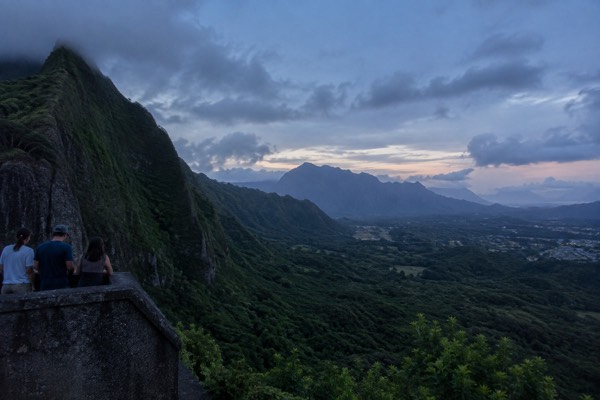
Two famous lookouts, Nuʻuanu Pali and Kaʻena Point, are currently closed for storm repairs.
That last sentence is the kind of thing a listicle will not tell you. Following Hurricane Lowell, the DLNR State Parks notice of 9 September 2026 closed Nuʻuanu Pali State Wayside and Kaʻena Point State Park's Mokuleʻia and Keawaʻula sections until further notice, along with Wahiawā Freshwater State Recreation Area. Travel content published before that date still describes both as open. If a guide you are reading does not mention the closures, it was not checked recently.
What remains is still a strong list. The windward side of the island holds most of it: the Koʻolau range rises steeply behind Kāneʻohe and the gardens and temples sit in that green, and the rainfall numbers explain why. The Lyon Arboretum station in Mānoa records an annual normal of 150.96 inches of rain against 16.41 inches at Honolulu airport, five miles away, per the NOAA 1991-2020 climate normals. The windward valleys are a different climate, and that is exactly why they feel like a different island.
If you would rather not drive the coastal routes yourself, a booked circle island day reaches most of the windward stops in one go.
Which Botanical Gardens Are Worth The Detour On Oahu?
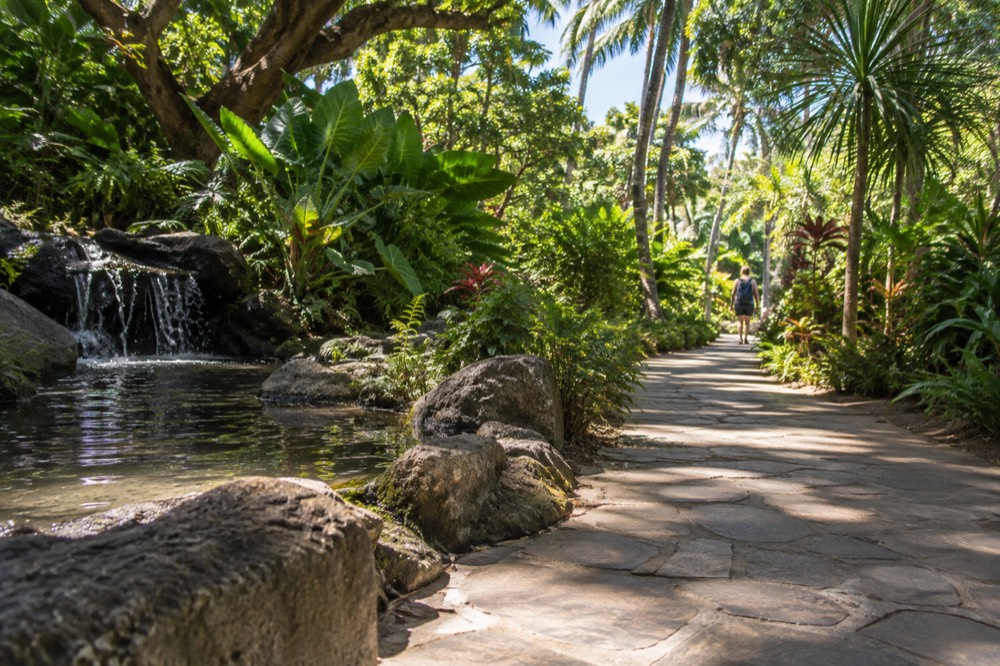
Hōmaluhia Botanical Garden in Kāneʻohe is the standout, a large county garden at the foot of the Koʻolau range with a lake, campsites and free entry, and it is the one most visitors never hear about. Foster Botanical Garden in downtown Honolulu is the oldest of the city's gardens and small enough for a lunch-hour visit. Koko Crater Botanical Garden sits inside the crater of the same volcano as the famous stairs trail.
Hōmaluhia is the pick of the four, and the reason is the setting. The garden sits at the base of the Koʻolau mountains, and the ridgeline fills the sky behind the lake in a way that photographs do not quite capture. Entry is free. The garden is a short drive from Kāneʻohe town, and it shares the windward side's wetter climate, so go expecting green and bring a light rain layer even on a day when Waikīkī is dry.
Foster Botanical Garden is the opposite experience: compact, central and historic. It sits near downtown Honolulu, which makes it one of the few genuinely quiet places within walking range of the city core. Our guide to Foster Botanical Garden covers the trees and the layout in detail.
One planning note that most lists miss: the windward valleys are dramatically wetter than the leeward coast, and not just in winter. Every single month at the Mānoa Lyon Arboretum station is wetter than Honolulu airport's wettest month, per the 1991-2020 climate normals. A "rainy day" on the windward side is a different thing from a rainy day in Waikīkī, and the gardens are built for it.
Is Waimānalo Beach Actually Quiet, And How Do You Get There?
Waimānalo Beach on the windward coast is one of the longest continuous sand stretches on Oahu, backed by ironwood trees with the Koʻolau range behind it, and it stays far quieter than the better-known Kailua beaches a few miles north. The beach park has public parking and facilities, which is the practical difference between a place that welcomes visitors and a residential street that cannot. The trade-off is distance from Waikīkī and changeable windward weather.
Kailua and Lanikai get the magazine covers, and the travel press has spent a decade calling them hidden, which they are not. Lanikai in particular has no public parking lot at all; the surrounding streets are residential, with no-parking zones and towing enforcement, and the nearest legal lot is at Kailua Beach Park. Sending more cars there is not a service to anyone, visitor or resident.
Waimānalo is the better answer for a visitor. It has the same windward sand and mountain backdrop, it has a beach park with facilities, and it does not require anyone to circle a residential block hoping for a space. Our Waimānalo Beach guide covers the access points.
Two safety notes, because the ocean here deserves them. The windward coast catches east and northeast swell, and conditions change through the day. And the wildlife rules are real: Hawaiian monk seals sometimes rest on these beaches, and a 50-foot distance is the recommended guideline, with 150 feet for a mother and pup. For green sea turtles, 10 feet is the recommended distance. Those are guidelines rather than statutory distances, but harassing protected wildlife is illegal regardless. Check our ocean safety guide before swimming any windward beach.
If a full booked day appeals, the circle island tours that stop in the windward towns are the efficient way to see this coast without a rental car.
Is Byodo-In Temple Worth The Drive To Lāʻie?
The Byodo-In Temple at the foot of the Koʻolau mountains in Lāʻie is a full-scale replica of a temple in Uji, Japan, set in valley grounds with ponds, black swans and a large seated Buddha. It is one of the most striking man-made settings on the island and it draws a fraction of the numbers of the better-known paid attractions. It sits well north of most itineraries, which is the only real barrier.
The setting does most of the work. The temple sits against a green valley wall, and the reflection pond in front of it is the shot everyone takes. It is a place for a slow hour rather than a quick photo, and the grounds are quiet enough that they feel far from Waikīkī even though the drive is not short.
The practical pairing: Byodo-In sits in Lāʻie, near the Polynesian Cultural Center, and the windward coast route from Kāneʻohe through Kailua and Waimānalo passes the temple on the way north. A Byodo-In Temple guide covers the details, and a booked tour that includes the temple handles the driving, which is worth considering given the distances involved.
What Can You Still Find On The North Shore Away From The Crowds?
Sharks Cove on the North Shore is a small rocky cove between Waimea Bay and Sunset Beach that becomes one of the island's best easy snorkeling spots in summer, when the winter surf is absent, and it sits beside a beach park with parking and facilities. Haleʻiwa town, a few minutes west, is a working country town rather than a hidden anything, but its lots and food trucks make it the practical base.
Winter waves close the cove to snorkeling.
The seasonal point deserves emphasis because it is the difference between a great visit and a wasted one. The North Shore's famous winter surf is not a spectator rumor; the same energy that makes Waimea and Sunset famous fills Sharks Cove in winter. In summer the cove flattens out and the snorkeling is excellent, with reef fish in shallow, sheltered water.
The town of Haleʻiwa is the base. It is a real community carrying heavy visitor traffic on a two-lane highway, so the etiquette is simple: park in legal lots, do not stop in travel lanes, and do not treat residents' driveways as overflow. Our Haleʻiwa town guide covers where to park and eat.
One North Shore name to handle carefully: Laniakea Beach, the turtle beach, has an ongoing state highway drainage and safety project that has been changing the parking configuration. Do not plan around any specific parking arrangement you read online. The Laniakea Beach guide is the page to check.
Which Overlooked Spots Are Close To Waikīkī?
Tantalus Lookout at Puʻu Ualakaa State Wayside sits above Mānoa and gives a view over Honolulu from a forested ridge that most visitors never climb to, a short drive from the city rather than a day trip. Ala Moana, Sandy Beach on the east end, and the Waikīkī Aquarium at the quiet end of Kalākaua Avenue round out a set of near-city spots outside the standard circuit, each reachable without a car commitment.
Tantalus is the pick. The lookout sits in a state wayside on a winding residential road above the city, and the view covers Diamond Head, Waikīkī and downtown in one frame. The drive up is through forest, which is itself the point: ten minutes from the city you are inside a canopy. Go for the hour before sunset, and note that sunset never gets later than about 7:17 p.m. on Oahu, per US Naval Observatory data, so the island has no long summer evenings to plan around.
Sandy Beach, on the east coast past Hanauma Bay, is a local bodyboarding beach with a powerful shorebreak that deserves respect; it is in our Sandy Beach Park guide. The Waikīkī Aquarium sits at the quieter Diamond Head end of Waikīkī and makes an easy hour.
The Oahu Travel Guide homepage covers the headline attractions, and our free and low-cost roundups complement the list here.
How Do You Actually Build A Day Around The Hidden Gems?
The windward side clusters well: Hōmaluhia Botanical Garden, the Nuʻuanu area, Waimānalo Beach and Kailua can fill one day without backtracking, and adding Byodo-In pushes the day toward Lāʻie and the North Shore. The leeward and North Shore gems need their own day, because the island's roads make crossing between coasts slower than the map suggests. Two booked tours cover most of this article in a single seat, sparing you the driving.
The honest logistics point is that Oahu rewards committing to one side of the island per day. The circle-island route exists precisely because the coastal road connects the windward and North Shore stops in one loop, and a booked day does it without you reading a map on a two-lane highway.
For independent travelers, TheBus and the Skyline rail share a fare structure: a HOLO card costs $3.00 for a two-hour pass with unlimited transfers, caps at $7.50 per day, and $90 covers a month, per the City and County of Honolulu's transit fares page. Note that Skyline has no Waikīkī station; a transfer is required, and the rail serves the airport end of the line.
| Hidden gem | Side of island | Entry | Best paired with | Watch out for |
|---|---|---|---|---|
| Hōmaluhia Botanical Garden | Windward, Kāneʻohe | Free | Kāneʻohe bay, Chinatown's Hōmaluhia drive | Wet microclimate; check hours |
| Foster Botanical Garden | Downtown | Paid entry | Downtown and Chinatown walk | Small site; an hour is plenty |
| Waimānalo Beach | Windward | Free | Kailua Beach Park lot | East swell; check surf forecast |
| Byodo-In Temple | Lāʻie, north windward | Paid entry | Polynesian Cultural Center | Long drive from Waikīkī |
| Sharks Cove | North Shore | Free | Haleʻiwa town | Winter surf closes snorkeling |
| Tantalus Lookout | Above Honolulu | Free | Sunset timing; no late evenings on Oahu | Residential access road, drive slowly |
For a booked day that covers the loop, these are the three options most travelers compare.
Which "Hidden Gems" Should You Skip, And Why?
Skip any list that sends you to Lanikai for sunrise without mentioning that the neighborhood has no public parking, skip Laniakea until you have checked the current highway project status, and skip Kaʻena Point and Nuʻuanu Pali Lookout entirely for now because both are closed for storm repairs as of September 2026. Also treat any "secret waterfall" claim with suspicion, because most of Oahu's ridge and waterfall land is private, and trespassing content is not hidden gem content.
Kaʻena Point deserves one more paragraph even closed, because it will reopen and it is worth the wait. It is a leina a ka ʻuhane, a place where souls depart the living world in Hawaiian tradition, and a protected seabird and monk seal area behind a predator-proof fence. When it reopens, go for the wildlife and the cultural weight, not for a sunset photo op, and stay on the trail.
The waterfall point is not pedantry. Most of the Koʻolau ridge and many of the island's waterfalls sit on private land, and the "secret spot" articles describing them are describing trespass. The legal waterfall experiences, Mānoa Falls and Waimea Valley's falls, are in our guides, and Waimea Valley's admission is published on its own site. Waimea Valley closes Mondays.
Common Questions About Hidden Gems In Oahu
Most questions about Oahu's hidden gems come down to three things: whether a place is genuinely under-visited or just under-parked, whether it is open right now given the September 2026 storm closures, and whether it is reachable without a car. The answers below cover the closures, transport, the best season for the North Shore coves, and the places that look free but carry entry or parking systems.
What are some hidden gems in Oahu?
Hōmaluhia Botanical Garden, Foster Botanical Garden, Waimānalo Beach, Byodo-In Temple, Sharks Cove in summer and the Tantalus Lookout are the honest list: real places outside the standard circuit, with parking and access that can handle visitors. Nuʻuanu Pali Lookout and Kaʻena Point are closed for storm repairs as of September 2026 and should be skipped for now.
Is Lanikai Beach a hidden gem?
No, and it cannot function as one. Lanikai has no public parking lot; the surrounding streets are residential with no-parking zones and towing enforcement, and the nearest legal lot is at Kailua Beach Park. Waimānalo Beach, a few miles south, offers the same windward sand with a beach park that has facilities.
Can you reach the hidden gems without a car?
Partly. TheBus and Skyline share a HOLO card fare structure with a $7.50 daily cap, but Skyline has no Waikīkī station and the rail serves the airport corridor, so the windward and North Shore spots are slow by bus. A booked circle island tour is the practical car-free answer for the far-flung ones.
When is Sharks Cove good for snorkeling?
Summer. The North Shore's winter surf fills the cove and closes it to snorkeling; in the calmer months the sheltered water and shallow reef make it one of the island's easiest snorkeling spots. Check the surf forecast before you go, and never snorkel it when a north swell is running.
Are Kaʻena Point and the Pali Lookout open?
Not as of September 2026. The DLNR State Parks notice dated 9 September 2026 closed Nuʻuanu Pali State Wayside and Kaʻena Point State Park's Mokuleʻia and Keawaʻula sections until further notice, following Hurricane Lowell. Check the DLNR notices before planning around either one.
What is the best hidden gem close to Waikīkī?
Tantalus Lookout at Puʻu Ualakaa State Wayside, a short drive above the city through forest, with a view over Honolulu, Diamond Head and the coast. Note that Oahu's sunsets never run much past about 7:17 p.m., so time the visit for the hour before rather than a long summer evening.
The short version: Oahu's hidden gems are not hidden so much as slightly out of the way, and the ones worth the detour are the ones built to receive you, gardens and beach parks with parking, temples with ticket windows, coves with lifeguards' worth of caution. Go to those, check the closures before you drive, and let the residential streets stay residential.