Does Oahu Have Better Beaches Than Maui?
A direct, sourced answer to whether Oahu's beaches beat Maui's, with the honest breakdown by sand, swimming, snorkeling, crowds and surf.
Does Oahu Have Better Beaches Than Maui?
No, not better overall. Maui generally has the more dramatic beaches and the clearer snorkel water, while Oahu has more beaches packed into a smaller, easier-to-drive island, plus a city sitting right on its best-known stretch of sand. Oahu's south shore also stays swimmable year-round, and its wave seasons run on a different clock. The honest answer is that "better" depends on what you want from a beach day.
That is the short version, and it is the one most guides dodge. The comparison gets argued in absolutes because both islands have a claim, and the claim flips depending on the category. Below is the breakdown by category.
Does Oahu Have More Beaches Than Maui?
Oahu packs a large number of beaches into a small, drivable island, and the practical difference is access rather than count. Waikīkī alone strings several named beaches along its frontage, and the windward coast adds Kailua, Lanikai, Waimānalo and more within a compact area. Maui's standout beaches are more spread out, so a beach-hopping day there means more driving between stops. On Oahu the variety sits closer together.
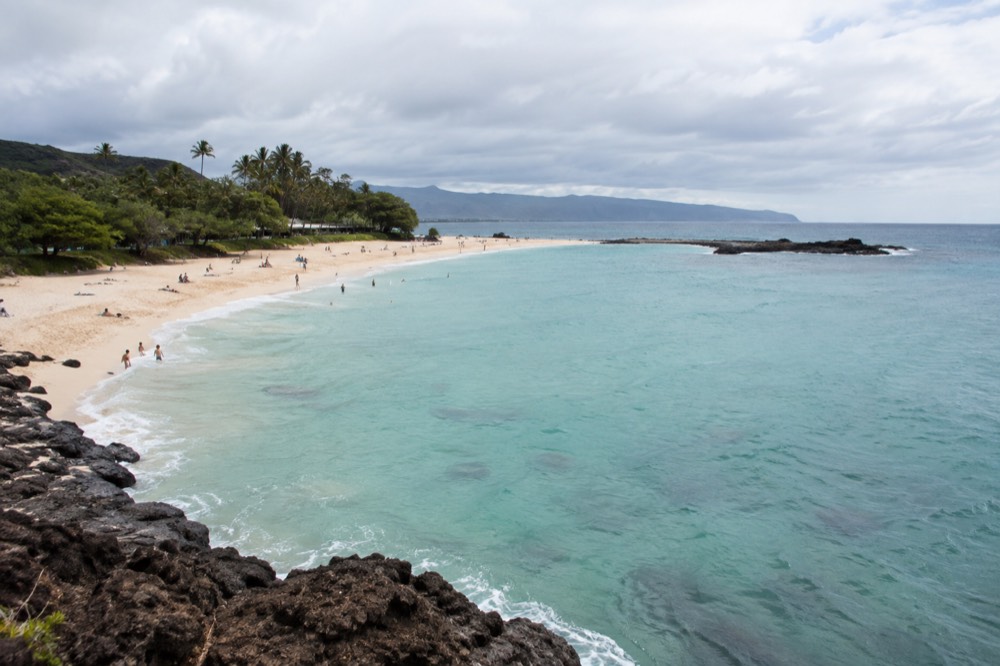
This is the category Oahu wins cleanly. The island is smaller than Maui, and its beaches ring it almost continuously. You can swim at Ala Moana in the morning, be on a windward beach by midday and still be back in Waikīkī for dinner, all without a long-haul drive. The best beaches on Oahu span every kind of shoreline: a calm city lagoon at Ala Moana Beach Park, a bodyboarding beach with a famous shorebreak at Sandy Beach, a turtle hangout at Laniakea, and the long golden stretch of Kailua Beach Park.
Maui's answer is quality over density. Its marquee beaches, the ones with the postcard sand and the volcanic backdrop, are genuinely spectacular, and nobody honest argues otherwise. But they are scattered along a coastline that takes real time to traverse, and the island's road congestion in high season eats into beach hours.
If your trip is a beach trip and nothing else, Maui's spread works fine. If you want a beach morning and a Pearl Harbor afternoon, or a beach and then a lūʻau without a long transfer, Oahu's compactness is the practical advantage.
Which Island Has Better Sand And Scenery?
Maui takes this one. Its best beaches pair wide golden sand with a dramatic volcanic backdrop, and the combination of red, black and white sand beaches within one island is something Oahu does not match. Oahu's most beautiful stretches, Lanikai and Kailua on the windward side, hold their own against almost anywhere, with fine pale sand and offshore islands in view. Island-wide, though, Maui's scenery-per-beach ratio is higher.
Lanikai deserves its reputation. The sand is fine and pale, the water shifts through greens and blues, and the Mokulua islands sit offshore as a constant backdrop. The catch is access: there is no public parking lot at Lanikai, the residential streets carry strict no-parking and time restrictions with towing enforcement, and the practical move is to park at Kailua Beach Park and walk. That is a real constraint, and any guide that sends you there without mentioning it is setting you up for a ticket.
Oahu's scenery also runs to the rugged rather than only the pretty. The east shore's rocky coast, the Mākapuʻu lighthouse trail views, and the North Shore's winter surf all give the island a range of coastal character. Maui counters with beaches backed by Haleakalā's slopes and the road to Hāna's string of coves.
One thing Oahu does have that Maui cannot offer: a skyline behind the sand. Waikīkī's beach with Diamond Head, Lēʻahi, at the end of it is one of the most recognizable coastal images in the Pacific. Whether that counts as scenery or as clutter depends on your taste.
Which Island Has Better Swimming Water?
Oahu's south shore stays swimmable all year, which is the island's strongest water claim. Honolulu Harbor's NOAA station recorded a 2025 mean of 78.0 to 78.2 degrees in the winter months and 82.7 in August, the warmest month, and harbor readings run warm against open ocean, so treat those as an upper bound. Both islands sit in the same subtropical band, so water temperatures are broadly similar.
The real difference is that Oahu's protected south shore keeps calm, swimmable conditions through winter, when north-facing beaches on both islands take the big surf. The water-temperature table below is computed from primary NOAA data, hourly readings across the full 2025 calendar year, and it is worth reading with the caveat attached: the station sits in Honolulu Harbor, not off Waikīkī.
| Month | Mean water temp (Honolulu Harbor) | Month | Mean water temp (Honolulu Harbor) |
|---|---|---|---|
| January | 78.2°F | July | 81.3°F |
| February | 78.0°F | August | 82.7°F |
| March | 78.2°F | September | 82.4°F |
| April | 79.3°F | October | 82.5°F |
| May | 79.7°F | November | 81.2°F |
| June | 80.6°F | December | 80.4°F |
The full-year range across all 8,758 hourly readings ran from 75.7 to 84.0 degrees. In practice: the water never feels cold on either island, and nobody chooses between Oahu and Maui on water temperature, because there is almost nothing to choose.
What does differ is where the calm water sits. Oahu's south shore faces away from the winter north swells, so Waikīkī, Ala Moana and Hanauma Bay stay gentle in January while the North Shore is closing out. In summer the pattern flips, and the north and east shores mellow while south swells pick up. The National Weather Service's surf forecast publishes Oahu's heights by shore aspect, north, west, south and east, and on a September sample day the south shore was running 4 to 6 feet while the north shore sat at 1 to 3, the exact inversion of the winter pattern. Maui runs on the same physics, but Oahu's south-shore beach strip is larger and more developed, so more visitors are standing on a calm beach when the swells arrive.
Which Island Has Better Snorkeling From Shore?
Maui wins on shore snorkeling, and it is not particularly close. Its premier reef sites are famous for a reason, and the water clarity there routinely beats what Oahu offers from most of its beaches. Oahu's best shore snorkeling spot, Hanauma Bay, is excellent but tightly managed: it closes Mondays and Tuesdays, entry is capped, and non-resident admission is $25 plus a 2.35% online service fee.
Reservations at Hanauma Bay open two days ahead at 7 a.m. HST. That management is why the reef survives, and it is also why a spontaneous snorkel there is hard.
Hanauma Bay is a Nature Preserve, not just a beach, and the rules reflect that. Entry is allowed from 6:45 a.m. to 1:30 p.m. with everyone out by 4 p.m., children 12 and under enter free, and Hawaii residents with a current ID enter free without a reservation. Parking is $3 for non-residents, cash only, and the lot fills early. Every visitor watches the mandatory orientation before going down to the sand.
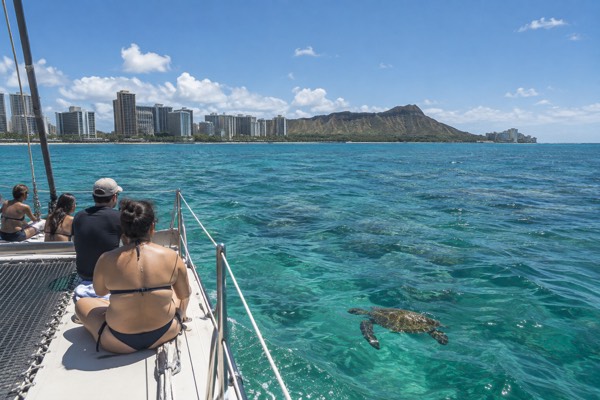
Outside Hanauma Bay, Oahu's shore snorkeling is decent rather than world-class. Shark's Cove on the North Shore is a strong summer option when the water is flat, and it is free. A guided trip evens the odds considerably: the two-hour Turtle Canyon snorkel from Waikiki comes with a turtle guarantee, which is a bolder promise than any beach on either island makes on its own.
Maui's shore reefs need no such management to impress, which is both their strength and, increasingly, their problem, as heavy visitation pressures the reef there too. If snorkeling is the entire point of your trip, Maui is the stronger pick. If it is one activity among several, Oahu's guided options and Hanauma Bay cover it well enough.
Which Island Is Better For Learning To Surf?
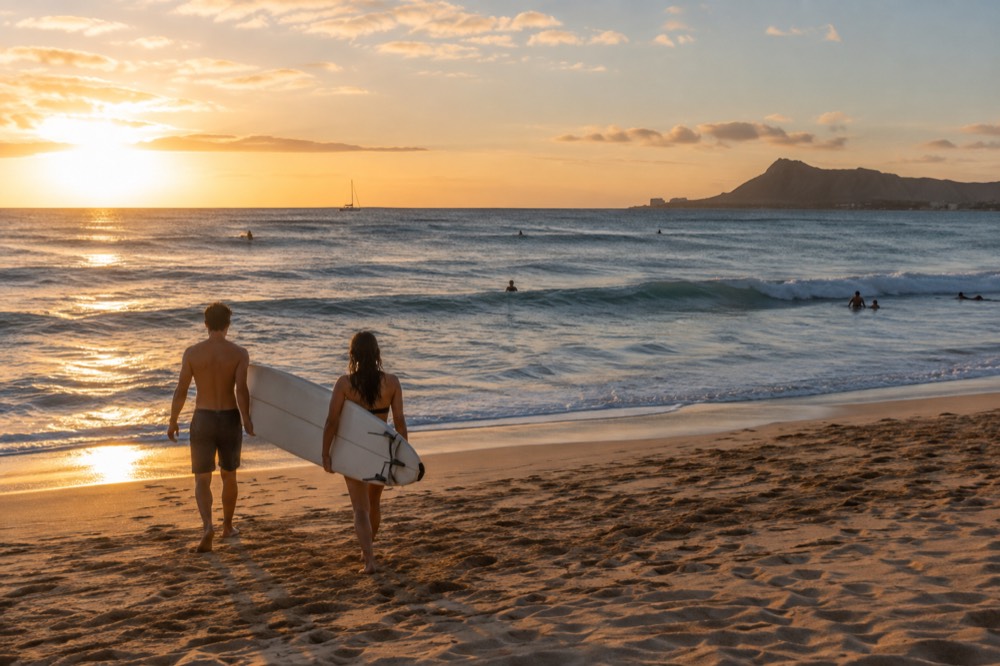
Oahu, and specifically Waikīkī, is the better place to learn to surf, and the reason is physical rather than reputational. Waikīkī's waves break gently over a shallow reef in warm water, rideable year-round, and the beach's long history means a deep bench of instructors and surf schools. It is also where the modern revival of surfing took root, on waves that are still beginner-friendly today.
Maui has good learning spots too, but Oahu's are more central and more consistent for a first-timer staying in the main visitor area.
Surfing on Oahu is not one thing. The island that gives beginners their first ride at Waikīkī also hosts the heaviest winter surf on the planet's radar on its North Shore, and the two coexist about an hour apart. A first-timer should not conflate them: surf lessons on Oahu happen on the south shore's small, forgiving waves, while Sunset Beach and its neighbours are for watching professionals in winter, not for paddling out.
The cultural weight matters here as well. Surfing, heʻe nalu, is a Hawaiian practice with deep roots, and Oahu's role in its modern history is real. Learning on the same gentle waves that carried that history is a genuinely better experience than learning in an anonymous beach town, and it is the one category where Oahu's beaches are not just convenient but distinctive. The wider set of guides lives on Oahu Travel Guide.
Which Island Has Better Beaches For A Family?
Both islands work well for families, but Oahu wins on the combination of calm water plus everything else. Ala Moana Beach Park is a sheltered, flat, lifeguarded lagoon minutes from the city, and the island adds a zoo, an aquarium and a full set of rainy-day options within a short radius. Maui's resort beaches are excellent for kids too. The tiebreaker is that an Oahu family beach day fails more gracefully when the weather turns.
Maui's resort stretches, at Kāʻanapali and the southwest coast, are often calmer than anything in Waikīkī, and a child's mood turning is a universal constant regardless of island.
Ala Moana is the quiet star here: a man-made but entirely natural-feeling lagoon with no waves to speak of, a lifeguard, shade trees and a full park around it. For toddlers it is hard to beat. Hanauma Bay's shallow inner reef is also excellent for careful kids, though the reservation system and the mandatory video make it more of a production.
The honest family math also includes the flight and the crowd factor. Oahu took 5,679,047 visitors by air in 2025, preliminary DBEDT figures, down about 2% on 2024's 5,794,854, and roughly six in ten Hawaii visitors land on this island. That volume shows up on the marquee beaches. Maui carries fewer visitors overall, and its resort stretches can feel less dense than Waikīkī on a busy week, though its famous beaches are hardly empty either.
Does Oahu Have Better Beaches Than Maui For A Short Trip?
For a trip of four days or fewer, Oahu is the better beach island, because the beaches are closer to where you sleep. A Waikīkī visitor is already on the sand, with Kailua, Lanikai and the North Shore all reachable as half-day moves, and the island's compactness means less of the trip is spent in a car. Maui rewards a longer, slower stay.
Rushing between Maui's spread-out coastlines burns the very beach time you came for. Short trip, Oahu; long, slow trip, Maui.
There is a timing angle too. Oahu's rainfall is famously lopsided: the official 1991-2020 climate normals put Honolulu Airport at 16.41 inches a year, while the Lyon Arboretum station in Mānoa, five miles inland, records 150.96 inches. Every single month in Mānoa is wetter than the airport's wettest month. The practical consequence for a beach trip is that a rain forecast for Honolulu often means rain in the valleys and sun on the leeward coast, and a short trip on Oahu can dodge weather by driving ten minutes. On a bigger island, that dodge costs half a day.
What About Turtles, Whales And Wildlife At The Beach?
Both islands deliver honu, Hawaiian green sea turtles, from the sand, and Oahu's Laniakea Beach is one of the most reliable places in the state to see them from shore. Humpback whales pass all the main islands from November through April, per the Hawaiian Islands Humpback Whale National Marine Sanctuary, so neither island owns whale season. The rules are identical on both islands.
Those rules are worth knowing precisely: 100 yards from humpbacks and 50 yards from spinner dolphins are law, while the 50-foot monk seal and 10-foot turtle distances are guidelines, with harassment itself illegal regardless.
The distinction between law and guideline matters, because a lot of content flattens it. Approach distances for whales and dolphins carry federal regulatory force. The seal and turtle figures are recommended distances, but take and harassment of protected species are illegal under federal and state law either way. At Laniakea, the volunteers on the beach will tell you where the line is, and the parking situation is in flux due to an ongoing highway drainage and safety project, so check before you go.
For whales from a boat, both islands run trips inside the November-to-April window, and the sanctuary's guidance is the same on both: keep 100 yards back. For more on Oahu's side of it, see whale watching on Oahu.
So Which Should You Choose?
Choose Oahu if you want beaches plus a city, a short transfer from airport to sand, calm winter swimming on the south shore, and the easiest island for a first Hawaii trip, especially a short one. Choose Maui if the beach is the whole point: you want the most dramatic sand, the best shore snorkeling, and a slower, more resort-driven rhythm over a longer stay.
Oahu has better beaches for how most people actually travel. Maui has better beaches for people whose itinerary is only beaches.
The fuller comparison, including food, cost and crowds beyond the shoreline, is in Oahu vs Maui: which to choose. And if the compactness argument won you over, the 1-day Oahu itinerary shows just how much beach and non-beach ground the island covers in a single day. This desk's own summary, for what it is worth, is that the question "better" is doing too much work: the islands are different products, and the honest recommendation is matching the island to the trip rather than crowning a champion.
Common Questions About Oahu And Maui Beaches
Most questions about whether Oahu has better beaches than Maui come down to three things: what kind of sand and scenery you want, whether snorkeling or convenience drives the trip, and how long you are staying. Maui wins on dramatic beaches and shore snorkeling, Oahu wins on access, calm winter water on the south shore, beginner surfing and the density of things to do around the sand.
Neither island is the wrong answer, and anyone telling you one is objectively better is selling something.
Does Oahu have better beaches than Maui?
Not better overall. Maui has the more dramatic sand and clearer shore-snorkeling water; Oahu has more beaches closer together, a swimmable south shore year-round, better beginner surfing at Waikīkī, and far more to do beyond the beach. For a short or first trip, Oahu is usually the stronger pick; for a trip that is only about beaches, Maui is.
Is the water warmer in Oahu or Maui?
Broadly the same. Honolulu Harbor's NOAA station recorded monthly means of 78.0 to 82.7 degrees across 2025, with August the warmest month, and harbor readings run warm against open ocean. Both islands sit in the same subtropical band, so water temperature should not decide this one.
Which island has better snorkeling?
Maui, for shore snorkeling. Oahu's best site, Hanauma Bay, is excellent but managed: closed Mondays and Tuesdays, $25 non-resident entry plus a 2.35% service fee, reservations opening two days ahead at 7 a.m. HST. Guided trips like the Turtle Canyon snorkel from Waikiki close much of the gap.
Are Oahu's beaches more crowded than Maui's?
Oahu's marquee beaches carry more foot traffic, which tracks with its visitor volume: 5,679,047 air visitors in 2025, preliminary DBEDT figures. But Oahu also has genuinely quiet stretches on the windward and leeward coasts, and its compact size means you can move when one beach fills up.
Can you swim at Oahu beaches in winter?
Yes, on the south shore. Waikīkī, Ala Moana and Hanauma Bay sit on the leeward side facing away from the winter north swells, so they stay calm while the North Shore takes the big surf. North-facing beaches on both islands are for watching in winter, not swimming.
Which island is better for a first trip to Hawaii?
Usually Oahu. The airport-to-beach transfer is short, the beaches are close to the hotels, the range of activities is unmatched, and the reservation-heavy sights like Hanauma Bay and Diamond Head are manageable with a little planning. Maui suits a second trip or a slower, beach-first stay.