Oahu 7 Day Itinerary: A Realistic Week On The Island
Seven days is enough to see Oʻahu properly, but only if the week is paced around reservation windows, closed days and the reality that the island's best experiences are booked days or weeks ahead.
Short answer
Seven days is the sweet spot for Oʻahu: enough for Pearl Harbor, a circle-island day, Diamond Head, Hanauma Bay, the North Shore and a luau, without rushing. The plan below sequences those around the reservation windows and closed days that actually decide what is possible.
Seven days is the sweet spot for Oʻahu. Shorter trips force brutal cuts; longer ones tempt people into driving the same roads twice. A week gives you room for the big history sites, one proper beach day, a luau and a genuine rest day, which is the day most itineraries leave out and most travelers end up needing anyway.
The plan below is built around the constraints that actually decide what is possible on this island: Hanauma Bay closes two days a week, the Polynesian Cultural Center closes two days a week, Diamond Head requires a reservation for out-of-state visitors, and the Pali Lookout is currently closed for storm repairs. Get those right and the week runs itself. This Oahu Travel Guide page sequences all of it day by day.
Is 7 Days Enough For Oʻahu?
Seven days is enough to see Oʻahu well, provided the week is paced around reservations rather than geography. Most first-time visitors can cover Pearl Harbor, Diamond Head, Hanauma Bay, the North Shore, a luau and one windward coast day comfortably in seven days. What seven days does not allow is everything: pick one or two anchor experiences per day and leave slack for weather, which on this island varies enormously by side. The single biggest mistake in week-long Oahu plans is stacking three anchor activities into a single day, then losing the whole day when one runs long.
Consider the numbers. Oʻahu took 5,679,047 visitors by air in calendar 2025, preliminary figures from the state's tourism statistics, and most of them see only this island: in July 2026, 387,063 of the month's 499,197 Oʻahu visitors visited no other island. That means everyone is competing for the same reservations, the same parking and the same beach access at the same time. A week gives you enough lead time to win those contests if you book in the right order.
The right order is: book the Arizona Memorial program and any guided tours first, then Diamond Head, then Hanauma Bay, then everything else. Loose items like the trolley, a food tour or a sunset sail can be booked mid-week once you know your energy levels.
One more pacing note. The island is not large, but traffic is real and the two-lane highway to the North Shore carries both tourists and a working community. Build one North Shore day into the week, not three, and do not plan a windward morning and a leeward afternoon on the same day unless you enjoy driving. The reward for pacing yourself is that each day ends with something remembered rather than something survived, and by day seven you will still like the island, which is not a small thing.
What Should Each Day Of A 7-Day Oahu Itinerary Look Like?
A realistic week runs: Pearl Harbor on day one, Diamond Head and Waikīkī on day two, Hanauma Bay and the south shore on day three, a guided circle-island day on day four, a rest and beach day on day five, the windward coast on day six, and a luau on day seven. The sequence respects closed days and reservation windows, and it front-loads the things that sell out. Swap days freely for weather, but keep the reservation-dependent days anchored to their bookings.
Here is the week at a glance:
| Day | Anchor | Why this day | Book ahead? |
|---|---|---|---|
| 1 | Pearl Harbor National Memorial | The Arizona program is free but ticketed; do it early in the week while energy is high | Yes, on recreation.gov |
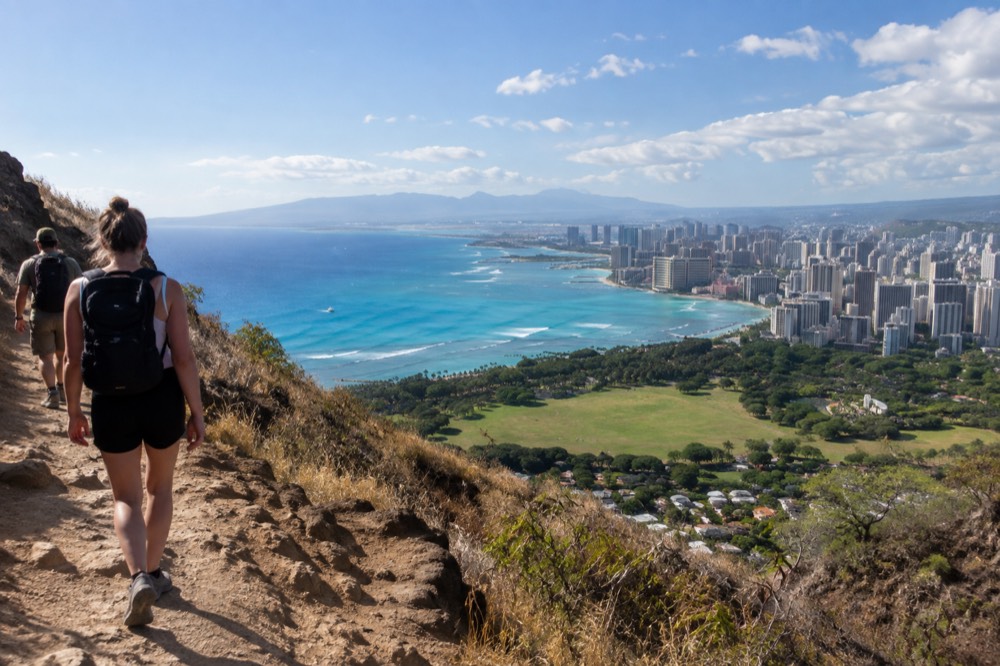
| 2 | Diamond Head, then Waikīkī | Non-residents need a reservation for entry and parking; afternoon is beach time | Yes, up to 30 days ahead |
| 3 | Hanauma Bay snorkeling | Closed Mondays and Tuesdays; reservations open two days ahead at 7 a.m. HST | Yes, timed entry |
| 4 | Guided circle-island tour | One booked seat covers Haleʻiwa, the North Shore and the windward coast | Yes |
| 5 | Rest day: beach, pool, Kapiʻolani Park | Every good week needs one; also your weather buffer | No |
| 6 | Kailua and the windward coast | Lanikai and the Mākapuʻu lighthouse trail, at your own pace | No |
| 7 | Luau evening, loose morning | Cultural capstone; book seats well ahead | Yes |
Day one deserves its own note. The Pearl Harbor visitor center is open 7 a.m. to 5 p.m. daily except Thanksgiving, Christmas and New Year's, park entry is free, and the Arizona Memorial program itself is free apart from a $1 non-refundable management fee per ticket when reserving on recreation.gov. Bags of any kind are prohibited inside, including backpacks and purses, and storage near the entrance carries a small fee. The memorial is a war grave, 1,102 sailors and Marines remain in the ship, so plan it as a morning of quiet attention rather than a photo stop. Arrive early, take the boat program, then give the adjacent museums whatever attention you have left rather than rushing to a second destination.
For day one, or any day you would rather not navigate yourself, a guided option handles tickets and transport: see the Pearl Harbor half-day tour for the most-booked version, or Check availability if your dates are close.
Day four is the circle-island day, and it is the one day of the week worth handing to a guide. The route strings together the North Shore, Haleʻiwa town and the windward coast, and a booked seat means no route planning, no parking hunts and no temptation to stop in a travel lane. The full-day grand circle island tour is the island's most-booked option for exactly this reason. If your week has room for a longer, deeper version that adds the Byodo-In Temple, that variant exists too and is worth the extra hours.
Day seven's luau deserves booking before you fly, not on day five. The best seats at the island's popular luaus go early, and the Toa Luau at Waimea Valley pairs the evening with daytime access to the valley itself, which closes on Mondays. A luau also makes a natural final evening: nothing needs packing, the show runs whether or not your legs are tired, and it ends the week inside Hawaiian and Polynesian performance traditions rather than inside a rental car.
How Do You Handle Reservations Without Losing Your Week?
Three reservations make or break an Oahu week: the USS Arizona Memorial program on recreation.gov, Diamond Head entry and parking for out-of-state visitors, and Hanauma Bay's timed entry, which opens exactly two days ahead at 7 a.m. HST. Book the Arizona program first, Diamond Head up to 30 days ahead, and set an alarm for Hanauma Bay's 7 a.m. release. Everything else can wait until you are on island. Miss one of these three and no amount of flexibility recovers the day.
The details matter, because a lot of competing content predates the current rules. Diamond Head's non-resident reservation requirement has been in force since 12 May 2022 and is permanent: entry is $5 per person, parking inside the crater is $10 per non-resident vehicle, payment is card only, and there are no on-site sales. Hawaii residents enter free with state ID. The monument is open 6 a.m. to 6 p.m. daily, with last reservation at 4 p.m. and last entry at 4:30 p.m.
Hanauma Bay runs on its own clock. It is closed Mondays and Tuesdays, plus Christmas and New Year's Day. Entry costs $25 per non-resident with a 2.35% online service fee, children 12 and under are free, and Hawaii residents enter free with no reservation at all. Entry is allowed from 6:45 a.m. to 1:30 p.m., with everyone out by 4 p.m. The reservation window is the part people get wrong: slots open two days ahead at 7:00 a.m. HST, so Monday morning you book Wednesday. If you would rather not run your week around an alarm clock, a shuttle-and-entry tour does it for you; the Hanauma Bay nature preserve guide covers the self-directed alternative in full.
What If The Weather Turns During Your Week?
Oahu's weather is a side-of-island problem, not a calendar problem: the leeward south shore around Honolulu and Waikiki is dramatically drier than the windward valleys, so a rainy morning rarely means a rainy island. The airport area records about 16 inches of rain a year while the Manoa valley, five miles inland, records 150.96 inches. When one side is soaked, drive to the other. That is the single most useful thing to know when a day in your itinerary collapses.
The rainfall contrast is not folklore; it comes from the official 1991-2020 climate normals. Every single month in Mānoa is wetter than Honolulu airport's wettest month. Practically, this means your Hanauma Bay day and your beach days belong on the south shore, your rainforest days, Mānoa Falls and Hoʻomaluhia Botanical Garden, belong on the windward side, and a genuinely island-wide washout is rare. Check the surf and weather forecast by shore aspect rather than by island, because the north and south coasts run out of phase: in winter the north shore carries the big swells while the south shore settles, and in summer the pattern inverts.
Build one buffer day into the week, which is why day five above is deliberately loose. If the trade winds bring rain to the windward side, flip day five and day six. If a whole day is lost, the rainy day activities on Oahu guide covers the Bishop Museum, ʻIolani Palace and other indoor options, all of which sit in urban Honolulu where the rain is lightest anyway.
One closure to know about before you plan any lookout stops: the Nuʻuanu Pali Lookout and Kaʻena Point State Park's Mokuleʻia and Keawaʻula sections are closed until further notice for storm repairs following the September 2026 hurricane, per the state parks notice. Do not build a day around either until you have re-checked the DLNR notices. This is a moving situation, and any itinerary that names those stops should be re-checked the week you travel.
How Much Does A 7-Day Oahu Itinerary Actually Cost?
Attraction fees for a week of the itinerary above run modestly: Diamond Head is $5 per person plus $10 to park, Hanauma Bay is $25 per non-resident, and the Pearl Harbor visitor center and Arizona Memorial program are free apart from a $1 reservation fee per ticket. The real budget items are lodging, a rental car or transit, one or two guided tours and a luau. Plan the big lines first and treat entry fees as rounding error. The table below lays out what is fixed and what is optional.
| Item | Typical planning range | Notes |
|---|---|---|
| Diamond Head entry + parking | $5 per person + $10 per vehicle | Non-residents, card only, reservation required |
| Hanauma Bay entry | $25 + online service fee | Children 12 and under free; residents free |
| Pearl Harbor / Arizona Memorial | Free, $1 per-ticket reservation fee | Parking $7 per day at the visitor center |
| Waimea Valley admission | $26 adult, $18 child 4-12 | Closed Mondays; kamaʻāina rates lower |
| Guided circle-island day | Check the operator's live listing | Includes transport; the biggest single time-saver |
| Luau | Check the operator's live listing | Book before you fly for weekend seats |
| Transit alternative | $7.50 per day HOLO cap | TheBus and Skyline share one fare system |
Two tax facts help you read hotel prices correctly. Hawaii's transient accommodations tax rose from 10.25% to 11.00% on 1 January 2026 under Act 96, often called the green fee, and it is an increase to an existing lodging tax, not a separate charge collected at the airport. Quoted room rates will not include it, so add lodging taxes when comparing hotels, and remember that the combined figure on an Oahu bill also includes general excise tax and a county surcharge, so the final line is meaningfully higher than the advertised rate.
If you are weighing whether a multi-attraction pass makes sense, the honest test is arithmetic, not enthusiasm: add up the entry fees for the specific sites on your week that the pass covers, and compare against the pass price on the operator's live listing. A dense, tour-heavy week can come out ahead; the loose week described above, with two free anchor sites and a rest day, usually does not.
If the arithmetic works in your favor, book an all-inclusive attraction pass here.
Do You Need A Car For All Seven Days?
You do not need a car for every day of the week, but you need one, or a booked seat, for the circle-island and North Shore days. Waikiki, Diamond Head, Hanauma Bay and Pearl Harbor are all reachable by TheBus or a combination of Skyline rail and bus, with a $7.50 daily fare cap on a HOLO card.
Rent a car for the middle stretch of the week and use transit at either end to save on rental days and hotel parking. That hybrid pattern is what most one-week visitors settle into.
The transit facts are solid: TheBus and Skyline share one fare structure, a cash single ride is $3.25, the HOLO daily cap is $7.50, and a monthly pass is $90. Skyline now reaches a station serving the airport, with bus transfers onward, but there is no Waikīkī station, so a transfer is always part of a rail trip to or from the hotel zone. The do you need a car on Oahu guide covers the mechanics, including which routes serve the major sites and how the HOLO card's daily cap works in practice.
For the days you do drive, parking, not driving, is the part that eats hours. Waikīkī hotel parking in particular is a volatile number; check with your hotel rather than trusting any figure you see online, and fold the cost into your rental-car math before assuming a car is cheaper than tours. On the North Shore, park only in designated lots and never in travel lanes, which residents and the highway patrol both take seriously.
Common Questions About A 7-Day Oahu Itinerary
Most questions about a week on Oahu come down to three things: the reservation calendar, the island's weather split and pacing. Book the Arizona Memorial program, Diamond Head and Hanauma Bay before anything else, keep a rest day in the middle of the week, and remember that rain on one side of the island usually means sun on the other. The answers below cover the specific questions that come up again and again.
Is 7 days in Oahu enough?
Yes. Seven days covers Pearl Harbor, Diamond Head, Hanauma Bay, the North Shore, a windward coast day and a luau without rushing, and it leaves a buffer day for weather. Most visitors who see only Oahu, which is the majority, find a week is the comfortable minimum for the island's highlights.
What should I book before I fly to Oahu?
Book the USS Arizona Memorial program on recreation.gov first, then Diamond Head entry and parking, then your luau seats, then any guided tours. Hanauma Bay cannot be booked far ahead at all: its reservations open exactly two days before your visit at 7 a.m. HST, so set an alarm.
Should I do the North Shore on my own or take a tour?
Either works. A guided circle-island day removes the route planning and the parking hunts on a busy two-lane highway, and the island's most-booked tour is that exact product. Driving it yourself is rewarding if you start early, park legally and skip the temptation to stop in travel lanes near turtle beaches.
Which day should be flexible in a 7-day Oahu itinerary?
Day five. Keep it loose, with a beach or pool morning and nothing booked, so it can absorb a rain-out, a late night or simple fatigue. If the weather is fine all week, it becomes your second beach day or a food tour afternoon.
Can you do Oahu without a car for a week?
You can, with one exception. TheBus and Skyline reach Waikīkī, Diamond Head, Hanauma Bay, Pearl Harbor and Kailua, with a $7.50 daily fare cap on a HOLO card. The exception is a full circle-island or North Shore day, where a rental car for two or three mid-week days, or a booked guided tour, beats four hours of buses.
What is the biggest mistake in a 7-day Oahu plan?
Stacking too much into single days and ignoring closed days. Hanauma Bay is closed Mondays and Tuesdays, the Polynesian Cultural Center closes two days a week, and the Pali Lookout is currently closed for storm repairs. A week planned around those facts runs itself; a week planned against them collapses by Wednesday.
A week on Oʻahu, sequenced around reservations and closed days rather than around a map, is one of the most rewarding trips in the islands: book the three hard reservations early, hold a buffer day in the middle, let the weather decide which coast you drive to each morning, and the island will do the rest.