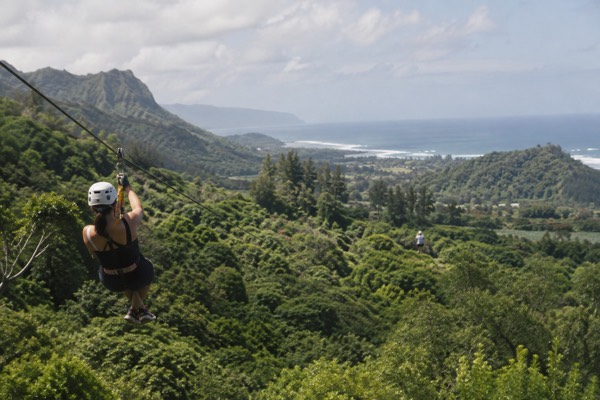
Turtle Bay Resort And North Shore Point: What A Visit Actually Involves
Turtle Bay Resort sits on Oʻahu's northern tip at Kuilima, where the North Shore's country pace meets a single large resort. Here is what a visit involves, what it costs to access, and when it is worth the drive.
Short answer
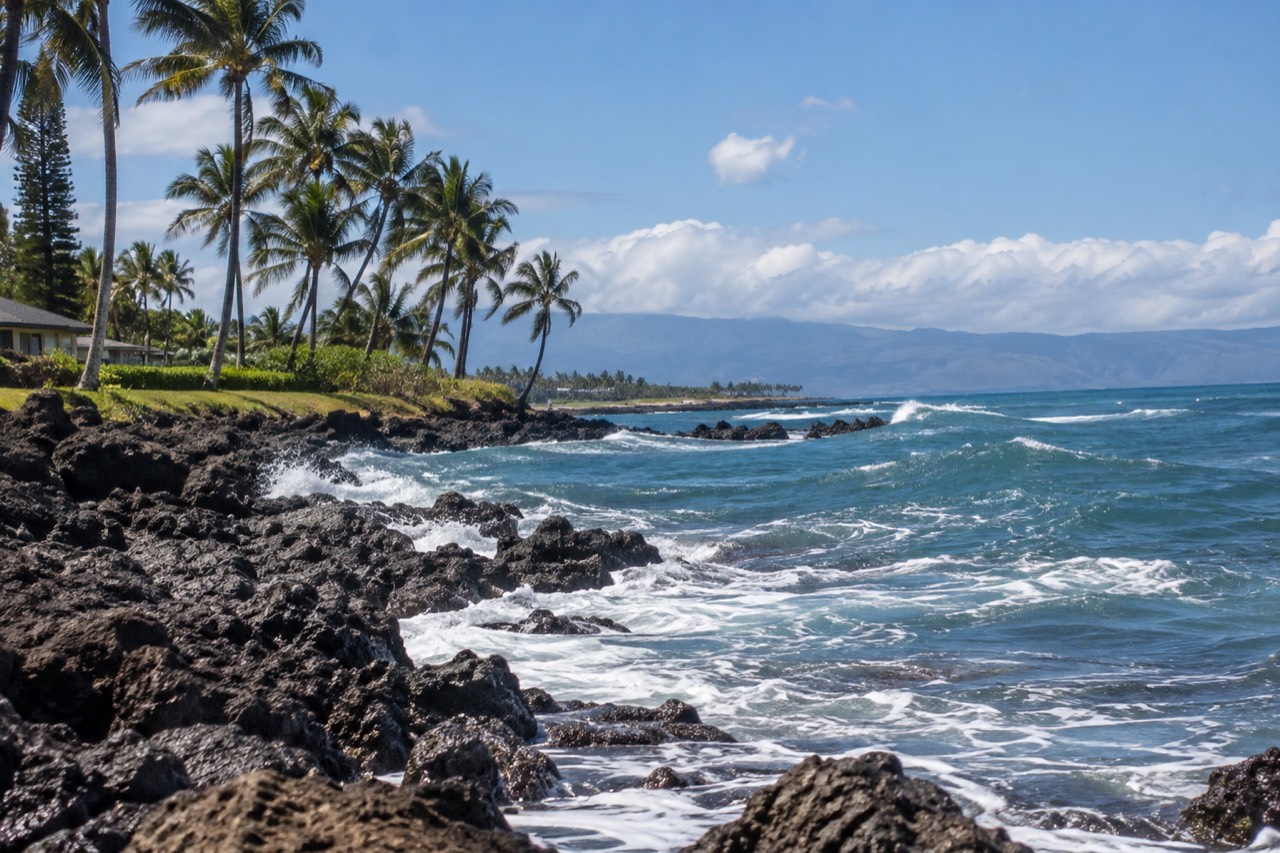
Turtle Bay Resort and the point at Kuilima sit at the northern end of the North Shore, about an hour's drive from Waikīkī. The coastal paths and bays around the resort are publicly reachable, the resort itself is a paid private property with restaurants and activities open to walk-in guests, and the area works best as a half-day stop on a North Shore loop rather than a destination on its own.
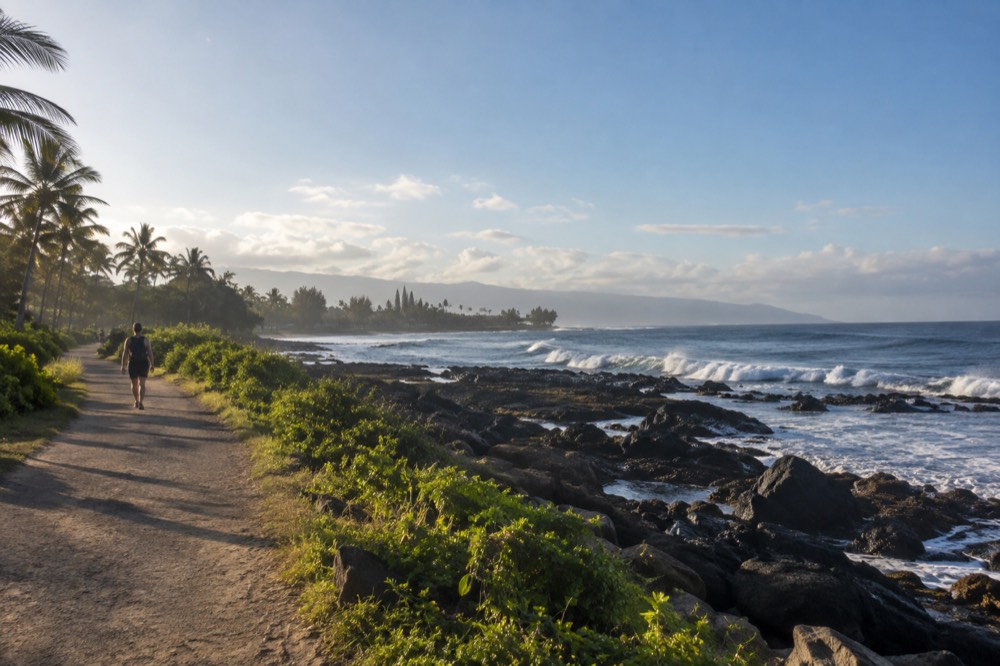
Turtle Bay Resort occupies the northernmost stretch of developed coastline on Oʻahu, at a tongue of land called Kuilima that separates Kawela Bay from ʻŌʻio, Hukilau and other windward-facing beaches beyond it. The resort is private property, but the shoreline in Hawaiʻi is public below the vegetation line, which means the bays, the coastal path and the point itself are reachable without a hotel room. That single fact shapes every visit here.
The area is often marketed as a calm counterweight to Waikīkī: fewer towers, more pasture, waves that belong to surfers rather than swimmers for much of winter. The honest version is more layered. The resort is a working business with restaurants, a spa, golf and stables, and it welcomes day visitors on those terms. The coastline around it is public, beautiful in a low-key way, and, in winter, genuinely dangerous in the water. This guide covers what a visit actually involves: how you get in, what it costs, when to come, and whether it earns its place on your route.
Where Is Turtle Bay Resort And What Is The Point At Kuilima?
Turtle Bay Resort sits at Kuilima, the northern tip of Oʻahu's North Shore, between Kawela Bay to the west and the Hukilau and ʻŌʻio beach stretch toward Lāʻie to the east. The "point" is the rocky headland the resort wraps around, where north- and west-facing water meets. The resort grounds are private, but Hawaiʻi law keeps the shoreline itself public, so the bays and coastal trail around the property are accessible to anyone who arrives respectfully.
Kuilima is the Hawaiian name for the landform, and it is the more useful mental marker than "Turtle Bay", because the resort's marketing name covers a whole resort campus while the geography is what you actually visit. The headland takes the full force of north Pacific swell in winter. In summer the same water can flatten to near-glass, which is why the character of a visit here flips completely with the season.
The resort campus includes hotel accommodation, golf courses, stables, restaurants and a spa spread across a wide coastal property. None of that requires a room key to enjoy at the level of a lunch, a walk or a booked activity, but all of it is paid private land. The public part is the shoreline: the sand, the rocks below the vegetation line, and the trail connections that link Kawela Bay to the east-side beaches.
The name "Turtle Bay" itself is not a promise. Green sea turtles, honu, do feed in the area, and they haul out on North Shore sands regularly, but a visit here is not a turtle sighting with a hotel attached. If a turtle encounter is a must-do on your trip, plan it rather than hoping for it, and we come back to that below.
Can You Visit Turtle Bay Resort Without Staying There?
Yes. The resort's restaurants, bars, golf, spa and paid activities such as horseback riding and surf lessons are open to day visitors, and the shoreline around the property is public under Hawaiʻi law. You cannot use the pools, beach chairs or other guest amenities without being a guest, and parking on the resort grounds is managed by the resort, so check their current policy before you arrive. Access to the bays themselves is free.
This is the distinction that trips people up. "Private resort" does not mean closed, and "public shoreline" does not mean you can wander through the lobby in a swimsuit. The practical visit looks like this: park where the resort permits day visitors, walk the coastal path, swim only where conditions and your ability agree, and eat at a restaurant if you want the full experience.
Kawela Bay, the crescent immediately west of the resort, is the calmest stretch of water in the area and the one families gravitate toward. It is reachable by the coastal trail from the resort side and from public beach access points. The trail between Kawela and the resort property is one of the nicer short walks on the North Shore: flat, shaded in stretches, and never far from water.
Respect cuts both ways here. The resort tolerates, and in some places actively maintains, public access through its land, and that arrangement survives only if visitors stay on paths, keep noise down near guest rooms and do not treat landscaped areas as beach gear storage. The North Shore is a working community, not a resort town, and Kuilima is the largest single employer in the area. Behaving like a guest rather than a customer who owns the place is both good manners and how the access keeps existing.
If water activities are the point of your trip rather than the scenery, the calm, instruction-first options are on the south and east sides of the island, and the trio below is where most first-time visitors land.
Is It Safe To Swim At Turtle Bay And The North Shore Point?
In summer, the sheltered bays around Kuilima, especially Kawela Bay, are among the calmer places to swim on the North Shore, and in winter the open coast here is for watching, not swimming. North-facing Oʻahu shores take their largest surf from roughly November through March, and conditions on any given day depend on the live forecast, not the calendar. Check the National Weather Service surf forecast and posted signs before you enter any water.
The North Shore's winter surf is not a spectacle you wade into. The same beach that is a toddler-friendly lagoon in July can carry a high-surf warning in January, and the point at Kuilima faces the swell more directly than the bays either side of it. The rule that matters: the size you see from the sand is not the size at the reef, and currents between the two are stronger than they look.
The seasonal pattern is worth understanding because it is the single biggest driver of what your visit is like. Oʻahu's shores run out of phase: north-facing shores peak in winter, south-facing shores peak in summer. On a September day in 2026 the National Weather Service surf forecast showed the south shore running larger than the north shore, the exact inversion of the winter pattern. The same coastline that hosts world-class big-wave surfing in winter is often the flatter, safer option from late spring through early autumn.
There is a second hazard that gets less coverage than surf: the rocky shelf along the point itself. Entering water over rock, in any swell, is how most North Shore injuries happen to visitors. The bays with sand entries are the places to swim; the point is the place to watch.
And there is a wildlife rule to carry with you everywhere on this coast. If a honu, a green sea turtle, hauls out on the sand near you, keep at least 10 feet away, and treat that as a guideline rather than a legal line: what is actually illegal under state and federal law is harassing, touching or otherwise taking the animal. A turtle resting on a beach is resting, not posing, and crowding it drives it back into the water without the rest it came ashore for.
The table below summarises the water-safety picture by season, in the same planning spirit as the rest of this guide.
| Season | Typical conditions at Kuilima | Best use of the coast |
|---|---|---|
| Late spring to early autumn | North-facing shores usually at their smallest; Kawela Bay often calm | Swimming, snorkelling, family beach days, the coastal trail |
| November to March | Large north swell on the open coast; bays variable | Watching surf from land, walking, eating, photography |
| Any season, high-surf warning posted | Breaking waves across bay entries, strong currents | Stay out of the water entirely; watch from a safe distance |
| Any season, flat morning | Calmest water of the day, lightest wind | Swim early; conditions often deteriorate by afternoon |
What Does A Visit To Turtle Bay Cost?
The shoreline and coastal trail around Kuilima cost nothing to visit, and there is no entrance fee for the public bays. The costs are the ones you choose: resort parking if you use their lots, restaurant meals at resort prices, and paid activities such as golf, spa treatments, horseback riding and lessons, all priced on the operator's live listing. A budget visitor who parks legally, walks the trail and swims at Kawela Bay spends nothing but fuel and time.
That last sentence is the honest answer for most readers. Turtle Bay is one of the few "resort" experiences on Oʻahu that can be done for free, because the part of it that is genuinely public, the coast, is also the best part. The resort's paid offerings are real and well regarded, but they are add-ons, not the gate fee. The full index of guides sits on Oahu Travel Guide.
The table below lays out the cost picture in planning terms.
| Item | Typical cost | Notes |
|---|---|---|
| Kawela Bay and coastal trail | Free | Public shoreline; no entrance fee |
| Resort parking | Set by the resort, check before arrival | Day-visitor arrangements change; confirm on the resort's site |
| Restaurant meal on property | Resort-level prices | Open to walk-in day visitors |
| Golf, spa, horseback riding | Priced on the operator's listing | Bookable without a room |
| Surf or SUP lesson | Priced on the operator's listing | Conditions-dependent in winter |
| Beach gear rental | Varies by provider | Bring your own if budget matters |
One cost that catches visitors out island-wide is tax, not admission. Hawaiʻi's Transient Accommodations Tax rose from 10.25% to 11.00% on 1 January 2026 under Act 96, sometimes reported as a "green fee". It applies to accommodations and, since the same date, to cruise fares; it is not a fee you pay at an attraction or an airport. If you see a resort bill, that is where the increase lives.
When Is The Best Time To Visit Turtle Bay And The North Shore Point?
For swimming, calmer water and family beach days, late spring through early autumn is the better window, when north-facing shores are usually at their smallest. For watching surf, November through March delivers the North Shore's famous size, and the point at Kuilima is a safe, dramatic place to see it from land. Mornings bring the most reliable weather and the lightest crowds, and sunset from this northern tip is a quiet, uncrowded experience.
The season decides your trip more than the clock does. Winter visitors should build the day around watching, eating and walking, with swimming only if the daily forecast and posted signs say the bays are calm. Summer visitors get the opposite problem: the water can be so flat that surfers go elsewhere, and that is exactly when the swimming here is at its best.
Time of day matters for a different reason than on the south shore. Oʻahu's day length swings by only about two and a half hours across the year, and sunset never gets later than roughly 7:17 p.m., so there are no long summer evenings here in the way a high-latitude destination has them. Plan the golden hour as a real appointment, not something you drift into.
Crowds follow the surf calendar. When the big winter swell events run, the North Shore's famous breaks draw the crowds, and Kuilima stays comparatively quiet because the point is not a contest venue. If your reason for coming north is to escape Waikīkī's density rather than to watch Pipeline, a winter weekday at Kawela Bay is one of the least crowded good-beach experiences on the island.
What Is There To Do Around Turtle Bay Beyond The Beach?
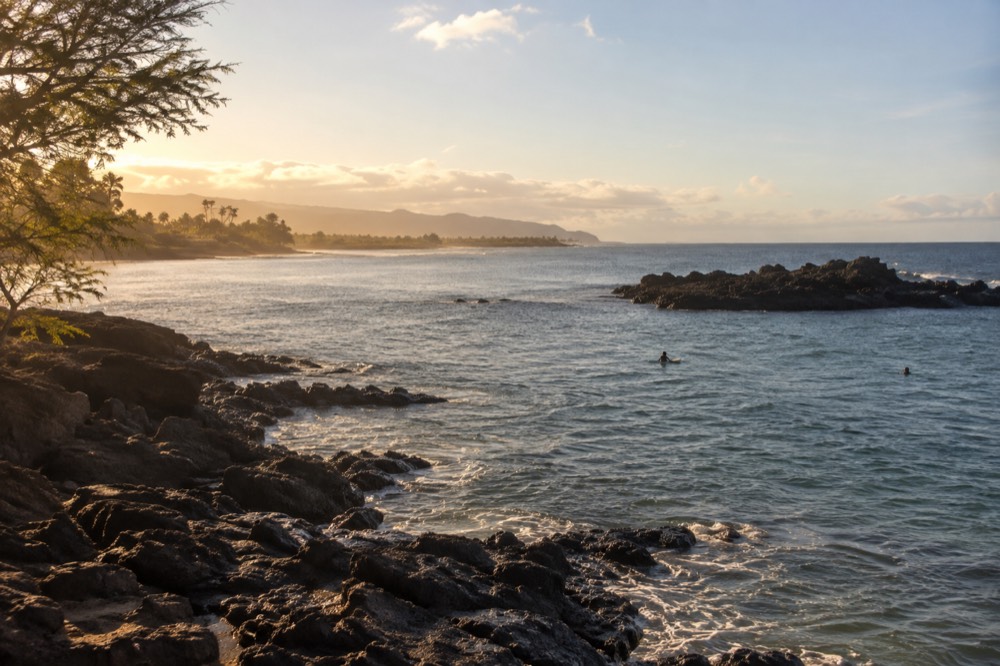
The immediate area offers a coastal walking trail linking Kawela Bay to the windward-side beaches, resort activities including golf, horseback riding and spa services open to day visitors, and a short drive in either direction to the North Shore's better-known stops: Waimea, Sunset Beach and Haleʻiwa to the west, Lāʻie and the windward coast to the east. The point itself is the main attraction: a walk, a meal and a long look at open ocean.
The trail is the underrated item. The stretch between the resort and Kawela Bay is short, flat and shaded in parts, suitable for kids and for anyone who wants coastline without a workout. Extend it eastward and the path continues toward the Hukilau and ʻŌʻio beach stretch, a quieter, more local stretch of sand with none of the resort's polish and all of the view.
For a fuller day, Turtle Bay sits at the pivot of a North Shore loop. West of here the classic stops line up: Sunset Beach, Laniakea Beach, where turtles haul out, and Haleʻiwa town for shave ice and plate lunch. East of here the road bends toward Lāʻie and the windward coast. A common and sensible shape is to make Kuilima the turnaround point of a morning drive, swim or walk at Kawela Bay, eat at the resort or in Haleʻiwa, and come back along the same coast in the afternoon light.
The table below sketches how a day around Kuilima can be assembled depending on what kind of day you want.
| Day shape | Morning | Midday | Afternoon |
|---|---|---|---|
| Swim day (summer pattern) | Kawela Bay before the wind rises | Lunch at the resort or in Haleʻiwa | Coastal trail walk, then the drive south |
| Surf-watching day (winter pattern) | Point and Sunset Beach from land | Plate lunch in Haleʻiwa | Laniakea for turtles, home before dark |
| Resort day | Golf, spa or a booked activity | Restaurant lunch on property | Beach time at Kawela Bay |
| Loop day | Drive north via the windward side | Kuilima and Kawela Bay | Return along the North Shore stops |
Two closures to know about as of the September 2026 hurricane-season notices: Nuʻuanu Pali State Wayside and Kaʻena Point State Park's Mokuleʻia and Keawaʻula sections are closed until further notice for storm repairs. If an older itinerary of yours sends you to either, re-check the state parks notices before you drive. Kaʻena Point, when it reopens, is the leeward end of this same northern coastline and a place that deserves restraint in any visit: it is a sacred site and a protected seabird area, not a photo prop.
If turtles are the reason you chose the name "Turtle Bay", be aware that sightings around Kuilima are incidental rather than scheduled. The reliable option on the island is a snorkel product built around them, and the one below runs with a turtle guarantee, which takes the gamble out of the plan.
Curious about the ocean life beyond the bays? Book a North Shore shark dive here.
Is Turtle Bay Resort Worth The Trip From Waikīkī?
For most visitors, yes, as part of a North Shore day rather than as a single destination. The drive is the cost, the coastline is the reward, and the combination of Kawela Bay's calm water, the point's open-ocean view and a resort meal makes a satisfying half-day. With only one or two days on Oʻahu total, the South Shore and east side pack more variety per hour, and Turtle Bay should wait for a longer trip.
What you spend here is hours on the Kamehameha and highway route north, through country that changes character from suburb to pasture to coast. What you get back is the least resort-like resort coastline on the island and a pace that Waikīkī cannot offer at any price. Whether that trade is worth it depends almost entirely on how many days you have.
With three or more days, the North Shore deserves one of them, and Kuilima is a good anchor for the eastern half of that day. With one or two days, the same hours spent on the east side's beaches or around Waikīkī and Diamond Head buy more variety, less driving and more swimming.
For guests of the resort the calculus is different, and mostly favourable: staying here puts you within a short drive of nearly every North Shore highlight while living outside the congestion of the high season's surf-watching traffic. That is the resort's real product, more than any single amenity on the property.
The wider planning context is worth knowing too. Oʻahu received about 5.68 million visitors by air in 2025, down roughly 2% on 2024, and most of them never leave the south end of the island. The North Shore absorbs its share of day traffic but the pressure concentrates at a handful of famous stops. Kuilima, a few minutes beyond the worst of it, is the part of the coast where the crowds thin first.
If your day here is a water-sports day rather than a beach day, the instruction-friendly products cluster back on the south and east sides. The two below suit first-timers: a beginner surf lesson in Waikīkī's gentle reform waves, and a flat-water paddleboard yoga class that needs no experience at all.
Common Questions About Turtle Bay Resort And The North Shore Point
Most questions about Turtle Bay come down to three things: access, season and expectations. The shoreline is public and free, the resort's paid offerings are optional add-ons, and the season decides whether you swim or watch. Turtles are possible but not promised, the drive is the real cost of the day, and the area rewards visitors who treat the North Shore as a working community rather than a resort annex.
Can you visit Turtle Bay Resort without staying there?
Yes. The restaurants, golf, spa and paid activities are open to day visitors, and the shoreline around the property is public under Hawaiʻi law. You cannot use guest amenities such as pools and beach chairs without being a guest, and parking arrangements are set by the resort, so check their current policy before you arrive.
Is Turtle Bay good for swimming?
In the calmer months, typically late spring through early autumn, Kawela Bay and the sheltered stretches around Kuilima are among the gentler places to swim on the North Shore. In winter, north-facing shores take large surf and the open coast is for watching rather than swimming. Check the daily National Weather Service surf forecast and posted signs before entering any water.
Can you see turtles at Turtle Bay?
Sometimes. Green sea turtles feed in the area and haul out on North Shore sands, but there is no schedule and no guarantee. If seeing a turtle matters to your trip, a snorkel tour with a turtle guarantee, such as the Waikīkī Turtle Canyon excursion, is the reliable way to plan it. Keep at least 10 feet from any turtle on land or in the water, and never touch or chase one.
How far is Turtle Bay from Waikīkī?
Turtle Bay sits at the northern tip of Oʻahu, and the drive from Waikīkī is a substantial part of the day's plan each way. Exact times vary with traffic and time of day, so treat the drive as a half-day commitment in each direction at peak and plan the rest of your North Shore stops around it rather than making the resort a quick out-and-back.
Is parking free at Turtle Bay?
The public bays and beach access points have their own arrangements, and parking on the resort grounds is managed by the resort for guests, diners and activity bookings. Rates and day-visitor policies change, so confirm on the resort's own site before you drive up. Parking legally matters on the North Shore generally: the highway is two lanes and enforcement is real.
What is the best time of year to visit?
For swimming and calm water, late spring through early autumn, when north-facing shores are usually smallest. For watching surf, November through March, when the point at Kuilima is a safe land-based front row to the North Shore's famous winter swell. Either way, mornings bring the most reliable weather.
The North Shore rewards a slow day and punishes a rushed one, and Turtle Bay is the slowest, easiest end of it. Arrive with a plan for the water that matches the season, park where you are allowed to, give any turtle on the sand the space it came ashore for, and the point at Kuilima will hand back exactly what the brochures promise: the quiet end of the island, on the island's own terms.