Halona Blowhole On Oʻahu: What A Visit Actually Involves
The Halona Blowhole is a roadside lava-tube lookout on Oʻahu's south-east coast, free to visit and at its best when a south or east swell is running. Here is what a stop actually involves, and how to time it.
Short answer
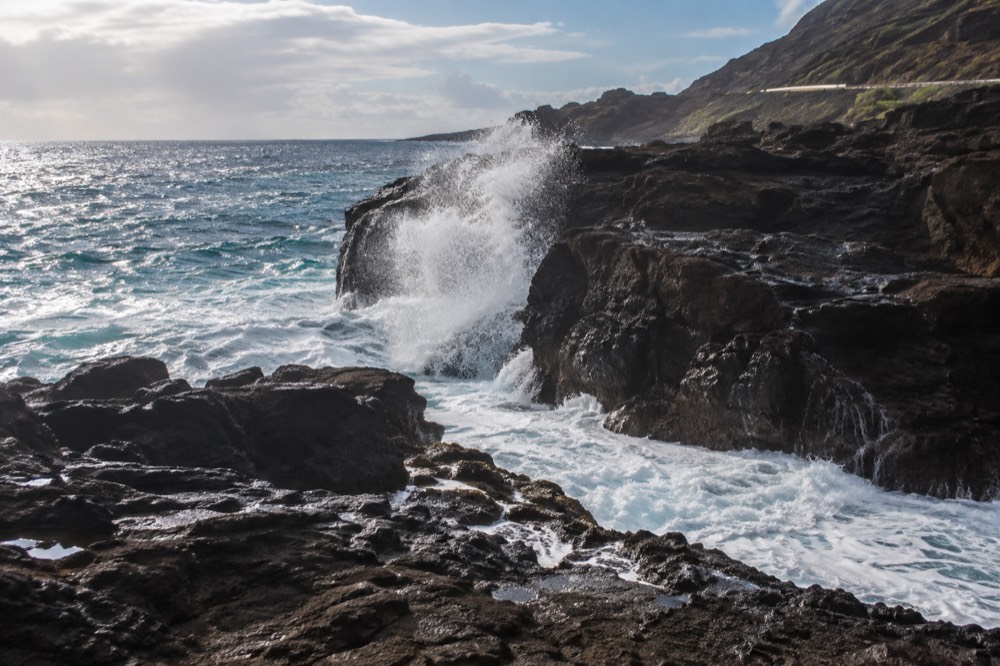
The Halona Blowhole is a free roadside lookout on Kalanianaʻole Highway between Hanauma Bay and Sandy Beach. The spray is driven entirely by swell, so there is no schedule and no guarantee; a south or east swell running at mid-to-high tide gives the best odds of a good display. Plan twenty to thirty minutes, and never climb the rocks to the vent.
The Halona Blowhole does not perform on demand. That single fact shapes everything about a visit, and most of the disappointing stops you will hear about happened because somebody pulled into the lookout on a flat day, watched a quiet hole in the rock for five minutes, and left. On the right day, with the right swell, the vent throws a plume of white water high enough that drivers on Kalanianaʻole Highway stop to look. On the wrong day it is a dark seam in the lava with an occasional gurgle.
This guide from the Oahu Travel Guide desk covers what the blowhole actually is, how the mechanics of it dictate your timing, what a stop costs, how to get there, and how it fits into a day along Oʻahu's south-east and windward coasts. It also covers the safety record, which matters here more than at almost any other roadside stop on the island, and the two beaches on either side of the lookout that most visitors drive past without realising what they are.
What Is The Halona Blowhole?
The Halona Blowhole is a natural lava-tube vent in the coastal rock at Halona Point, on Oʻahu's south-east shore, where incoming surf forces water up through a channel and out of a landward opening as a vertical spray. It is not a geyser and has no underground water source; it is entirely ocean-driven. The display ranges from nothing at all to a dramatic plume, depending on swell and tide.
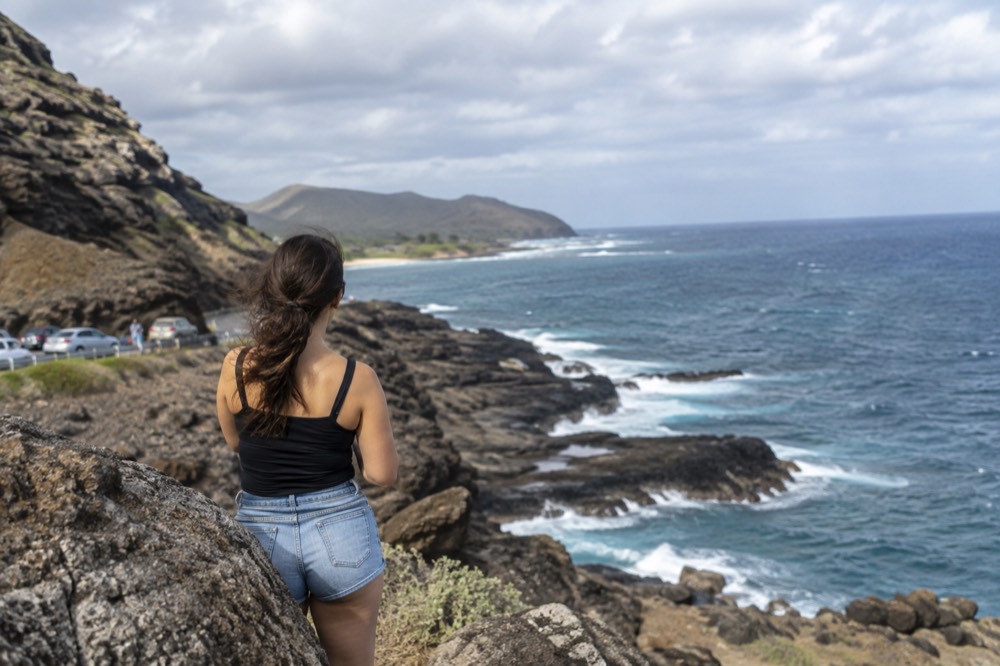
The word halona means "lookout" in ʻōlelo Hawaiʻi, which is a fair description of what the point itself offers even when the blowhole is quiet: a raised view along a stretch of dark, broken lava coast with the open Pacific beyond. The tube that produces the spray is a remnant of the Koko Head-area lava flows that shaped this whole corner of the island. A wave arrives, the tube fills faster than it can drain, and the pressure escapes upward through the weakest opening, which happens to face the sky.
Two things follow from the mechanics. First, the blowhole is a swell instrument: read the surf forecast and you can predict the show better than any "best time to visit" list can. Second, the water that exits the vent is ocean water arriving at speed, which is why standing near or on the vent is genuinely dangerous and why the rocks below the lookout have a history of people being swept away. The viewing area above is the safe place, and it is a good one.
When Does The Halona Blowhole Spray?
The blowhole sprays when enough swell reaches the vent, so the practical answer is: check the surf forecast, not the clock. South and east swells feed it best, a moderate to high tide generally helps, and the hours around a rising tide are the most reliable single window. On a flat day there is no spray at all, and no amount of waiting changes that. Winter's large north swells often leave this coast calm.
The south shore of Oʻahu runs out of phase with the north shore, and that is the planning insight most visitors never get. North-facing shores peak in winter; south-facing shores peak in summer. The Halona coast faces roughly south-east, so it responds to south swells and to the east and north-east swells that tropical systems push in. On a September day in 2026, the National Weather Service surf forecast showed the south shore running larger than the north shore, the exact inversion of the winter pattern. The same forecast product publishes an Oʻahu table by shore aspect every day, and it is the single most useful planning tool for this stop.
| Condition | Effect on the blowhole |
|---|---|
| South or east swell running | Best odds of a strong, repeated plume |
| Flat, no swell | Little to no spray; the vent may look like a dry hole |
| North swell only (typical winter) | Often quiet here even when the North Shore is enormous |
| Mid-to-high tide | Generally better; more water volume reaching the vent |
| Rising tide through mid-morning | A practical, repeatable window to aim for |
| Very high surf | Bigger spray, but stay well back from the lower rocks |
One honest caveat: the blowhole is a natural system and nobody can promise a performance. If your whole east-coast day hinges on seeing a big plume, check the forecast that morning and be philosophical if it is flat. The lookout itself, and the coast either side of it, are worth the stop regardless.
How Much Does It Cost To Visit The Halona Blowhole?
Nothing. The Halona Blowhole lookout is a free public roadside pull-off with no entry fee, no ticket and no reservation system. There is no gate, no attendant and no time limit on how long you can stay. The only costs attached to a visit are the costs of getting there: a bus fare, a rideshare or a rental car, plus whatever food and water you bring. That free access is a real part of its appeal.
Compare that with the two headline natural sites either side of it on the same highway. Hanauma Bay Nature Preserve charges non-residents $25 plus a 2.35% online service fee for entry, children 12 and under free, and requires a reservation that opens only two days ahead at 7:00 a.m. HST, with the bay closed Mondays and Tuesdays. Diamond Head State Monument charges out-of-state visitors $5 per person plus $10 per vehicle, credit card only, with reservations mandatory for non-residents since 12 May 2022. The Halona Lookout asks for none of that. You park, you look, you leave when you are ready.
| Site on the same highway | Entry cost | Reservation needed? |
|---|---|---|
| Halona Blowhole lookout | Free | No |
| Hanauma Bay (non-resident) | $25 + 2.35% service fee | Yes, opens 2 days ahead at 7 a.m. HST |
| Hanauma Bay (Hawaii resident with ID) | Free, no reservation | No |
| Diamond Head (non-resident) | $5 per person, $10 per vehicle | Yes, for entry and parking |
| Diamond Head (resident with ID) | Free | No |
The free access cuts both ways, of course. Because there is no gate, there is also no staffed safety presence, and the rocks below the lookout attract people who should not be on them. The fee-free experience is a lookout experience, not a beach experience, and the distinction matters.
How Do You Get To The Halona Blowhole?
The lookout is a pull-off on Kalanianaʻole Highway (Route 72) on Oʻahu's south-east coast, between Hanauma Bay and Sandy Beach Park. Driving east from Waikīkī, you pass Hanauma Bay first and the lookout appears on the ocean side of the road shortly after. By public transport, TheBus serves this stretch of highway; a HOLO day pass caps at $7.50 no matter how many rides you take.
The driving route is the island's most scenic commuter road, hugging the coast past Koko Head and up toward the windward side. Coming from town, the road climbs past the Hanauma Bay ridge, descends, and the lookout is the obvious gravel-and-pavement pull-off on the right with the ocean directly below. Coming the other way, from Sandy Beach or Waimānalo, it is on your left. The pull-off is small and fills quickly on good-swell days and at sunset; if it is full, the honest options are to wait for a space or continue to Sandy Beach and walk back along the coast path, not to park on the highway shoulder.
If you are riding TheBus, the same fare structure that covers the rest of Honolulu applies: $3.25 for an adult cash single ride on TheBus with no transfers, or a HOLO card at $3.00 for a two-hour pass with unlimited transfers, with a $7.50 daily cap. The HOLO card itself costs $2.00. A child five and under rides free with a paying rider. Check current route and stop detail against TheBus trip planner before you go, because stop locations on this highway have changed with road projects in the past.
For most visitors, though, this stop is one leg of a driving day. The blowhole is a fifteen-minute experience that happens to sit on one of the best driving roads on the island. Treat it as a highlight of the route rather than a destination you would build a whole trip around, and it will not disappoint you.
Is The Halona Blowhole Safe?
The lookout itself is safe; the rocks below it are not. People have been killed on the lava shelf beneath the blowhole, swept away by waves while standing near the vent or swimming in the cove beside it. The safe rule is simple and absolute: view from the lookout, stay behind the barriers, and never climb down onto the rock shelf or stand over the vent.
The ocean here is unsheltered Pacific, and the wave that takes you is not the one you were watching. The cove immediately north of the point, sometimes called Halona Cove or Eternity Beach, looks like a sheltered swimming spot and occasionally behaves like one, but it is a narrow pocket beach under a steep lava coast with no lifeguard. The water can be calm for an hour and then a set of waves arrives. If you do go down, go on a genuinely flat day, never turn your back on the ocean, and understand that any rescue from this coast is a difficult one. Families with small children should treat the lower rocks as off-limits, full stop.
There is also a wildlife dimension. Hawaiian monk seals rest on beaches along this coast, and green sea turtles, honu, feed in the nearshore water. The recommended viewing distances are 50 feet for a monk seal and 10 feet for a honu; those are guidelines rather than statutory distances, but harassing or taking either animal is illegal under federal and state law regardless of how close you are. If a seal is hauled out on the sand of the cove, the visit to the cove is over. Give it the beach.
What Is There To Do Near The Halona Blowhole?
The immediate neighbours are Sandy Beach Park just east of the lookout, a bodyboarding and bodysurfing beach with a well-earned reputation for a powerful shorebreak, and the Halona Cove pocket beach just north of the point. Within a short drive east you reach Waimānalo Beach and the long windward coast; west of the lookout sits Hanauma Bay, and beyond it the Koko Head area. The blowhole is a natural stop on any east-coast loop.
Sandy Beach deserves more attention than it usually gets from visitors, who tend to photograph the blowhole and drive on. The shorebreak there is one of the strongest on the island, which makes it excellent for experienced bodysurfers and genuinely hazardous for inexperienced swimmers; the break lands in very shallow water and the sand drops steeply. Our Sandy Beach Park guide covers it in detail. If the blowhole is flat but the surf is up, Sandy is where the show has moved.
Further along the coast, the stops stack up quickly. Laniakea Beach on the north-west facing shore is the island's best-known turtle beach, though its parking situation has been in flux with an ongoing highway drainage and safety project. On this south-east stretch, Hanauma Bay Nature Preserve is the headline neighbour, and it is worth repeating the two facts that catch people out: reservations open only two days ahead at 7:00 a.m. HST, and the bay is closed Mondays and Tuesdays. If your east-coast day falls on one of those two days, the blowhole, Sandy Beach and the windward coast carry the day instead.
| Stop | What it is | Best for |
|---|---|---|
| Halona Blowhole lookout | Free roadside viewpoint over the lava vent | Swell days, sunrise, a short stop |
| Halona Cove | Small pocket beach below the point | Flat-swell days only, strong swimmers, no lifeguard |
| Sandy Beach Park | Bodysurfing beach with a powerful shorebreak | Experienced bodysurfers, sunbathing, local energy |
| Hanauma Bay | Marine-life preserve, snorkelling | Reservation holders, closed Mon and Tue |
| Koko Head area | Crater trail and district park inland | A steep stair climb with a view |
A note on the water itself: harbour temperature readings at Honolulu averaged 78.2 °F in January and 82.7 °F in August across 2025, a small annual swing, and open-ocean water off this coast runs a little cooler than those harbour figures. The practical point is that the ocean here is swimmable year-round; the variable is never temperature, it is surf and current.
Is The Halona Blowhole Worth The Trip?
On a day with a south or east swell running, yes, unambiguously: it is free, it is dramatic, and the setting along the lava coast is one of the best short stops on the island. On a flat day it is a ten-minute pause on a scenic drive, worth exactly that and no more. The honest planning move is to make it conditional: check the surf forecast that morning, and let the swell decide.
The conditional framing matters because the blowhole sits on a route almost everyone drives anyway. The road from Waikīkī to the windward coast passes it regardless of your plans, so the stop costs you almost nothing in time. The visitors who regret the blowhole are the ones who drove out specifically for it on a flat day, and the visitors who rave about it are the ones who arrived mid-plume with the wind carrying spray across the lookout. Same place, same free entry, entirely different memories.
If you would rather leave the driving and the swell-checking to someone else, a booked circle-island day is the low-effort version of this whole coast. The most-booked full-day circle island tour runs about six and a half hours and covers the loop with a stop at the Halona Lookout among its highlights, which pairs well with a day when you simply do not want to think about parking. Check availability if that sounds like your kind of day; the operator's live listing carries current pricing and departure points.
How Does The Blowhole Fit Into A Circle-Island Day?
The blowhole sits early on the standard clockwise loop, roughly twenty to thirty minutes out of Waikīkī by road, between the Hanauma Bay ridge and Sandy Beach. A typical clockwise day runs Waikīkī to the blowhole, up the windward coast past Waimānalo and Kailua, across to the North Shore, and back through the central plain. Going counter-clockwise puts the blowhole at the end of the day instead.
The practical sequencing advice is simple: do the south-east coast early. The blowhole, Hanauma Bay's ridge road and Sandy Beach all get busier as the day goes on, and the pull-off's small size means a late-morning arrival can mean circling for a space. An early start also puts the light behind you for photography along this stretch, which faces east and south-east.
If a full loop feels like too much driving for one day, the alternative is an out-and-back along this coast only: Waikīkī, Hanauma Bay's exterior ridge, the blowhole, Sandy Beach, then up to Waimānalo and back. That is a half-day shape rather than a full-day one, and it keeps the best of the scenic road without committing to the North Shore.
For a fuller version of the loop with a temple stop folded in, the Hidden Gems circle island tour with Byodo-In runs about nine hours and reaches the windward valley shrine, a pairing many visitors would never think to assemble themselves; the operator's live listing carries current dates and pricing.
And if your Oʻahu itinerary is attraction-heavy rather than tour-heavy, the all-inclusive attraction pass covering over 40 things to do can make sense for exactly this kind of multi-stop day, though it rewards doing the arithmetic against your actual list first.
Common Questions About The Halona Blowhole
Most questions about the Halona Blowhole come down to three things: it is free, it is swell-dependent, and the rocks below the lookout are genuinely dangerous. There is no schedule, no ticket, no reservation and no best hour that beats a good surf forecast. Check the south and east shore forecast on the morning of your visit, stay behind the barriers, and treat the stop as one highlight on a scenic drive.
Is the Halona Blowhole free?
Yes. The lookout is a free public roadside pull-off with no entry fee, no ticket and no reservation system. The only costs are transport and whatever you bring with you.
What time of day is the Halona Blowhole best?
There is no reliable time of day, because the spray is driven by ocean swell rather than a schedule. A rising tide through mid-morning is a reasonable window to aim for, but a flat day stays flat at any hour. Check the surf forecast for the south and east shores that morning instead of trusting a fixed time.
Can you swim at the Halona Blowhole?
The pocket beach in Halona Cove beside the point is sometimes swimmable on very calm days, but it has no lifeguard and sits under a steep lava coast, and people have been swept away from this stretch of rock. The lookout above is the safe place. Sandy Beach Park just east has lifeguards but a powerful shorebreak that suits experienced bodysurfers rather than casual swimmers.
How long should you spend at the Halona Blowhole?
Twenty to thirty minutes is plenty for the lookout itself, longer if the swell is running and the plume is putting on a show. It is a stop on a route, not a destination for a whole afternoon.
Is the Halona Blowhole worth visiting if the surf is flat?
Only briefly. Without swell the vent can look like a dry hole in the rock, and no amount of waiting changes that. The coastal view from the lookout is still pleasant, so treat it as a quick photo stop on the way to Sandy Beach or the windward coast.
Can you see the Halona Blowhole on a tour?
Yes. Circle-island tours routinely stop at the Halona Lookout, which suits visitors who would rather not drive Kalanianaʻole Highway themselves or who want the swell-checking left to a local operator.
The Halona Blowhole rewards two habits that cost nothing: reading a surf forecast and arriving with modest expectations. On a day when the south or east swell is running, a free roadside stop delivers one of the most photographed plumes on the island; on a flat morning it gives you a fine view and a reason to keep driving toward Sandy Beach. Either way, the coast itself is the real attraction, and it is always on.