Where Is The Publics Surf Spot On Oahu?
Publics is a Waikīkī surf break at the Diamond Head end of the beach, off Kapiʻolani Park. Here is exactly where it sits, when it works, and what to expect in the water.
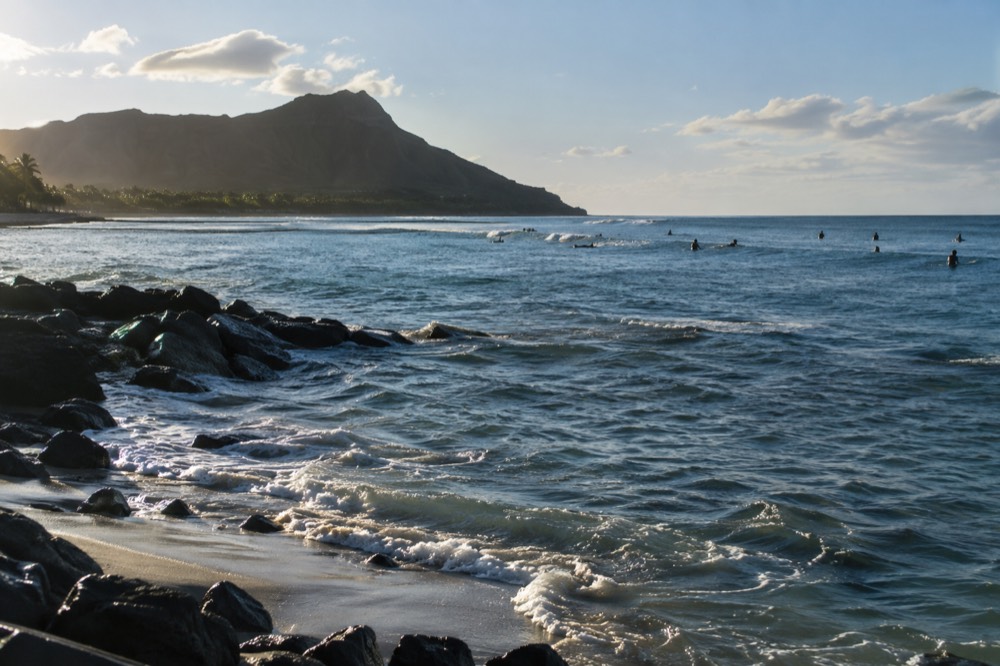
Publics, the surf spot, sits at the Diamond Head end of Waikīkī, off the stretch of sand in front of Kapiʻolani Regional Park, roughly between the Waikīkī Aquarium and the Diamond Head end of Kalākaua Avenue. It is a reef break, not a beach break, and it is one of the friendlier waves in Waikīkī, which is exactly why people ask about it by name. Locals often call it Pops.
The name trips people up in search, and that is fair. "Publics" is not a town or a beach park with a sign. It is a named wave, the same way Queens and Canoes are named waves along Waikīkī, and it breaks over the reef a short paddle from shore. If you are standing on Kapiʻolani Park's seawall looking out to sea on a summer morning with a south swell running, you are looking straight at it.
Where Exactly Is Publics On Oahu?
Publics breaks off the reef in front of Kapiʻolani Regional Park, at the eastern, Diamond Head end of Waikīkī beach, near the Waikīkī Aquarium and the end of Kalākaua Avenue. It is a reef break a short paddle from shore, and its common local nickname is Pops. Unlike the more crowded breaks closer to the Royal Hawaiian, this end of Waikīkī is quieter, with the park behind you instead of hotels.
Walk it from the heart of Waikīkī and you will feel the change. The beach narrows, the hotels thin out, and the sand in front of Kapiʻolani Park opens into a grassy, family-filled stretch where the island's geography tilts toward Lēʻahi, the Hawaiian name for the crater signposted as Diamond Head. The wave itself sits outside that section of reef. On a small day you can watch longboarders glide across it from the seawall without moving.
Two things make the location useful for a visitor. First, it is walkable from almost anywhere in Waikīkī, so there is no car, no parking hunt and no bus transfer involved in surfing it. Second, it is on the south shore, which changes everything about when it works, and that is worth a proper explanation.
This is also the practical end of Waikīkī for planning a wider surf day. If you want the full picture of the island's surf geography, from the North Shore's winter waves to the town breaks, our Oahu surfing guide covers the whole island, and the money page on Things to Do in Oahu places surfing in the context of everything else on your list.
When Does Publics Actually Have Waves?
Publics is a south-shore break, so it works best in the summer months, from roughly May through September, when south swells arrive in Waikīkī. In winter the south shore goes quiet and the island's energy shifts to the North Shore. The National Weather Service's Honolulu surf forecast publishes Oahu's surf by shore aspect, and it routinely shows the south and north coasts running out of phase with each other.
That out-of-phase pattern is the single most useful thing to understand about surfing on this island, and it is grounded in the official forecast rather than surf-shop folklore. On a September day in 2026, the NWS Honolulu surf zone forecast showed the south shore running 4 to 6 feet while the north shore sat at 1 to 3 feet in the morning and smaller in the afternoon. That is the exact inversion of the winter pattern, when the north and west shores take the big swells and the south shore flattens out.
Here is the seasonal picture, drawn from that same forecast structure:
| Shore | Peak season | Character |
|---|---|---|
| South (Waikīkī, Publics, Ala Moana) | Summer, roughly May to September | Long-period south swells; Publics is at its best |
| North (Sunset, Waimea, Haleʻiwa) | Winter | Large north and northwest swells; experts only on big days |
| West (Mākaha side) | Winter | Picks up northwest swell; sheltered in summer |
| East (Waimānalo, Kailua side) | Variable | Trade-wind chop and occasional wrap swell |
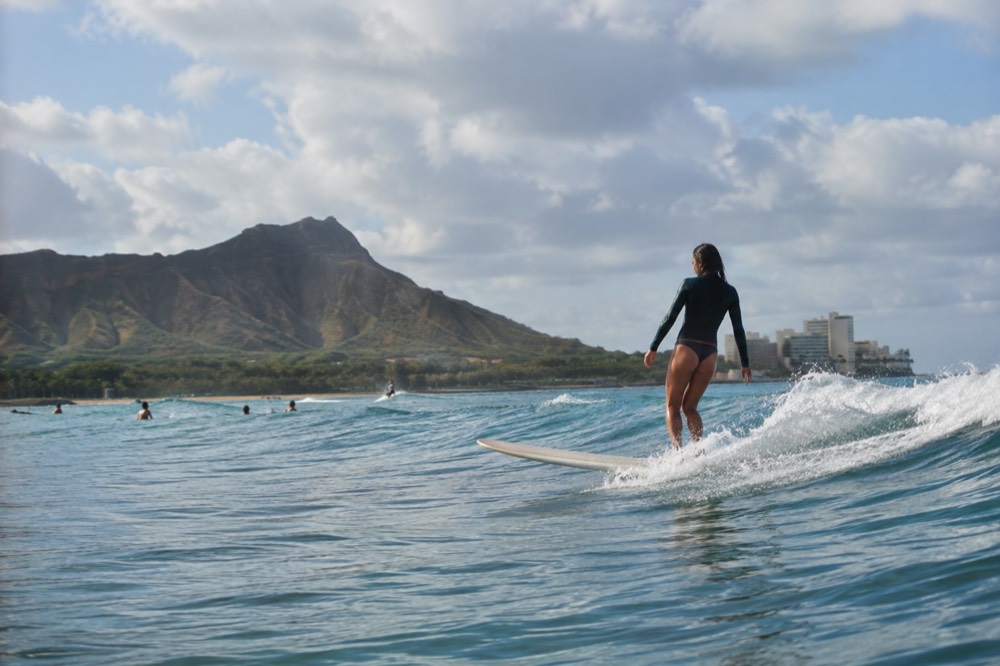
For Publics specifically, the summer south swell is the whole story. The wave is long, soft and forgiving by Oahu standards, which makes it a favourite for longboarders and for people moving up from the beginner breaks. On a solid summer swell it connects and lets you ride for a long time. On a flat summer week, well, that happens too, and the honest answer is to check the forecast rather than trust the calendar.
Is Publics Good For Beginner Surfers?
Publics is one of the gentler waves in Waikīkī and suits longboarders, improvers and confident beginners better than most named breaks on the island, though it is a step up from the sand-bottom lessons at the west end of the beach. The paddle out is over reef and the lineup has real surfers in it, so etiquette applies. If you have never stood on a board, take a lesson first.
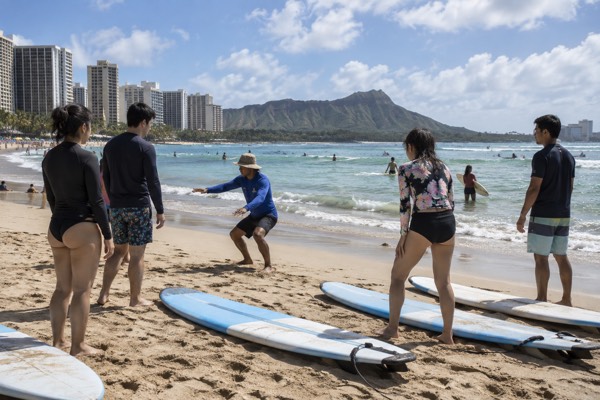
The distinction matters because Waikīkī sells itself as a beginner's paradise, and it is, but not every wave in it is a lesson wave. The sand-bottomed, waist-deep spots where instructors push students into waves are a different experience from sitting in a real lineup over reef. Publics is the second thing. You need to be able to paddle, read a set and handle yourself around other people.
A few practical points for anyone planning to surf it:
- Paddle out over reef, not sand. Reef booties are not essential but they help, and falling is part of the deal.
- Longboards rule. The wave rewards glide and nose time, and shortboarders often find it slow.
- Mind the crowd. Summer mornings are busy. Watch the lineup for ten minutes before you paddle out and you will learn the rotation quickly.
- Respect the locals. This is a working wave for people who live here, and visitors who drop in or snake waves make it worse for everyone.
If a first-timer in your group wants to work toward Publics, our surf lessons on Oahu guide walks through what a lesson covers and where the beginner-friendly breaks are.
Ready to try the gentle waves yourself? Book an open group surfing lesson here.
How Do You Get To Publics From Waikīkī?
Publics is walkable from anywhere in Waikīkī: head toward Diamond Head along Kalākaua Avenue until the hotels end and Kapiʻolani Regional Park begins, then walk onto the beach by the Waikīkī Aquarium. From the middle of Waikīkī the walk is a comfortable stroll, not a hike, and there is no need for a car, a bus or a transfer. The seawall makes it easy to spot the lineup from land.
That walkability is the quiet advantage. Oahu's famous breaks on the North Shore require a drive up a two-lane highway that jams badly in winter, and parking near the best breaks is a known headache. Publics asks none of that. You can carry your board down Kalākaua Avenue from your hotel, surf for two hours, and be back for breakfast. More of these guides are collected on Oahu Travel Guide.
If you are staying outside Waikīkī, the options are straightforward:
| Coming from | Best approach | Notes |
|---|---|---|
| Central Waikīkī | Walk along Kalākaua Avenue | 15 to 25 minutes depending on your hotel |
| Kapiʻolani Park area | Walk straight to the beach | You are already there |
| Downtown or elsewhere | TheBus toward Waikīkī, then walk | $3.25 cash single ride; a HOLO card caps at $7.50 per day |
| Rental car | Not recommended for this spot | Waikīkī parking is expensive and scarce; the wave is walkable |
The transit figures come straight from the City and County's published fare structure, which applies to both TheBus and Skyline. Note that Skyline has no Waikīkī station, so rail riders transfer to a bus for the final leg into the neighbourhood. Our Waikīkī neighborhood guide covers the district in more depth if you are choosing where to stay.
What Should You Know Before Paddling Out At Publics?
Check the surf forecast the morning you go, because the south shore's size changes day to day with each arriving swell, and bring more patience than ego. Publics is a shared wave with a mixed crowd of longboarders, locals and visitors, and the experience is best for everyone who treats it that way. Reef underfoot, a live current depending on conditions, and sun exposure on a long session are the three practical things most first-timers underestimate.
The forecast is free and official. The National Weather Service's Honolulu office publishes a surf zone forecast for Oahu broken down by shore aspect every day, and it is the same product that shows the south shore running 4 to 6 feet while the north shore sleeps. Read it before you wax up, not after.
A few honest notes on the experience itself:
- Sunscreen that stays on. A two-hour session in Waikīkī's midday sun is a lot of exposure, and reef-safe zinc that does not wash off is worth the extra minute.
- The current is real on some days. South swells push water along the beach; if you drift, paddle back in and walk up the sand rather than fighting it.
- The reef is alive. Do not stand on it, do not kick it, and give turtles their space. Honu are common in Waikīkī, and the recommended viewing distance is 10 feet. Disturbing them is illegal regardless of distance, so enjoy them from where you float.
- Leave nothing. Taking rock or sand from the shoreline is against Hawaii law, and there is nothing at Publics you need to take home anyway.
That last cluster of rules is worth internalising for the whole island, not just this break. The wildlife protections are real law, and the reef you are surfing over is the ecosystem that makes the wave exist in the first place.
Can You See Publics Without Surfing It?
Yes, easily, and it is one of the better free spectacles in Waikīkī: the seawall along Kapiʻolani Park and the sand near the Waikīkī Aquarium both look straight out at the Publics lineup, and on a summer morning with a south swell running you can watch longboarders ride for a hundred metres without paying a cent. Bring a coffee, sit on the wall, and the show runs all morning.
This is the version of the answer for the non-surfers in your group. Waikīkī's surf culture is visible from land in a way that most destinations cannot match, and the Diamond Head end of the beach is the calmest place to take it in. The park behind you has shade, grass and space, which the hotel end of the beach does not.
It also makes a decent anchor for a wider day. Kapiʻolani Park puts you within walking distance of the Waikīkī Aquarium, the Honolulu Zoo and the start of the walk toward Diamond Head State Monument, which requires an out-of-state reservation and a $5 per person entry fee, charged separately from the $10 per vehicle parking fee, card only. Pair a morning of watching Publics with an afternoon up the crater and you have a genuinely good Waikīkī day without starting a car.
If watching surf makes you want to see the rest of the island's coastline, the guided circle-island tours are the efficient way to do it. The most-booked option runs about six and a half hours and covers Haleʻiwa and the North Shore with a guide who knows the breaks, and there is a longer hidden-gems version that adds the Byodo-In Temple on the windward side.
Where Is The Publics Surf Spot On Oahu?
To restate the direct answer in plain terms: Publics is at the Diamond Head end of Waikīkī, breaking over the reef off Kapiʻolani Regional Park, close to the Waikīkī Aquarium, and it is best on a summer south swell between roughly May and September. Locals frequently call the wave Pops.
It is walkable from anywhere in Waikīkī along Kalākaua Avenue, needs no car and no parking, and suits longboarders and improving beginners far better than shortboarders chasing speed.
The reason this question gets asked so often in search is that the name is opaque. Nobody guesses "Publics" from looking at a map. But once you know it, the spot could not be easier to find: walk toward Diamond Head until the hotels run out, look for the lineup of longboards sitting outside the reef, and you have arrived.
And once you have surfed it or watched it, the logic of Waikīkī's whole surf layout makes sense. The named breaks march along the beach from the outrigger canoe spots in the west toward Publics in the east, each one sitting on its own patch of reef, each one with its own crowd and character. Publics is the quiet, graceful end of that line, and on a summer morning it can feel a world away from the chaos of the busier hotel-front sections, even though it is the same beach and the same walk.
For a different perspective on the island's surf geography, a full circle-island day shows you where the winter energy goes, and the Go City Oahu pass bundles dozens of attractions if your trip is activity-heavy. Both are worth a look once the board is back on the rack.
Between the two, the choice usually comes down to time and appetite. The shorter circle-island day fits a packed itinerary and still gets you to the North Shore's breaks, while the longer hidden-gems version trades pace for depth and adds the windward coast's temple stop. Either way, you come back to Waikīkī with a mental map of where the island's waves actually live, which makes the forecast on any given morning mean something.
Common Questions About Publics Surf Spot On Oahu
Most questions about Publics come down to three things: exactly where it sits, what kind of wave it is, and whether a given surfer can handle it. The location answer is fixed, off Kapiʻolani Park at the Diamond Head end of Waikīkī near the aquarium, while the wave quality and difficulty shift with the swell and the season. Summer south swells make it a long, friendly ride; winter leaves it small and quiet.
The questions below cover the details people ask before they paddle out.
Where is the publics surf spot on Oahu?
Publics is at the Diamond Head, or eastern, end of Waikīkī beach, breaking over the reef in front of Kapiʻolani Regional Park, near the Waikīkī Aquarium and the end of Kalākaua Avenue. It is a short walk from anywhere in Waikīkī, and locals commonly call the wave Pops.
Is Publics the same wave as Pops?
Yes. Pops is the local nickname for the Publics surf break. You will hear both names used in the lineup and in surf reports, and they refer to the same reef off Kapiʻolani Park at the Diamond Head end of Waikīkī.
Is Publics a beginner wave?
It is beginner-friendly by comparison with most of Oahu, but it is not a first-lesson wave. The paddle out is over reef and the lineup is shared with experienced longboarders. Take a lesson on the sand-bottom spots first, then move to Publics once you can paddle, catch an unbroken wave and steer around other people.
When is the best time of year to surf Publics?
Summer, roughly May through September, when south swells reach the Waikīkī coast. The National Weather Service's Honolulu surf forecast shows the south shore running at its largest during these months while the North Shore sits small. In winter the pattern flips and Publics goes quiet.
Can you surf Publics without a car?
Yes, and that is one of its best features. Publics is walkable from any Waikīkī hotel along Kalākaua Avenue. If you are staying elsewhere, TheBus runs toward Waikīkī at $3.25 for a cash single ride, and a HOLO card caps your daily spending at $7.50 across TheBus and Skyline.
Can you watch the surfing at Publics from land?
Yes. The seawall along Kapiʻolani Park and the sand near the Waikīkī Aquarium look directly out at the Publics lineup, and on a good summer morning the longboard show is free. The park behind the beach has grass and shade, which makes it one of the more comfortable places in Waikīkī to sit and watch.
Publics rewards the early riser, the longboarder and the patient, and it asks almost nothing of you logistically beyond a walk down the beach. Find the end of the hotels, look for the boards on the outside, and check the south shore forecast before you wax up. That is the whole trick of finding one of Waikīkī's most likeable waves.