What Is The Rainy Season On Oahu?
Oahu's rainy season runs roughly November through March, but the honest answer depends on which side of the island you are standing on. A sourced guide to rainfall, wet months, and planning around them.
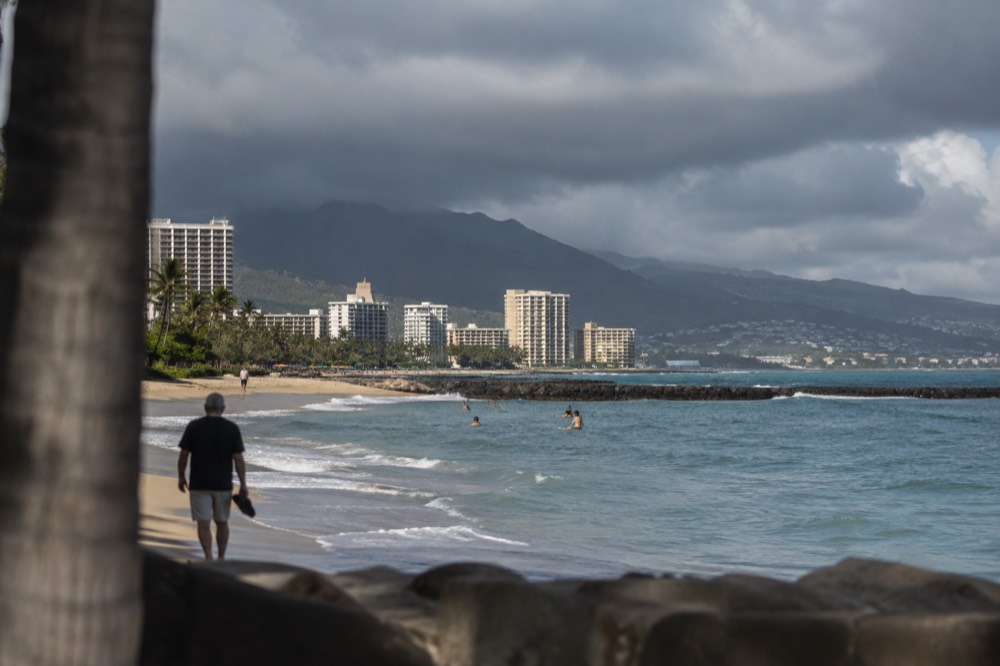
Oahu's rainy season runs roughly November through March, when Pacific winter systems push more frequent and heavier showers across the island. That is the short answer, and it is true as far as it goes. The fuller answer is that Oahu does not have one climate. It has several, stacked side by side, and the difference between them is enormous. The leeward coast around Waikīkī and Honolulu is one of the driest places in Hawaii, while the Mānoa valley, five miles away, is one of the wettest. A visitor who never leaves Waikīkī can spend a "rainy season" week barely seeing rain.
This guide lays out what the actual data says, month by month and side by side, and then gets practical: what rain on Oahu is really like, what it does and does not ruin, and how to build a plan that survives a wet afternoon. The numbers here come from the NOAA 1991-2020 climate normals and other primary sources, not from folklore.
What Is The Rainy Season On Oahu?
Oahu's rainy season runs roughly November through March, anchored by the winter months when the trade winds weaken and cold fronts from the northwest reach the island. During the rest of the year, from roughly April through October, steady trade winds blow and the rain that does fall arrives mostly as brief overnight or early-morning showers on the windward side. November through March is when the pattern breaks down and genuine rain events reach the leeward side too.
The mechanics are worth understanding, because they explain almost everything else in this article. For most of the year, trade winds blow from the northeast. They push moist air up against the Koʻolau mountain range, the spine that runs along the island's windward side. The air rises, cools, drops its water on the windward slopes, and arrives over Honolulu and Waikīkī already squeezed dry. That is why the south shore can sit under clear sky while Kāneʻohe, on the other side of the same mountains, is grey.
In winter, the trade winds become less reliable. Cold fronts sweep down from the northwest, and when one passes, it can bring rain to the whole island, including the normally dry leeward coast. These frontal passages are the real "rainy season" events: a day or two of genuine weather, then a return to sunshine. Kona winds, the southerly flow that replaces the trades, can also bring muggy, showery conditions to the leeward side.
So the rainy season is not a monsoon. It is a season in which the usual dry-side protection weakens, and the island's rainfall gap narrows, without ever closing.
If you are building a trip around this, a pass that covers a wide menu of attractions is one way to hedge against a washed-out beach day, since you can swap an outdoor stop for an indoor one without each swap costing a separate ticket.
How Much Rain Does Oahu Actually Get?
The numbers vary by a factor of more than nine across an island you can drive around in a day. Honolulu International Airport, on the leeward coast, records an annual normal of 16.41 inches of rain, making it one of the driest places in the state. Kāneʻohe Bay, on the windward coast, records 27.82 inches. Mānoa, the valley five miles inland from Waikīkī, records 150.96 inches, more than nine times the airport's total.
Those figures come from the NOAA National Centers for Environmental Information 1991-2020 climate normals, which are the standard 30-year averages used across the United States. They are not anecdotes. They are the measured record.
Here is the annual picture side by side:
| Station | Side of the island | Annual rainfall normal | Character |
|---|---|---|---|
| Honolulu International Airport | Leeward (south) | 16.41 in | Driest; March is the wettest month at 2.36 in, June the driest at 0.50 in |
| Kāneʻohe Bay MCAS | Windward (east) | 27.82 in | Moderately wet; November is the wettest month at 3.68 in |
| Mānoa, Lyon Arboretum | Windward valley | 150.96 in | Extremely wet; July alone averages 15.35 in |
The Mānoa row deserves a moment, because it is the single most useful fact on this page. Every single month of the year at the Lyon Arboretum station in Mānoa is wetter than the airport's wettest month. Read that again. The wettest month at the airport, March at 2.36 inches, is still drier than the average July in Mānoa. That means the Mānoa Falls trail is a wet-weather hike in every season, not just in winter, and it means the common advice "visit the waterfalls in the rainy season" is backwards for this island. The falls run all year because the valley that feeds them rains all year.
It also means a weather forecast for "Honolulu" tells you almost nothing about conditions in the valleys. If your plan includes Mānoa Falls, the Lulumahu area, or any Koʻolau ridge trail, check conditions for that specific area, and read the site's flash flood safety guide before you go, because valley rain and flash flooding are the same subject.
Which Side Of Oahu Gets The Most Rain?
The windward side, meaning the east-facing coast from Kāneʻohe through Waimānalo and up towards Lāʻie, receives far more rain than the leeward side in every month of the year. The leeward south shore, where Waikīkī, Honolulu, and Ko Olina sit, is drier, sunnier, and warmer on average. The mountains between them catch most of the moisture, which is why the valleys above Honolulu are dramatically wetter than the coast just below them.
The practical consequence for a visitor is simple: where you stay shapes how much rain you experience more than when you visit does. A November week in Waikīkī can be drier than a July week in Kāneʻohe.
The trade-off runs both ways. The windward side pays for its rain with the island's lushest scenery: the green Koʻolau cliffs, Hōʻomaluhia Botanical Garden, the Kailua and Waimānalo beaches that stay beautiful under cloud. The leeward side pays for its sunshine with drier, browner hills and a landscape that can feel closer to arid California than to the postcard version of Hawaii.
If a wet afternoon does hit your side of the island, the fix is usually an indoor or covered activity rather than a lost day, and the site's rainy day activities guide lists the real options. A pass covering dozens of attractions across the island makes that swap cheap, since you are not forfeiting a single-activity ticket when the sky turns.
When Is Oahu's Wettest Month?
On the leeward coast, March is the wettest month, averaging 2.36 inches at Honolulu airport, and June is the driest at 0.50 inches. On the windward coast the peak shifts later, with November leading at Kāneʻohe Bay at 3.68 inches. In the Mānoa valley the pattern inverts entirely: July is the wettest month at 15.35 inches, driven by trade winds rather than winter fronts.
That inversion is the detail almost every generic Hawaii weather article gets wrong or omits. The conventional line is that summer is dry and winter is wet, and on the leeward coast that is broadly true. Honolulu's monthly normals climb from October, peak in January, and fall away through spring into a very dry June and July.
But the wettest places on Oahu do not follow that calendar. The Lyon Arboretum's 15.35 inches in July is driven by the trade winds pumping moisture up the valley all summer long. Winter fronts add to the valley's total, but summer is when the water really falls there. This is why the Mānoa Falls trail is muddy and the stream is running hard in the middle of "dry season", and why locals treat the summer months as prime waterfall season on the windward side.
For planning purposes, a few honest rules of thumb follow. If your trip is beach-first and you want the driest possible base, the leeward coast from June through September is the statistically safest combination on the island. If your trip is waterfall-first, you do not need the rainy season at all; you need the windward valleys, in any month. And if you are visiting in January or February, expect at least one or two days of real rain wherever you stay, balanced against days that are perfectly fine.
Does Rain Ruin An Oahu Vacation?
Usually not, because most rain on Oahu, especially on the leeward side, arrives as brief showers rather than all-day events, and the island's outdoor options are so varied that a wet patch on one shore often coexists with sun on another. The rain that does disrupt plans is the valley rain, which can trigger flash flood warnings and close stream hikes, and that is the one hazard worth taking seriously rather than shrugging off.
Rain often clears on another shore, so a day tour still works. Book a circle island tour here.
The typical leeward shower is a short, heavy burst that passes in minutes and dries off the pavement within the hour. Locals call these blessings when they arrive over the dry side, and they are one reason the south shore's hills turn briefly green even in the dry months. You can lose an hour of beach time to one and gain the rest of the day.
The exceptions matter more than the rule. When a winter front stalls over the island, it can rain steadily for a day or two, and that is when the planning advice kicks in: swap the beach for the Bishop Museum, the Honolulu Museum of Art, or a submarine-style activity that runs in any weather. When the rain is falling in the mountains, the risk is different and more serious. Stream beds and valley trails can flash flood even when the coast is dry, and the site's hurricane season guide and flash flood coverage explain the warning signs. If there is a flash flood watch for the Koʻolaus, the waterfall hike is off, full stop, regardless of what the sky above Waikīkī looks like.
One more thing worth knowing: rain and temperature are barely connected on Oahu. Winter is maybe a few degrees cooler than summer, and the ocean stays swimmable year-round. The water temperature at Honolulu Harbor, measured hourly by NOAA, averages 78.2°F in January and 82.7°F in August, and those harbor readings run slightly warm against the open water off Waikīkī. You will not need a wetsuit for swimming in the rainy season, and most people do not need one at any time of year.
What About Hurricanes And Flash Floods?
Hurricane season in the Central Pacific runs June through November, overlapping the back half of the dry season and the front half of the rainy season, while flash floods are the more immediate hazard for visitors. The same tropical moisture that feeds a storm can flood the island's valleys, and the valleys respond fast. Neither is a reason to avoid the season, but both demand a daily forecast check.
The DLNR parks system gives a live example of how this works. In late August 2026, Hurricane Lowell's passage led to closures across Hawaii's state parks, and on Oahu three sites, Nuʻuanu Pali State Wayside, Kaʻena Point State Park's Mokuleʻia and Keawaʻula sections, and Wahiawā Freshwater State Recreation Area, remained closed into September for storm repairs. A visitor who had read a months-old article about the Pali Lookout would have driven up a closed road. The lesson generalises: after any significant tropical weather, check the DLNR notices and the National Weather Service forecast for your specific activity, not a guidebook.
Flash flooding deserves the same respect. The Koʻolau valleys concentrate rainfall into narrow stream channels, and the water level can rise from ankle-deep to dangerous in minutes under a storm the coast never sees. The safety rules are unglamorous and effective: never enter a flooded stream or flooded road, check for flash flood watches before any valley or waterfall hike, and be willing to change the day's plan. The ocean safety guide covers the coastal equivalents, including why the box jellyfish calendar matters for swimmers on the south shore.
For a trip built with weather flexibility in mind, an attraction pass earns its keep in exactly these situations. When a front parks itself over the island for a day, having a menu of indoor and covered options already paid for turns a lost day into a rearranged one, and the pass is the cheapest way to hold that menu open.
How Do You Plan Around Oahu's Rain?
Plan by side of the island first, season second, and keep at least one indoor alternative in reserve for every two outdoor days. Book the windward activities for mornings, when valley clouds are often still thin, watch the National Weather Service forecast the evening before rather than days ahead, and treat any flash flood watch as a hard cancellation for stream hikes. Visitors who build this flexibility in rarely lose a full day to rain on Oahu.
The single best planning habit is the evening forecast check. Oahu weather is highly forecastable on a 12-to-24-hour horizon and much less so a week out, so a rigid itinerary built before you fly is the thing most likely to break. Book only the fixed-appointment activities in advance, the ones with set times such as luaus, and leave the beach days, hikes, and drives to be sequenced once you can see the actual sky.
A few patterns make the sequencing easier. Rain on the windward side is most common overnight and in the morning, so afternoon is often the better window for Kāneʻohe and Kailua. Rain on the leeward side, when it comes in winter, usually arrives with a front that affects the whole island at once, so there is no side to flee to, only indoors to retreat into. And valley rain can happen in any month, so the waterfall hikes are never automatically safe from weather just because it is summer.
The activities that are weatherproof deserve a place in any rainy-season plan. Two of the best are underwater by design:
A submarine dive runs on a schedule and is indifferent to surface rain, and an underwater scooter adventure puts you below the weather entirely. Both work as the "reserve" half of a rainy-season day plan, and both are the kind of activity that a pass or a pre-booked slot makes easier to move rather than cancel.
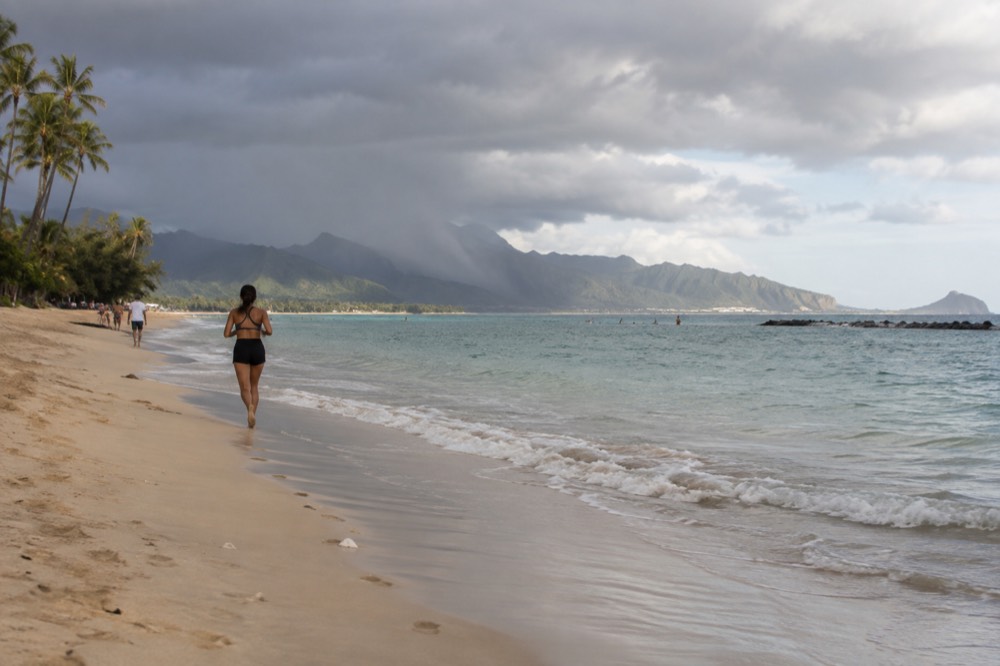
For the same reason, the scooter option below is worth holding in your back pocket for the day the beach plan dies at breakfast.
Common Questions About The Rainy Season On Oahu
Most questions about rain on Oahu come down to three things: which side of the island you are on, whether the rain is coastal or falling in the mountains, and whether your plans can flex by a day. The rainy season itself is the least of the three, because leeward rain is usually brief and the wettest places are wet in every month. The answers below cover what visitors ask most.
What is the rainy season on Oahu?
Oahu's rainy season runs roughly November through March, when weakened trade winds and passing winter fronts bring more frequent rain to the whole island, including the normally dry leeward coast. Outside those months, rain is mostly confined to brief windward-side showers under steady trade winds.
What is the wettest month on Oahu?
It depends on where you stand. On the leeward coast, March is the wettest month, averaging 2.36 inches at Honolulu airport. On the windward coast, November leads at Kāneʻohe Bay with 3.68 inches. In the Mānoa valley, July is the wettest month at 15.35 inches, because summer trade winds, not winter fronts, drive the rain there.
Does it rain all day on Oahu?
Rarely on the leeward coast. Most south-shore rain arrives as short, heavy showers that pass within minutes to an hour. Sustained all-day rain does occur when a winter front stalls over the island, typically once or twice per rainy season, and valley rain can persist much longer than coastal rain.
Is the rainy season a bad time to visit Oahu?
No. Winter brings the highest visitor volumes of the year to the island, and the leeward side stays comparatively dry even in January. The trade-offs are a higher chance of a washed-out day, slightly cooler air, and the arrival of humpback whales in Hawaiian waters from November through April, which many visitors consider winter's best feature.
Which side of Oahu is driest?
The leeward south and west shores. Honolulu airport records 16.41 inches of rain per year, making it among the driest places in Hawaii. The windward east coast records 27.82 inches at Kāneʻohe Bay, and the Mānoa valley records 150.96 inches, more than nine times the airport's total.
Is it safe to hike to waterfalls during the rainy season?
Only with a forecast check the same day. Valley streams can flash flood even when the coast is dry, and the wettest places on Oahu are wet in every month, not just winter. If a flash flood watch covers the Koʻolaus, cancel the stream hike regardless of what the sky above Waikīkī looks like.
The bottom line is that Oahu's rainy season is real but heavily overstated by people who have only read about it. The island's dry coast is genuinely dry, its wet valleys are genuinely wet, and the two sit five miles apart. Plan for the side you are on, keep a weatherproof alternative in hand, and the rain becomes a scheduling detail rather than a trip spoiler. More on building that flexibility, including the month-by-month numbers and the full planning picture, is in the site's Oahu weather by month guide and the wider coverage at Oahu Travel Guide.