What Is The Prettiest Hike In Oahu?
A direct, sourced answer to which Oahu hike is the prettiest, why Mānoa Falls earns the title, and how the other contenders compare.
What Is The Prettiest Hike In Oahu?
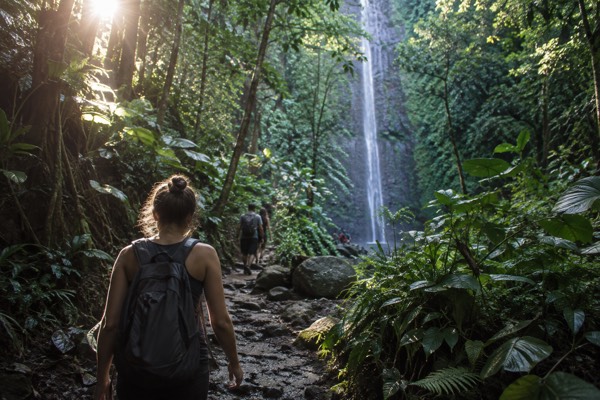
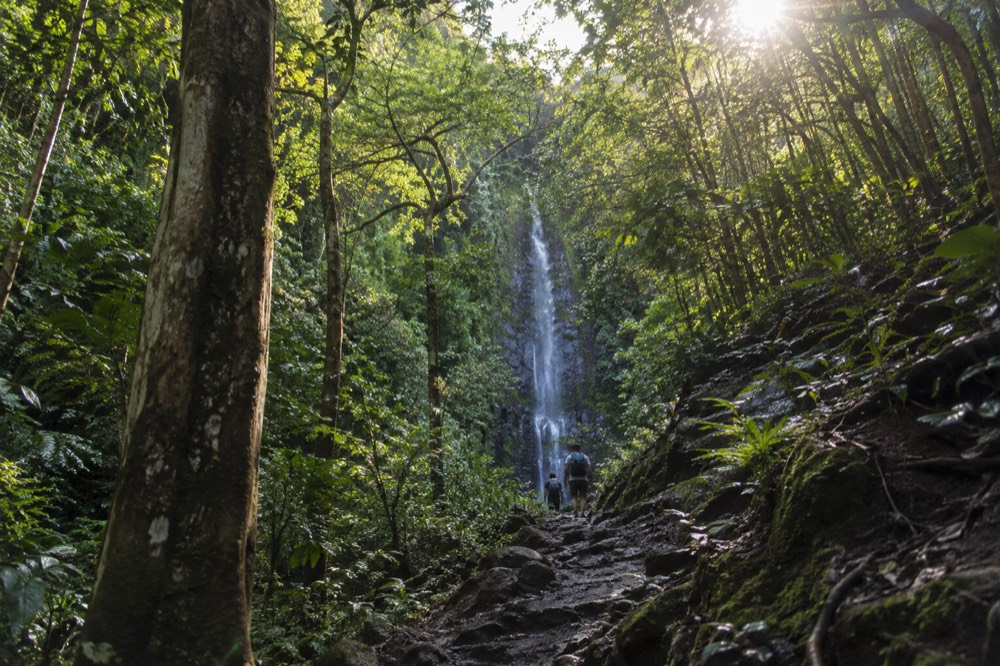
The prettiest hike in Oahu is the Mānoa Falls trail, a short rainforest walk to a narrow waterfall dropping into a green amphitheatre. The trail sits in Mānoa Valley, five miles inland from Waikīkī, in a corner of the island that receives more than nine times the annual rainfall of the leeward coast. That rain is the whole reason the hike looks the way it does.
This is a judgement call, and honest guides should say so. Beauty on Oahu comes in two flavours: the emerald, closed-in lushness of the windward valleys, and the open, panoramic drama of the ridgelines. Mānoa Falls wins on the first count more decisively than any other walk on the island wins on either. Below is the case for it, the strongest contenders against it, and the practical details that decide whether you actually enjoy the day.
So Which Oahu Hike Takes The Title?
The Mānoa Falls trail is the prettiest hike in Oahu, and it is not especially close on the lushness measure. The walk climbs gently through a rainforest canopy to a waterfall that runs year-round because the valley above it is one of the wettest places near Honolulu. The trail is short and manageable, the scenery changes every few hundred metres, and the payoff is a wall of green with water coming down the middle of it.
The numbers behind the look are worth knowing. The NOAA 1991-2020 climate normals put the Lyon Arboretum station in Mānoa at 150.96 inches of rain per year. Honolulu International Airport, on the leeward coast, receives 16.41 inches over the same period. Five miles separate the two stations. Every single month in Mānoa is wetter than the airport's wettest month, which is why the valley stays green through the dry season while Waikīkī browns out around the edges.
What that means for a hiker is simple. The trail is shaded almost the whole way, the air is noticeably cooler than at the beach, and the greens are the deep saturated kind that photographs badly because phones cannot handle the range. The waterfall at the top, about 150 feet high, is a ribbon rather than a torrent most of the year, but the amphitheatre of rock and vegetation behind it is the real subject.
The trail is free to walk. Parking is handled by a private lot adjacent to the trailhead, and the fee situation there has changed more than once, so check current arrangements before you go rather than relying on older articles. Getting there without a car is realistic too: city buses serve Mānoa Valley from central Honolulu, and the walk from the nearest stop adds only a few minutes through a quiet residential neighbourhood. The full practical rundown, including how to reach the trailhead by public transport, is in our Mānoa Falls trail guide.
Why Does Mānoa Falls Feel Like A Different Island?
Mānoa Valley sits on the windward side of the Koʻolau ridge line, where moisture coming off the ocean is forced upward and falls as rain, and that mechanism is what makes the hike feel nothing like Waikīkī. The valley floor holds a botanical garden, a university campus and residential streets under a permanent canopy of cloud, all five miles from the beach. Hikers notice the change within the first ten minutes of the walk.
The temperature drops, the light goes soft and filtered, and the sound of the city disappears behind the trees. The contrast is the island's defining geographic fact. Oʻahu's windward side is wet, the leeward side is dry, and the ridge between them creates both. A visitor who spends every day in Waikīkī can end a week convinced the island is a beach with a city on it. One morning in Mānoa corrects that entirely.
There is a practical consequence too. The trail is muddy most of the year, and the mud is the slick red clay kind, not the sandy kind. Shoes with grip matter more than fitness does. The trail is well maintained and well travelled, but it is not a paved stroll, and visitors in flip-flops turn back regularly.
Rain changes the character of the walk rather than ruining it. On a wet morning the waterfall fattens up, the ferns drip audibly and the forest smells the way rainforests are supposed to smell. On a dry morning the light shafts through the canopy and the photography is better. There is no bad version, only different ones, which is part of the case for calling it the prettiest.
If you would rather have the logistics handled, there is a self-guided option that bundles transport from Waikīkī with time on the trail, which suits travellers who do not want to work out the bus connections or the parking. Details are on the operator's live listing.
What Are The Other Contenders For The Most Beautiful Hike?
Three other walks compete seriously for the title, and each wins on a different measure. The Lanikai Pillbox trail wins on views, with two small WWII-era lookout structures above Kailua and a panorama over the Mokulua islands. The Makapuʻu Point lighthouse trail wins on ocean colour, a paved climb along the eastern tip of the island.
And the walk through Waimea Valley on the North Shore wins on ease, a mostly flat botanical garden path ending at a waterfall.
None of them matches Mānoa for rainforest atmosphere, but each has a visitor it suits better. Here is how the main contenders stack up against each other.
| Trail | What it wins on | Setting | Effort level |
|---|---|---|---|
| Mānoa Falls | Rainforest lushness, waterfall | Windward valley, fully shaded | Easy to moderate, often muddy |
| Lanikai Pillbox | Coastal panorama over the Mokulua islands | Exposed ridge above Kailua | Moderate, steep in places |
| Makapuʻu Point lighthouse | Open ocean views, paved surface | Eastern coastline, exposed | Easy, fully paved |
| Waimea Valley walk | Botanical gardens, flat path | North Shore valley | Easy, paved most of the way |
| Diamond Head (Lēʻahi) | The crater rim panorama over Honolulu | Dry crater interior | Moderate, mostly paved then stairs |
A few honest caveats belong alongside that table. The Pillbox trail is exposed with no shade, so it is a morning walk in anything approaching warm weather, and parking in the surrounding residential streets is restricted, so the legal options fill early. Makapuʻu is the most family-proof of the group because the whole thing is paved. Waimea Valley charges admission, is closed on Mondays and opens 9 a.m. to 4 p.m. Tuesday through Sunday, with adult entry at $26 and discounted rates for kamaʻāina and military, and whether the waterfall pool opens for swimming is decided daily by the lifeguard rather than guaranteed.
The broader shortlist, with trail lengths and difficulty ratings across the whole island, is in our best hikes on Oahu overview.
Is Diamond Head The Prettiest Or Just The Most Famous?
Diamond Head, the crater the Hawaiian language calls Lēʻahi, is the most famous hike on Oahu, but it is not the prettiest, because its beauty is a single payoff rather than a continuous walk. The trail climbs through a dry crater interior, passes through a tunnel and a spiral staircase, and ends at a fire control station looking down on Waikīkī and the whole south shore. The view is the best single panorama available on foot from Honolulu.
The walk itself is dusty and functional.
The practical rules are strict and a lot of older content gets them wrong. Non-resident visitors pay $5 per person for entry plus $10 per vehicle to park inside the crater, both charged separately, and the park takes credit card only, no cash at the gate. Reservations are mandatory for non-residents for both entry and parking, a rule in force since 12 May 2022, with no on-site sales. Hawaii residents enter free with state ID. The monument is open 6 a.m. to 6 p.m. daily, with last reservation at 4 p.m. and last entry at 4:30 p.m., and it closes only on Christmas and New Year's Day.
Because the reservation is the hard part, plenty of visitors skip the DIY version and take a tour that includes the ticket and the shuttle from Waikīkī, which removes both the booking task and the drive. Our Diamond Head State Monument guide covers the full self-guided version if you would rather do it yourself.
If the reservation feels like the hard part, book a Diamond Head hiking tour here.
When Is The Best Time Of Day To Hike For The Best Light?
The best light on any Oahu hike is in the first two hours after sunrise, roughly 5:50 a.m. to 8 a.m. in summer and from about 7:15 a.m. in midwinter, because the island's day length swings only about two hours and thirty-five minutes across the whole year. Sunset never gets later than about 7:17 p.m., so there are no long northern-latitude summer evenings here.
Mānoa Falls specifically is better in the morning, when the valley is cooler and the crowds are thin.
The small day-length swing surprises visitors from high latitudes. Oahu's shortest day runs about 10 hours 51 minutes and its longest about 13 hours 26 minutes. That means an evening hike after a full beach day is realistic in June and much less so in December, when the sun is down before 6 p.m.
Mornings also matter for the exposed trails. The Pillbox and Makapuʻu walks have essentially no shade, and the NWS surf zone forecast shows the east-facing shores running larger in late summer as former tropical cyclones send swell in, which is worth knowing if your coastal walk ends near the water. Check the forecast the night before rather than assuming.
Photographers should note one more thing: the valley cloud that makes Mānoa photograph well in the morning can turn to grey flat light by midday, while the coastal trails do the reverse, going harsh by late morning and golden in the last hour before sunset. If the prettiest picture is the goal, match the trail to the hour rather than the hour to the trail.
What Should You Know Before Hiking Any Trail On Oahu?
Three things decide whether an Oahu hike goes well: the mud, the closures and the sun. Most valley trails are slick red clay year-round, so closed-toe shoes with real grip beat fitness. State parks close for storm repairs with little notice, and as of the DLNR notice dated 9 September 2026 the Nuʻuanu Pali State Wayside and Kaʻena Point State Park remain closed after Hurricane Lowell, so any itinerary built from older articles needs a fresh check. And the tropical sun burns through cloud faster than visitors expect.
Closures deserve emphasis because they change fast. The two named above are the significant ones on Oahu right now, and both appear in itineraries published before the storm. The Diamond Head page carried its own storm-related update in late August 2026, so even the trails that are open should be confirmed the week you travel.
The sun point is not garnish. Honolulu's latitude means the UV index runs high even under the valley cloud, and the forest canopy on the Mānoa trail filters light without blocking it. Water, a hat for the exposed sections and reef-safe sunscreen for anything ending near the ocean are the standard kit.
A small planning table for the two most-visited walks:
| Trail | Entry cost, non-resident | Reservation | Closed days |
|---|---|---|---|
| Mānoa Falls | Free; private parking lot charges a fee | Not required | None stated |
| Diamond Head (Lēʻahi) | $5 per person, $10 per vehicle, card only | Required since 12 May 2022 | Christmas, New Year's Day |
For travellers who want scenery without hiking at all, a half-day scenic tour that reaches multiple lookouts in one loop covers the same visual ground with none of the mud, and pairs well as a rest day after the trails.
What Is The Prettiest Hike In Oahu?
The prettiest hike in Oahu is the Mānoa Falls trail, for the simple reason that it delivers the island's rarest scenery, genuine rainforest, in a short, shaded, manageable walk with a waterfall at the end. Diamond Head has the better single view and the Pillbox trail has the better panorama, but neither of those walks is beautiful along the way. Mānoa is beautiful from the first step to the last.
The 150 inches of annual rain that fall on the valley above it are the reason the green never fades, and that is a fact no other trail on the island can borrow. That is the honest ranking, and it is also the practical one, because Mānoa is walkable year-round, reachable without a car and free to enter. The strongest alternative is not a different trail at all but a different kind of day: pair the Mānoa morning with a Makapuʻu afternoon and you will have seen both halves of what makes Oahu's landscape worth walking through.
Common Questions About The Prettiest Hike In Oahu
Most questions about Oahu's prettiest hikes come down to four practical things: whether a reservation is needed, what the walk costs, how hard the mud really is and whether the waterfall is worth the hype. Mānoa Falls needs no reservation and costs nothing to walk, while Diamond Head needs a reservation and two separate fees. The mud is the one thing that consistently surprises visitors, and closed-toe shoes solve it.
What is the prettiest hike in Oahu?
The Mānoa Falls trail. It is a short rainforest walk in the wettest valley near Honolulu, ending at a roughly 150-foot waterfall, and no other trail on the island matches its continuous lushness. Diamond Head and the Lanikai Pillbox trail have better views, but Mānoa is beautiful for the entire length of the walk rather than only at the top.
Is the Mānoa Falls hike hard?
No, it is an easy to moderate walk with a gentle climb, short enough that most visitors finish comfortably within a morning. The difficulty people underestimate is the mud: the trail is slick red clay for much of the year and shoes with real grip matter more than fitness. It is not paved and it is not suitable for flip-flops.
Do you need a reservation for the Mānoa Falls trail?
No, the trail itself is free and requires no reservation. Parking is handled by a private lot next to the trailhead which charges a fee, and that arrangement has changed over time, so check the current setup before you drive out rather than trusting older articles.
Is Diamond Head prettier than Mānoa Falls?
Not as a walk. Diamond Head, Lēʻahi, has the single best panorama available on foot from Honolulu, but the trail itself is dry, dusty and functional, and the beauty is concentrated in the last five minutes at the rim. Mānoa is beautiful from start to finish. Many visitors do both, since they showcase opposite halves of the island's landscape.
What is the best hike on Oahu for beginners?
The Makapuʻu Point lighthouse trail is the most forgiving, because it is fully paved with a steady gradient and ends at a view down the eastern coastline. Mānoa Falls is the next step up, easy apart from the mud. Waimea Valley's garden path is flatter still but charges admission and closes on Mondays.
Are any Oahu hiking trails closed right now?
Yes. Under the DLNR State Parks notice dated 9 September 2026, Nuʻuanu Pali State Wayside and Kaʻena Point State Park, along with Wahiawā Freshwater State Recreation Area, remain closed until further notice for repairs after Hurricane Lowell. Check the DLNR notices the week you travel, because this list changes.
If you want to build a full trip around the trails rather than a single morning, the Oahu Travel Guide homepage collects the reservation rules, transport details and seasonal timing in one place, and our best hikes on Oahu overview ranks every major walk on the island by difficulty and payoff. Whichever trail you pick, go early, wear real shoes and give the rainforest the morning it deserves.