What Is The Hardest Hike In Oahu, Hawaii?
A direct, sourced answer to which trail is the hardest hike in Oahu, Hawaii, plus how the island's other well-known climbs compare, what they cost, and how to prepare.
What Is The Hardest Hike In Oahu, Hawaii?
The Koko Crater Railway Trail, the stair climb up an old tramway bed on the island's southeast side, is the hardest well-known hike on Oahu: a relentlessly steep, exposed ascent with no shade, no water and no bailout point until the top. It is a different category of effort from Diamond Head or Mānoa Falls, and it punishes heat, dehydration and false confidence more than any other trail visitors commonly attempt. The trail is free to walk, and the honest reason it beats everything else is the combination of grade, surface and sun rather than distance alone.
That is the short answer, and it is the one this desk stands behind after working through the island's trail list against what the verified record supports. The longer answer is more interesting, because Oahu's "hard" hikes are hard in completely different ways, and the one that is right for a strong walker can be wrong for someone who has never hiked in tropical heat before.
This page works through the main candidates one at a time: why the Koko Crater stairs sit at the top of the list, what makes Diamond Head harder than its reputation suggests, why the Mānoa Falls trail turns on the weather rather than the terrain, and why two of the island's more serious coastal walks are simply off the table right now. Along the way there is practical detail on fees, reservations and preparation, all of it drawn from official sources rather than recycled listicles.
Which Trail Do Serious Hikers Point To First?
The Koko Crater Railway Trail, sometimes called the Koko Head stairs, is the climb experienced hikers name first when asked about Oahu's hardest trail, because it is a near-continuous steep ascent over uneven steps and old railway ties with almost no flat ground, no shade and no water anywhere on the route. The surface is the second half of the difficulty: the track bed is an abandoned tramway, so footing is irregular, and in wet conditions the ties and surrounding dirt become slick. There is no fee to walk it, and the trailhead sits by Koko Head District Park on the island's east side.
The trail's reputation rests on three things stacking on top of each other. First, the grade: the climb is steep enough that most people stop to rest repeatedly, and the steepest sections come in the middle third where quitting means descending the same uneven surface you came up. Second, the exposure: the southeast side of the island gets full sun for most of the day, and there is no tree cover to speak of on the route itself. Third, the surface: old railway ties set into a dirt slope are not a built staircase, and they demand attention on the way down as much as on the way up.
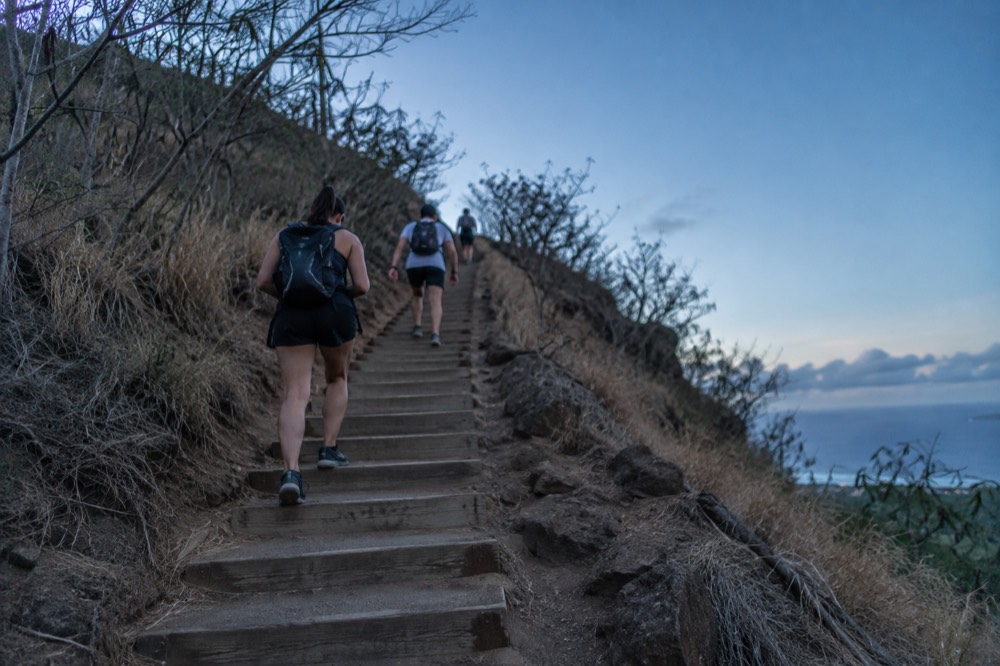
What the trail is not is technical. There is no scrambling, no rope work and no cliff-edge exposure of the kind that makes ridge trails genuinely dangerous. It is a pure cardio and heat-management problem, which is exactly why it filters people so effectively: a walker who is strong but unused to tropical sun can get into trouble on it faster than they expect, and a walker who is heat-acclimatised but modestly fit can grind it out slowly. If you want a fuller profile of the trail, including its history as a tramway to a military installation at the summit, the Koko Head crater trail guide covers it in detail.
What we can say, from the trail's own character and from the official record around it, is that the difficulty is real and it is about steepness and heat, not length.
Why Does The Koko Crater Trail Punish Unprepared Hikers?
Heat and dehydration are what turn the Koko Crater trail from a hard workout into a rescue, because the route offers no shade, no water and no shelter for its entire length, and Honolulu's tropical sun is strong enough year-round that midday attempts are the single biggest mistake visitors make. The trailhead facilities sit down at Koko Head District Park, not on the trail itself, so anything you need on the climb you must carry. Most people who struggle on this trail are not struggling with fitness alone; they underestimated water and timing.
Timing matters more than almost anything else. Oahu's day length varies by roughly two and a half hours across the year, and even at the summer solstice the sun rises around 5:50 a.m. in the Waikīkī area and sunset never falls later than about 7:17 p.m. That means an early start is available in every season, and it is the difference between climbing in comfortable air and climbing in full exposure. The latest sunrise of the year, in mid-January, is around 7:11 a.m., so even in the depths of winter an 8 a.m. start beats the heat that builds by mid-morning.
The second mistake is footwear. Railway ties, dirt steps and loose gravel punish flip-flops and worn-out sneakers, and the descent is where most slips happen. Trail shoes with real grip are the single cheapest upgrade to this hike. The third mistake is going alone with no plan: there is no ranger station on the trail, and while the route is popular enough that you will rarely be truly alone, a twisted ankle halfway up is a long, slow problem.
If the stairs sound like more than you want, that is a reasonable conclusion, not a failure. The island has gentler options that still deliver a real summit feeling, and a guided option can take the logistics off your plate entirely. The picks above include a Diamond Head tour that handles the mandatory reservation, a self-guided Mānoa Falls option and a lookouts tour for people who want the views without the climb.
What Makes Diamond Head Harder Than Its Reputation?
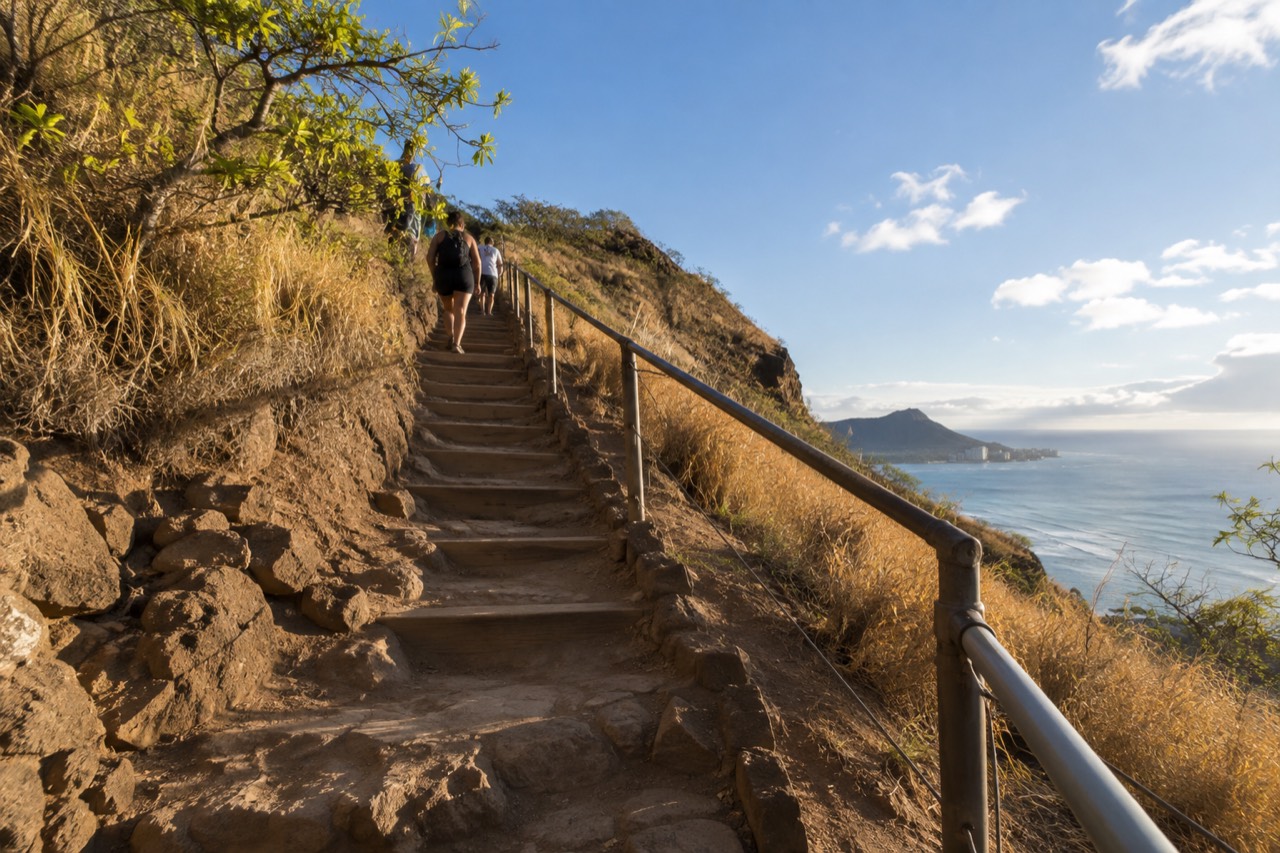
Diamond Head, the crater trail the state signposts as Lēʻahi, is not the hardest hike on Oahu by a wide margin, but it is harder than its postcard reputation suggests: it is a sustained paved and stepped climb with two long stair sections and an unlit tunnel, entry costs $5 per non-resident plus $10 per vehicle, and non-residents must reserve in advance with no on-site sales. Residents enter free with Hawaii ID. The reservation requirement has been in force since 12 May 2022 and is permanent, which matters because a large share of competing guides still describes it as a turn-up-and-pay trail.
The monument is open 6:00 a.m. to 6:00 p.m. daily, with last reservation at 4:00 p.m. and last entry at 4:30 p.m. It closes only at Christmas and New Year's. Entry is credit card only, and children 3 and under enter free. The full fee picture:
| Item | Non-resident | Hawaii resident |
|---|---|---|
| Entry per person | $5 | Free with Hawaii ID or driver's licence |
| Parking per vehicle | $10 | Free with ID |
| Children | 3 and under free | 3 and under free |
| Payment | Credit card only | Credit card only |
| Reservation | Required, up to 30 days ahead | Not required |
| Hours | 6:00 a.m. to 6:00 p.m., last entry 4:30 p.m. | Same |
Why does a paved trail in a state monument deserve a place in a hardest-hike conversation? Because it is the trail where the gap between expectation and reality gets people. Visitors arrive expecting a gentle stroll to a viewpoint and instead find a steady climb, stairs, more stairs, and a section of tunnel where a small torch on a phone is genuinely useful. On a hot afternoon with a family in tow, Diamond Head produces more exhausted, sunburnt walkers than the stairs do, simply because far more people attempt it. The Diamond Head State Monument guide covers the trail itself.
The reservation system is the practical wrinkle. Booking through the state's system up to 30 days ahead is straightforward, but the slots for popular morning windows go fast, and travellers who leave it until arrival often find the times they wanted are gone. A guided tour that bundles the ticket and transport removes that failure mode entirely, which is why the option above exists on this page.
Is The Mānoa Falls Trail Hard?
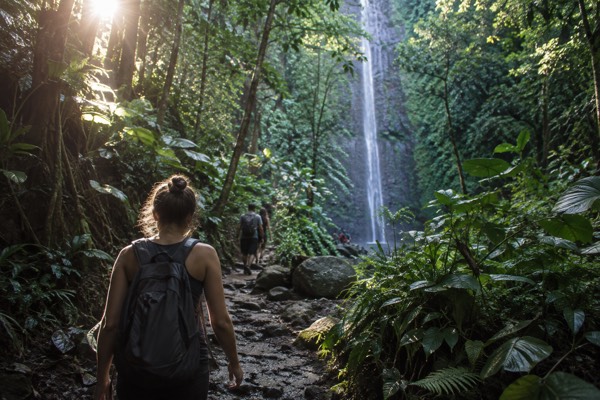
The Mānoa Falls trail is not steep in the way the Koko Crater stairs are, but it is the island's most weather-dependent popular hike: it runs through a rainforest valley that receives roughly 150 inches of rain a year, the path is mud and root the whole way, and after rain it becomes slick enough that the difficulty is entirely a function of the last 24 hours of weather. The trail itself is free to walk. Parking is handled by a private lot near the trailhead, and the current rate is posted at the lot, so check before you go rather than trusting a number copied from an old blog.
The rainfall figure is not decoration, it is the single most useful planning fact on this page. The National Weather Service's 1991 to 2020 climate normals put the Lyon Arboretum station in Mānoa at 150.96 inches of rain a year, against 16.41 inches at Honolulu airport on the leeward coast, roughly five miles away. Every single month at the Mānoa station is wetter than the airport's wettest month. In practical terms: you can check the sky over Waikīkī, see blue, drive into the valley, and walk into a different climate.
Mud is the reason this trail belongs in the conversation. On a dry day it is a moderate walk through genuine rainforest, shaded almost the whole way, suitable for reasonably steady children. On a wet day it is a slip hazard from the first hundred metres, and the falls at the end, while worth seeing, are viewed from a distance rather than approached closely. The Mānoa Falls trail guide has the full profile, and the Mānoa neighborhood guide covers getting there.
Flash floods are the serious note. Rainforest valleys on Oahu can flood fast, and the risk is not the falls, it is the stream crossings and the speed with which a valley that receives this much rain can go from trickle to torrent. If it has rained heavily, or rain is forecast, pick a different day. The Oahu flash flood safety guide explains what that looks like in practice.
What About Kaʻena Point And The Nuʻuanu Pali Lookout?
Two of Oahu's more demanding and more rewarding walking destinations are closed as of 9 September 2026: Nuʻuanu Pali State Wayside and the Mokuleʻia and Keawaʻula sections of Kaʻena Point State Park are shut until further notice for storm repairs following Hurricane Lowell, per the DLNR State Parks notice, so neither can be planned into a trip right now. Wahiawā Freshwater State Recreation Area is also closed. Any guide that currently describes the Pali lookout or Kaʻena Point as open is working from stale information.
Kaʻena Point deserves particular care even when it reopens. It is a leina a ka ʻuhane, a place where souls depart the living world in Hawaiian tradition, and it is also a protected seabird and monk seal area behind a predator-proof fence. It is not a "great sunset spot" that happens to have a trail; it is a sacred site with a walk attached, and copy that treats it as scenery gets both the culture and the conservation wrong. When it reopens, the Kaʻena Point State Park guide will carry the current access details.
The Pali lookout closure is a practical loss for hikers too, because the Nuʻuanu area above it holds some of the windward side's best walking, and the lookout is the natural anchor for planning a day in that part of the island. The Nuʻuanu Pali lookout guide keeps the fuller picture. Until DLNR reopens the wayside, plan around it.
There is a second reason this section exists: the closures are a reminder that Oahu's trail and access picture changes, and that a printed list from two years ago is not a plan. Hurricane season runs through the late summer and autumn, and the state parks system posts closure notices on its own site, which is where this desk checks before publishing anything that names a state-managed site.
How Should You Prepare For A Hard Oahu Hike?
Preparation for a hard Oahu hike is mostly heat management: start early, carry more water than feels reasonable, wear real footwear and sun protection, and check both the weather and the trail's reservation status before you leave, because the two failure modes that actually hurt people on this island are heat and arriving at a gate that requires a booking you do not have. Everything else, fitness included, is secondary to those two.
The practical checklist, compressed:
| Factor | What to do | Why it matters on Oahu |
|---|---|---|
| Start time | On trail by 7–8 a.m. | Sun is strong by mid-morning year-round; sunrise is around 5:50 a.m. in June, 7:11 a.m. in mid-January |
| Water | Carry more than you think you need | Koko Crater has none on the route; heat exhaustion is the common failure |
| Footwear | Gripping trail shoes | Railway ties, mud and paved steps all punish smooth soles |
| Reservations | Diamond Head: book up to 30 days ahead, non-residents only; Hanauma Bay snorkelling opens 2 days ahead at 7 a.m. HST | No on-site sales at Diamond Head since May 2022 |
| Weather | Check the valley, not the beach | Mānoa gets 150.96 in of rain a year against the airport's 16.41 in |
| Closures | Check DLNR notices before driving | Pali lookout and Kaʻena Point sections are closed as of 9 Sept 2026 |
Two notes on the table. First, the Hanauma Bay line is there because snorkelling trips and hikes often share a day, and the two-days-ahead-at-7-a.m. reservation window is the single most-misquoted planning fact on the island: the official City & County page is explicit that reservations open two days ahead at 7:00 a.m. HST, not 48 hours, not a week. Second, the closures line is dated because the situation is live; re-check the week you travel.
For travellers who want the summit experience without carrying the logistics, guided options solve the reservation problem directly. The Diamond Head tour below bundles the mandatory ticket and the shuttle, which is the cleanest way to guarantee the morning slot.
For a rainforest walk instead, the self-guided Mānoa Falls option handles transport to the valley, leaving you to enjoy the mud rather than navigate to it.
And if the honest conclusion after reading this page is that a hard climb is not what your trip needs, that is a legitimate answer too. Oahu rewards walkers of every level, and the best hikes overview sorts the island's trails by what you actually want from a morning outdoors. The Oahu Travel Guide homepage is the place to start if the whole island is still open in front of you.
Common Questions About The Hardest Hikes On Oahu
Most questions about Oahu's hardest hikes come down to four things: which trail is genuinely hardest, whether a beginner can attempt it, what it costs, and whether it is open on the dates you are actually there. The short version is that the Koko Crater stairs are the hardest popular trail on the island, Diamond Head is the most famous and needs a reservation booked ahead, Mānoa Falls turns entirely on the weather rather than the terrain, and two of the island's serious coastal destinations are closed for storm repairs as of September 2026. The questions below cover the details people ask most often before they go.
What is the hardest hike in Oahu, Hawaii?
The Koko Crater Railway Trail, the stair climb up an old tramway bed on the island's southeast side. It is a steep, exposed ascent with no shade, no water and no bailout until the summit, and it is free to walk. It is hard because of grade, surface and sun combined, not because of distance or technical scrambling.
Can a beginner hike the Koko Crater stairs?
A reasonably fit beginner can, with conditions: go early before the heat, carry more water than feels sensible, wear shoes with real grip, and treat resting as part of the plan rather than a failure. The trail is popular, so you will rarely be alone, but there is no water, no shade and no facilities on the route itself. If any of those conditions feel shaky, Diamond Head is the better first climb on the island.
Is Diamond Head a hard hike?
Moderate, not hard, but harder than its postcard image. It is a sustained climb with two long stair sections and an unlit tunnel, and it produces more exhausted walkers than the stairs simply because far more people attempt it, often in midday heat. Non-residents pay $5 per person plus $10 per vehicle, card only, and must reserve in advance; the requirement has been in force since 12 May 2022.
Does it cost anything to hike these trails?
The Koko Crater trail and the Mānoa Falls trail are free to walk. Mānoa's trailhead parking is a private lot with a posted rate, so check at the lot. Diamond Head charges non-residents $5 per person and $10 per vehicle, credit card only, with reservations required and no on-site sales; Hawaii residents enter and park free with ID.
Are any hard Oahu hikes closed right now?
Yes. As of the DLNR notice dated 9 September 2026, Nuʻuanu Pali State Wayside, the Mokuleʻia and Keawaʻula sections of Kaʻena Point State Park, and Wahiawā Freshwater State Recreation Area are closed until further notice for Hurricane Lowell storm repairs. Check the state parks notices the week you travel, because this list changes.
What time of day should I start a hard hike on Oahu?
Early. Sunrise falls between roughly 5:50 a.m. in late June and 7:11 a.m. in mid-January, and the sun is strong enough by mid-morning that an afternoon start on an exposed trail like Koko Crater is the single biggest self-inflicted difficulty on the island. Be on trail within an hour or two of sunrise and the hardest hike on Oahu becomes merely a hard one.
Whichever trail you pick, the same three rules carry the day: start early, carry water, and check the official status the week you go. The hardest hike on Oahu is only as hard as the preparation you bring to it.